Category Archives: Significance

2011 in Review … “A Hobby Worth Having”

Thanks to everyone that has read, perused, or glanced at my photos and thoughts. The WordPress.com stats helper monkeys prepared a 2011 annual report for this blog. It’s not really that impressive in the grand scheme, but the experience has been incredibly valuable for my personal growth. I encourage everyone to start blogging … it is truly a hobby worth having.

Here’s an excerpt:

A New York City subway train holds 1,200 people. This blog was viewed about 4,100 times in 2011. If it were a NYC subway train, it would take about 3 trips to carry that many people.

Click here to see the complete report.

He came and dwelt among us

Yesterday, Christmas Eve, was the deadliest day in Richmond since New Year’s Day. Last night, I got the following text from my housemate:

“Don’t know if y’all saw the news or not but two people were killed and a 2 year old girl was abducted a few blocks [from] our house tonight. Be praying for our community tonight and throughout tomorrow as we reflect on what the birth of Christ and the hope of his return means.”

Later, I heard that there were three murders in the same day — a reminder that we humans are not the kind and simple species I like to imagine. I was so thankful that the sad news came with a charge to take Christmas more seriously.

If there were ever a Hallowed Hall, it was the stable in which Jesus was born. Amidst the chaos of an ancient Hebrew city — multiplied by the Roman census — God created room for His holy and audacious command: “peace on earth.”

This day is a tradition that exists to remind us that, with reckless abandon, the God of the universe “came and dwelt among us.” He spoke human language, followed human traditions and respected the full range of human experience: Contentment, excitement, trust, affection, doubt, betrayal, and loss.

Into such a world, this incarnation brought a peace and hope that allows us to give of ourselves and be satisfied.

When we follow a higher calling, the most simple human places become holy. I pray that this year we will hear the Christmas story and appreciate how absurd it sounds: A baby that is God, a new star in the sky, a mother that is a virgin, a stable that is a maternity ward, and a peace that surpasses human understanding.

That ancient city became an unlikely intersection, a place worth remembering, and the origin of a hope found in the person of Jesus Christ.

Merry Christmas.

Gift

When my older brother Steven told me what he wanted for Christmas, I laughed and told him that he was boring.

Steven is similar to me in personality — very different in lifestyle. He’s a rational, fast-paced consultant and I’m a scattered high school teacher. His commute is thousands of miles while my job is five minutes away. So when I start looking for potential presents I’m always wondering if they’re something he would want and enjoy … or just something that I think is cool.

My first decision: The shotgun approach. In addition to his request, I decided to add three more gifts that I thought might engage his creative mind, reconnect him to home, and give him a chance to process his thoughts and emotions throughout the busy work week.

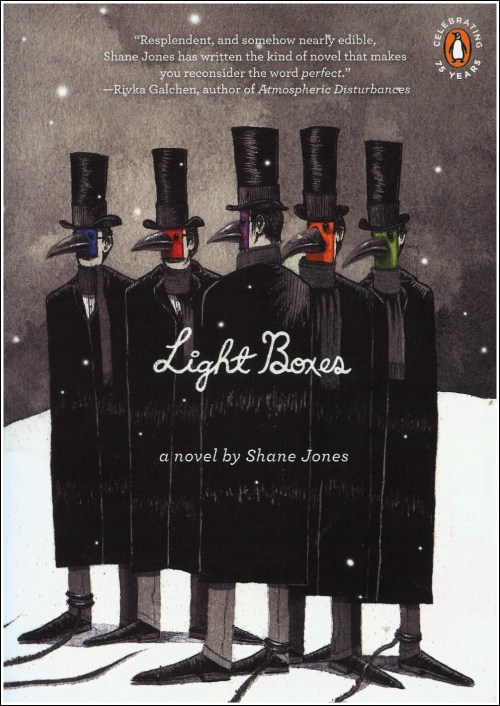
The first is Light Boxes:

 This novel is really a piece of modern folklore that can’t be read to “learn something.” For a book like this, you have to slow down and embrace the flourish of poetry … and learning is indirect. I also appreciate the cover art (suits, scarves, masks and  a creeping monster) for its connection to his current life.

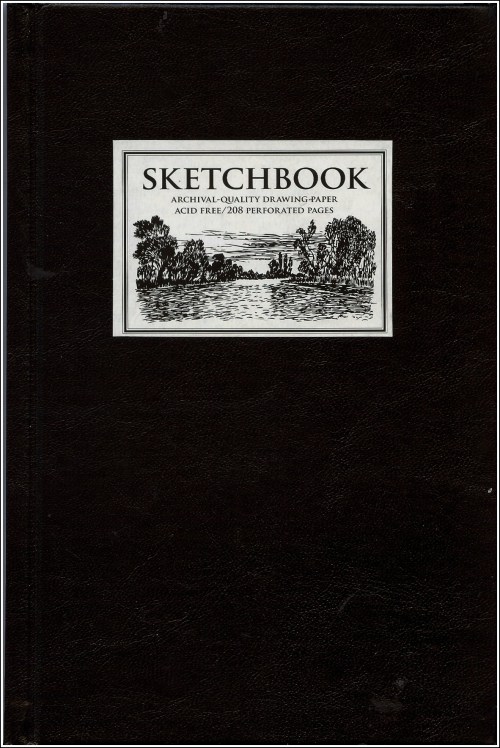
Next item I found for my analytical and professional brother is a simple, black, hardback sketchbook:

With 208 blank, perforated pages, I liked this book because it’s classic, but also has some utility as a place to write todo lists or brainstorms that can be removed and shared. In other words, it’s not another journal … it’s more like a canvas.

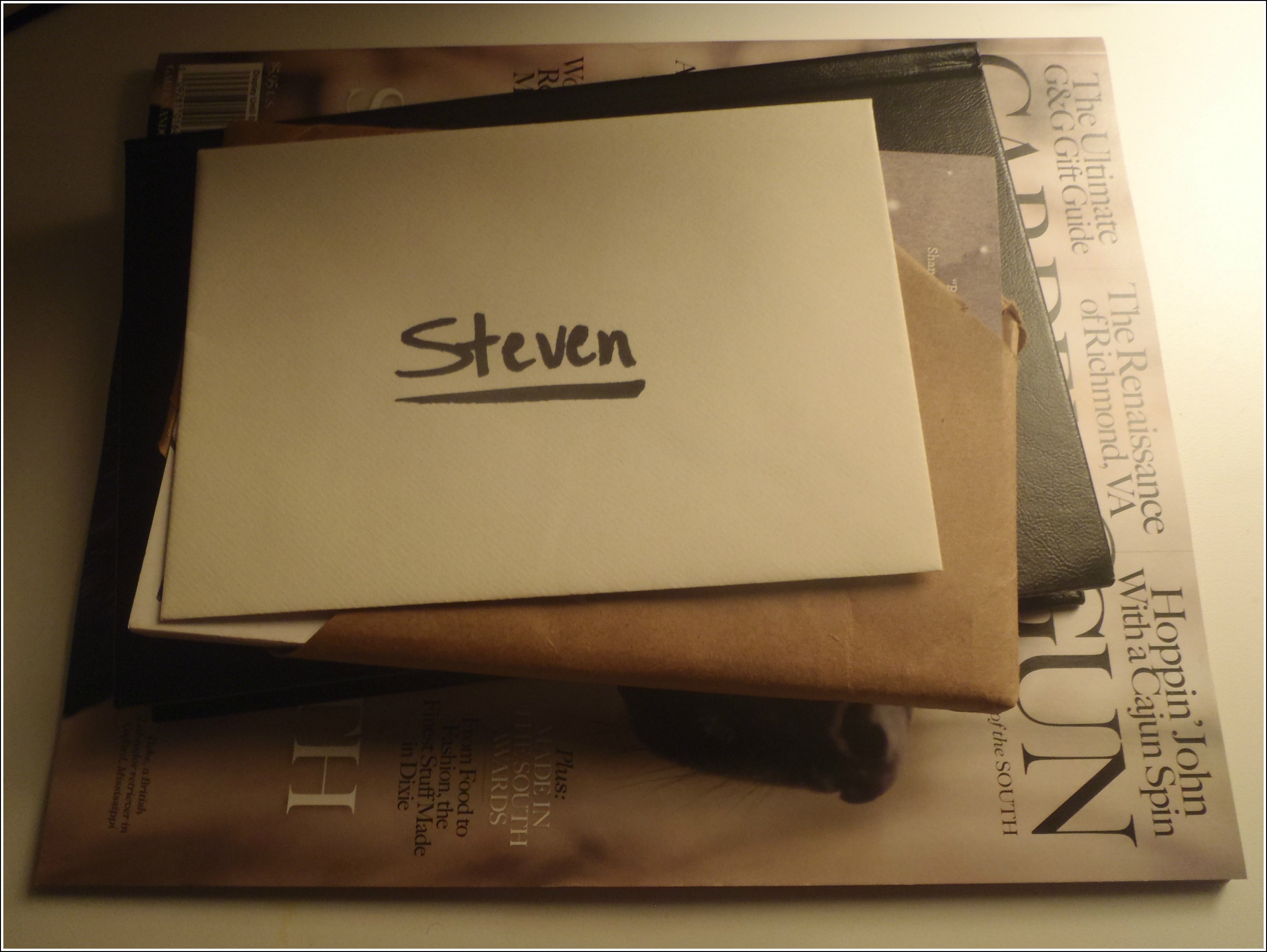
Finally, I was thinking about his long commute from the South to the cold Midwest and settled on his last present in this scattershot of gifts: the latest edition of “Garden and Gun.” That way, the next time he flies north he will bring with him a rich and unabashedly southern collection of photos and stories. Not to mention the article, “The Renaissance of Richmond, VA.” Here’s looking at you:

When it all came together, I couldn’t help but appreciate the collection … a pile of blacks, grays, and whites. It’s not for me, but I’ve enjoyed collecting it. As I get older, I hope I continue to find my own style,  while always remembering that saying, “I love you,” through a gift has to include a combination of my interests and another’s desire. That way, it’s personal, but not returned on Monday.

Just in case he gets bored by the narrative of Light Boxes, (“I dreamed you a field of running horses, Selah. For you, Bianca, a balloon the size of the sky, my body a kite you can throw into the air. Pull me by string and horse.”) I made it perfectly clear that I’ll gladly take any one item back for myself. The final benefit to shotgun giving is that nothing hinges on the one big-ticket item.

So, after finding what I thought could be the perfect Christmas gift collection for my older brother, I added the final piece and (I admit) a very practical addition to any grown man’s life:

A clothes hanger.

Sometimes you just gotta share.

P.S. Special thanks to Michael Wolfe and Maria Popova for leading me down this more thoughtful and appreciative path for the past five months.

Savage Faces, Human Places

I’ve been thinking about the word “savage” for about a month now. What does it mean? Who uses it? What purpose does it serve in society? At this point, I think I’m about ready to move on.

I may break up this piece later and turn it into more of a series … for now, here’s where I’ve landed:

According to the Wiktionary entry, the word originated in the “Latin silvaticus (‘wild’; literally, ‘of the woods’)” then moved through late Latin and French to English and eventually became the word “savage” as we know it today. The first thing I notice is that the word has always had an implicit vantage built into it. This unspoken perspective is the place from which savagery was determined. “Of the woods” can be read as “not from the city” or at the very least, “not of us.”

My first question quickly emerged, “From where is this word spoken?”

A few weeks ago, my Richmond Perspectives class discussed the relationship between the Native American Chief Powhatan and the English settler/invader John Smith. One of my handouts that week included the following insight on an entry in John Smith’s journal:

“‘Powhatan carried himself so proudly, yet discretely, in his savage manner, as made us all admire his natural gifts,’ Smith wrote, ‘considering his education.’ Majestic, mighty, and prideful Powhatan may well have been, but, in Smith’s eyes, he was still, and ever would be, a savage” (The River Where America Began, 77). 
 

This quote moved me to wonder about Smith and the British perspective at the time. Was there something particularly savage about Powhatan or had Smith simply decided that every person he encountered would be savage? Clearly, thousands of Native Americans believed Powhatan to be an effective leader, but Smith couldn’t see past his seventeenth-century English perspective of the “New World.” From this vantage, the entire territory, Powhatan’s chiefdom and beyond, was “savage” before it was even encountered.

There was something within John Smith’s mind that prevented him from developing an appreciation for the powerful leader with which he dealt. I’ve landed on three posible explanations for this: 1. Smith came here believing that every inhabitant was inferior, 2. Smith was legitimately shocked by Powhatan’s physical appearance or behavior and lastly, 3. Smith was afraid of Powhatan and used words such as “savage” to demean him and minimize his power.

When I read this quote with my students, I asked them what thought in particular about the word savage. I was actually surprised to hear that they use the world all the time. To them, “savage” is a joke to make fun of friends when they’re not acting proper or just to make fun of someone in general. One mentioned that the projects in Richmond are savage. Another joked that it’s savage when you pick up food off the ground and eat it. I think this conversation actually filled the rest of class and I left that day with a lot to think about.

My history class had just launched itself into the twenty-first century.

When I first started writing this post, I realized the topic was making connections to all sorts of other ideas and semi-related thoughts. This post is the first paragraph of that original piece and I’ll publish the rest in segments. I’m also starting a new page titled, “Power,” where I’ll store these and others because I think perspective and “savagery” are linked to how we position ourselves in relation to each other … identity is a powerful thing.

This post is this first of my “Savage Faces, Human Places” series that I’m putting together in my section on Power.

From Drinking Songs to Pet Theories

I recently felt convicted on behalf of the individualistic, intellectual, global community. Didn’t we used to sing drinking songs together? It seems like these days we spend our time talking and debating rather than getting lost in something greater … something that unites.

I’ve been thinking a lot about the difference between beer and coffee. In 2010, Stephen Johnson gave a TED talk titled, “Where good ideas come from.” I highly recommend it. In his presentation, he argues that the advent of the English coffeehouse played a significant role in the development of ideas during the English enlightenment. With the coffee house, Johnson states, the English people moved from a perpetually drunk society to a stimulated community of thought and collaboration. The ideas that transformed society emerged, at least in part, from within the incubator of the coffeehouse. So I originally saw this as a good thing. Don’t we need good ideas to progress? Well, yes, but I think we’ve lost something in the process of becoming enlightened and thoughtful. In short, we’ve lost drinking songs. We’ve lost this social tradition that connected us to each other and our sense of belonging and place.

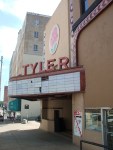
I see the effects of this coffeehouse culture on my own upbringing in Tyler, TX. My friends and I would often meet for coffee at the “local” Starbucks and talk about life. These were great times we spent laughing and solving the world’s problems. But they didn’t unite us or connect us to our city in a meaningful. We never spontaneously burst into song with steins of beer sloshing around as we sang, “Tyler, oh Tyler! Da-dum de-dum de-dum …” Or anything of the sort.

In addition, the people that did drink together in high school did not usually do so with members of the older generations because they were partaking in something that many consider immoral. Thus, if there were a drinking song for Tyler, they wouldn’t be singing it. Instead, they would still be stuck in the teenage ghetto while their parents either condoned or condemned from afar. It really is a tragedy. When it came time for me to look for colleges, I felt no remorse leaving that city in the dust. I had clearly not connected to it’s people or culture in such a way that made me feel like I belonged. I had not yet come of age.

Here’s the deal: It’s not about beer and it’s not exactly about drinking songs. It’s about the cultural traditions that unite people.

The thing about these traditions is that they have to be taught. This teaching process requires close, intergenerational relationships. Drinking songs clearly had an incredible ability to galvanize that “togetherness” of community because they eventually became Baptist hymns and even the national anthem of the USA. The difficult question for me is whether this generations is producing material that could be redeemed in the same way. Does our philosophizing  bring us together? As I sit here at my computer developing this theory I wonder if instead I could be singing a drinking song (or any song) with a group of people. Granted, it’s 10 a.m. on a Thursday, but my point is this: I don’t want to care more about my pet theories than our collective humanity.

I think it’s time to start singing.

A Vantage

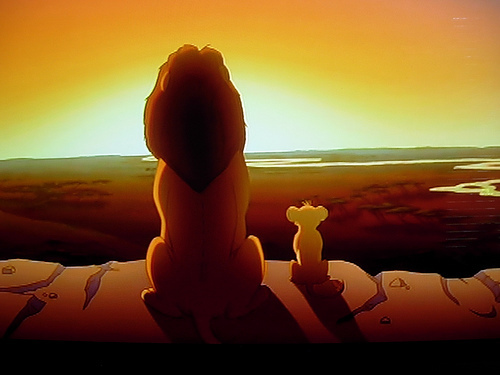
This week I have been teaching my high school students about imagination, appreciation, curiosity and innovation. The joys of alternative education 🙂 During this time, I’ve made some (albeit naive) teacher observations and formulated some theories to help myself improve and better understand what I’m doing. The most valuable lesson so far is this: The classroom is a vantage. From this vantage, we see the world for its order and structure. As Mufasa took Simba to the mountaintop, so do we teachers take our students to the classroom to make sense of the world in which they live.

From the vantage of Pride Rock, Mufasa shared with Simba the details of his kingdom: Places to go and places to avoid. At the same time, he is also sharing the weight of the responsibility of the kingdom (which I see as knowledge, adulthood, and the unknown future).  In this moment, he is imparting an understanding of life from the mountaintop because that is where the chaos of life begins to make sense. That is the place of perspective. Without the context of perspective we will hardly understand the significance of the information we retain.

One important point is that a mountaintop is positioned far away from life on the ground below. That’s not a bad thing! I think the “ivory tower” critique of education sometimes directs us to teach a more “realistic” education. But this is a mistake. Instead of making our education realistic, we believe that education must be detached from reality in order to prepare students for the abstract and unpredictable future. Is the future reality? No. We can only speculate how our students will use the information we teach them and we must give them the ability to make connections on their own. The ability to imagine the future and prepare for its challenges.

This capacity for imagination is becoming a subject of discussion as a skill that can (and should) be taught. In a PBS Newshour production, “Conversation: Imagination in Education,” Jeffrey Brown interviewed the director of the Lincoln Center Institute for the Arts in Education, Scott Noppe-Brandon. Brown asked, “What would [imagination in education] look like? What would be an example of putting imagination into the skill set and into the curriculum?” To this question, Mr. Noppe-Brandon responded,

“It’s taking issues like, ‘How do you get kids to notice deeply? How do you get them to attend to details and information in front of them? How do you get them to notice patterns and make connections and be reflective and tolerate ambiguity? Elements like that that combined over time start to build that cognitive capacity for imaginative thinking.” Imagine how differently we would teach if we believed this … the excitement in our voices as we say, “Look out over this world of information and conquer it with your mind.”

In my attempt to teach this concept to my students, I landed on the following formula:

Imagination + Creativity + Knowledge + Appreciation + Hard Work = Innovation.

Hopefully, my students will begin to value the ideas in their minds, appreciate the ideas of others and make connections between the two and reality. Reality is  not always the sort of place where people develop the capacity for creativity and imagination. That’s why we have the classroom. The classroom is a vantage. Every other hour of the day is enough reality for now.

On Jobs and Place

Right now it seems like everyone is talking about jobs and the economy. I saw Obama in Richmond yesterday talking about jobs, Republicans are hoping that the lack of jobs will help get Obama ousted, and many Americans are looking for jobs just about anywhere. All the while, it seems that we’re missing a relatively important point: Where are these jobs going to be created? I’d like to drastically shift this dialogue to the specific places and communities where these theoretical jobs will appear. First, we need to care about where we live.

For the record, the government may temporarily rehab existing jobs (e.g. highway repair), but this is neither innovative nor sustainable. In my opinion, the American government effectively sustains much of our society, but is not a trustworthy engine of growth. The American government has a longevity and reliability that makes for a comfortable place to live and do business.

Within this context, it is hard-working, intelligent and creative people that can add new and innovative jobs to our economy.

Unfortunately, most people in America aren’t able to make the proper connections that lead to new businesses. This is because the creation of a job requires a new idea, a connected network, sufficient capital and a knowledge of and commitment to a particular community. This community serves as the proving ground for these soon-to-be business owners and provides them with a knowledge base of needs and trends.

In a recent video posted by the National Endowment for the Arts, Christine Harris described the “creative economy” and a network of “creative industries” in the greater Milwaukee region. She defines these creative industries as “organizations, individuals, and companies whose products and services originate in artistic, cultural, crative, and/or aesthetic content.” These industries span a the gamut of traditional sectors and together comprise the creative economy.

The organization developing this network, Creative Alliance Milwaukee, works to bring together men and women in the creative economy who are working to move the region and create jobs.  One noteworthy example that Harris cites the time the CEO of a flooring company visited hosted by the creative alliance. businesses. She recalls the story in this way,

“Within a month of that meeting, he had hired one of our visual artists to design a new flooring pattern. That artist now has a royalty fee. And he has since then hired two other artists. They have royalty fees and he has products that no one else in the world has.”
 
We cannot talk about job creation without discussing the relationships involved in commerce and innovation. This is ultimately the foundation of local economy.

Rather than rely on our government for jobs, I want us to rely on our government for the environment in which jobs are created. We have amazing political stability in America: That can sustain job creation. We have a wide-stretched infrastructure in America: (as much as I hate highways) That can sustain job creation. Maintaining these constants will be necessary to improving our economy, but will not create long-term positions in the workforce.

That’s our job.

Moses to Zuckerberg: A Position of Power

Mark Zuckerberg is the Robert Moses of the twenty-first century. Never elected, powerful beyond imagination. Not from the right family, but more influential. Not a member of Phoenix, but extremely selective. Not in the game, but driven to rewrite its rules. Robert Moses experienced similar social exclusion at Yale. Similar to Zuckerberg, this exclusion drove him. On Moses, Caro writes,

“Alongside the massive cathedrals of Yale’s traditions, buttressed by prejudice and pride, Bob Moses had erected his own small but sturdy structure. ‘In our little world…,” Bacon was to say, “he made himself a position of power.’ 

In light of Moses’ later career, that was the key point” (Caro, 47).

From his Ivy League education, Zuckerberg didn’t look to New York for power, that traditional American icon. The internet and computers were dramatically reshaping global influence in Silicon Valley.

In grand New York, Moses planned and completed massive public works projects to connect the boroughs and the region while Zuckerberg, from a garage in the valley, constructed a virtual bridge to connect the entire world. Through their efforts, these two men shaped the world that we inhabit today.

Facebook’s Twitter description states, “Giving people the power to share and make the world more open and connected.” Essentially they want to democratize the world, to end exclusivity. Moses also worked to make the city more accessible for the average American (as long as they could afford a car) and used his power to force roads through old-money estates in Long Island and elsewhere.

Someone from a powerful, WASP background wouldn’t work to undermine regional power. But neither of these men had much to loose. Moses was a Jew, didn’t know how to drive a car and spent his life building roads, bridges and tunnels. Zuckerberg (also of Jewish descent) is a socially awkward computer hacker who made billions connecting “friends” around the world.

Zuckerberg and Moses both lived life on the margins of traditional power.  As a result, they both developed a deep understanding of power. And when they realized that power wouldn’t engage them as equals … they turned it on its head. Both knew they could not win at the old game, both knew that the game had a weakness, and both were smart and industrious enough to exploit it.

Both created new worlds and situated themselves comfortably in the center.

Elks, Masons, and Odd Fellows: antiquated past or valuable tradition?

“I just worry,” my dad told me one day this summer, “that there won’t be enough Shriners in the future to maintain hospitals like Scottish Rite (Hospital, Dallas).” “Well,” I responded, “why don’t you become a Shriner?”

Growing up, I never would have thought about fraternal societies. To be honest, Barney Flintstone’s membership in the Loyal Order of Water Buffaloes was the closest I ever came to even knowing they existed. Then I went to college, joined a fraternity, and never looked back … until now. I graduated in May and in the last few months, fraternal societies for grown men have started to make a lot more sense. I think it was when people started doing this weird thing — calling me a man instead of a guy — that I started to wonder what I was getting myself into. Isn’t being a man all about being lonely and depressed? Work all day then come home and sit in your house? Robert Putnam’s book Bowling Alone makes a strong case that we’re living more of our lives without each other. As a result, it doesn’t feel like there’s any benefit to this whole “guy-to-man” switch … just more responsibility. There’s nothing cool waiting for me on the other side. But in the context of our nation’s history, that wasn’t always the case. There was an era of the American city when the fabric of society was dense with organizations and groups that carried and supported you through all the stages of life.

Douglass Rae summarized this era of ‘urbanism’ in this way:

“All or virtually all of the people who were assembled by these organizations — whether for religious or a fraternal lodge meeting or a sporting contest — were members of locally grounded communities. And the acts of assembly and association almost certainly deepened and enriched participants sense of loyalty to and identity with place.” Rae, City: Urbanism and its end (2003).

Rae’s research focussed on the city of New Haven, Connecticut and the 100-year deterioration of urbanism. In his research, he documents how each city block in New Haven was once a thriving microcosm of society. Middle-class men and women were usually a part of several societies in the city for different purposes including fraternities, sports teams, and social clubs. It’s wasn’t easy life in 1900, but it was lived together.

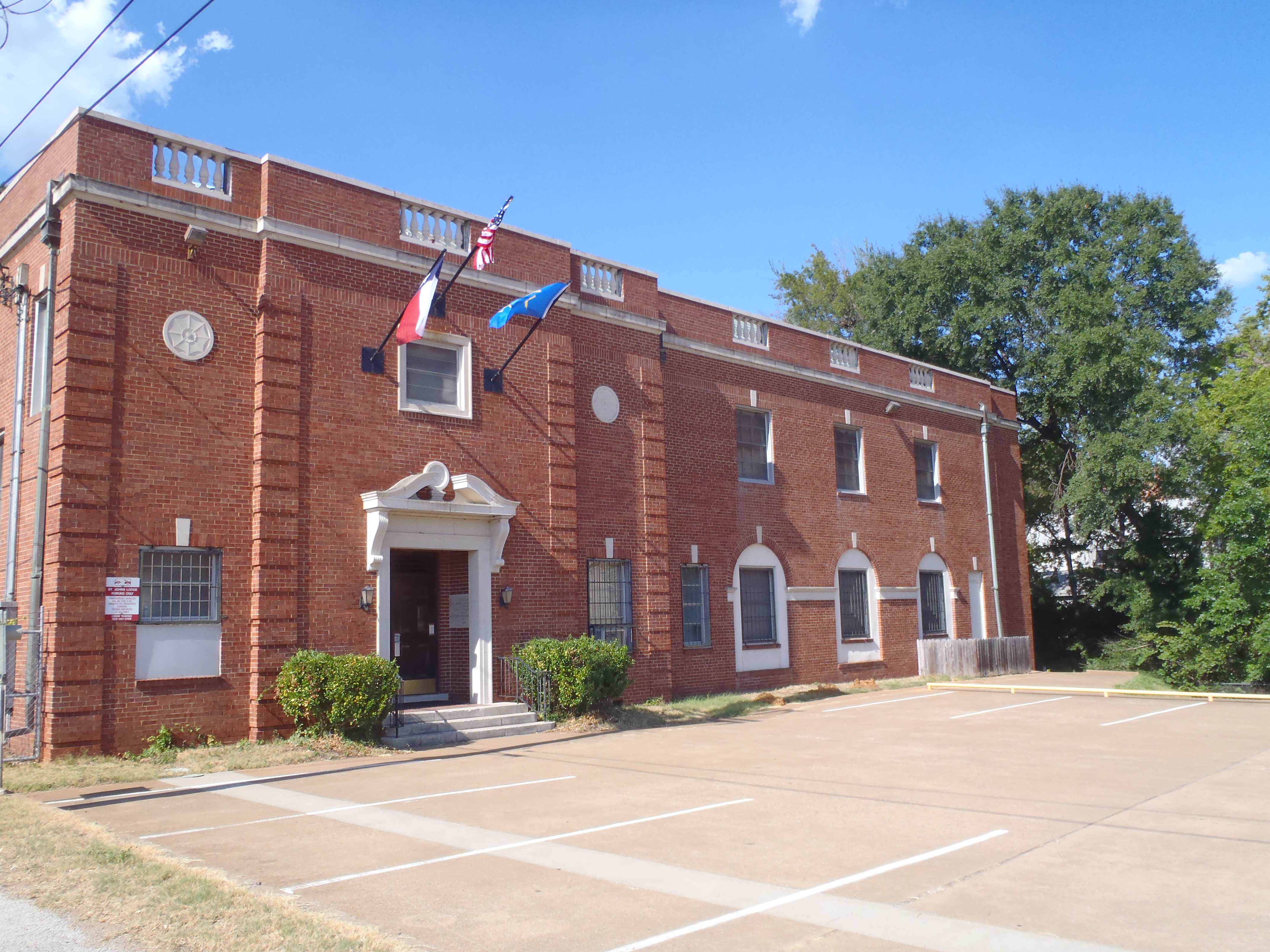
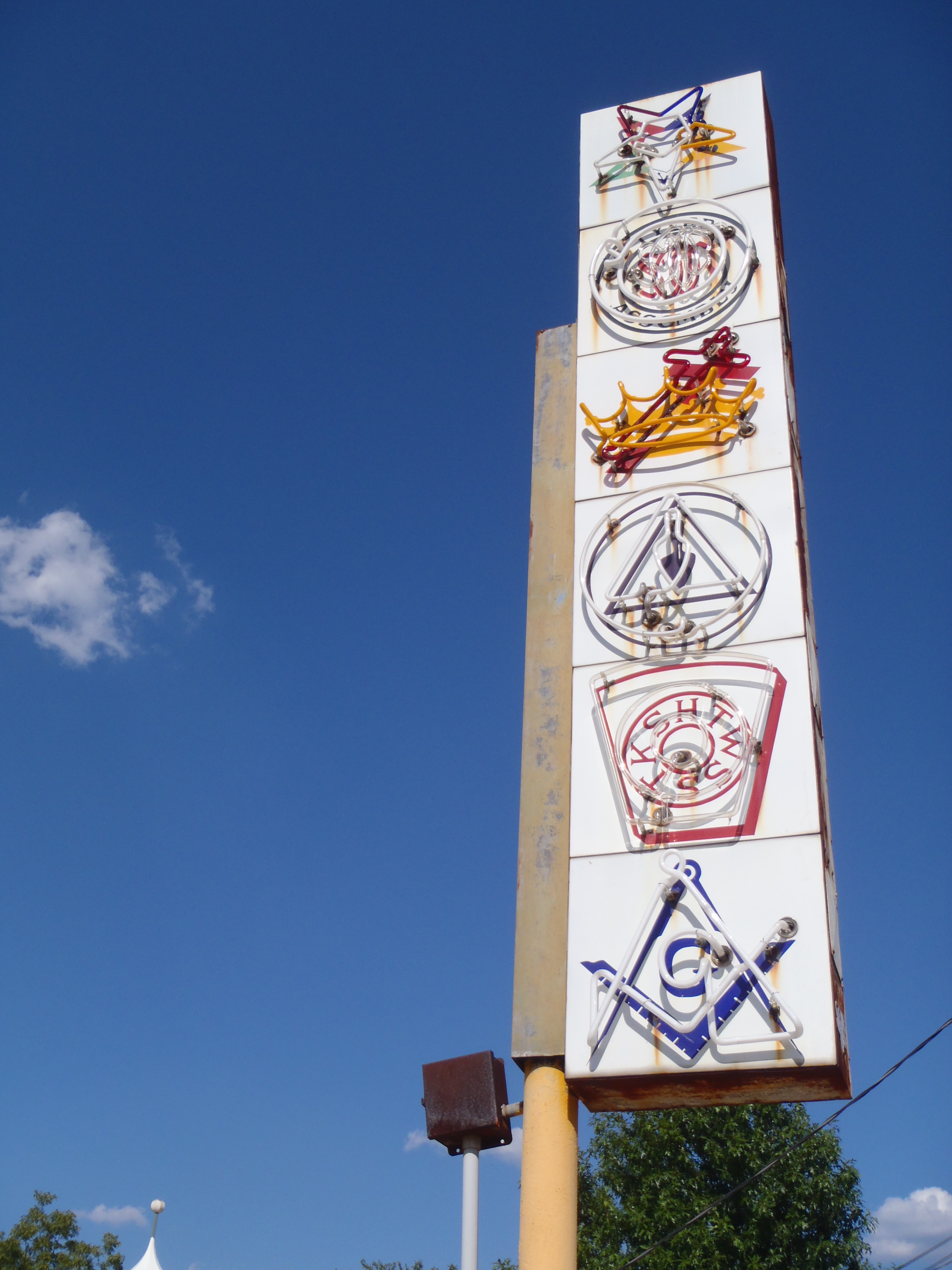
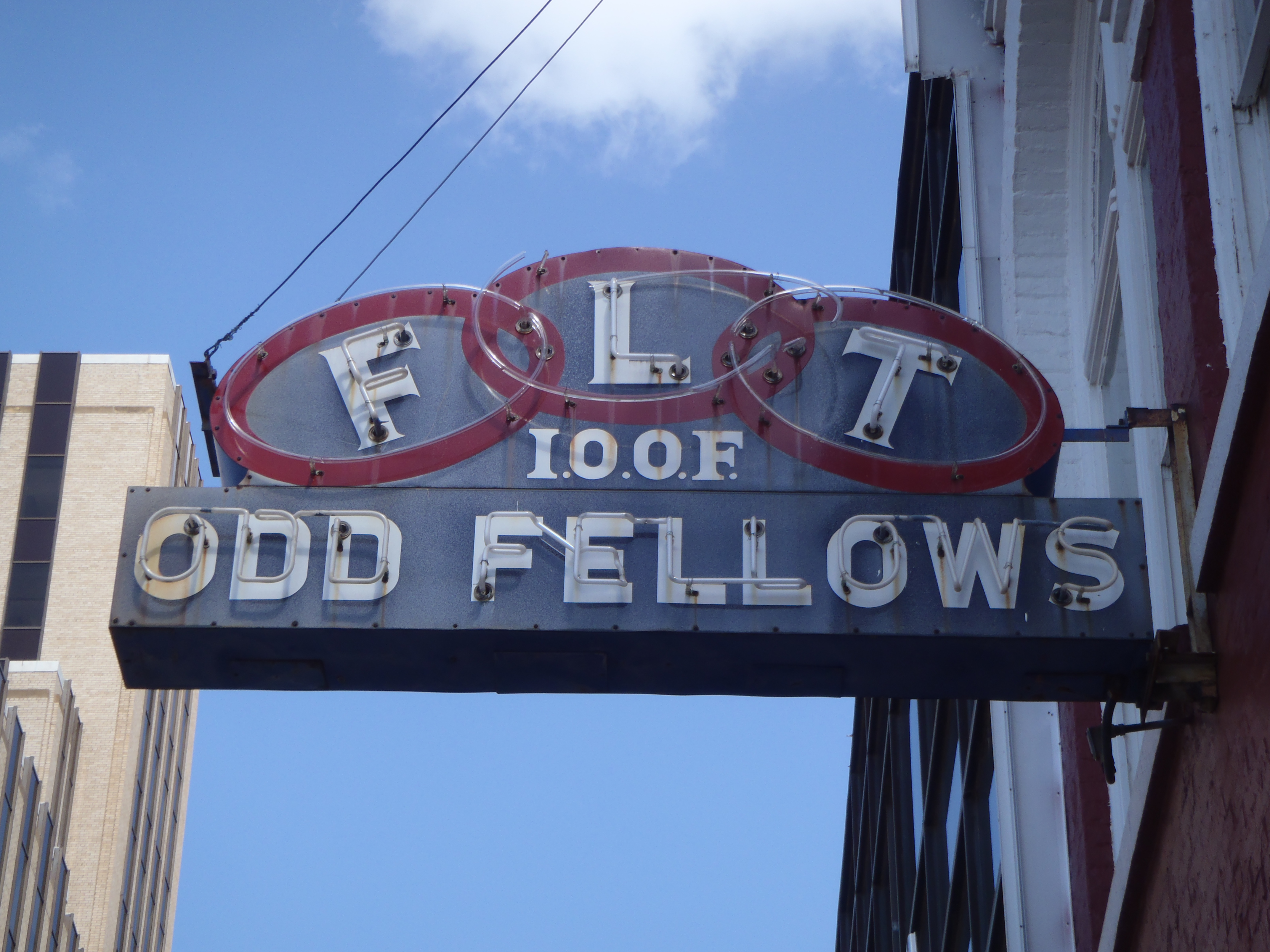
Today, things have changed. The America of 1900 no longer exists. But what I love about cities is that the buildings in our cities (the ones that survived) are the constructed monuments to our past. Tyler, TX is no exception. While they don’t hold the same place of prominence in the region, there are still buildings in Tyler that harken to an older era. The Masonic Lodge (pictured above), built in 1932 is the most striking downtown example that is still in use. I’ve driven by this building numerous times, but never thought it was special. Today, I almost felt like someone was going to come out and kidnap me for taking a photo of their building. The awesome neon sign (left) on the street is also worth noting … I don’t recognize some of the symbols, but I’m sure they all mean something to the men involved. The pentagram at the top looks slightly demonic, but I’d still think it was cool if my dad went to this building for a meeting once a week.

Other buildings in Tyler are no longer being used for their original purposes, but still bear the markings of early twentieth-century urbanism. The old Elk Lodge is one such building. I believe there is still a group of Elks in Tyler, but now they meet on the edge of the city in a newer lodge. It’s kind of a shame they moved, but I’m partially glad they did because the building is amazing and I got to walk through it today (without being properly initiated). It’s currently being renovated by Ron Mabry of Tyler for events in the city. I believe All Saints Episcopal is having a dance later on in the year. I hope that at least one high school student walking by notices the plaque on the building that states the founding purpose of the building: “Tyler Lodge No. 215, B. P. O. Elks, M. E. Danbom, Exalted Ruler.” The people on this plaque cared enough about each other to build a building where they could meet, talk about life, celebrate and mourn.

Only the oldest parts of our nation harbor these artifacts of the American past. It is always good to remember where we came from because it gives us a context for where we are. Plenty of people today are talking about why guys aren’t growing up, etc, but I don’t think they ever ask the question, “What’s waiting on the other side?” Yes, traditions are cumbersome and (quite necessarily) antiquated, but even in this postmodern society there is utility in having a structure to stand up under. There is a beauty in being told how to act. So don’t mock the Oddfellows, Lions, Masons, or Shriners. The men involved in these organizations are engaging in a tradition of American civil society that was once a grand element of this American life. Today, it is mostly just plaques on buildings … and a memory of how life could be.

C-T-D: Conclusion to my time in this place called Tyler

I moved back to my hometown of Tyler in May to begin a brief, post-grad-limbo summer. Since I arrived, I have made it my hobby to explore the city, imagine its potential, and write a series of posts on my ideas. I called this, “Connecting-the-Dots,” because I believe that Tyler (like many cities) suffers from a lack of cohesion and identity. On the micro level, we lack special places (“dots”) fully enhanced with the cultures, traditions, and organizations that comprise our civil society. On the macro level, we lack the connections of transportation and urban design that unite the disparate pieces of what we consider to be a singular unit. I’ve been primarily guided by the question, “Where is Tyler?”

In my attempt to answer this question, I’ve spent my time looking for what I believe makes this city unique: what someone can find here that is not anywhere else in the same way. The places that I love the most are sometimes the places that are most unloved. In other words, the Rose Garden may not be as sexy as Chuy’s right now, but it is unique to Tyler unlike the Austin import. Business in North Tyler might not be as lucrative as its cousin on South Broadway, but it’s more creative, local and artisan. It’s the difference between Janie’s Cakes and the WallMart bakery, Stanley’s and Spring Creek, the Rose Garden and Faulkner Park, Balance and World Gym, La Favorita and Pasado’s.

Unfortunately, all of those places that I believe represent Tyler do not reside together in one awesome, dense, and diverse place. In my opinion, a visitor to this city needs a guide to properly experience what this city has to offer. But suppose there were such a singular place comprised of all the unique Tyler attractions. It would be remarkable. People would come from all over the region to be a part of it’s energy and excitement. Now, suppose there were two. Or three and a street car connecting them. Suppose you could go to one for dinner, the next for a concert and the third for coffee, dessert and drinks and never get into a car or leave your friends. Suppose everyone in East Texas heralded this as the “Tyler experience.” Suppose we leveraged what makes us unique in order to make us uniquely great.

Our city is positioned as a regional leader in oil & gas, the processing of roses, healthcare, higher education, retail, banking, legal and financial services. Suppose we were also known as a creative and innovative community that supports new ideas local aspirations. That is a dream many in this city have been fighting to realize. I believe it’s a dream worthy of this place called Tyler.

C-T-D: Broadway Center

Here’s the deal: I want downtown to be cool, but I think we need more than one cool place. The historical buildings and “monuments” on the square are worth saving, but they shouldn’t have a monopoly on dense urban development in Tyler. I’m convinced that we can improve downtown and create more high-density developments at the same time. Most importantly, if we connect them to each other, their synergy will have far more positive social and economic impact than they could on their own.

First stop: Broadway Center. Once we have finished building The Complete Loop, we should look to Broadway for the next great artery of development in Tyler. But, instead of the constant retail strip malls and big boxes that you see in South Tyler, this section of Broadway will augment the existing historic neighborhoods with new, high-density developments. Like two weights on the end of a barbell, Downtown and the redeveloped Bergfeld Center will anchor this region. See the difference? Instead of constant retail strip, we will concentrate businesses in two high-density places that will are in close proximity to valuable real estate. It’s better 🙂

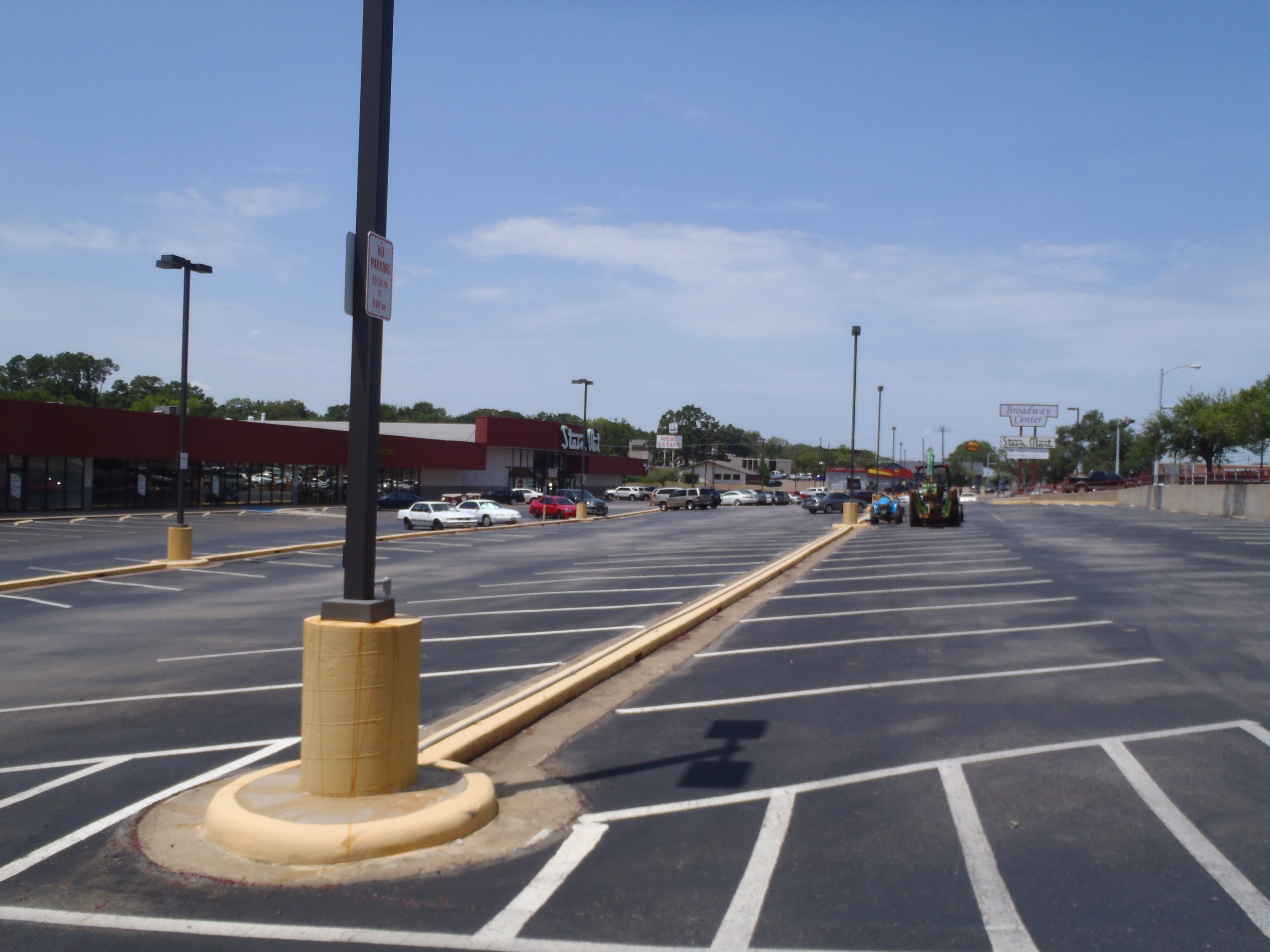
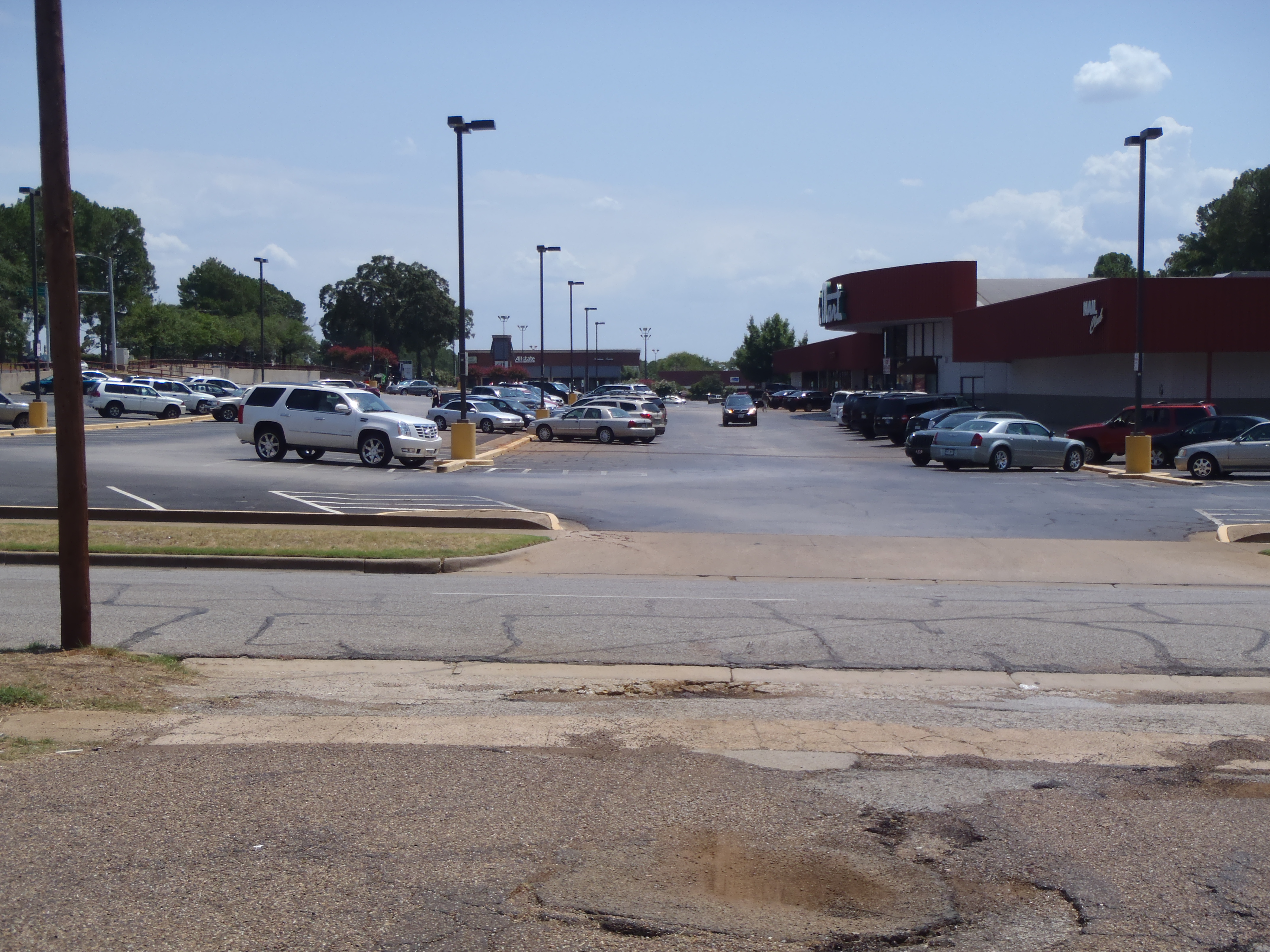
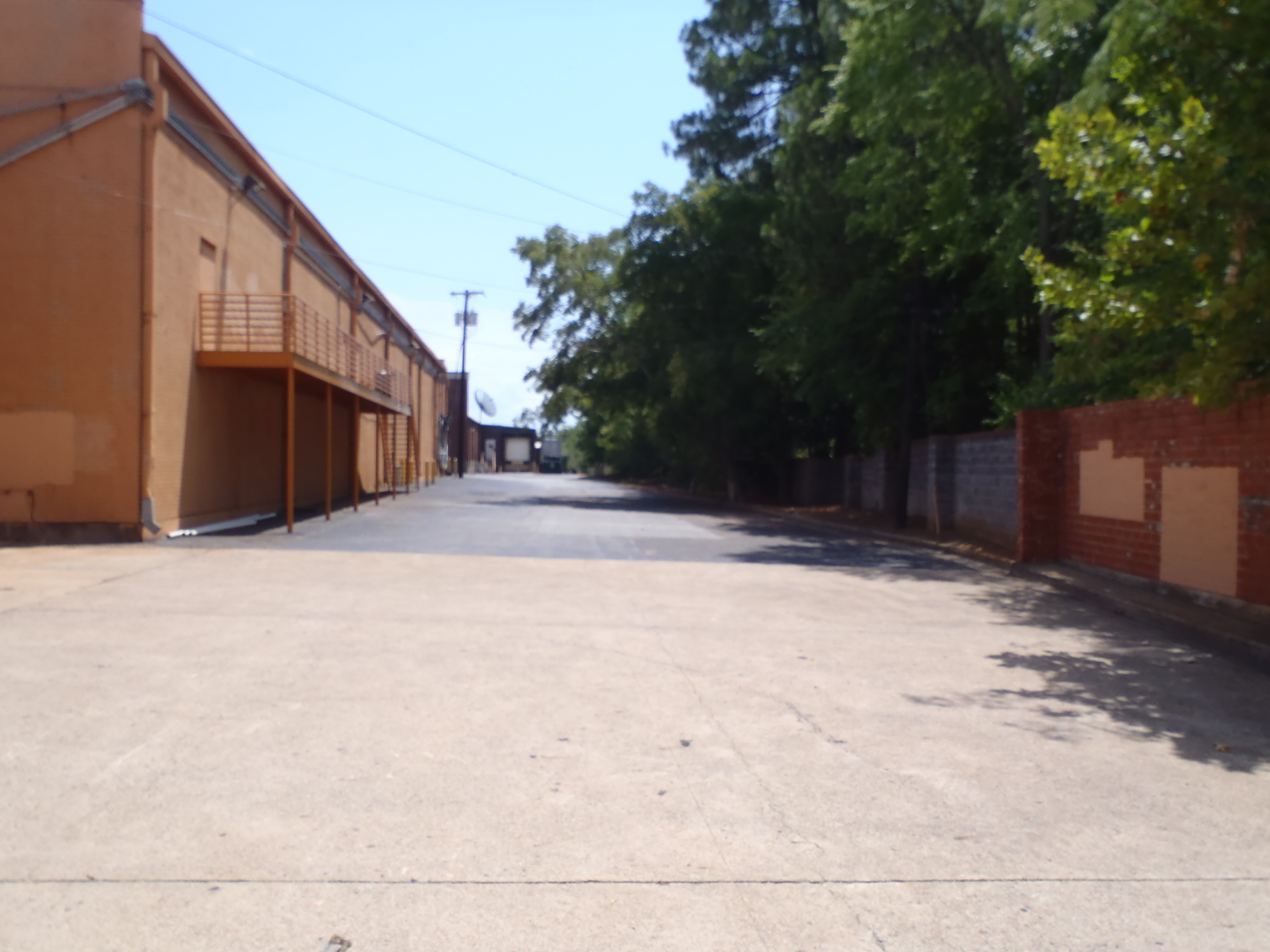
Rule #1: Every parking lot in this section has potential for development. It’s a pretty basic rule, but  necessary. Building on parking lots has the capacity to transform ugly/boring/typical spaces into unique and attractive spaces. We also don’t often don’t even realize how incredibly big these parking lots are. We just get used to them so we don’t “see” them any more. I know, people have to park somewhere, but we also deserve to have a beautiful city, right? Let’s find a way to do both.

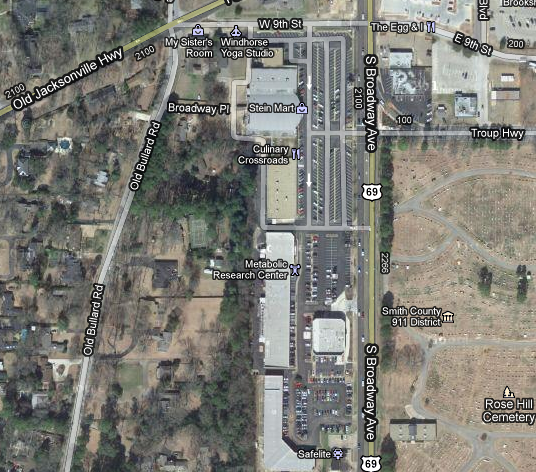
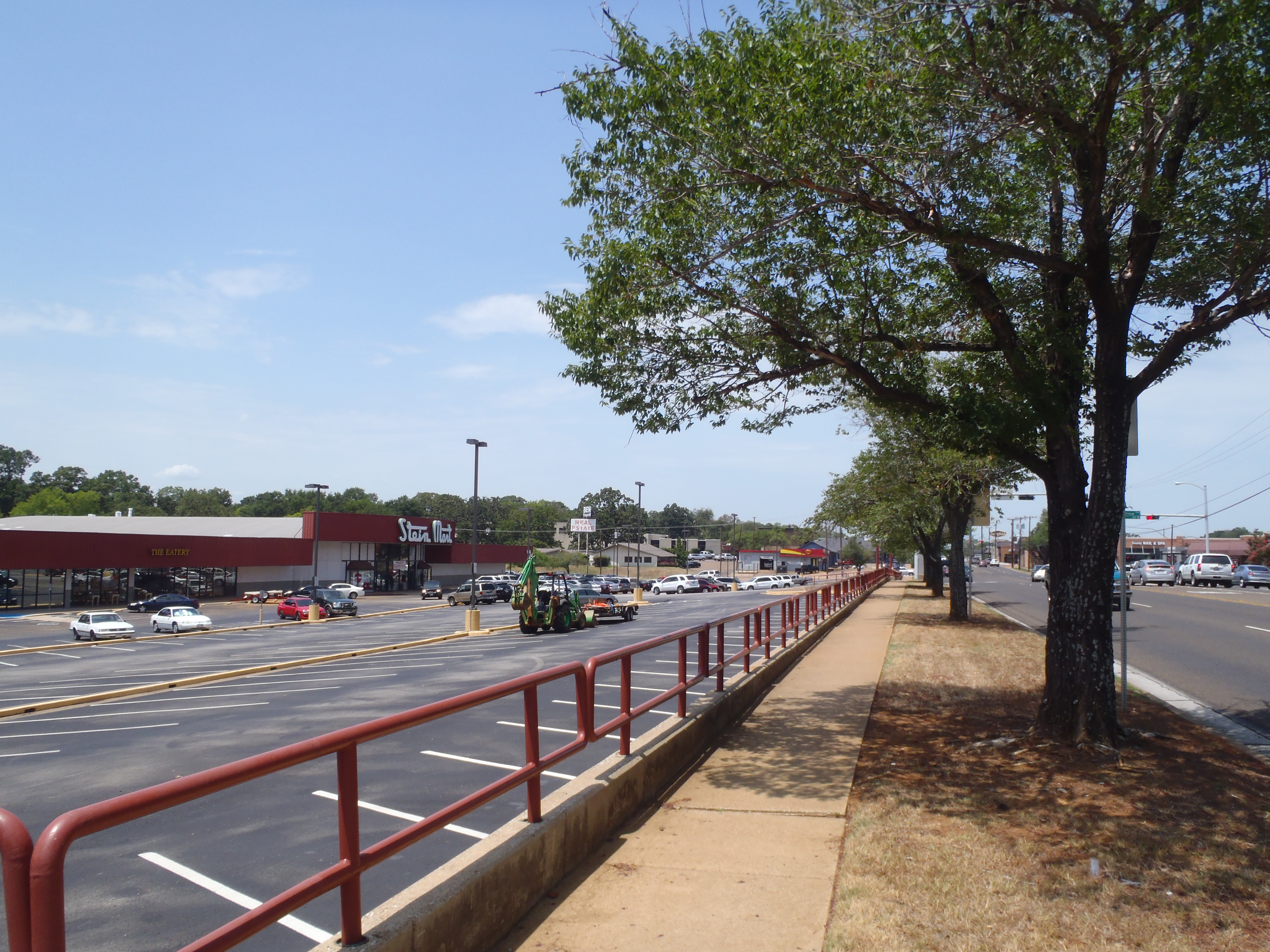
Rule #2: Reconnect the roads and the complete the grid. More roads means more access and more retail space. In regard to the issue of parking, it also means more on-street parking. If we connect Troup Highway (left) through what is now a parking lot and Stein Mart, it would meen a straight shot to Old Bullard and plenty of places to spend money. Additionally, the connectivity would invite residents of the nearby neighborhoods to visit the new shops, parks and restaurants on their morning walk. According to a recent traffic study, 30,000 cars per day drive by this spot on Broadway — Let’s give them more reason to stop. Also, in order to extend the grid, it would be great to build two new roads through this development in front of (to the right) and behind (left) what is now Stein Mart. This will complete the grid and create city blocks for more dense, protected urban development. Think less people would come? Think again. More people are likely to shop and spend their time in compact, beautiful spaces. These developments are essentially the free-market “one-stop-shop” developments that incorporate a multitude of uses into previously unloved space.

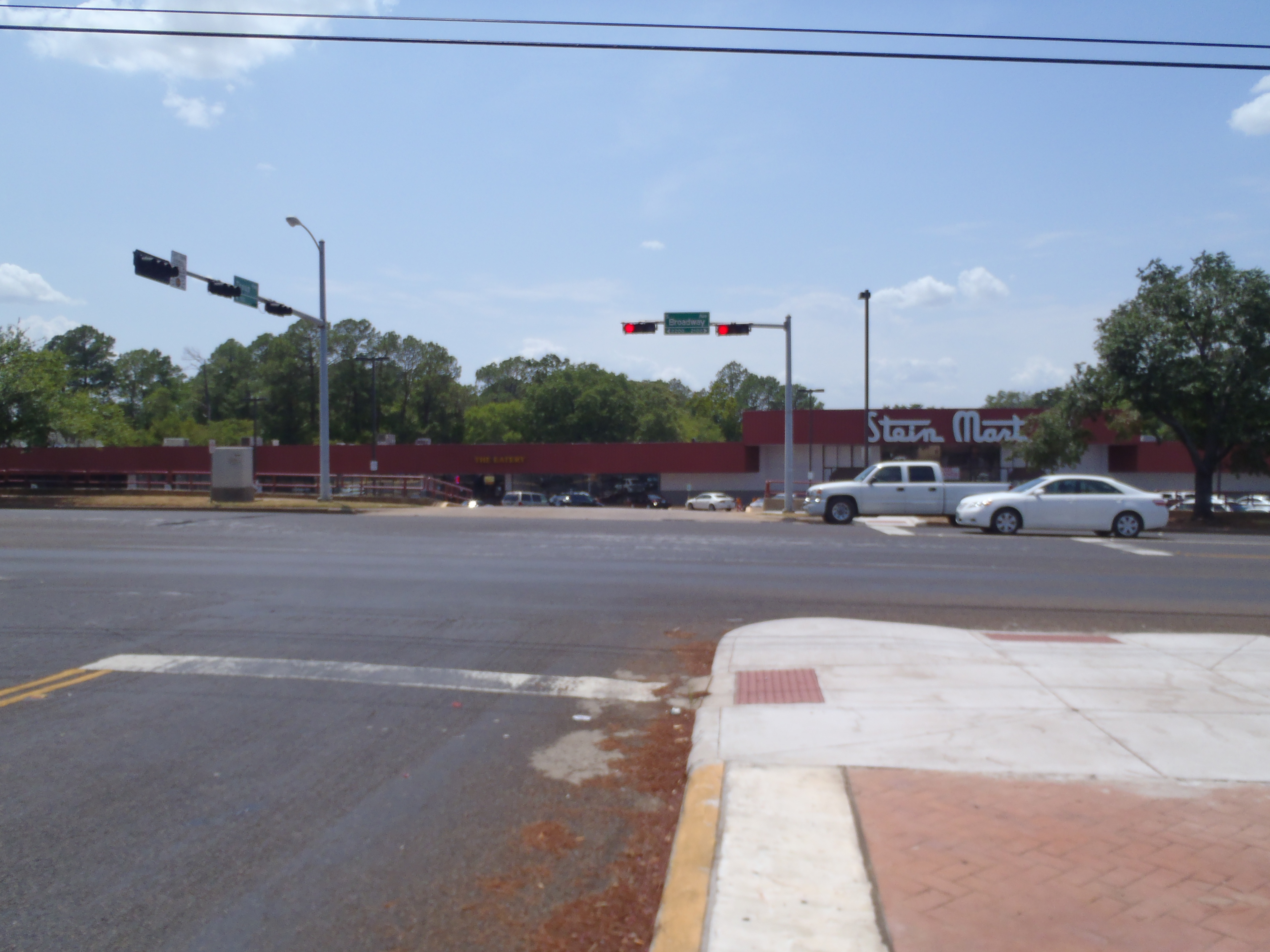
Rule #3: Build to the street on street level. This is important: Don’t pop it up with a “sporty” flight of stairs, don’t put parking in front, and do keep the street trees as a buffer. If there must be parking, put it on the inside of the development. The point is to make the development itself the advertisement for the development. Currently, with a football field of asphalt infront of the strip mall, you have to put a sign out front informing people exactly what it is. With the building built to the road, they will know what it is and they will appreciate the good urbanism.

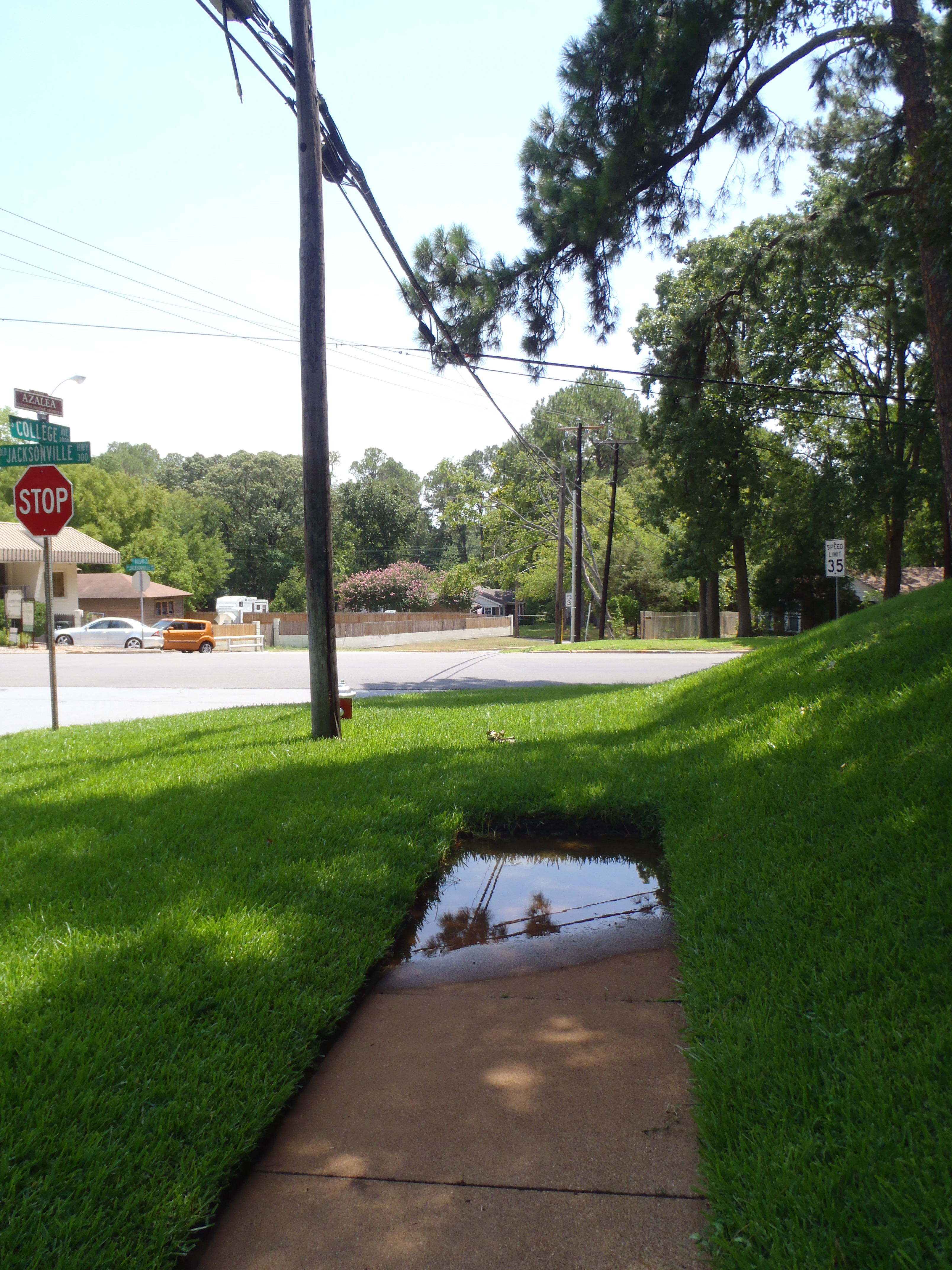
Rule #4: Finally, of course, make it walkable and bikeable. According to the recent Walk Score report, the most walkable cities in America are, as always, also the coolest cities in America. Tyler was not on the list. Many times when I walk in Tyler I have this feeling like I don’t belong. Today was no different … as I was walking down Old Bullard toward this development the sidewalk ended. There aren’t crosswalks across Old Jacksonville or Broadway and there isn’t a sidewalk along Ninth St. That’s just not acceptable … and more importantly not welcoming. With a little public investment, this could be a completely accessible and welcoming area for everyone.

So that’s the newest node! I’m gradually “Connecting the Dots” in Tyler and hoping one day someone will take my ideas and make lots of money with them.

Check out my other Tyler projects at my Tyler, TX page.

Creative Placemaking in Big D

Right now, all I can think about is Creative Placemaking.

My friend Anne Tyler just told me about the term which she first encountered this summer during an internship in DC. She’s working at the National Endowment for the Arts (don’t throw stones) as a part of their newly created “Our Town” grant program.  On July 12, 2011, the NEA posted a Press Release announcing the first round of grants totalling $6.5M. Through this program, the NEA will fund 51 communities that have a desire to reinvision neglected spaces for the purpose of encouraging creative people and collaborative culture. According to the Web site,

“Through Our Town … the National Endowment for the Arts will provide a limited number of grants, ranging from $25,000 to $250,000, for creative placemaking projects that contribute toward the livability of communities and help transform them into lively, beautiful, and sustainable places with the arts at their core.”

The idea is basically this: If you are a city, you want to be “creating” rather than “consuming.” In other words, you want to be the place that people look to for the next big idea rather than simply using old ideas from elsewhere. In order to be a city that creates, you must have a creative culture and places that attract and encourage creative people. If you do not have these places in your city, you will find yourself buying rather than producing ideas. Creative people who do not feel engaged will move to another place where they feel welcome. The creativity brain drain.

So how do you keep and attract young, creative talent?

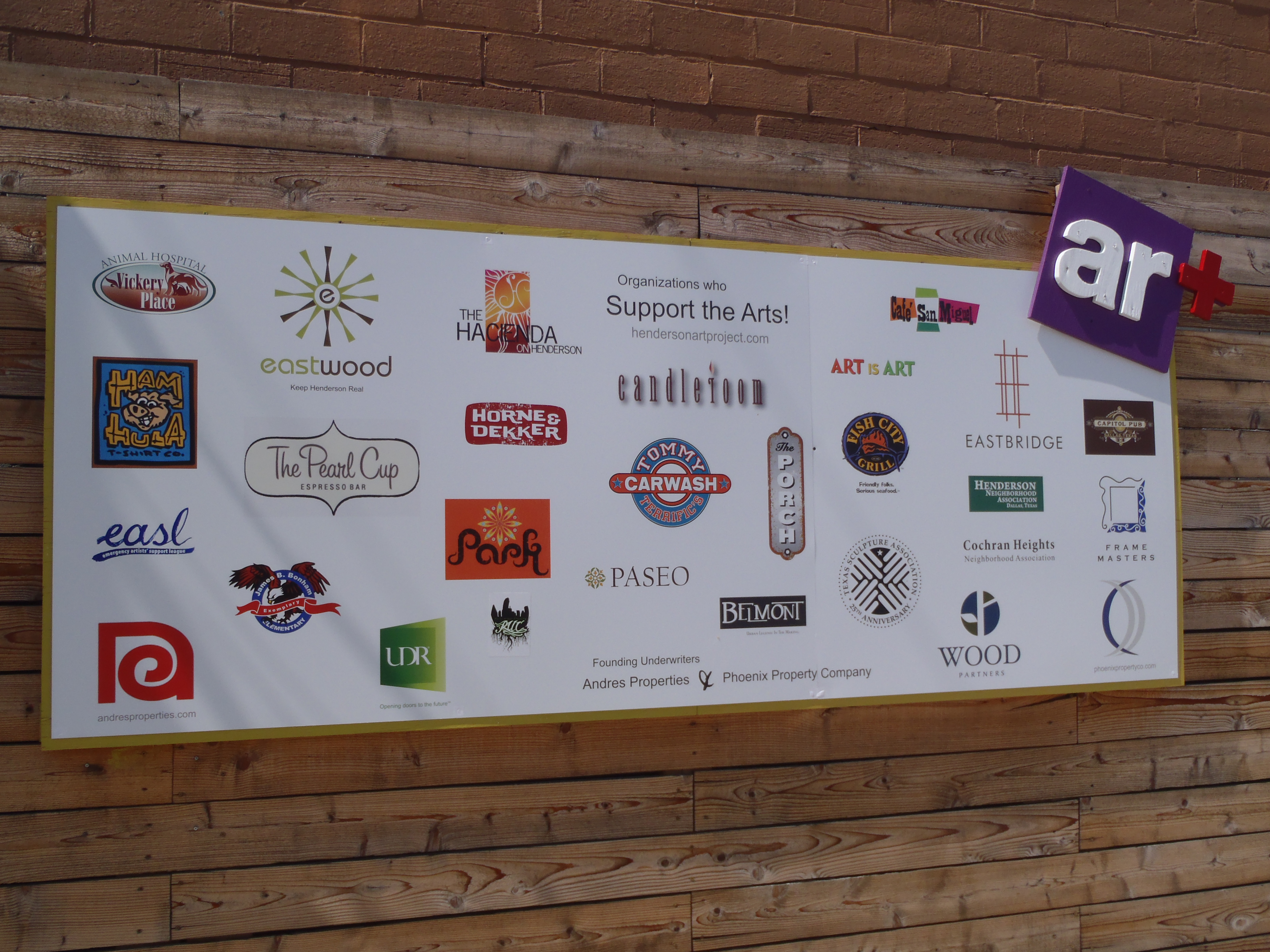
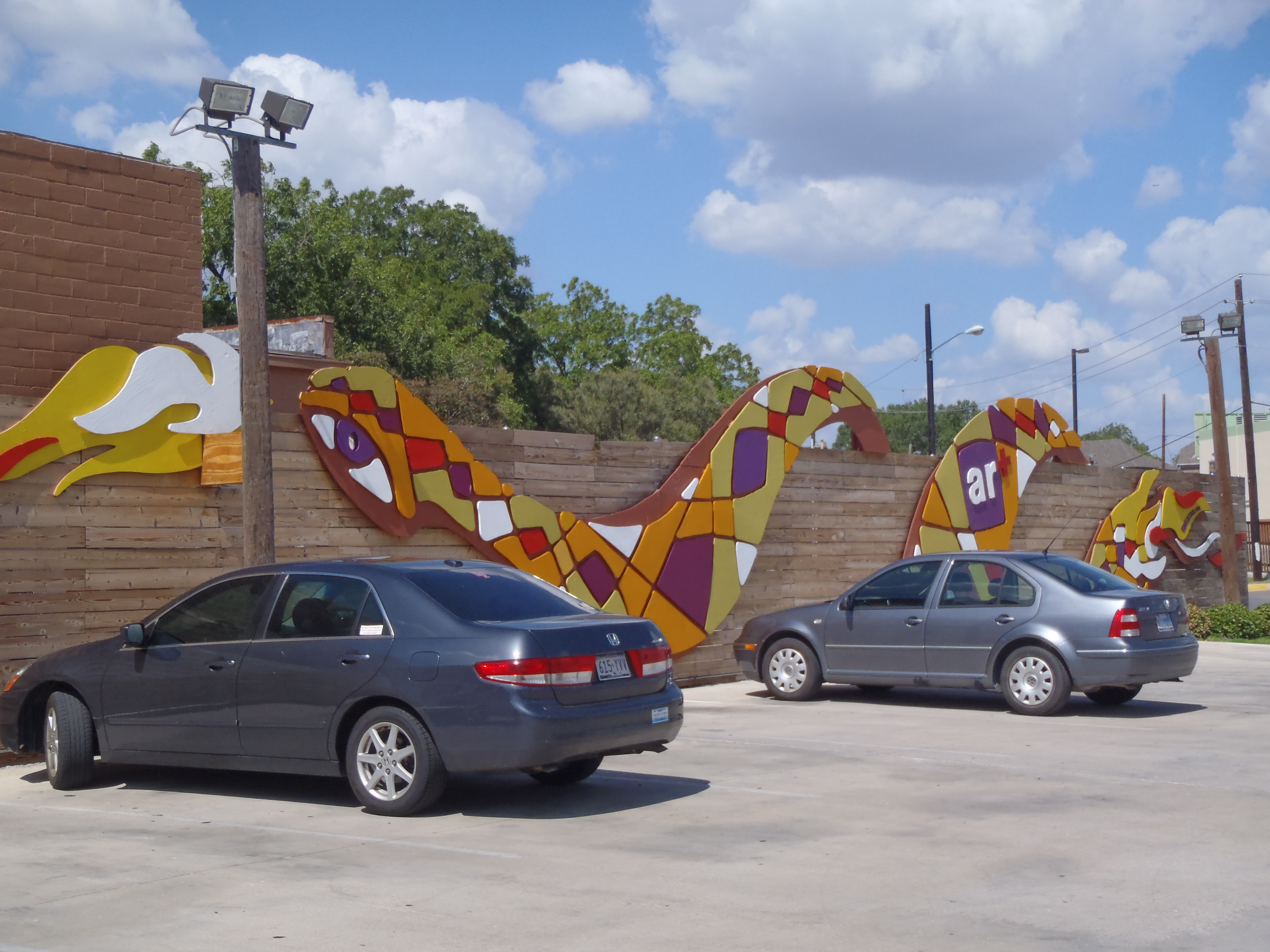
I drove to Dallas to find an example: The Knox-Henderson neighborhood. Many Texas would consider Knox-Henderson a gayborhood (rightly so), but as my friend Price always says, “Hey, they make nice things!” Indeed. The image to the right is of a sign on Henderson Ave. that lists the local businesses that support the arts in the neighborhood. When I saw this sign, I realized I had arrived. The Pearl Cup, my coffee destination, was one of the businesses listed that had contributed  to the Henderson Art Project, a collaboration between local businesses and a larger property company. On the same wall, there is a huge flame/dragon/snake installation (pictured left) that takes up about half of the entire length. You can’t miss it … it’s huge. This and several other examples of public art (Included in the Picasa album at the end) are an example of what can happen when businesses realize the economic and cultural value of Creative Placemaking. The public art is a message to creative people: You will thrive here.

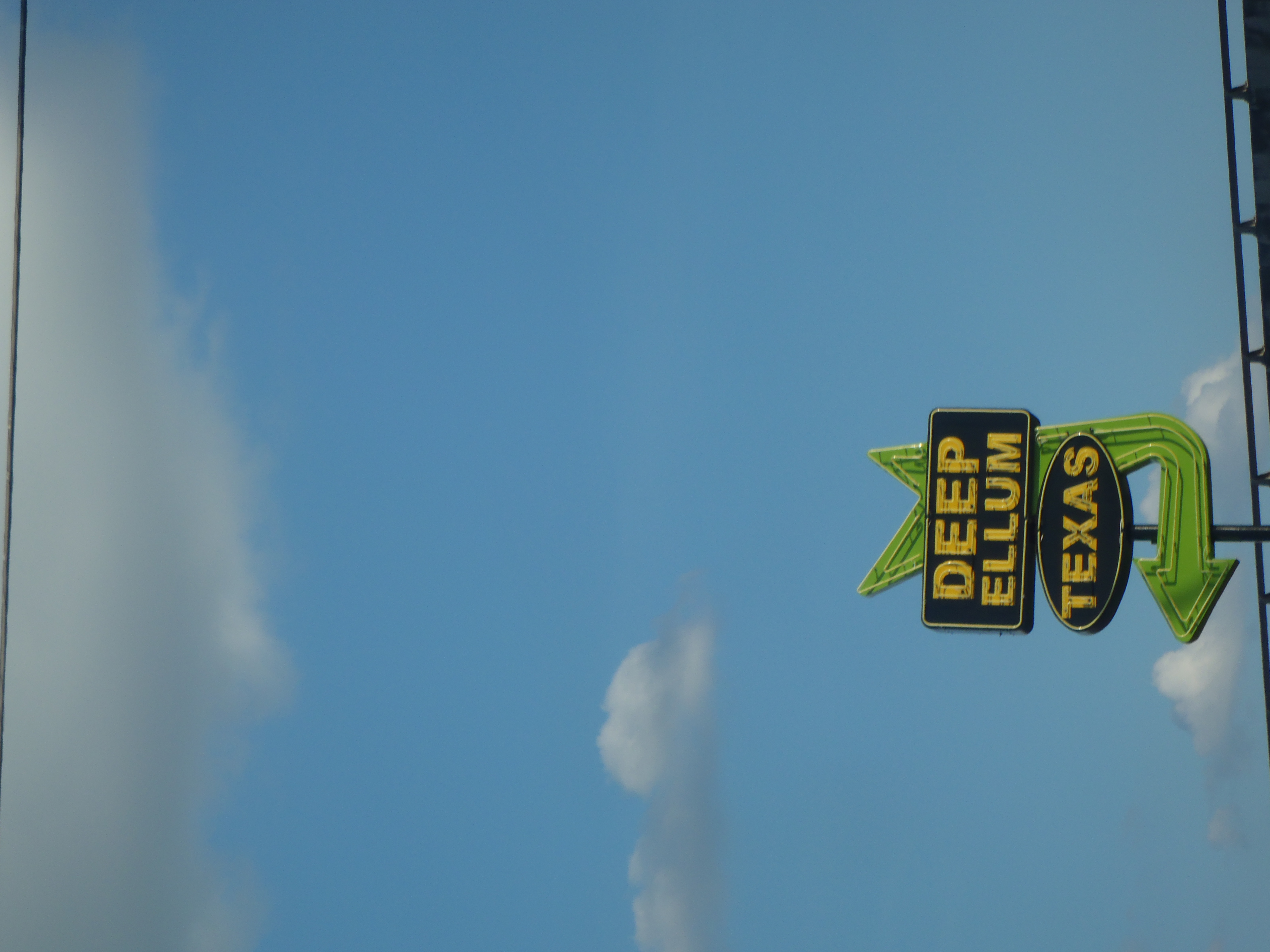
My second example of Creative Placemaking is slightly more dramatic and significantly more cool. I first visited Deep Ellum  for a concert when I was a junior in high school. It wasn’t until last week that I went back. Ladies and gentlemen, Deep Ellum is the coolest neighborhood around. It kicks Uptown in the butt and gives Victory Park the finger while doing a wheelie down Main St. The reason why I had to include it as an example in this post is for two reasons: The artisan culture in Deep Ellum feels significantly more organic than in Knox-Henderson and the art itself is displayed on a far grander scale. The murals are the length of entire city blocks (see banner photo), the sculptures are often ten times the size of human scale and the art in general is prolific.

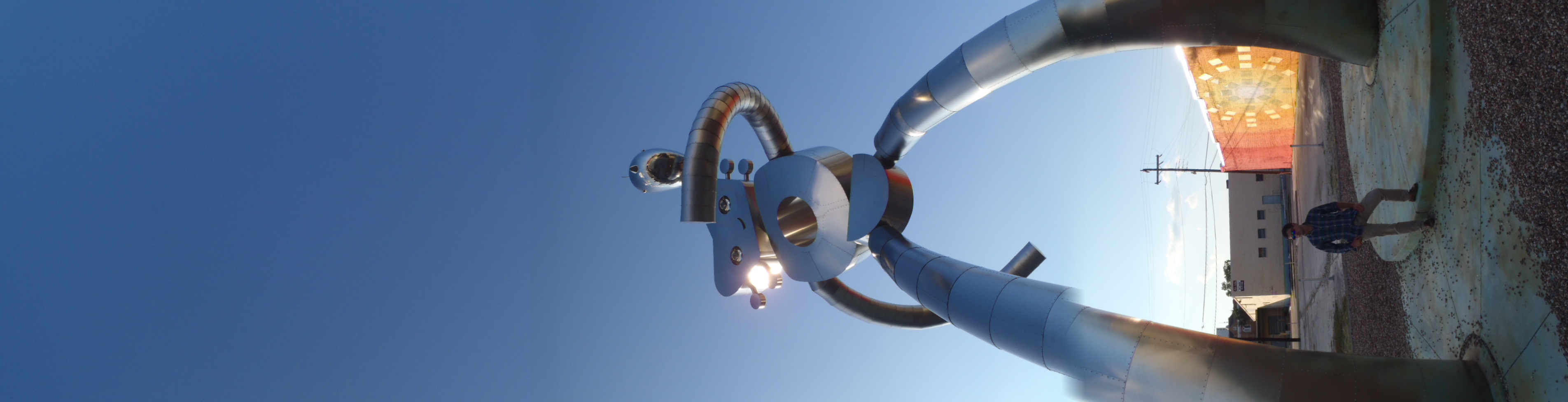
You can’t walk anywhere without seeing something that someone has improved with their imagination. The place feels very engaged. One of the best examples of public art in this neighborhood are the robot sculptures (pictured right) scattered around. They are huge, shiny and very unassuming. There’s no sign that says, “Look at what we did! We’re creative people!” They’re just there … waiting for people to stroll beside them or for an urbanist to take photos and blog about them. Of course, like all cool places, there are people that say Deep Ellum is DANGEROUS. According to the Dallas interactive crime statistics, there are more crimes here then in some places, but not significantly more. Regardless, my conviction is that crime does not get better when upstanding citizens move out of these neighborhoods. Cool places need cool people. In turn, cities need these cool places to thrive and attract new ideas. Many cities would be lucky to have one.

Hopefully, through the Our Town program, many cities will have neighborhoods like these two examples in Dallas. With these grants, the NEA is going beyond simply promoting art. The NEA is promoting the very places that inspire and cultivate art. The Our Town grants can be used for many different reasons, but their primary function is to energize cities to find ways to invite and invest in creative people. I feel like suddenly I have a term that describes a process that I have wanted to promote for a long time.

Creative Placemaking

If you find the concept Creative Placemaking at all interesting, you must watch this video of three remarkable case studies: “Creative Placemaking in Shreveport, Milwaukee and Madison.”

The NEA also funded a journal research that resulted in the publication of a journal article titled Creative Placemaking. This article is a must-read for anyone that wants to add lasting value to their city or real estate development.

C-T-D: Downtown, no finer place … for sure

If Jane Jacobs is famous for describing “the sidewalk ballet” outside her window in Greenwich Village, I would like to be the first to say Tyler is in a “sidewalk intermission.” There was a time when our downtown was full of people “dancing” around each other to get to the stores and offices, but I believe we are now experiencing the intermission that happens before a renaissance. Rather than hold on with nostalgia to a proud past, we have to look to the future and imagine how downtown will once again be great in a completely new way.

But when did we begin to neglect our downtown? Petula Clark’s  famous ballad, “Downtown,” offers some insight into the process. “When you’re alone and life is making you lonely,” she sings, “you can always go downtown” … “everything’s waiting for you, downtown.” This song is such a incredible artifact of the 60s zeitgeist and a common reference point for urban historians. The paradigm shift is that in the twentieth century (many say after WWII), the dense urban spaces in America became places to visit rather than places to inhabit and as a result they became neither. The problem is that downtown will not always be “waiting for you” if there are not people living there and sustaining it while you’re gone. Like many cities with oil and money, Tyler followed the trend of outward growth and the commuter lifestyle. Fueled by our cheap, local oil we basically packed our cars and left downtown in the dust.

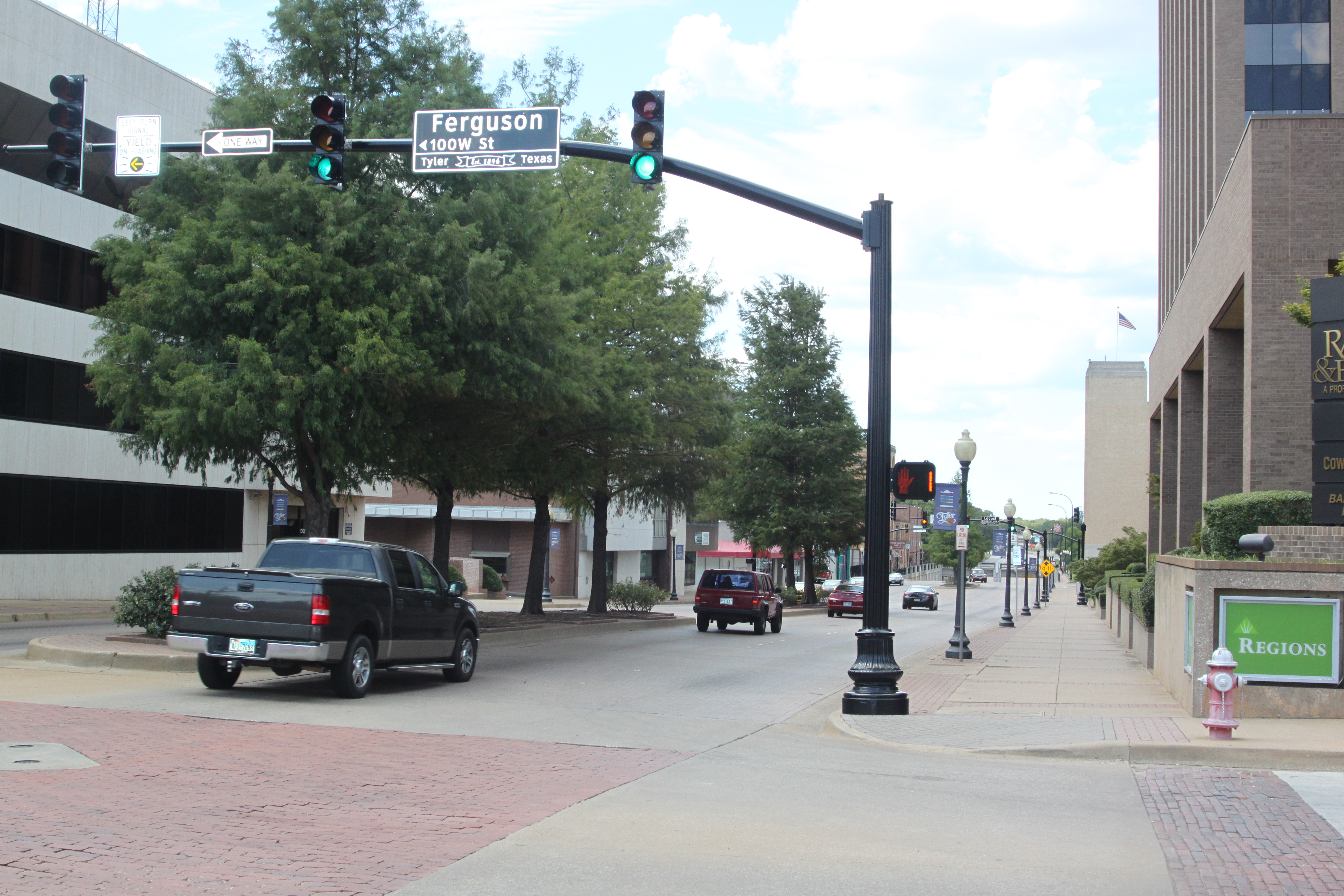
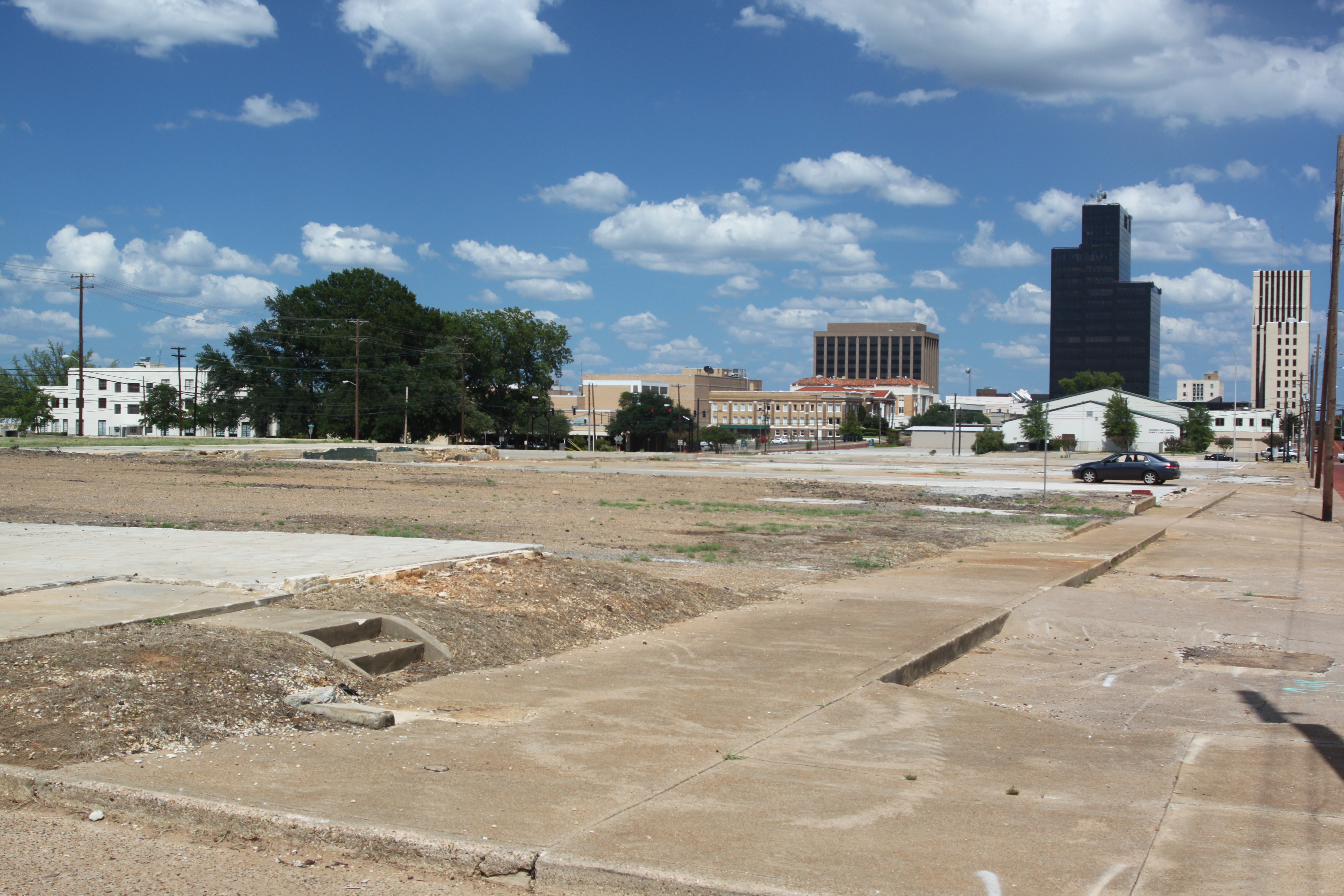
The result of this growth mentality is that we do not have the money to “care about what we already have.” For every new development in Tyler, the public sector is expected to provide roads, sewage, fire departments, police departments, schools, street lights, signs and other various forms of public services and infrastructure. This cost is significant and it is somewhat needless considering there are vast sums of land in the city where services already exist. As the city continues to cater to new developments, we do so rather than reinvesting the money into older, existing spaces elsewhere in the city. These images of Tyler’s downtown (below) are images of a city waiting to be reborn.

Downtown Tyler, TX

So here’s the basic dilemma: How does our local government incentivize businessmen to build on parking lots rather than horse ranches? I suppose it starts with a vision.

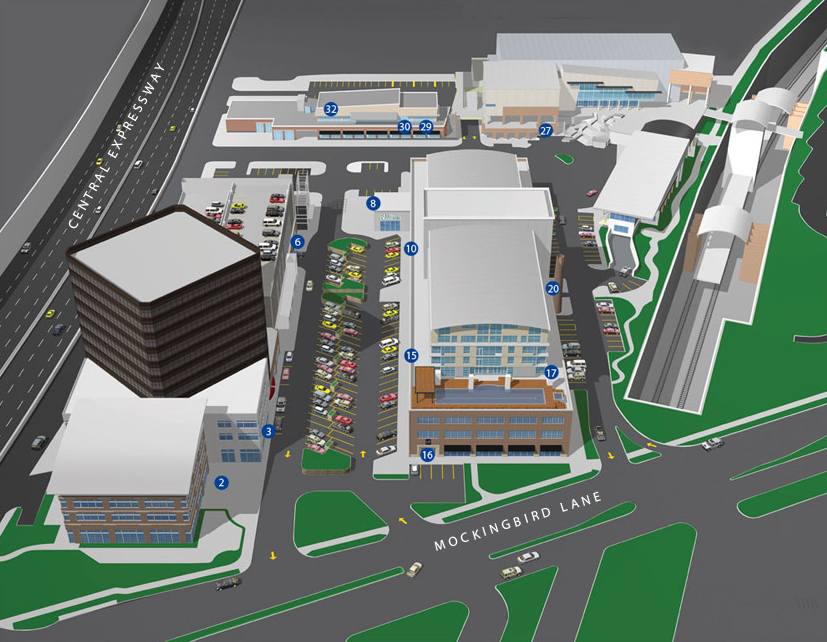
Empty lots, parking lots and vacant buildings are waiting for a renaissance. Young people, artisans, and creatives are looking for a place to find community. Some churches desire to feel more connected to the city. Our government deserves to reside in a place of prominence. This is my vision for downtown Tyler as a dense node of city life connected to the rest of the city by transportation and urban design. A great example of this sort of development is Mockingbird Station in Dallas. The place is an incredible example of the potential of a repurposed factory building that is now connected to the DART light rail. It’s attractive, interesting and it has created a significant draw for itself even in its relatively short lifetime. This is the vision I would like to cast for every empty lot in downtown Tyler. Could we do it?

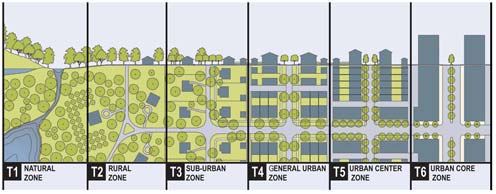
First, I suppose we need a zoning code that allows for a variety of living options such as row houses and lofts next door to hole-in-the wall cafes and shops. A place for people to live. One popular concept promoted by Duany Plater-Zyberk (pictured below) is called the Transect.

The transect is basically a zoning plan that allows for a wide variety of urban forms and gives the city a gradual progression from the urban core all the way out to nature. In addition to new zoning, I am (of course) confident that we need to “connect the dots” of high-density developments with a street car loop along beautiful avenues, bike lanes and sidewalks. All I want is one loop of public investment and long-term commitment to our existing city. The private-sector investments would be astounding. We have already begun to see developers look to the downtown with businesses such as Don Juan’s, Rick’s, Jake’s, the Downtown Coffee Lounge, Balance, and others. What these all need is to be more connected to the city and they will not simply exist as moments of brilliance. Instead, they will reside in an area inhabited by people that have pride in their business and share this pride throughout the city. These people also sustain the economy while visitors increasingly come enjoy the city life.

So there are economic arguments, community arguments, and even valid entertainment arguments for downtowns. To me, the argument for downtowns and urban spaces is more simple: Let’s turn this city (the whole city) into a source of pride. It’s not too late. I don’t want us to look back and wish we had taken our city a little more seriously. We need to allow for a little urban chaos, promote design oddities and find some way to discourage this endless leapfrog development to the next new loop. We need significant places and I believe we need to collectively begin to care about what we already have.

Check out my other Tyler projects at my Tyler, TX page.

Longing for a Heyday

So we all know that our downtowns aren’t what they used to be. They’re cleaner, taller and most importantly (in most places) they’re quieter. There’s just no people. But we Americans also all seem to carry this strange collective memory of a heyday when our cities and our downtowns were bustling, busy, smelly and successful.

In that era, downtown was a source of pride and a symbol of ambition and progress. In her book Downtown America, Alison Isenberg describes downtown as the cite of transformation, protest, destruction and renewal. Most importantly, she argues, the history of downtown America teaches us about ourselves as Americans and specifically what we value. She writes,

“It has been the people — their crusades, their financial stake, their ideals, and their changing priorities — that have given meaning, hopes, and limitations to the material condition of downtown and that ultimately have given Main Street its form. This interplay puts buildings up and takes them down (Insnberg, 316).

It was people who cast a vision for a space and called it downtown. They called it special — worth taking a risk and worth making bold statements. But today downtown America is mostly just a few lines on a historical marker, “This place was once great because ___.” There are very few people who live downtown, there is little diversity, and most of the buildings are relics of a once-proud past. We have lost downtown and the institutions that resided there. All we have now is a memory of a space and an incredible longing for the heyday of our cities.

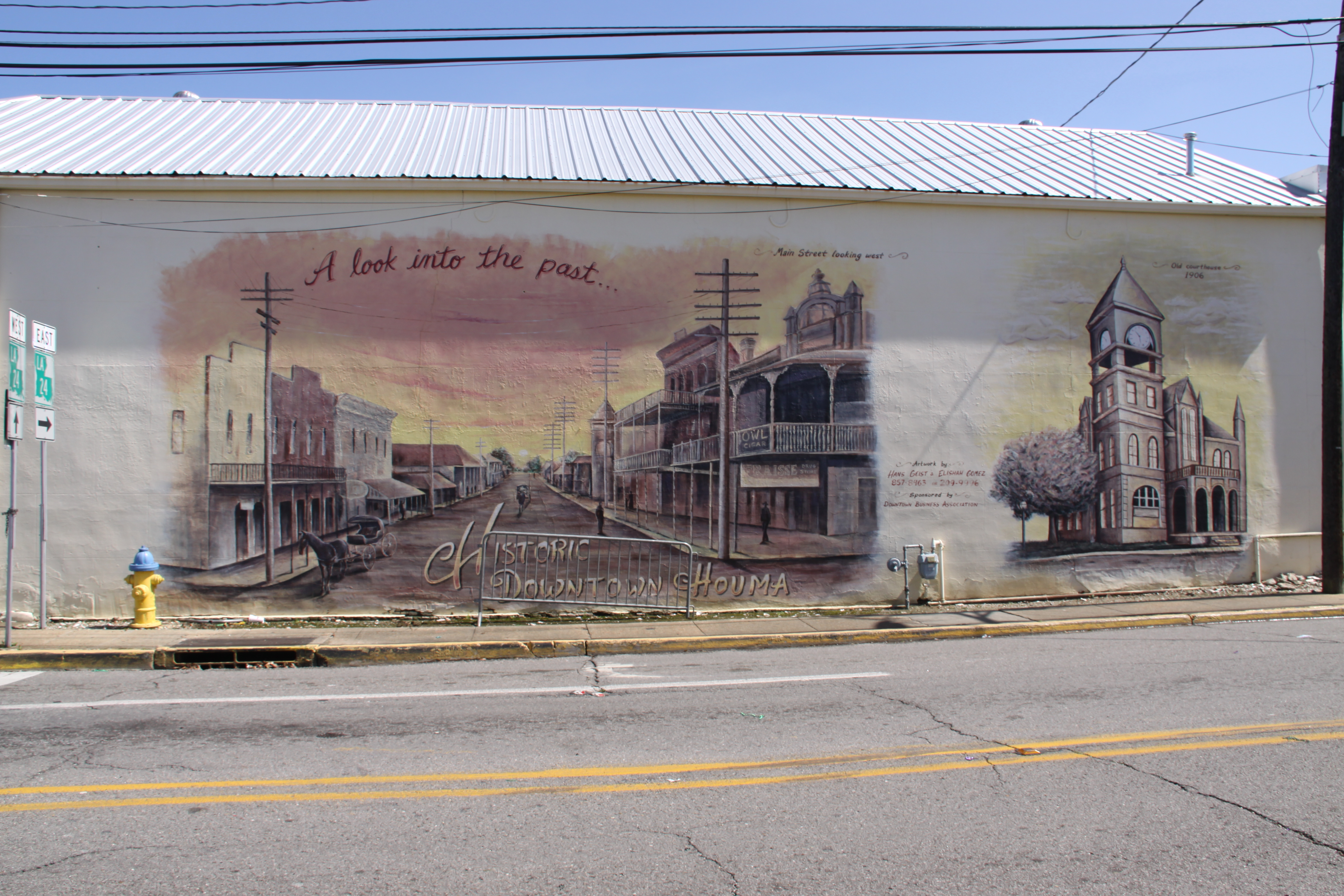
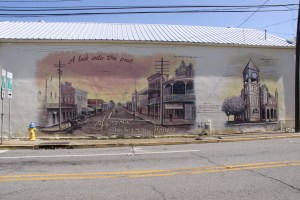
In the past few months I have visited two small towns that perfectly encapsulated this nostalgia. The first is Houma, Louisiana and the second is Ilwaco, Washington. In Houma, I experienced the mélange of Louisiana cultures: Country music bars, party busses blaring rap music (it was Mardi Gras weekend), old southern mansions, a beautiful old courthouse and food carts serving Mexican food. As I walked through the city I noticed a mural of an old “Main St.” scene (above). “A look in to the past …” the mural reads, “Historic Downtown Houma.” The larger image is of “Main Street looking west” and the smaller image to the right is of the old Houma Courthouse ca. 1906.  I suppose this mural, sponsored by the Downtown Business Association, was an attempt to remind people in the region of the proud history of Houma. Hopefully visitors will enjoy a stroll “into the past,” spend their money, and come again.
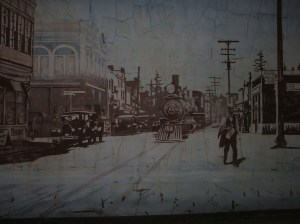
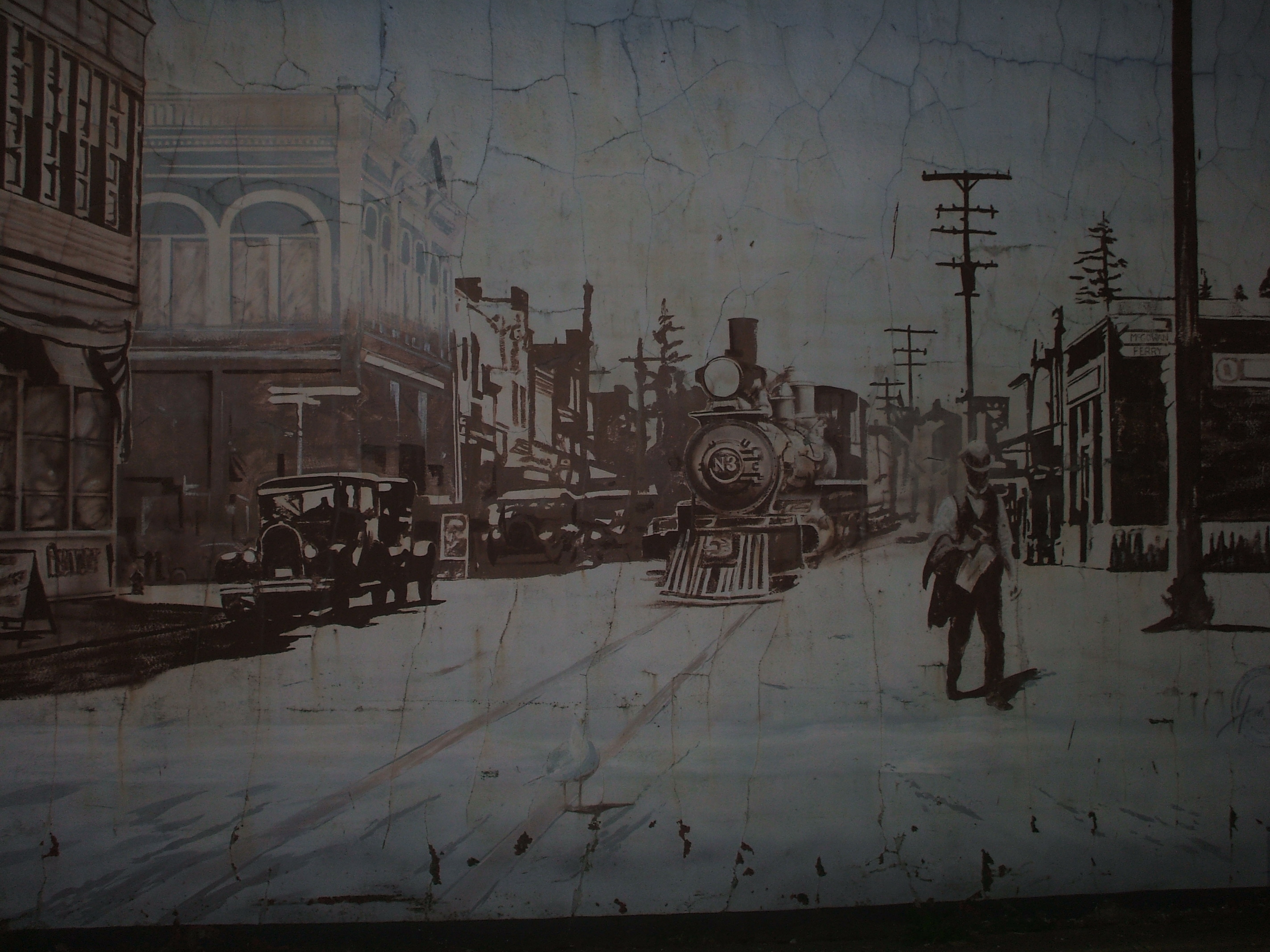
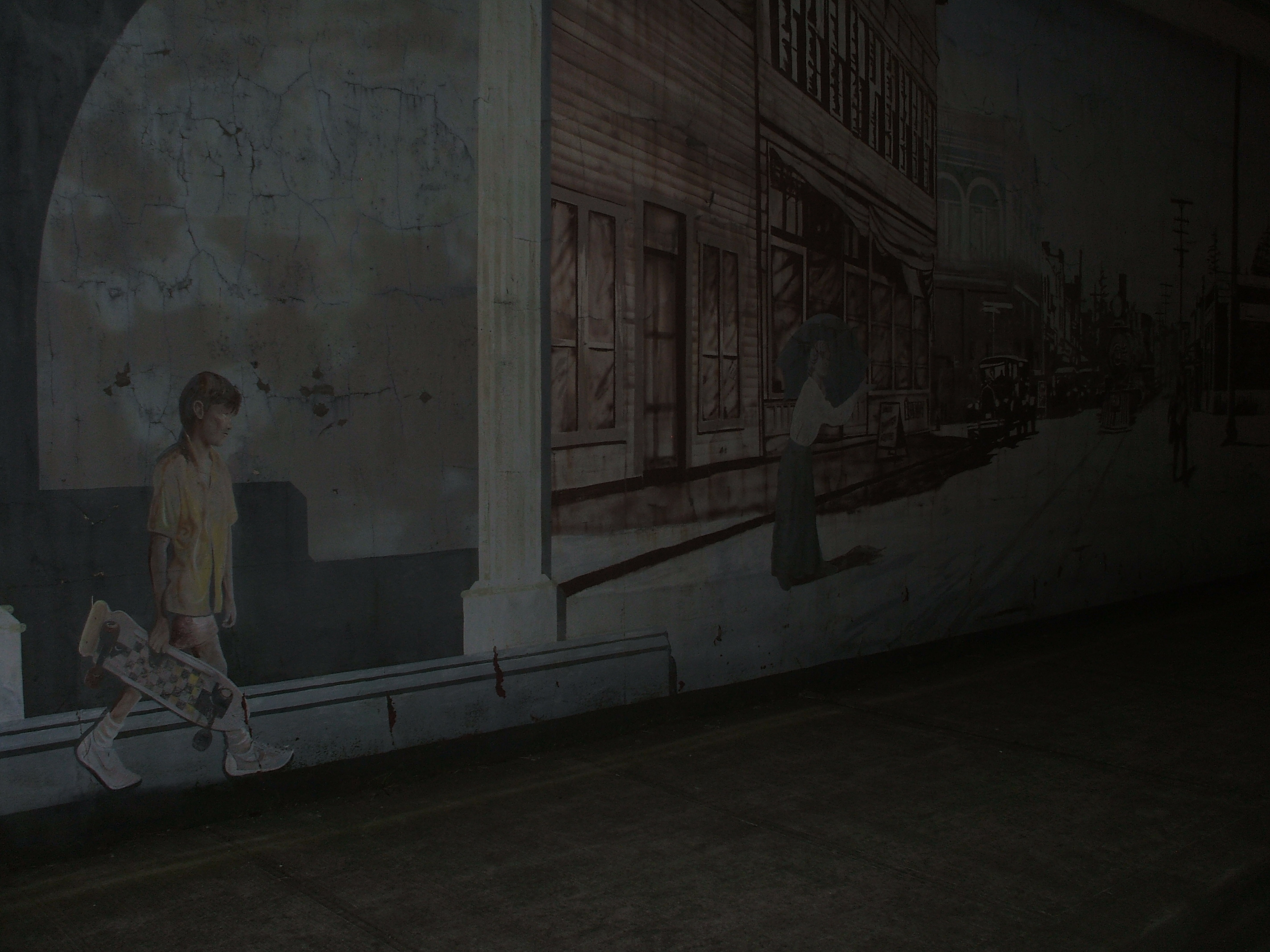
The second example of a nostalgic mural (left) is a little more complex. It is titled a “Main Street” mural in Ilwaco, WA located on, not Main St., but Spruce St. at the intersection of First Ave. This mural depicts the same nostalgia for a bustling past with cars! trains! A/C grid! and a man with a hat! walking through the street. This is clearly  a mural of past progress and innovation. When I looked closer, however, I realized that it’s actually a mural of a mural of progress. On the left side of the mural, there’s a boy walking with a skateboard toward the mural of the old Main St.  The boy seems to represent a newer sort of progress, but is placed in context of the historical legacy of the city.
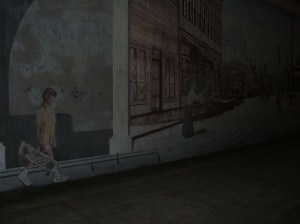
So what are these murals trying to say?

Greg Dickenson writes extensively about the connection between memory and place and the significance of both on personal identity. He considers the new spaces that we inhabit (e.g. McDonalds and strip malls) which seem devoid of historical context. They are clean and new, but what do these spaces lack? Dickenson’s perspective states,

“In a post-traditional period, a time of deepening memory crisis, secured place becomes harder and harder to maintain, giving rise to nostalgia to cover the discomforts of the present.”

This nostalgia is often revealed in murals such as the two above as well as in old photographs, old marquees, historical markers and similar references to the past. It is sort of a cheap nostalgia because it really doesn’t help us to understand the complexities of the past. I think that a more complex history would defeat the purpose of increasing tourism because it wouldn’t make people feel “comfortable” in these nostalgic places. The problem with that simple message is that when downtown was bustling it was a complex place. As long as we continue to sanitize (“suburbanize”) our cities for the sake of visitors and tourism we fail to revitalize (“urbanize”) our downtowns.

Isenberg, Alison. Downtown America: A History of the Place and the People Who Made It. Chicago: University of Chicago, 2004.
Dickinson, G. (1997). “Memories For Sale: Nostalgia and the Construction of Identity in Old Pasadena,” Quarterly Journal of Speech 83, 1-26.

The Rose Park

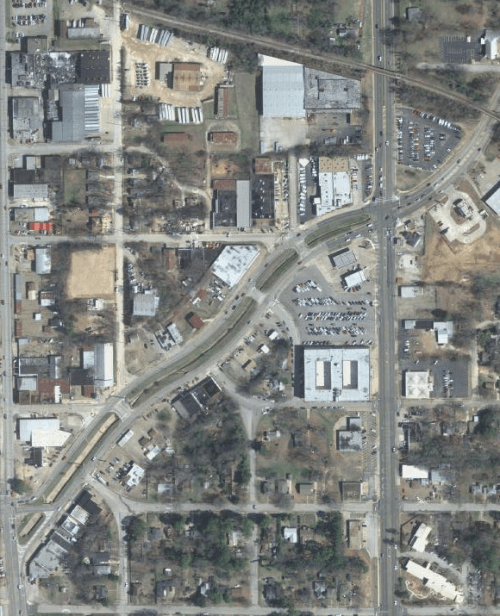
Look at the image below. What do you see?

I see a rose.

The stem of the rose (S. Glenwood Blvd.) extends as a greenway belt from the bottom left corner toward the upper right. It curves along the stream in between the grass of the greenbelt. At the end of the stem, there is a parking lot in a shape that resembles a flower bud. It seems like a perfect fit for the Rose Capitol … especially considering it’s in The Rose District, my fictitious plan for the area of land around the Rose Garden Complex. The Rose Park would be the perfect way to say, “Welcome to Tyler, we like roses a lot.” Since we pretty much control the commercial rose industry in the USA … I’d say roses like us too.

The Rose Park is the perfect way to welcome visitors into this city that has been celebrating the rose industry for decades. As you drive into Tyler on Glenwood, the road is suddenly transformed into a tree-lined parkway with a creek running down the middle of it. Brick sidewalks run along this parkway as it wanders past the junk shops and the Cotton Belt Building. The sidewalks of this parkway then ends with a crosswalk across the intersection that has been rebuilt to accommodate a larger number of walkers and bikers. The bike/ped crossing leads across the intersection into the parking lot that has been transformed into a park of flowers. From the sky, the stem and rose form a clear picture of the city’s identity. From the road, drivers get a glimpse of the park and begin to feel like they have formally entered Tyler.

The Rose Park should be a part of a bigger network of trails and parks in the Rose District. These would all make this an area of the city that is accessible, functional and proud. In it’s current form, this is just a road and a parking lot. But in a few years it could be a purposeful use of space and an excellent entry to this city.

Check out my other Tyler projects at my Tyler, TX page.

C-T-D: Thoughts on “Downtown”

I would love to start drawing a map for downtown Tyler. I’ve already written extensively about an imaginary place I call the Urban Valley, but right now I have this burning question in my mind, “Do we want a downtown in Tyler?” If yes, then for what purpose?

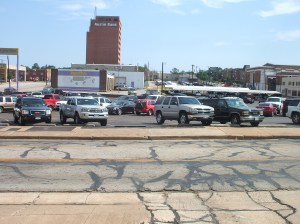
You see, there is this crime that occurs when people try to “bring the suburbs in to the city.” I’m worried we don’t quite realize that the two concepts are completely antithetical. Suburban settlements usually have large parking lots, small wooded areas and one-story detached buildings. These should have very little relevance in a downtown. Take a look at the photo of the parking lot. Does this photo look like a city? (Side note: The city of Tyler has looked into building a parking garage here, but most likely won’t put floorspace on the first floor) The real tragedy is that there were likely beautiful buildings here that served a whole variety of purposes. Now, this entire city block serves one purpose: The storage of cars (idea cite: Douglass Rae). Urban space should be considered so valuable that buildings are next to each other, green space is a planned park or garden and cars cannot be given ultimate precedence. In all sincerity, we have enough suburbs in Tyler … please, first and foremost, let downtown be urban.

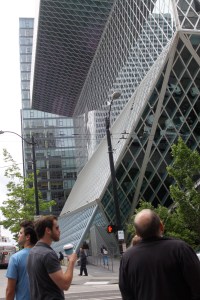
I believe that the potential of every space is limited by real and imagined barriers. If there are real, perhaps topographical, barriers to building a higher density downtown than I’ll be content to give up this dream. I just don’t think that’s the case. Most barriers I would consider “real” are primarily economic, but as long as people continue to build farther south I’ll contend that they might as well build downtown. To me, it’s the imagined barriers that I can’t stand. If it’s a zoning issue, some regulation, or a city of small dreams then I won’t be satisfied. Cities do not become great with small dreams. Cities become great when people do bold things that the mainstream calls crazy. Take, for instance, the Seattle Public Library (pictured). This building is a strikingly beautiful and completely functional structure that could theoretically be built anywhere on any square piece of land. In Seattle, they love it. Could we love this library? I should add, there are people in Tyler doing great work to revitalize our downtown, but I’m just not sure whether the public will appreciate it.
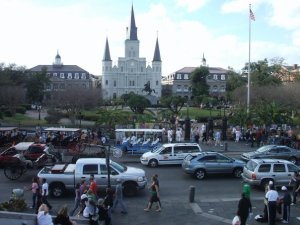
Another possible impediment to Tylerites embracing urban life is a lack of urbanity. It seems like Tylerites like to live in wooded neighborhoods rather than urban spaces. Most of Tyler is so spread out that we don’t always have to interact with people who are different from us on a regular basis. I fear we’re missing the beauty and diversity of urban life. But could it be that there is simply not a viable urban option? I say yes. I bet there are thousands of people in East Texas that are tired of mowing their lawns, driving everywhere and living far away from “the action.” I bet if we promote city life in Tyler and remove P&Z red tape then people will come from all over to create and inhabit a thriving downtown.
The other day, my friend Dustin asked me what my ideal downtown would look like if I could design it. I said that there really isn’t (or shouldn’t be) an ideal downtown. As long as there are people there at every hour of the day and night; as long as there are public spaces that welcome every citizen of the city; as long as people claim it rather than exploit it; as long as it’s traditional, deviant, creative and ultimately “Tyler,” then that will be perfect no matter what it looks like.

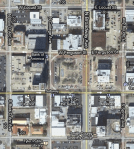
Look at the arial photo of Tyler to the left. These nine city blocks should not look like everywhere else in the city because if they do then they will be no longer be significant. Downtowns are places where you can live to not only experience the diversity of other people’s lives, but most importantly you can personally add to the diversity of self expression, culture, perspective, race, ethnicity, etc. When we begin to add to this multi-cultural society and invest in the community we become a part of organizations and we learn what it means to be citizens instead of consumers. I don’t want us to “consume” downtown as entertainment the same way we sometimes consume church, media and everything else. Rather, we must commit to downtown as an idea and be unified on our goal at the outset. This idea is that, in many ways, downtown is what we look to as the zenith of our city’s development. I believe there is an inherent value to dense urban downtowns as the site of culture creation, political debate and financial stability. Our downtown is a vital element of the future of our city as the capitol of East Texas. We need a viable downtown option, but we have to want it. And we have to know what it is.
Check out my other Tyler projects at my Tyler, TX page.

C-T-D: The Rose Garden Complex

There are many proud  Tylerites who love the Tyler Rose Garden while also thinking that it needs some work. It’s heralded as the largest municipal rose garden in the nation (impressive), but for  some reason it just doesn’t do it for people. It doesn’t have pull. For the past few days I’ve been thinking about the garden and wondering what Tyler could change to make it a more desirable destination. When I drove there myself, I realized something: The Rose Garden can’t be significant on it’s own.

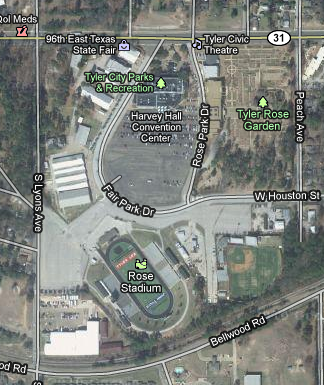
While there are several components of “The Rose Garden Complex,” they don’t form a cohesive destination. They’re essentially separated from each other by roads and parking lots. As it is, this expanse of asphalt ruins what could be a really cool Rose Garden Complex experience. I wonder if Depave would be willing to help us take it out because it’s got to go. It does not draw you towards anything or direct you to go anywhere. Most of the parking lots don’t even have lines marking individual spots … it is truly formless space.

If you look through the photo album at the end of this post, I think you’ll notice what I’m talking about. I was even impressed and I was expecting a lot of asphalt. I found myself thinking that we patterned our parking lot design after the ship harbor design. It might be because the huge Rose Festival floats need a place to sit and maneuver before starting the annual parade. While that may be the case, I think we can find some parking elsewhere in Tyler … their waiting area on one day of the year shouldn’t hold back the entire space.  Besides, wouldn’t it be more fun to parade through a beautiful space?

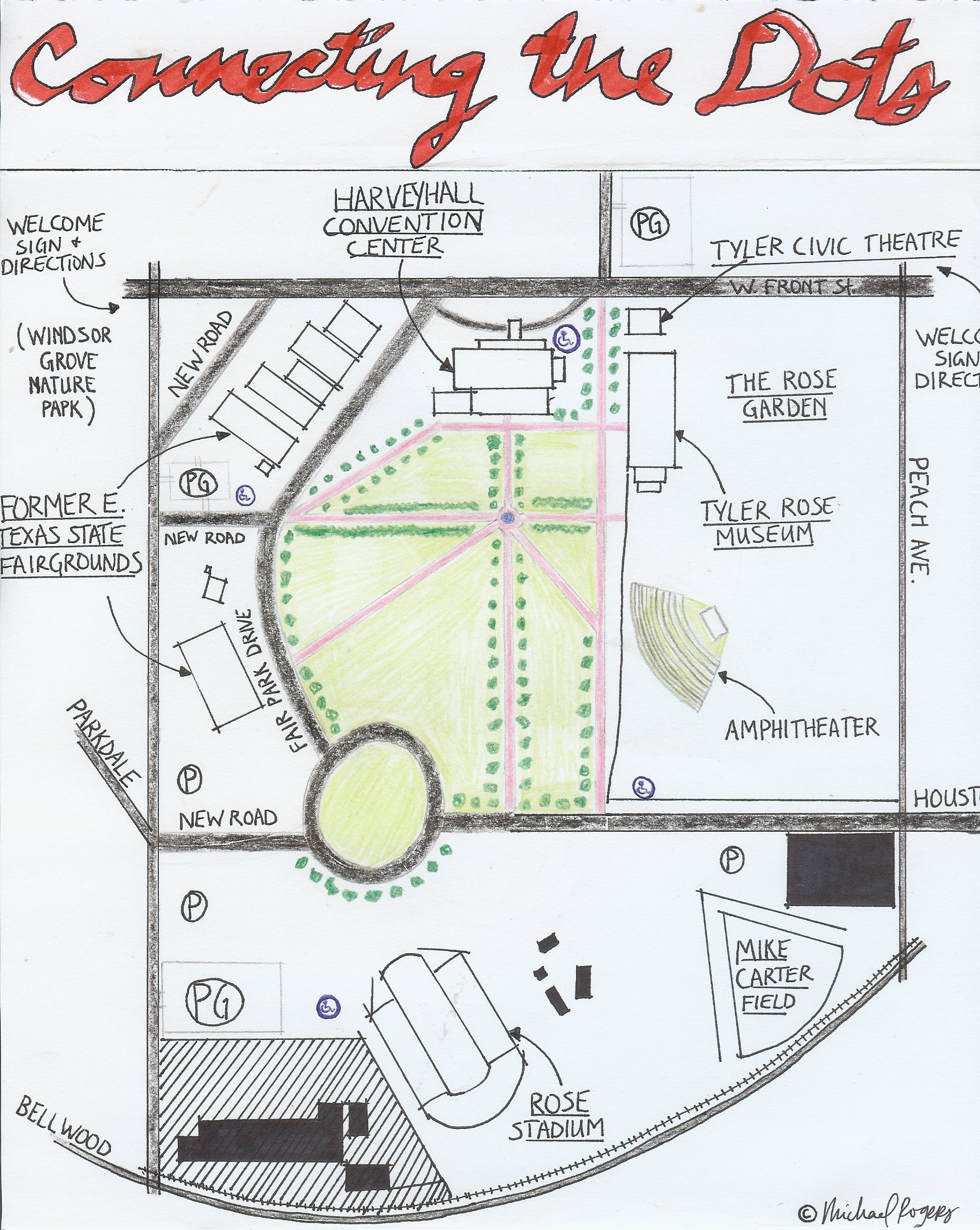
Fortunately for Tyler, a blank slate is a great place to start. My mind has wandered for hours these past few days and it finally arrived at the place pictured to the right. It looks like the Tyler Rose Garden Complex, but the center of the picture is grass (light green), trees (dark green dots), and rose bushes (dark green squiggly lines). And a water feature! (blue dot where the paths converge). In this place, the view from Harvey Hall is grand: Down a path bordered by trees, across a great lawn and toward the old fairgrounds and the Rose Garden. There is nothing but trees and grass between Harvy and the Rose Garden so that people can walk from one to another in the cool shade of trees. The Rose Garden itself hasn’t changed much except for the addition of an amphitheater (!) for live converts. (Big shout out to fellow visionary Tom Ramey and others for the idea of making the Rose Garden a music venue).

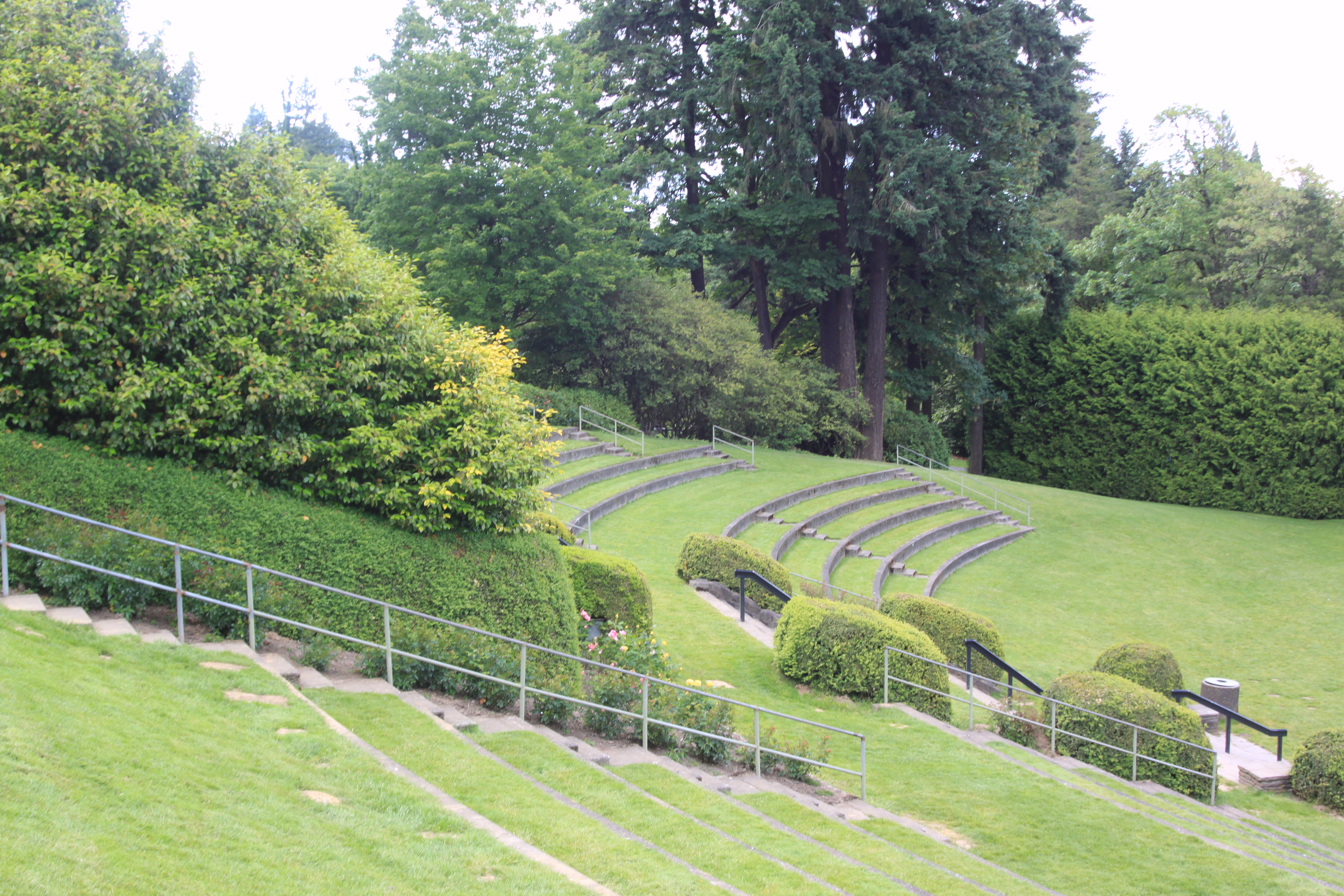
“Live at the Rose Garden” is the hottest tagline in East Texas because (you guessed it) the backdrop to the concert is the largest municipal rose garden in the nation and for once there is something to do while you’re looking at it. This amphitheater looks like the one from the Portland Rose Garden (to the right), but it’s better because it’s facing the flowers instead of big bushes. Every Friday night during the summer there’s a live concert here and people come from all over to fall in love with the place (and return again). When they arrive, they exit the street car at the stop just outside Harvey Hall on Front St. If they’re driving, they’re directed to park in one of the parking garages (PG) or lots (P) located on the perimeter of the complex. The roads within the complex also have on-street parking and handicapped spots closer to the center of the site. They all meet at the new roundabout in the middle.

Once they’ve parked, they walk down a number of brick paths (red) or bike in the bike lanes along each street (black) to get to the amphitheater. Every Friday night during football season people come early before the games to walk to the lawn that is lit up with lights from the trees. The Rose Garden is even open on these game nights with special events to keep people in the area. All this visiting is great business for the bars and restaurants that opened up in the former fairgrounds buildings! That whole area was rezoned to allow mixed-use infill development so there’s even a small community of people living in apartments with a view of the lawn and garden. They go on walks down the brick paths and do stair runs up the amphitheater in the mornings to stay in shape.

Whew! That place is so alive and engaging that people (even locals) don’t have to have a reason to visit. They just want to be there. Stay tuned for the next place my mind wanders to! I’m thinking it might visit a place that’s more urban … in the meantime, enjoy these photos from the Tyler Rose Complex! It’s ripe for redevelopment.

Check out my other Tyler projects at my Tyler, TX Page.

The Rose Complex

Connecting the Dots: Intro

Imagine if Tyler decided to take a few areas, increase their eminence, and connect them to each other. My latest concept, Connecting the Dots (C-T-D), outlines a long-term process of public and private investment that I’ll complete in the next three followup posts.

The basic idea is often called Transit-oriented development. It’s the idea that we need to begin considering land use and transportation as one unified city function. You see, for the past century or so we have built our cities without considering how people will travel  because access to a car was generally assumed. And, I might add, those without cars were not usually considered valuable (i.e. profitable). Cities have grown rapidly and died gradually with this sort of development because 1. The roads cost too much, 2. New developments make older ones obsolete, and 3. New developments often have difficulty maintaining lasting significance past their prime. This paradigm is the Gander Mountain, it’s the church my family goes to, it’s the Hollywood Tyler Rose theater, and it’s the majority of this city.

But it wasn’t always this way. There was a brief time in history somewhere between horses and cars that we travelled on fixed tracks. During this time, (often) private corporations ran street cars through a partnership with municipalities in order to provide transportation for locals or visitors when they entered the train station, “Welcome to Richmond.” Now, it seems that the main city function is to facilitate transportation through the building of roads rather than to provide transportation for the general public. “But,” you say, “Tyler has a bus system already.” Yes it’s true, but in this post I want to argue that the bus system has not succeeded in unifying our city. Besides, we don’t have many significant areas to visit. What we have is a lot of stores, schools, restaurants and other businesses scattered over 49.3 square miles of asphalt, concrete and St. Augustine grass. Where, I wonder, is Tyler in all of this?

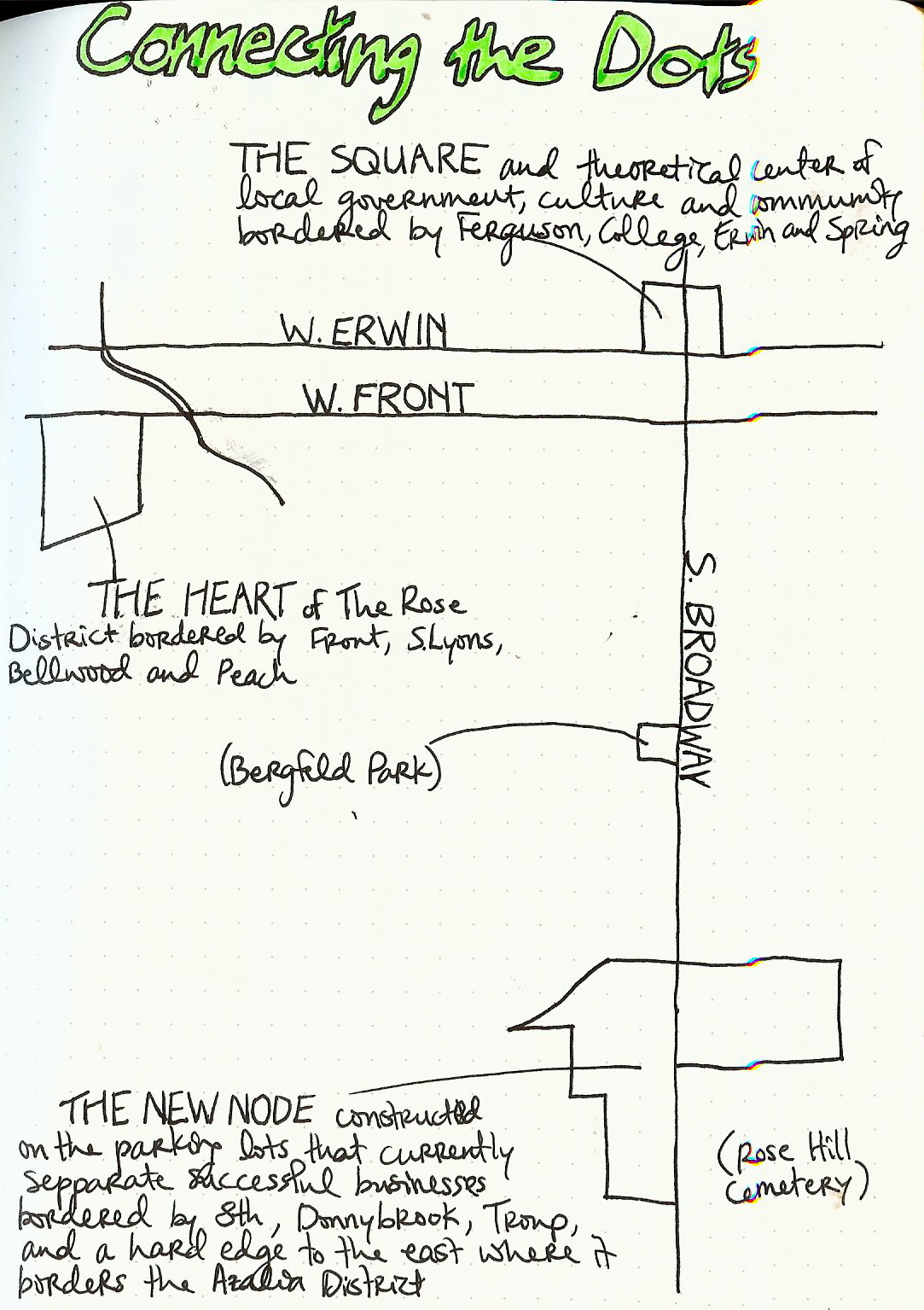
C-T-D seeks to revisit that earlier era of development for a 21st Century application. I have decided to start macro with this first piece (perhaps a look at Tyler 10 years down the road) then followup with more micro concepts for each individual node that I’ve proposed: The Rose District, The Square (with my Urban Valley), and a New Node that I haven’t named yet (ideas?). Each of these locations will be connected to each other with complete streets. This will also provide an alternative to cars and increase their viability as destinations. Completing streets will finally reconnect our asphalt to our buildings after decades of disconnected drives. Also, a recent report promoted by Smart Growth America shows that sidewalks and bike lanes increase the economic vitality of a region. That means more jobs! Eventually, we would add light rail trains (or BRT) to these streets in a circuit in order to properly move citizens from one location to the next.

I personally prefer light rail (yes, in Tyler) because it makes such a statement of  commitment to a given space. Light rail is also not as stigmatized as busses. Besides, it’s just plain cool. Check out the loop (below) I’ve devised for the light rail and complete streets:

Of course, in order to connect the dots … we first need dots to connect. This process involves developing three high-density, mixed use, cool (this is not a joke), and interesting nodes. These nodes are special, they have names and unique characteristics and an eminence that draws people to visit.

Check out my other Tyler projects at my Tyler, TX page.

P.S. I recently returned from a trip to Seattle and Portland and I brought back ideas, the book 101 Things I Learned in Architecture School,  and a Leuchtturm1917 journal with dots instead of lines. Let the games begin.

Gallery

C-T-D: Tyler’s Urban Valley

This gallery contains 6 photos.

**Interesting update: I met with my city councilman today and he told me that a very well-known real estate developer in Tyler bought the location of the “Urban Valley” and he wants to turn it in to an outdoor movie … Continue reading

On Space and Place: Terms Defined

Over the course of this blog, I will often write about space and place. This post is my attempt to clarify these two terms because they are ultimately the two underlying concepts of each post. While I draw from theorists such as Foucault and Said, I have eventually developed my own way of thinking about life through these lenses.

The two words, in my opinion, are completely distinct from each other. Space is the void. Space is the physical, tangible built environment in which we live. Space is buildings, roads, houses, parks, landscapes. Space is the void. Place is the life. Place is the culture that is created within a space.  Place is what makes a house a home. Place is created when people congregate, communicate, experience each other. Place is a conversation in a coffee shop or a fight outside your house. Place is the life.

These concepts of space and place are often used in casual conversation. Consider the phrase, “I’m just not in the right place to make that sort of decision.” This common refusal is usually considered metaphorical as in an emotional state or a level of maturity. But, what if the person is thinking of actual places where they have experienced significant emotional attachment to other people and are not prepared to enter those places again. Or what if the person has a close tie to a person that lives in another space and they aren’t willing to leave? These are the memory places that are informing the person as they make the decision to move forward or remain.

We all know spaces such as these where we have invested time, emotion and energy to create place with another. We have struggled to be accepted into the group of people that make up these places or we have revelled in our influence over them. It is in these places of human interaction that we struggled through love, lust, pleasure, loss, enlightenment, rejection and friendship to eventually reach some sort of comfort. No matter how frightening these places are, what is more frightening is the thought of leaving them. In these places we become ourselves, we find our identities and we are unsure how that will change when we leave.

Pardon the long quote below … I think it helps me to understand what I am saying:

In his book Repairing the American Metropolis, Douglas Kelbaugh writes, “As others have pointed out, spatial boundaries demarcate the beginning of a place as much as the ending of a place and its power. Boundless architectural and urban space has less nearness, less presence. Limits are what differentiate place from raw space,  whether they separate sacred from profane space or one secular space from another.”

The “spatial boundaries” which demarcate place are the physical boundaries which affect the human interaction within that space. These are often used to enhance the experience of existing in a certain space, but they cannot alone create space. Without humans a space is meaningless. In the same way, it is humans that give space meaning regardless of the intent of the design of the place. All throughout history there have theories about cities which attempt to create the perfect society with the perfect spaces. Le Corbusier’s La Ville radieuse is a common example of this delusional habit. But we have learned time and time again that you can’t solve problems with new space: Housing projects and suburbs are two great examples. They were both dreams for a better life, but both inhabit miserable and satisfied people alike.

It is places that people crave. To me, it is not easy to create place with another. To be honest, many people don’t create place because they don’t linger in a space for long enough. Think about a highway. It is the space par excellence. There is only movement and stigma on the highway — no life, no place. It is one, uniform, vacuous space. And how many of us spend hours each day in these spaces? In contrast, a place can be anywhere. I remember four friends and I had an impromptu gathering in a chapel recently that created the most beautiful place of fellowship. I recently wrote that graduation was an instantly nostalgic place where people gathered from all over the world. It was not “The University of Richmond” that weekend, but instead it was transformed by the presence of a multitude of people that had gathered for the same purpose.

I don’t want to limit myself with these terms, but I sincerely believe they illuminate my perspective on the city and society. I will likely link back to this post many times in the future for reference … they’re my words, but the concepts belong to many people. I’m excited to see how far I can take them.

*Repairing the American Metropolis: Common Place Revisited.  Douglas S. Kelbaugh