Category Archives: Ambition

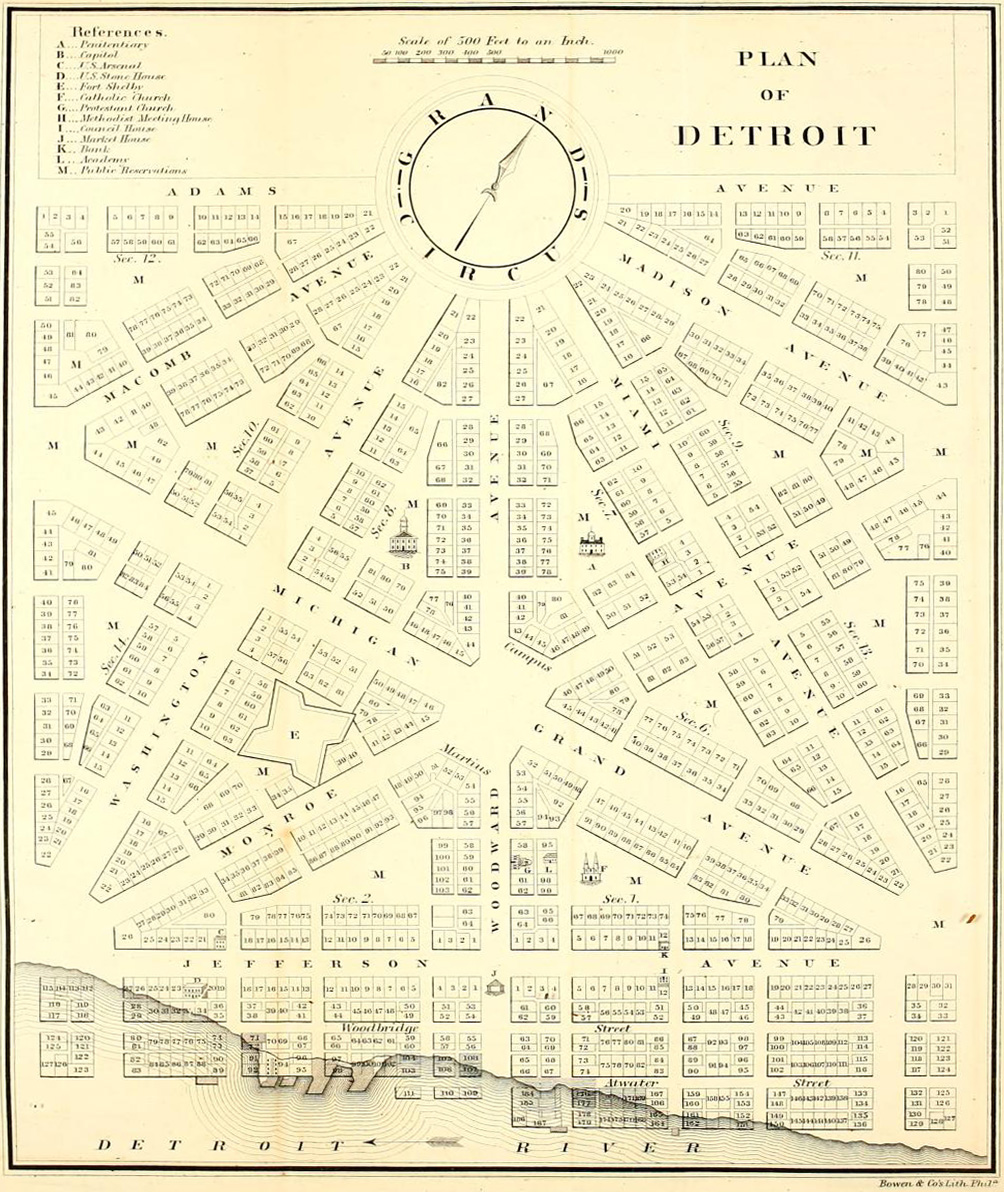
Vision for Detroit, 1807

There was a time when Detroit was in worse shape than today. In 1805, the entire settlement burned. There may have remained remnants of buildings and streets, but for the most part, Detroit was simply a memory.

Just a few years before this fire, America invested in the idea of a completely master planned city: Washington D.C. There had been many American cities planned out of the raw earth, but none compared to the beauty and design of D.C. When Detroit burned, Augustus Woodward looked east for inspiration and found this new vision for the city called Detroit:

Old_map_1807_plan

In the two centuries that followed, this city grew to nearly 2 million residents and has now shrunk to a little more than 700,000. It’s easy to look at Detroit today and marvel at its losses. But we have to remember that fire. When Detroit lost everything, before the world knew her name, one person rose to draw this vision. He found inspiration in another great American city and drew a plan that became the backbone of an empire. It remains mostly intact to this day.

While bulldozers roam the city demolishing abandoned buildings by the 10,000s, as the earth returns to prairie as it was found over 300 years ago, residents of the city are wondering what could possibly become of this place. When I visited in 2013 I met so many people excited to tell me about the recent improvements: new jobs, new businesses, arts and culture. A few months later, the city declared bankruptcy and Kevin Orr took control of the city’s fate.

I’ll be going back to Detroit this summer and I can’t wait to see what has happened in a year: to walk around and experience it for myself. There’s so much to learn in that place: inspiration, caution, fuel for my endless curiosity, and context for the situation in Richmond and other American cities.

Until then, I’ll be wondering how a Shinola watch can cost $950 while this house was recently listed for $100. Until then.

Everybody’s doing it

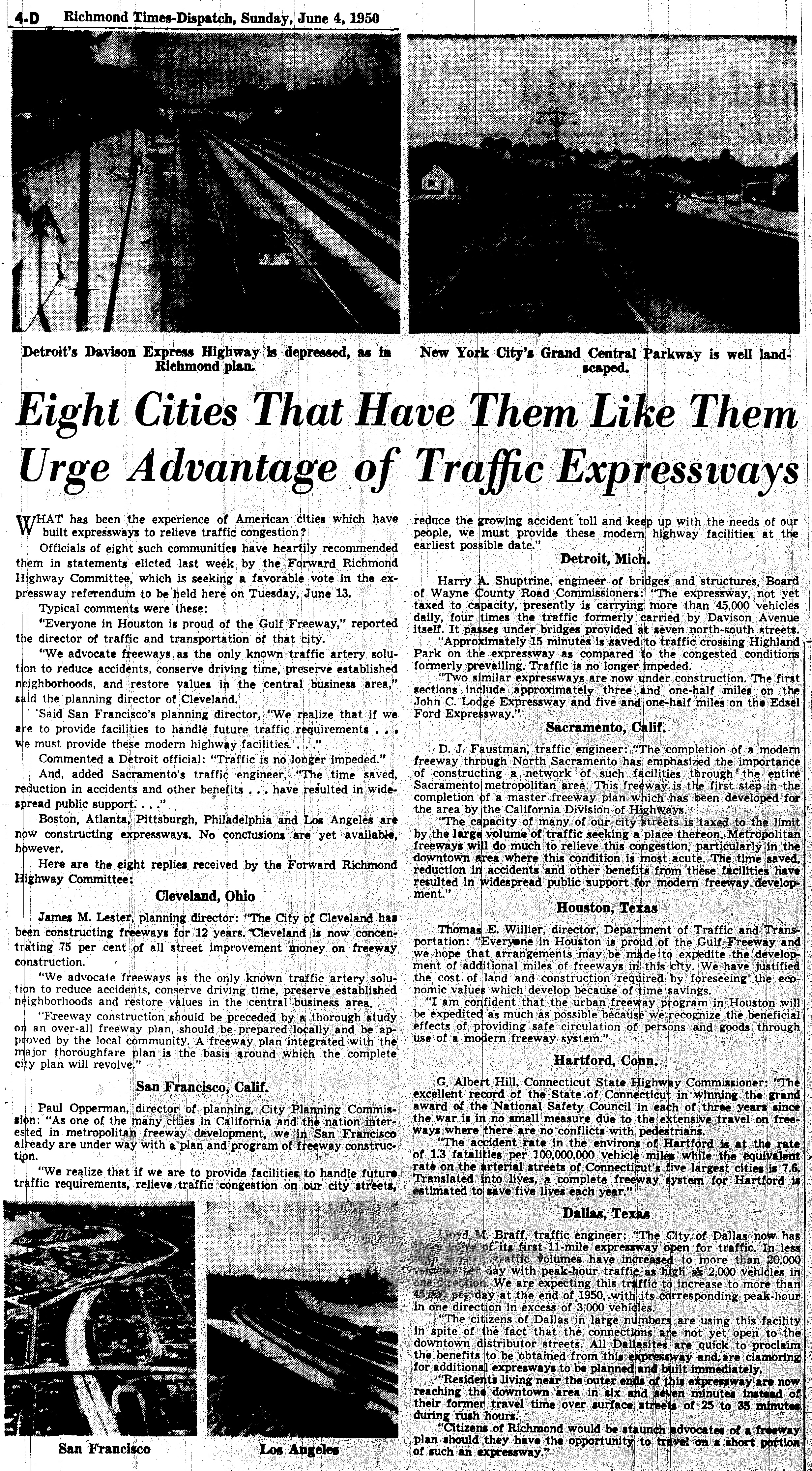
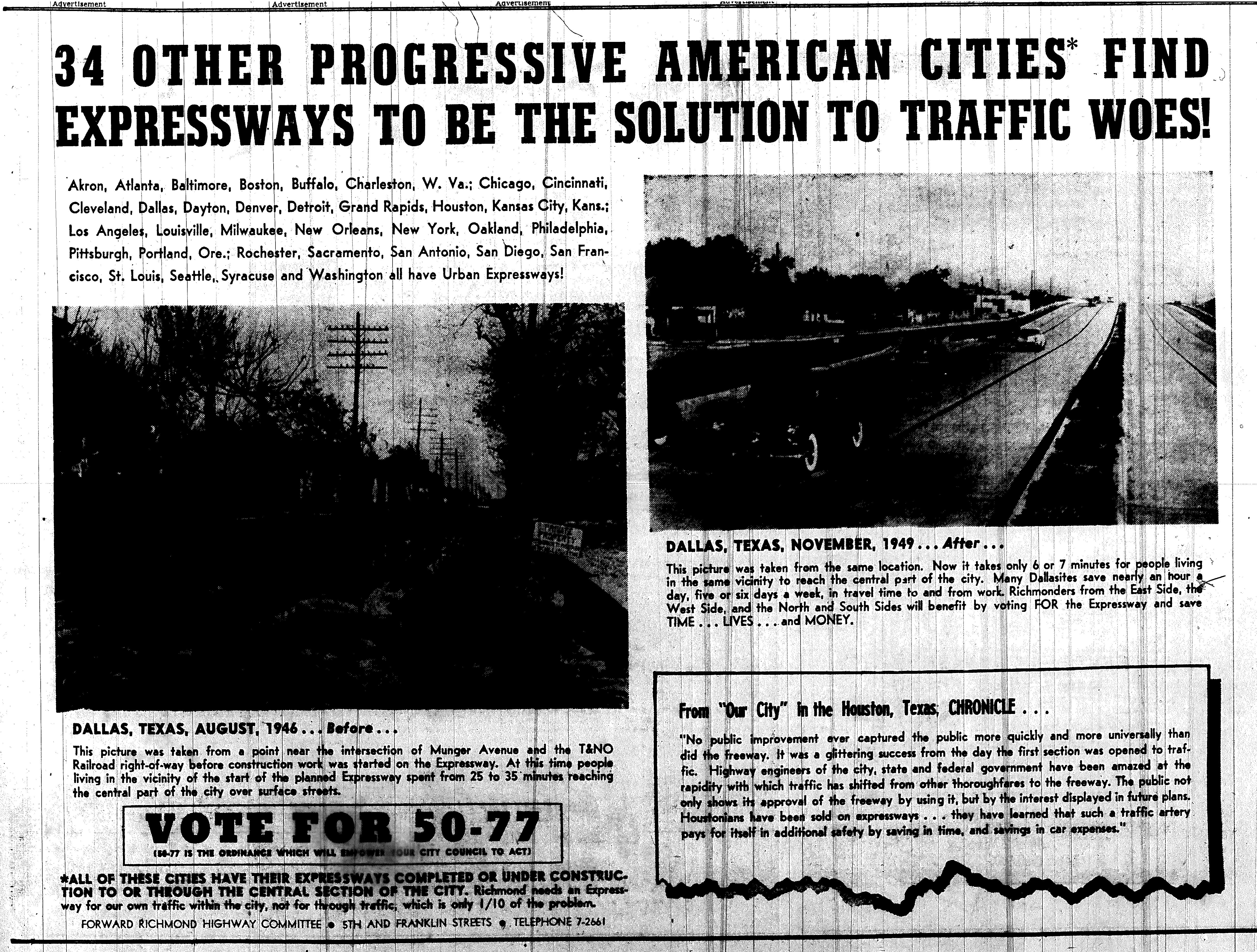
When Richmond was debating whether to construct an urban highway, one argument used in favor of the highway was the citation of other cities with urban highways. Here are two prime examples from June 4, 1950:

june 4 1950-eight cities with highways say they're good-news-propoganda

june 4 1950-First ad-Forward Richmond Highway Committee in favor-Political ad

To read an opinion article related to this topic, click here.
For more artifacts like this, check out my page, “Highways in Richmond?

Book review: How Children Succeed

I love books written by journalists. In his latest, How Children Succeed, Paul Tough weaves together delicate personal stories and obscure academic research into a nonfiction that reads like the biography of a life I would be proud to live.

Beyond a student’s GPA and SAT score,  there is an entirely different measure that determines whether a they have what it takes to succeed. These “hidden” strengths are called a range of terms including non-cognitive skills, socio-emotional intelligence, soft skills, and character. Without a critical mass of these character traits, which range from self-control to optimism, an individual has a significantly lower chance of success. The research on character forces us to look past academic knowledge to something deeper that guides our choices and drives our behaviors. While the new psychological research is fascinating, the idea of character isn’t the most revolutionary.

But there’s another concept that I find to be more eyeopening and important: the idea that stress in life causes harm to the body and the mind. I first wrote about this topic in a blog post a year ago in response to a This American Life episode. In it, Ira Glass (also a reader of the book) interviews Tough and others  about the emerging research on the relationship between stress and the brain. As I listened, I memorized the phrase, “the biology of stress.”

As in, the biological response to the stress of life.

You see, ever since I graduated from college I’ve followed a meandering path of books on topics such as leadership, therapy, and growth. But none of these books made a biological connection between life and the body. In his book, Tough more clearly describes this connection as the HPA Axis which stands for the hypothalamic-pituitary-adrenal (the chemical) response to stress. It’s this system that senses stress and responds in an attempt to protect the person involved. When these chemicals flood your brain, you lose the parts of your brain that house the executive function and revert to a “fight or flight” response and a more reactionary animal nature. Sadly, the more often you’re in stressful situations, the more likely this will be your primary response to life.

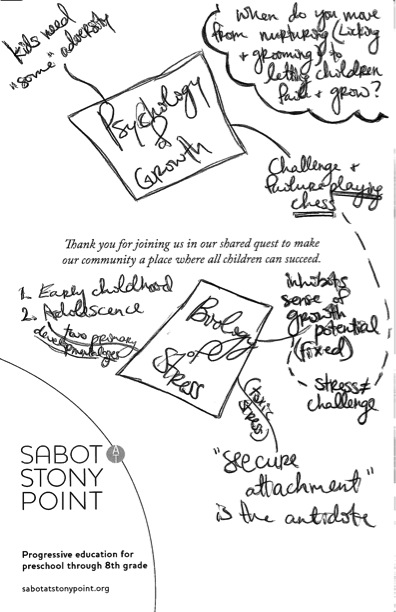
It’s this connection that most influenced me when I heard  Tough speak about his book at the Sabot School in Richmond. (I’m also proud to say I shook his hand and spoke with him when sat down at the end my row before the program.) While he spoke, I diagramed his speech on my bulletin:

Notes from Paul Tough event

As you can see, I found two main ideas: The Biology of Stress and the Psychology of Growth. It’s clear from the research that trauma and stress (and especially chronic stress) wreak havoc on the human brain, stunt learning, and prevent growth. But there is also incredible research in the field of psychology about the antidote to this stress: a secure attachment to parents who are are comforting and who help children manage their stress. For those who are older, a caring adult and a safe support group can also provide opportunities for people to feel accepted and to accept themselves.

This acceptance is the first step to growth.

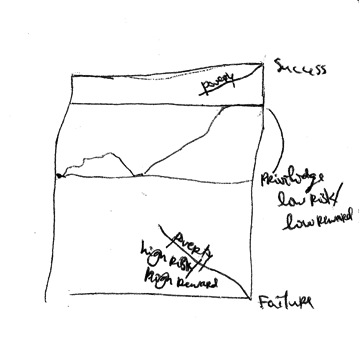
But there also is a surprising third point that connects both stress and growth: that is the believe that growth is enhanced by, indeed requires, the presence of stress. And on the affluent end of the spectrum, Tough and others believe there is even a deficit of adversity which prevents students from ever fully developing into themselves. They simply pass from one institution to another seeking stability and a straightforward path of rewards for their work. In contrast, students in poor communities have a much higher risk of failure, but the students that get out have something their wealthier peers lack: the knowledge that they have achieved something great and the determination to do it again. I drew another diagram while trying to explain this concept to my girlfriend and simultaneously trying to understand it myself:

Notes on Class and SuccessThe point is not to be naive about poverty (especially extreme poverty) and it’s also not about “success” in monetary terms, but in the more personal sense of achievement. Tough writes that the point is to be more understanding of the role of adversity. For the high school student I mentor in Richmond, it wouldn’t help for me to remove all adversity from his life. That would stunt growth as well. Instead, I need to give him a safe place to feel accepted, to know he is loved, and to enjoy life for a moment. He can go to school or the basketball court and know that I’m only a phone call away. And, of course, when he needs something that he definitely can’t get on his own, I’ll do my best to help him out.

Which brings me to Fatima.

I first met Fatima while she was walking home from work one day this summer. I am friends with her roommate, but I had never met her so I made the connection and asked her about her life. I quickly realized that Fatima has a goal: she is determined to get her driver’s license. So I agreed I would teach her how to drive and do whatever I could to help her. A month or two later, I got a call and for the past two weeks, her roommate and I have been riding in the passenger seat while Fatima, timid and incredibly nervous, has been learning how to drive.

This morning, I picked her up to go to the DMV and take the driving test for the first time. She told me she has three chances to get it right before her learner’s permit expires on October 14 so she wanted to get an early start. “I want to drive,” she said when I picked her up. “I want to drive to the DMV.” Aside from a few “dad moments,” I kept my cool on the way and she got us both there with relative skill. As expected, the place was crowded so Fatima got in line to get her number (to wait in another line) and I sat in a seat nearby.

As she stood there, a short, middle-aged Moroccan woman, I was amazed by her courage. No mother or father was there to help her. No husband, partner, or lifelong friend was there with her for support. A stranger (me) was her only chance to get this right and to accomplish her goal. But to Fatima, none of that mattered. It didn’t matter that the woman behind the counter was a little rude or that she was surrounded by people speaking a foreign language. She was focused on one thing: getting a driver’s license to get a car to get a job.

And at first I thought she was incredible for her courage, ambition, and resilience (qualities she certainly possesses in great measure). But, as Tough writes in his book, that is never the full story. While we were waiting in her third line of the morning, I asked her about her family. She told me that she has three younger brothers: one who lives in Rhode Island, and who two live in Morocco with her mother. Her father has passed away. “How is your mom?” I asked mostly to be polite.

“She’s doing good,” Fatima replied.

“Do you get to talk to her very often?”

“Oh yes, I talk to her everyday.”

Every day. I don’t quite know what drives Fatima, but I know it’s somehow connected to the relationship she has with her mother and her brothers. She is loved. And every day when she goes out into this stressful, foreign world she knows that she can return home to a conversation with her mom, a peace, a calm. She’s even told her mom about me, about her goal of getting her license and the stressful test she has to take. And from this loving relationship she goes back out into the world, ready to fight every step of the way. Tough writes that this is the fundamental difference between stress that harms and stress that results in growth: a chance to be restored.

This book may make you think about your life, your kids, your students, your friends. It’s a study that pushes the conversation about “education reform” to a new and more meaningful place: failure, success, and the perilous journey in between.

Sadly, Fatima did not pass the driving test today. I don’t even think the instructor let her out of the parking lot. She very gently told us that Fatima needs more practice. She was just way too nervous and unable to complete some basic tasks as a result. I know she was devastated. After months of work and hours of waiting, she her license was still out of reach..

If that were the end of the story, if Fatima went home and gave up on her dreams, it would be a pretty sad story. But I am sure that she is Skyping with her mom as I write this post, telling her all about this morning, the lines at the DMV and the events of the day. And as she shares with her mom, Fatima is slowly replacing her own stress and fear with her mom’s love and acceptance. She even called me a few hours later to make sure I would let her know when I found a time to take her back for her second test. I believe that through her experiences today Fatima will move forward more prepared for the test and determined to pass.

And that is how anyone succeeds.

Grad school brainstorm

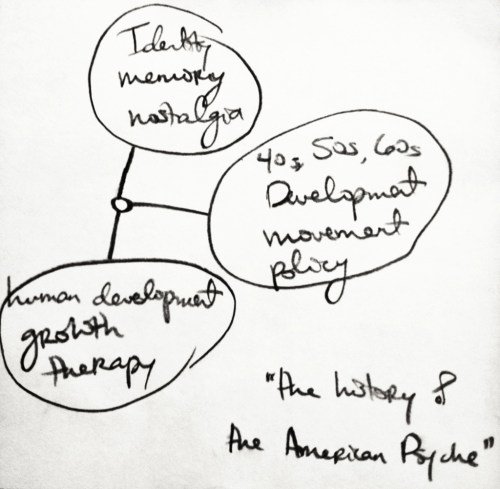
For me, grad school is a foreign country. Below is a brainstorm I wrote down after having a clarifying conversation with a friend last weekend. You may notice that I use the word “clarifying” relative to what my thoughts were before the conversation, but I’m nowhere near clarity. These are the topics that I’m interested in, not the path.

Having a blog has given me momentum through this process since I’ve had a chance to “try out” different topics and disciplines. While “trying out” is fun, it will soon be time to choose. For now, I have the intersection of three areas of interest and the title of my hypothetical grad school thesis:

20130708-112352.jpg

The difference of an early bloomer

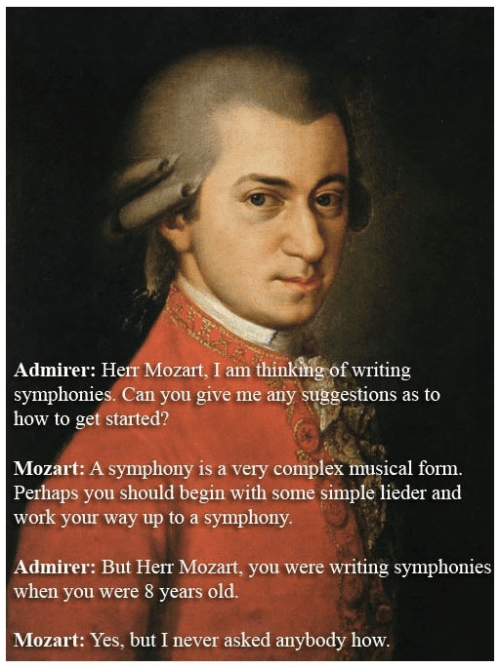
There is so much truth to this Mozart quote I found on The Meta Picture:

Mozart

I personally don’t identify as an early bloomer/genius. Crazy, I know. If you’re the same way, check out this article about a late bloomer for some inspiration: “Discovered at 64, a Brooklyn artist finds his place” and definitely read through Malcolm Gladwell’s article related to the topic: “Late Bloomers: Why do we equate genius with precocity?

Naming New Worlds

Behind the house where I grew up there is an undeveloped lot of trees and grass. As a child, my neighbors and I often climbed over the back wall into this untamed world. We constructed imaginary realms and a gateway to the outside. We even gave it a creative name: Trocourba.

Always fair (even as children), I remember we pulled the name from fragments of each of our respective school mascots: Trojans, Cougars, and Braves. As children, we saw this lot as an empty palate for us to fill with our imagination. Much of what we built has been lost, but I still walk through those woods when I’m home and remember the days spent claiming and naming that empty space.

***

This post is about the attitude of the explorer: the belief that discovering a place makes it “new.” And if it’s new then it’s never been named. We name things every day in order to claim them and make sense of them. In order to understand a place, we give it a name. It makes it familiar.

What first started me thinking about the idea of “naming and claiming” was a conversation I had with my high school students last year. I was teaching the “pre-European” section of a class on Richmond history and we started to discuss the word “savage.” This post is a follow-up to my fascination with the word “savage” over a year ago.

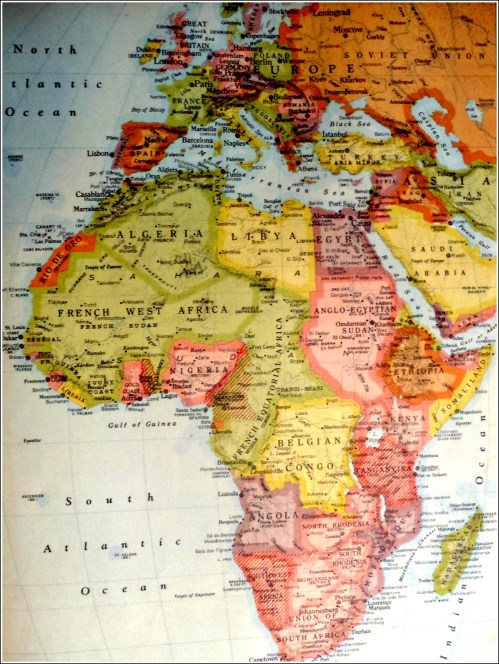
The concept and conviction of savagery, I realized, is a necessary precursor to the process of “naming new worlds.” There are two primary steps in this process. First, discovered lands are proclaimed “new” simply because nothing there is familiar and, second, the existing names for that land (and all inhabitants) are deemed illegitimate. In my class, we discussed the British invasion of present-day Virginia, but that’s not the only example of “savage” places being invaded. Many years after the US gained independence from the British monarchy, the kingdoms of Europe made similar claims on land in Africa. Much of this continent was subdued by the military might and shameful brutality of early Europe. As tribes and kingdoms in Africa fell, new nations were formed.

It was time for some new names:

Many of these names have been changed in the past 50 years of independence, but the legacy of colonization, of course, lives on.

In my search to understand this connection between mapmaking and empire, I remembered one of my favorite sections in the play, Tamburlaine, by Christopher Marlowe. Tamburlaine is a play about a man that seems superhuman in his ambition and his strength. In one scene, Tamburlaine discusses the growth of his kingdom by using the metaphor of a map and a pen:

“Zenocrate, were Egypt Jove’s own land,
Yet would I with my sword make Jove to stoop.
I will confute those blind geographers
That make a triple region in the world,
Excluding regions which I mean to trace,
And with this pen reduce them to a map,
Calling the provinces, cities and towns
After my name and thine, Zenocrate”

(Marlowe, Tamburlaine, I, iv, 72-79).

Here Marlowe conveys the dreams of a new map for a new kingdom with a new king. Tamburlaine connects the map of the world to his goals for military conquest and his desire for increase. With these words he boldly speaks the future into existence. He, like many leaders throughout history, desires to claim the earth as an extension of himself and his power. His kingdom will be as large as his desire because his strength will not be stopped in his pursuit.

This confidence is not unique to Tamburlaine or fiction at all. There are many examples of powerful men looking over other people’s land with greed. These days we all understand this idea of a “nation” as if it is the way that we’ve always structured the world, but that is not the case. As we shifted to nations from the former powerful families, kingdoms, and empires, many voices of dissent were silenced as neat maps were drawn by powerful hands. Here’s a few examples (with dissenting factions in parenthesis):

  • The United States of America (The Lakota, The Sioux)
  • The Democratic Republic of Congo (The Banyamulenge)
  • The United Kingdom (Northern Ireland)
  • China (The Uighur, The Tibetan)
  • Iraq (The Kurds)

In America, we expanded our borders with military victories and the conviction that God Almighty had ordained our growth. In other nations, it was a colonizing force that created new borders with little regard for indigenous territories or cultural differences. While the colonizing or invading forces subdued, they claimed the land and it’s “inferior” inhabitants. In nearly every single case, it went something like this:

“Sorry, that place you call home isn’t your home any more. Oh, and stop calling it that. It’s not called that any more. You’re pronouncing it wrong. How could you be so stupid?”

***

This is the power of names. When a name is given, it becomes familiar. When the name of a place is changed, natives become foreigners. Dignity is stripped. Identity is lost. And there is a deep unquenchable resentment that lives on in hearts and minds.

We are all a part of this legacy. We are all naming or being named.

Labor Lost

There is something that’s been bothering me since I left Detroit. It’s a lingering question: What would America be like today if auto workers throughout the Twentieth Century had rioted and protested against the American government rather than corporations for benefits and a fair wage?

What if the corporation was the wrong target all along?

Today, many people look to Detroit as a failure of unions demanding too much of corporations: health care, pensions, company cars. I disagree with this opinion, but I do see the point: residents on that frontier town were struggling too locally. This made Detroit a formidable industrial town for corporations looking to do business. But their struggle didn’t benefit or protect the rest of their nation with federal policy.

I think one reason workers demanded help from their employers was their perceived permanence. From the nineteen teens to the 1950s the auto industry in Detroit seemed as permanent as the nation itself. I think that it was also a matter of proximity for disgruntled employees: Workers in Detroit could march down the road to Ford’s River Rouge plant more easily (even with the fire hoses and armed guards) than they could drive 10 hours or so to D.C. Unlike Paris and London, our nation’s Capitol wasn’t the heart of industry and labor reform.

Ford was close and he was rich. The businesses in the city also had the most to lose and so it was here that employees felt they had the most leverage. With sit ins and riots they demanded their humanity and their health. And won. As their employers rose to global prominence the quality of life for middle class residents of the city continued to increase.

And then Martelle writes that two things happened: globalization and vertical integration. New factories were increasingly being built abroad and auto parts were increasingly being manufactured on site rather than purchased from suppliers. Neither of these is the fault of Detroiters. And then there was the flight to the suburbs and the Sun Belt, encouraged by federal policy and grants to decentralize defense industry and connect the nation with highways.

In sixty years, the city flipped in every way imaginable.

Today, the Big Three have taken their factories elsewhere and acquired or driven out many of their parts suppliers. With their departure went their jobs and salaries as well as their accompanying healthcare and other benefits. The classic quick-one-two jab of American unemployment.

We’ll never know what America would be like if we had demanded more security from our national government as we industrialized. Perhaps we’d be falling like France or maybe we’d be rising like Great Britain.

While we benefit from the labor struggle in Detroit, we continue to blame the city for demanding more. When really I think they should have demanded differently.

Image

A Day in The D

20130503-181455.jpg

20130503-181527.jpg

20130503-181545.jpg

20130503-181606.jpg

20130503-181626.jpg

20130504-013014.jpg

20130504-013039.jpg

The trend

“The trend toward division of labor and specialization is one of the most universal and one-way trends in human history.”

(Roy Baumeister, Is there Anything Good About Men: How Cultures Flourish by Exploiting Men122)

Detroit Preflection

“Have fun in Detroit!” a friend said to me today. Then added, “I never thought I’d say that.” I laughed and thought, “I never thought I’d hear it.”

In one week, I’ll probably be eating lunch in that infamous American place: MoTown, The Motor City, The D, former home to the Arsenal of Democracy, and the historical heart of the global automobile revolution. Today, it’s a bleeding heart, to be sure, but it’s a crazy American story and I’m ready to see it for myself.

•••

I don’t remember the first time I heard about Detroit. I don’t think it really factored into my elementary, middle school, or high school educations. If it did, it wasn’t a prominent stop along the way.

Actually, I think my first connection to Detroit was in the movie, The Jungle Book (1967). As King Louis sang “I wanna be like you,” the rhythm of Motown filled my young ears. It’s a somewhat dubious scene in the movie, but a good example of Disney capturing the musical genre that Detroit sold to the world. It would be most of my life before I would even begin to consider it’s context or implications.

I didn’t grow up dreaming about Detroit, but I’ve always been interested in cities. This particular city has been calling my name since I first read Tom Sugrue’s Origins of the Urban Crisis for a class five years ago. As I read Sugrue in horror, I learned about the racism and violence that ruined the city in the twentieth century. My classmates and I watched a moving documentary, “Goin’ to Chicago,” that introduced the story of the Great Migration and its role in changing many northern cities (definitely click the link to watch the video if you’ve never seen it). The following summer, I had a layover in the Detroit airport and talked to a woman who told me that she was proud of Detroit despite it’s national perception, but then added that she preferred to live in “nearby” Windsor. I remember the airport was pretty cool too.

That same summer, my boss at Partnership for Smarter Growth gave me a copy of The Geography of Nowhere: The Rise and Decline of America’s Man-Made Landscape as if it were a coming-of-age ritual. She said that someone had given it to her and now it was time for me to have it. Around that time (or earlier), my parents enthusiastically told me about the documentary “Standing in the Shadow of Motown” and I later watched and was amazed. Here’s a link to the trailer. What a place! This music changed the world, but many of us forget it or were never taught in the first place.

For the next few years, I spent almost all of my time learning about Richmond and New York City. But last summer I watched (and really enjoyed) Eminem’s movie Eight Mile and was reminded of my fascination with the city. More overcoming, more amazing music, more fight, more attitude. I have to go there.

Last year, I started to read the book The Warmth of Other Suns: The Epic Story of America’s Great Migration and once again I became incredibly interested in the story of the Great Migration. The title is not hyperbole. The story is epic. It’s a huge book and I had to put it down, but I’ll finish it some day. It’s impossible to understand race in Detroit without understanding where everyone came from. This is the story of African American migration from the rural south to northern cities such as Detroit.

I have seen three brief videos that have connected me to Detroit in different ways. First, the Chrysler Super Bowl commercial, “Imported from Detroit.” I was totally moved by the gospel choir, dramatic shots of the city and phrases such as, “you see, it’s the hottest fires that make the hardest steel.” It was bombastic, yes, but you can’t deny that attitude. It is unique. You could not make a video like that about Richmond, or Austin, or San Francisco. More recently, I watched the trailers for the documentaries Burn and Detropia, both jarring insight into the reality of Detroit’s profound decay and loss. I continued to feel the drama of this city from 1,000 miles away.

I recently stumbled upon one last video that I have grown to love over the past year. It’s a beautiful piece about the Michigan Central Station in southwestern Detroit titled, simply, “Michigan Central Station.” I like this video and I choose it to conclude this post because it’s not sad, but it’s a real portrayal of an abandoned place. It’s also connected to a Web site, “Talk to the Station,” where we’re encouraged to share “ideas and love” for the dilapidated structure. The ideas are great and the energy is exciting. Fifteen ideas in the last two weeks!

As I look forward to my visit, I am most excited about this kind of creativity and stubborn ingenuity in the face of a raw and bitter history. My pilgrimage has been brewing for almost five years and I’m ready to see the place for myself.

Detroit, I’m on my way.

Detroit! Books! Adventure!

I’m going to Detroit. In preparation, I’m putting together a reading list, calling interesting people for advice, and working my network to put together a legendary survey of this monumental city. I will likely post about Detroit in advance of my trip, potentially during the trip, and certainly after the trip. For now, here’s my reading list:

When I was in college, I loved to plan trips like this so I’m beyond excited to get back into the fun. Can’t forget about fun 🙂 Maybe one day I’ll have a job that encourages me to plan trips to places that have a story to tell, lessons to learn, and a creative vision for the future. Until then, Detroit awaits.

Career Dressing Rooms

“Cities have become the career dressing rooms for young adults. They have become the place where people go in their twenties to try on different identities. Then, once they know who they are, they leave.”

The Social Animal, 188-189

The Final Advantage

After months of reading, I have finished William Zinsser’s affectionate guide: On Writing Well. I’ve learned more about writing from this book than any other single source. I’ve also been entertained and moved to tears along the way. That dual quality, reflects Zinsser, “seems to me to be a good day’s work.”

I will never truly be finished with Zinsser and his legacy; as I start projects in the future I’m sure I’ll keep him nearby for regular reference. This book is truly a guide in the most relatable of ways: Zinsser’s voice takes you on a journey and never leaves your side. Here are a few of the many annotated, starred, and underlined bits that charmed me along the way:

“Clutter is the official language used by corporations to hide their mistakes.”

“Believe in your own identity and your own opinions. Writing is an act of ego, and you might as well admit it. Use its energy to keep yourself going.”

“Nouns now turn overnight into verbs.”

“Our daily landscape is thick with absurd messages and portents. Notice them.”

“Don’t hedge your prose with little timidities. Good writing is lean and confident.”

“You’ll find the solution if you look for the human element.”

“She wrote well because she was a clear thinker and had a passion for her subject.”

“We are suspicious of pretentiousness, of all the fad words that the social scientists have coined to avoid making themselves clear to ordinary mortals. I urge you to be natural. How we write and how we talk is how we define ourselves.”

“Criticism is the stage on which journalists do their fanciest strutting.”

“This heightening of some crazy truth—to a level where it will be seen as crazy—is the essence of what serious humorists are trying to do.”

“Taste chooses words that have surprise, strength and precision.”

“We are a culture that worships the winning result: the league championship, the high test score. Coaches are paid to win, teachers are valued for getting students into the best colleges. Less glamorous gains made along the way—learning, wisdom, growth, confidence, dealing with failure—aren’t given the same respect because they can’t be given a grade.”

“Moral: any time you can tell a story in the form of a quest or a pilgrimage you’ll be ahead of the game.”

“One of the saddest sentences I know is “I wish I had asked my mother about that. Or my father. Or my grandmother. Or my grandfather.”

“Writers are the custodians of memory.”

“But the final advantage is the same one that applies in every other competitive venture. If you would like to write better than everybody else, you have to want to write better than everybody else.”

“A good editor likes nothing better than a piece of copy he hardly has to touch. A bad editor has a compulsion to tinker, proving with busywork that he hasn’t forgotten the minutia of grammar and usage. He is a literal fellow, catching the cracks in the road but not enjoying the scenery. Very often it simply doesn’t occur to him that a writer is writing by ear, trying to achieve a particular sound or cadence, or playing with words just for the pleasures of wordplay.”

“You will write only as well as you make yourself write.”

A race

20130323-151353.jpg

In the past 24 hours, my 95-year-old granddad has set and broken 4 world records. Two races to go.*

His life is truly a testament to the value of consistency and hard work. For the first 90 years of his life, he lived and worked. For the past five years, he has won.

But the beauty of his story is not in his gold medals and world records. The beauty in his story is not mere longevity or discipline. The beauty lies in his faith in God and identity in his plans. He said a few years ago (after a stroke) that he might never run again. He was as content that day as he was today as the first officially recorded man his age to run the mile.

And through the years, he has loved his family with a commitment that deserves more honor than any metal can bestow. Fifteen of us came to watch him this weekend. At the end of the race today, the first person to greet him was his great granddaughter.

Winning a race is not about crossing a finish line. Winning is about loving and being loved along the way. Winning is about remembering what really matters.

This is the life of a champion:

20130323-170014.jpg

*He ended up setting world records for the last two races as well

We, the Mobile

As I rode home from work on Friday, I decided I needed to get out of Richmond. For me, a 70-mile drive to Charlottesville is far enough to feel like I got “away” from my routine life. That drive down I-64 was the beginning of an idea that has everything to do with highways and hallowed halls: the faster you can get somewhere the closer it feels.

I’ve been told that humans have always considered a reasonable commute to be about a half of an hour to an hour of travel. Walking, that would be about 3.5 miles. Driving, that could be a trip from Trenton to New York. Flying, that’s a D.C. to Chicago commute that no child dreams to have when they grow up. While the amount of time we travel to work has remained relatively the same, the increase in distance has been significant. The affects of this distance are profound.

In the early 1900s, before the Model T and good roads, many wealthy Americans owned second homes just outside the city. In Boston, for instance, this was the rural getaway known as Jamaca Plain. Near Richmond, it was the neighborhood of Bon Air. Originally a retreat ten miles outside the city, Bon Air was frequented by Richmonders who wanted to get “away” from the stifling life of an industrial city. Today, Bon Air is near the middle of a metropolitan region and considered just another inner suburb. Meanwhile, the wealthiest residents are more likely to have second homes in Sun Valley or Naples than rural Virgina. The idea of buying a second home 10 miles away seems absurd. The faster you can get somewhere, the closer it feels. But is it actually close?

Many American cities today are populated by the children of faraway parents that raised them and watched them leave. I am one of these children. I was given the chance to move over 1,000 miles from home to live somewhere new and exciting. I have been given the chance to go out on my own. But when did this become normal? We, the millennials, are the fifth generation of Americans with access to cheap gasoline and the third generation to grow up with interstate highways.

We grew up as the unsettled generation of an increasingly mobile nation. There have always been wealthy people, but there have not always been turbojets and 70 mph speed limits. This has changed the way we see distance and separation.

For instance, I live about three-and-a-half hours away from my hometown of Tyler, TX. By plane. So that’s about 22 hours away by car and 349 hours by foot. When I left Tyler for college I didn’t really think it was a big deal. Now, it feels significantly farther than I originally imagined. In my sixth year of life away from Texas I can say there is much I have learned while I’ve been away. I wouldn’t change my decision to leave if I had the chance. I love the city where I live and the university where I studied.

But there is this simple, lingering question I am asked every once in a while that I can never completely answer: “So, how’d you end up in Richmond?”

Like most, I tend to focus on the “pull” factors of migration. Oh, I came here for college and fell in love with the city. I usually also make a joke about how the University’s website was easy to navigate or that Richmond wasn’t as cold as Boston, another city I considered for school. But why, as a senior in high school, did I not consider a single school in Texas or even somewhere closer like New Orleans or St. Louis? Why the 1,000-mile trek? There are a few easy answers I can think of:

  1. My brothers did it
  2. My parents let us
  3. I knew I would only be “a flight away”

But that doesn’t really answer the question. While there was a draw to move away, there were also significant “push” factors that sent me away from my southern home. In the land of football and Rick Perry, I didn’t really think there was a place for a friendly writer trying to make a difference. I made lots of unfavorable generalizations to justify my move away, but at the same time I was more focussed on where I was headed. When I applied to college, I dreamed of a place where people liked to read and write, where Christians didn’t all look the same, and where it wasn’t weird to suck at basketball. I didn’t know if I would find that, but I figured it was worth a shot. Everywhere I went in Texas, I saw the same story and realized that, while I think it’s a great story, it would be a hard one to fit into.

So I got out. I became one of the many confused Texpatriots simultaneously displaying a Texas flag and critiquing that beautiful, mineral-rich place.

And here I am: living in an old mansion in Richmond, working at an amazing university that also happens to be my alma mater. My neighborhood is both dangerous and beautiful depending on who you ask. My house is used as a tutoring site for hundreds of kids each year. My city has representations of American architecture going back to the 1700s, fine art, public murals, excellent restaurants, and more. It’s not D.C., but it’s also not snooty and it suits me well.

And yet, if you notice, all the positives aren’t really adding up. There’s always the question, “But what?” Living in Richmond is awesome, but it involves this thing I call the golden triangle of growing up: the pull between a career, a significant other, and family/hometown.

This is how it plays out:

Whenever I think about moving home (or at least near family), my first thought is that I can’t go back until I get somewhere in my career. There’s not much of a market in Tyler for someone who made up their own major in college. Then, whenever I think about advancing my career (a word I routinely misspell) which might involve grad school somewhere far away, I immediately think about my girlfriend and wonder how the timing of both will work out. Thinking about our relationship then takes me back to thinking about moving home and I imagine a life of holiday swaps and long-distance in-laws. Again, when I think about home, I think about my career pulling me all across the nation and I wonder what my little sister will be up to as she finishes high school and enters young adulthood herself. I wonder if my parents will be sitting on our back patio enjoying those cool spring afternoons in Tyler while I’m who-knows-where doing who-knows-what. I think about my three older brothers who are all living in this golden triangle as well and I wonder if we will ever manage to live near each other again.

I wonder if I will ever get to move home and whether it will still be home when I get there.

When you’re in a relationship with someone that’s in a similar situation, you also realize that at some point one of you will have to bend for the other. That’s the compound reality of this golden triangle: both of you can never have all three at the same time. And since both people in relationships today have educations and aspirations, it takes a lot of energy to make it all line up. Often people choose to go their separate ways, some struggle through the long-distance life, and others manage to work it out in the same place. Even when it does work out, it can be a gauntlet of long-term planning and flexibility.

That brings me back to my trip to Charlottesville. I’m currently sitting at a coffee shop with four friends I’ve met since moving out to Virginia. Between the two couples and myself, we represent five home states: Tennessee, Ohio, Maine, Virginia and Texas. We are all living in the reality of the triangle:

I am from Tyler, TX and my girlfriend is from Medford, NJ and Sanibel, FL. We both currently live in Richmond, but our families are scattered from Florida to California. My friend, Max, who is originally from Portland, ME, currently works and lives in D.C. where he met his girlfriend, Shannon, a native Tennesseean (who also moved around growing up), in D.C. just before she moved to Charlottesville for law school at UVA. Max is currently applying to law schools around the mid-Atlantic region and hopes to end up somewhat close by. Margo, another friend from college, is currently living in her hometown of Cincinnati and hoping to start medical school in the fall. She got into the University of Cincinnati program but is trying her darndest to get into a med school in Virginia so she can live near her boyfriend, Joe. Joe, a native of Richmond (the only native Virginian in the group), is currently in the UVA post-bac program so that that he can apply for med schools this summer and start a year from now in the fall. If Margo starts the program in Cincinnati, he will likely move to Cincinnati to work while he does his best to get into the same program or, if he only gets into a program in Virginia, she may try and transfer after her first two years.

It’s no wonder some are calling us the most stressed-out generation.

Max made the comment last night that we are living in an era of “progressive instability” as young adults in Twenty-First-Century America.

“Dramatic instability,” he added.

Since the best opportunities are no longer nearby, we find ourselves settling into LDRs (long-distance relationships) while we find jobs or attend grad school. Even if you don’t want to go to grad school, you’ve most likely thought about it. Max made the comment that the economy expects us to have graduate educations, but doesn’t facilitate the experience. Also, with MBA programs like UVA’s Darden that charge $76,000 a year for in-state tuition, our generation is making history in the way of personal debt.

With the sluggish economy, vertical mobility is synonymous with geographic mobility and cross-country job searches are the norm. This was once the time of life when people began to build stability, moved home, and started a new chapter of life. Some of my friends have managed to work that out, but many of us genuinely didn’t know it was an option. We, the mobile, have followed the allure of big cities and fresh lives.

No longer a time for building community, the twenties have become a very dynamic stage of life. One misstep and you’ll be roadkill in this “Great Recession” that sees unemployment as a mark of personal failure: you can’t get a job if you don’t have experience and you can’t get experience if you don’t have a job. Of course, it can work out, but it’s a little terrifying at the same time. And we are all living in this reality from day to day. Every once in a while I think about all of this and I take a very deep breath. It’s just too much to consider it all at the same time.

In a decade, I hope I look back and laugh at the golden triangle of growing up. I hope we will have a chance to tell stories and swap war wounds on the other side. I hope we all keep our sanity in the process and I hope we remember what matters most. What makes people happy today is what made people happy thousands of years ago: close relationships, good work, and unconditional love.

In the world of the golden triangle, it’s simply a question of where.

History

“The last chapter in any successful genocide is the one in which the oppressor can remove their hands and say, ‘My God, what are these people doing to themselves? They’re killing each other. They’re killing themselves while we watch them die.”

If you have not yet watched Aaron Huey’s TED talk, “America’s native prisoners of war,” you should probably do that before reading this post.

The quote above, taken from Huey’s speech, has taught me so much about loss, abandonment, and the legacy of systemic oppression. His description of the Native American experience describes so well the power of stigma and blame: “You are the savage,” says stigma, “you did this to yourself.” It’s the same way much of America still views inner-city neighborhoods that were abandoned by the middle class decades ago. It’s the sort of condescending lens through which the exploiter will always view the exploited. The effect can be seen in West Virginia and Louisiana, oil-rich Nigeria, and even Wounded Knee, South Dakota: #4 on Wikipedia’s List of the four poorest places in the United States. Still.

Huey continues to explain his perspective on European settlement throughout American history. “This is how we came to own these united states.” He says, “This is the legacy of Manifest Destiny. Prisoners are still born into prisoner-of-war camps long after the guards are gone. These are the bones left after the best meat has been taken.”

People are trapped by the past, he says, they cannot escape because their identity has been crushed. They cannot escape. And where would they go? While federally recognized Americans inhabit much of the fertile soil on this continent, there are still Native Americans living in the desserts, the outskirts, the badlands of our nation. He earlier describes the word Wasi’chu (lit. “taking the fat) as the word used to describe white people. This is a derogatory word, but it is not negative in a sense because it is directed at the exploiter, the “one who takes the best meat.” And so this nation continues to stretch its influence across this land, one settlement at a time.

I suppose my charge is simple: remember the past to have a context for the present. And don’t just remember Gone with the Wind; remember the stories that haven’t been packaged and sold to you. And “Give back the Black Hills,” says Huwy, “It’s not your business what they do with them.” In other words, when there is reason to believe that wrong has been done, the best time to work through the past is now.

Start at the Edge (cont.)

Yesterday, I read the weekend commentary from the Richmond Times-Dispatch titled “Direct traffic to our creative capital” (follow this link for one editorial and you will also see a link for “related” articles) and felt kind of compelled to write a response. The first section of this post yesterday was directly related to the way we talk about Richmond and why we are stuck in an outdated paradigm.

Now, I want to write the article I really intended to write all along: My opinions on how we should focus future developments in the city of Richmond.

#1 We need more people

Some Richmonders still cling the idea that a beautiful city is one that is relatively quiet and “clean,” but in reality many city functions cannot survive without a critical mass of residents. Case in point, many people (including myself) have been talking about trolleys in Richmond. “We invented them! Bring them back!” But we can’t just talk about “trolleys in Richmond” and not make some account for the changes that have occurred since 1888 when they first rolled out. In 1900, just a decade later, Richmond’s population density according to the census was 16,000 people per square mile. That was the highest population density of any city in the south (Christopher Silver, Twentieth-Century Richmond, 63). Compared to the measly 3,415 citizens per square mile living in Richmond today, the Richmond of 1900 was clearly capable of supporting systems of mass transit. Today, we just aren’t in the same place. I wrote once about the idea of “Longing for a Heyday” and how I/we sometimes look to some time in the past when cities were great. I don’t think we need that sort of shallow nostalgia, but rather a reasoned comparison between the Richmond of the past and the Richmond of today.

Our primary goal should be to get people here in the highest density possible. Remove all restrictions on ancillary unit rentals, remove unnecessary P&Z, and bring neighborhoods back to downtown: row houses and mansions alike. Get the density up, then we can talk about street cars et. al.

#2 Distrust Regional Collaboration

When multiple localities have vastly different values and strong competitive interest, collaboration is strained at best. Chesterfield wants more retail/corporate, Henrico wants more of everything, and Richmond wants to become a creative, welcoming city for all. What is there to talk about? Richmond needs to distrust regional collaboration at the government level and continue to invest in the physical condition as well as the residents of the city. Like I said in my last post, compared to the past 60 years, it’s a good time to be an American city. The tide is turning in our favor and if we are patient enough we may later return to the bargaining table with more than humble requests. Also, if the ballpark isn’t good enough, let the Squirrels go. We can use that space for a new neighborhood (see #1) and add to the growing Northside community.

#3 Cover the Highway

I was speechless when I read the commentary printed by the Richmond Times-Dispatch this weekend. Speechless. I don’t know Josh Dare, Tom Silvestri, or Sean Connaughton personally, but I imagine them to be very nice people. I also imagine them to be a lot like my parents’ friends which means we could definitely get along over drinks or dinner, but every once in a while I might have to bite my tongue. And that is what I did as I read through their commentary while sitting around others in a public space.

Here is my reply to the idea of improving the highway experience: First, don’t hold the highway against the people of Richmond. It exists as yet another shameful reminder of how Richmond officials often destroyed the city they were charged to represent. As most Richmonders are now aware, the people of Richmond soundly defeated the highway plan in the 50s only to later be sidestepped by a policy loophole. Second, want to make a statement? Cover the highway. The entire stretch from Shockoe Bottom to beyond Jackson Ward. Take a tip from Dallas, Boston, and Hamburg: Urban highways are bad business.

Cover the highway, build a park, and reconnect the city. The statement this would make is that we care more about the wellbeing of committed, local citizens than the opinions of temporary passersby and we would rather move them along to their destination with as little harm to the city as possible. Besides, if they do have a destination (which is most likely) they really just want a Wawa coffee and some gas for their car.

#4 Build on the parking lots

I know, I know, I know. We need to have parking lots because we have to make sure that everyone can drive and park where they work and play, etc. But if we are going to move forward, we must build on our parking lots. This isn’t really up for debate. Look at what was once the neighborhood of Gamble’s Hill and tell me that you like things the way they are. We must build on our parking lots and reclaim this valuable (and finite) urban space.

#5 Start at the edge

Finally, the real conversation is not about strangers on the highway, it’s about residents in the neighborhoods surrounding our city. What do they think about us? Why do they feel so confident about their relative position? The redevelopment policy that Richmond should begin to pursue should be a two-pronged policy targeting not just the core, but also the edge of this city. We’re not going to expand our boundaries so we might as well dig some trenches and settle in. This is what the city fathers should have done 60 years ago. Rather than bring the blight of the suburbs into the heart of the city, we take the beauty of the city to the edge of the suburbs. Begin to create a stark contrast from city to county along every major corridor with street trees, bike lanes, on-street parking, and high-density development. Build brick and stone columns at the border denoting that the driver has left or entered a place that cares just as much about the space between buildings as it does about what is on the shelves inside.

Stake a claim. Start at the edge.

Start at the Edge

As a resident of Richmond for the past five years, I have had the privilege of living through an exciting and dynamic season of change. It seems that after about 60 years of condescension and loss, it’s becoming a good time to be an American city. It’s a good time to be Richmond.

So, with that in mind, I was a little surprised when I read three editorials recently published in the Richmond Times-Dispatch addressing the “issue” of the view of Richmond from the highway. As I read each article, I felt that importance had been placed, not on the city, but on the opinions of passersby. This editorial is a response to those articles and perhaps generations of similar articles that have come before them. I believe that before we have a conversation about Richmond, we need to have an understanding of how the city changed during the twentieth century and more importantly what changed about the way we talk about cities in general.

My undergraduate education on the urban crisis in America presented changes in the city as a process of politics, prejudice, and technological advancement. More recently, I have come to understand the urban crisis as a gradual shift in investment and perception that took the American city, a source of pride, and turned it into a mark of shame. Furthermore, I understand the urban crisis as a rhetorical war between old and new. The goal of the war, as with any, was to frame the other as “backward” and the self as “progressive.” While Richmond attempted to maintain dignity, new technologies seemed dissatisfied with older cities: You’re too compact, too dilapidated, too prone to riot and rot.

As each new suburb was developed it became yet another statement to the American people pointing toward the promise of new, more civilized places with room to roam and play. Within this promise there was also a clear distinction being made from the archaic, dark city where most Americans at the time resided. As with all major shifts, the new way of doing things had to work to undo the more traditional ways of life. Many believe that the post-war zeitgeist of modernization, on a national level, did much to shift popular opinion. But on a local level, citizens of the Richmond metro-region still had to prove to residents that there was a more abundant life to be lived on the other side of the city limits.

This was accomplished through a series of events: The celebrated opening of Willow Lawn Shopping Center (1956), the construction of the Richmond-Petersburg Turnpike (1959), the failure of plans for consolidation with Henrico (1967) and other semi-related moments along the way. Each of these also had their corollary effect on the life of the city exemplified by events such as the closing of Miller and Rhodes/Thalhimers, the destruction of urban neighborhoods, and the political isolation that conclusively trapped and humbled this once-proud American city.

As money and people continued to migrate to the suburbs, local officials turned their attention from annexation to urban renewal. “If we can’t have the suburbs,” I imagine them thinking, “we have to do something about this city.” But rather than invest in what already existed, they fixated on dreams of what could be. “We get it” they tried to say “and we’ll fix it,” just don’t move your family to the suburbs.

As Silver writes, the city then “embraced urban renewal with a sense of urgency unprecedented in Richmond … Consolidation would have afforded vast new areas for growth and would have enabled the city to continue its policy of neglect toward inner-city areas” (254). Now left to embrace the demands of reality, Richmond’s city fathers sold out and destroyed much that today would protected as historical. They were always looking to what the city could be rather than accepting the city as is.

To me, this moment of urban renewal was a sign that the suburbs had won the war. This was the point in the story where it was finally decided that new was in fact better than old: Look! Even the city hates the city. In the decades that followed the tumultuous 60s and 70s, much has been said of the potential of cities, but almost all of it with the understanding that cities have something to prove. To this day, the standard to which Americans hold their cities is strangely high while their commitment to funding urban institutions and infrastructure is remarkably low. As Kunstler might argue, this is because we are no longer a nation of citizens; we are a nation of consumers.

Additionally, it seems that many of us have a powerful aversion to cities because we’re still trapped by the negative stigma established all those years ago. While local boosters proclaim, “Richmond is a city of art and great food!” critics reply, “Parking lots! Potholes! Prostitutes!” And regardless of their merit, these conversations do little to change the paradigm.

In this sadly familiar conversation, the subject is always “the city.” The place that needs to change is the city. The place that we want to love is the city. But this is not the perspective of an insider. Instead, we need to recognize that this critique is one of suburban condescension. The suburbs are still trying to prove their worth and their legitimacy and they are still quick to do so by orienting themselves against the “corrupt” and ” inefficient” locality they are ashamed to call neighbor, but delighted to visit for a basketball game.

We cannot have a productive conversation about Richmond until we move past the negative stigma that outsiders have placed on the city and begin to see Richmond as good once again. We should welcome visitors to come and enjoy themselves in the city, but our ultimate concern must be with the needs and desires of existing residents. Developments in Richmond should be for the city, not at the city’s expense, because that is what we can sustain and appreciate. And no longer should we consider developments for someone else to enjoy.

We have nothing to prove and everything to gain.

This Ignorant Present Revisited

A couple of months ago, I posted a quote from MacBeth that included the phrase, “this ignorant present.” I posted it because, for some reason, the idea really struck a cord with me.

Everywhere I go, I am asked variations the same question, “What’s in store for next year?” When I was a senior in college, I was asked this question. When I was a senior in high school, I was asked this question. I think before every big transition I have been conditioned to receive this question with either evasive answers or a scattershot of ideas and possible directions. Rarely (besides the college acceptance) have I been the sort of person to have an answer. Now, because I am currently working in a one-year program, the questions about the future have sort of carried on right through college graduation and into this year.

And I’ve noticed two things about this process: 1. Questions about the future make me uncomfortable and 2. I find myself asking these sorts of questions all the time. And then I started to wonder if maybe we are sort of all collectively making each other feel uncomfortable or unsatisfied with the present. Am I simply hoisting my discomfort onto my friends by asking them the same question that I myself am tired of hearing? Often, rather than enjoy the present, I am thinking about the future and I find that this ignorant present doesn’t seem to deserve our time in the context of the grand future we are supposed to be planning for ourselves. I know that lots of times these questions are well-meaning (or maybe an attempt on my part to make casual conversation), but I’m tired of the question and I want to respect the present.

I want to appreciate the present.

I also intend to put in serious work getting to the next step of my life … and I understand that I will always need to prepare for the future. But maybe I’m telling myself this as much as anyone else: the present is what we have. Conversations about the future, regardless of their intent, seem a bit assuming. This is, after all, the human experience we’re talking about so no matter what answer I give you when you ask the question (you know you want to) it’s with the understanding that life is going to happen regardless of what I say. So at this point, that seems like the only legitimate answer about what the future holds in store.

Life.

And more life.

RVA Remembers

Make your own at http://rvacreates.com/generator.php