
I have recently come to the conclusion that life is a combination of therapy and trauma. There are moments in between, of course, but these are often forgotten.
I’m not really thinking of therapy in the strictly medical sense. I think of therapy more as an overcoming of the past. Two months ago I wrote a similar post from a slightly different perspective. At the time, I saw our selves as haunted houses full of fear and stigma. The ghosts, I thought, were the memories of trauma. And the therapy for trauma I described in this way:
“We need to painfully return to embrace ourselves: chaos and all. We need to walk the halls of this haunted house, to run our hands over dusty railings, to notice what has been broken, and perhaps to even find that our fears were unfounded.”At the time, I don’t think I really respected the difficulty of therapy. That is, I don’t think I understood how difficult it can be to work through and overcome the past. I also had a shallow understanding of the memories of trauma I carry within myself. Now, I see that embracing ourselves “chaos and all” is a much more difficult and long road, but no less worthwhile.
My next thought is also related to how we form memory and how events in retrospect can become therapeutic while others later seem traumatic. The former are the stories we tell ourselves from the past that help us to understand the kind of person that we are and want to be. The other stories, the stories of trauma, are the stories that we usually ignore or try and laugh about and forget. These are the stories that remind us of who we don’t want to be.
These are the stories we ignore … as well as the people and places with which they are associated.
But they are as intimately “us” as are the stories we enjoy hearing about ourselves. They shape the way we approach every situation. These stories affect the way we interact with other people, perceive authority figures, the opposite sex, peers, coworkers. And since each of us carries different traumatic experiences, each of us will see vastly different activities as therapeutic. For me, baseball was a sport that I was never good at. Struck out in T-ball, put away the bat, gave the pants to a friend’s little brother, and never looked back. So when I threw a baseball with one of my friends the other day, for the first time in about a decade, it was actually a strange sort of therapy.
For someone else, public speaking might be a therapy. For another, going back home is either therapy or trauma depending on how productive we think that it is vs. how much we revert to the person we are trying to forget. We all fear different things in order to protect ourselves, but these fears are usually more internal than we realize: hanging out with the old traumatic stories we love to hate.
As we interact with the past we don’t get rid of it, but, rather we grow to understand it and appreciate it. We also learn more about our negative cycles and can catch ourselves before they set in. Unfortunately, this process never ends, but I imagine it develops over time. I suppose that’s really the goal of these sorts of processes anyways: longevity. The more we’re willing to submit ourselves to life, to therapy, the more we’ll develop and mature. So here’s to long, healthy lives. Here’s to the good and the bad and the perfectly normal in between.
↬ @Spozbo and the semi-controversial David Deida for leading me to consider the benefits of therapy not as something to fear, but as something integral to healthy human development: life as therapy.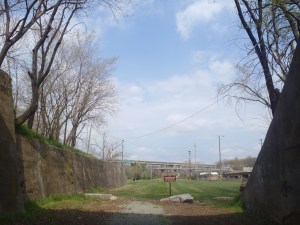 I recently visited the Negro Burial Ground just east of downtown Richmond in Shockoe Valley. My approach to this site was across a VCU parking lot and through a tunnel under Broad St. As you walk through the tunnel, you emerge onto a huge empty field of beautiful grass that was once yet another parking lot in downtown Richmond. In recent years, the asphalt was removed and this area was designated “A Place of Contemplation and Reflection.” I appreciate this area mostly because it’s a complicated place. There aren’t physical buildings that most people would consider “historic,” but what happened on this one piece of ground (the public execution and careless burial of enslaved and free people) is considered enough to make the place significant today. Once a place of fear and violence, it has been restored to the people of Richmond as a place of silence and careful thought.
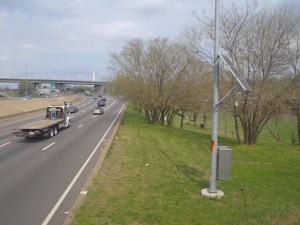 While I think the site itself is certainly worth visiting, what I really care about is a place located just above the actual burial grounds. From this vantage, you can see that less than 50 yards away from this place of contemplation is Interstate 95 in all of its glory. The cars and tractor trailers fly by on this crazy asphalt slingshot that shoots cars straight through the heart of my city. Like all highways, it’s a totally anonymous no man’s land where you don’t walk, you don’t slow down, and you don’t typically notice the historic burial grounds nearby. When you’re on a highway like this, you don’t care much for where you are because you’re more focussed on where you’re going. That’s essentially the nature of movement.
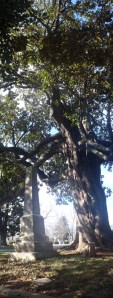 There is something so basic and yet remarkable about the time and care that was taken in the planning and development of Hollywood Cemetery. It’s no wonder Richmond’s aristocracy used to picnic on the hills of Hollywood overlooking the James River. They escaped the smoke of the city, tidied up their family plot, and caught a cool breeze on warm summer days. Since the cemetery was first planned, it has been maintained, improved, and today remains a destination in this old American city. A brick walkway was added to create “President’s Circle” where two former US presidents are buried. The cemetery stands, in part, as a testament to the longevity of power and tradition in American society.
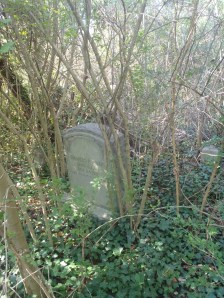 Another remarkable cemetery in Richmond, one that is not highlighted in Thadani’s epic, is Evergreen Cemetery. I visited Evergreen four days before I visited Hollywood and, as anyone would tell you, the difference is stark. Where one has improved, the other has declined. Where one is prominently placed on the hills overlooking the James, the other is beside a highway in Church Hill. Where one is a testament to power, the Other is a testament to the longevity of systemic stigmatization and shame.
 Highways and Hallowed Halls