Tag Archives: identity

Movement and Moment

Over the course of the past year, I’ve been writing my way through a bunch of different thoughts and ideas and the result has basically become the entirety of this blog. At the same time, I’ve also been gradually trying to connect the dots with one underlying theme: that life is all about circulation and significance, the movement as well as the moment.

Since my words don’t always make a lot of sense, I’m constantly trying to find new ways to explain myself and share what I think is interesting about the world: examples of circulation and significance in our daily lives. Most of these places are either what I consider Highways (circulation) or Hallowed Halls (significance). Today, I get to write about a place that embodies both of these characteristics and the tension that exists between the two.

I recently visited the Negro Burial Ground just east of downtown Richmond in Shockoe Valley. My approach to this site was across a VCU parking lot and through a tunnel under Broad St. As you walk through the tunnel, you emerge onto a huge empty field of beautiful grass that was once yet another parking lot in downtown Richmond. In recent years, the asphalt was removed and this area was designated “A Place of Contemplation and Reflection.” I appreciate this area mostly because it’s a complicated place. There aren’t physical buildings that most people would consider “historic,” but what happened on this one piece of ground (the public execution and careless burial of enslaved and free people) is considered enough to make the place significant today. Once a place of fear and violence, it has been restored to the people of Richmond as a place of silence and careful thought.

While I think the site itself is certainly worth visiting, what I really care about is a place located just above the actual burial grounds. From this vantage, you can see that less than 50 yards away from this place of contemplation is Interstate 95 in all of its glory. The cars and tractor trailers fly by on this crazy asphalt slingshot that shoots cars straight through the heart of my city. Like all highways, it’s a totally anonymous no man’s land where you don’t walk, you don’t slow down, and you don’t typically notice the historic burial grounds nearby. When you’re on a highway like this, you don’t care much for where you are because you’re more focussed on where you’re going. That’s essentially the nature of movement.

To get the photo above, I climbed up a little hill to the foot of the Broad St. bridge I had previously walked underneath. For a while, I just sat up on the hill and watched the disinterested movement of the highway next to the contemplative stillness of the old burial ground. I realized that we need both the movement and the moment, but I think sometimes we feel like we have to make a choice: You have to be either ambitious or thoughtful, motivated or lazy. When I experience a place like this, it reminds me that we should be aware of both aspects of life. It also makes me a little more hopeful that my writing is still relevant. What I have learned through writing this blog is still teaching me and making the world a more interesting place.

While I was looking out on the scene, I realized that photos and words are limited media for describing ideas such as movement and moment. So I filmed a brief and simple video (below) that might help to further explain this relationship. It’s much more about the idea than the video itself … and I recommend muting the video sound and listening to Lisbon, OH by Bon Iver while you watch it.

As always, more to come.

P.S.  to Gwarlingo for the movement/moment pairing … it used to be found in their explanation of the meaning of the word Guarlingo which is Welsh for the sound a grandfather clock makes before it strikes on the hour, “the movement before the moment.” Of course, my blog is about the movement and the moment, but I thought it was an interesting side note.

Hayden White on Narrative

I was looking back through The Houses of History the other day and I was struck (once again) by Hayden White’s article “The Fictions of Factual Representation.”

Here are two excerpts:

“Most nineteenth-century historians did not realize that, when it is a matter of trying to deal with past facts, the crucial consideration for him who would represent them faithfully are the notions he brings to his representation of the ways parts relate to the whole which they comprise.
 
They did not realize that the facts do not speak for themselves, but that the historian speaks for them, speaks on their behalf, and fashions the fragments of the past into a whole whose integrity is—in its representation—a purely discursive one.
 
Novelists might be dealing only with imaginary events whereas historians are dealing with real ones, but the process of fusing events, whether imaginary or real, into a comprehensible totality capable of serving as the object of representation, is a poetic process.”
 
“These fragments have to be put together to make a whole of a particular, not a general kind.”

The Memories that Haunt the Mind

In church on Sunday we sang a song titled, “We Cannot Measure How You Heal.” I’ll be honest, usually when I sing in church I don’t have a clue what I’m singing about, but as I sang through this hymn I was struck by it’s message. After we finished singing, I wrote down the following excerpt:

“But present too is love which tends the hurt we never hoped to find,
the private agonies inside, the memories that haunt the mind.
So some have come who need Your help and some have come to make amends,
as hands present in the touch of friends.
Lord, let Your Spirit meet us here to mend the body, mind, and soul, 
to disentangle peace from pain, and make Your broken people whole.”
 

Most days I don’t like to think that I’ve picked up some baggage over the course of my short life. I don’t have the sort of personality that likes to revisit old pain, but every once in a while I have no choice. When I least expect it, the past asserts itself on my present and clouds my vision of the future. We aren’t always aware of this pain, but we all carry with us “the memories that haunt the mind.”

These memories often hold us back because they remind us of our weakest, most vulnerable moments. They remind us of times when we felt unloved. They remind us of when we failed. In these memories there is a lie that we will never amount to any more than that little boy or that little girl. I hate lies, but I especially hate the lies that trap us with small dreams. In the same way that the hymn speaks to the hurt of our past, I have been thinking a lot about the fears of our future. Like memories of the past, these can paralyze us and steer us away from our calling. So the other day I came up with my own metaphor for life somewhat following in the legacy of Rilke’s Letter To a Young Poet #4:

Chaos and despair. The flower has fallen from your brown, curly hair. But look up to the field of new days the Lord has given you. Pick each one with joy and vigor knowing that it too will fall. When it dies it will become the earth that composes the future. But don’t simply examine the earth! You cannot possibly know how it will direct the color and shape of the future. Simply know that each day the flower is restored and replaced.
 
In the same way, don’t look past it to the other flowers in the field. They are like specks of color on a painting: limited representations of reality. A closer look doesn’t tell you any more than what you already knew: this day too will come. And when it does, as if sprouted from the canvas itself, that day will desire your attention and affection. But that day is not today.
 
Today, as is true in the case of a painting, you must take a step back and begin to simply appreciate what you cannot understand. The future for what it is.
 

So that’s my thought for today: what you can’t understand should not dictate your outlook. Rather, let what is true guide you and let yourself breathe in the space you have been given. Today. As Rilke writes,

“Don’t search for the answers, which could not be given to you now, because you would not be able to live them. And the point is, to live everything. Live the questions now. Perhaps then, someday far in the future, you will gradually, without even noticing it, live your way into the answer.”
 

Amen.

C is for Cemetery

Cemeteries are memory personified.

They are the tangible outcome of the human desire to be remembered. The desire to last beyond our death. They are the pyramids of the masses; each grave a person’s last chance to make their case for God and men. Cemeteries are also a halmark of civilized society … not everyone receives the dignity of a headstone. And because not all headstones are created equal, they’re also a tangible and public investment in the future of the family name.

In his book, The Language of Towns and Cities, Dhiru Thadani writes an entry for cemeteries that includes two photos of Hollywood Cemetery in Richmond. “Authentic towns and cities have cemeteries,” he writes, “and space should be planned to accommodate this essential component when designing new towns.” When I read this, I appreciated Thadani’s attention to the value of cemeteries in modern life. I also considered it a bit of a coup for Richmond considering the other noteworthy cemeteries in America. Then again, it’s completely justified.

There is something so basic and yet remarkable about the time and care that was taken in the planning and development of Hollywood Cemetery. It’s no wonder Richmond’s aristocracy used to picnic on the hills of Hollywood overlooking the James River. They escaped the smoke of the city, tidied up their family plot, and caught a cool breeze on warm summer days. Since the cemetery was first planned, it has been maintained, improved, and today remains a destination in this old American city. A brick walkway was added to create “President’s Circle” where two former US presidents are buried. The cemetery stands, in part, as a testament to the longevity of power and tradition in American society.

Another remarkable cemetery in Richmond, one that is not highlighted in Thadani’s epic, is Evergreen Cemetery. I visited Evergreen four days before I visited Hollywood and, as anyone would tell you, the difference is stark. Where one has improved, the other has declined. Where one is prominently placed on the hills overlooking the James, the other is beside a highway in Church Hill. Where one is a testament to power, the Other is a testament to the longevity of systemic stigmatization and shame.

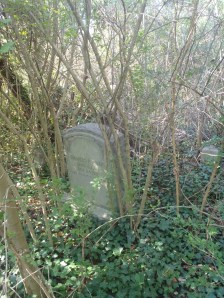
At one time, Evergreen Cemetery must have been a place of prominence in the black community. At least a generation of leaders, their family and friends were buried in this place. The most noteworthy resident is of course the famed Maggie L. Walker: the first American woman to “charter a bank in the United States.” Her grave, like many others, is now shaded in the canopy of a forest that has grown where there was once a field. Mausoleums have been raided, pathways are hidden by brush, and the lives of black Richmond are gradually being lost to time.

With cemeteries, it’s always difficult to understand who is responsible for upkeep. The children of the deceased, the businessmen who sold the plots, or the society at large. The more fascinating question to me, of course, is not who, but why? At its most fundamental level, the maintenance of graves is actually a maintenance of one’s personal identity and heritage. In the case of Hollywood, this is both American and Confederate heritage. In both cases, the members of these groups seem totally unashamed of their pride. They live boldly in their past and work tirelessly to maintain the vestiges which prove it’s legitimacy.

In contrast, the people who would have maintained a place such as Evergreen were a vastly more manipulated and displaced group in the twentieth century. The successful class of black Richmonders, once confined to the city, were proud to erect monuments and sustain traditions that defied the white power structure’s condescending narrative of black inferiority. Once segregation was overthrown, however, many left the city behind and perhaps coincidently left behind their heritage as well. Of course, this is true of nearly every American who left the city in the twentieth century. And yet, one cemetery shines and the other is being slowly eroded by time.

“Segregated at Death” was a title that I considered for this post, but I decided that  it wasn’t the message with which I wanted to lead. I decided that it would be more worthwhile to simply present these two cemeteries and hopefully develop more of a holistic understanding of both (and cemeteries in general) in the context of the other. Thadani’s omission of Evergreen is unfortunate, but not unexpected: his work is often more concerned with aesthetic than politics. For me, I believe that if if we’re going to talk about cemeteries, we ought to at least consider both sides of the American color line to get the full story.

If anyone else wants to start tearing down trees at Evergreen let me know! I still think it can be saved and I would love to be a part of clearing the brush from old Richmond graves. The task is daunting (if you’ve been there, you know), but I think would be worth it.

Perhaps the more we work the more we will know why.

This slideshow requires JavaScript.

This post is a part of a series I’m putting together on my RVA page.

Delusions

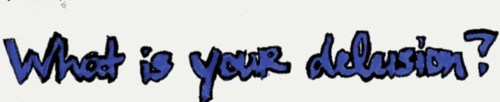
For the past few months I’ve been writing about identity and perspective. My primary goal during this process has been to answer the following question:

Along the way, I’ve considered various delusions that we humans believe about ourselves and each other … and I’ve found many of these within myself. It’s been a pretty worthwhile experience, but recently I was amazed by a passage from the Hebrew prophecy found in Isaiah. It is perhaps the most profound answer to my question.

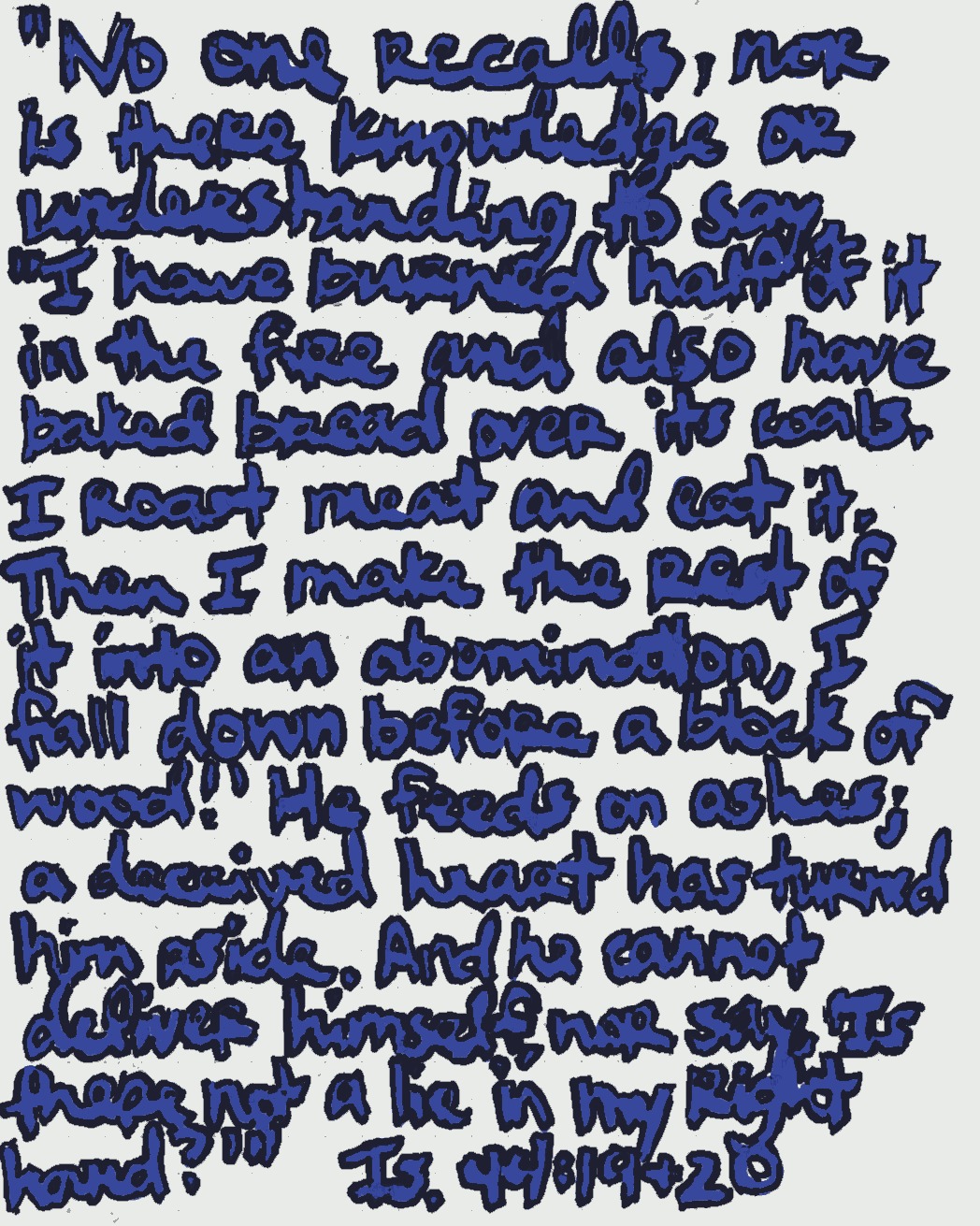
Reading Isaiah 44:13-20 is a humbling experience. Here is an excerpt:

This passage is a profound metaphor for the lies that we tell ourselves.

The man in the story worships something that is temporary, a wooden idol. Something that he himself created. Alone in his own world, the man has convinced himself that he is in the presence of greatness. This thing then becomes the object of his worship.

I love the first line, “No one recalls.” It reminds the reader that the man in the story has not been afforded the same perspective that makes his delusion obvious.

Then I wonder, how many lies have we told ourselves? The first that comes to mind is my Facebook page. When I look at it, do I not believe what I see? In my heart, I know that I am more complex than this one page, but on a daily basis I put that knowledge aside and believe the lie that I have created for myself and others. I literally give of my time and energy to supporting that “Facebook me” that sustains this limited identity.

We humans create many amazing things. We also often like to convince other people that these things are important … sometimes we even convince ourselves. Then we unwittingly begin, ever so slowly, to sacrifice our “selves” to the thing that we have created. Some major examples that come to mind are empires, corporations, religions, and nations. Each one of these entities is created and buttressed by the energy of human work, but many still believe that their individual lives are less important than the entity being sustained.

To these we give our time, our money, our creativity, and our lives.

Finally, it seems that the difficulty of my favorite question is that it inserts doubt into our enlightenment notions of human reason. As humans, we often employ our own reason to save ourselves from delusion. This endeavor, I believe, has had limited success. This is because I have found that every such human attempt toward salvation or enlightenment (even this blog) can itself become a new object of worship and delusion. So here is my desire: To find those humans who are pointing their lives toward something that is not made, discovered or achieved by men. That, to me, is the Christian walk. It is not to sustain a structure or to defend an ideology. It is to follow a path that no human could (or would) have ever devised.

As I mentioned earlier, the oposite of delusion is perspective. Without something outside of the human experience, we will never see ourselves properly and we will be perennially stuck like gerbils on an exercise wheel. Perspective allows us to first see the wheel (the ideology, culture, addiction) that was created by men and then to leave the wheel entirely. This is the beginning of a journey of faith.

Many people would say that, as a Christian, I fit the description of the deluded man I described above. They say that I worship something that has been created by men … not dissimilar from the example in Isaiah 44. They say that the Bible is simply paper and ink and that I’m defending an idol. I can’t say that they’re wrong and I’m right. I can only say that the more I search for even a glimpse of eternal perspective the more I am drawn back to my Christian faith. This faith is not easy, or white, or  American, or something for which I feel personally responsible.

It is difficult and uncertain and leads me to constantly see myself in a new light.

At this point, that’s the only conclusion I can think to give this post. I will continue to interrogate my delusions and I hope to continue to learn more about my perspective on myself and others. All the while, I’ll be personally seeking the Truth that opens my eyes to the man-made objects that I continue to worship each day. Giving them up may seem irrational, but they are the exercise wheel and I would like to soon step off.

Amen.

This post is a part of my “Savage Faces, Human Places” series that I’m putting together in my section on Power.

Not “the Poor Kid”

I’ve been sitting on this post for weeks, but last night’s South Park episode put me over the edge … “The Poor Kid” is both funny and excellent commentary on the ways in which we see ourselves and each other.

The main point of the plot (aside from mocking the Penn State scandal) revolves around Eric Cartman’s constant attempt to solidify his identity as “not the poorest kid in school.” The introduction of course begins with Cartman realizing that he is, in fact, the poorest kid in school. A terrible blow for his shallow identity. He then fakes a meth lab in order to get the attention of CPS and a new start as a foster child in small-town Colorado. Ridiculous, yes, but I bet everyone who reads this post (or watches the episode) can relate to such a desperate attempt to restore their identity rather than own up to reality and move on.

Cartman’s first conversation at his new school highlights this experience:

“O.K. All right, so listen, I know our family is poor, ok, but before we lived here, Kenny was actually poorer than me so technically he’s the poorest kid at this school.”
 
“What are you talking about? The poor kid at this school is Jacob Hallery.” “Really?”
 
“Yeah, dude. His dad died five years ago and his mom went crazy from depression so she can’t even keep a job.”
 
“YES!! Did you hear that, Kenny? We’re good! I seriously didn’t think we’d stand a chance but everything’s gonna be O.K.! (singing now) Cause I’m not, I’m not the poor kid in schoooooool.”
 

The point is not that Cartman’s mean, although he is. The point is that he’s saying what everyone else is thinking. I laugh because I know it’s true. More broadly, I laugh because the greater message is that we generally follow the human instinct to identify ourselves against others rather than towards ourselves or a purpose.

So this post is about our perspective and identity as well as the external places and people that give us a standard from which we may contrast ourselves. In the same way that Cartman feels relieved by the presence of a “poorest kid” in school, I’ve found that we all believe, in some small way, that we will be “O.K.” as long as we’re not the worst.

For me, if I found that I actually was the worst (e.g. being one of two in the first round cut from the basketball team in 7th grade), then I just decided that it wasn’t worth my time. Ever. But no matter how well I invested my energy in other places, I still felt the need to “beat” basketball (or whatever it was at the time) by thinking of jocks as uneducated or otherwise illigitimize general athletics. In this way, I propped myself up on a prejudice that made me feel more intelligent, industrious and orderly.

In short, this is Orientalism.

Originally used to denote academic and artistic work focussed on “Eastern nations,” Orientalism has now become the term for a strong critique that debunks the very perspective it used to denote. In 1978, Edward Said published the book Orientalism which fundamentally shifted the usage of the word from the study of “The Orient” to the actual perspective with which “the Orient” had been studied and the imaginary space was created as a result. Today, his ideas form a sort of standing check on every scholar attempting to “understand” anything remotely foreign or exotic. The reason why this concept is still important is that Orientalism (the critique) states that the very act of such research is fundamentally a form of identity formation rather than simply an intellectual pursuit for understanding.

I propped up my identity on the myth of the “uneducated athlete,” Cartman celebrated the existence of a “poor kid” on which he could rest his shallow pride, and Orientalists may have sought the “Orient” in order to further the narrative of the progressive, industrious, and powerful West.

At its best, this sort of identity gives people confidence and empowers them to remove themselves from negative influences. At worst, the Orientalist perspective is a delusion completely unable to engage reality. This delusion can lead individuals as well as entire nations to stigmatize other people and regions as inferior to the point of dehumanizing the other. As Ziauddin Sardar writes,

“Orientalism’s failure, Said argues, has ‘been a human as much as an intellectual one; for in having to take up a position of irreducible opposition to a region of the world it considered alien to its own, Orientalism failed to identify with human experience, failed also to see it as human experience’ (Sardar, Orientalism,” 74).

In other words, the perspective established it’s object of study as so distinct that it no longer engaged the complexities of human experience. After years of this study, the Orient became as much a myth as a reality. More broadly, this perspective can prevent individuals from forming whole and healthy identities if they are positioned in opposition to imaginary people and places.

Some more fine examples of this perspective in action are the “rebellious youth,” the “corrupt inner-city,” and “the backward south.” Implicit in each of these titles is the presence of an onlooker (Adults, suburbs, and the Northeast) employing this dehumanizing Orientalist lens. In the context of my general thoughts on “savagery” I believe that everyone, to some extent, believes in this notion of the Orient. The farther away from yourself that you find this ‘other,’ the saver and more comfortable you may feel. The closer the ‘other’ is to yourself, the more unsettled and protective.

Either way, the more we work to prop up these identities, the more unhealthy our lives will become. Humans are complex … we can seek to understand each other as long as we accept that we never truly will. It’s more difficult, but I think this acceptance will allow us to be a little more realistic about ourselves and each other.

That’s the point of this post … and this series: “Savage Places, Human Places

P.S. Nina just called me out the other day for still maintaining that “all b-school students” are completely out of touch with society. So this never stops … and it never should because humans are complicated. Amen.

This post is a continuation of my “Savage Faces, Human Places” series that I’m putting together in my section on Power.

Savage Faces, Human Places

I’ve been thinking about the word “savage” for about a month now. What does it mean? Who uses it? What purpose does it serve in society? At this point, I think I’m about ready to move on.

I may break up this piece later and turn it into more of a series … for now, here’s where I’ve landed:

According to the Wiktionary entry, the word originated in the “Latin silvaticus (‘wild’; literally, ‘of the woods’)” then moved through late Latin and French to English and eventually became the word “savage” as we know it today. The first thing I notice is that the word has always had an implicit vantage built into it. This unspoken perspective is the place from which savagery was determined. “Of the woods” can be read as “not from the city” or at the very least, “not of us.”

My first question quickly emerged, “From where is this word spoken?”

A few weeks ago, my Richmond Perspectives class discussed the relationship between the Native American Chief Powhatan and the English settler/invader John Smith. One of my handouts that week included the following insight on an entry in John Smith’s journal:

“‘Powhatan carried himself so proudly, yet discretely, in his savage manner, as made us all admire his natural gifts,’ Smith wrote, ‘considering his education.’ Majestic, mighty, and prideful Powhatan may well have been, but, in Smith’s eyes, he was still, and ever would be, a savage” (The River Where America Began, 77). 
 

This quote moved me to wonder about Smith and the British perspective at the time. Was there something particularly savage about Powhatan or had Smith simply decided that every person he encountered would be savage? Clearly, thousands of Native Americans believed Powhatan to be an effective leader, but Smith couldn’t see past his seventeenth-century English perspective of the “New World.” From this vantage, the entire territory, Powhatan’s chiefdom and beyond, was “savage” before it was even encountered.

There was something within John Smith’s mind that prevented him from developing an appreciation for the powerful leader with which he dealt. I’ve landed on three posible explanations for this: 1. Smith came here believing that every inhabitant was inferior, 2. Smith was legitimately shocked by Powhatan’s physical appearance or behavior and lastly, 3. Smith was afraid of Powhatan and used words such as “savage” to demean him and minimize his power.

When I read this quote with my students, I asked them what thought in particular about the word savage. I was actually surprised to hear that they use the world all the time. To them, “savage” is a joke to make fun of friends when they’re not acting proper or just to make fun of someone in general. One mentioned that the projects in Richmond are savage. Another joked that it’s savage when you pick up food off the ground and eat it. I think this conversation actually filled the rest of class and I left that day with a lot to think about.

My history class had just launched itself into the twenty-first century.

When I first started writing this post, I realized the topic was making connections to all sorts of other ideas and semi-related thoughts. This post is the first paragraph of that original piece and I’ll publish the rest in segments. I’m also starting a new page titled, “Power,” where I’ll store these and others because I think perspective and “savagery” are linked to how we position ourselves in relation to each other … identity is a powerful thing.

This post is this first of my “Savage Faces, Human Places” series that I’m putting together in my section on Power.

MADD Highways

If I were a historian, I might write a book about the relationship between the drinking age and car driving in America. I might wonder how much of our lives have been fragmented by these two devices. I might marvel at their intertwined stories and their combined affect on the way we live. I might mourn the loss of American tradition and culture.

I think I might be too emotionally invested to be a historian.

Duck on Decorated Shed?

I don’t think Robert Venturi had any idea someone would ever take his duck and decorated shed concepts to this level. The (now patented) concept of building a huge, proportional hat onto a small square building was inspired by my hometown of Tyler, TX with the “Kicker’s” coffee franchise. The hat might even qualify as a duck? Be amazed:

Elks, Masons, and Odd Fellows: antiquated past or valuable tradition?

“I just worry,” my dad told me one day this summer, “that there won’t be enough Shriners in the future to maintain hospitals like Scottish Rite (Hospital, Dallas).” “Well,” I responded, “why don’t you become a Shriner?”

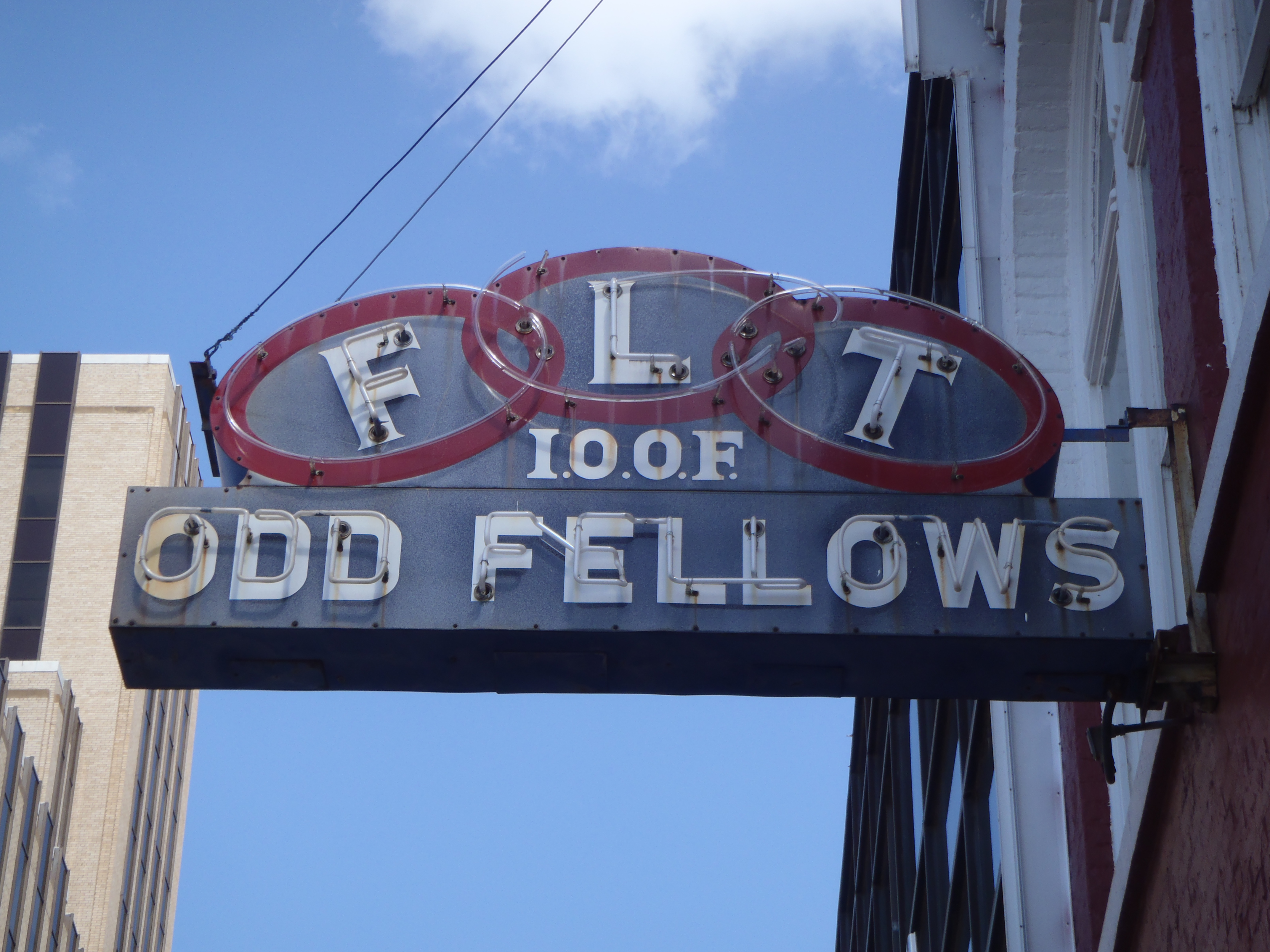
Growing up, I never would have thought about fraternal societies. To be honest, Barney Flintstone’s membership in the Loyal Order of Water Buffaloes was the closest I ever came to even knowing they existed. Then I went to college, joined a fraternity, and never looked back … until now. I graduated in May and in the last few months, fraternal societies for grown men have started to make a lot more sense. I think it was when people started doing this weird thing — calling me a man instead of a guy — that I started to wonder what I was getting myself into. Isn’t being a man all about being lonely and depressed? Work all day then come home and sit in your house? Robert Putnam’s book Bowling Alone makes a strong case that we’re living more of our lives without each other. As a result, it doesn’t feel like there’s any benefit to this whole “guy-to-man” switch … just more responsibility. There’s nothing cool waiting for me on the other side. But in the context of our nation’s history, that wasn’t always the case. There was an era of the American city when the fabric of society was dense with organizations and groups that carried and supported you through all the stages of life.

Douglass Rae summarized this era of ‘urbanism’ in this way:

“All or virtually all of the people who were assembled by these organizations — whether for religious or a fraternal lodge meeting or a sporting contest — were members of locally grounded communities. And the acts of assembly and association almost certainly deepened and enriched participants sense of loyalty to and identity with place.” Rae, City: Urbanism and its end (2003).

Rae’s research focussed on the city of New Haven, Connecticut and the 100-year deterioration of urbanism. In his research, he documents how each city block in New Haven was once a thriving microcosm of society. Middle-class men and women were usually a part of several societies in the city for different purposes including fraternities, sports teams, and social clubs. It’s wasn’t easy life in 1900, but it was lived together.

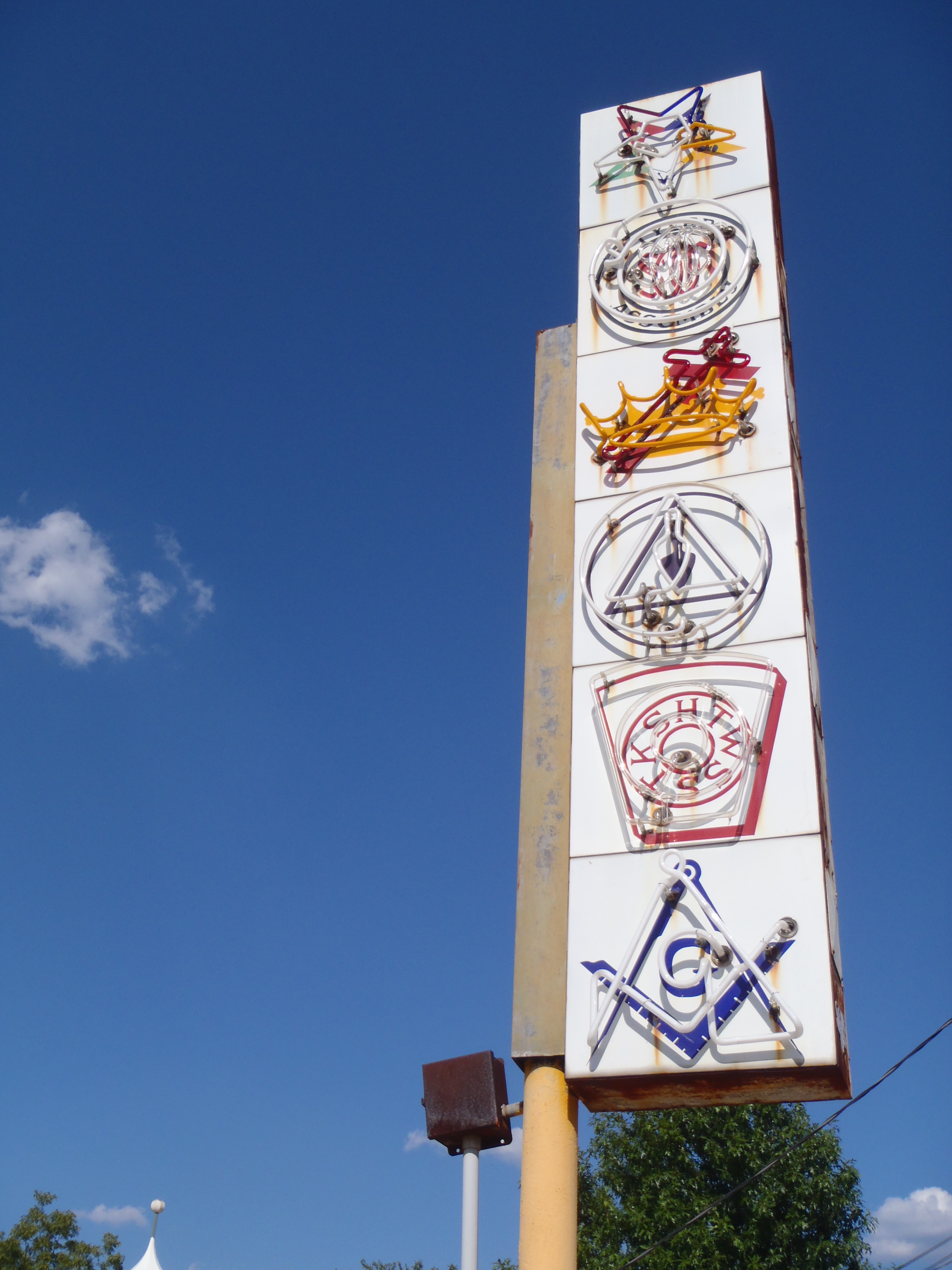
Today, things have changed. The America of 1900 no longer exists. But what I love about cities is that the buildings in our cities (the ones that survived) are the constructed monuments to our past. Tyler, TX is no exception. While they don’t hold the same place of prominence in the region, there are still buildings in Tyler that harken to an older era. The Masonic Lodge (pictured above), built in 1932 is the most striking downtown example that is still in use. I’ve driven by this building numerous times, but never thought it was special. Today, I almost felt like someone was going to come out and kidnap me for taking a photo of their building. The awesome neon sign (left) on the street is also worth noting … I don’t recognize some of the symbols, but I’m sure they all mean something to the men involved. The pentagram at the top looks slightly demonic, but I’d still think it was cool if my dad went to this building for a meeting once a week.

Other buildings in Tyler are no longer being used for their original purposes, but still bear the markings of early twentieth-century urbanism. The old Elk Lodge is one such building. I believe there is still a group of Elks in Tyler, but now they meet on the edge of the city in a newer lodge. It’s kind of a shame they moved, but I’m partially glad they did because the building is amazing and I got to walk through it today (without being properly initiated). It’s currently being renovated by Ron Mabry of Tyler for events in the city. I believe All Saints Episcopal is having a dance later on in the year. I hope that at least one high school student walking by notices the plaque on the building that states the founding purpose of the building: “Tyler Lodge No. 215, B. P. O. Elks, M. E. Danbom, Exalted Ruler.” The people on this plaque cared enough about each other to build a building where they could meet, talk about life, celebrate and mourn.

Only the oldest parts of our nation harbor these artifacts of the American past. It is always good to remember where we came from because it gives us a context for where we are. Plenty of people today are talking about why guys aren’t growing up, etc, but I don’t think they ever ask the question, “What’s waiting on the other side?” Yes, traditions are cumbersome and (quite necessarily) antiquated, but even in this postmodern society there is utility in having a structure to stand up under. There is a beauty in being told how to act. So don’t mock the Oddfellows, Lions, Masons, or Shriners. The men involved in these organizations are engaging in a tradition of American civil society that was once a grand element of this American life. Today, it is mostly just plaques on buildings … and a memory of how life could be.