A walk around my early fall garden

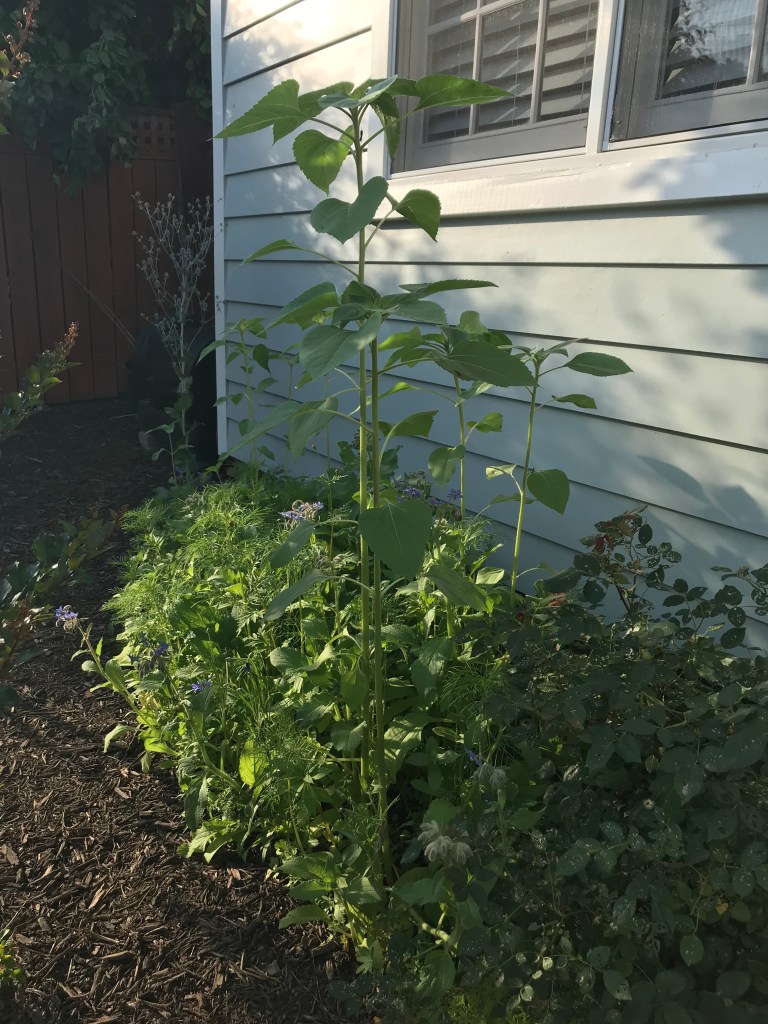
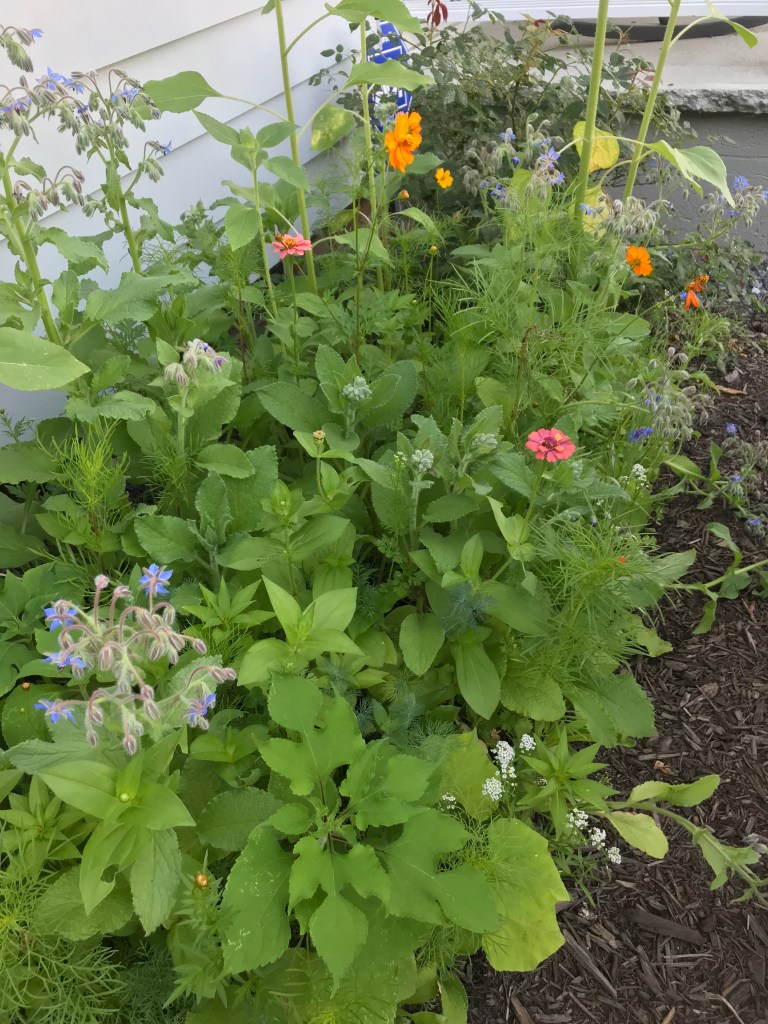
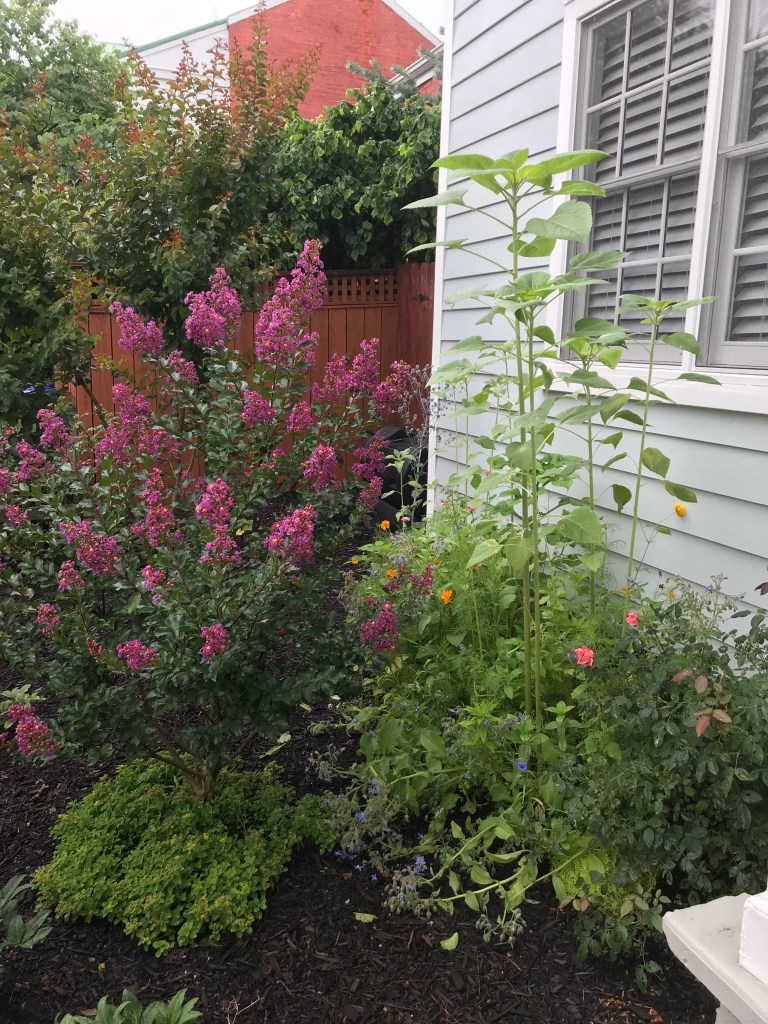
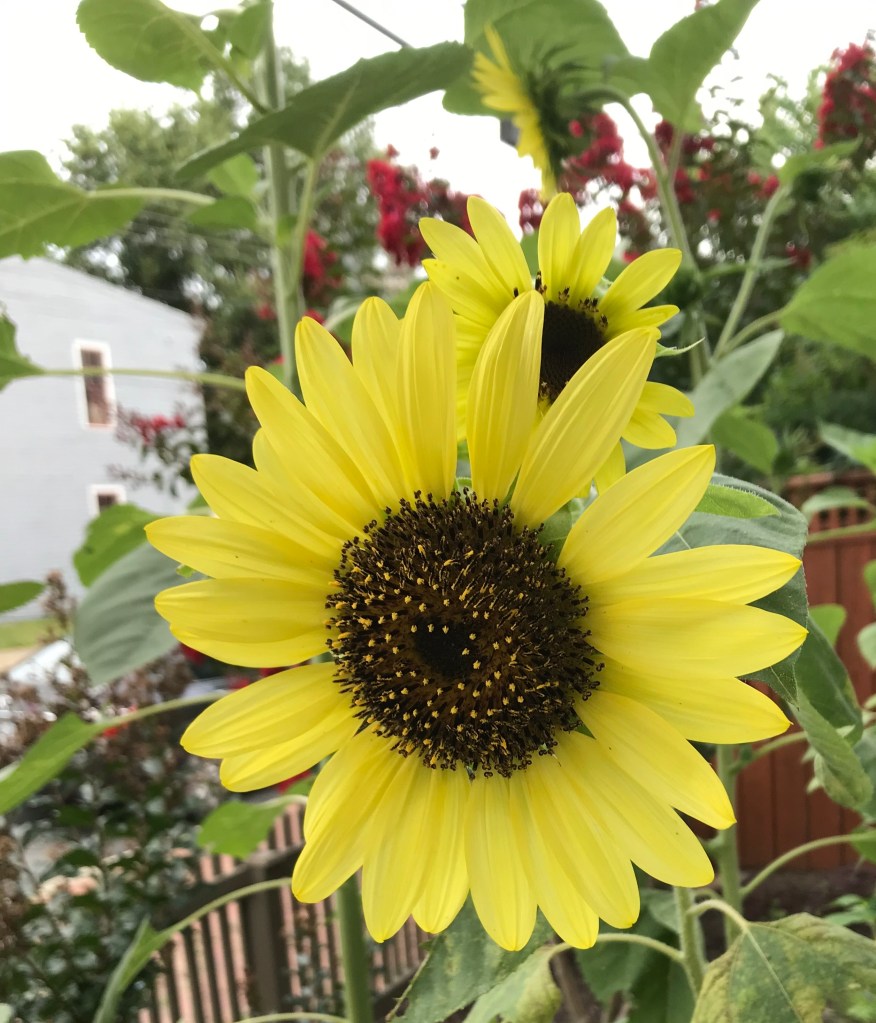
Just some photos and thoughts to remember early fall, 2021. The first winter we lived in our house, I terraced and seeded the side of our yard to create a wild edge. I have received so much joy from the plants that have come up now two years in a row in this section of the yard. I keep filling in gaps, but the bulk of color and life come from the seeds planted on turned soil a year and a half ago.

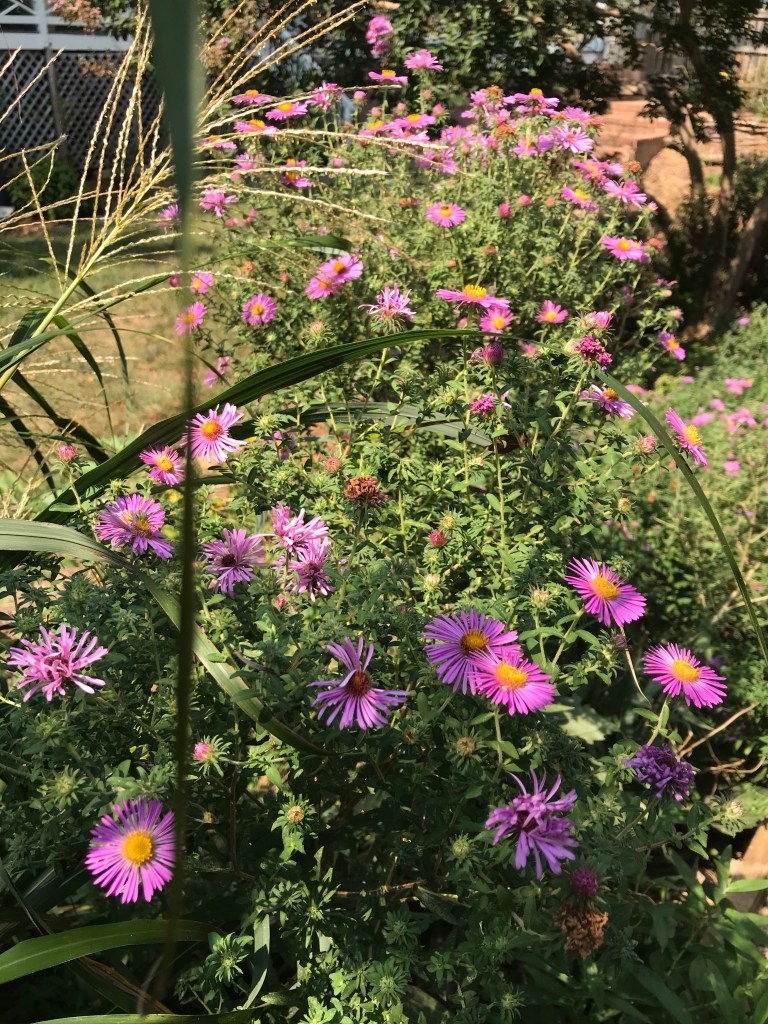
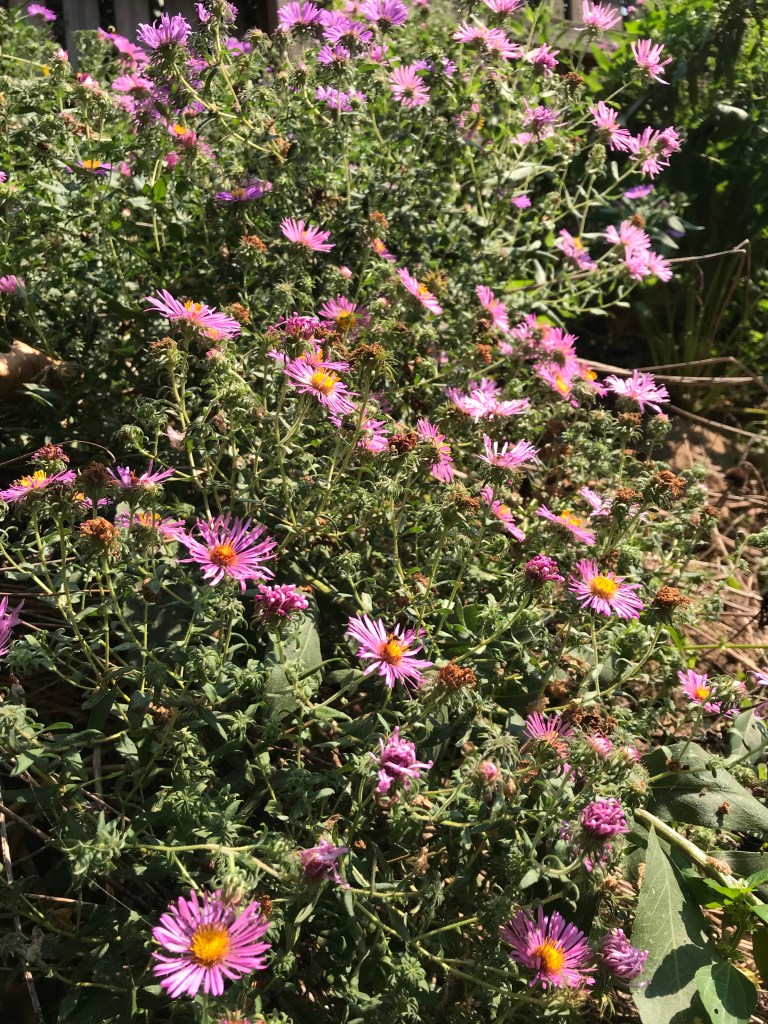
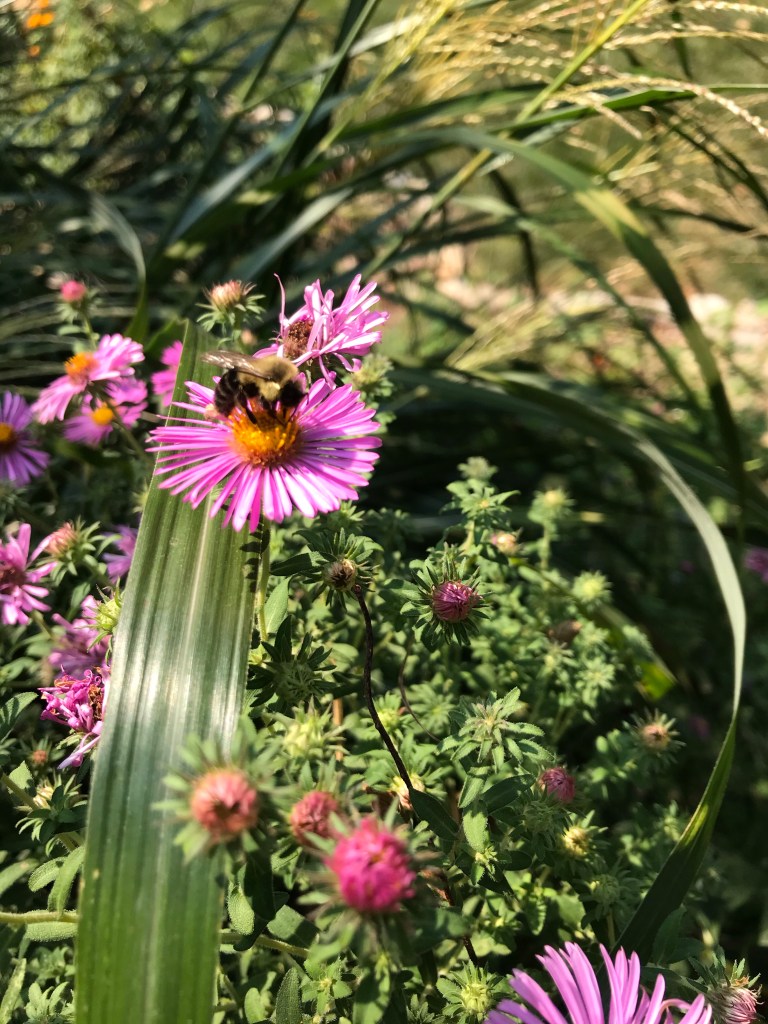
New England Aster has taken the place of first coreopsis then coneflower in the wild edge. Bumble bees and other insects have enjoyed this late summer bounty.
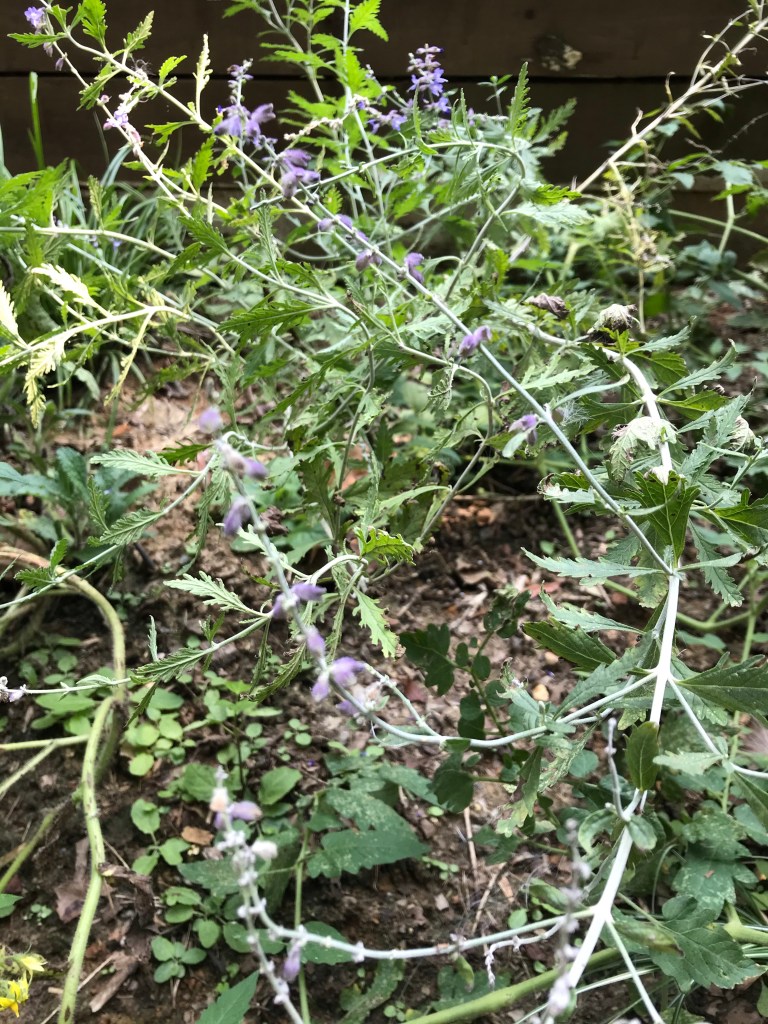
Russian Sage that struggled this summer, but I hope will thrive in the fall and come back with full strength in the spring.
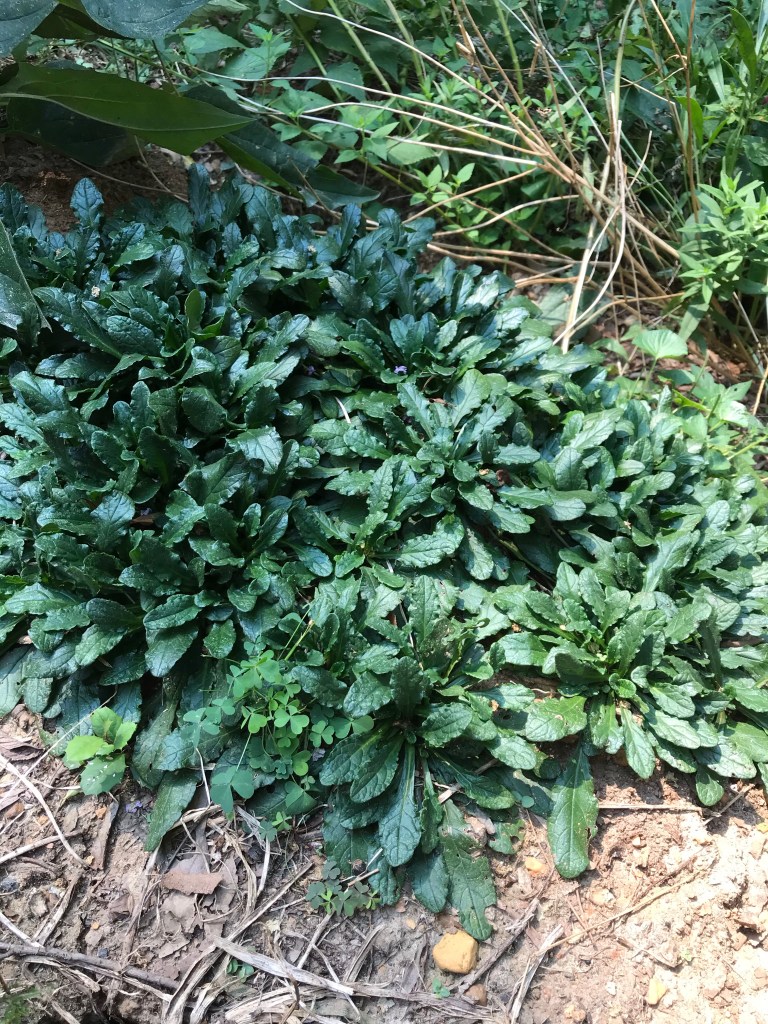
Ajuga reptans grown from seed is spreading in a few clumps nearby. I don’t remember planting this specifically, but I have thrown out a few seed mixes and wouldn’t be surprised if this was included.
I have graduated to mostly buying my flower seeds from Prairie Moon Nursery. I love their commitment to natives for habitat restoration and the variety of options is remarkable. I don’t limit myself to natives, but I’m definitely drawn to them and find myself using them more and more.

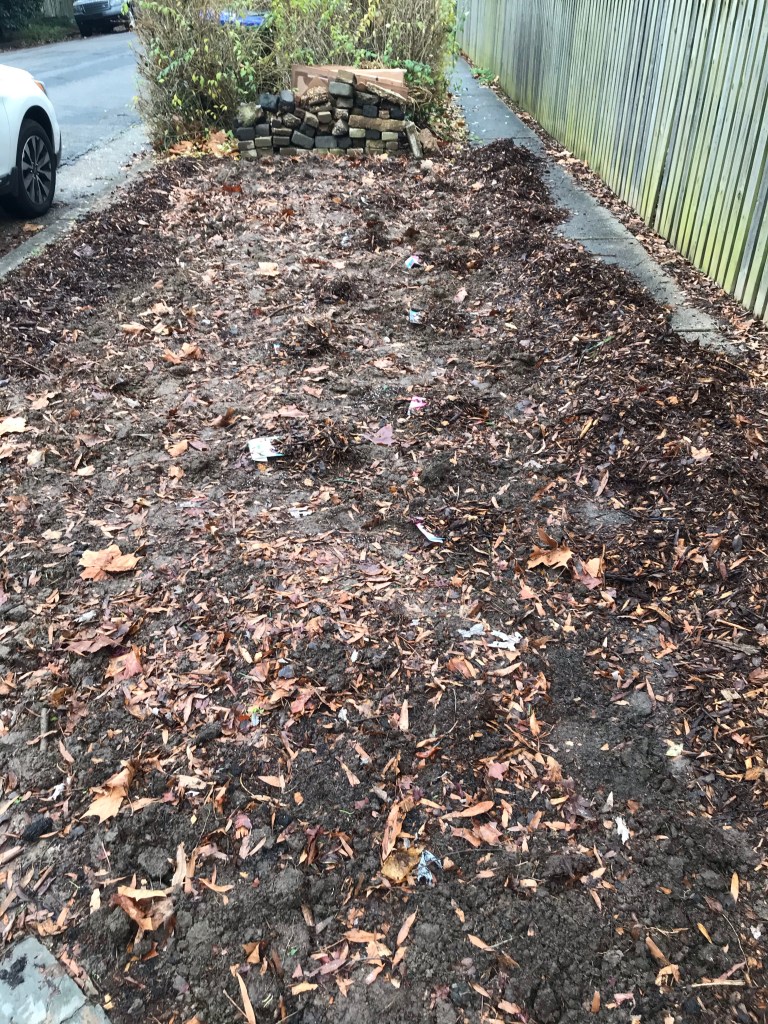
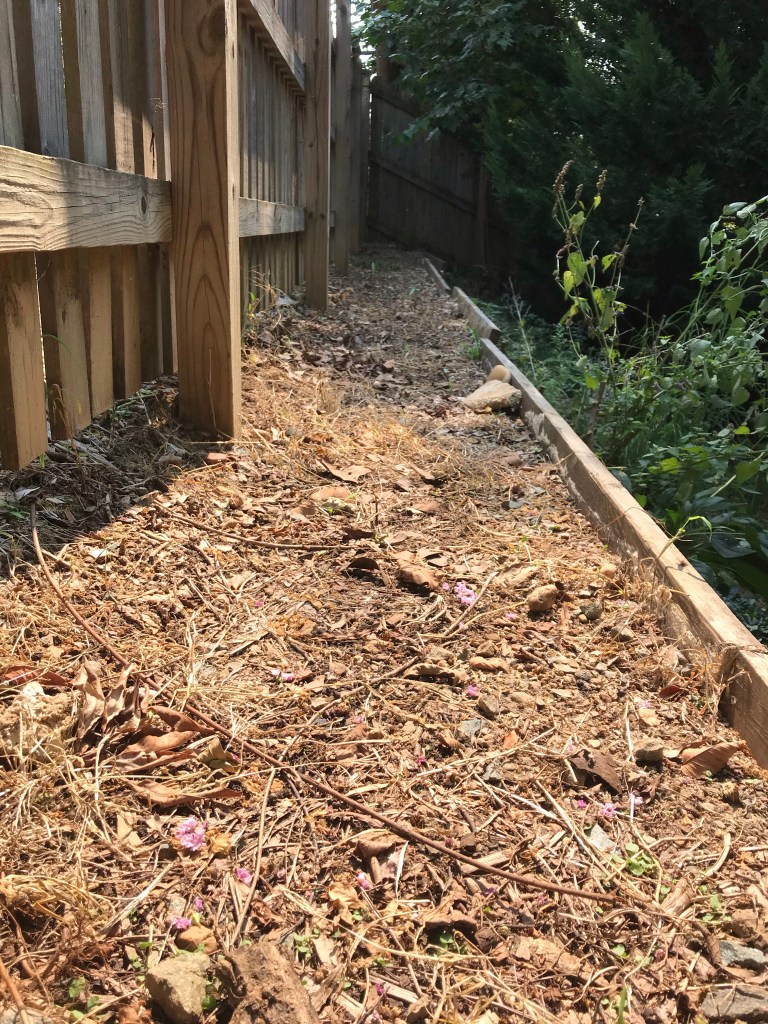
I filled half a “supercan” with weeds from this dog run a week or two ago. I let it go to seed last year and paid the price. I plan to put down cardboard and mulch to turn this into a walking path around the side and down the hill to the back of the yard.
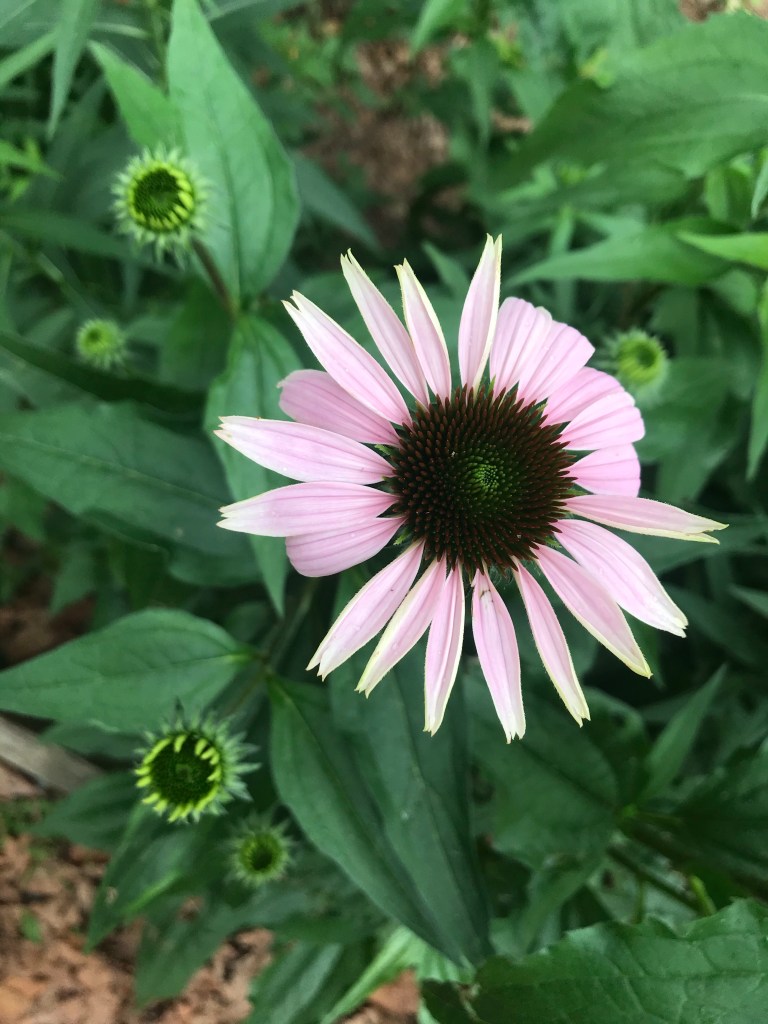
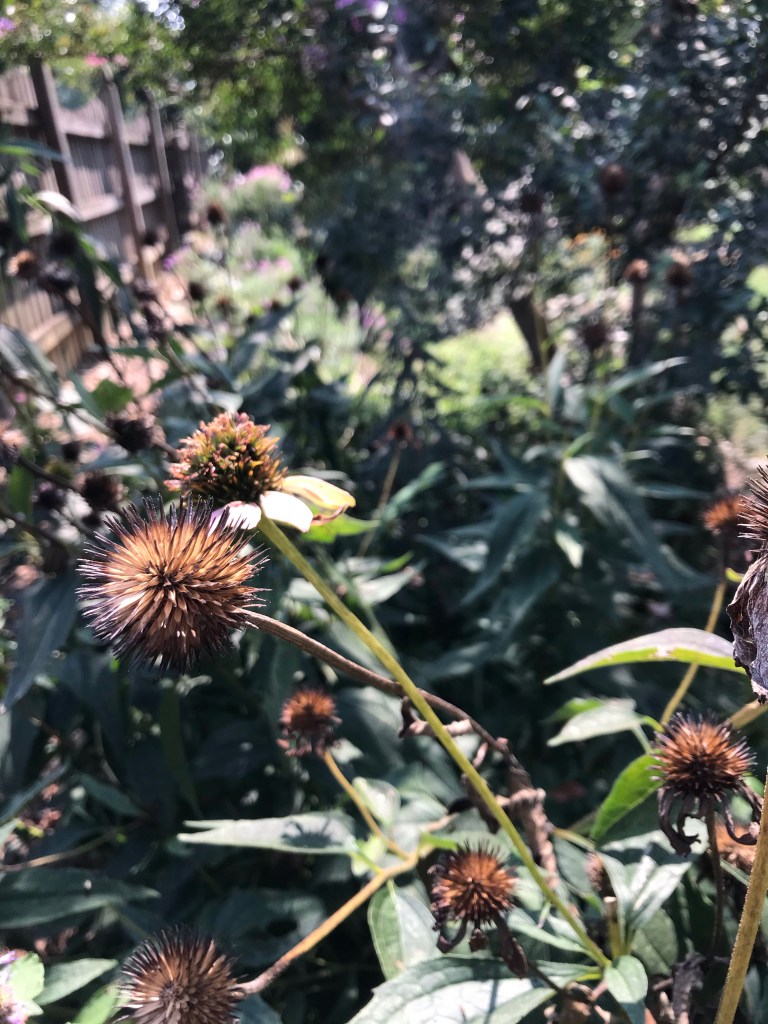
I have already seen one small, extremely fast bird feeding on these spent purple Echinacea/coneflower seed heads. I’ll leave all of this up through early spring.
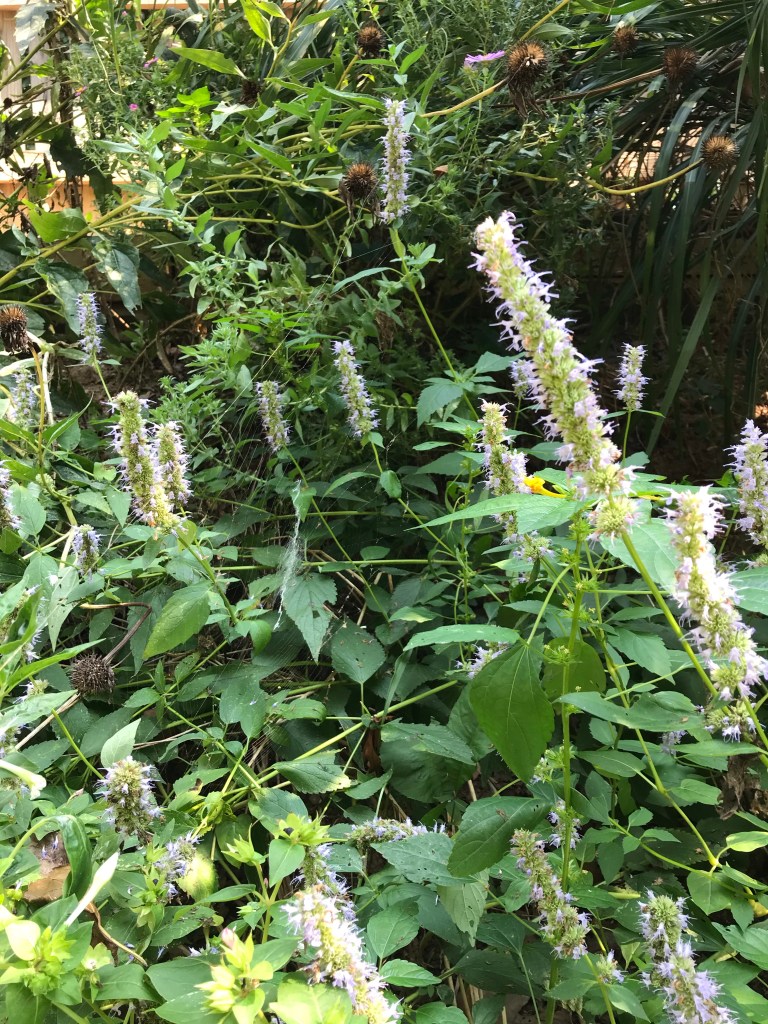
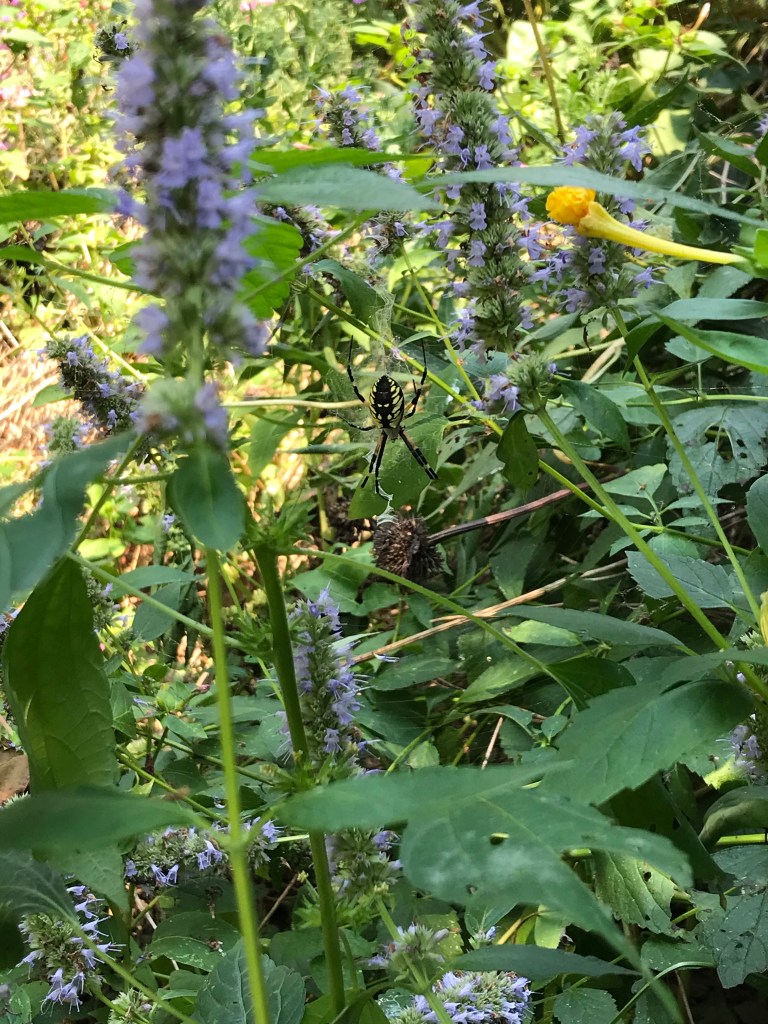
Agastache has been a fun, repeat blooming, addition and now is home to a Yellow Garden Spider, building the perfect place to lay her eggs. I remember when I was six or seven we had a “zig zag” spider web like this outside the window of the kitchen of the house where I grew up and I have loved them ever since.
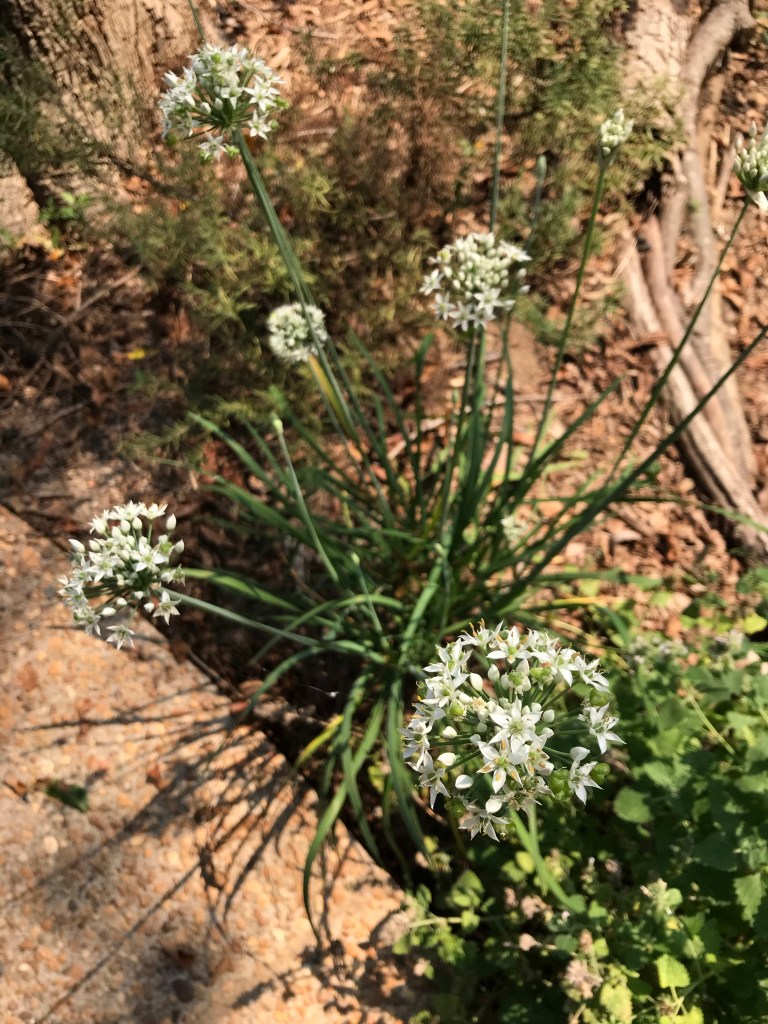
On a recent visit to the Lewis Ginter Botanical Gardens I saw large sections of chives blooming and it encouraged me because I thought I had just been lazy not harvesting the herb. I plan to add more of these for next year.
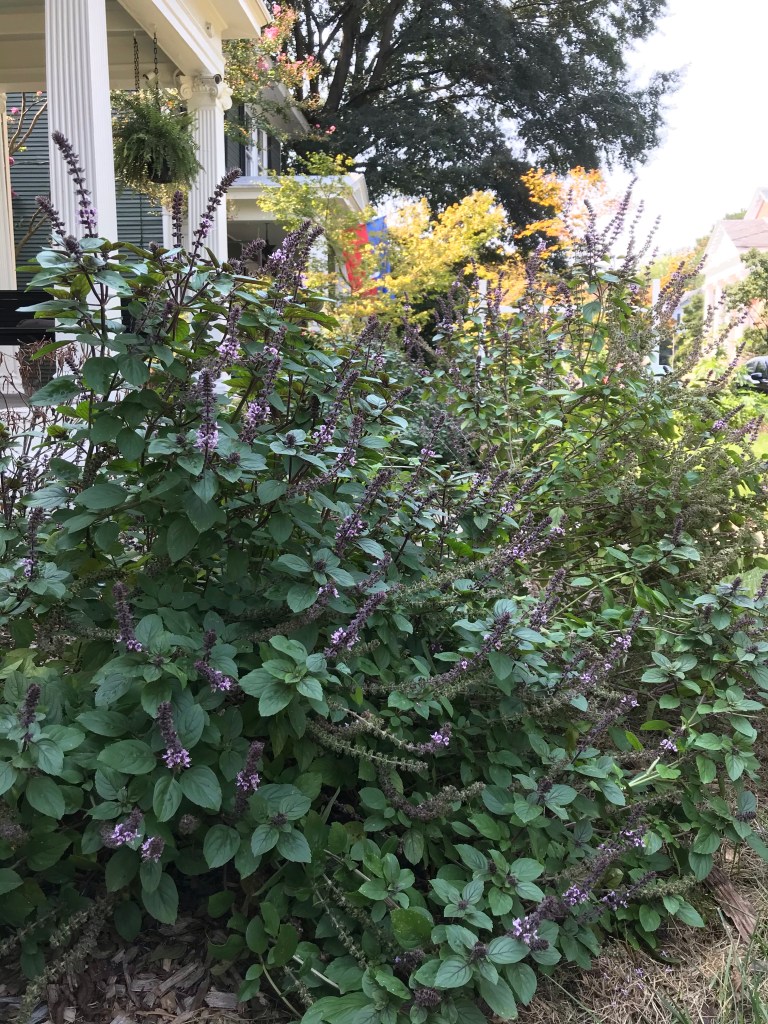
The blue basil in the front of the house was inspired my dad’s pollinator garden. It has been a summer-long source of entertainment for me as a steady parade of wasps, bumblebees, and honey bees have spent hours floating from one flower to the next.
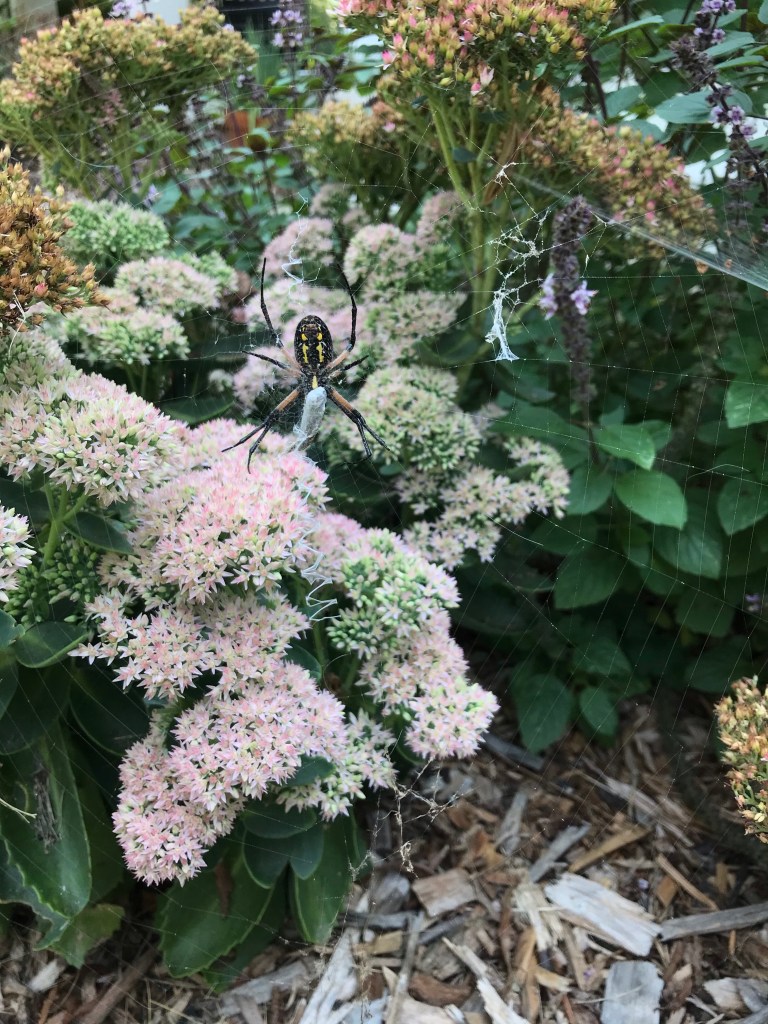
Another garden spider in between the sedum Autumn Joy. It’s devastating that the second search result for Orb-weaver spiders is a page on the Orkin website. Why anyone would fear, hate, and kill this insect is truly beyond me.
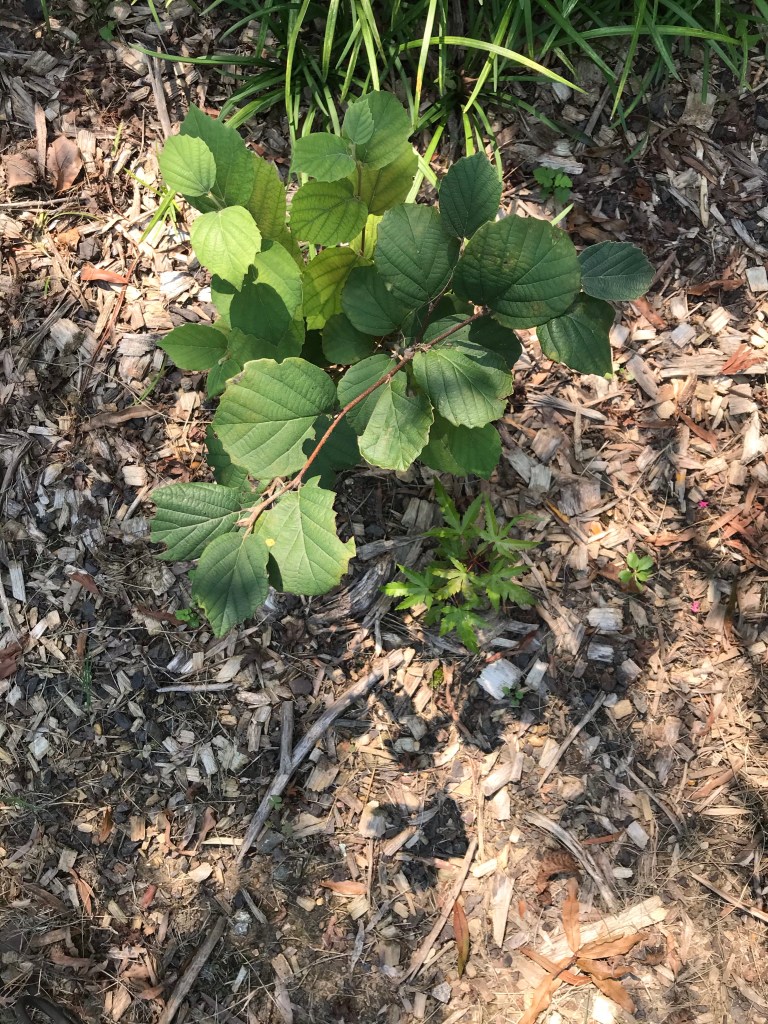
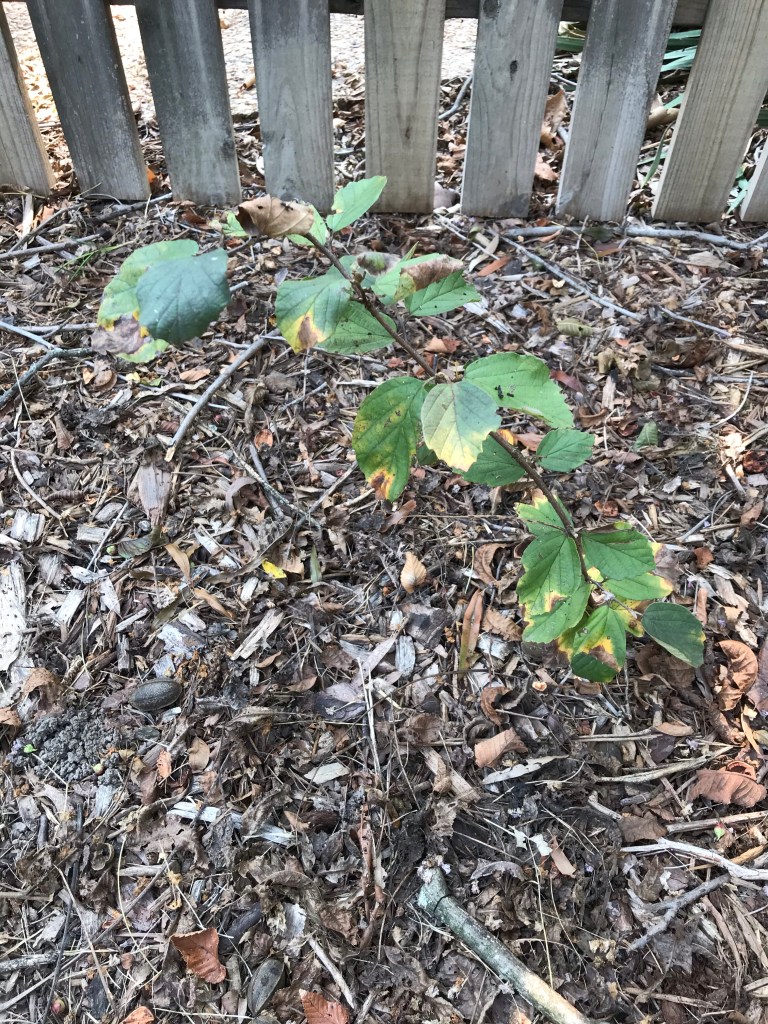
My mother has connected with her birth families over the past several years and we learned that her birth father’s last name was Fothergill. This plant is Fothergillia Gardenii (dwarf Witch Alder) and I feel like I have a special connection because of my new-found heritage. This one is looking great, filling out and nice and green, but the next one is not doing well, possibly struggling because I planted it in partial sun instead of full sun (it’s on the transplant list).
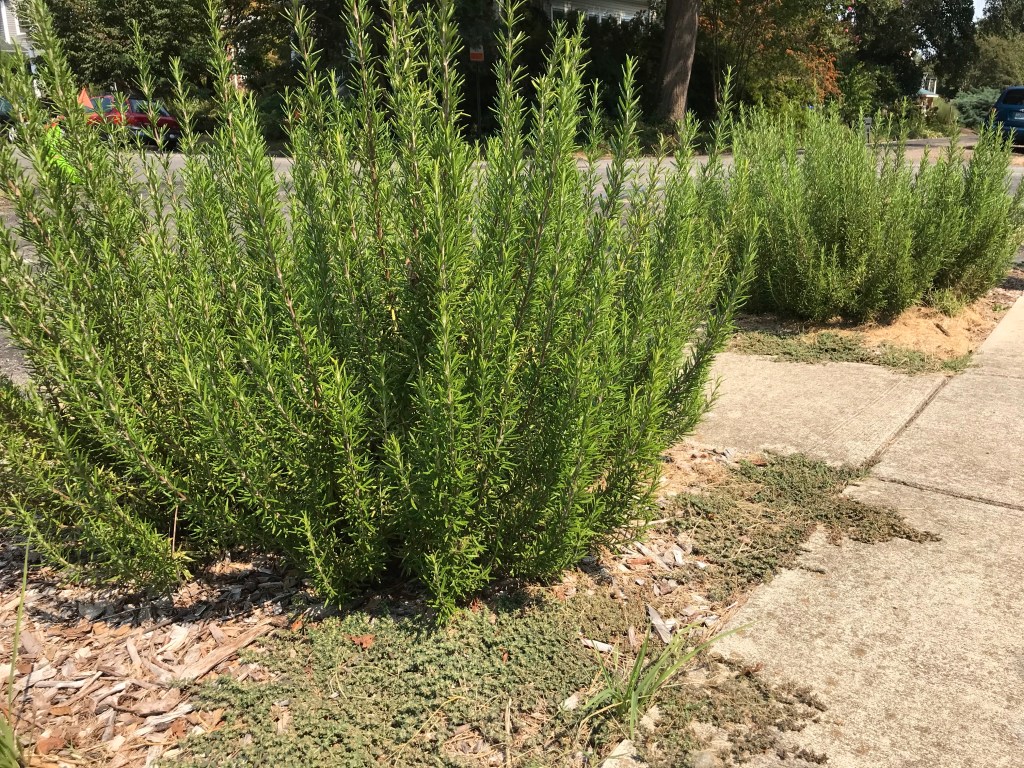
I can’t wait to see these Rosemary bloom in the spring. They were both maybe 5″ x 5″ x 12″ when I planted them in early 2020.
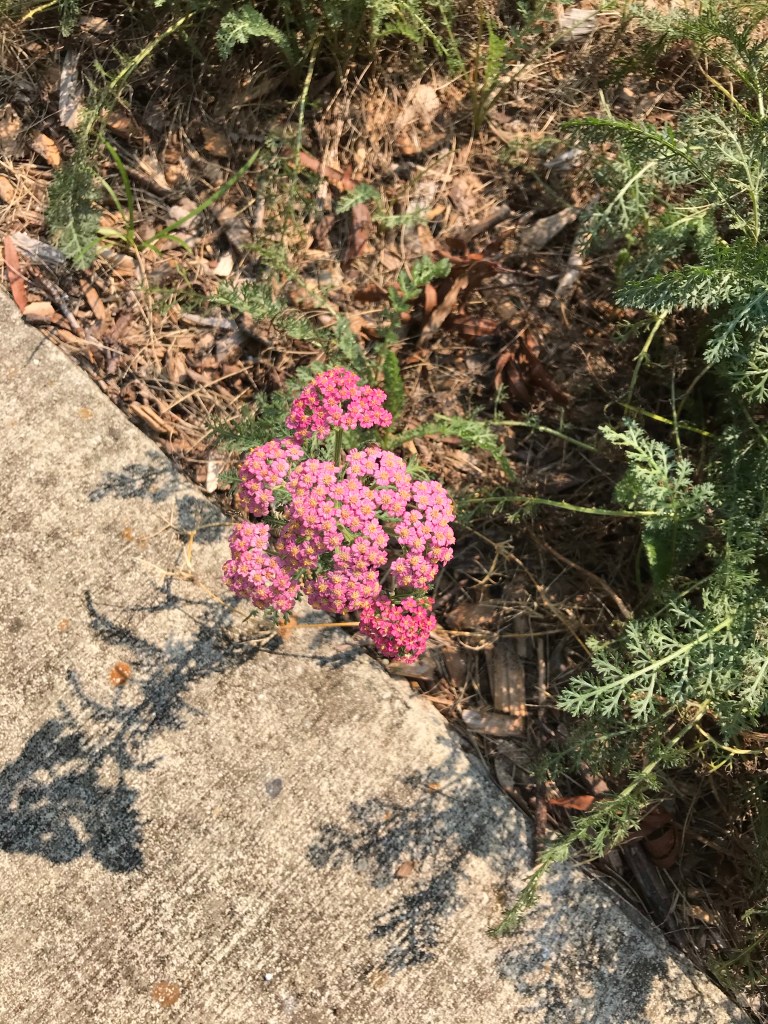
Achillea/yarrow that has naturalized well and continues to bloom.
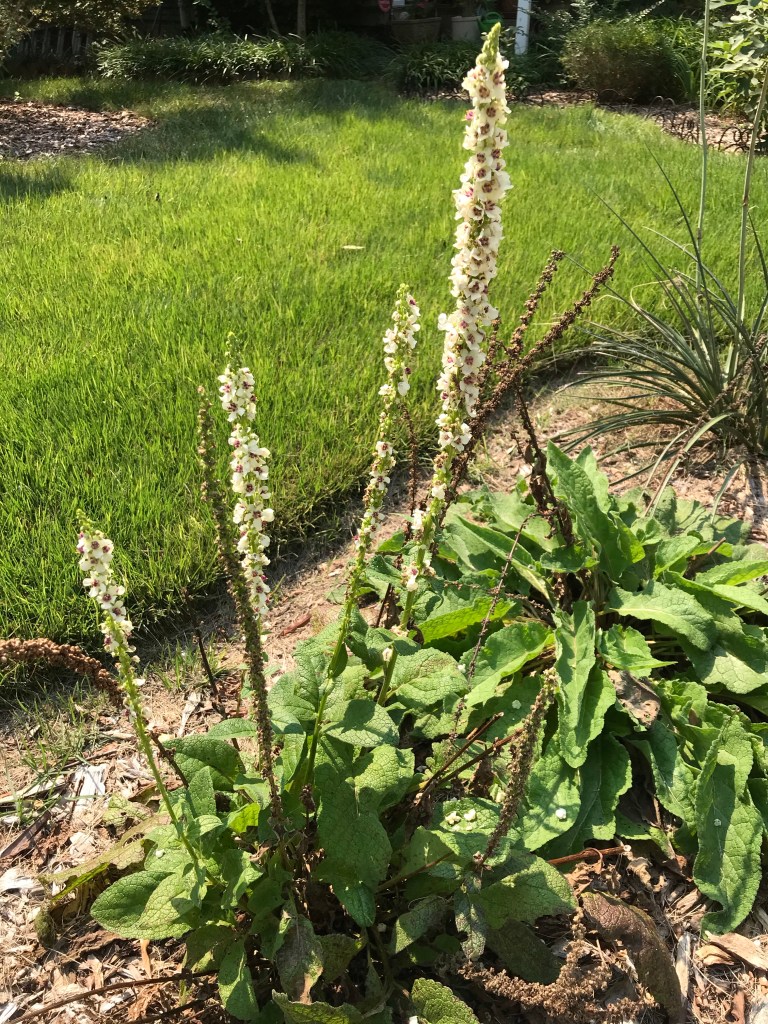
This third bloom of the Verbascum (wedding candles) is not as glorious as the first and not nearly as much of a bee magnet, but still gives me joy and nice visual interest.
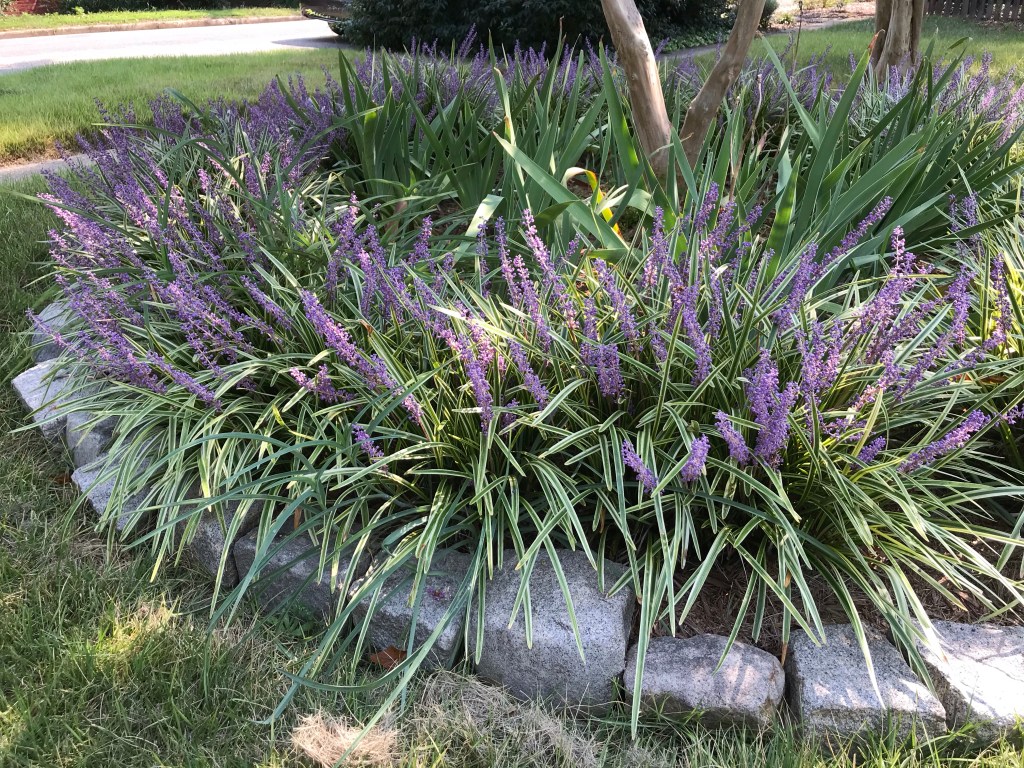
Liriope in full bloom has been making this circle pop for the last few weeks. The purple Irises in the middle are divided originally from my mom’s childhood home in Dallas. They were transplanted to California by her step mom, then again to Arizona, back to Texas, and finally flew on a plane to Richmond. It is a constant battle cutting back the suckers on the Crape Myrtle in the middle, but I finally feel like I have it in a good place. It shows off the evergreen shape of the Iris which is also a nice backdrop for the Liriope.
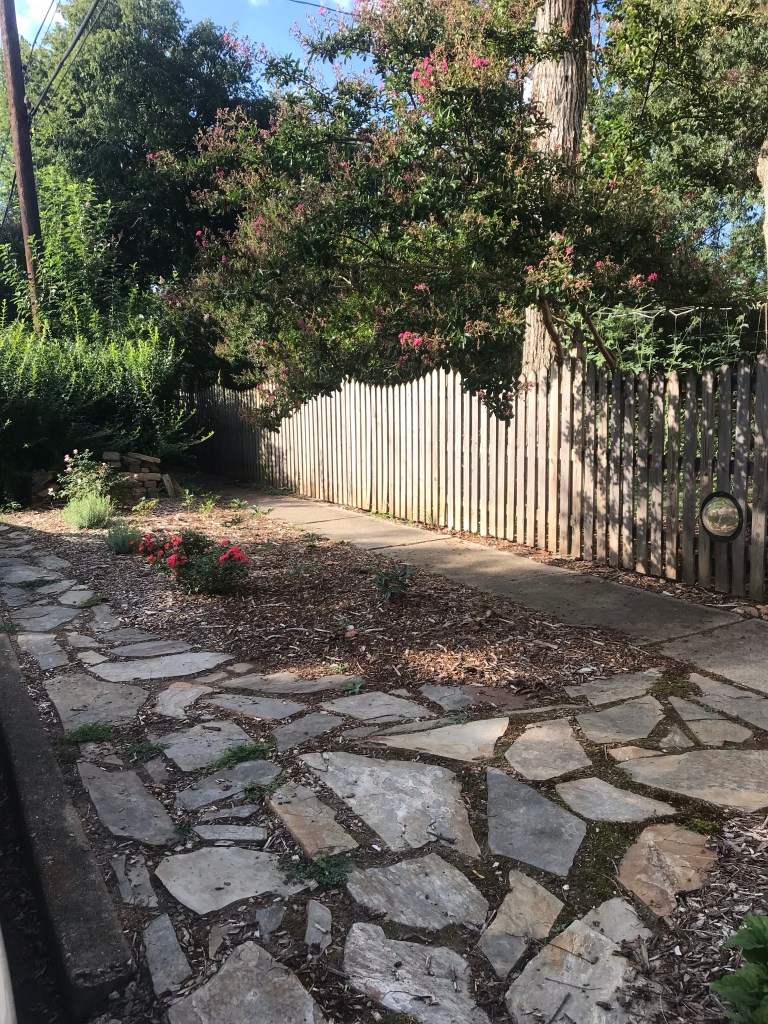
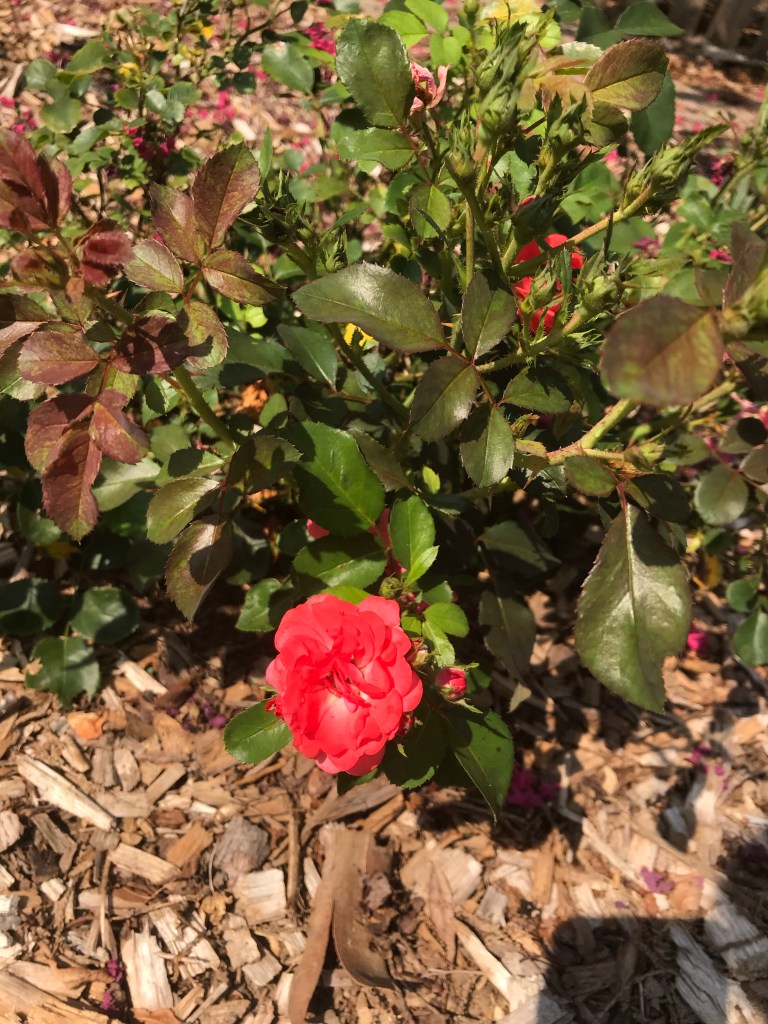
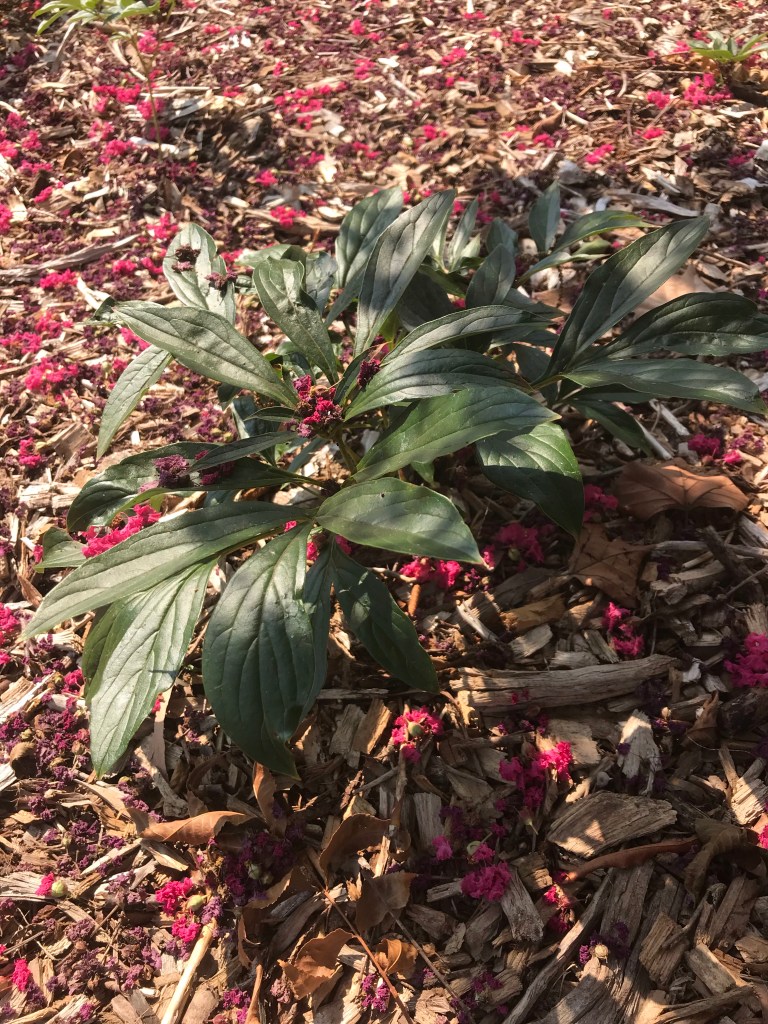
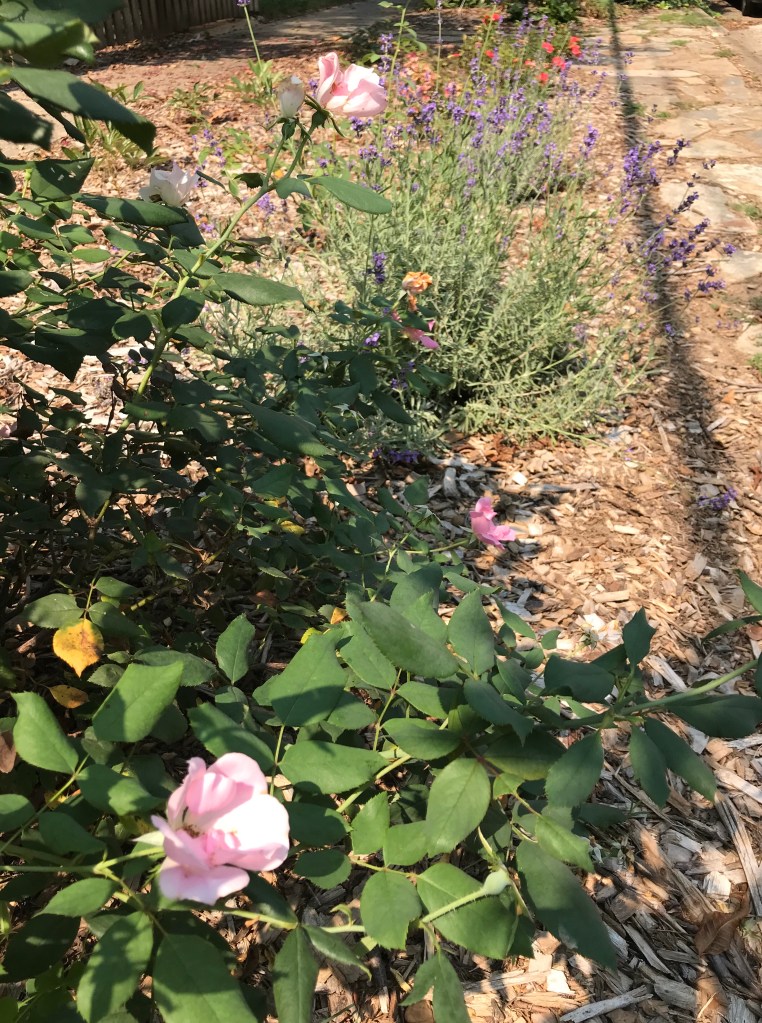
The newest flower bed has thrived for the most part. Roses and Hidcote lavender in bloom along the fieldstone path and near the peonies that I hope to see more from next year.
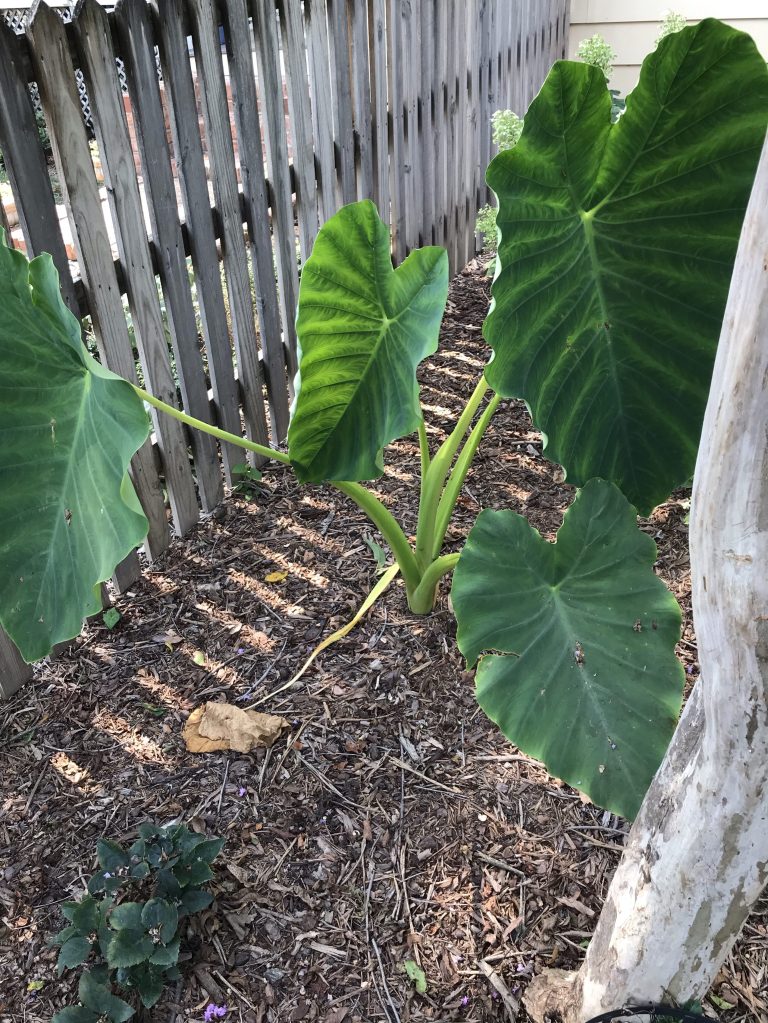
An impulse buy near the cleaning supplies section of Lowe’s, I have really enjoyed watching these Elephant Ear stretch out and claim their piece of territory.
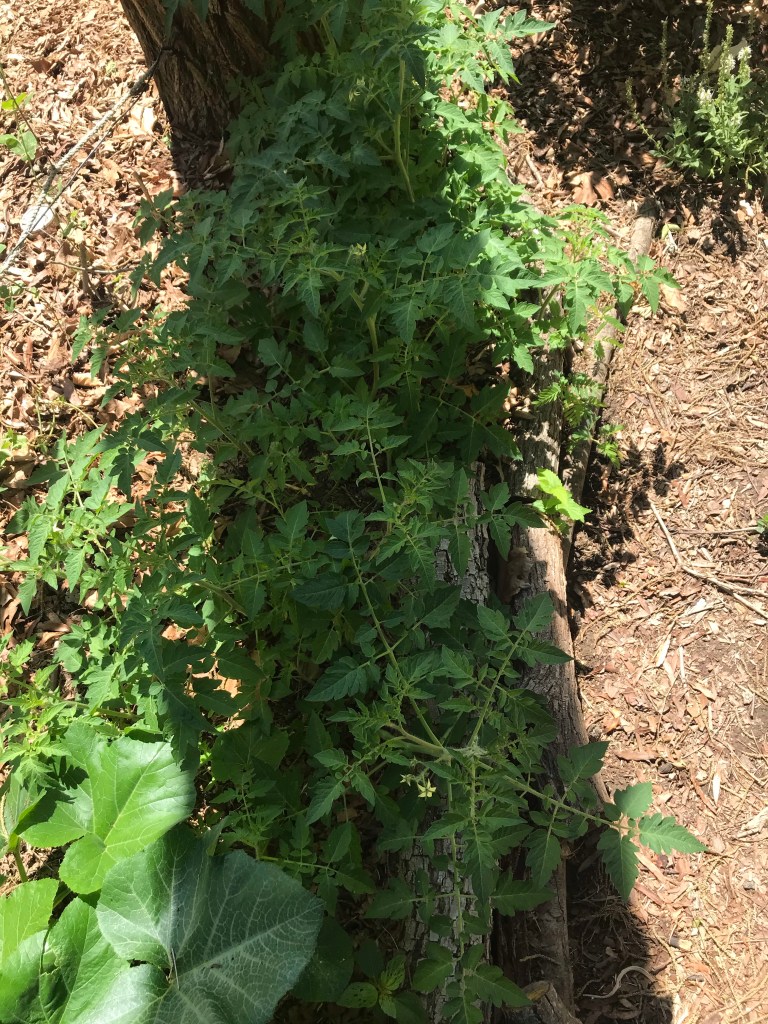
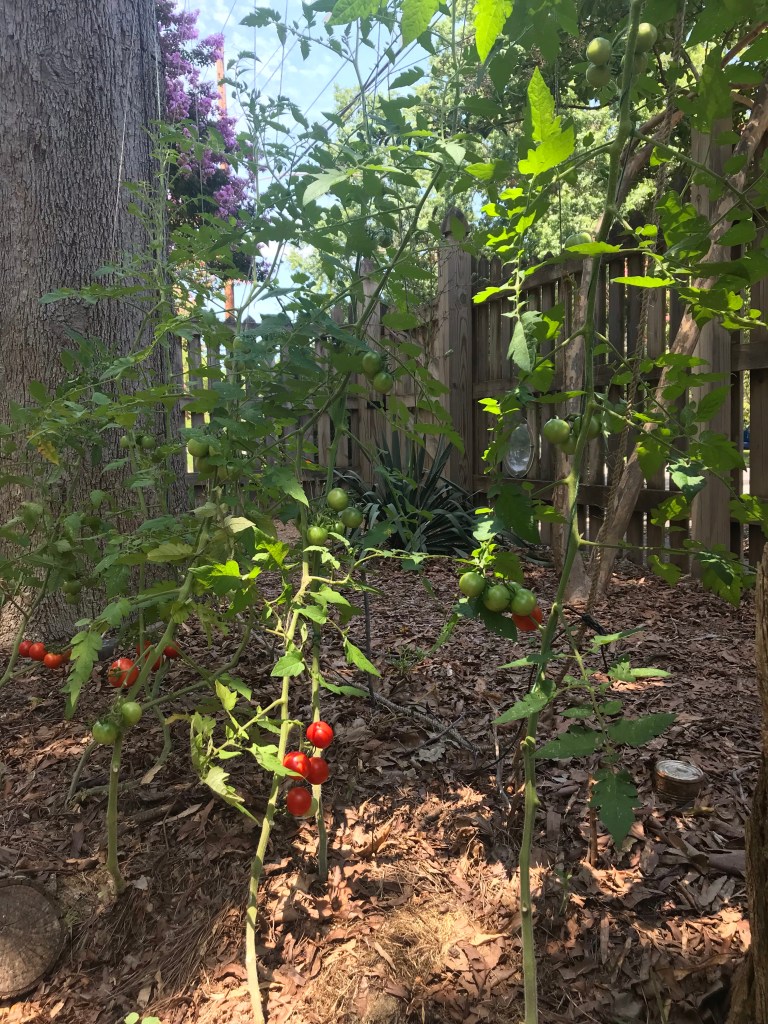
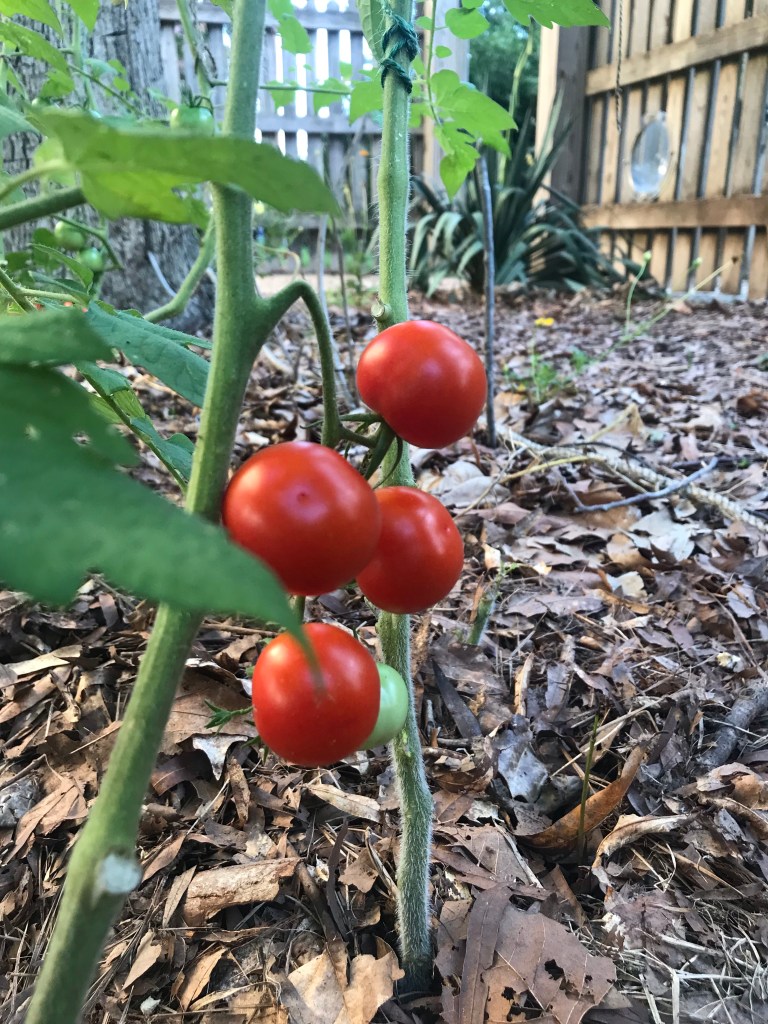
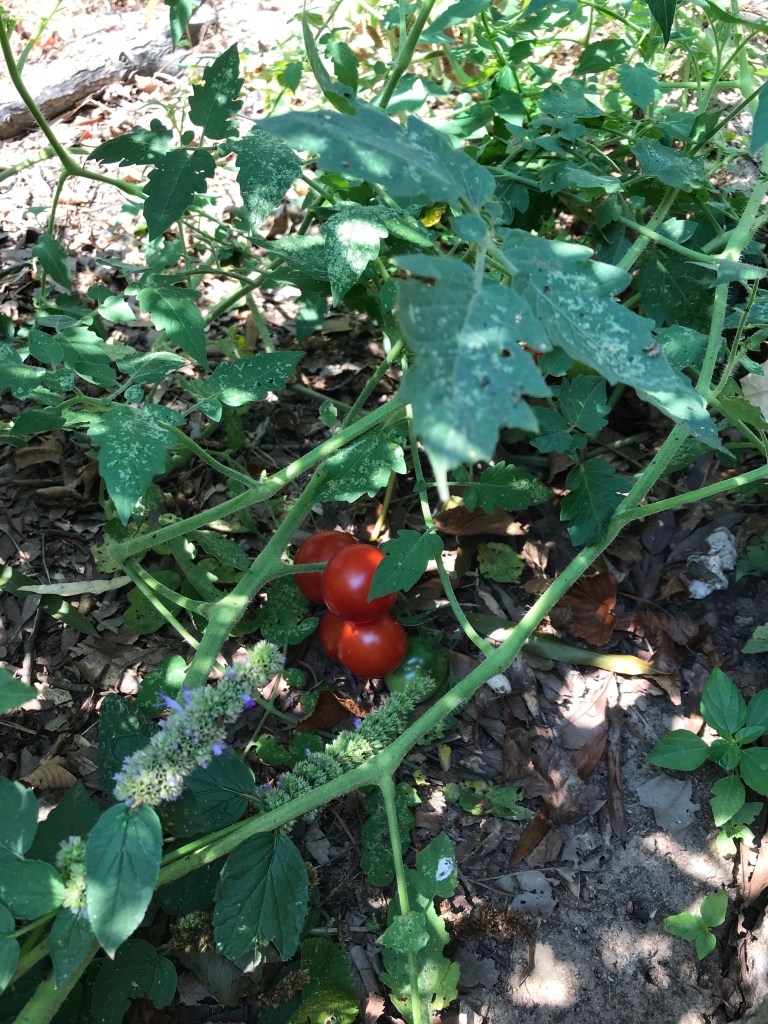
I had dozens of volunteer tomato plants sprout this year to affirm me in my lazy composting methods. Here is one I left to grow along the ground. Newsflash, you don’t have to trellis your tomatoes! I watched a YouTube video once of an Italian family harvesting piles of tomatoes from their yard, none of them were staked. Of course there are benefits to staking, but this is a reminder to me to relax. Here are three perfectly good tomatoes grown near the ground near some faded Anise Hyssop.
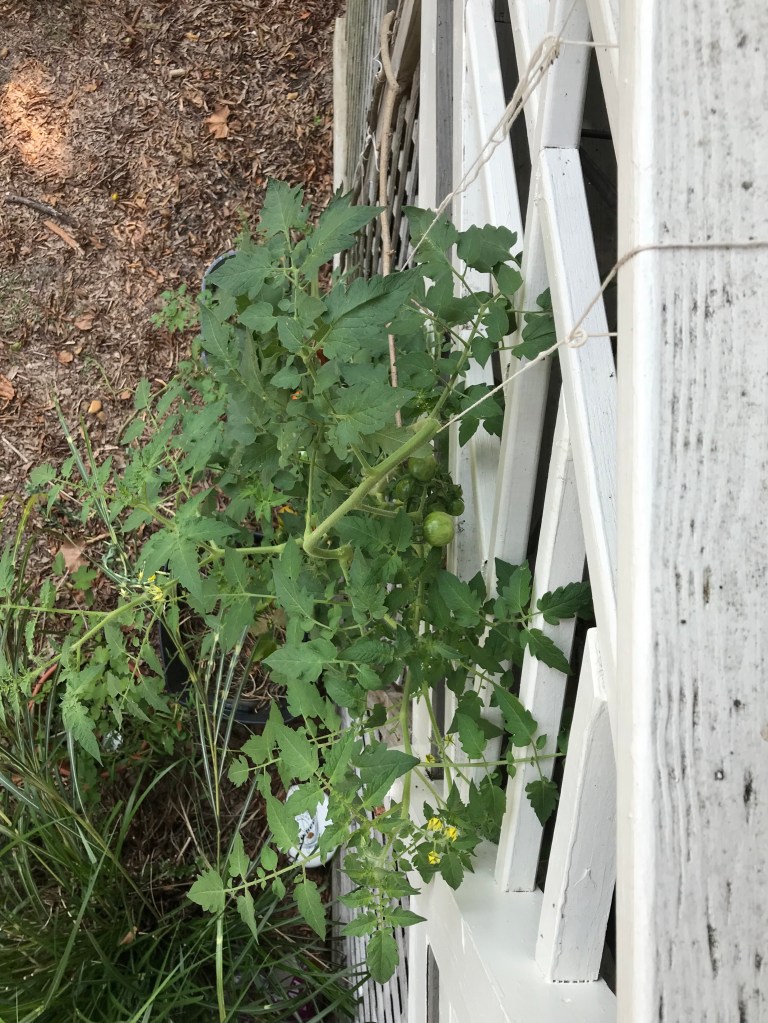
Volunteer tomatoes on a trellis between two trees.
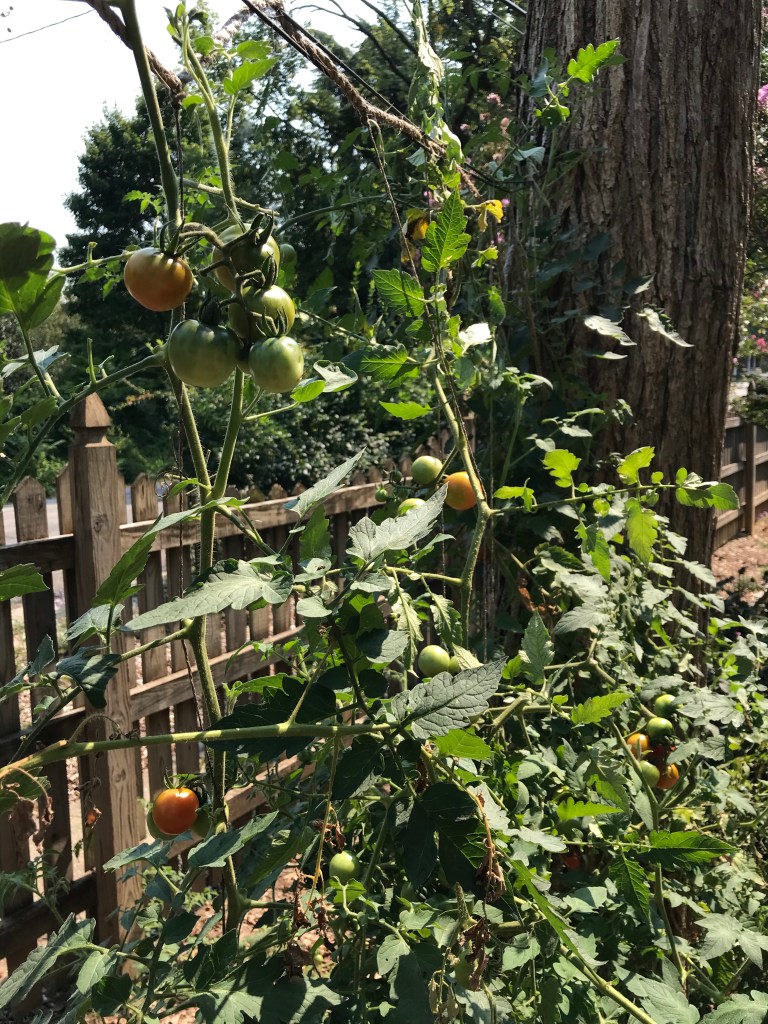
I had some extra sprouts so I tried out some different sections of the yard for tomatoes and will definitely be doing more up the deck next year.
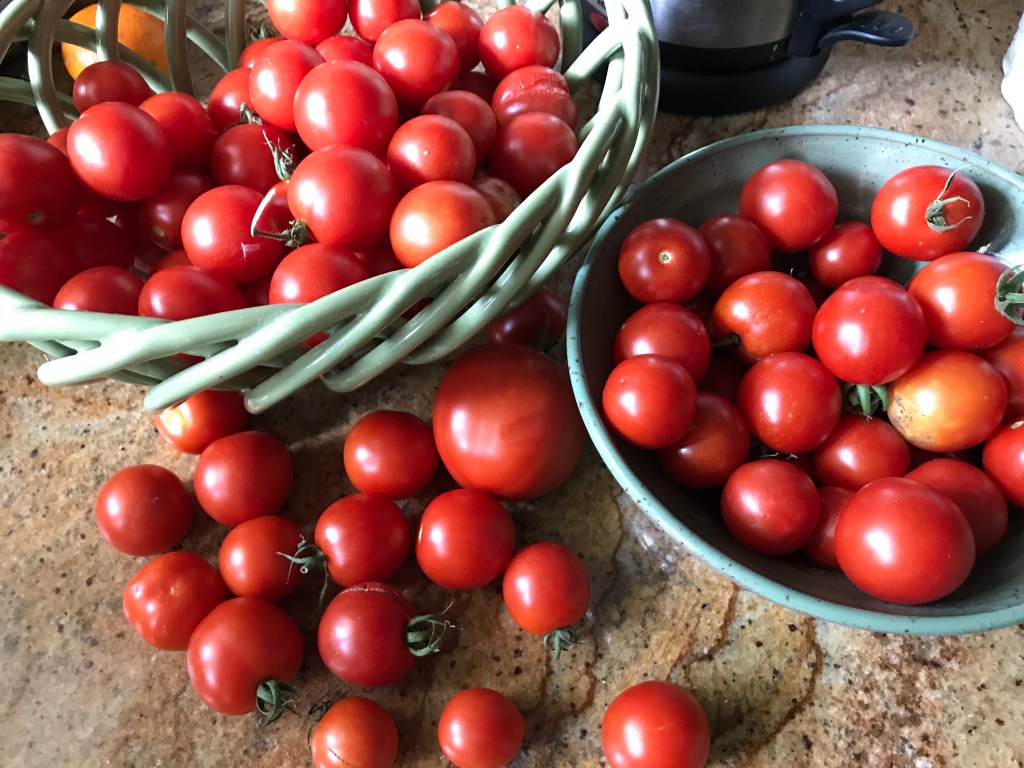
Late summer bounty:
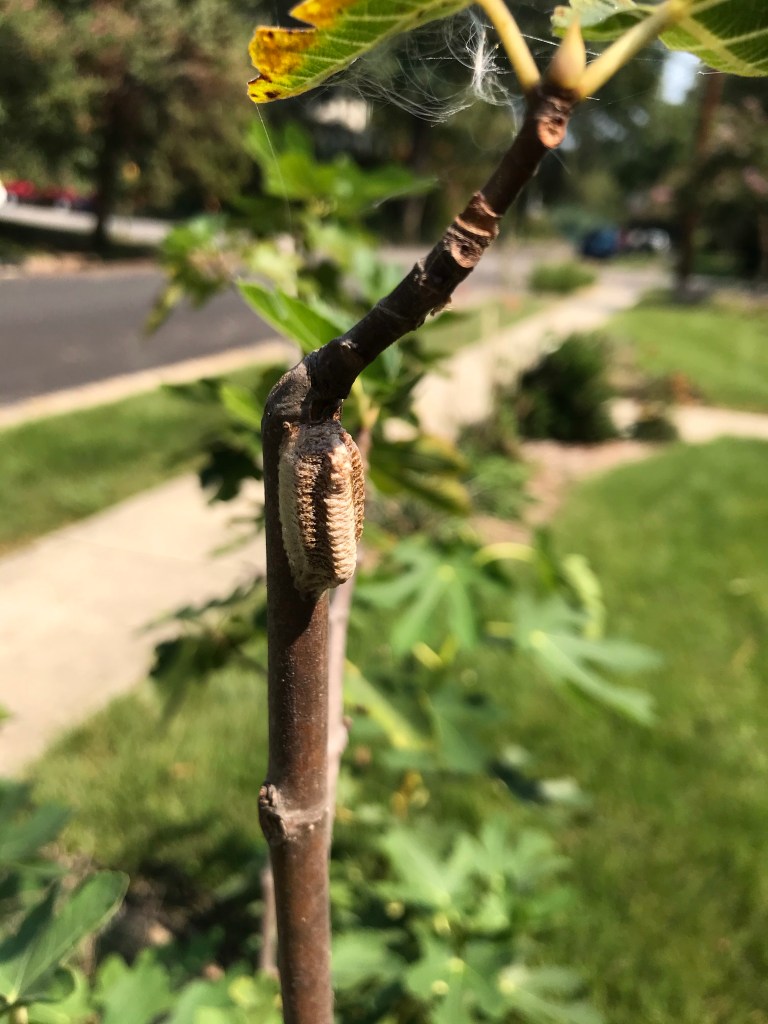
I believe this is a Praying Mantis egg case on this fig tree containing dozens or hundreds of eggs that will turn into those amazing predators of the garden.
Insects tucking themselves and their babies in for bed all over the place.
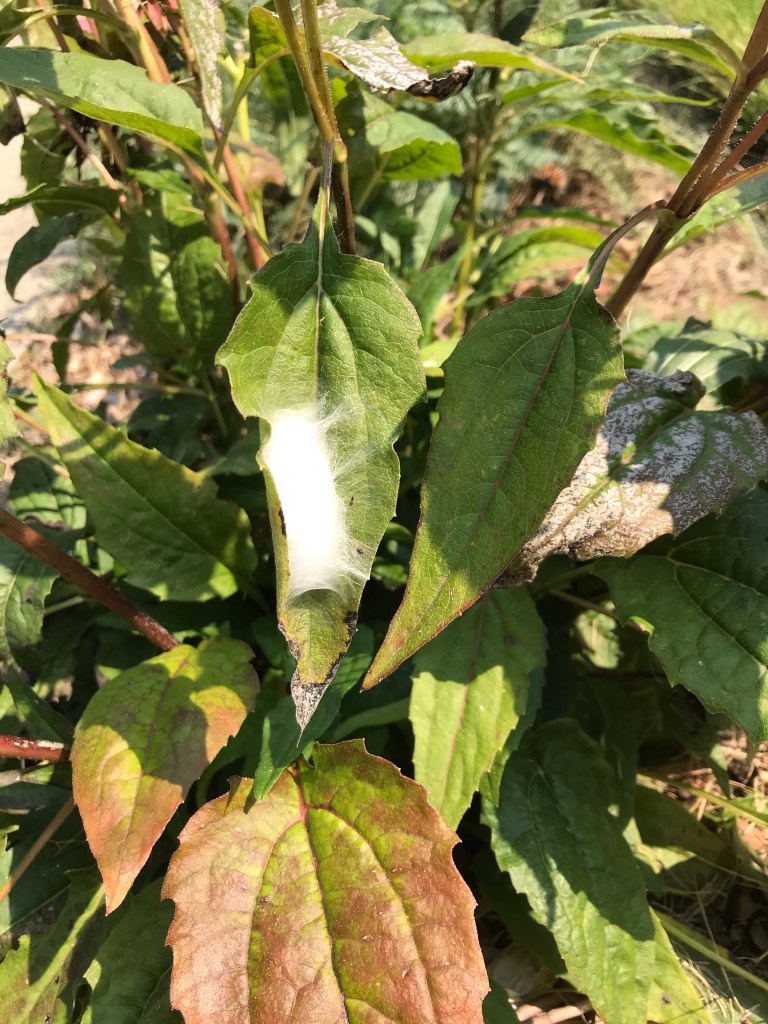
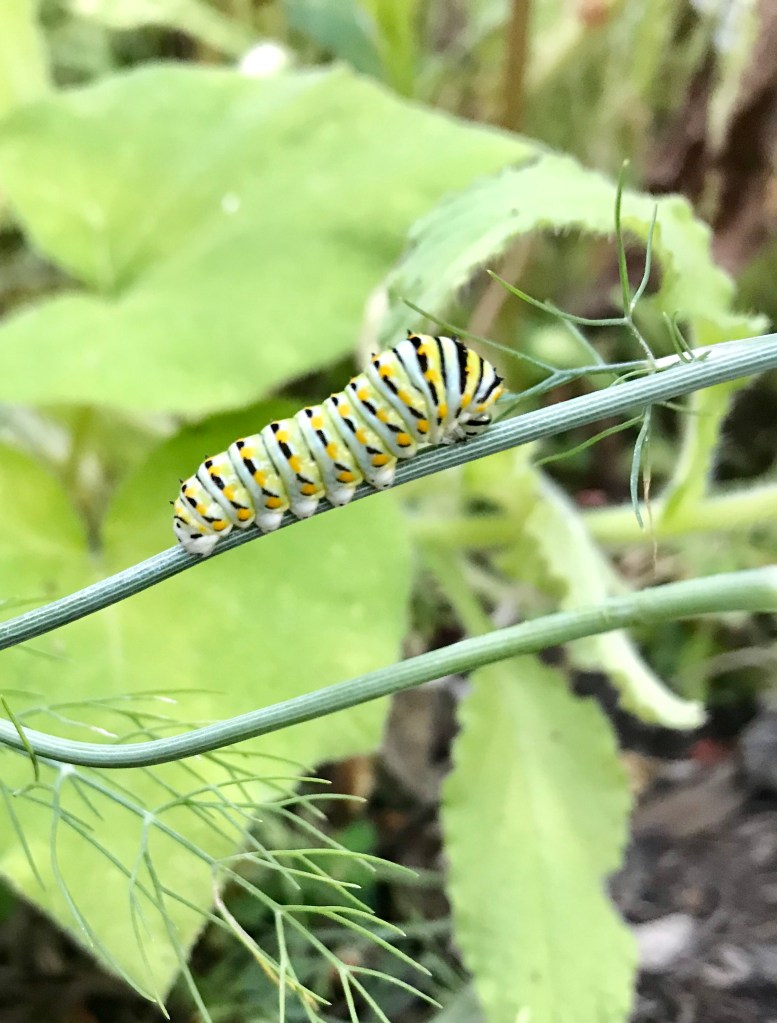
Parsley ravaged by Yellow Swallowtail caterpillars that I watched over the past week. I haven’t seen a crysalys yet, but hope to see the butterflies when they emerge.
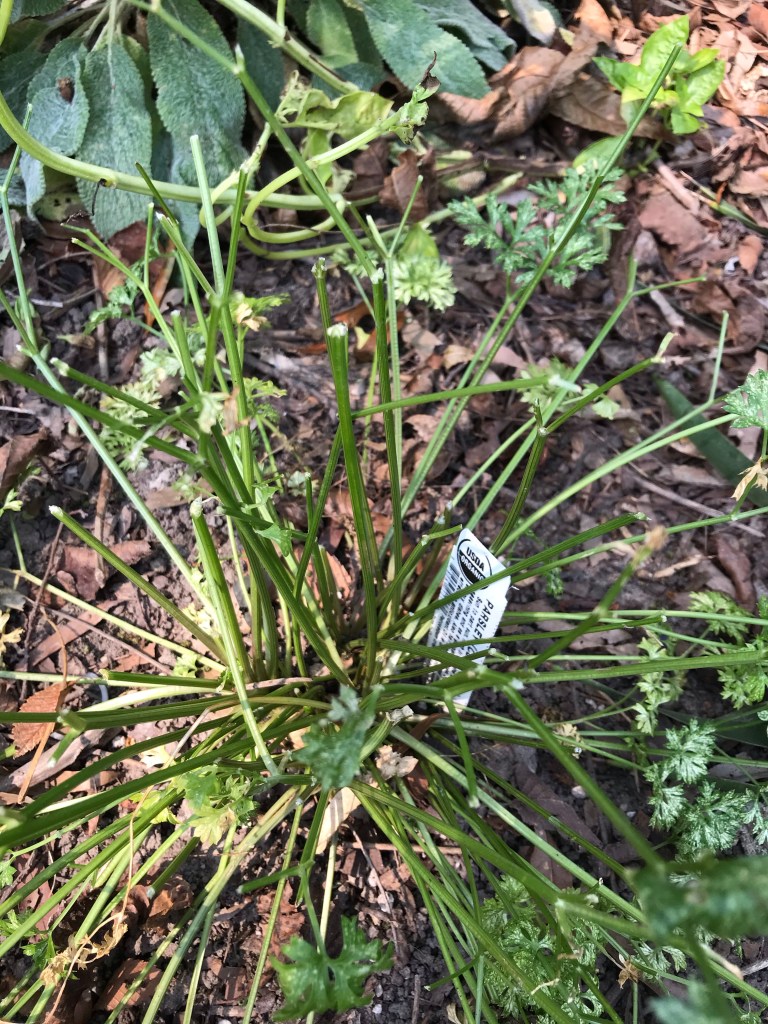
Something, I think underground, is destroying what was for months a beautiful white-blooming salvia. I’m depressed about it, but will probably post this picture on a local NextDoor gardening group and see if anyone has suggestions.
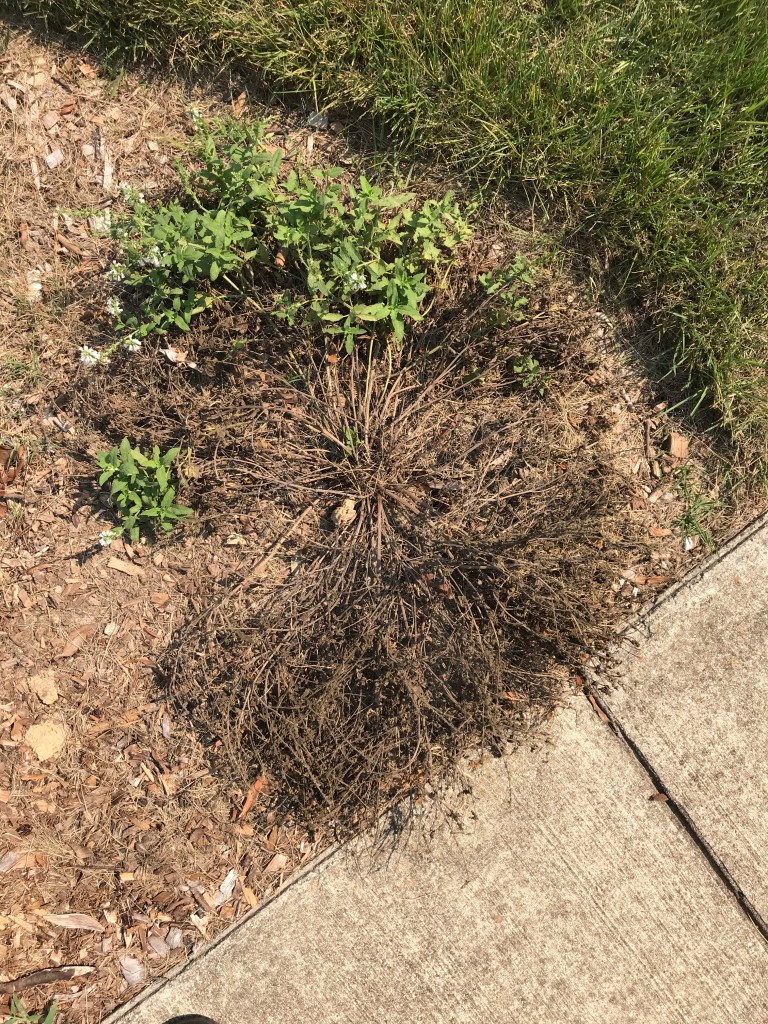
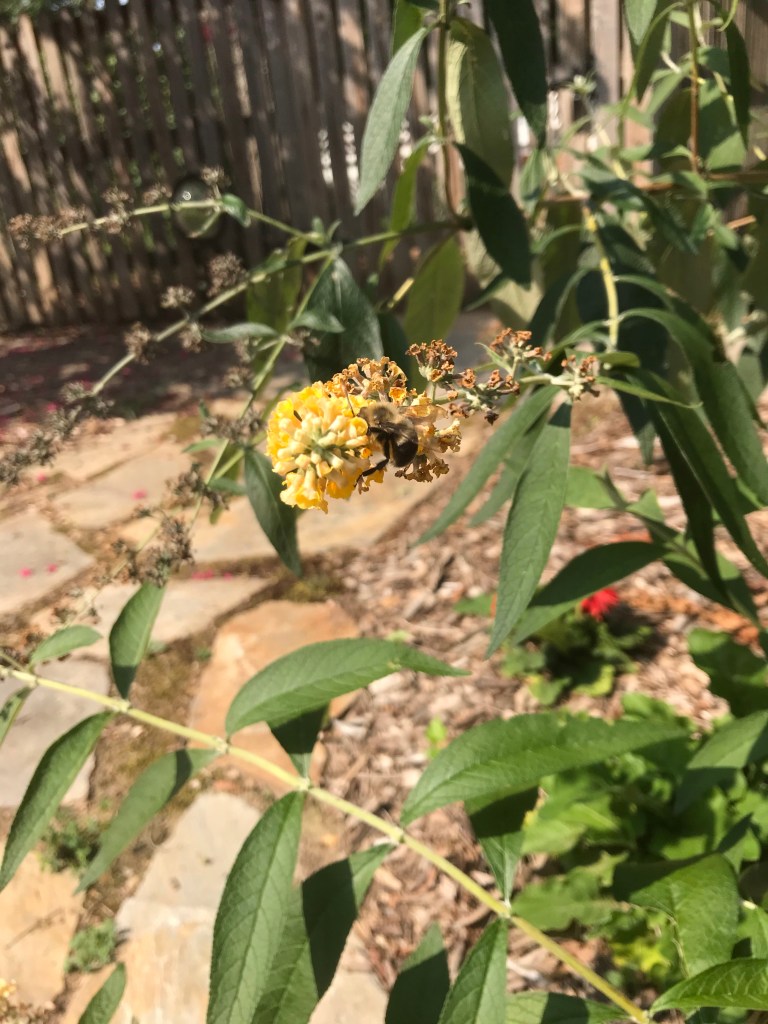
When I planted this butterfly bush it was tiny, maybe two feet tall. It grew all winter long with shiny green leaves and bloomed for most of the summer until the main trunk wilted. I cut it and pulled the side trunk to the middle, but as you can see below, it is also dying. I think I have root rot and will have to remove the entire plant, but for now I’m leaving the branches that are still alive to bloom while I cut out the dead.
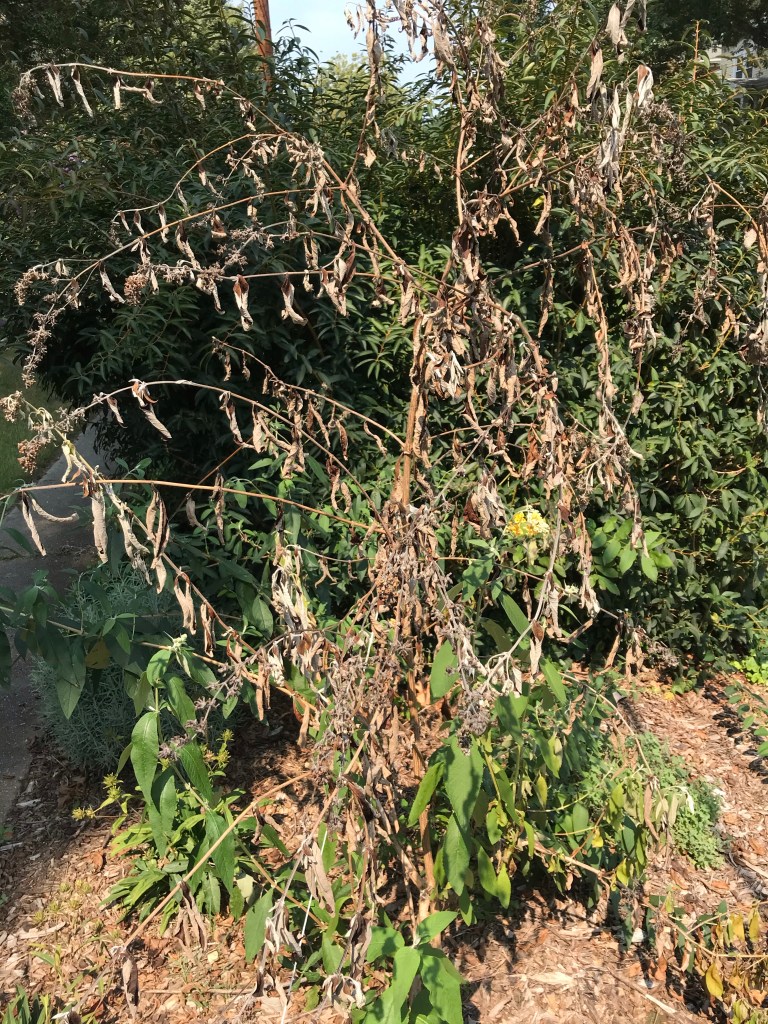
Summer to Fall

Two essays have recently been on my mind, “After a Summer Without Butterflies, I Cling to What Endures,” by Margaret Renkl, and “Why You Should Do Your Spring Planting in the Fall,” by Margaret Roach.

Margaret Renkl is a regular contributer to the NYT opinion section who has made me sigh more than once. Her observations in the garden connect with me on so many levels, from the plants and insects that we share to the sense that things are not what they once were. As someone who has lived in both extreme corners of the South (Eastern Texas and Virginia) I always appreciate her references and storytelling. She writes in a Southern lament style as she finds beauty in nature as well as the death and decay below the surface. In a more practical way, the essay by Margaret Roach shares wisdom from the 85-acre Brooklyn Bridge Park. While Renkl mourns the loss of butterflies, Roach reminds me that while rural and suburban America are a toxic wasteland of pesticides, a new wave of natural meadow-style landscaping is turning cities into oases of natural beauty. Here are just some quotes and photos I enjoyed from each piece.

From Renkl, there is always beauty and death. She and I are living parallel lives and I’m so grateful that she writes because she helps me organize my own thoughts, she connects the ecosystem and helps me appreciate each part.

“How ragged we are now, dragging summer behind us like an old blanket we can’t set down. The homicidal heat of August has given way to the merely cruel heat of mid-September, but we are done with it even so. Everyone is cross, and not just the people.”

“And yet.

The mornings are a gift. Cool and damp, they feel like part of an entirely different ecosystem. If I’m poking around the garden early enough, I can spy all the darling bumblebee butts deep in the bells of balsam flowers where the bees have tucked themselves in for sleep.”

“The spent zinnias and coneflowers and black-eyed Susans provide plenty of seeds, and the beautyberries, arrowwood berries and pokeweed berries are ripe now, too.”

“Already the fall wildflowers are beginning to come into their own. The goldenrod throws its yellow plumes into the air; ironweed and asters purple the fields and roadsides; snakeroot blankets the forest understory; anise hyssop and elephant’s foot flowers call to the bees on the naturalized side of our yard. All of them feed the insects that feed the birds who need fuel for the migration, or for surviving the winter at home.”

“A basilica orb-weaver spider has built her cathedral outside our front door. Her web has been pummeled by rains again and again, but her pearly egg sacs, all strung together in a row, are safe. Every day I check them to be sure, and every day their mother watches me warily as I check.

She will guard them faithfully until she dies, and the last thing she will do is secure the guy wires they’ll need to guide them when they climb out of their sacs next spring.”

From Roach, practical wisdom and photos that make me dream of my next trip to New York.

“Rather than following the common practice of planting and transplanting in spring, for instance, she suggests shifting virtually all of that activity to autumn — and not cutting back most perennials as the season winds down.”

“But in just 11 years since the first section opened, the place has become a refuge and breeding ground for diverse and unexpected species. The state-threatened golden northern bumblebee (Bombus fervidus) can be seen happily collecting nectar on wild bergamot (Monarda fistulosa), while nearby, fluttering swarms of the common but colorful little pearl crescent (Phyciodes tharos) are delighted to find so much of their host plant, smooth aster (Symphyotrichum laeve), to savor.”

“More than 180 species of birds have been sighted in the park. And not just the mallards and herring gulls that you might expect on a waterfront, but swallows, woodpeckers and rare sparrows, as well as 31 species of warblers. An extremely rare painted bunting (Passerina ciris) spent two months in the park one winter.”

“The practice she adheres to is called ecological horticulture. It’s the polar opposite of the purely ornamental version, which is driven by asserting control of plants in the name of aesthetics.”

“Spring planting “gets in the way of our work, instead of complementing it,” Ms. McMackin said. And in the past four years, her crew has gradually phased it out. Next year, there will be no spring planting at Brooklyn Bridge Park, except for some tree species that resent fall root disturbance.

“When we do plant in spring, and then summer arrives, it can be such an extreme environment — hot, dry and windy, too,” she said, and those are hard conditions for plants trying to root in. With a fall planting schedule, the winter that follows is easier on them.”

“In May and June, instead of planting, we can get weeds while they’re still small,” Ms. McMackin said. “You can hoe rather than having to hand-pull — getting rid of things that can cause massive problems later, if you don’t.”

“At Brooklyn Bridge Park, the gardeners skip most of the traditional fall cutbacks and cleanup. That leaves plenty of seed that can self-sow, or be eaten by birds, and preserves an overwintering habitat in the leaf litter for arthropods. Except where mulch or compost is needed, the approach is hands-off.”

“We just had an endangered sedge pop up. And we had a state-threatened saltmarsh aster appear that we relocated to our salt marsh,” she said. “It’s amazing what happens when ‘Leave things alone as much as possible’ is part of your maintenance strategy.”

Fieldstone path

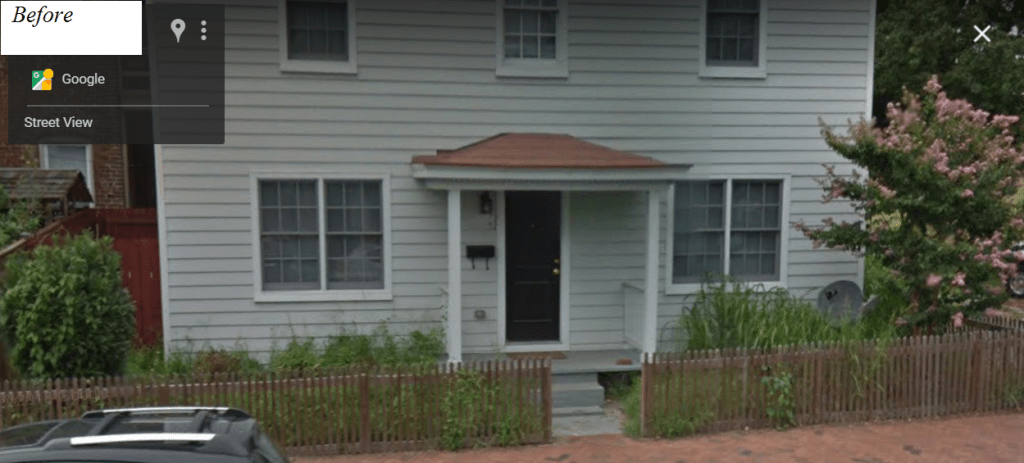
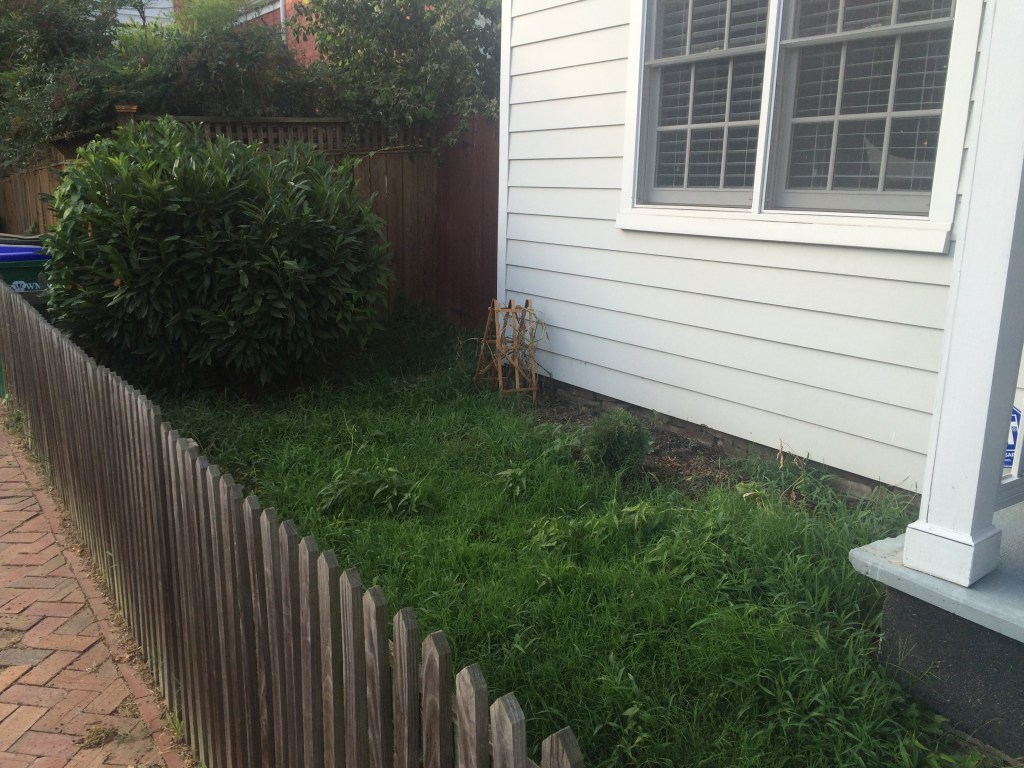
Soon after we moved into our current home, I started doing one of my favorite things: digging up grass. One grass removal project became a cutting garden and a fieldstone path through the easement to a gate into our back yard. It was definitely worth the effort, we use it all the time. Here is what the area looked like before we started, just a standard, anonymous piece of grass:

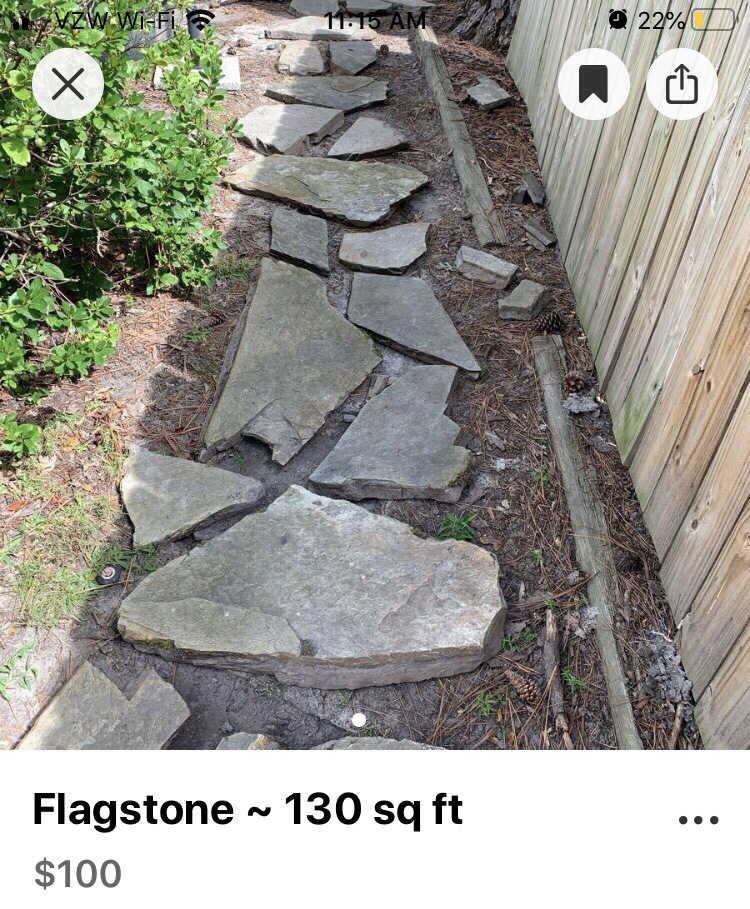
In July, I got some help to dig out the first iteration and see how it felt. The path went from the street to the sidewalk, but I realized it would only work for the one car parked near the path. The stone in version 1.0 was just old concrete and pavers I’d found around the yard and these are still piled up in a stack at the end of the flower bed, waiting for me to have the energy and inspiration to do something with them. At this point, it was actually more dangerous to walk on because nothing was set. Then, I saw this post on NextDoor:

It was a lot of fieldstone (flagstone?) and a great price. It took my sister and I at least three trips in my smallish SUV and I was definitely worried about the suspension, but we got it to the house and started to lay out the new path. I never would have had the motivation to do this without her help.

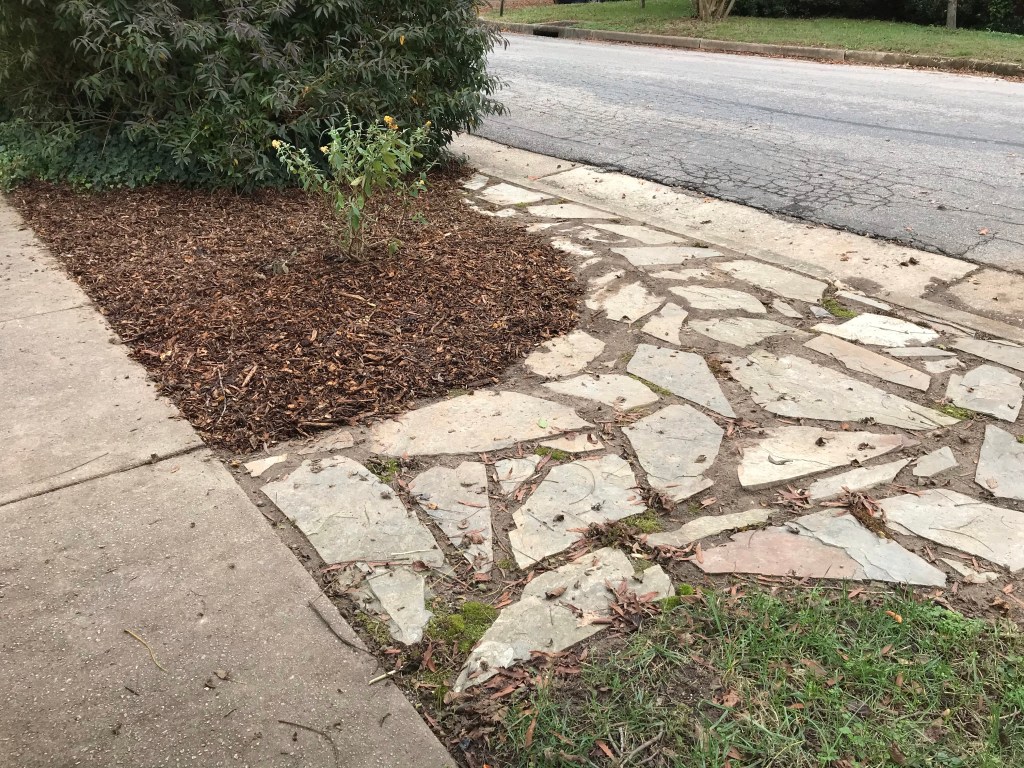
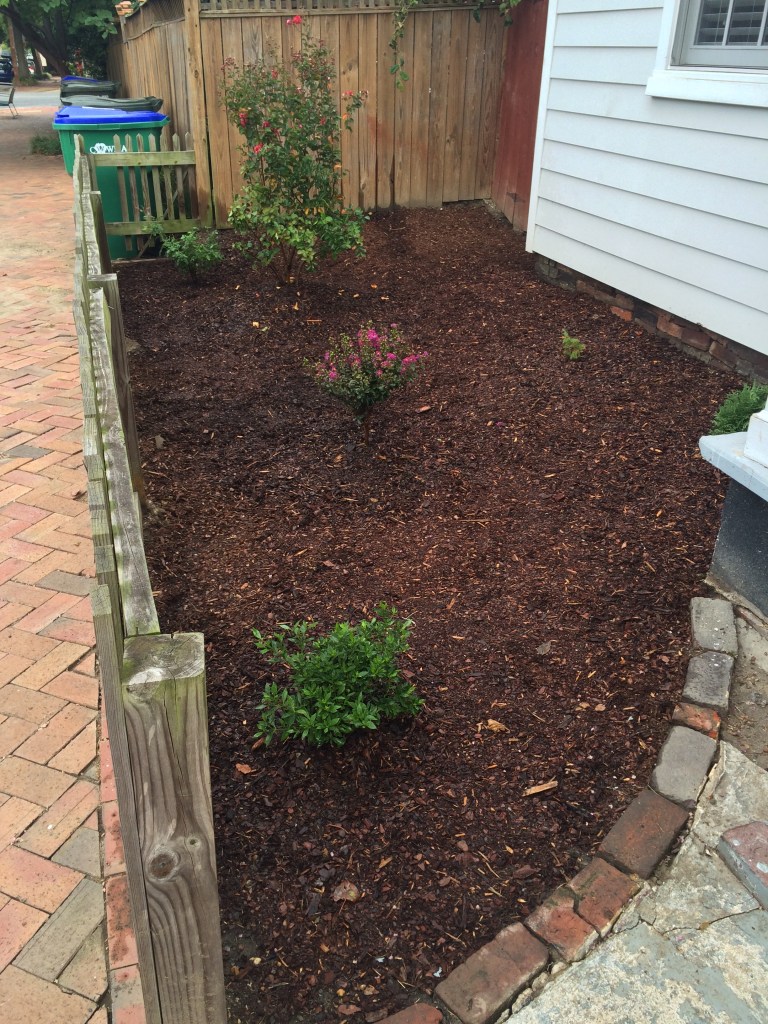
First, we dug down into the path to start making way for the stone. We wanted the stone to be level with the curb and sidewalk. We also decided to extend the long tail of the path all the way down the side of the street so that any car parked along the way could use it. We poured paver sand down and added more wherever needed to level the stones and make the path smooth. We filled in the gaps with sand then dirt and some moss in the hope that it might take over eventually. I planted one plant at this point, a butterfly bush that was a replacement for one that had died within the return window. Here is how it looked soon after we finished:

To prep for the cutting garden, I amended the soil with compost, leaf mold from the garden pile, and peat moss. I wanted good moisture retention and good drainage. I don’t like tilling up soil and I may find another way to do this next time.

Later on last fall, I laid out peony (Shirley Temple, Sarah Bernhardt, and Karl Rosenfield), allium (giant Schuberti, Ivory Queen, and tiny caeruleum) and tulip (casa grande). I didn’t get pictures of it all, but I was glad to see the bulbs come up nicely in succession through early spring. The peony also all emerged and look great, still growing well into the summer months. Here’s a WIP photo with my peony roots laid out for planting down the right side of the bed:

In mid-spring this year, we added Roses (blushing knock out, Lichfield Angel, and coral drift), hidecote lavender, two asters, and another lavender moved from the backyard (originally from our last house). I also planted a catmint that is so far looking like it needs more sun and two Gerber daisies that I’ll want to move eventually since the colors don’t really fit in. Some more photos for now,

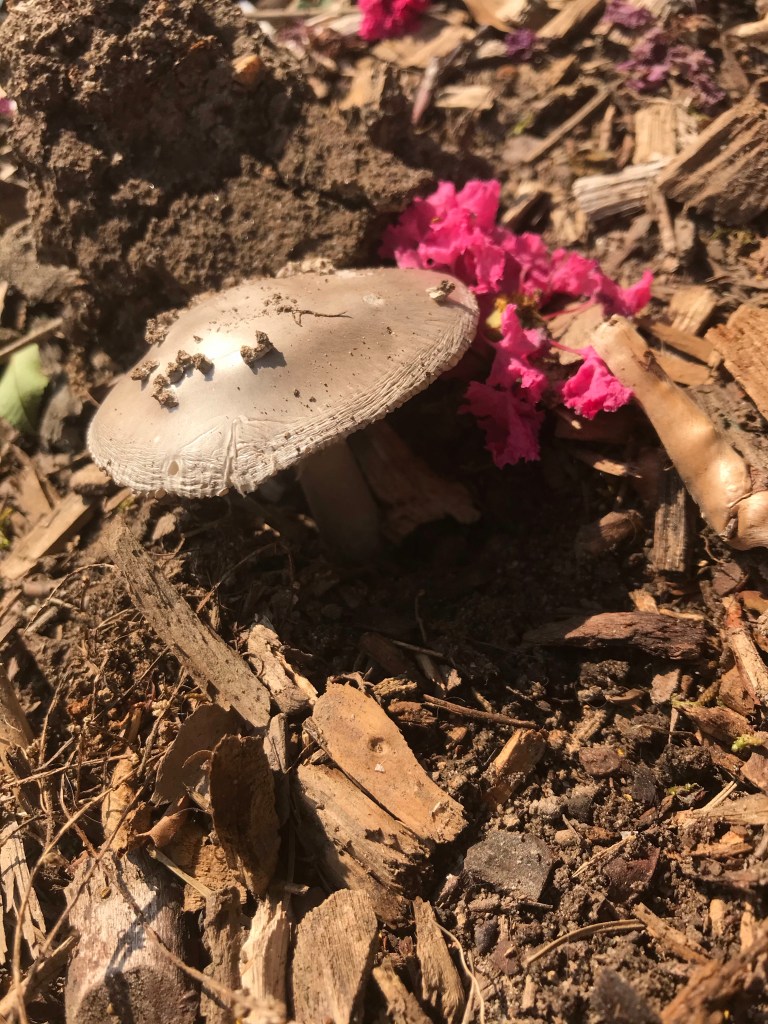
Always a good sign of soil health when you have mushrooms popping up in July 🍄

Flying insect hang out spot (video)

Something about the combination of these plants (coneflower, false sunflower, mountain mint, anise hyssop, and sweet pepper bush) has made this picket a hot spot for flying insects, especially at a time in summer when many other flowers have dried up.

Finding the value in the trees of Creighton Court

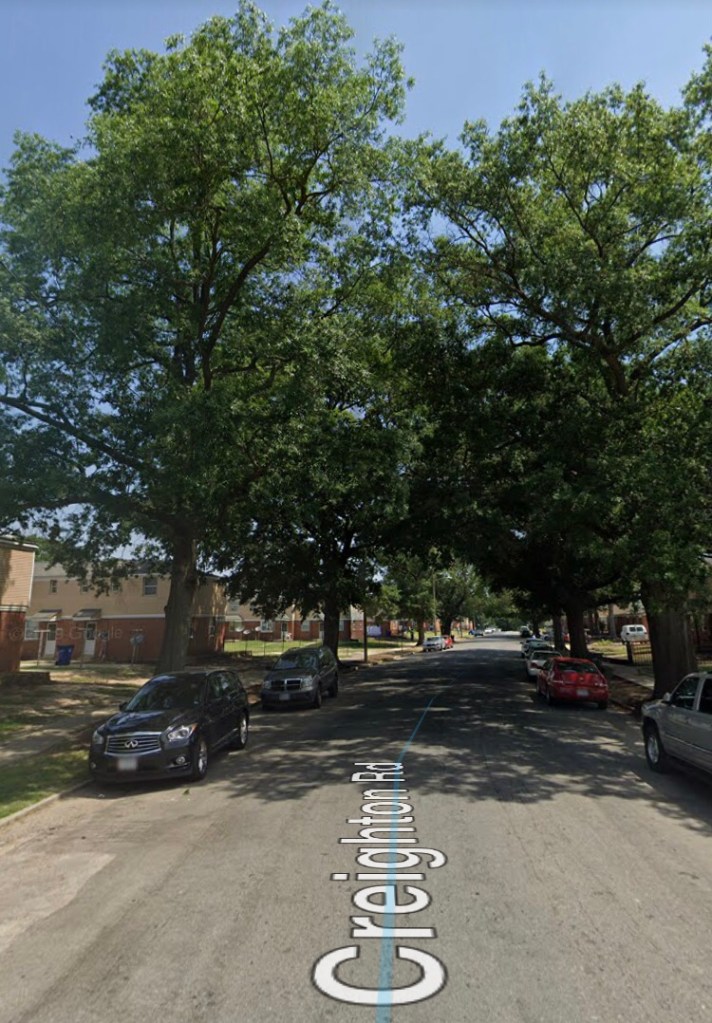
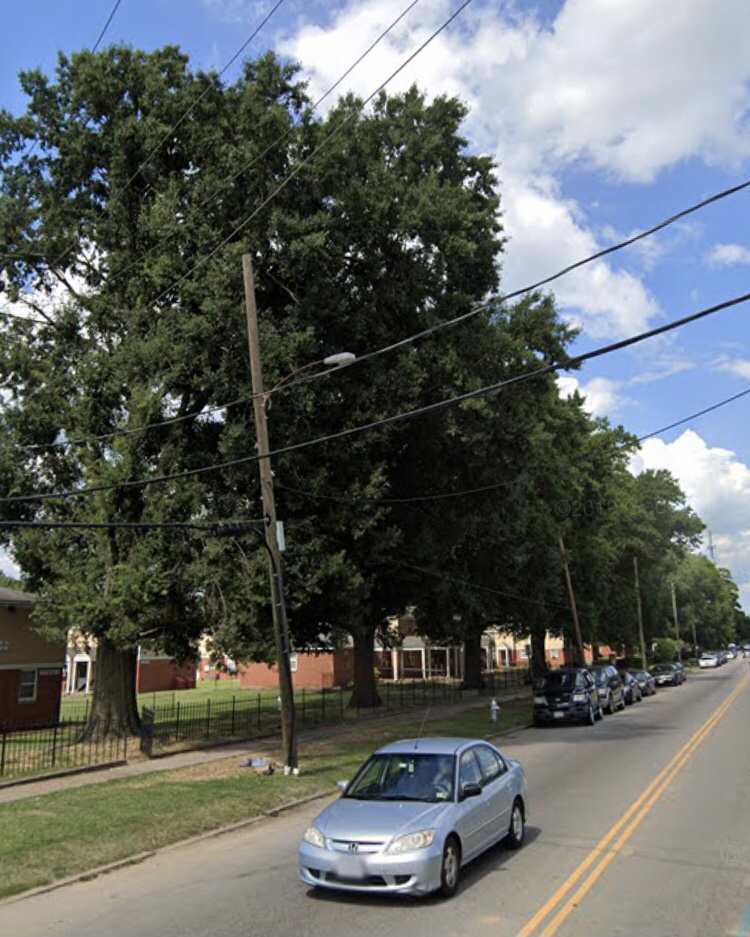
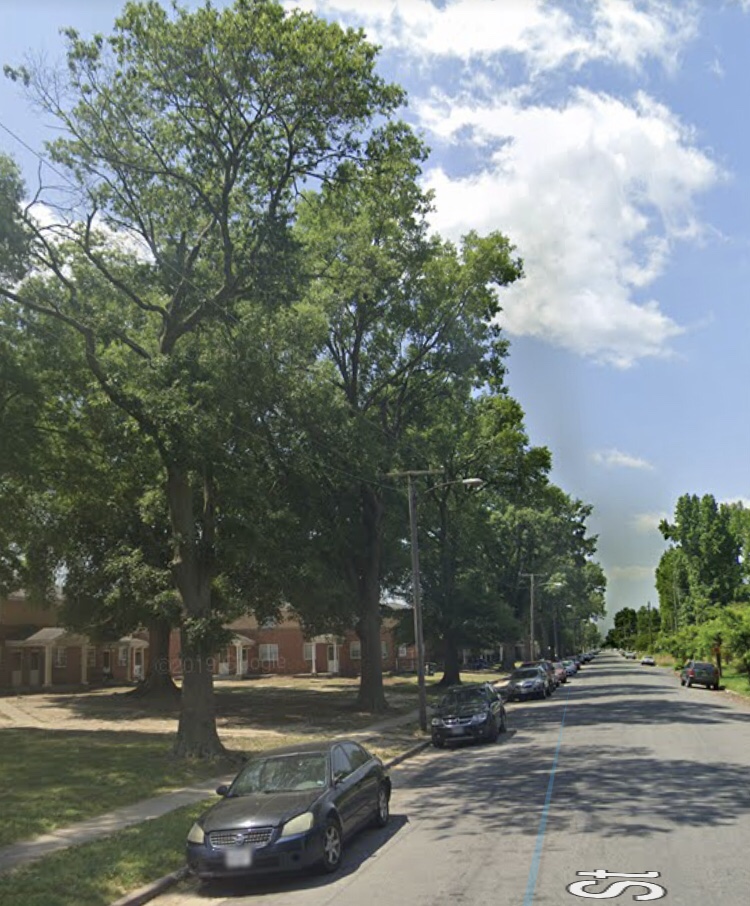
As a part of my last job, I regularly drove through the neighborhood of Creighton Court to make deliveries. This is the second job that has brought me through this part of Richmond and for all these years I’ve been amazed by the huge, hardwood trees.

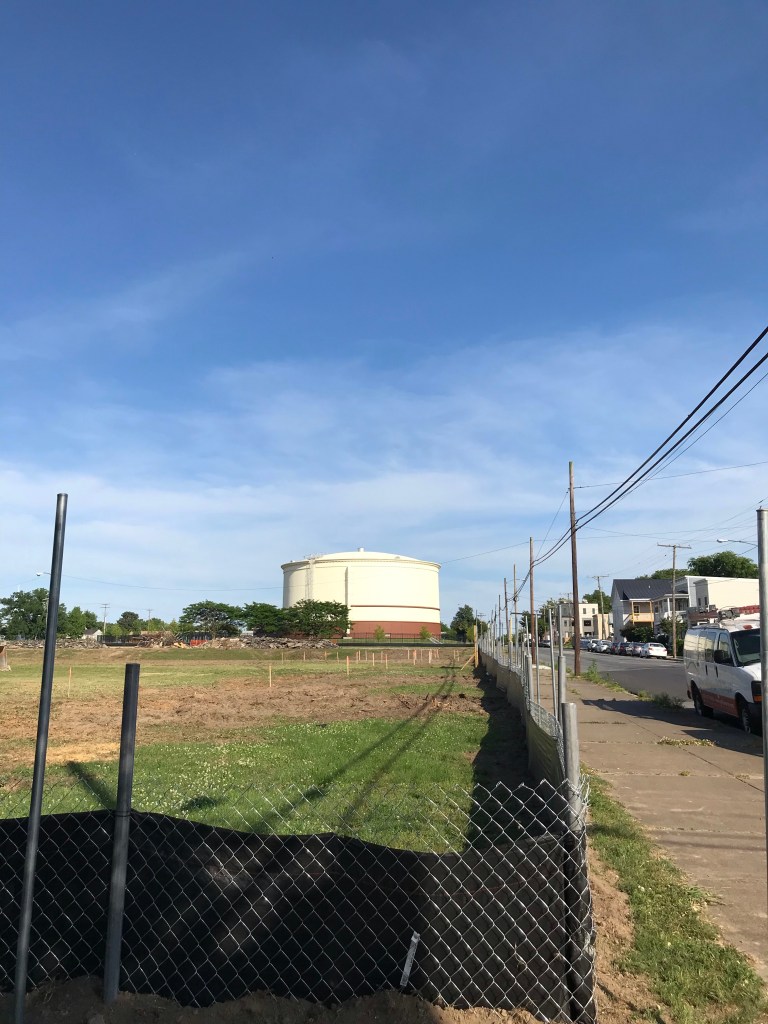
Looking north on Creighton from 9 mile
Looking north on 9 mile to I-64
Looking south on 29th

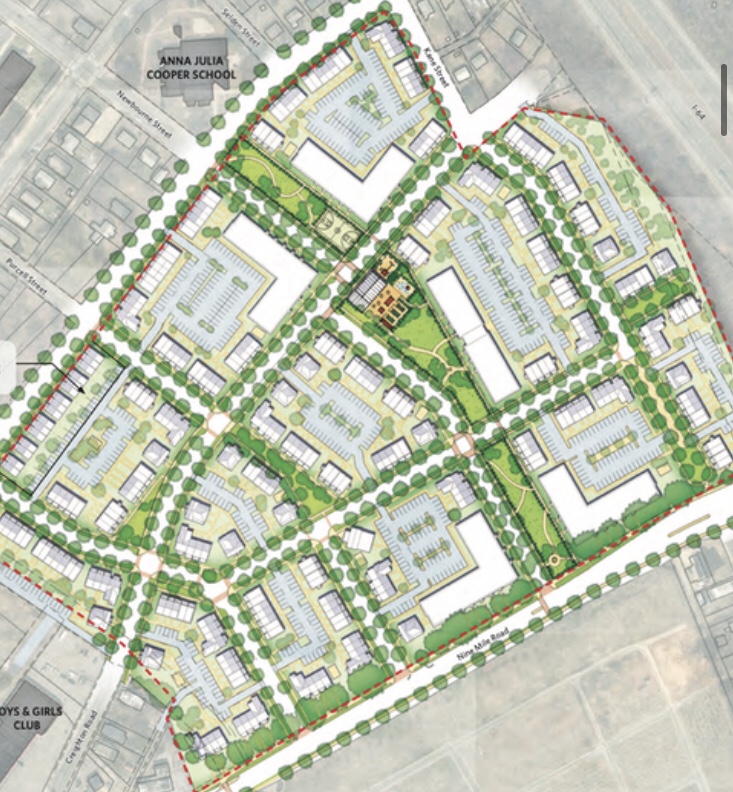
There are many articles already about why the redevelopment process is problematic in many ways and I support those efforts. What I want to add to the conversation now is an awareness of the existing trees and reasons to preserve them for whatever comes next. When I saw the plans for Creighton, I was disappointed to see that most of the trees on the design have been listed as uniform dots rather than left as the existing trees like you see along 9 Mile Rd. in the design below.

To be fair, the drawing doesn’t say explicitly that the trees will be torn down, but I’ve learned from experience not to trust Richmond to preserve them.

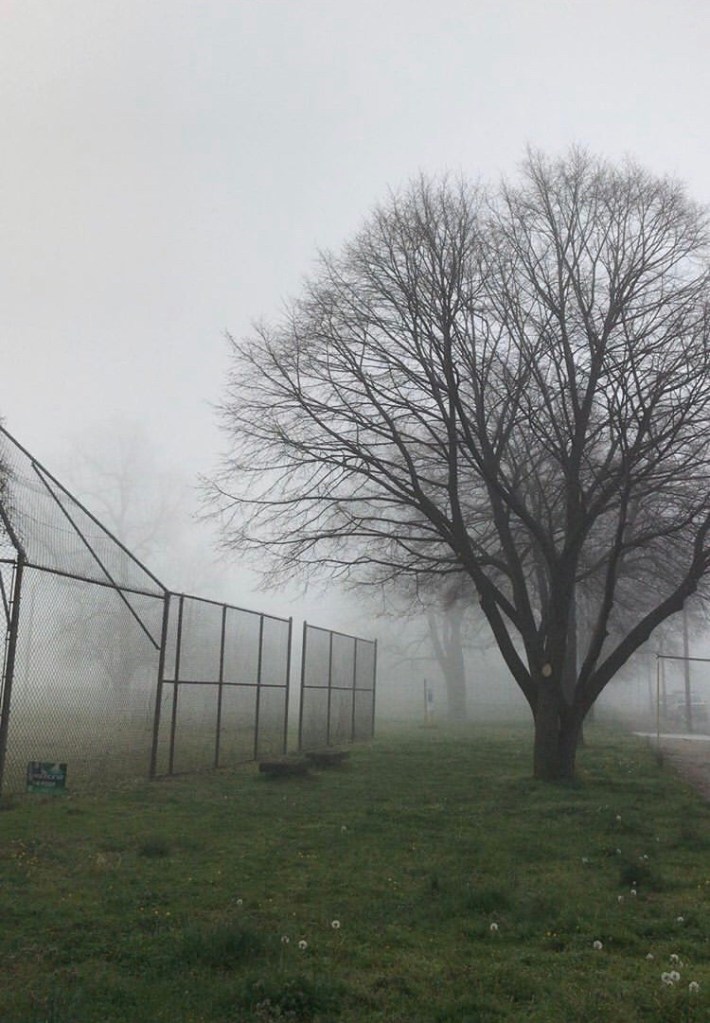
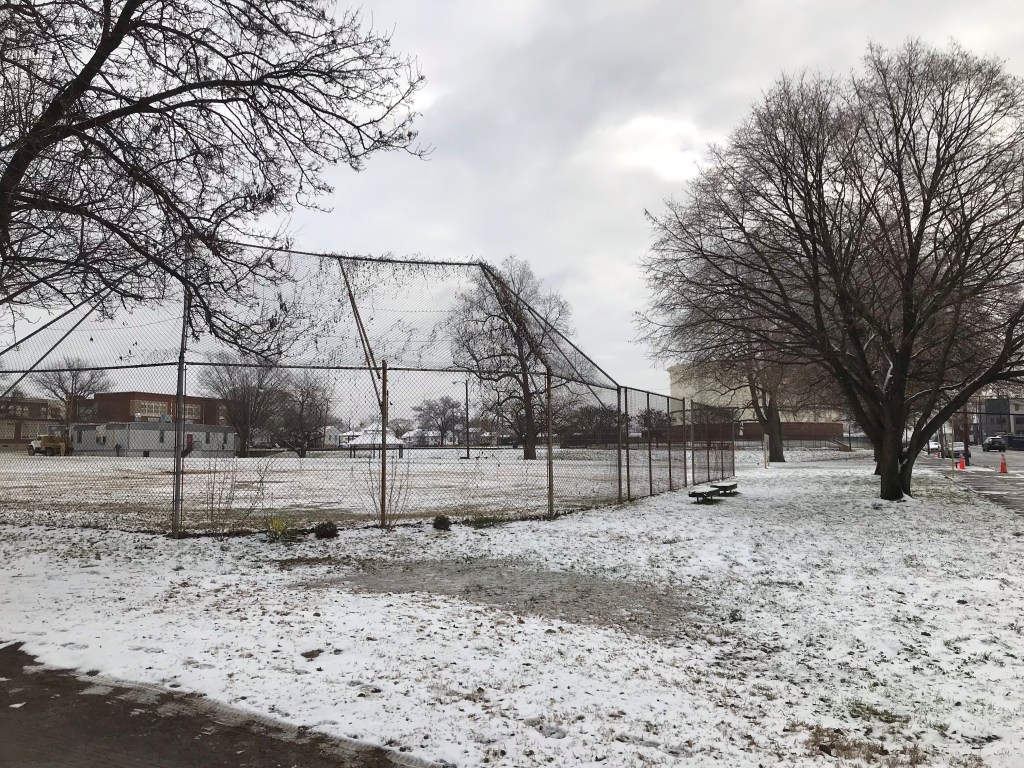
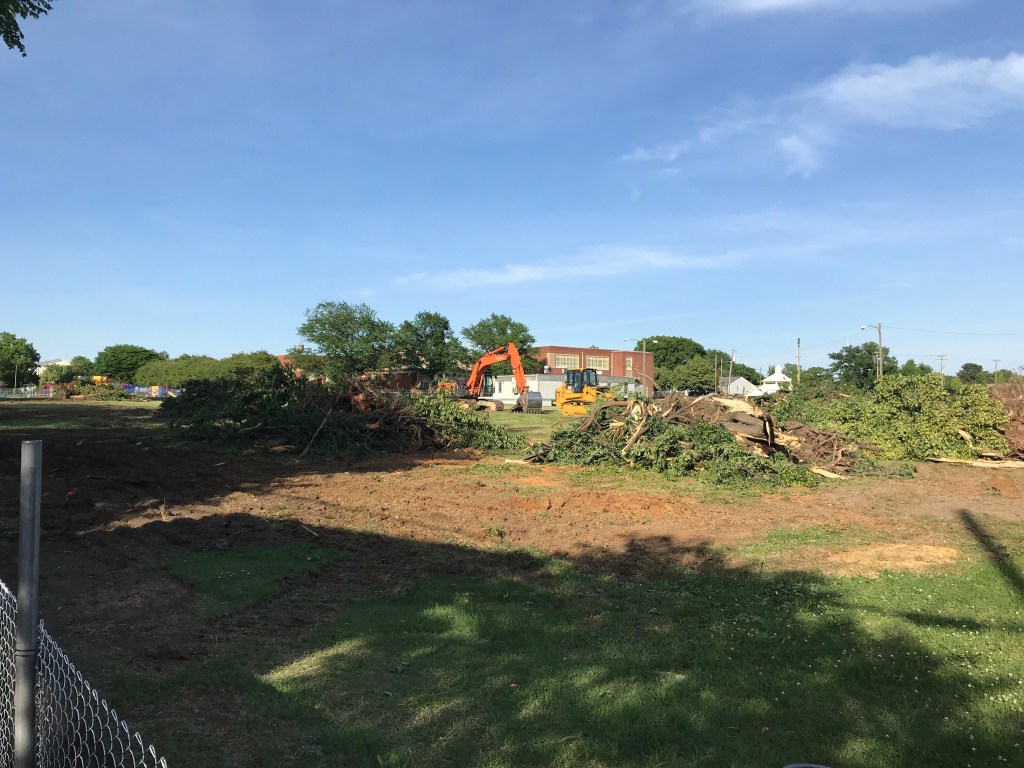
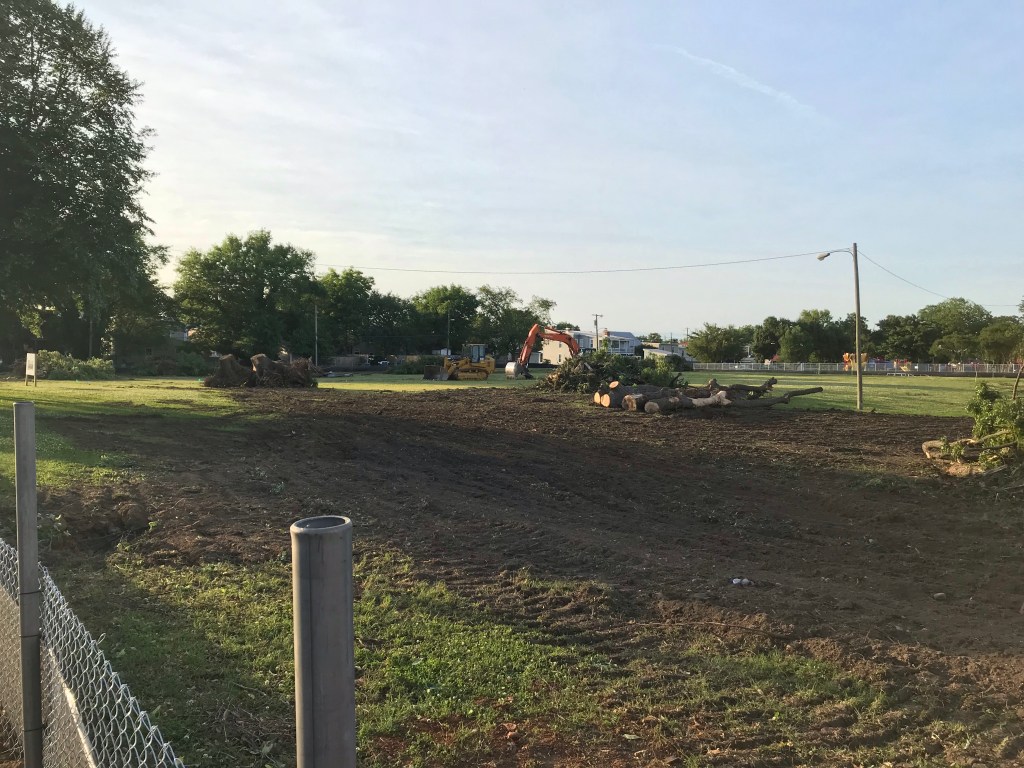
I used to live near the former Ethel Bailey Furman park in Church Hill. It was mostly an open field for dogs to run, pick-up baseball, ultimate frisbee, bike polo, and block parties. Around the perimeter of the park we’re around a dozen old, hardwood trees. When the city decided to build a school on the park property, the A&E firm they hired just erased them. I came home one day to a massive pile of roots and branches that had all been still in the ground when I left that morning. Here are some before photos:

And after:

The shade, the natural beauty, the sound break, the birds, and so much more are gone. In their place are Leland cypress and other predictable landscaping trees and shrubs. They didn’t even really need the space where the trees once grew because they were all around the perimeter of the lot. With some creativity they could have been preserved.

Now, in the 21st century, after all we’ve learned about the role that trees play in cooling our communities in a warming climate and how these trees are already rare in formerly redlined neighborhoods like Church Hill. With all of this knowledge, the city spent tax dollars to have these trees piled up and thrown away.

By the way, as insult to injury, the city said they were going to rebuild the park on another area of the lot and they never did.

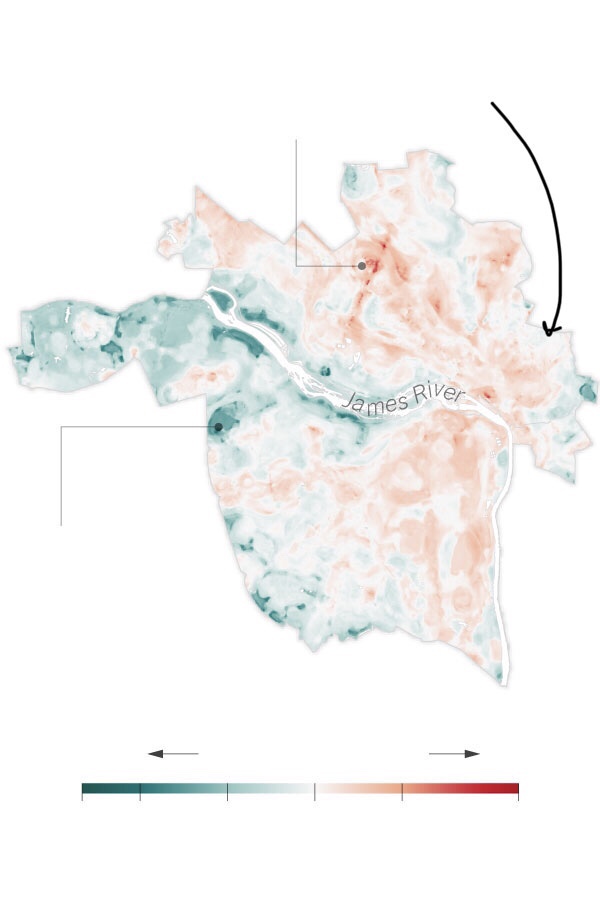
So we come to Creighton Court and all the public housing communities in Richmond. If you look closely at the map on heat disparity in Richmond, these public housing communities (see arrow below) are not nearly as hot as Gilpin Court, the neighborhood most talked about, or even expensive neighborhoods like the Fan. My neighborhood elsewhere looks about the same shade of green as Creighton.

If the research is correct, much of that cooling affect is coming from the shade and transpiration of these old, beautiful trees. It would be such a shame for them to be taken away. Really, it should be a crime. If Richmond is taking climate change and equity seriously, the preservation of trees should be mandated. Planting a 10’ young tree (or several young trees) does not replace one that is 70’ tall. The trees do all the work, we just need to leave them alone.

Tomatoes will grow

Earlier this year, while I was gently coaxing tomato sprouts inside, some tomato seeds from my compost were already germinating and starting to grow right in the garden. I just harvested 12 tomatoes off of these volunteer tomato plants, recently thinned and trimmed. The plants that I sprouted and grew “on purpose” are weeks behind in their first harvest. This is a good reminder to me that this cycle of plants and seeds has been going on for millennia, mostly without human intervention. Without lamps, sprouting mix, and “hardening off” seedlings, these plants will find a way to grow.

Early summer color pop

I’m enjoying this corner of the garden especially right now for its early summer pop of color.

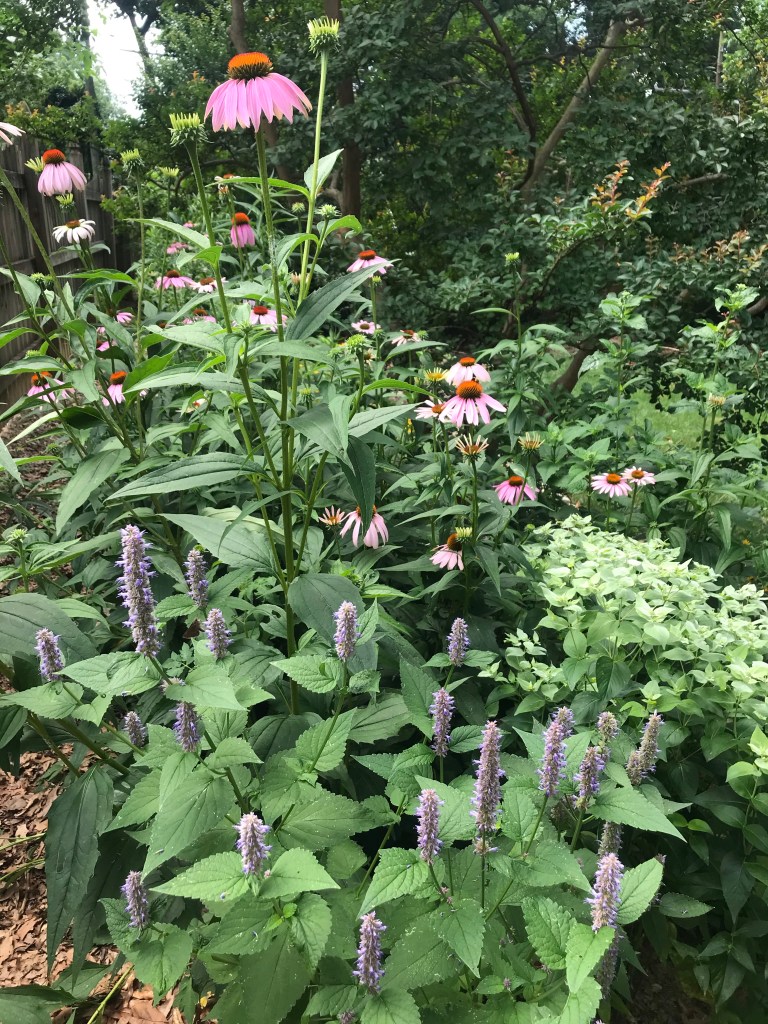
I planted the anise hyssop (purple) and the mountain mint (silver/green) as plants from a nursery, but the echinacea grew from seed and has been prolific. I am amazed by how well it’s done considering my neglect – I honestly don’t even remember when I planted it.

Air layering figs

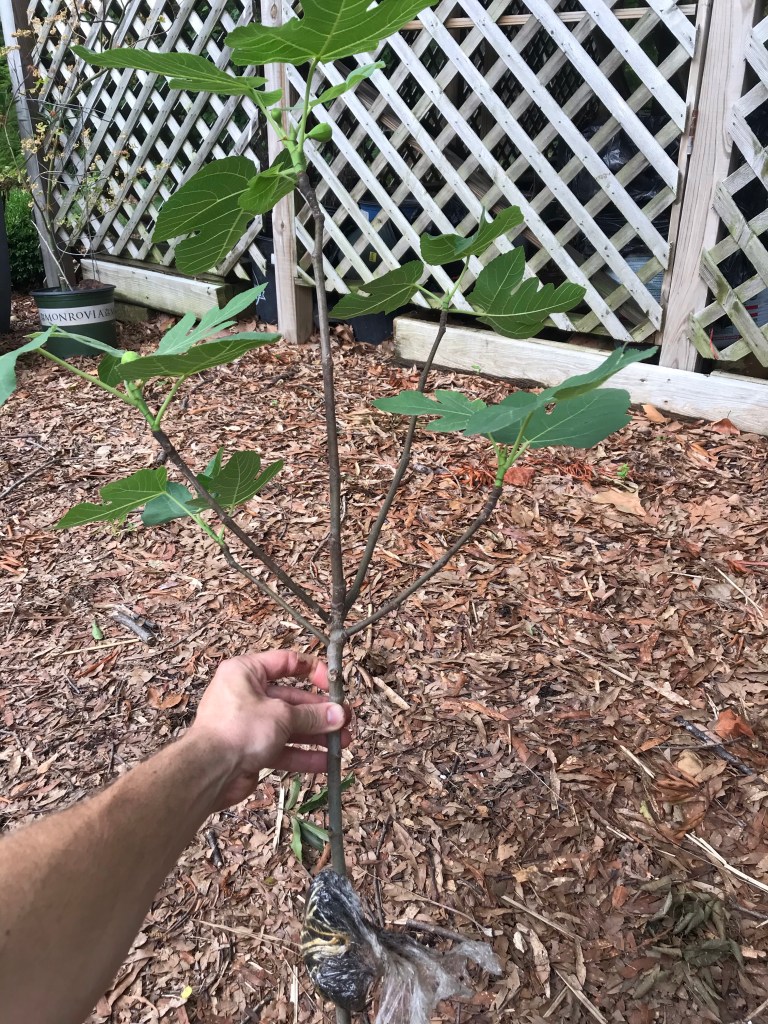
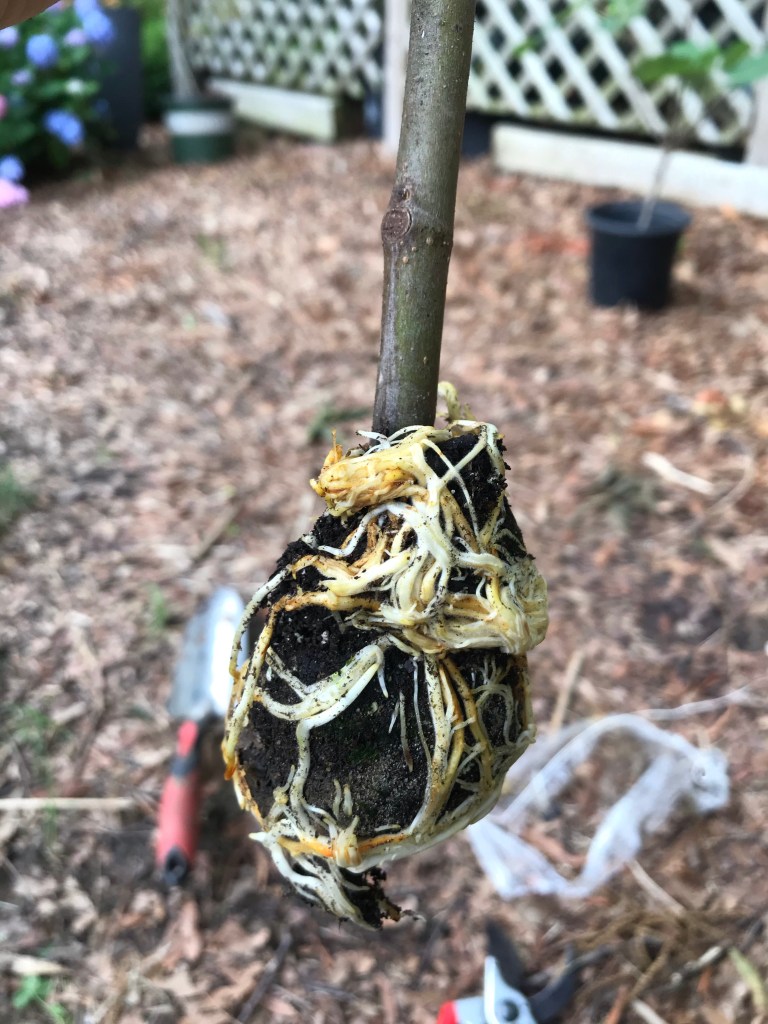
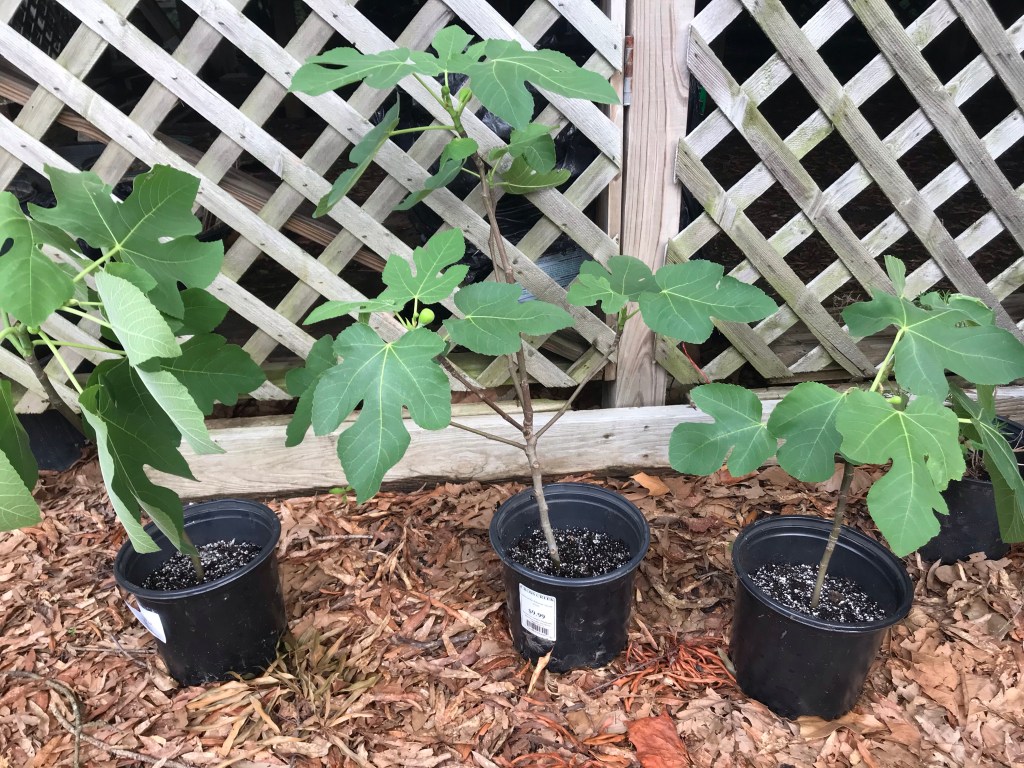
I tried air layering for the first time and so far it’s looking pretty good. These came from a neighbor’s Brown Turkey fig tree and are eventually going to be planted in a community food forest near my house. There are little air layering products you can buy, but my brother encouraged me to just use saran wrap and it worked well with about half of them rooting. You’re supposed to use peat moss, but I didn’t have any so I used potting soil with extra vermiculite instead. It’s incredible to me that you can make these as large as you want, especially since figs are fast growers and always have a branch to spare. Special thanks to NextDoor for connecting me with someone I already knew, but didn’t realize was my neighbor, who shared her fig and many gardening tips while I worked.
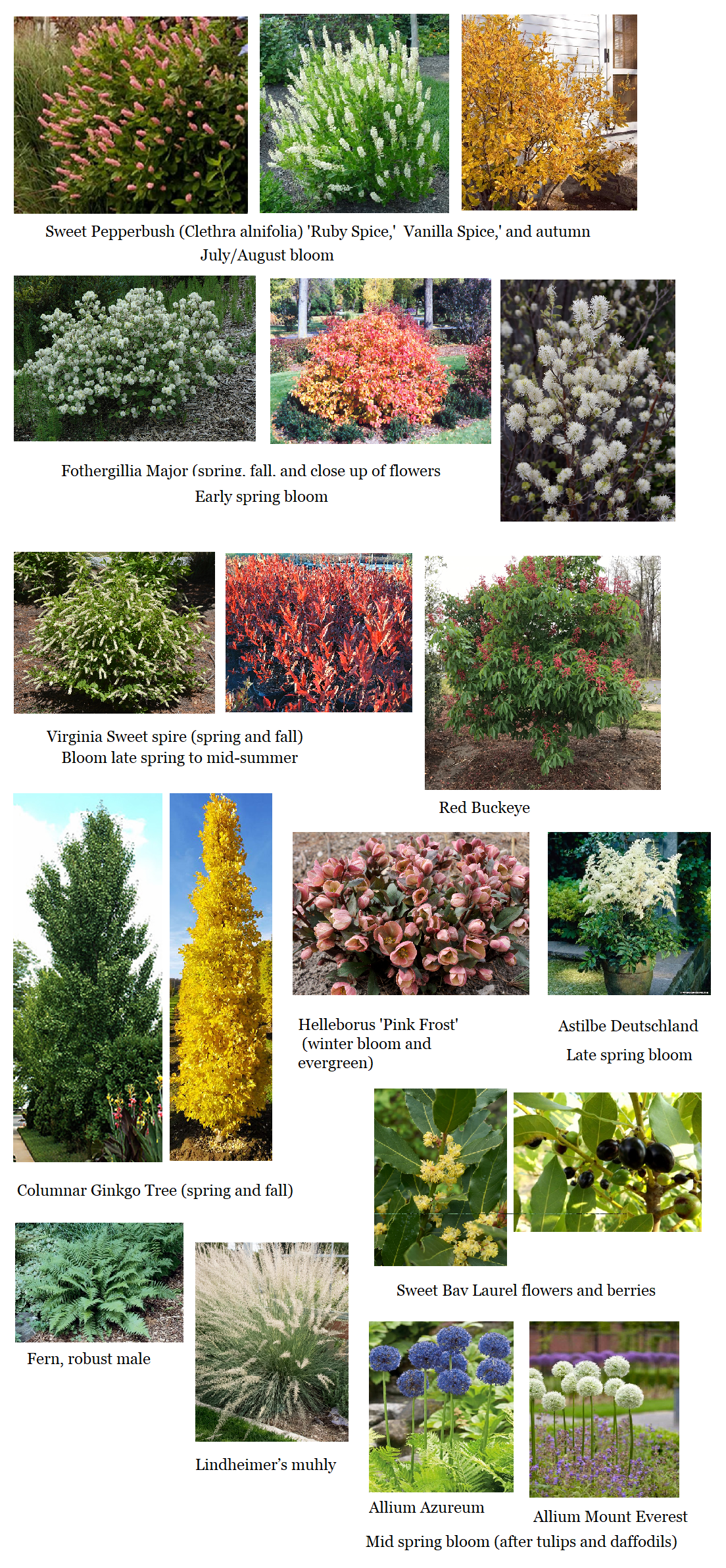
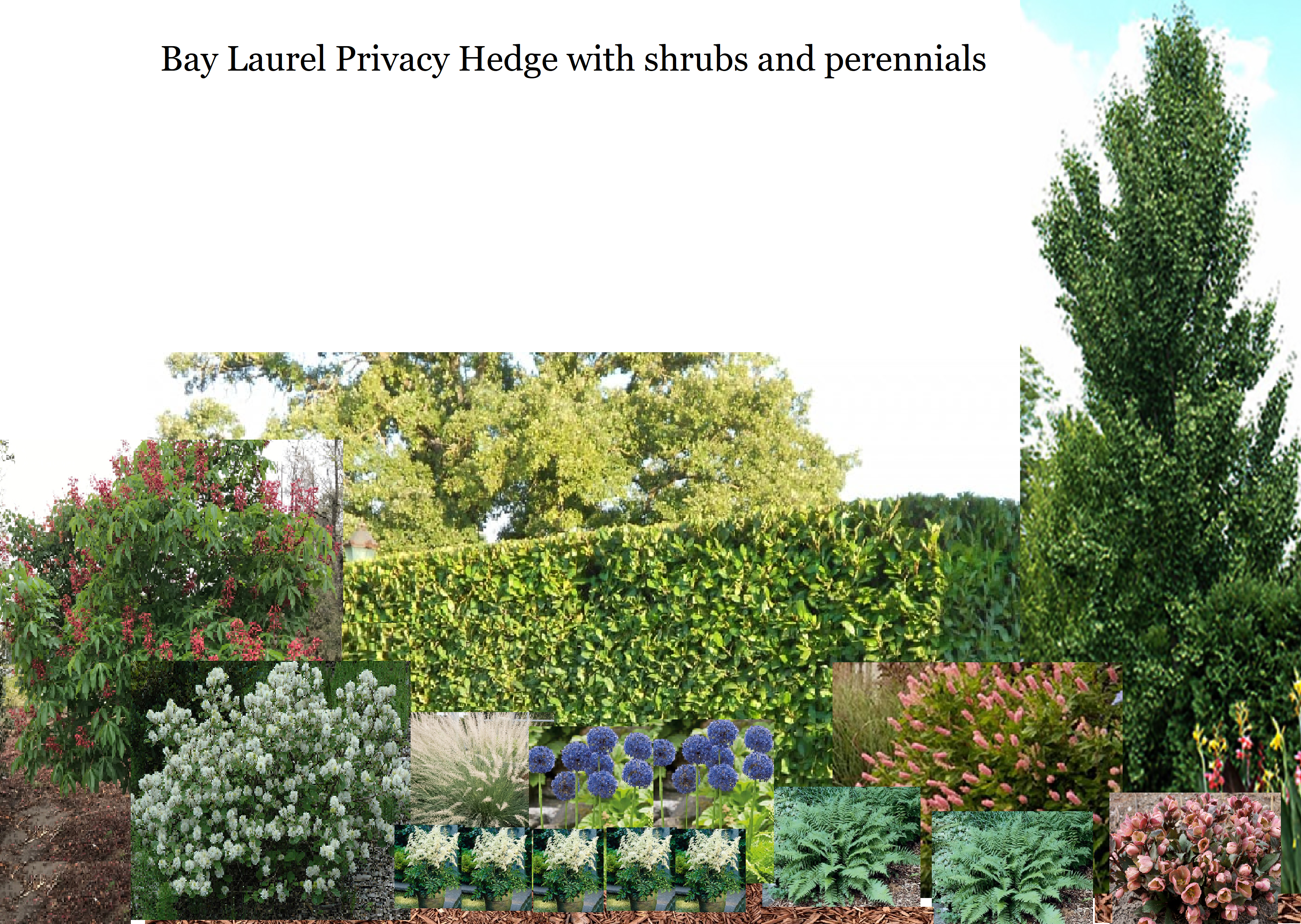
Hedge design (Sweet Bay Laurel)

Just sharing something I put together for a friend that wants to block the view of a neighbor’s house from their back patio. It’s not totally correct with spacing and siting, but could be tweaked pretty easily. I chose Bay Laurel because it’s evergreen and the leaves can be used in the kitchen (bay leaves) and the shrubs and perennials provide a nearly year round color mix, attraction to pollinators and birds, and are low maintenance once established. If I were to actually install this I would follow the instructions in this “How To Create A Privacy Hedge” video by Urban Farmstead.
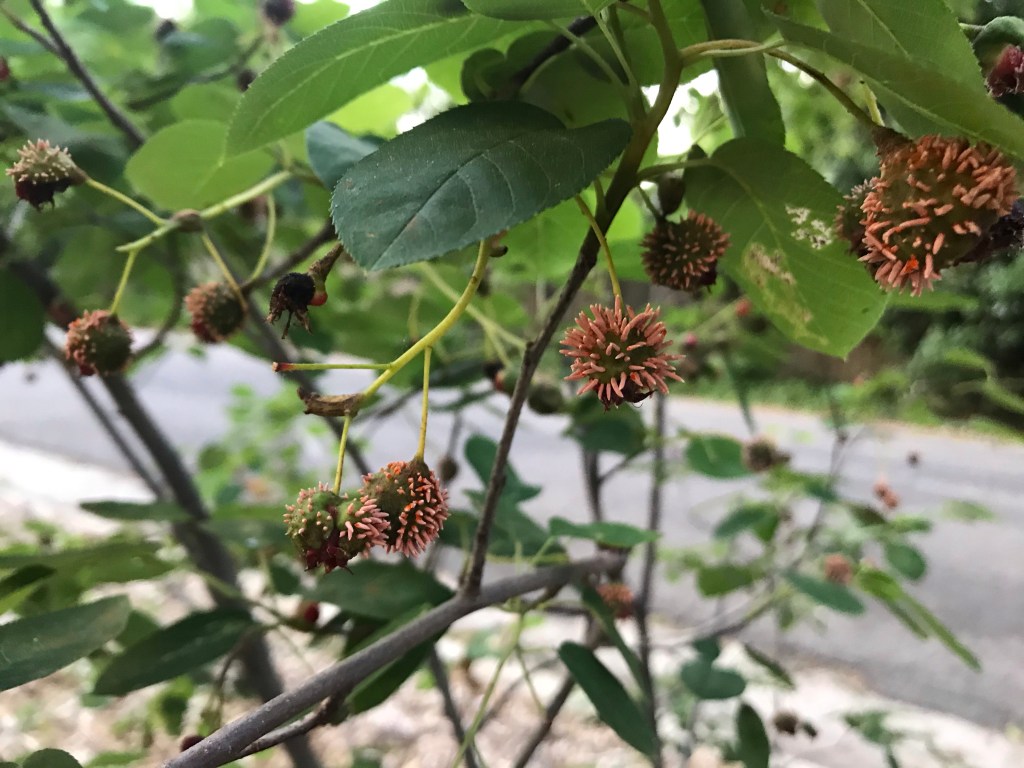
Serviceberry Update 🤢

Two months ago I was feeling hopeful and sentimental about spring and excited about the potential of the buds on my serviceberry. This week, I discovered that the supposed abundance of berries I was hoping to eat in June are now disgusting and inedible. The plant apparently has something called Cedar Apple Rust. Now the berries that were flowers that were buds full of potential are just hosts for a fungus preparing to spread.
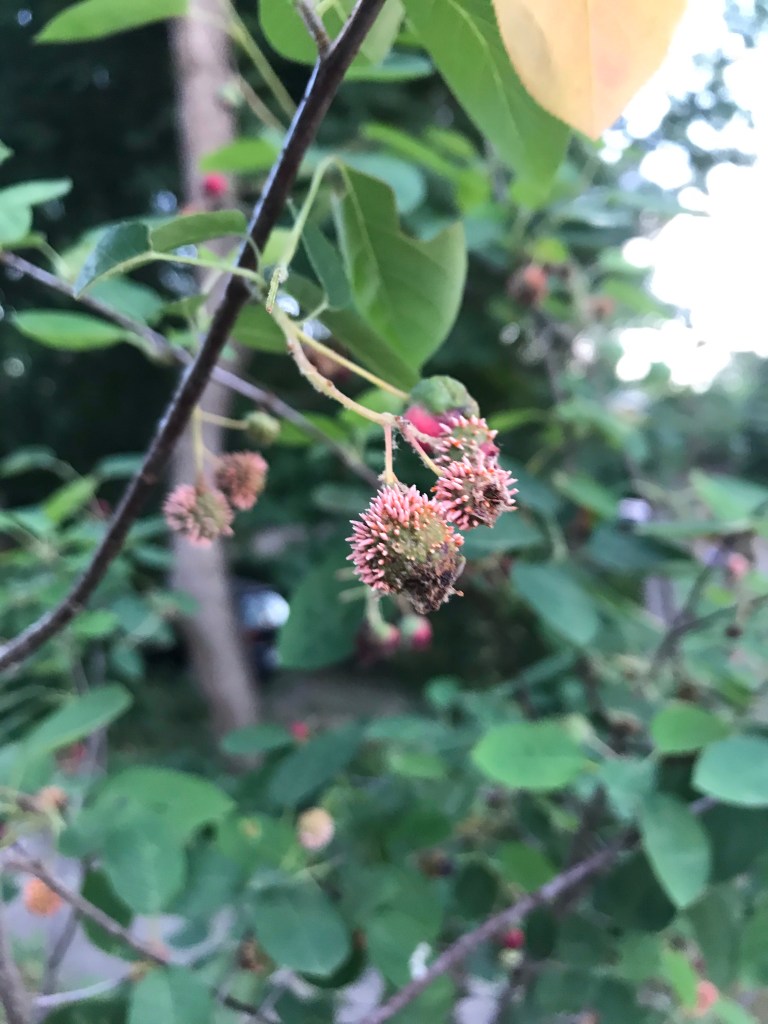
I don’t know what this means for my metaphor. That the world still exists in 2021. COVID is still ravaging communities, politics continue to get weirder and weirder, and Black Lives Matter is still a controversial idea in some circles. So I’m letting it sink in that my plant has a disease. That disease will never really go away. Even if this shrub recovers, as I’m told it will, the disease is always around. The spores can travel miles to their next host. It’s unrealistic to believe that this will not happen again to my serviceberry, but I know there will be a spring that the spores happen to skip this place. This experience will make me significantly more grateful for a season down the road, hopefully, that we get to enjoy the berries, ripe and ready to eat.
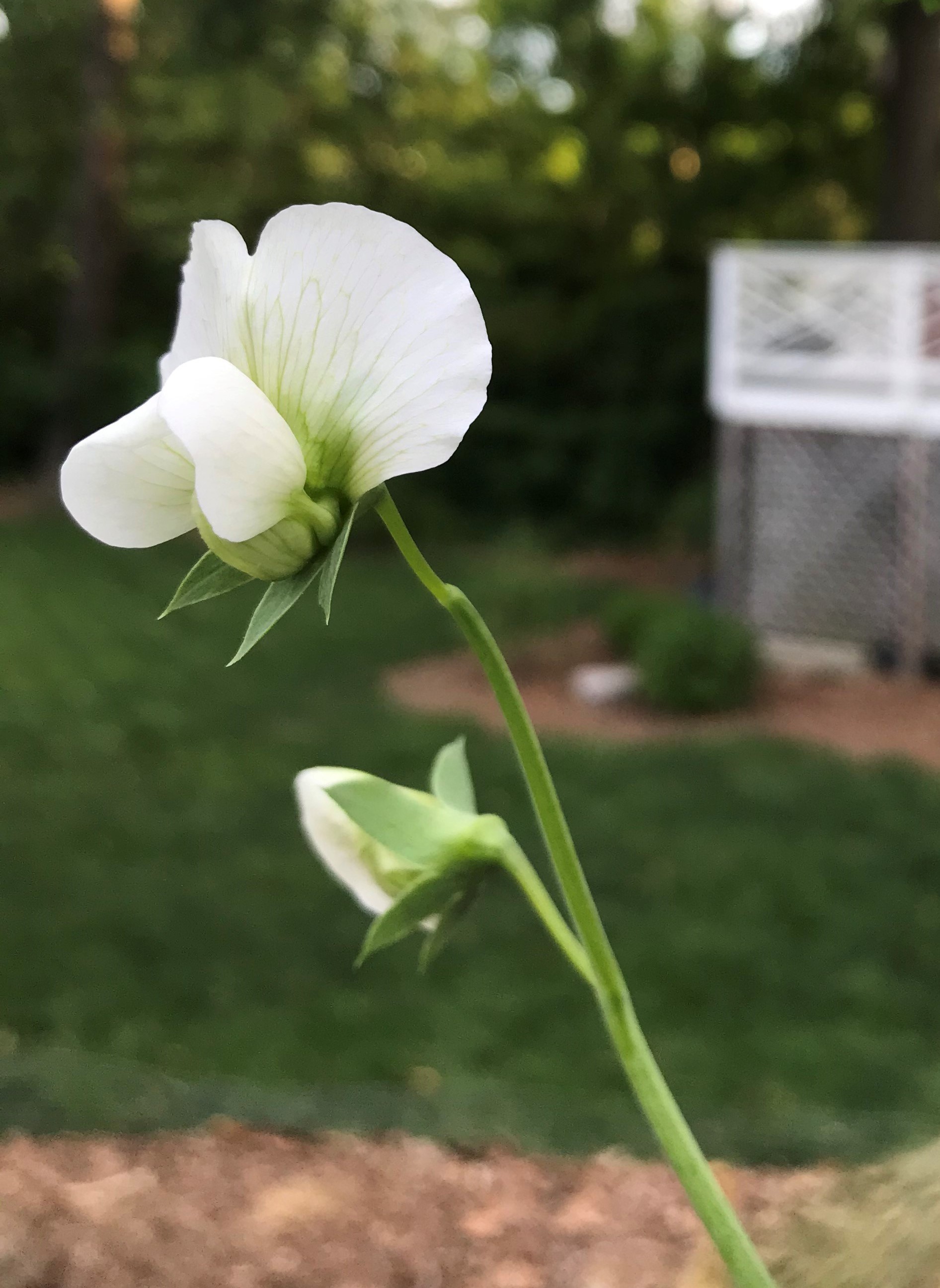
Good mornings

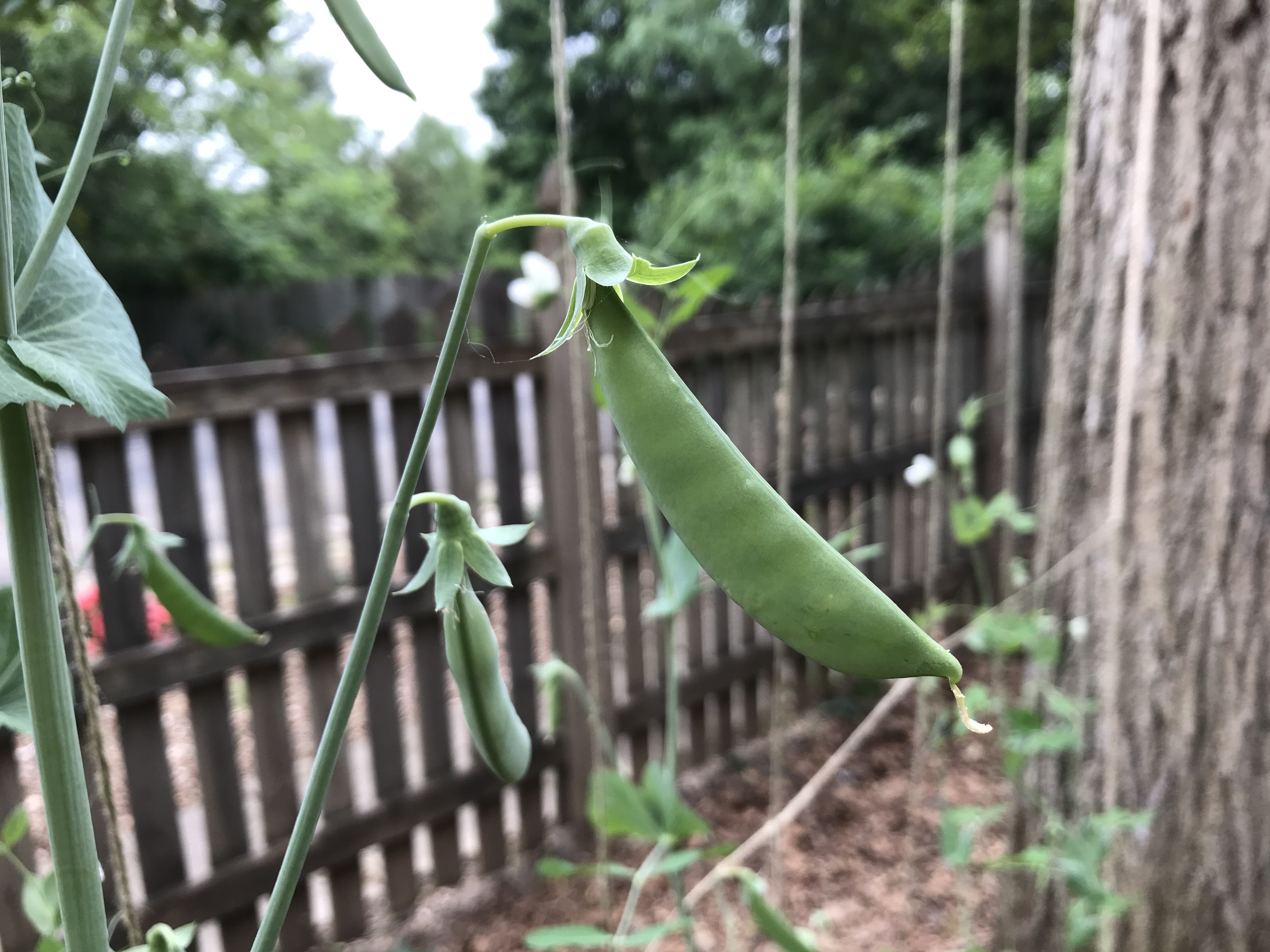
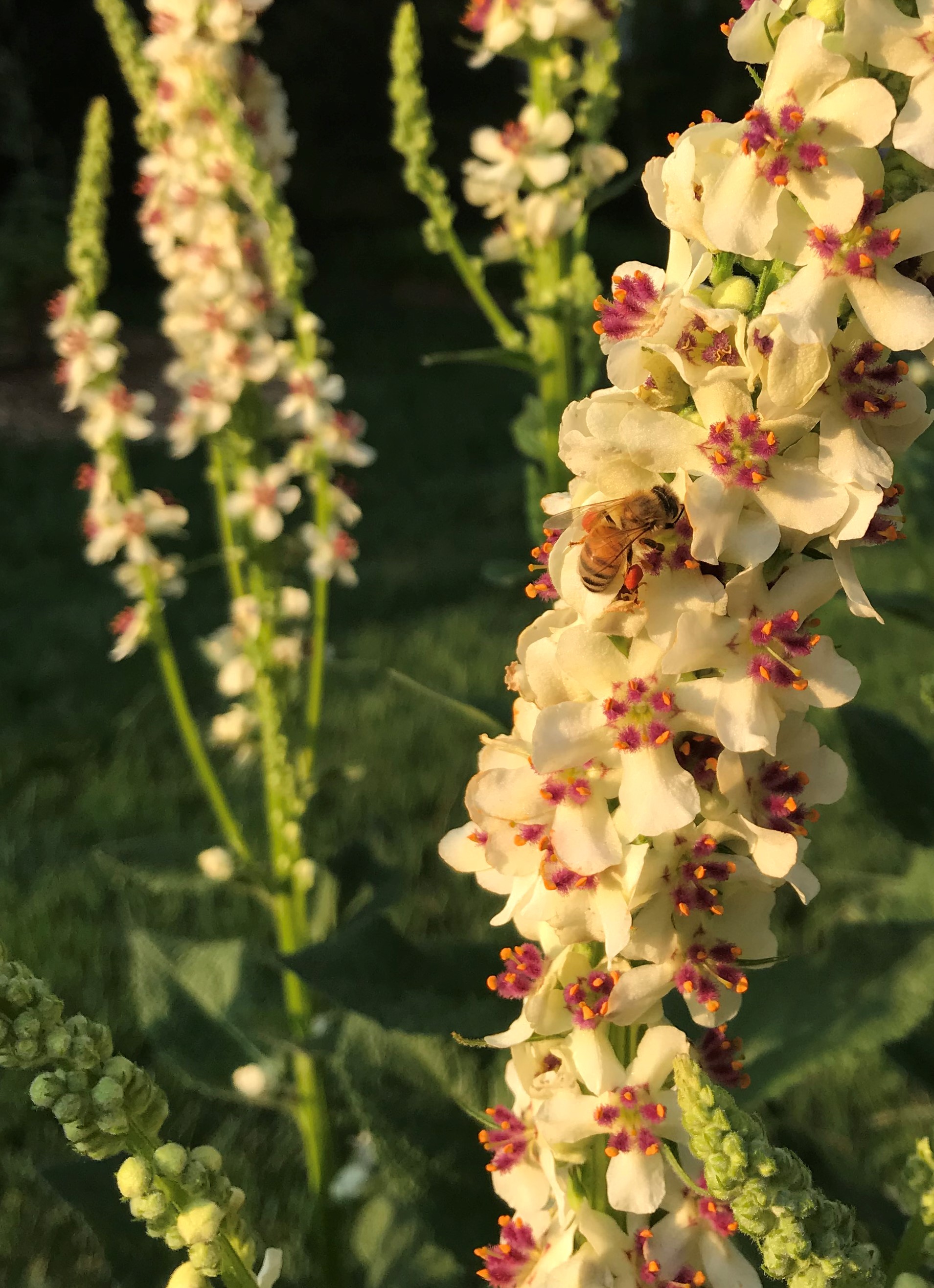
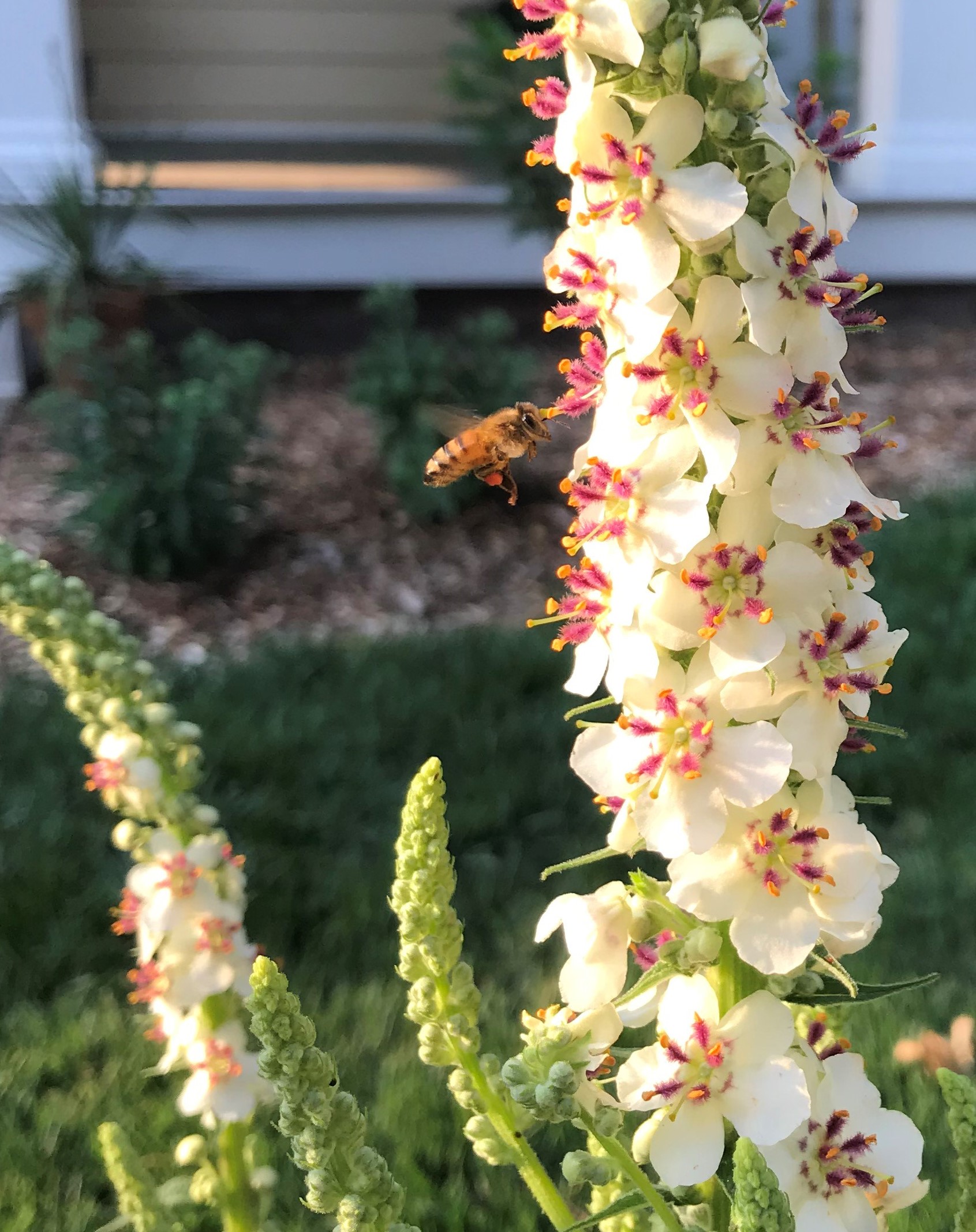
Yesterday morning I shared a sugar snap pea with my 18-month old while we watched bees forage on some Verbascum (Mullein) that I planted earlier this month. I’ve had some flops this year so far including beets, fennel, poppies, bachelor’s button, etc. I’ve already rearranged several plants that were either crowding each other out or not getting the amount of sun they require. So often, all I can think about is the work that still needs to be done, but in that moment, thinking about the benefits to nature and our quality of life, I was grateful for something going well. And considering the ease of use and the quick reward I will definitely be doubling down on these peas next year.

Surveying our postponed lives

Last year, I had a lunch on the calendar with an old coworker set for March 12. We hadn’t seen each other since my son was born and we had lots of work gossip and life updates to share. Of course, as the date arrived, the COVID threat grew and we decided it would be safer to postpone. We pushed it back to April 30, then August 13, then again to January 13 (the worst date out of all of these), and May 12, then finally over a year later to May 26, 2021. With vaccinations and revised CDC guidelines in tow, it looks like our lunch is finally going to happen. We are not close friends or family, not in either’s inner quarantine bubble. I think we both acknowledged this and while we were looking forward to catching up we also didn’t take the rescheduling personally.

Of course, we could have cancelled, but I don’t think either of us wanted to give up on the lunch. We just wanted to be safe. Also, it was nice to have something normal on the calendar even if we knew it might have to be moved.

Many people have talked about how COVID gave them a new understanding of their closest network, who matters most in a time of crisis. I also think COVID has given us a new appreciation for the influence of a broad network of weaker ties on quality of life. There are loads of people I admire, but don’t know particularly well, who I have missed this year. I even miss strangers. The friends laughing at a table nearby, the interesting clothes people wear, the small acts of kindness on the street.

There have been far more serious casualties of COVID-19 than a lunch date or a wedding. Important communal sacraments and traditions have been postponed, some opportunities to grieve or celebrate feel lost forever. The entire experience of the pandemic will be a part of us, regardless of how we experienced it. I don’t want to forget the small things that keep a city and community moving forward during non-COVID life which has plenty of disappointment and excitement on it’s own.

One example that I have been daydreaming about lately is being in a full, buzzing coffee shop again. Since the first fall when I moved to Richmond almost 14 years ago, coffee shops have been my home away from home and I have missed them dearly. I miss real mugs, real plates, and silverware. I miss the caffeine-induced brainstorm. I miss the community board with events and vendors. And of course, I miss the eavesdropping and people watching. You just can’t fit this into a take-out container.

Sometime this summer or fall, whenever they are ready to reopen, I imagine myself in Sub Rosa with a cappuccino at the bar around 10:30 a.m. on a disastrously busy weekend morning. With myself, the Times, and who knows what former friend, neighbor, or coworker that might walk by. Croissant flakes and dirty dishes are everywhere along with the smell of chocolate, polenta, and smoke. I’m grateful we all united over COVID by staying away, but I can’t wait to see everyone and catch up on the other side.

Update: My lunch date was actually pushed back three more days because his wife was scheduled to get the COVID vaccine during our lunch window. It felt like a fitting end to the saga.

A new trail to the Pump House

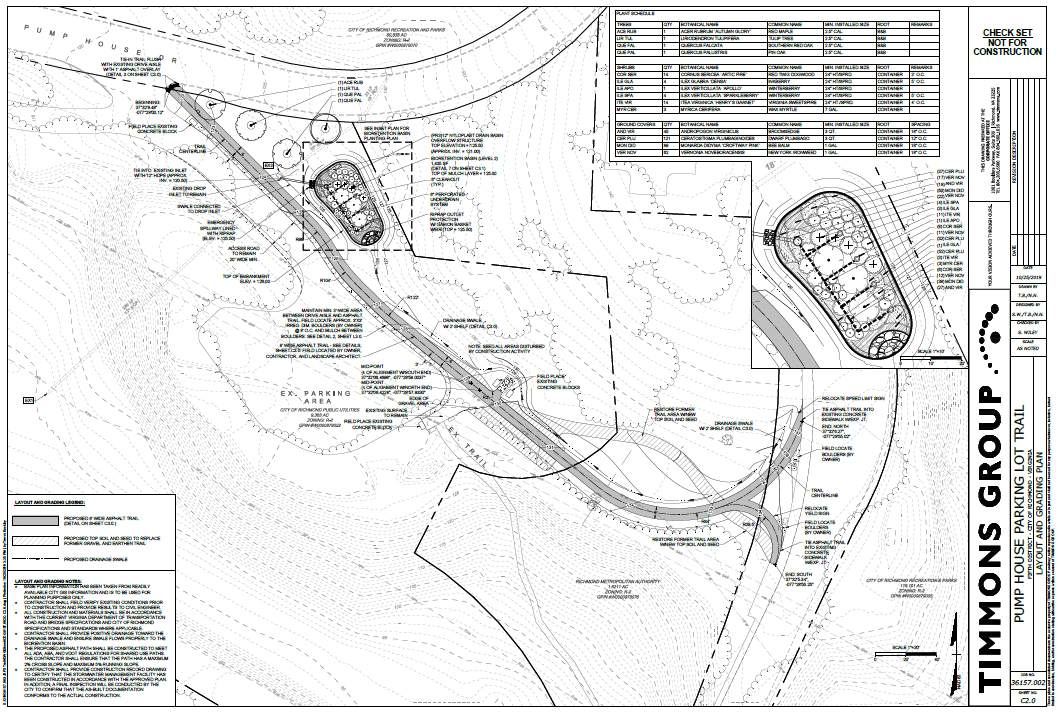
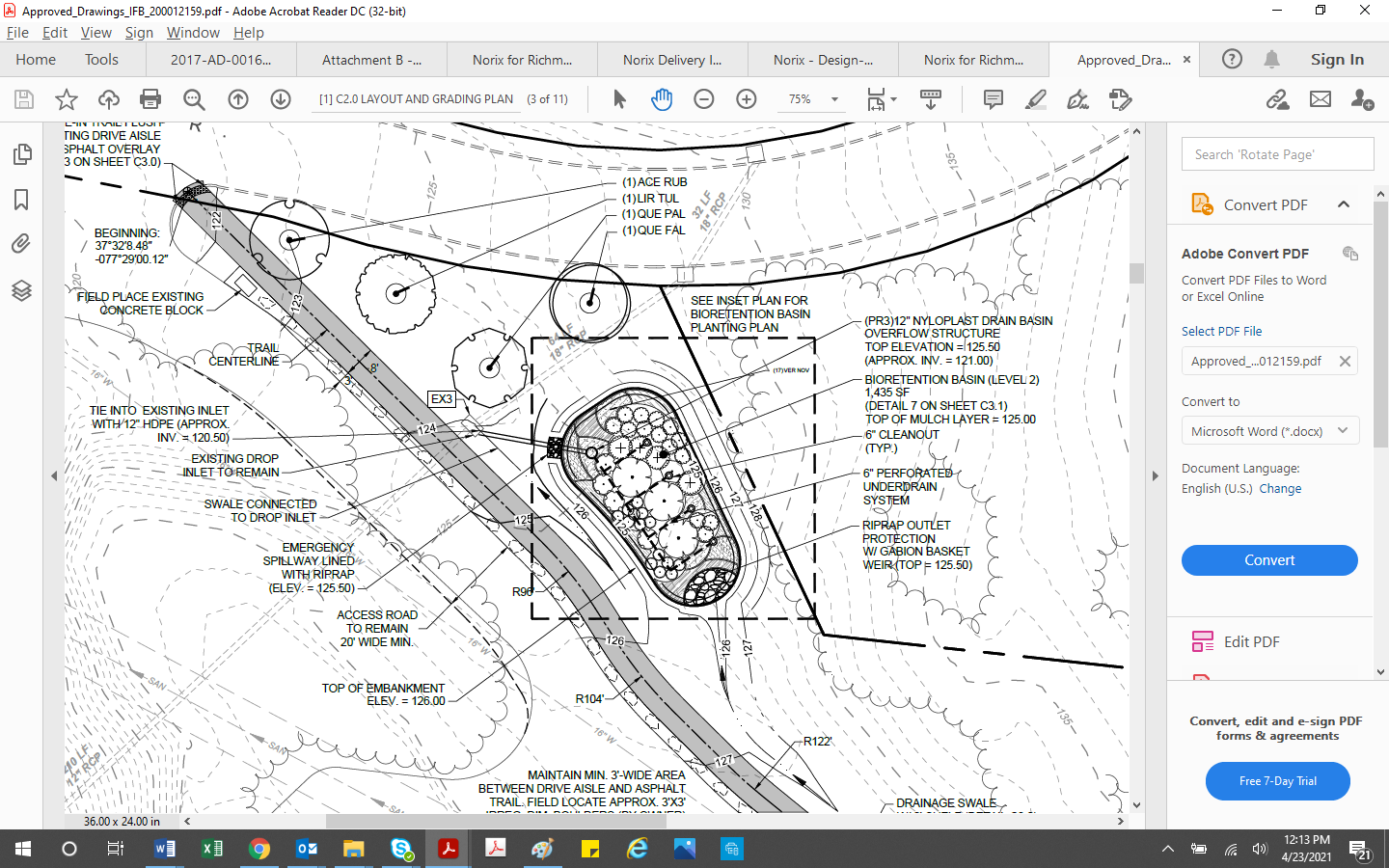
There is a construction site near the Nickle Bridge toll station that I’ve been running by for the past month or so. My first fear was that they were building a new road access to enter the trail parking lot right after the toll booths, but I realized that would cause traffic issues. While searching for another IFB, I recently came across the plans for the project and I was pleasantly surprised. The city is installing a new Pump House Park Trail that will connect the sidewalk of the Nickle Bridge to the North Bank trail entrance and the Pump House beyond. The project which includes “500-foot long and eight-foot wide multiuse asphalt trail with an ADA-compliant portion, requisite storm water management elements including a rain garden, and other landscaping and site furnishing elements” was awarded to Jeffery Stack Inc. in Jersey, VA for $186,380. I was surprised there were only four bidders, but contractors are very busy right now.

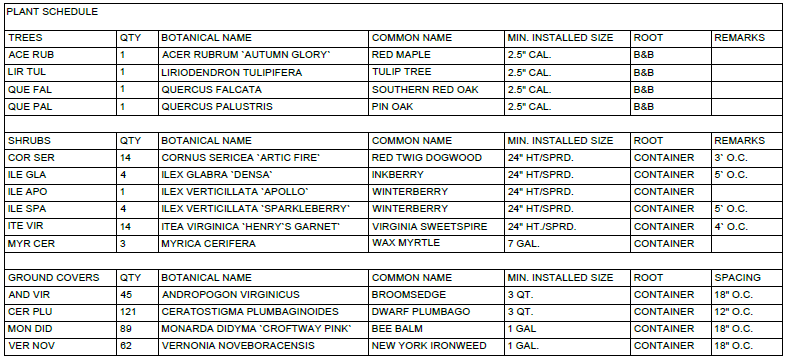
The plans designed by the Timmons Group, attached below, look simple and thoughtful. I appreciate the use of native plants in the rain garden. I’d like to know more about the policy or program that required the use of natives. Pollinators are going to love the wax myrtles, sweetspires, dogwoods, tulip tree, bee balm and more. I would have liked to see fruit-bearing shrubs included in the designs like serviceberry, blackberry, and blueberry. I like the graceful curve of the trail, and the way that the project prioritizes foot traffic at the juncture of so many beautiful outdoor spaces: Byrd Park, Maymont, the Nickle Bridge/Southside/Buttermilk Trail, the North Bank trail, and of course the Pump House. I especially hope the Pump House, with more foot traffic, visibility, and awareness, continues to become the destination that folks have been saying it could be for years. Designs and files attached below.

These documents and more are publicly listed at the following link: https://mvendor.cgieva.com/Vendor/public/VBODetails.jsp?DOC_CD=IFB&DEPT_CD=LAA1&BID_INTRNL_NO=161494&BID_NO=IFB+20012159&BID_VERS_NO=1.

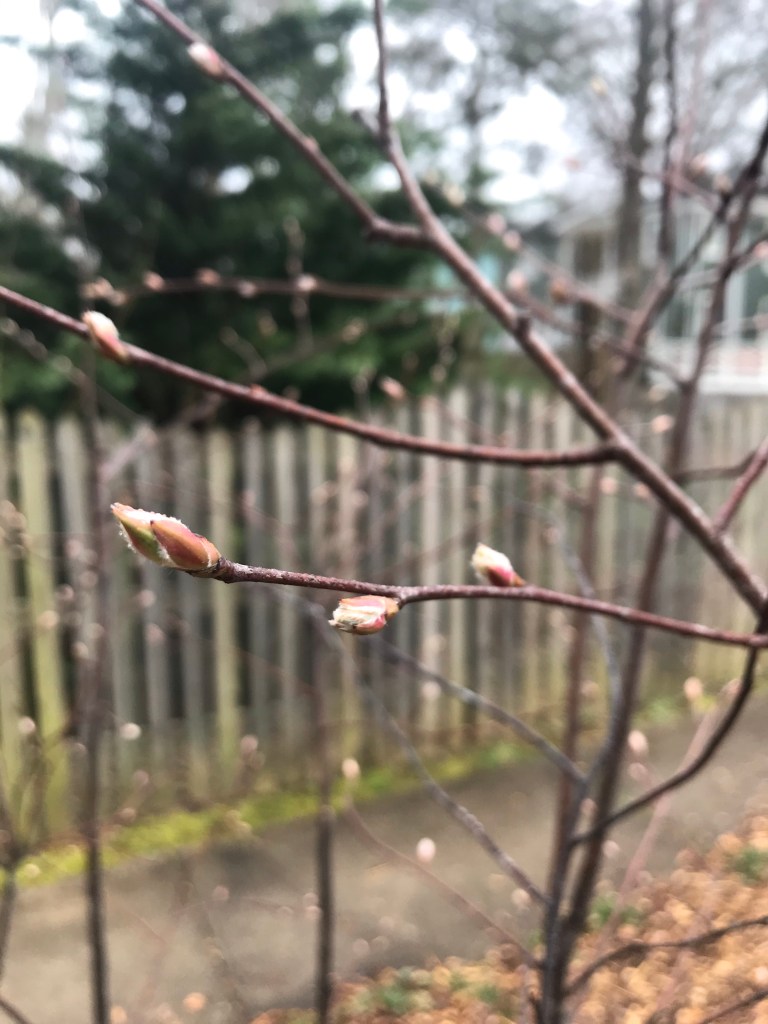
Serviceberry buds in COVID spring

One year ago, there were buds on the serviceberry bushes in Richmond as there are today. I didn’t notice, of course. Even if I had known what they looked like to identify them, we were too busy helping our son heal from surgery and reading the news about a virus infecting the world. The service berry bloom historically signaled the time for bodies of those who had died over the winter to be interred. It’s hard to imagine putting a loved one in the ice for months until the ground was soft enough to bring them back out for a funeral. After one year of lockdown, loneliness, denial, and all the ways we’ve inhabited this pandemic, it feels appropriate to think that we’ve also postponed our grief in the same way.

Seeing these buds feels encouraging, but also too soon. They are going to bloom any day (some already have) and provide an early meal to pollinators as they emerge. Similarly, we are emerging from COVID, searching for what aspects of life will return to fuel us in the coming months. Although we may not be ready to let go of the darkness and confusion that we’ve been inhabiting for the past year, the buds are a reminder to me that we need to start preparing ourselves to grieve and to be ready to see the good.

Sometimes it can be hard to accept that spring has come, that things are beautiful again, if you still feel cold on the inside. It can be hard to accept the next chapter when you haven’t been able to let go of the last. Burying and memorializing the dead has long been part of the process of appreciating life. It will also be important for us to bury and memorialize what we have lost in other ways, the friendships, jobs, marriages, favorite restaurants, traditions. We could also bury aspects of COVID that aren’t serving us well like fear and the compulsive sanitizing.

I am daydreaming about some kind of memorial that involves serviceberry bushes and other spring blooming natives. A memorial that is beautiful every year around the time we started the slow crawl out of COVID-19. A memorial that gets better with time, perpetuates itself, serves nature. We are still in a pandemic, but it’s time to start getting ready to not be in a pandemic some day. I don’t want to be stuck in the last year, I don’t want to pretend like it didn’t happen, but I also don’t want to miss the blooms and the berries.

Garden dreaming

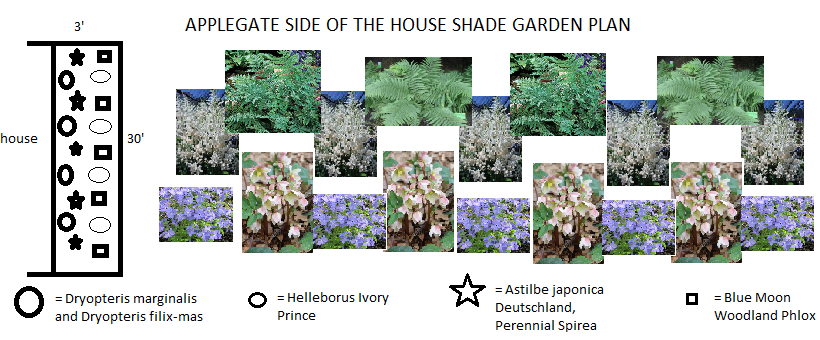
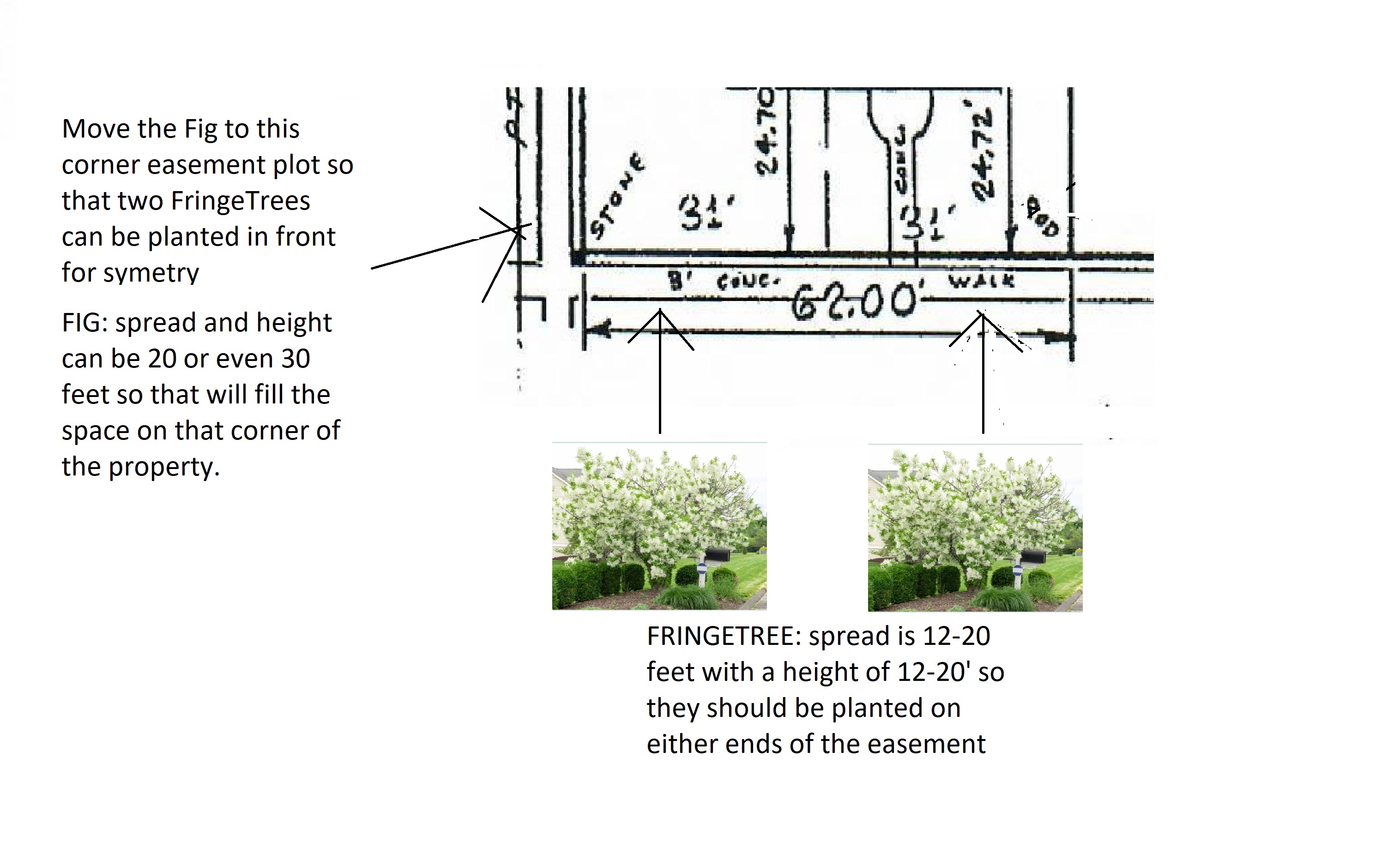
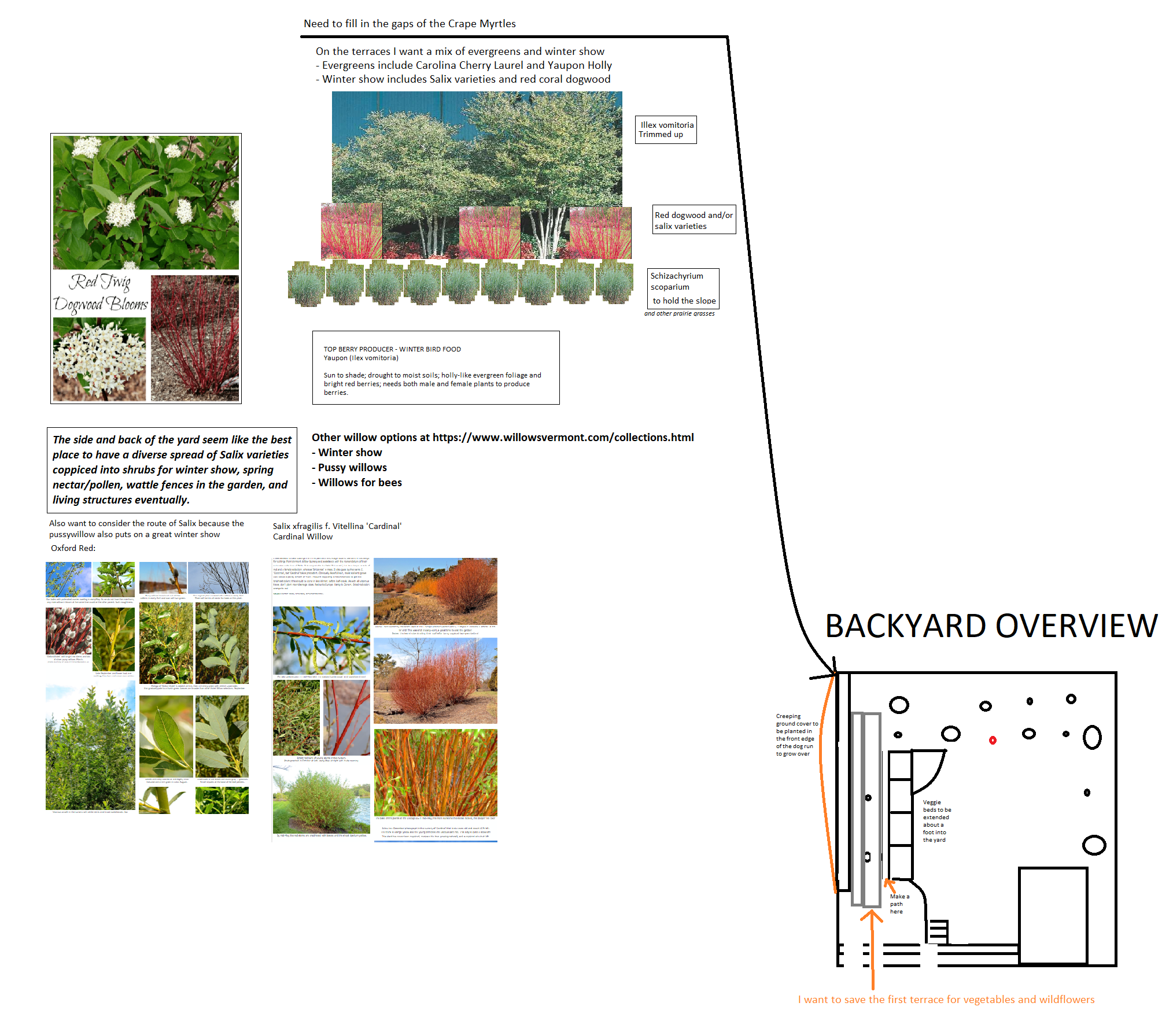
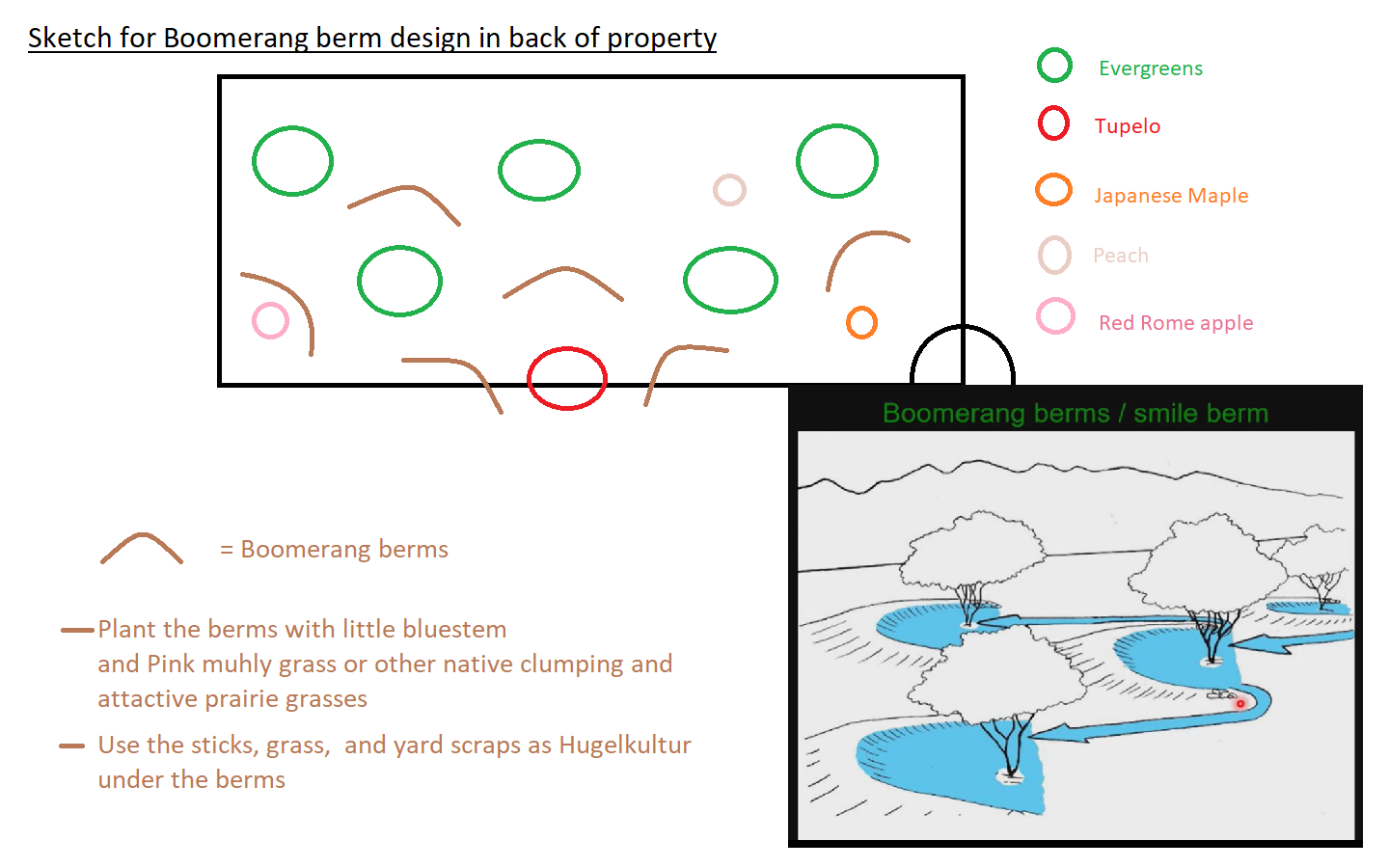
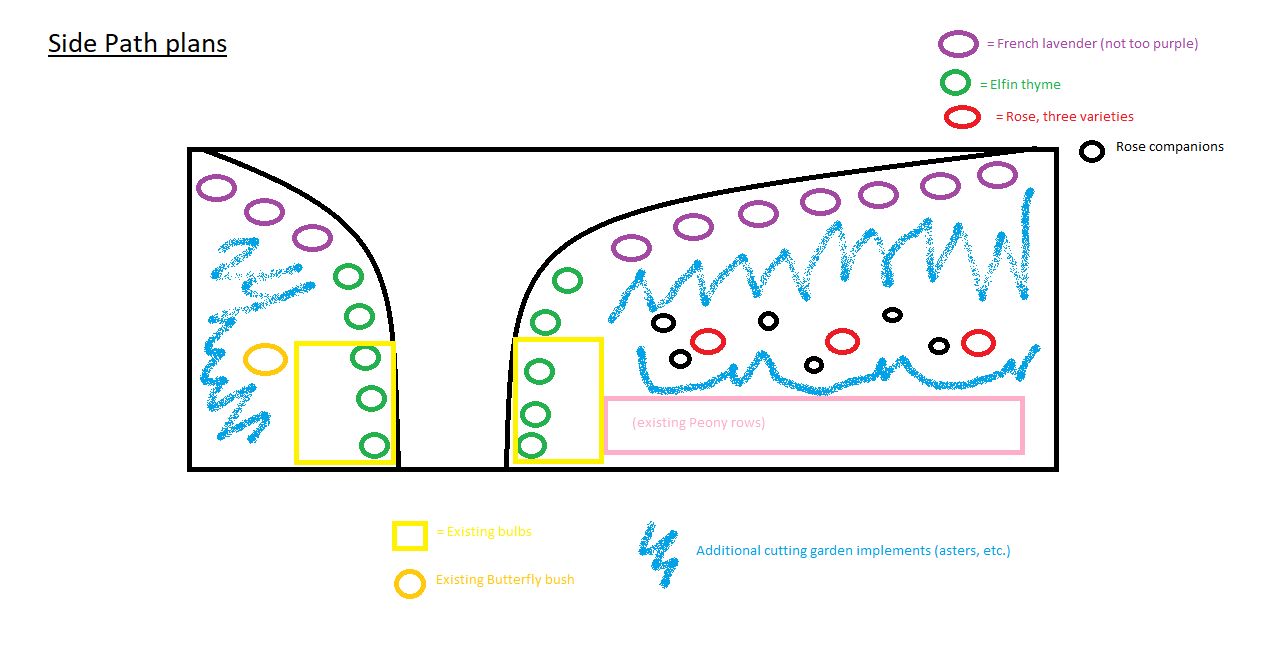
Most of my creative energy these days goes to daydreaming about my garden. I have a mental map of the spaces I want to improve and a growing list of the plants that I want to grow, but I started to realize I needed some way to organize it all outside my brain. I don’t want to learn a new program right now and I’ve been happy to realize that Paint does the job. These designs are in varying states of completeness, but really it doesn’t matter because they will all end up different than I imagine. This is just the starting point.

This daydreaming gives me joy, but it also makes me feel like I don’t have enough time. It could be years or forever before I finish all of these projects. I think it’s a good thing to take this project slowly (even when I don’t like to) because I’m constantly learning about new plants and designs that I want to fit into the mix. If I did it all with what I know now it wouldn’t be nearly as interesting.

My main values that guide me are to work with plants that are mostly native, support pollinators and birds (and other wildlife), don’t need much special care, and provide year-round cutting for inside the house. I have lots of climate anxiety and it’s helpful to focus on tending to my plot (among other things). For me, planting low-maintenance plants that benefit the ecosystem and are also beautiful is a win-win. Maybe I’ll check in for an update once planting gets under way next month.

Fun landscape memories

As we enter spring, I’ve been getting extremely nostalgic for last summer when I watched my first wildflowers grow from sprouts. I’ve planted more seeds for more wildflowers in the past week, but honestly I still have this worry in the back of my mind that the seeds won’t grow this time. It’s a problem of modern life that I’ve very rarely sprouted and grown or done anything with seeds up to this point in my life, but it’s also fun to have a kind of childlike fascination with them like they’re magic (which the basically are). Since we’re in a new house now, I’m also thinking about all the landscape work that we did at our last house and wanted to put together this blog post to share and also save the memories for myself. Many exhausting weekend days went into making this “yard” into a garden that we could enjoy.

When we first moved into our last house, the front yard was a mix of tall grasses, one shrub, and one established Crape Myrtle. The fence was unstained and badly warped. The ground level of the front yard was higher than the fence so that it met the bottom cross beam and left no room for the fence and the siding of the house to breathe potentially leading to rot. There also was no clear walkway around the house and little visual interest in fall, winter, and early spring.

The property faces south and receives full sun all day long. We knew we needed to find plants that could withstand the heat and also some more trees to eventually provide shade for the house and the garden. We also knew that we wanted the garden to be low-maintenance so we looked especially for heat and drought tolerant plants.

The first major change we made was to dig out the entire yard including a few inches of soil (several truck loads) to lower the ground level, remove the grass, add mulch, and prepare the space for landscaping. We also planted two more Crape Myrtles, one large one to mirror the existing one and provide shade on the south-facing front of the house

We also planted a knockout rose, a small arborvitae, and a gardenia (the last two did not do well).

I hired a landscaping company to install French drains around both sides of the house and redo the back patio. The patio had been installed violating code (sloping toward the house and covering the lowest board of siding) and needed to be redone to prevent the risk of rot.

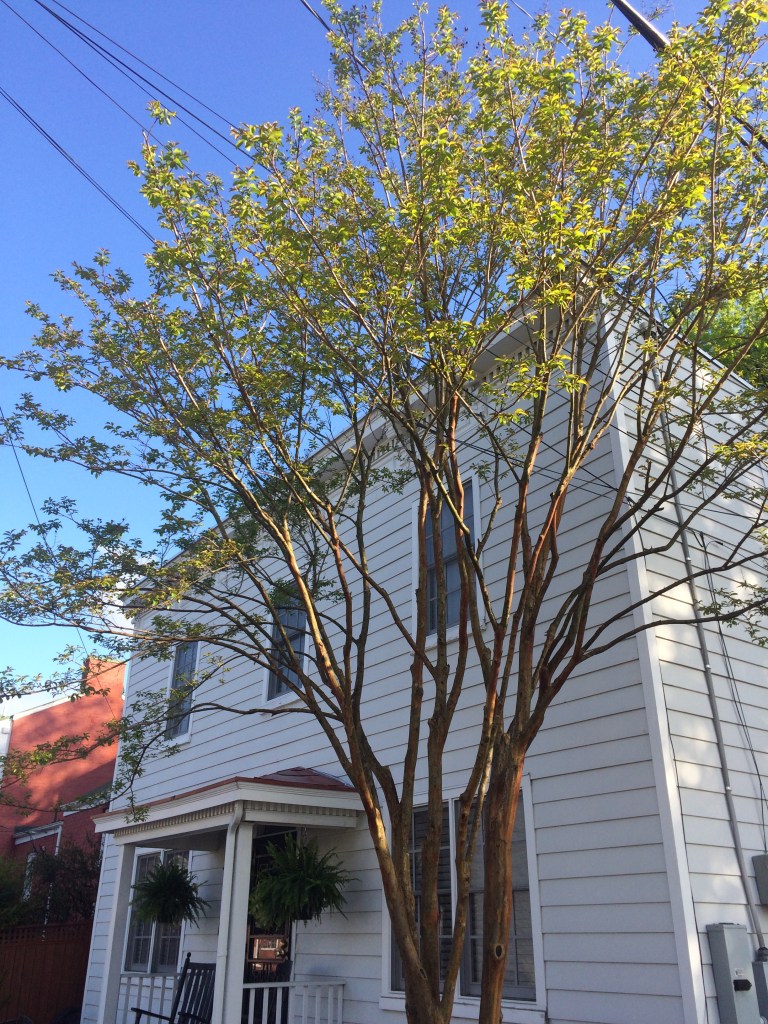
To give the existing Crape Myrtle more room to spread and encourage upward growth, I trimmed limbs growing toward the middle of the tree as well as lower limbs and many smaller limbs that I didn’t think looked good where they were growing. It has continued to grow and fill out nicely from this initial trim.

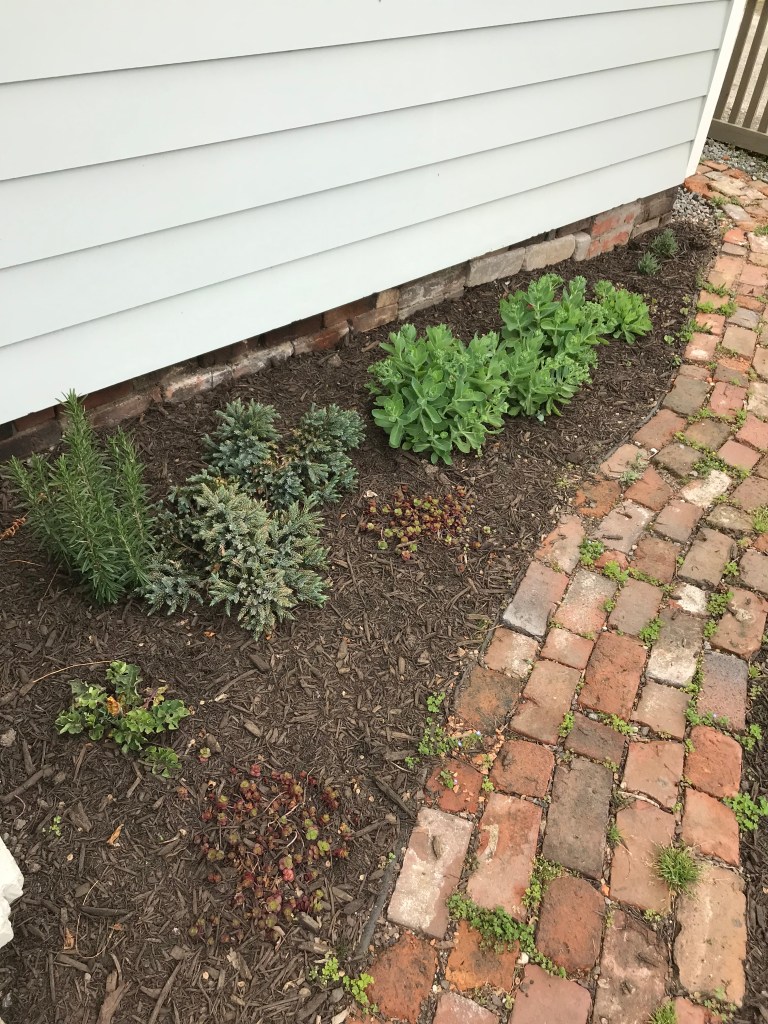
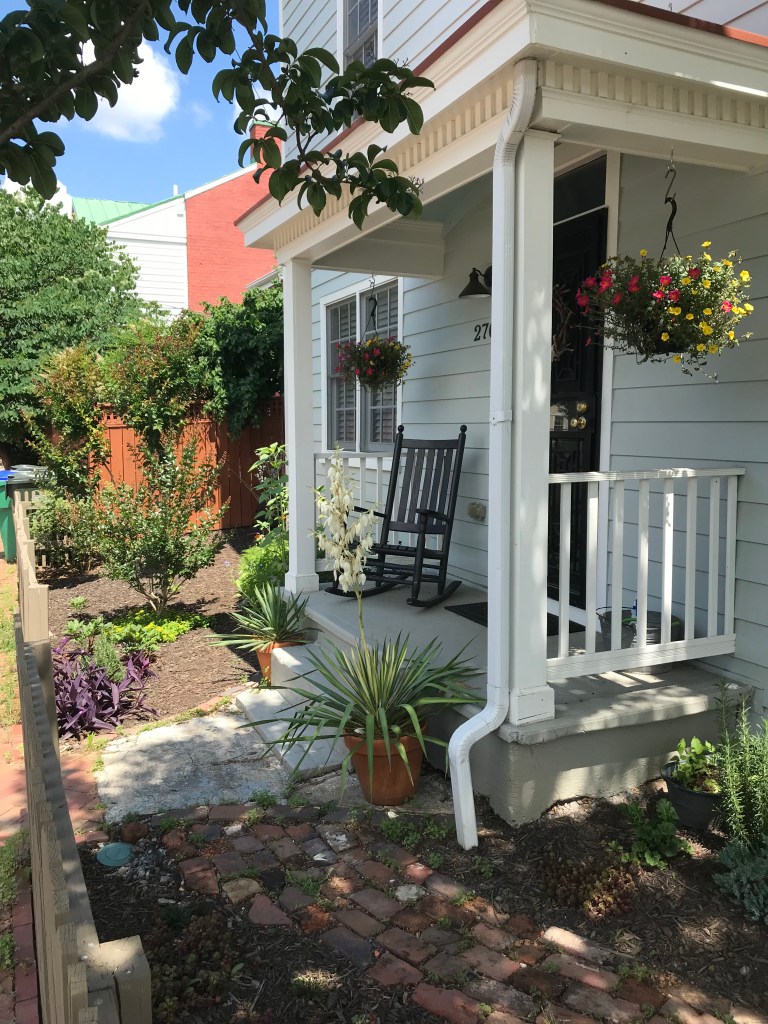
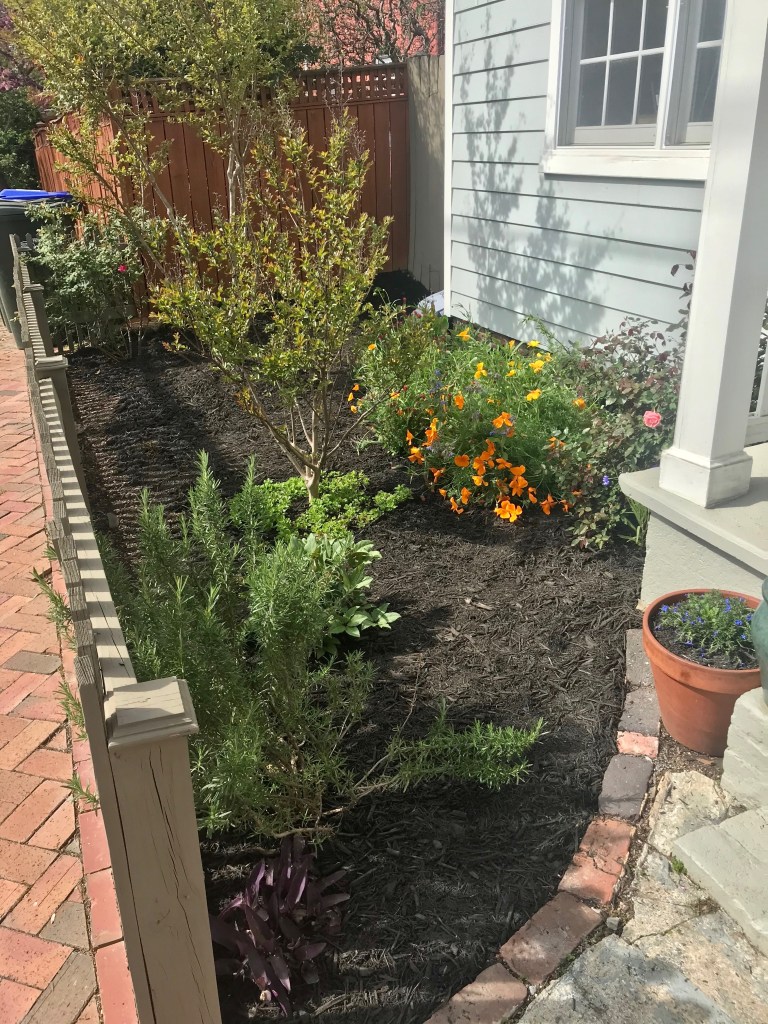
After considering many options, we decided to install a permeable brick path around the right side of the house leading to the side gate and the back patio. We used old reclaimed bricks from a friend’s backyard in the neighborhood so the path would match the historic character of the house. Along the brick, we planted a variety of sedums and aromatics including rosemary, lavender, and thyme as well some dwarf evergreens and Gerber daisies.

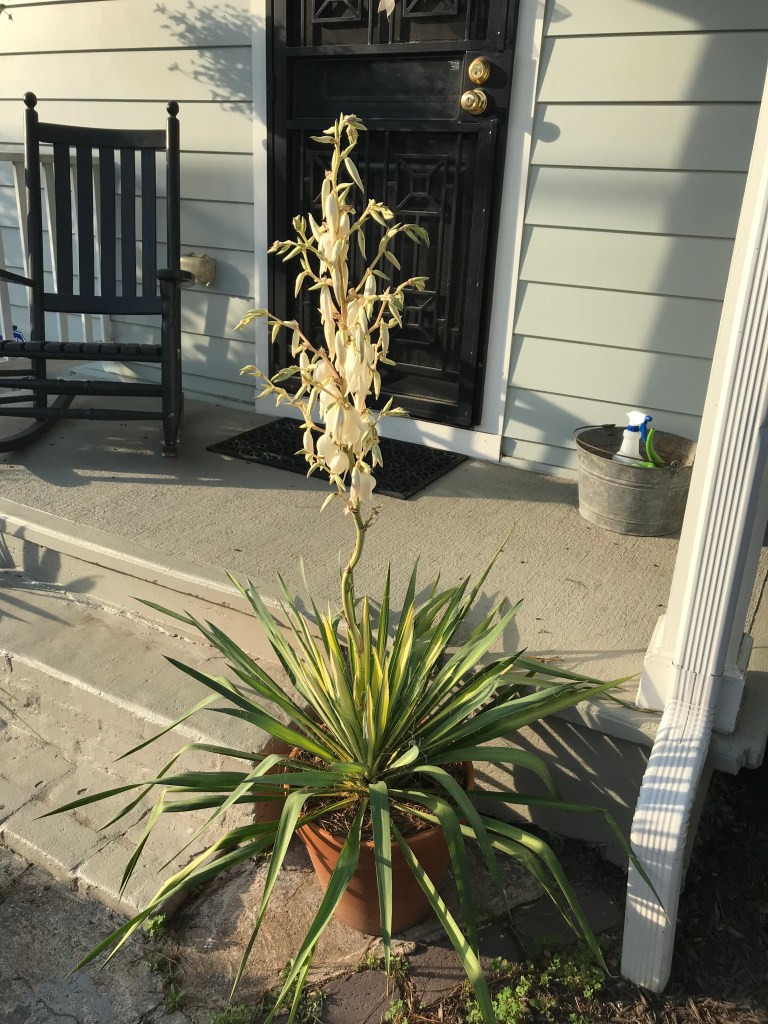
I potted yuccas (one foraged and one purchased) and placed them on either side of the front steps for more year-round, no-maintenance curb appeal.

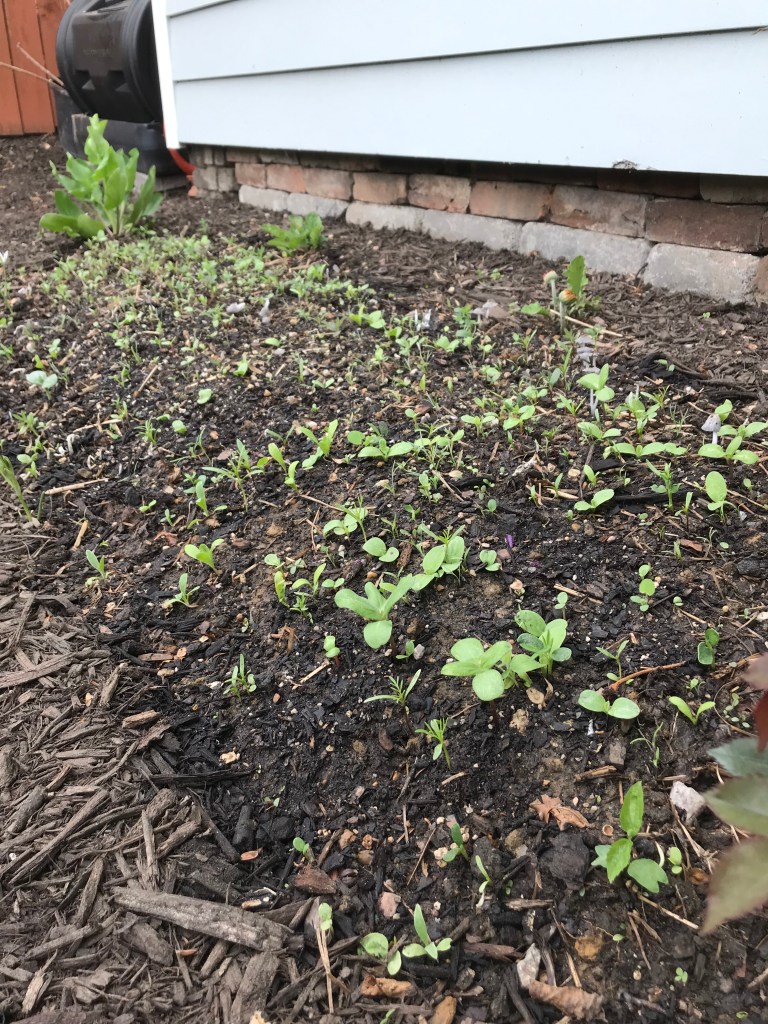
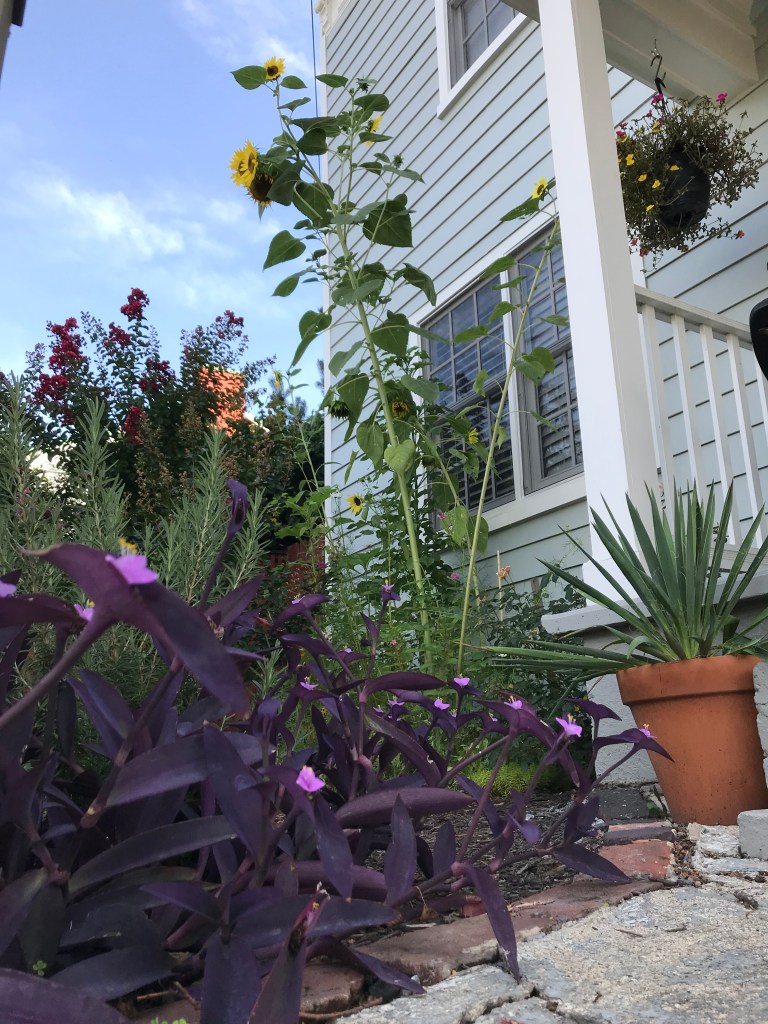
We added more plants including Lenten roses, Russian stonecrop, purple heart, more rosemary, and a second knock out rose. The Lenten roses provide nice winter blooms and have grown very well. We then spread some of our compost and planted a wildflower garden to attract pollinators and provide a bounty of flowers throughout the summer.

The wildflowers provided months of changing colors and shapes as different flowers grew and bloomed. It even got a little out of hand, but since they are mostly annuals, we weren’t worried about keeping it trimmed back as long as we could walk to the other side.

While we initially thought of the heat and full sun as a problem, we realized that with the right plants it could provide a bounty.

We also had the house painted a light, cool blue-green color to compliment the new landscape, mulch, and brick walkway. Then we stained the fence a light brown natural color to blend in and protect the wood. Hanging plants provide an additional layer of color.

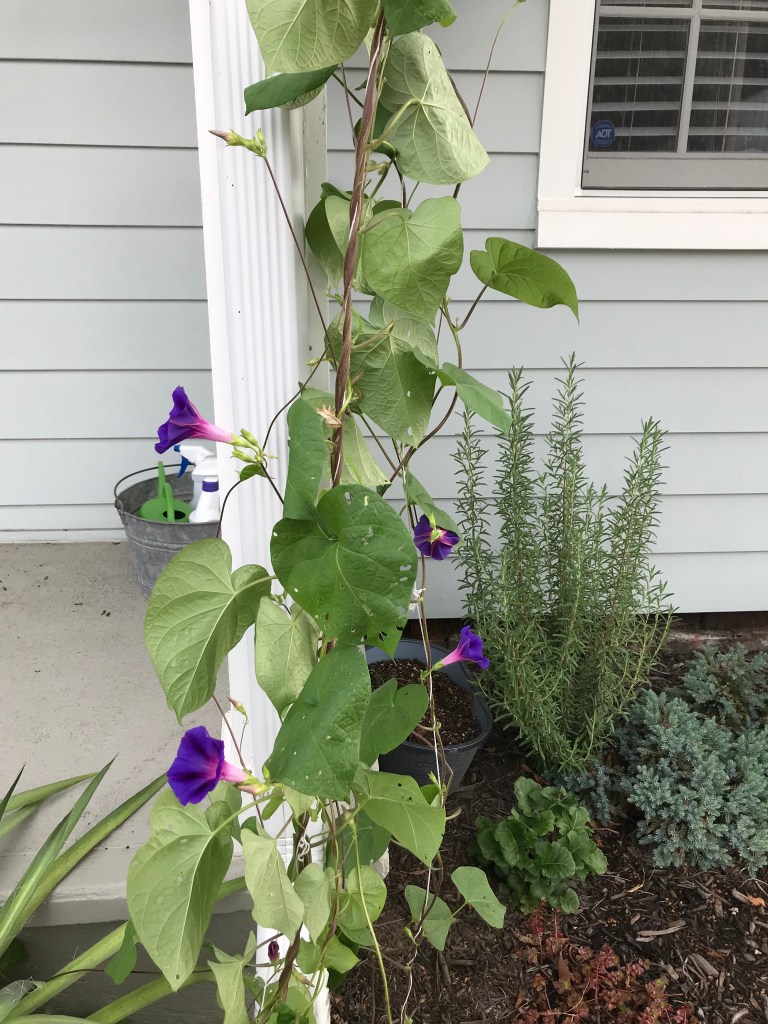
By late summer, I had trained a morning glory vine up the front of the house and across the brick path toward the larger Crape Myrtle.

I really enjoyed watching everything spread and thrive. Especially considering how low-maintenance it became once everything was established.

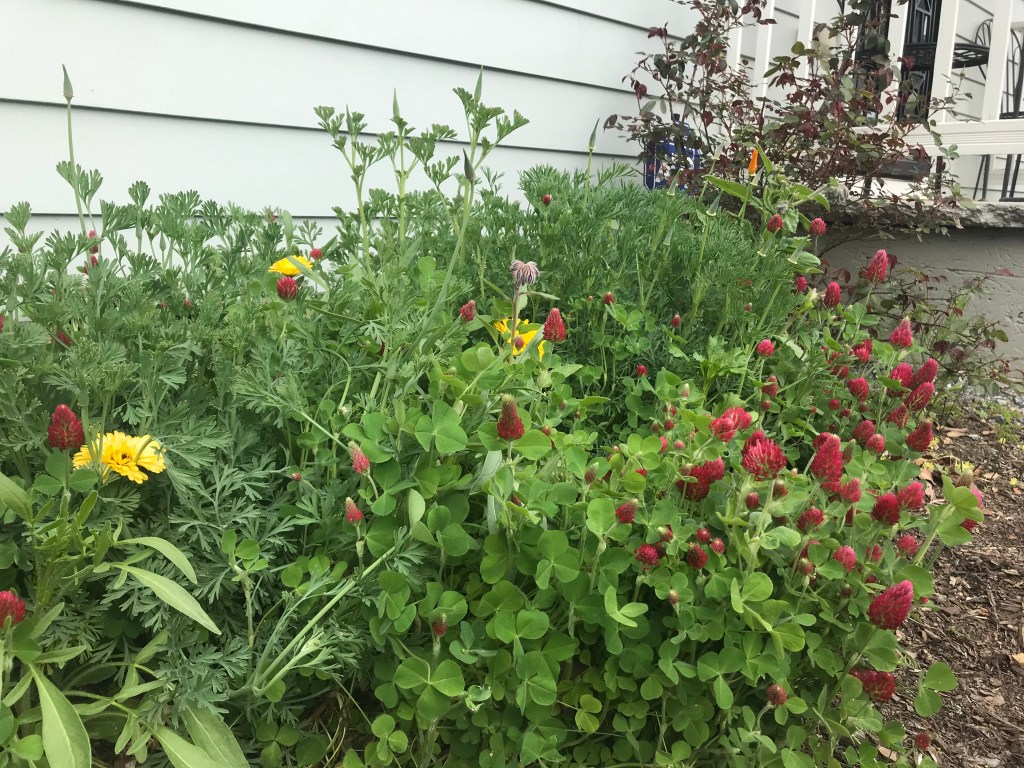
Last fall, I planted some crimson clover cover crop that has taken very well and bloomed along with some returning wildflowers this spring.

It’s definitely hard to leave something that we put so much work into, but I’m glad to go back and see it is still doing well and remember that it’s a gradual process figuring out what plants and uses will work best for each space.

Butterflies in SoCal

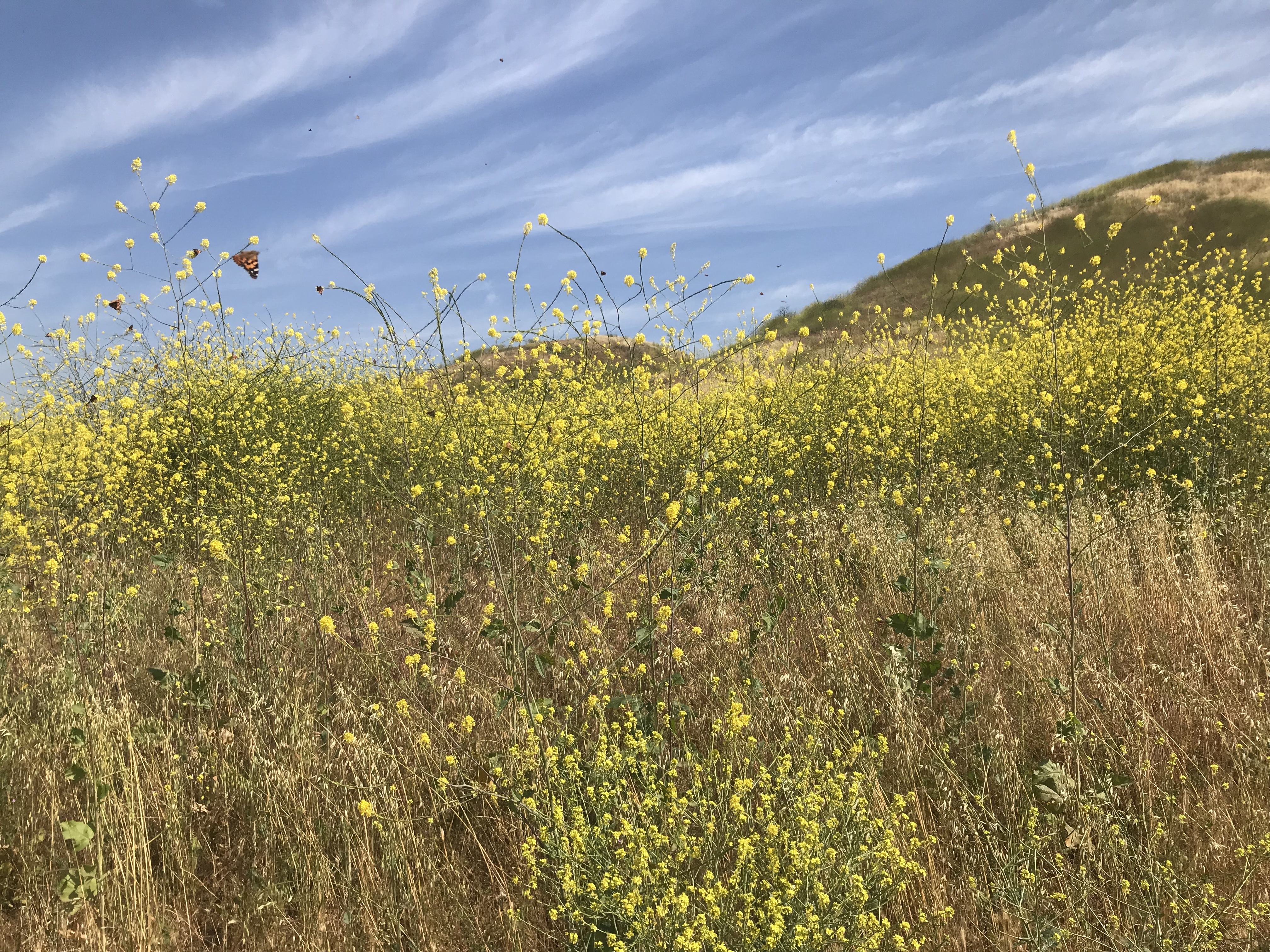
The population of butterflies on wildflowers outside L.A. right now is incredible:

Richmond, we need to do more

If you have not read about the latest UN assessment of human impact on the environment, it is your homework assignment for the weekend. The NYTimes review can be reached here:

Humans are Speeding Extinction and Altering the Natural World at an ‘Unprecedented’ Pace

The photo below will link you to the full report summary for the overachievers:

In short, not even considering Climate Change, humans are ruining habitats and driving plants and non-human animals toward extinction. In Richmond, we need to do more to create and preserve habitats for the species that have long called this place home.

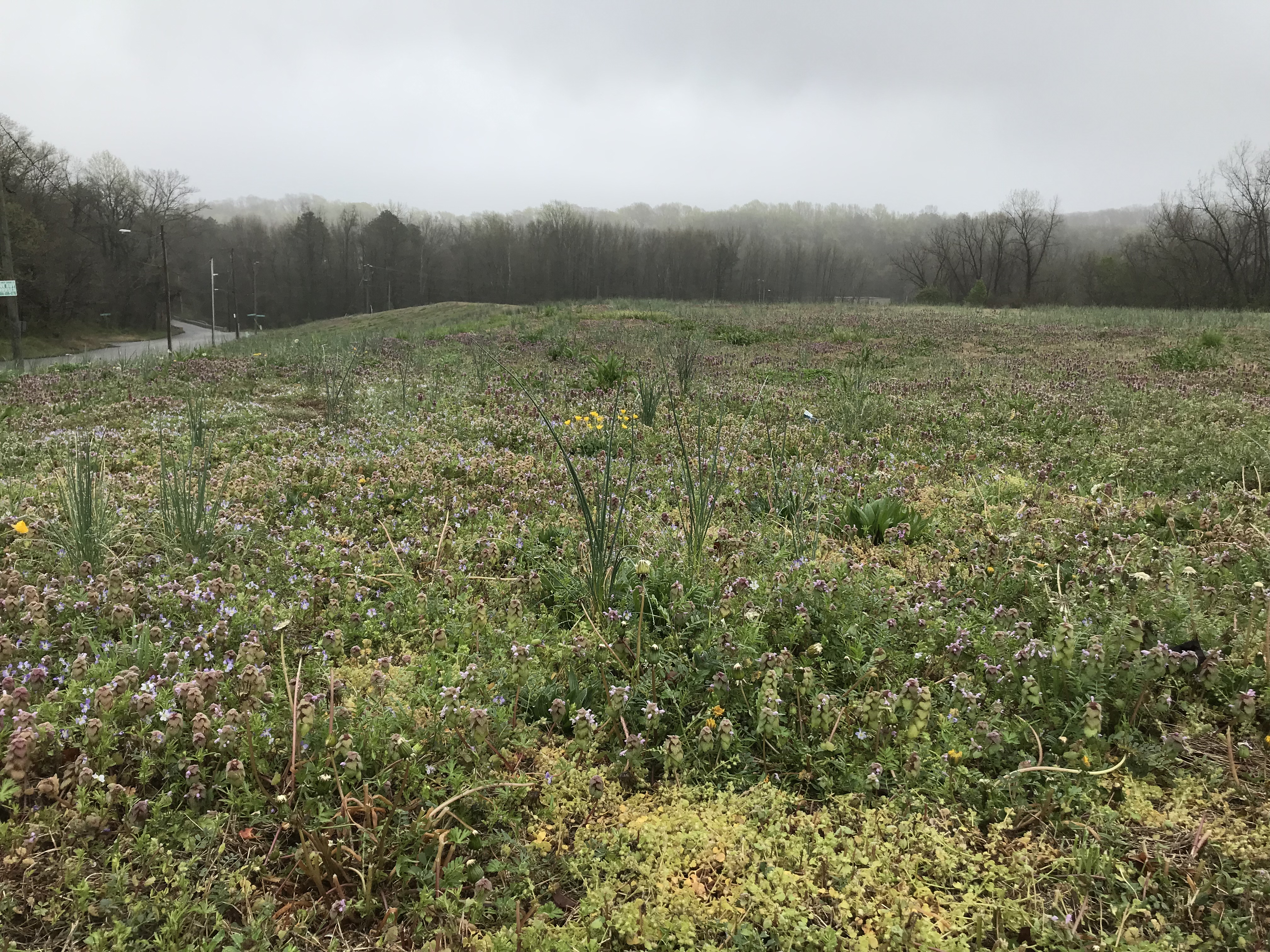
The City of Richmond and it’s constituent parts (RRHA, etc.) control vast stretches of land in the city that for the most part are empty save for rusting structures, parking lots, and mowed weeds. Entire farms exist on less. Here’s a fine example near the East End landfill:

These properties need to be cultivated in a restorative way that creates habitat (food, shelter, water) for insects such as pollinators as well as birds, small land mammals, amphibians, and other native species. I recently visited a small town doing amazing things for its pollinators, this could easily be done in Richmond:

As the caretakers of the Falls of the James and the vast James River Parks System, Richmond should also look into improving this property as a habitat which might include planting more native flowering and fruiting plants, building structures for habitat, and working to limit the negative impact of human activity such as pesticides, herbicides, fertilizers, and pollution. This includes the sewage that overflows into the river every time we have a hard rain.

As we consider our carbon footprint, we should evaluate ways to bring nature-friendly hydroelectric power generation back to our energy mix. I’ve been fascinated by small-scale generators such as Turbulent. Click the photo below for a video demonstration:

When you look at our city, essentially our human habitat, and compare it to a state or national park, it’s not hard to imagine the negative affect humans have had. We should require/incentivize every city block to include de-paved sections with native plantings for habitat, beauty, and the added benefit of water table recharge and less run-off in our sewer system.

We need to encourage more dense development to be sure we are fully utilizing our utilities (water, schools, emergency) as well as public transit. The denser development will ideally lead to cheaper cost of housing as supply increases and less distance that we all have to travel to get to work and recreation.

It’s overwhelming to read the research, but I’m convinced the best thing we can do is appreciate nature and do all we can to listen to what it needs. The answers will come to us as we go. For starters, I am personally working toward removing poison (insect, plant, rodent, etc.) from use and I believe as a city we need to find better ways to manage nature that don’t cause lasting and generic harm. I have planted a “mini-meadow” that I’ll be watching grow (and hopefully bloom) over the next few months. If this is successful, I’d love to plant little patches of wildflowers elsewhere in the city. Truth be told, it’s the first time I’ve planted from seed so I’m still a little skeptical, but it’s shaping up. I’d like to look into solar power, composting toilets, a greenhouse, wind turbines, electric razor scooter for commuting, and more. I’m limited by the cost and also questions about how things are regulated. I am ALWAYS taking in ideas and happy to hear that something can be done more efficiently.

We need to do more and we will also benefit from the beauty of nature, the health benefits of fresh food and an active lifestyle, and we can share our time with new friends we make along the way. If the pending environmental doom stresses you out, time in nature might just fix that too.

Missing insects

For the past nine days, the only thing I’ve really wanted to talk about is an article in the New York Times by Brooke Jarvis titled, “The Insect Apocalypse is Here.” I had noticed the article on the homepage for a few days, but last Saturday I finally sat down to read it all the way through. I was not prepared.

The story follows scientists and “amateur” etymologists mostly in Europe and the United States who are all arriving at the same conclusion: populations of insects are declining at an exponential rate.  The study that first alarmed the scientific community calculated a more than 75% loss in total flying insect biomass in 63 German nature preserves over the past 30 years. Similar studies of monarch butterflies, honeybees, moths and others have corroborated this research. Worry is growing that the insect kingdom will eventually disappear entirely. The consequences are expected to be catastrophic.

Beautiful headline graphic from the NYTimes article by Matt Dorfman.

The article hit a nerve very close to home for me because for the past year or two I’ve been spending a lot of time reading and watching videos about permaculture design. I’ve come to believe that nature can heal itself with the right combination of human interventions. I’ve begun to follow Jeff Lawton, Colette O’Neil of Bealtaine Cottage, and Toby Hemenway of Gaia’s Garden. My YouTube homepage is full of recommendations for videos about swales, cob construction, and food forests.

The creativity and optimism of these teachers has given me some hope for the future, but this article reminded me that their endeavor is more urgent in more ways than I had realized. Insects are integral to the creation of soil, the fertilization of flowering plants, the decomposition of all living organisms, and the foundation of the food chain. What is permaculture without insects?

I started to look more seriously at how humans have shaped the environment, not just through the lens of permaculture vs. monoculture, but also from the perspective of insect habitat. We’ve taken our flowering meadows and replaced them with grass yards and immense
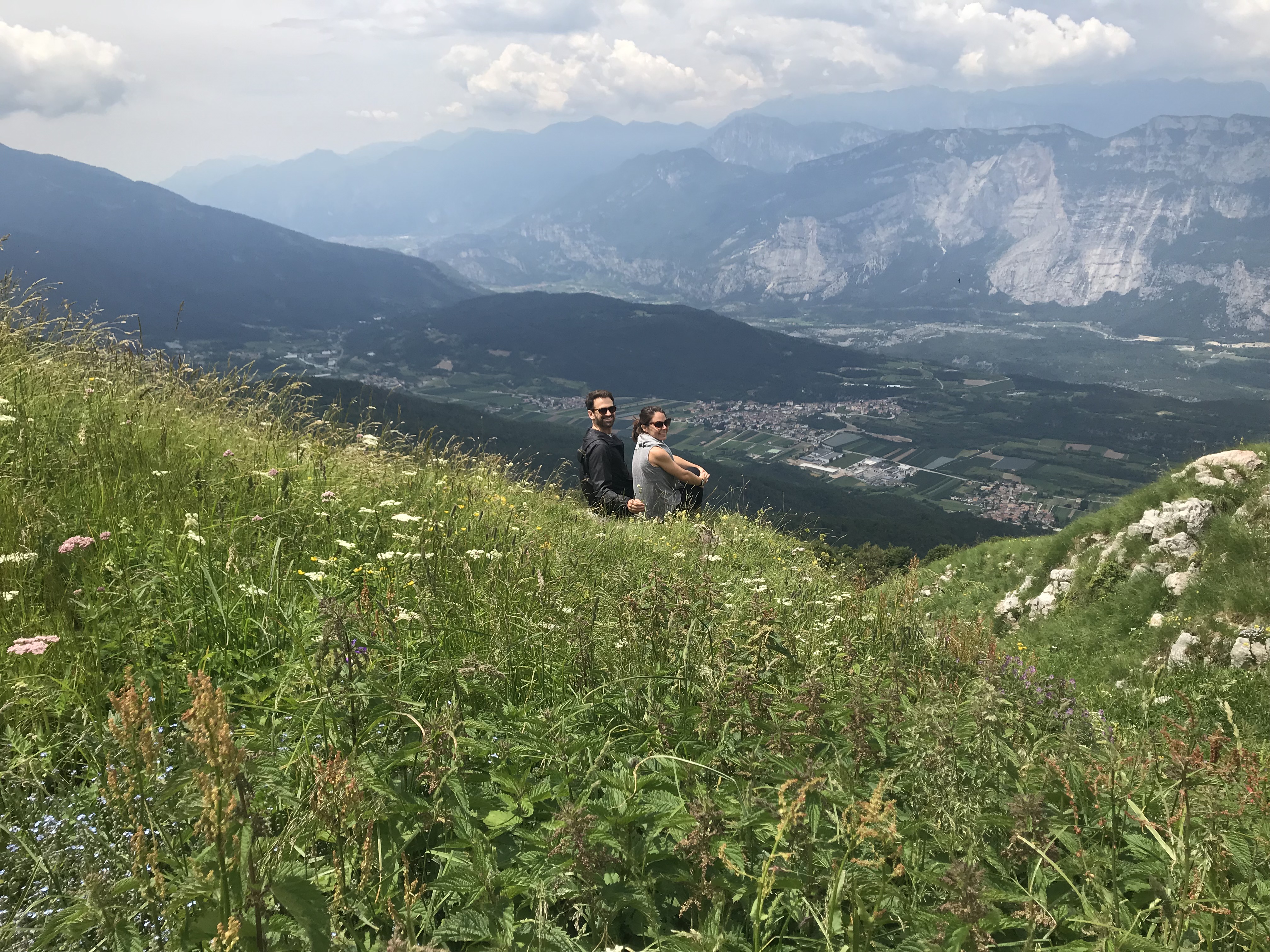
monoculture farms, we’ve chopped up dense forests into subdivisions, we’ve dammed rivers and prevented them from flooding surrounding lands with their nutrients. We have replaced every known habitat with asphalt roads, parking lots, sidewalks, and other impermeable surfaces. We have removed elements of insect habitat everywhere: pollen, rotting trees and animals, feces. We have cleaned up our environment in every imaginable way and we are left with something monotonous and ugly in contrast to diverse and natural beauty like this alpine meadow that I experienced this summer, shown in the photo below.

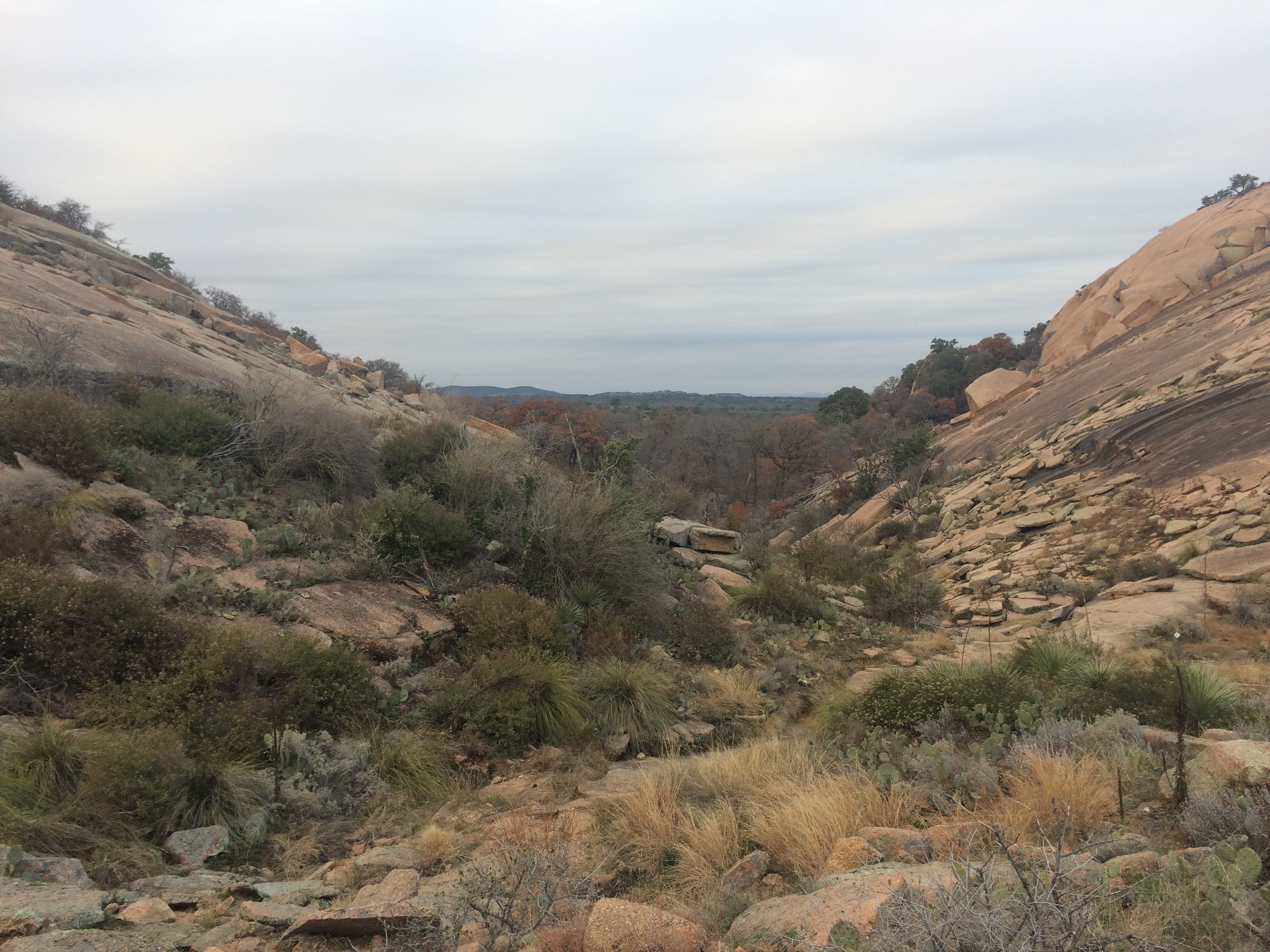
Or this Hill Country valley next to Enchanted Rock from last winter:

As I continued to read, I remembered another article from February of this year, “Let Your Winter Garden Go Wild,” that taught me for the first time how insects, birds, and small mammals all rely on dead plant growth from the summer months for shelter during winter. Some insects burrow into the ground, I learned, while others “like ladybugs, lacewings and parasitic wasps spend winter in the hollow stems of old flowers.” For three years, I drove to work past farms south of Richmond, and every season I watched as plants were harvested and removed entirely from the environment: no rot, no hollow stalk for hibernation, no insulation for production from the wind and snow.

I also felt a very personal sense of guilt as I thought about the ways that I have waged war on insects on my own small part of the world. Insecticide, in addition to climate change, is seen as a major determining factor for insect population decline. When we moved into our current house, I sprayed a general insecticide all around the place. I don’t even remember what exactly I was trying to kill, probably ants, but most likely out of some irrational fear. I remembered when I was young how my dad would fog the back yard of our house with an insecticide a few hours before my parents had friends over in order to control the mosquito population. What does it say about the product if we children weren’t allowed go outside for an hour or more after he sprayed? In just the past year I’ve poisoned rats with kill boxes, I’ve trapped flies by the thousands, and I’ve killed wasps burrowed into the dirt around our house. Although annoying, these wasps are actually harmless and we’ve never known them to sting. The insecticide revolution (along with fertilizer) allowed for modern farming to proliferate, but also created a world inhospitable to insects.

“Hans de Kroon characterizes the life of many modern insects as trying to survive from one dwindling oasis to the next but with ‘a desert in between, and at worst it’s a poisonous desert.’ Of particular concern are neonicotinoids, neurotoxins that were thought to affect only treated crops but turned out to accumulate in the landscape and the consumed by all kinds of nontargeted bugs.”

Brooke Jarvis, “The Insect Apocalypse Is Here”

Even small amounts of these toxins have been shown to wipe out insect populations. Jarvis writes that one of the theories about how neurotoxins affect bees is that it prevents them from finding their way home. Lost, the bees die alone and entire hives are found, not full of dead insects, but mysteriously empty.

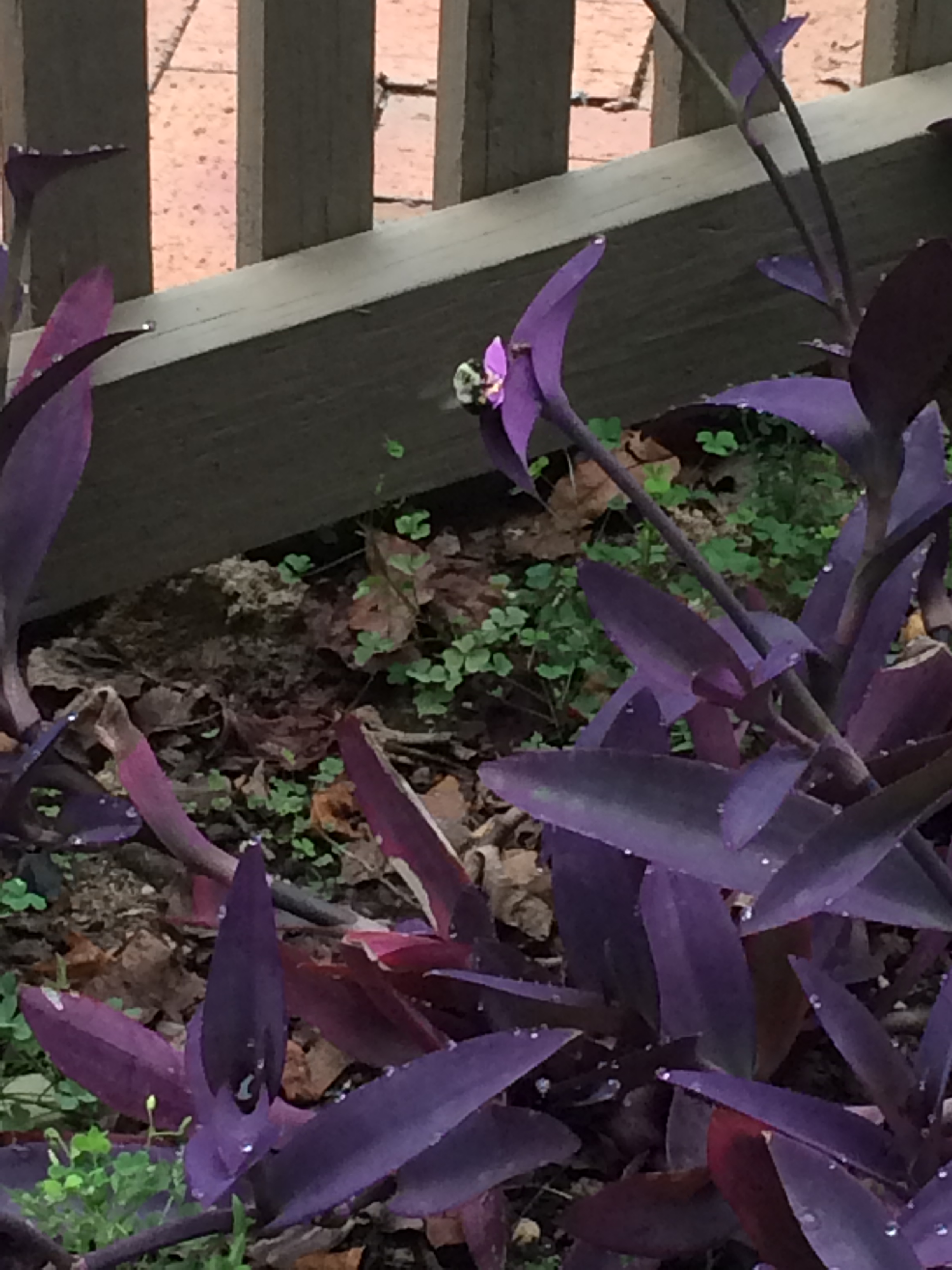
Considering the insect apocalypse also reminded me that one morning in September of this year, while waiting for the bus, I had been excited to see a bumblebee floating from flower to flower on our purple heart plants. I was so excited that I even took a photo (below) and watched it for as long as I could. What I didn’t realize at the time, because it is so difficult to notice, is that my excitement was borne not of the presence of the bumblebee, but of the overwhelming absence of all other insects in the garden.

Jarvis writes that we are exceptionally good at forgetting how things used to be. “The world never feels fallen, because we grow accustomed to the fall.”

As I have now been made aware of this acute loss, my last response has been to imagine ways that I could contribute to insect habitats. I found a lovely British organization called BugLife that created the following diagram for gardening with insects in mind.

Big Life guide to Wildlife Gardening

This diagram includes food, water, and habitat for insects to grow and survive all four seasons of the year. One of the core lessons that BugLife seeks to share is that in order to support insect life we need to do more and we need to do much LESS. We need to stop keeping our farms, yards, and gardens so tidy and we need to keep a much wider variety of flowering plants than in a traditional garden. Essentially, we need to return our small portions of the earth back to a more natural environment and we need to learn to see beauty in way that each element serves to benefit the other.

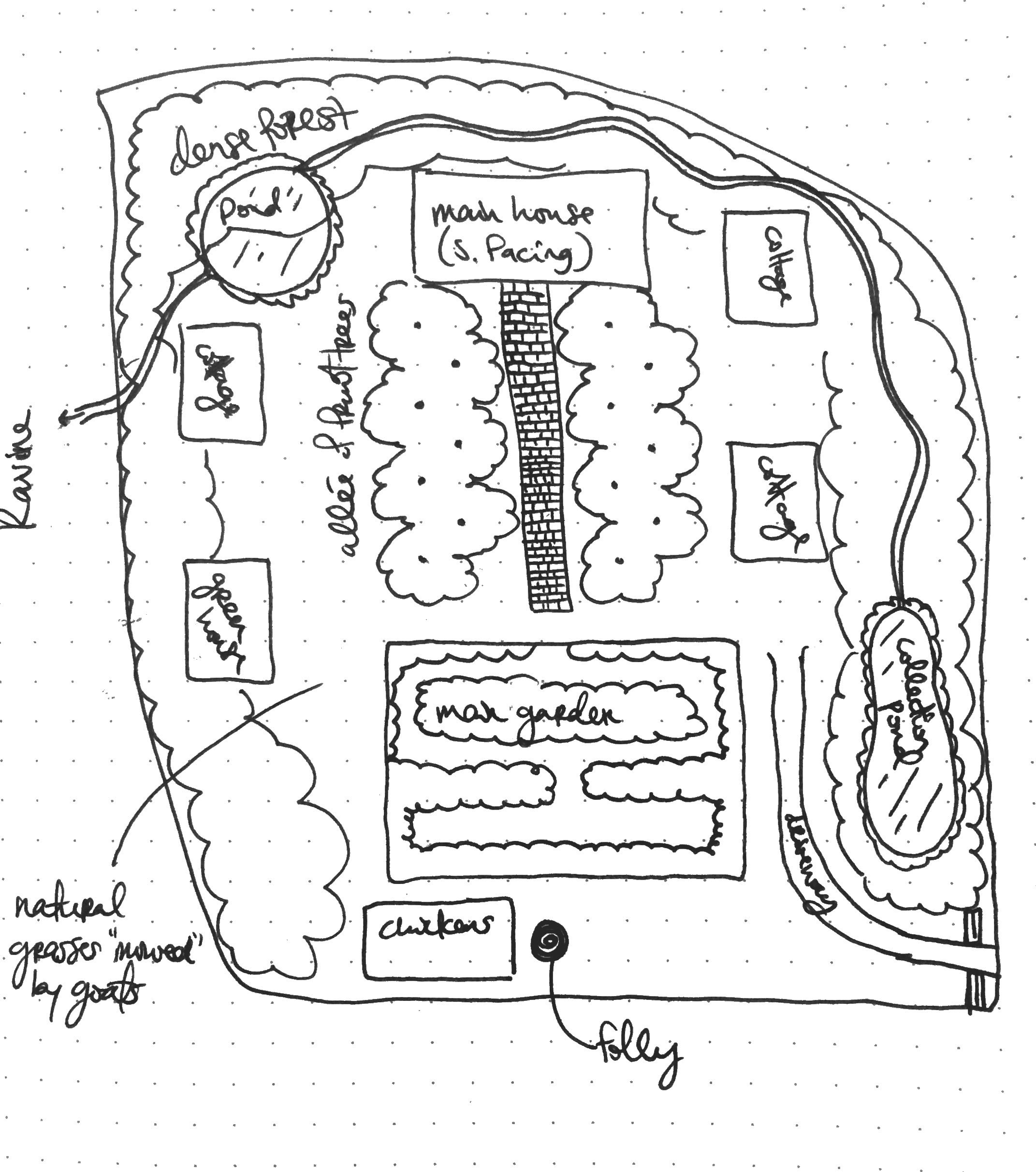
I’ve also been daydreaming constantly about buying a small parcel of land that’s for sale near my house and fully living into my permaculture fantasies. It’s a densely wooded area perched above a ravine on one side while bordering a neighborhood and an old semi-industrial area on the others. It looks like there is enough run-off from the street to feed a small pond or two on the property and enough room for a house and multiple outbuildings. While many trees would need to be cut down, the entire property could eventually be reshaped into a self-sustaining and diverse ecosystem of wild prairie, forest, ponds, as well as gardens and living spaces. I’ve imagined the houses incorporating sustainable design such as cob construction, passive and active solar, rocket stove mass heaters, and composting toilets.

Of course, I don’t know how to do any of these things and I can’t quit my day job, but it’s still fun to dream:

Until then, I will be actively swapping my anxiety for action with small changes to make the natural world around me more interesting, more wild, and a little more hospitable to our little friends.

The MAMA swings

Last fall I took two online classes through the local community college as prerequisites for a graduate program that I eventually decided not to pursue. Along the way, I discovered James Marcia.

Marcia contributes the idea that as someone enters each stage of identity development they tend to move into four alternative statuses: identity diffusion, identity foreclosure, identity moratorium, and identity achievement.

These four alternatives are connected by the presence or absence of two  characteristics: crisis and commitment. The experience of crisis, to Marcia, involves an individual exploring options as their identity develops. Commitment is the moment the individual decides to invest in one option and integrate it into to their newly resolved identity.

There are four different combinations of crisis and commitment that a person may find themselves experiencing during their development. Identity diffusion is the state of a person who has not explored meaningful alternatives and also has not made an identity commitment. Perhaps, they have been made by others to feel powerless to true exploration and commitment or it may be they are simply content and comfortable. An individual who makes a commitment without exploring options is said to be in identity foreclosure. They’ve confidently ended their journey before they even started, often accepting their received culture and path. Identity moratorium is the state of an individual who has explored meaningful alternatives, but has not yet made a meaningful, lasting commitment.

At the end of a crisis, if the person is to have developed in a new way, they will examine all of the options they have explored during their crisis and commit to the one or few that most define their identity in this new context. This is called identity achievement.

It’s certainly not a passive process. Most current research suggests that major identity shifts occur during late adolescence and early adulthood when individuals are embracing their independence and exploring on their own. In early adulthood there is an emergence of identity that is more vetted and integrated. But the process is never finished.

The final truth that I learned from Marcia, for me, is the most encouraging. He believes that in order to achieve a positive identity, most individuals go through “MAMA” cycles: from moratorium (that is, exploring without a commitment) to achievement (choosing and recommitting to your identity) and then back again. “Marcia agues that the first identity is just that—it should not be viewed as the final product.”

With each relationship, job, community, major world event, or other change in life, we are given the chance to reconsider our beliefs and identity. The MAMA cycles are healthy. That was positive news to me—as a somewhat impulsive explorer—and an affirmation that searching is healthy. We can always decide to return to what we already knew to be true, but knowing that we have explored our options will provide necessary assurance along the way.

I’ve primarily learned about Marcia through the textbook Children by John Santrock (2013). All quotes and paraphrases here are from that work.