
Here’s the deal: I want downtown to be cool, but I think we need more than one cool place. The historical buildings and “monuments” on the square are worth saving, but they shouldn’t have a monopoly on dense urban development in Tyler. I’m convinced that we can improve downtown and create more high-density developments at the same time. Most importantly, if we connect them to each other, their synergy will have far more positive social and economic impact than they could on their own.
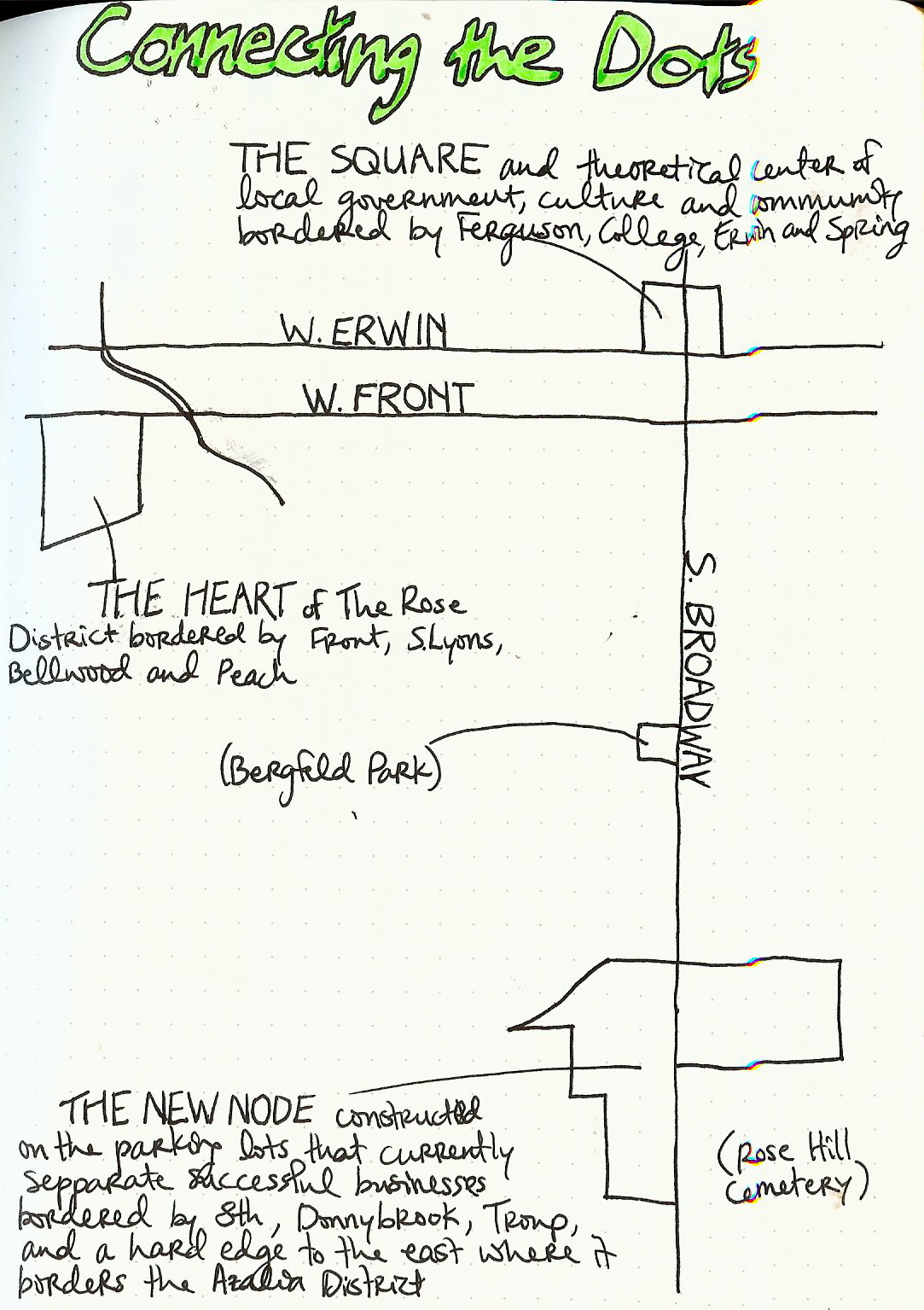
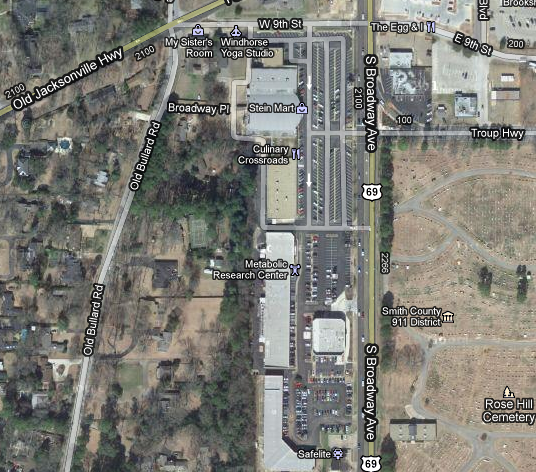 First stop: Broadway Center. Once we have finished building The Complete Loop, we should look to Broadway for the next great artery of development in Tyler. But, instead of the constant retail strip malls and big boxes that you see in South Tyler, this section of Broadway will augment the existing historic neighborhoods with new, high-density developments. Like two weights on the end of a barbell, Downtown and the redeveloped Bergfeld Center will anchor this region. See the difference? Instead of constant retail strip, we will concentrate businesses in two high-density places that will are in close proximity to valuable real estate. It’s better 🙂
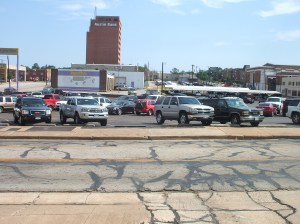
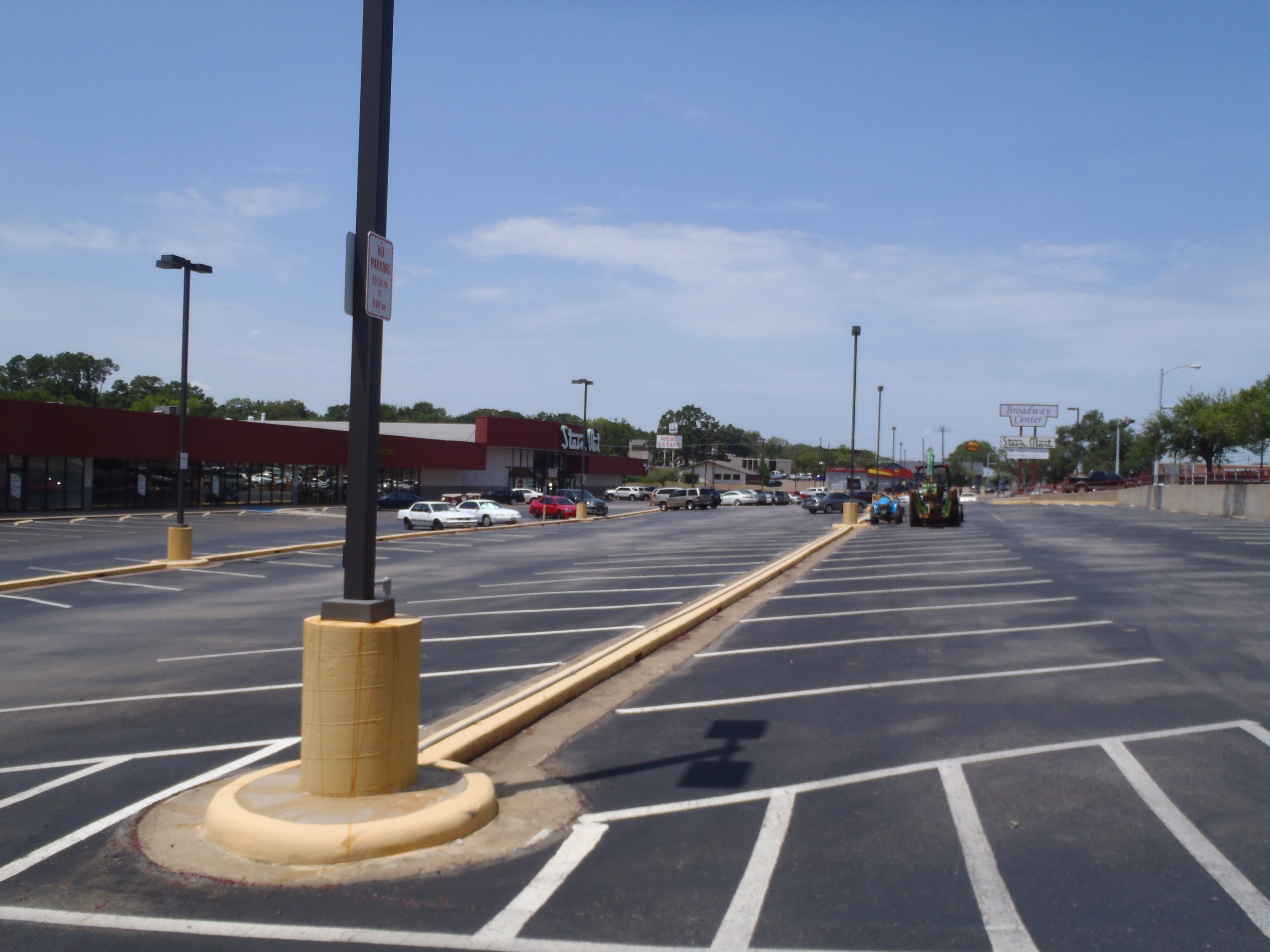 Rule #1: Every parking lot in this section has potential for development. It’s a pretty basic rule, but necessary. Building on parking lots has the capacity to transform ugly/boring/typical spaces into unique and attractive spaces. We also don’t often don’t even realize how incredibly big these parking lots are. We just get used to them so we don’t “see” them any more. I know, people have to park somewhere, but we also deserve to have a beautiful city, right? Let’s find a way to do both.
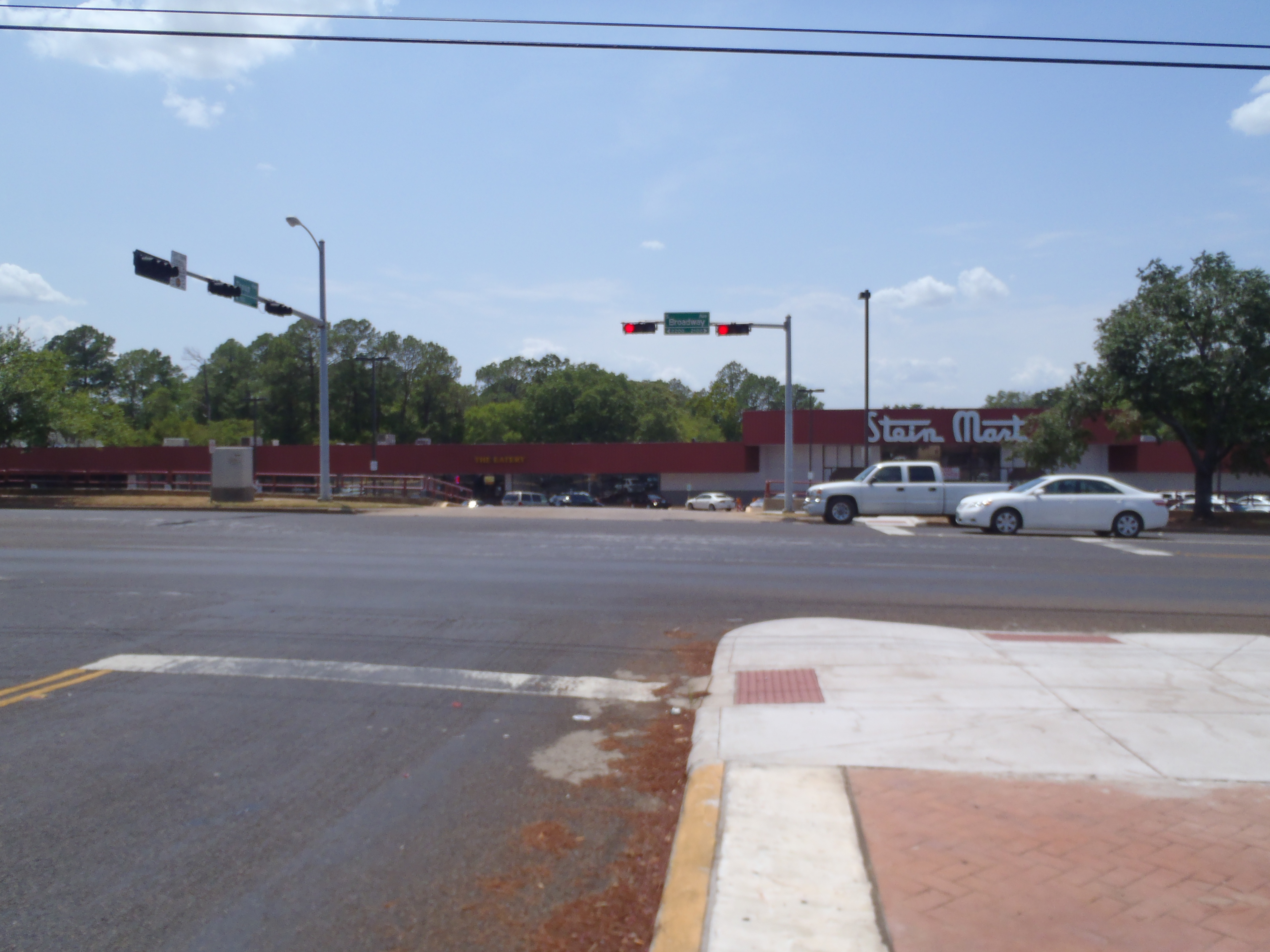 Rule #2: Reconnect the roads and the complete the grid. More roads means more access and more retail space. In regard to the issue of parking, it also means more on-street parking. If we connect Troup Highway (left) through what is now a parking lot and Stein Mart, it would meen a straight shot to Old Bullard and plenty of places to spend money. Additionally, the connectivity would invite residents of the nearby neighborhoods to visit the new shops, parks and
 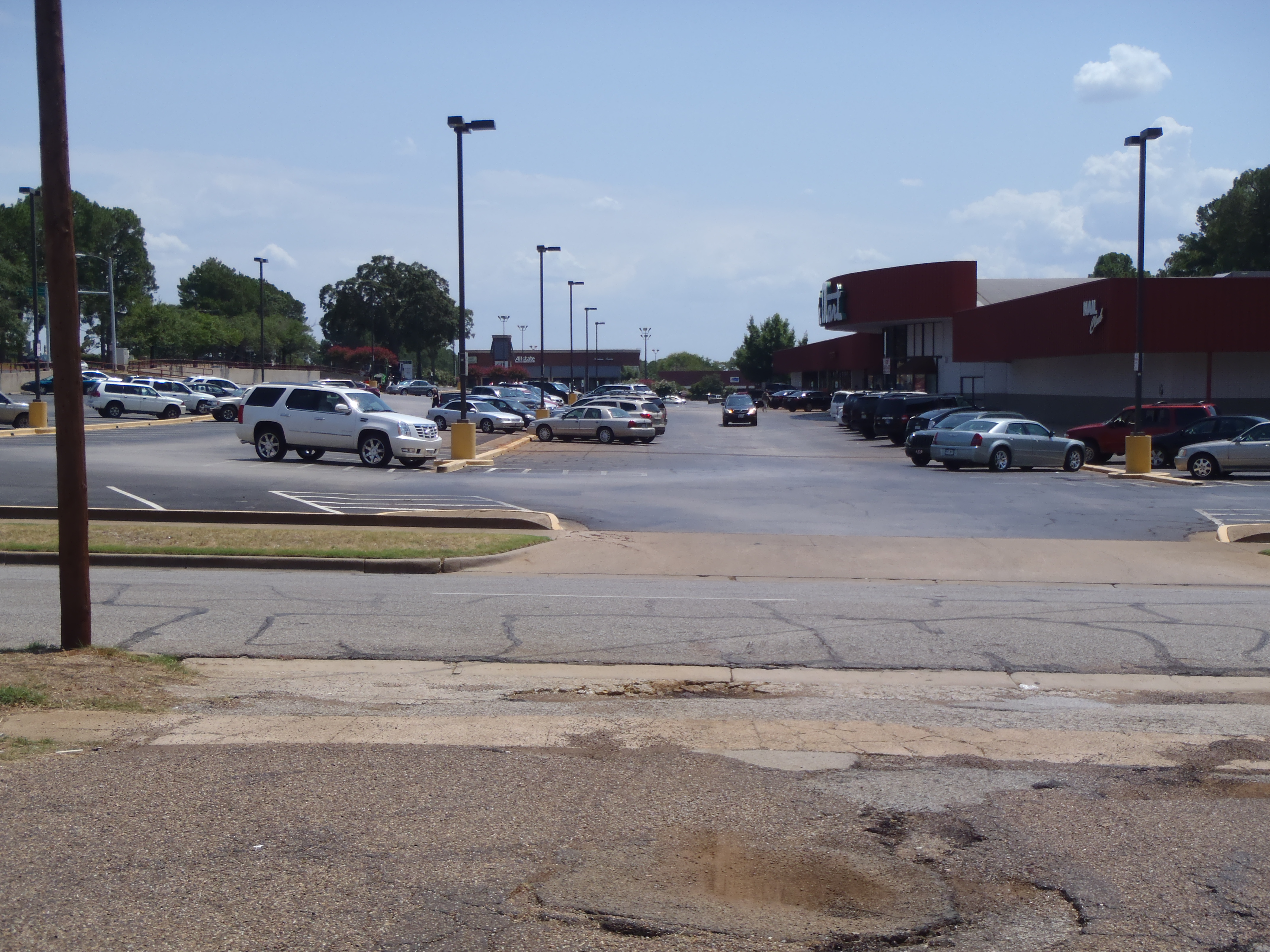 restaurants on their morning walk. According to a recent traffic study, 30,000 cars per day drive by this spot on Broadway — Let’s give them more reason to stop. Also, in order to extend the grid, it would be great to build two new roads through this development in front of (to the right) and behind (left) what is now Stein Mart. This will complete the grid and create city blocks for
 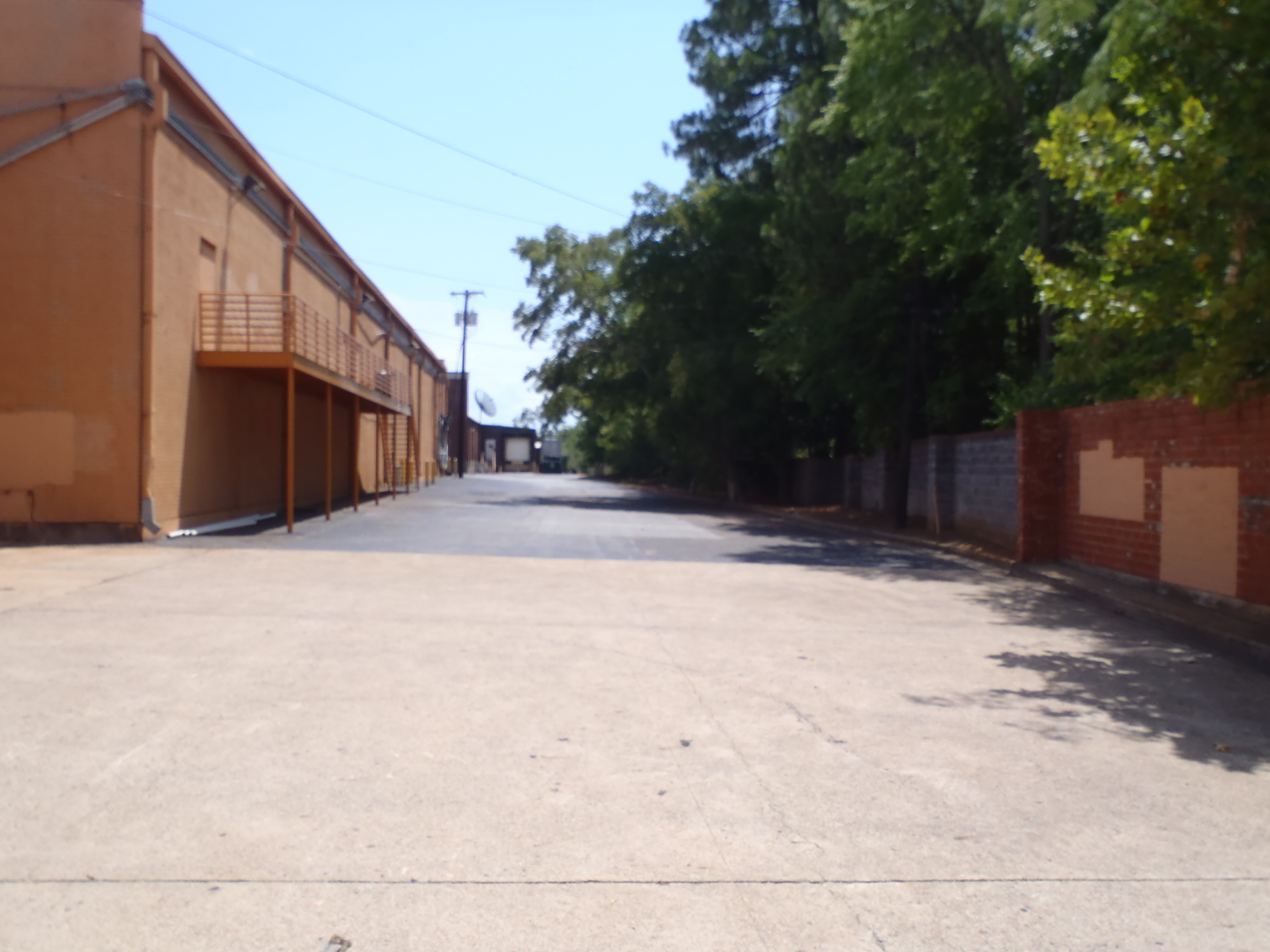 more dense, protected urban development. Think less people would come? Think again. More people are likely to shop and spend their time in compact, beautiful spaces. These developments are essentially the free-market “one-stop-shop” developments that incorporate a multitude of uses into previously unloved space.
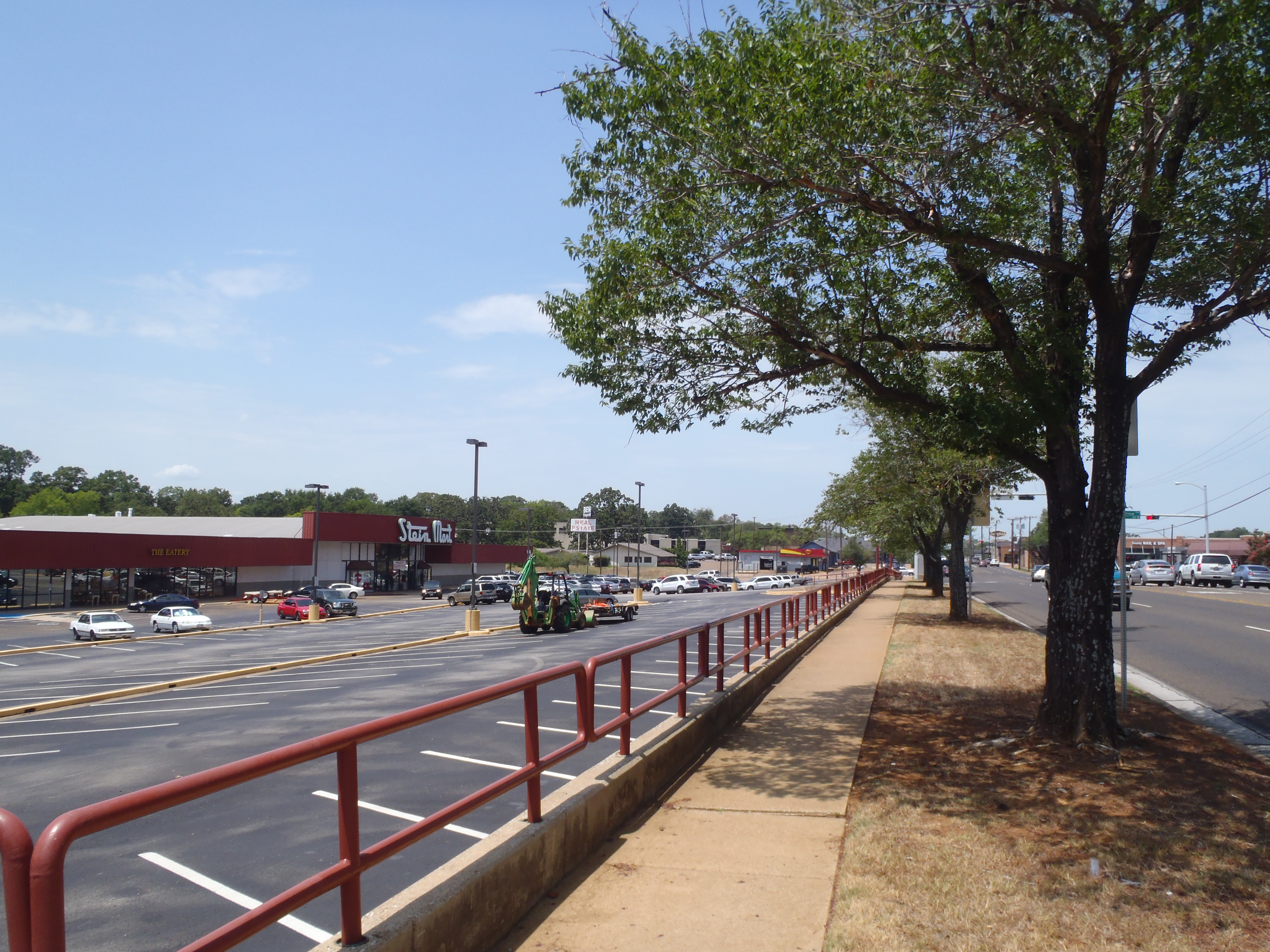 Rule #3: Build to the street on street level. This is important: Don’t pop it up with a “sporty” flight of stairs, don’t put parking in front, and do keep the street trees as a buffer. If there must be parking, put it on the inside of the development. The point is to make the development itself the advertisement for the development. Currently, with a football field of asphalt infront of the strip mall, you have to put a sign out front informing people exactly what it is. With the building built to the road, they will know what it is and they will appreciate the good urbanism.
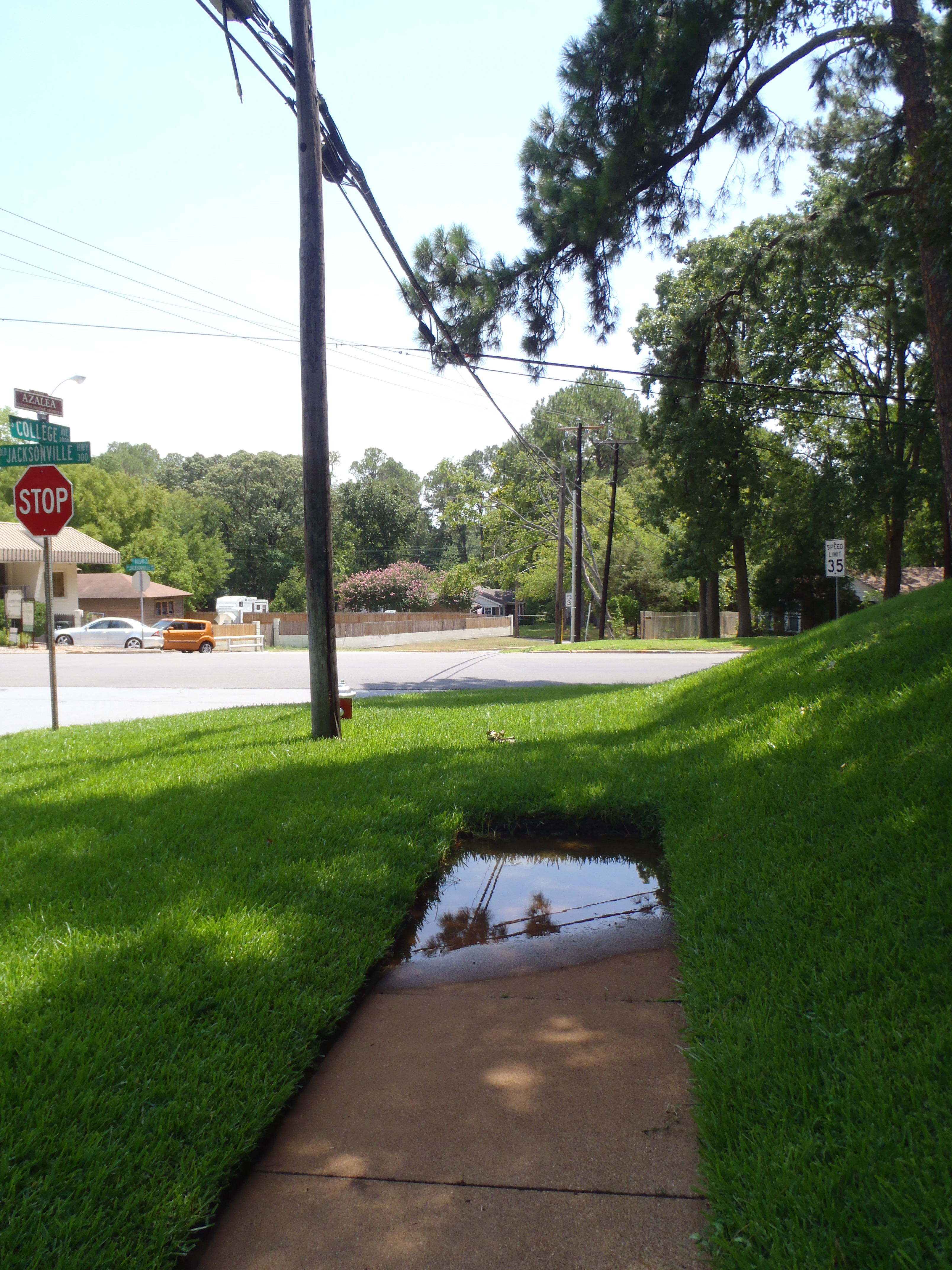 Rule #4: Finally, of course, make it walkable and bikeable. According to the recent Walk Score report, the most walkable cities in America are, as always, also the
 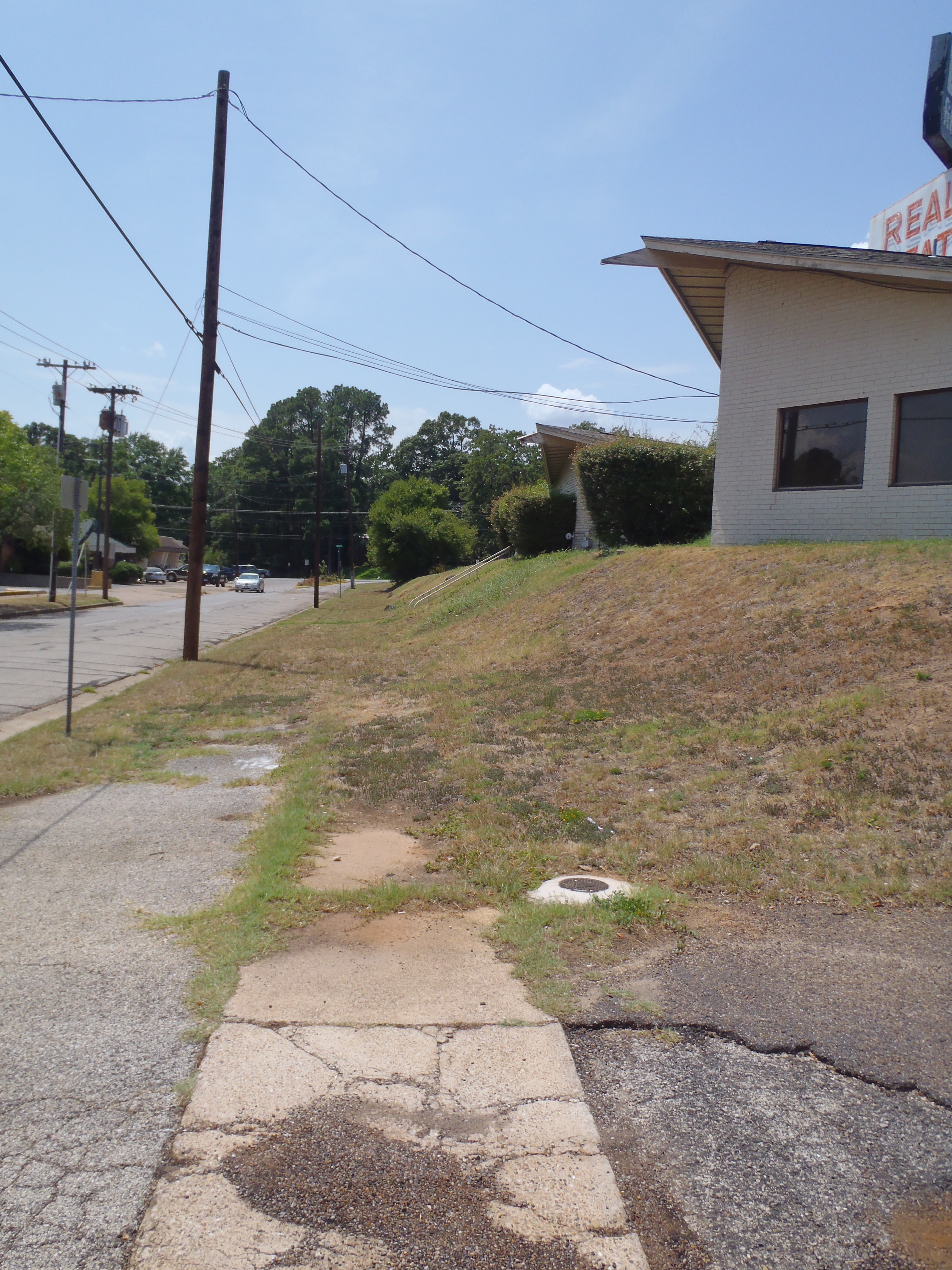 coolest cities in America. Tyler was not on the list. Many times when I walk in Tyler I have this feeling like I don’t belong. Today was no different … as I was walking down Old Bullard toward this development the sidewalk ended. There aren’t crosswalks across Old Jacksonville or Broadway and there isn’t a sidewalk along Ninth St. That’s just not acceptable … and more importantly not welcoming. With a little public investment, this could be a completely accessible and welcoming area for everyone.
So that’s the newest node! I’m gradually “Connecting the Dots” in Tyler and hoping one day someone will take my ideas and make lots of money with them.
Check out my other Tyler projects at my Tyler, TX page.

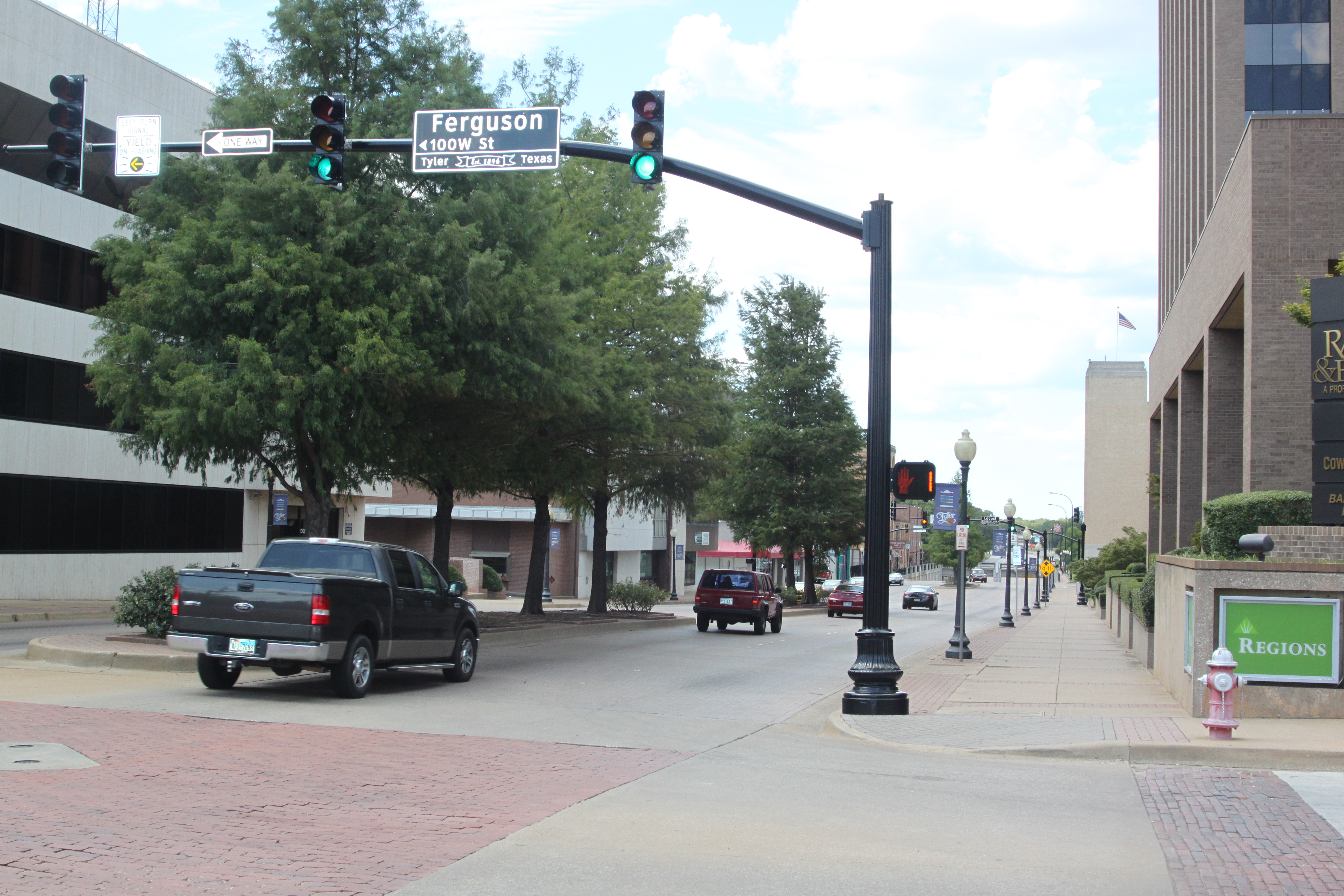

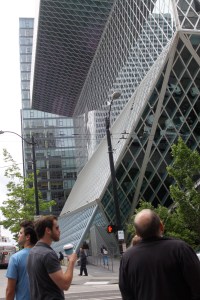 I believe that the potential of every space is limited by real and imagined barriers. If there are real, perhaps topographical, barriers to building a higher density downtown than I’ll be content to give up this dream. I just don’t think that’s the case. Most barriers I would consider “real” are primarily economic, but as long as people continue to build farther south I’ll contend that they might as well build downtown. To me, it’s the imagined barriers that I can’t stand. If it’s a zoning issue, some regulation, or a city of small dreams then I won’t be satisfied. Cities do not become great with small dreams. Cities become great when people do bold things that the mainstream calls crazy. Take, for instance, the Seattle Public Library (pictured). This building is a strikingly beautiful and completely functional structure that could theoretically be built anywhere on any square piece of land. In Seattle, they love it. Could we love this library? I should add, there are people in Tyler doing great work to revitalize our downtown, but I’m just not sure whether the public will appreciate it.
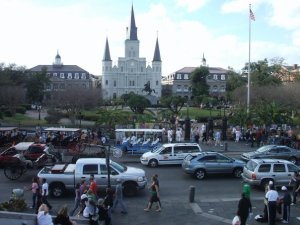 Another possible impediment to Tylerites embracing urban life is a lack of
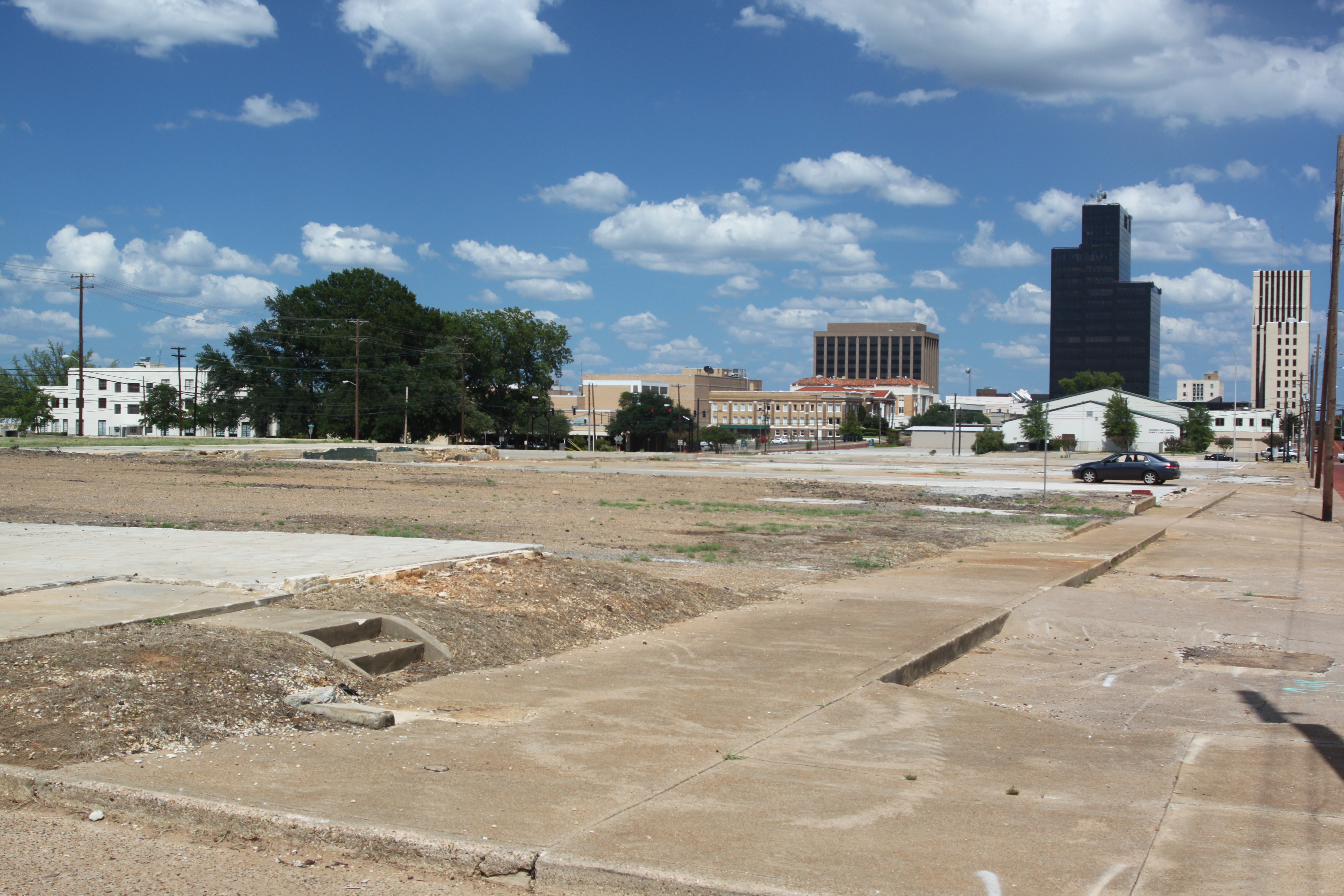
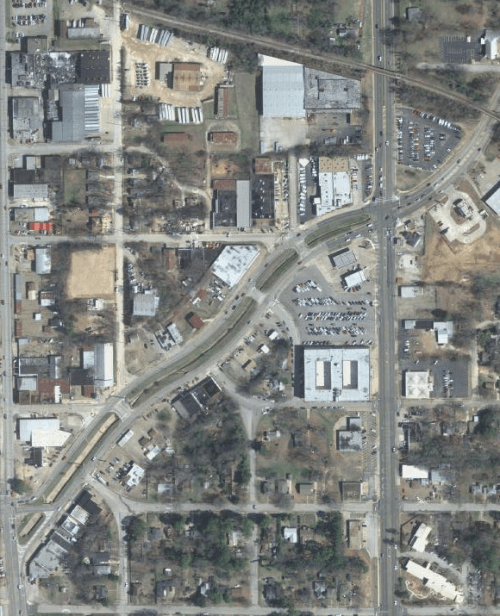
 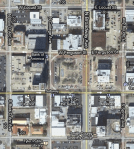 Look at the arial photo of Tyler to the left. These nine city blocks should not look like everywhere else in the city because if they do then they will be no longer be significant. Downtowns are places where you can live to not only experience the diversity of other people’s lives, but most importantly you can personally add to the diversity of self expression, culture, perspective, race, ethnicity, etc. When we begin to add to this multi-cultural society and invest in the community we become a part of organizations and we learn what it means to be citizens instead of consumers. I don’t want us to “consume” downtown as entertainment the same way we sometimes consume church, media and everything else. Rather, we must commit to downtown as an idea and be unified on our goal at the outset. This idea is that, in many ways, downtown is what we look to as the zenith of our city’s development. I believe there is an inherent value to dense urban downtowns as the site of culture creation, political debate and financial stability. Our downtown is a vital element of the future of our city as the capitol of East Texas. We need a viable downtown option, but we have to want it. And we have to know what it is.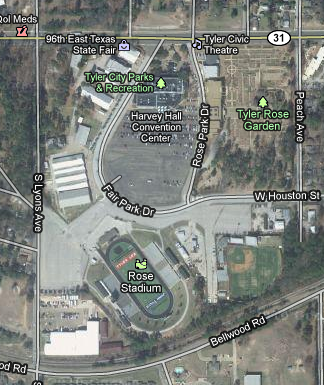

 Highways and Hallowed Halls