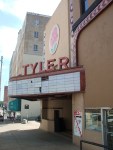
Tag Archives: nostalgia

From Drinking Songs to Pet Theories

I recently felt convicted on behalf of the individualistic, intellectual, global community. Didn’t we used to sing drinking songs together? It seems like these days we spend our time talking and debating rather than getting lost in something greater … something that unites.

I’ve been thinking a lot about the difference between beer and coffee. In 2010, Stephen Johnson gave a TED talk titled, “Where good ideas come from.” I highly recommend it. In his presentation, he argues that the advent of the English coffeehouse played a significant role in the development of ideas during the English enlightenment. With the coffee house, Johnson states, the English people moved from a perpetually drunk society to a stimulated community of thought and collaboration. The ideas that transformed society emerged, at least in part, from within the incubator of the coffeehouse. So I originally saw this as a good thing. Don’t we need good ideas to progress? Well, yes, but I think we’ve lost something in the process of becoming enlightened and thoughtful. In short, we’ve lost drinking songs. We’ve lost this social tradition that connected us to each other and our sense of belonging and place.

I see the effects of this coffeehouse culture on my own upbringing in Tyler, TX. My friends and I would often meet for coffee at the “local” Starbucks and talk about life. These were great times we spent laughing and solving the world’s problems. But they didn’t unite us or connect us to our city in a meaningful. We never spontaneously burst into song with steins of beer sloshing around as we sang, “Tyler, oh Tyler! Da-dum de-dum de-dum …” Or anything of the sort.

In addition, the people that did drink together in high school did not usually do so with members of the older generations because they were partaking in something that many consider immoral. Thus, if there were a drinking song for Tyler, they wouldn’t be singing it. Instead, they would still be stuck in the teenage ghetto while their parents either condoned or condemned from afar. It really is a tragedy. When it came time for me to look for colleges, I felt no remorse leaving that city in the dust. I had clearly not connected to it’s people or culture in such a way that made me feel like I belonged. I had not yet come of age.

Here’s the deal: It’s not about beer and it’s not exactly about drinking songs. It’s about the cultural traditions that unite people.

The thing about these traditions is that they have to be taught. This teaching process requires close, intergenerational relationships. Drinking songs clearly had an incredible ability to galvanize that “togetherness” of community because they eventually became Baptist hymns and even the national anthem of the USA. The difficult question for me is whether this generations is producing material that could be redeemed in the same way. Does our philosophizing  bring us together? As I sit here at my computer developing this theory I wonder if instead I could be singing a drinking song (or any song) with a group of people. Granted, it’s 10 a.m. on a Thursday, but my point is this: I don’t want to care more about my pet theories than our collective humanity.

I think it’s time to start singing.

Elks, Masons, and Odd Fellows: antiquated past or valuable tradition?

“I just worry,” my dad told me one day this summer, “that there won’t be enough Shriners in the future to maintain hospitals like Scottish Rite (Hospital, Dallas).” “Well,” I responded, “why don’t you become a Shriner?”

Growing up, I never would have thought about fraternal societies. To be honest, Barney Flintstone’s membership in the Loyal Order of Water Buffaloes was the closest I ever came to even knowing they existed. Then I went to college, joined a fraternity, and never looked back … until now. I graduated in May and in the last few months, fraternal societies for grown men have started to make a lot more sense. I think it was when people started doing this weird thing — calling me a man instead of a guy — that I started to wonder what I was getting myself into. Isn’t being a man all about being lonely and depressed? Work all day then come home and sit in your house? Robert Putnam’s book Bowling Alone makes a strong case that we’re living more of our lives without each other. As a result, it doesn’t feel like there’s any benefit to this whole “guy-to-man” switch … just more responsibility. There’s nothing cool waiting for me on the other side. But in the context of our nation’s history, that wasn’t always the case. There was an era of the American city when the fabric of society was dense with organizations and groups that carried and supported you through all the stages of life.

Douglass Rae summarized this era of ‘urbanism’ in this way:

“All or virtually all of the people who were assembled by these organizations — whether for religious or a fraternal lodge meeting or a sporting contest — were members of locally grounded communities. And the acts of assembly and association almost certainly deepened and enriched participants sense of loyalty to and identity with place.” Rae, City: Urbanism and its end (2003).

Rae’s research focussed on the city of New Haven, Connecticut and the 100-year deterioration of urbanism. In his research, he documents how each city block in New Haven was once a thriving microcosm of society. Middle-class men and women were usually a part of several societies in the city for different purposes including fraternities, sports teams, and social clubs. It’s wasn’t easy life in 1900, but it was lived together.

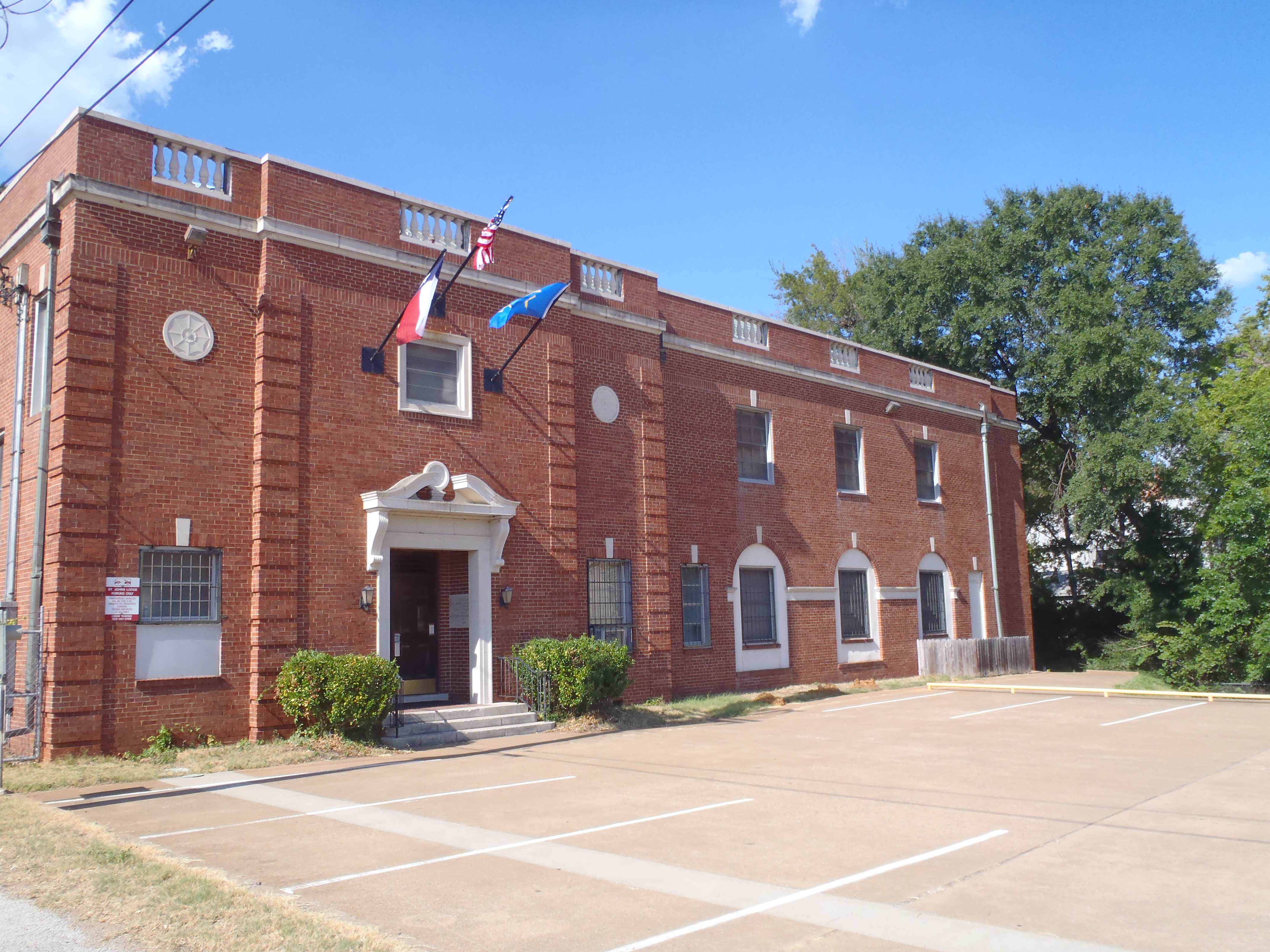
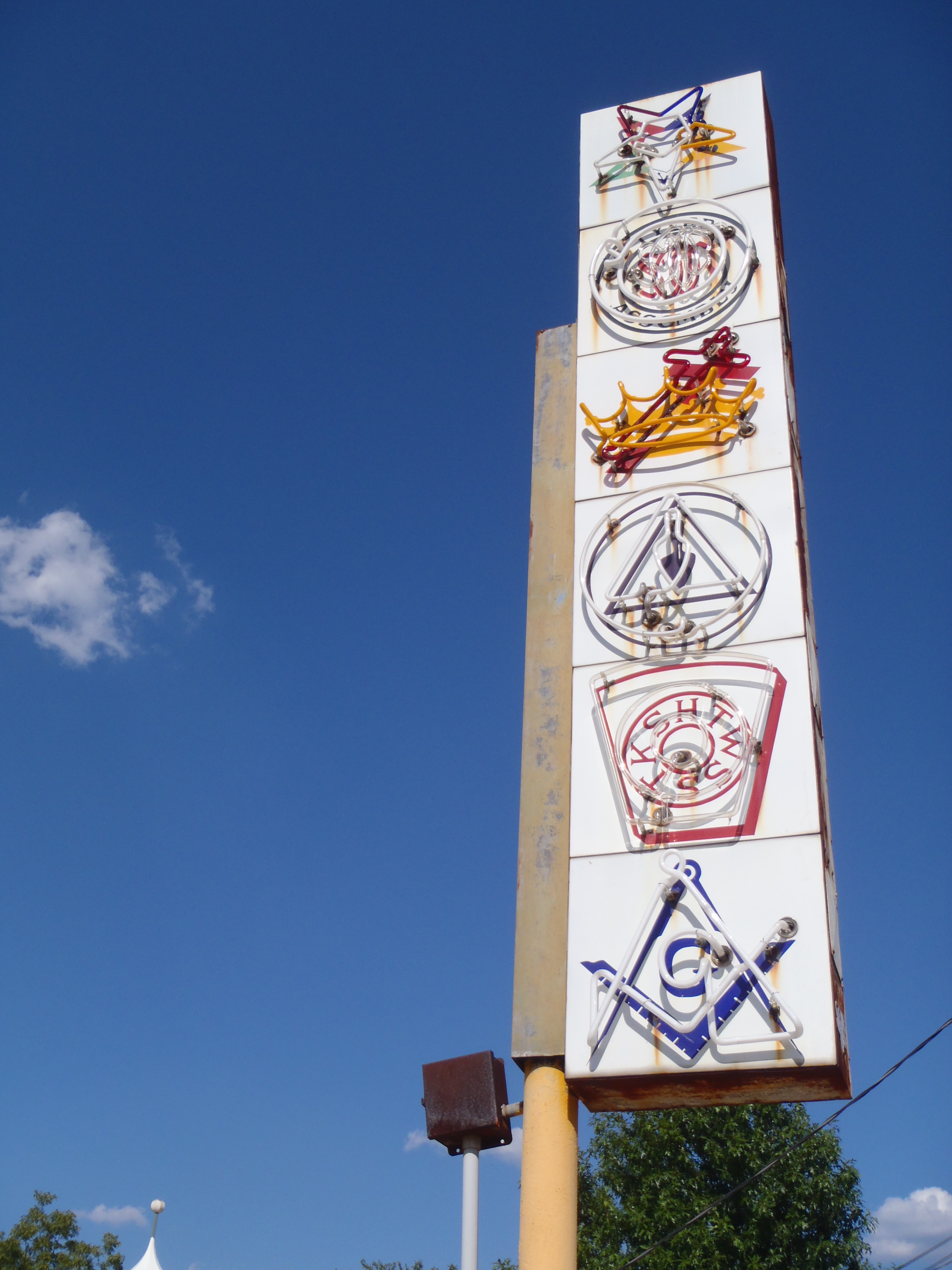
Today, things have changed. The America of 1900 no longer exists. But what I love about cities is that the buildings in our cities (the ones that survived) are the constructed monuments to our past. Tyler, TX is no exception. While they don’t hold the same place of prominence in the region, there are still buildings in Tyler that harken to an older era. The Masonic Lodge (pictured above), built in 1932 is the most striking downtown example that is still in use. I’ve driven by this building numerous times, but never thought it was special. Today, I almost felt like someone was going to come out and kidnap me for taking a photo of their building. The awesome neon sign (left) on the street is also worth noting … I don’t recognize some of the symbols, but I’m sure they all mean something to the men involved. The pentagram at the top looks slightly demonic, but I’d still think it was cool if my dad went to this building for a meeting once a week.

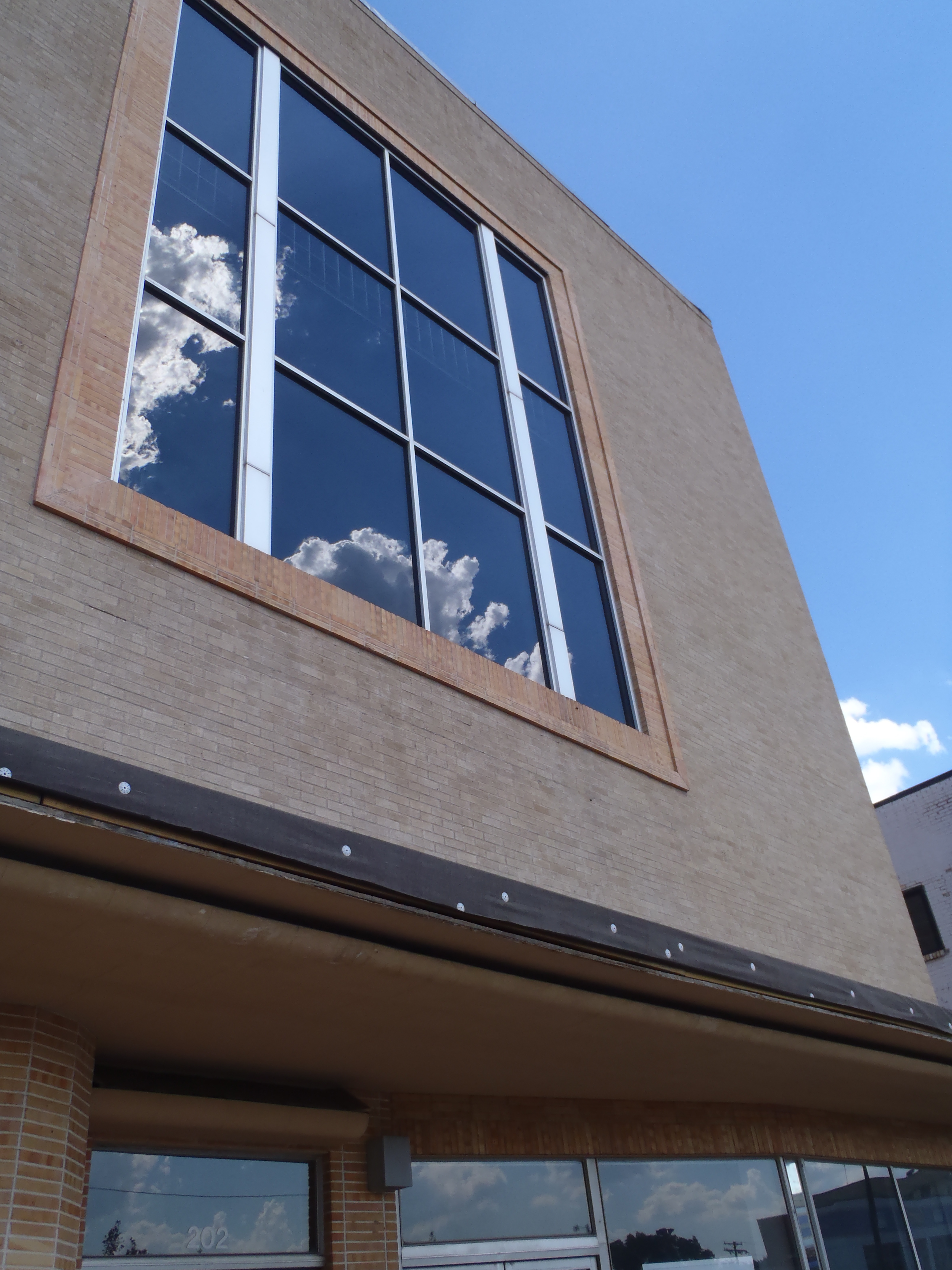
Other buildings in Tyler are no longer being used for their original purposes, but still bear the markings of early twentieth-century urbanism. The old Elk Lodge is one such building. I believe there is still a group of Elks in Tyler, but now they meet on the edge of the city in a newer lodge. It’s kind of a shame they moved, but I’m partially glad they did because the building is amazing and I got to walk through it today (without being properly initiated). It’s currently being renovated by Ron Mabry of Tyler for events in the city. I believe All Saints Episcopal is having a dance later on in the year. I hope that at least one high school student walking by notices the plaque on the building that states the founding purpose of the building: “Tyler Lodge No. 215, B. P. O. Elks, M. E. Danbom, Exalted Ruler.” The people on this plaque cared enough about each other to build a building where they could meet, talk about life, celebrate and mourn.

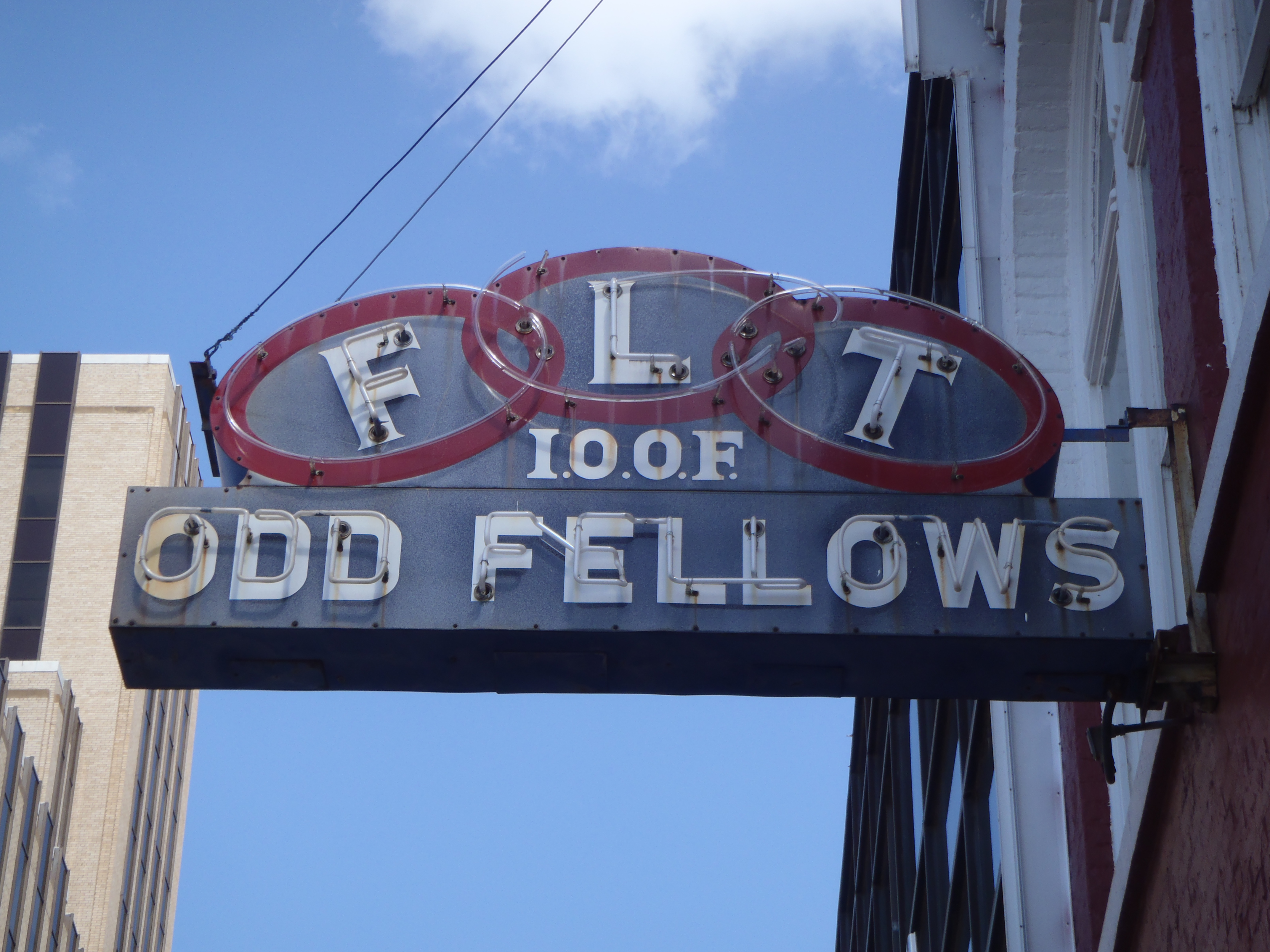
Only the oldest parts of our nation harbor these artifacts of the American past. It is always good to remember where we came from because it gives us a context for where we are. Plenty of people today are talking about why guys aren’t growing up, etc, but I don’t think they ever ask the question, “What’s waiting on the other side?” Yes, traditions are cumbersome and (quite necessarily) antiquated, but even in this postmodern society there is utility in having a structure to stand up under. There is a beauty in being told how to act. So don’t mock the Oddfellows, Lions, Masons, or Shriners. The men involved in these organizations are engaging in a tradition of American civil society that was once a grand element of this American life. Today, it is mostly just plaques on buildings … and a memory of how life could be.

Lost Treasure: Stone Drainage Tunnel

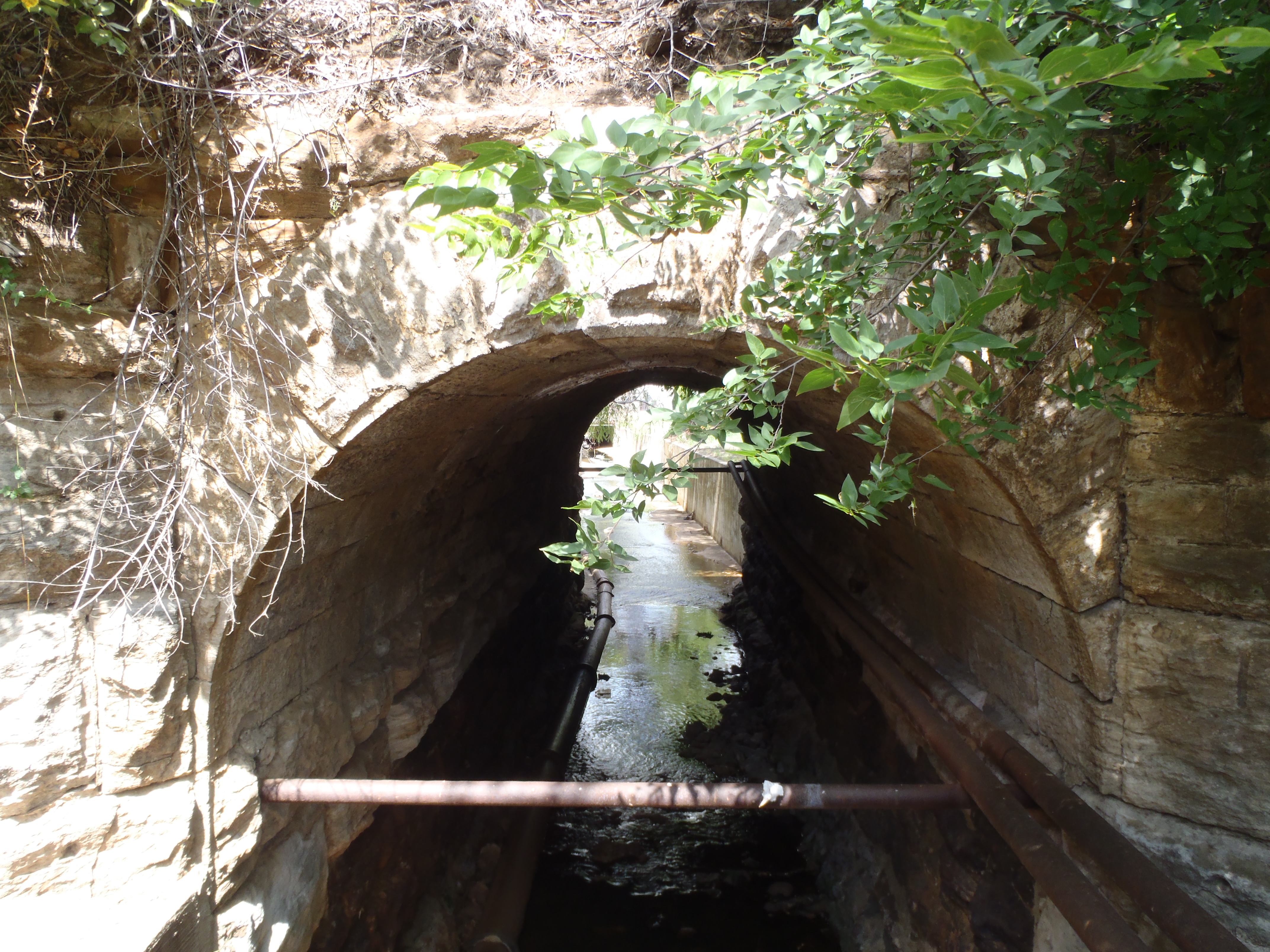
They don’t build ’em like they used to … so why don’t we take care of the old stuff? My “Lost Treasure” category is for structures and spaces that have been forgotten. The first entry is my favorite bit of public infrastructure in Tyler. The tunnel is a stone arch made of stone with a capstone that reads, “1880.” You might not have noticed it just east of the intersection of Elm St. and Fannin Ave. Here’s a link to the Google map aerial shot for reference. This is something worth restoring:

Longing for a Heyday

So we all know that our downtowns aren’t what they used to be. They’re cleaner, taller and most importantly (in most places) they’re quieter. There’s just no people. But we Americans also all seem to carry this strange collective memory of a heyday when our cities and our downtowns were bustling, busy, smelly and successful.

In that era, downtown was a source of pride and a symbol of ambition and progress. In her book Downtown America, Alison Isenberg describes downtown as the cite of transformation, protest, destruction and renewal. Most importantly, she argues, the history of downtown America teaches us about ourselves as Americans and specifically what we value. She writes,

“It has been the people — their crusades, their financial stake, their ideals, and their changing priorities — that have given meaning, hopes, and limitations to the material condition of downtown and that ultimately have given Main Street its form. This interplay puts buildings up and takes them down (Insnberg, 316).

It was people who cast a vision for a space and called it downtown. They called it special — worth taking a risk and worth making bold statements. But today downtown America is mostly just a few lines on a historical marker, “This place was once great because ___.” There are very few people who live downtown, there is little diversity, and most of the buildings are relics of a once-proud past. We have lost downtown and the institutions that resided there. All we have now is a memory of a space and an incredible longing for the heyday of our cities.

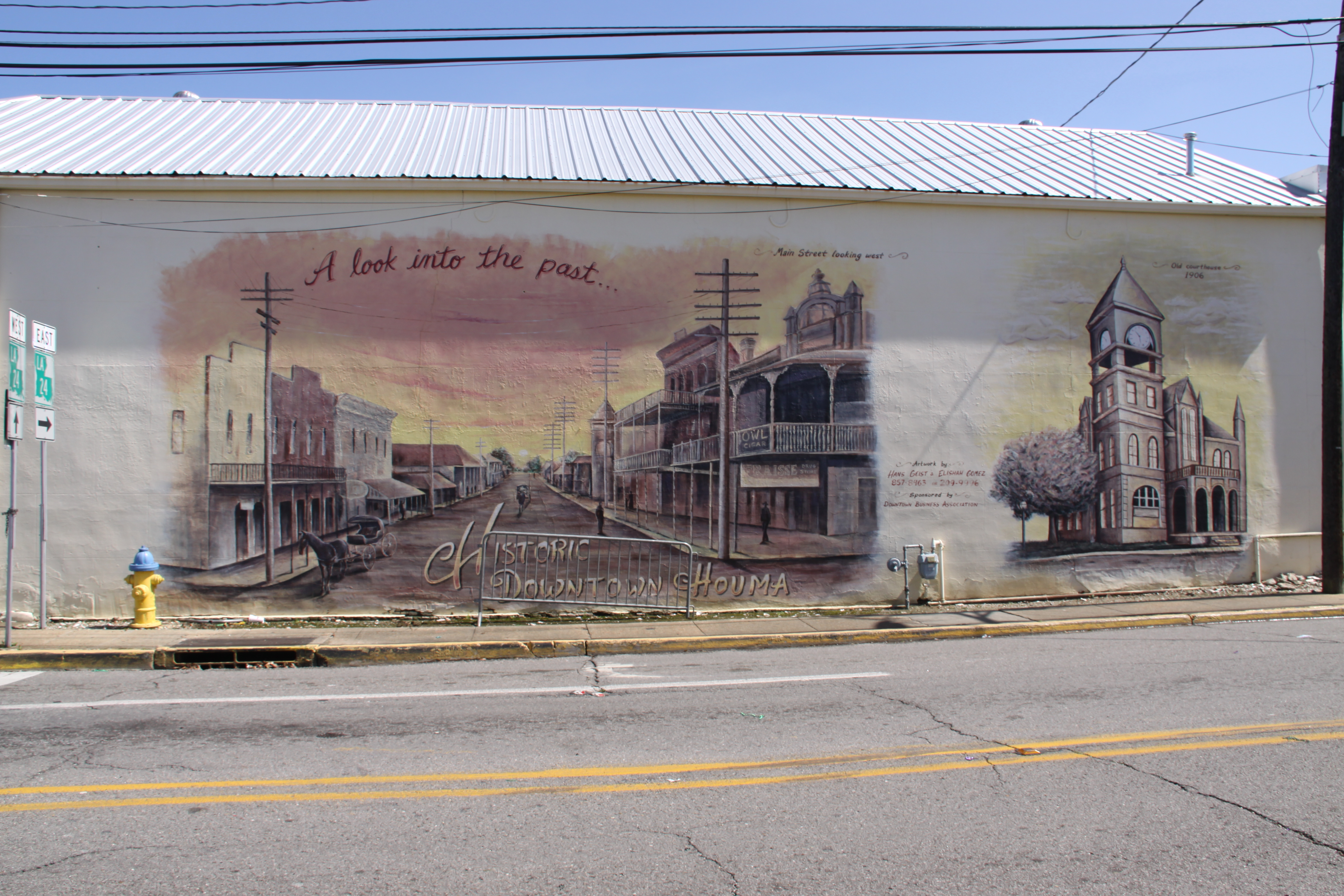
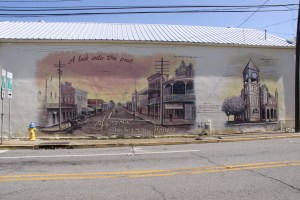
In the past few months I have visited two small towns that perfectly encapsulated this nostalgia. The first is Houma, Louisiana and the second is Ilwaco, Washington. In Houma, I experienced the mélange of Louisiana cultures: Country music bars, party busses blaring rap music (it was Mardi Gras weekend), old southern mansions, a beautiful old courthouse and food carts serving Mexican food. As I walked through the city I noticed a mural of an old “Main St.” scene (above). “A look in to the past …” the mural reads, “Historic Downtown Houma.” The larger image is of “Main Street looking west” and the smaller image to the right is of the old Houma Courthouse ca. 1906.  I suppose this mural, sponsored by the Downtown Business Association, was an attempt to remind people in the region of the proud history of Houma. Hopefully visitors will enjoy a stroll “into the past,” spend their money, and come again.
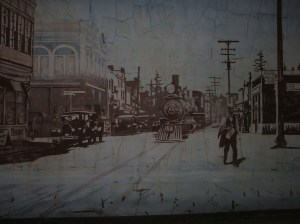
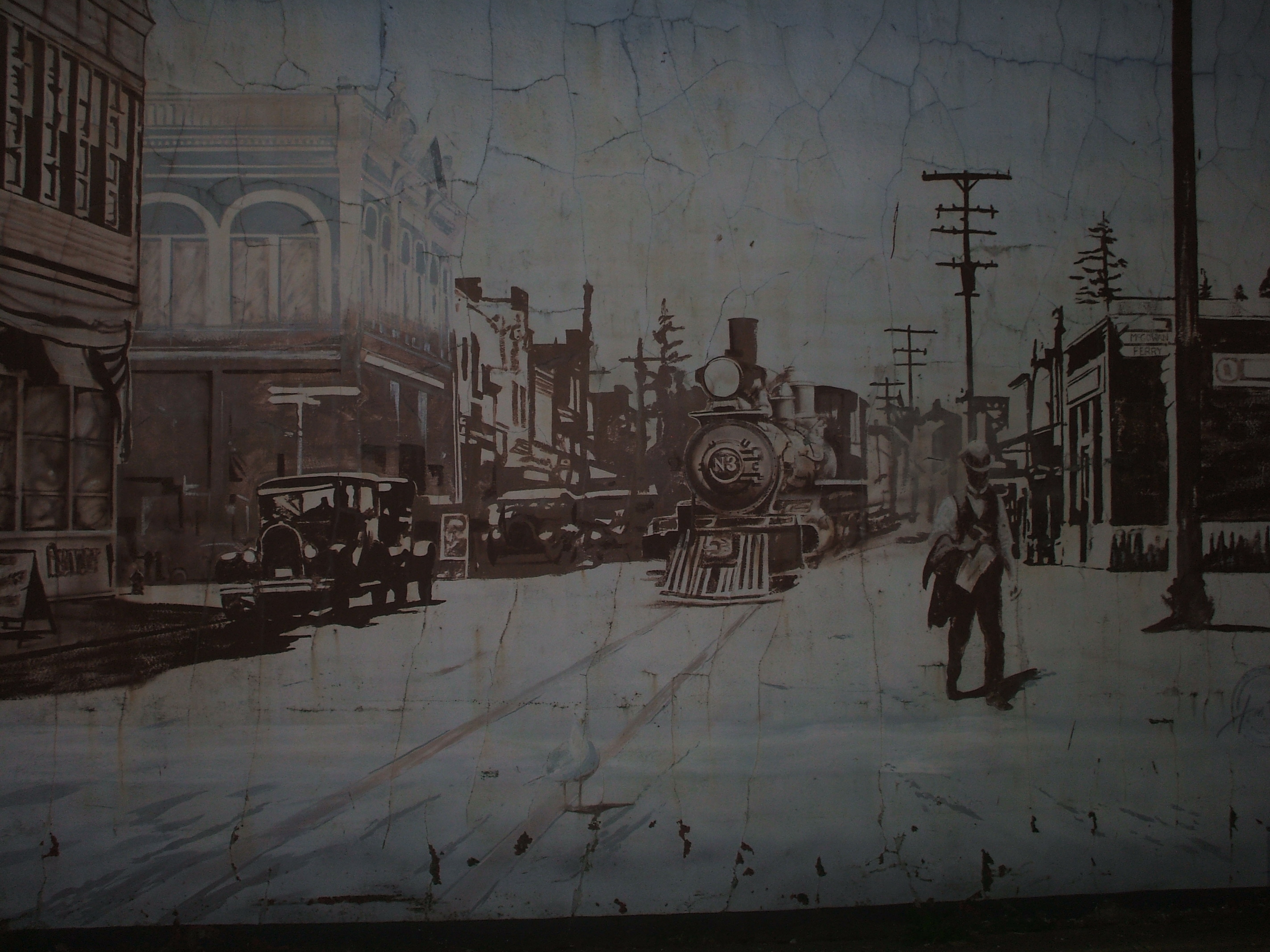
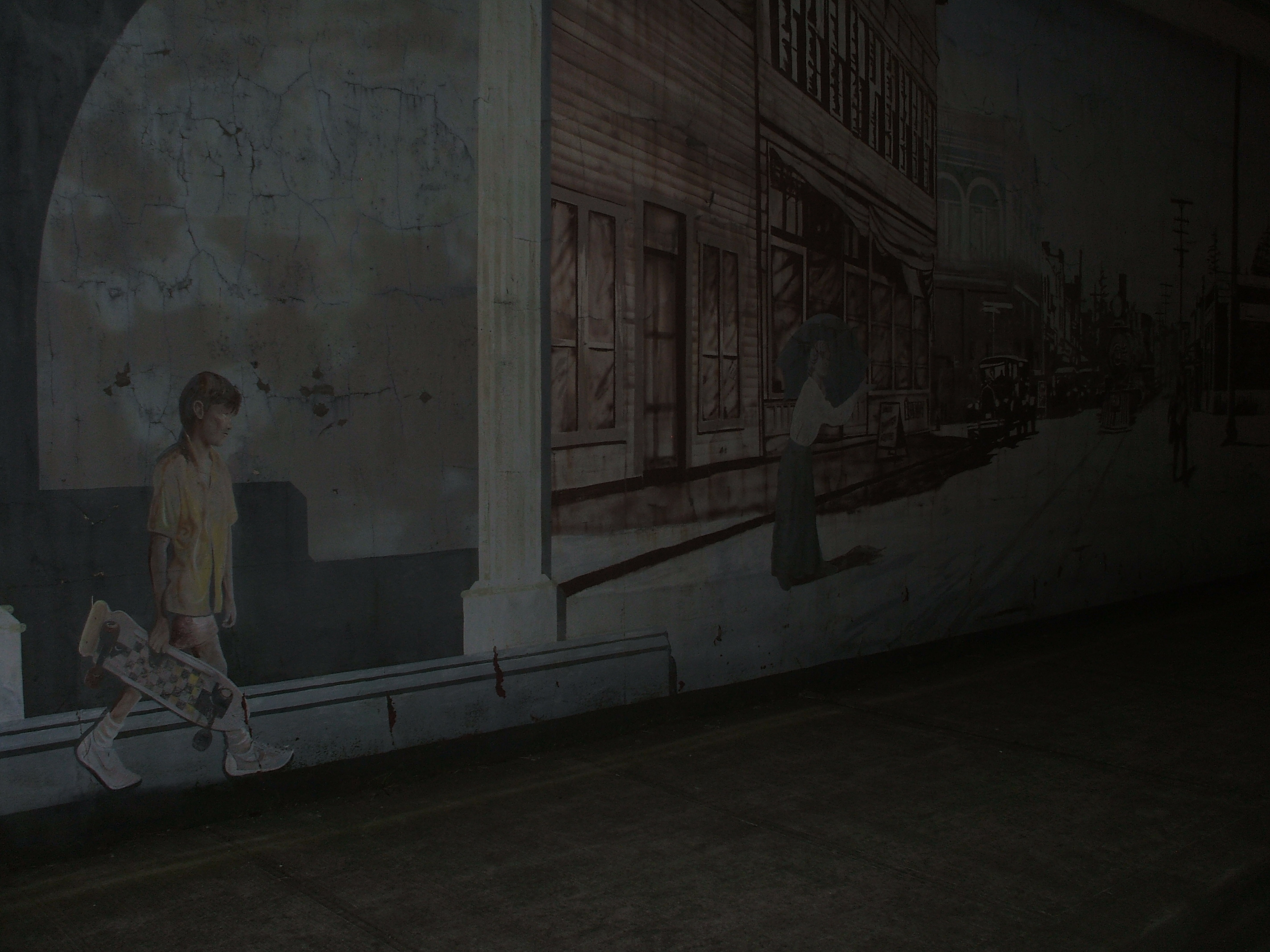
The second example of a nostalgic mural (left) is a little more complex. It is titled a “Main Street” mural in Ilwaco, WA located on, not Main St., but Spruce St. at the intersection of First Ave. This mural depicts the same nostalgia for a bustling past with cars! trains! A/C grid! and a man with a hat! walking through the street. This is clearly  a mural of past progress and innovation. When I looked closer, however, I realized that it’s actually a mural of a mural of progress. On the left side of the mural, there’s a boy walking with a skateboard toward the mural of the old Main St.  The boy seems to represent a newer sort of progress, but is placed in context of the historical legacy of the city.
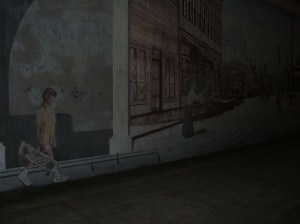
So what are these murals trying to say?

Greg Dickenson writes extensively about the connection between memory and place and the significance of both on personal identity. He considers the new spaces that we inhabit (e.g. McDonalds and strip malls) which seem devoid of historical context. They are clean and new, but what do these spaces lack? Dickenson’s perspective states,

“In a post-traditional period, a time of deepening memory crisis, secured place becomes harder and harder to maintain, giving rise to nostalgia to cover the discomforts of the present.”

This nostalgia is often revealed in murals such as the two above as well as in old photographs, old marquees, historical markers and similar references to the past. It is sort of a cheap nostalgia because it really doesn’t help us to understand the complexities of the past. I think that a more complex history would defeat the purpose of increasing tourism because it wouldn’t make people feel “comfortable” in these nostalgic places. The problem with that simple message is that when downtown was bustling it was a complex place. As long as we continue to sanitize (“suburbanize”) our cities for the sake of visitors and tourism we fail to revitalize (“urbanize”) our downtowns.

Isenberg, Alison. Downtown America: A History of the Place and the People Who Made It. Chicago: University of Chicago, 2004.
Dickinson, G. (1997). “Memories For Sale: Nostalgia and the Construction of Identity in Old Pasadena,” Quarterly Journal of Speech 83, 1-26.


Gallery

C-T-D: Tyler’s Urban Valley

This gallery contains 6 photos.

**Interesting update: I met with my city councilman today and he told me that a very well-known real estate developer in Tyler bought the location of the “Urban Valley” and he wants to turn it in to an outdoor movie … Continue reading