Category Archives: Significance

2011 in Review … “A Hobby Worth Having”

Thanks to everyone that has read, perused, or glanced at my photos and thoughts. The WordPress.com stats helper monkeys prepared a 2011 annual report for this blog. It’s not really that impressive in the grand scheme, but the experience has been incredibly valuable for my personal growth. I encourage everyone to start blogging … it is truly a hobby worth having.

Here’s an excerpt:

A New York City subway train holds 1,200 people. This blog was viewed about 4,100 times in 2011. If it were a NYC subway train, it would take about 3 trips to carry that many people.

Click here to see the complete report.

He came and dwelt among us

Yesterday, Christmas Eve, was the deadliest day in Richmond since New Year’s Day. Last night, I got the following text from my housemate:

“Don’t know if y’all saw the news or not but two people were killed and a 2 year old girl was abducted a few blocks [from] our house tonight. Be praying for our community tonight and throughout tomorrow as we reflect on what the birth of Christ and the hope of his return means.”

Later, I heard that there were three murders in the same day — a reminder that we humans are not the kind and simple species I like to imagine. I was so thankful that the sad news came with a charge to take Christmas more seriously.

If there were ever a Hallowed Hall, it was the stable in which Jesus was born. Amidst the chaos of an ancient Hebrew city — multiplied by the Roman census — God created room for His holy and audacious command: “peace on earth.”

This day is a tradition that exists to remind us that, with reckless abandon, the God of the universe “came and dwelt among us.” He spoke human language, followed human traditions and respected the full range of human experience: Contentment, excitement, trust, affection, doubt, betrayal, and loss.

Into such a world, this incarnation brought a peace and hope that allows us to give of ourselves and be satisfied.

When we follow a higher calling, the most simple human places become holy. I pray that this year we will hear the Christmas story and appreciate how absurd it sounds: A baby that is God, a new star in the sky, a mother that is a virgin, a stable that is a maternity ward, and a peace that surpasses human understanding.

That ancient city became an unlikely intersection, a place worth remembering, and the origin of a hope found in the person of Jesus Christ.

Merry Christmas.

Gift

When my older brother Steven told me what he wanted for Christmas, I laughed and told him that he was boring.

Steven is similar to me in personality — very different in lifestyle. He’s a rational, fast-paced consultant and I’m a scattered high school teacher. His commute is thousands of miles while my job is five minutes away. So when I start looking for potential presents I’m always wondering if they’re something he would want and enjoy … or just something that I think is cool.

My first decision: The shotgun approach. In addition to his request, I decided to add three more gifts that I thought might engage his creative mind, reconnect him to home, and give him a chance to process his thoughts and emotions throughout the busy work week.

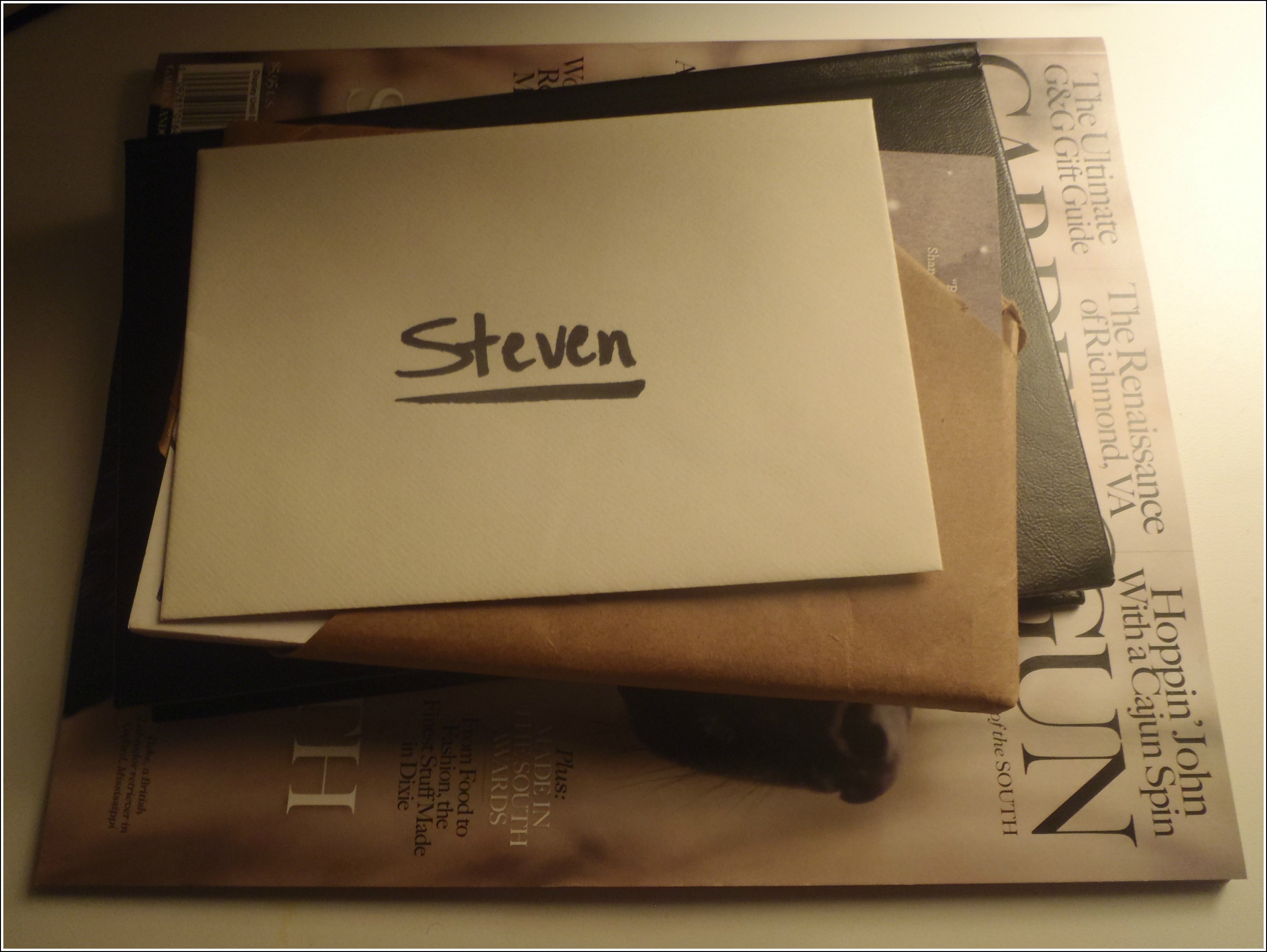
The first is Light Boxes:

 This novel is really a piece of modern folklore that can’t be read to “learn something.” For a book like this, you have to slow down and embrace the flourish of poetry … and learning is indirect. I also appreciate the cover art (suits, scarves, masks and  a creeping monster) for its connection to his current life.

Next item I found for my analytical and professional brother is a simple, black, hardback sketchbook:

With 208 blank, perforated pages, I liked this book because it’s classic, but also has some utility as a place to write todo lists or brainstorms that can be removed and shared. In other words, it’s not another journal … it’s more like a canvas.

Finally, I was thinking about his long commute from the South to the cold Midwest and settled on his last present in this scattershot of gifts: the latest edition of “Garden and Gun.” That way, the next time he flies north he will bring with him a rich and unabashedly southern collection of photos and stories. Not to mention the article, “The Renaissance of Richmond, VA.” Here’s looking at you:

When it all came together, I couldn’t help but appreciate the collection … a pile of blacks, grays, and whites. It’s not for me, but I’ve enjoyed collecting it. As I get older, I hope I continue to find my own style,  while always remembering that saying, “I love you,” through a gift has to include a combination of my interests and another’s desire. That way, it’s personal, but not returned on Monday.

Just in case he gets bored by the narrative of Light Boxes, (“I dreamed you a field of running horses, Selah. For you, Bianca, a balloon the size of the sky, my body a kite you can throw into the air. Pull me by string and horse.”) I made it perfectly clear that I’ll gladly take any one item back for myself. The final benefit to shotgun giving is that nothing hinges on the one big-ticket item.

So, after finding what I thought could be the perfect Christmas gift collection for my older brother, I added the final piece and (I admit) a very practical addition to any grown man’s life:

A clothes hanger.

Sometimes you just gotta share.

P.S. Special thanks to Michael Wolfe and Maria Popova for leading me down this more thoughtful and appreciative path for the past five months.

Savage Faces, Human Places

I’ve been thinking about the word “savage” for about a month now. What does it mean? Who uses it? What purpose does it serve in society? At this point, I think I’m about ready to move on.

I may break up this piece later and turn it into more of a series … for now, here’s where I’ve landed:

According to the Wiktionary entry, the word originated in the “Latin silvaticus (‘wild’; literally, ‘of the woods’)” then moved through late Latin and French to English and eventually became the word “savage” as we know it today. The first thing I notice is that the word has always had an implicit vantage built into it. This unspoken perspective is the place from which savagery was determined. “Of the woods” can be read as “not from the city” or at the very least, “not of us.”

My first question quickly emerged, “From where is this word spoken?”

A few weeks ago, my Richmond Perspectives class discussed the relationship between the Native American Chief Powhatan and the English settler/invader John Smith. One of my handouts that week included the following insight on an entry in John Smith’s journal:

“‘Powhatan carried himself so proudly, yet discretely, in his savage manner, as made us all admire his natural gifts,’ Smith wrote, ‘considering his education.’ Majestic, mighty, and prideful Powhatan may well have been, but, in Smith’s eyes, he was still, and ever would be, a savage” (The River Where America Began, 77). 
 

This quote moved me to wonder about Smith and the British perspective at the time. Was there something particularly savage about Powhatan or had Smith simply decided that every person he encountered would be savage? Clearly, thousands of Native Americans believed Powhatan to be an effective leader, but Smith couldn’t see past his seventeenth-century English perspective of the “New World.” From this vantage, the entire territory, Powhatan’s chiefdom and beyond, was “savage” before it was even encountered.

There was something within John Smith’s mind that prevented him from developing an appreciation for the powerful leader with which he dealt. I’ve landed on three posible explanations for this: 1. Smith came here believing that every inhabitant was inferior, 2. Smith was legitimately shocked by Powhatan’s physical appearance or behavior and lastly, 3. Smith was afraid of Powhatan and used words such as “savage” to demean him and minimize his power.

When I read this quote with my students, I asked them what thought in particular about the word savage. I was actually surprised to hear that they use the world all the time. To them, “savage” is a joke to make fun of friends when they’re not acting proper or just to make fun of someone in general. One mentioned that the projects in Richmond are savage. Another joked that it’s savage when you pick up food off the ground and eat it. I think this conversation actually filled the rest of class and I left that day with a lot to think about.

My history class had just launched itself into the twenty-first century.

When I first started writing this post, I realized the topic was making connections to all sorts of other ideas and semi-related thoughts. This post is the first paragraph of that original piece and I’ll publish the rest in segments. I’m also starting a new page titled, “Power,” where I’ll store these and others because I think perspective and “savagery” are linked to how we position ourselves in relation to each other … identity is a powerful thing.

This post is this first of my “Savage Faces, Human Places” series that I’m putting together in my section on Power.

From Drinking Songs to Pet Theories

I recently felt convicted on behalf of the individualistic, intellectual, global community. Didn’t we used to sing drinking songs together? It seems like these days we spend our time talking and debating rather than getting lost in something greater … something that unites.

I’ve been thinking a lot about the difference between beer and coffee. In 2010, Stephen Johnson gave a TED talk titled, “Where good ideas come from.” I highly recommend it. In his presentation, he argues that the advent of the English coffeehouse played a significant role in the development of ideas during the English enlightenment. With the coffee house, Johnson states, the English people moved from a perpetually drunk society to a stimulated community of thought and collaboration. The ideas that transformed society emerged, at least in part, from within the incubator of the coffeehouse. So I originally saw this as a good thing. Don’t we need good ideas to progress? Well, yes, but I think we’ve lost something in the process of becoming enlightened and thoughtful. In short, we’ve lost drinking songs. We’ve lost this social tradition that connected us to each other and our sense of belonging and place.

I see the effects of this coffeehouse culture on my own upbringing in Tyler, TX. My friends and I would often meet for coffee at the “local” Starbucks and talk about life. These were great times we spent laughing and solving the world’s problems. But they didn’t unite us or connect us to our city in a meaningful. We never spontaneously burst into song with steins of beer sloshing around as we sang, “Tyler, oh Tyler! Da-dum de-dum de-dum …” Or anything of the sort.

In addition, the people that did drink together in high school did not usually do so with members of the older generations because they were partaking in something that many consider immoral. Thus, if there were a drinking song for Tyler, they wouldn’t be singing it. Instead, they would still be stuck in the teenage ghetto while their parents either condoned or condemned from afar. It really is a tragedy. When it came time for me to look for colleges, I felt no remorse leaving that city in the dust. I had clearly not connected to it’s people or culture in such a way that made me feel like I belonged. I had not yet come of age.

Here’s the deal: It’s not about beer and it’s not exactly about drinking songs. It’s about the cultural traditions that unite people.

The thing about these traditions is that they have to be taught. This teaching process requires close, intergenerational relationships. Drinking songs clearly had an incredible ability to galvanize that “togetherness” of community because they eventually became Baptist hymns and even the national anthem of the USA. The difficult question for me is whether this generations is producing material that could be redeemed in the same way. Does our philosophizing  bring us together? As I sit here at my computer developing this theory I wonder if instead I could be singing a drinking song (or any song) with a group of people. Granted, it’s 10 a.m. on a Thursday, but my point is this: I don’t want to care more about my pet theories than our collective humanity.

I think it’s time to start singing.

A Vantage

This week I have been teaching my high school students about imagination, appreciation, curiosity and innovation. The joys of alternative education 🙂 During this time, I’ve made some (albeit naive) teacher observations and formulated some theories to help myself improve and better understand what I’m doing. The most valuable lesson so far is this: The classroom is a vantage. From this vantage, we see the world for its order and structure. As Mufasa took Simba to the mountaintop, so do we teachers take our students to the classroom to make sense of the world in which they live.

From the vantage of Pride Rock, Mufasa shared with Simba the details of his kingdom: Places to go and places to avoid. At the same time, he is also sharing the weight of the responsibility of the kingdom (which I see as knowledge, adulthood, and the unknown future).  In this moment, he is imparting an understanding of life from the mountaintop because that is where the chaos of life begins to make sense. That is the place of perspective. Without the context of perspective we will hardly understand the significance of the information we retain.

One important point is that a mountaintop is positioned far away from life on the ground below. That’s not a bad thing! I think the “ivory tower” critique of education sometimes directs us to teach a more “realistic” education. But this is a mistake. Instead of making our education realistic, we believe that education must be detached from reality in order to prepare students for the abstract and unpredictable future. Is the future reality? No. We can only speculate how our students will use the information we teach them and we must give them the ability to make connections on their own. The ability to imagine the future and prepare for its challenges.

This capacity for imagination is becoming a subject of discussion as a skill that can (and should) be taught. In a PBS Newshour production, “Conversation: Imagination in Education,” Jeffrey Brown interviewed the director of the Lincoln Center Institute for the Arts in Education, Scott Noppe-Brandon. Brown asked, “What would [imagination in education] look like? What would be an example of putting imagination into the skill set and into the curriculum?” To this question, Mr. Noppe-Brandon responded,

“It’s taking issues like, ‘How do you get kids to notice deeply? How do you get them to attend to details and information in front of them? How do you get them to notice patterns and make connections and be reflective and tolerate ambiguity? Elements like that that combined over time start to build that cognitive capacity for imaginative thinking.” Imagine how differently we would teach if we believed this … the excitement in our voices as we say, “Look out over this world of information and conquer it with your mind.”

In my attempt to teach this concept to my students, I landed on the following formula:

Imagination + Creativity + Knowledge + Appreciation + Hard Work = Innovation.

Hopefully, my students will begin to value the ideas in their minds, appreciate the ideas of others and make connections between the two and reality. Reality is  not always the sort of place where people develop the capacity for creativity and imagination. That’s why we have the classroom. The classroom is a vantage. Every other hour of the day is enough reality for now.

On Jobs and Place

Right now it seems like everyone is talking about jobs and the economy. I saw Obama in Richmond yesterday talking about jobs, Republicans are hoping that the lack of jobs will help get Obama ousted, and many Americans are looking for jobs just about anywhere. All the while, it seems that we’re missing a relatively important point: Where are these jobs going to be created? I’d like to drastically shift this dialogue to the specific places and communities where these theoretical jobs will appear. First, we need to care about where we live.

For the record, the government may temporarily rehab existing jobs (e.g. highway repair), but this is neither innovative nor sustainable. In my opinion, the American government effectively sustains much of our society, but is not a trustworthy engine of growth. The American government has a longevity and reliability that makes for a comfortable place to live and do business.

Within this context, it is hard-working, intelligent and creative people that can add new and innovative jobs to our economy.

Unfortunately, most people in America aren’t able to make the proper connections that lead to new businesses. This is because the creation of a job requires a new idea, a connected network, sufficient capital and a knowledge of and commitment to a particular community. This community serves as the proving ground for these soon-to-be business owners and provides them with a knowledge base of needs and trends.

In a recent video posted by the National Endowment for the Arts, Christine Harris described the “creative economy” and a network of “creative industries” in the greater Milwaukee region. She defines these creative industries as “organizations, individuals, and companies whose products and services originate in artistic, cultural, crative, and/or aesthetic content.” These industries span a the gamut of traditional sectors and together comprise the creative economy.

The organization developing this network, Creative Alliance Milwaukee, works to bring together men and women in the creative economy who are working to move the region and create jobs.  One noteworthy example that Harris cites the time the CEO of a flooring company visited hosted by the creative alliance. businesses. She recalls the story in this way,

“Within a month of that meeting, he had hired one of our visual artists to design a new flooring pattern. That artist now has a royalty fee. And he has since then hired two other artists. They have royalty fees and he has products that no one else in the world has.”
 
We cannot talk about job creation without discussing the relationships involved in commerce and innovation. This is ultimately the foundation of local economy.

Rather than rely on our government for jobs, I want us to rely on our government for the environment in which jobs are created. We have amazing political stability in America: That can sustain job creation. We have a wide-stretched infrastructure in America: (as much as I hate highways) That can sustain job creation. Maintaining these constants will be necessary to improving our economy, but will not create long-term positions in the workforce.

That’s our job.

Moses to Zuckerberg: A Position of Power

Mark Zuckerberg is the Robert Moses of the twenty-first century. Never elected, powerful beyond imagination. Not from the right family, but more influential. Not a member of Phoenix, but extremely selective. Not in the game, but driven to rewrite its rules. Robert Moses experienced similar social exclusion at Yale. Similar to Zuckerberg, this exclusion drove him. On Moses, Caro writes,

“Alongside the massive cathedrals of Yale’s traditions, buttressed by prejudice and pride, Bob Moses had erected his own small but sturdy structure. ‘In our little world…,” Bacon was to say, “he made himself a position of power.’ 

In light of Moses’ later career, that was the key point” (Caro, 47).

From his Ivy League education, Zuckerberg didn’t look to New York for power, that traditional American icon. The internet and computers were dramatically reshaping global influence in Silicon Valley.

In grand New York, Moses planned and completed massive public works projects to connect the boroughs and the region while Zuckerberg, from a garage in the valley, constructed a virtual bridge to connect the entire world. Through their efforts, these two men shaped the world that we inhabit today.

Facebook’s Twitter description states, “Giving people the power to share and make the world more open and connected.” Essentially they want to democratize the world, to end exclusivity. Moses also worked to make the city more accessible for the average American (as long as they could afford a car) and used his power to force roads through old-money estates in Long Island and elsewhere.

Someone from a powerful, WASP background wouldn’t work to undermine regional power. But neither of these men had much to loose. Moses was a Jew, didn’t know how to drive a car and spent his life building roads, bridges and tunnels. Zuckerberg (also of Jewish descent) is a socially awkward computer hacker who made billions connecting “friends” around the world.

Zuckerberg and Moses both lived life on the margins of traditional power.  As a result, they both developed a deep understanding of power. And when they realized that power wouldn’t engage them as equals … they turned it on its head. Both knew they could not win at the old game, both knew that the game had a weakness, and both were smart and industrious enough to exploit it.

Both created new worlds and situated themselves comfortably in the center.

Elks, Masons, and Odd Fellows: antiquated past or valuable tradition?

“I just worry,” my dad told me one day this summer, “that there won’t be enough Shriners in the future to maintain hospitals like Scottish Rite (Hospital, Dallas).” “Well,” I responded, “why don’t you become a Shriner?”

Growing up, I never would have thought about fraternal societies. To be honest, Barney Flintstone’s membership in the Loyal Order of Water Buffaloes was the closest I ever came to even knowing they existed. Then I went to college, joined a fraternity, and never looked back … until now. I graduated in May and in the last few months, fraternal societies for grown men have started to make a lot more sense. I think it was when people started doing this weird thing — calling me a man instead of a guy — that I started to wonder what I was getting myself into. Isn’t being a man all about being lonely and depressed? Work all day then come home and sit in your house? Robert Putnam’s book Bowling Alone makes a strong case that we’re living more of our lives without each other. As a result, it doesn’t feel like there’s any benefit to this whole “guy-to-man” switch … just more responsibility. There’s nothing cool waiting for me on the other side. But in the context of our nation’s history, that wasn’t always the case. There was an era of the American city when the fabric of society was dense with organizations and groups that carried and supported you through all the stages of life.

Douglass Rae summarized this era of ‘urbanism’ in this way:

“All or virtually all of the people who were assembled by these organizations — whether for religious or a fraternal lodge meeting or a sporting contest — were members of locally grounded communities. And the acts of assembly and association almost certainly deepened and enriched participants sense of loyalty to and identity with place.” Rae, City: Urbanism and its end (2003).

Rae’s research focussed on the city of New Haven, Connecticut and the 100-year deterioration of urbanism. In his research, he documents how each city block in New Haven was once a thriving microcosm of society. Middle-class men and women were usually a part of several societies in the city for different purposes including fraternities, sports teams, and social clubs. It’s wasn’t easy life in 1900, but it was lived together.

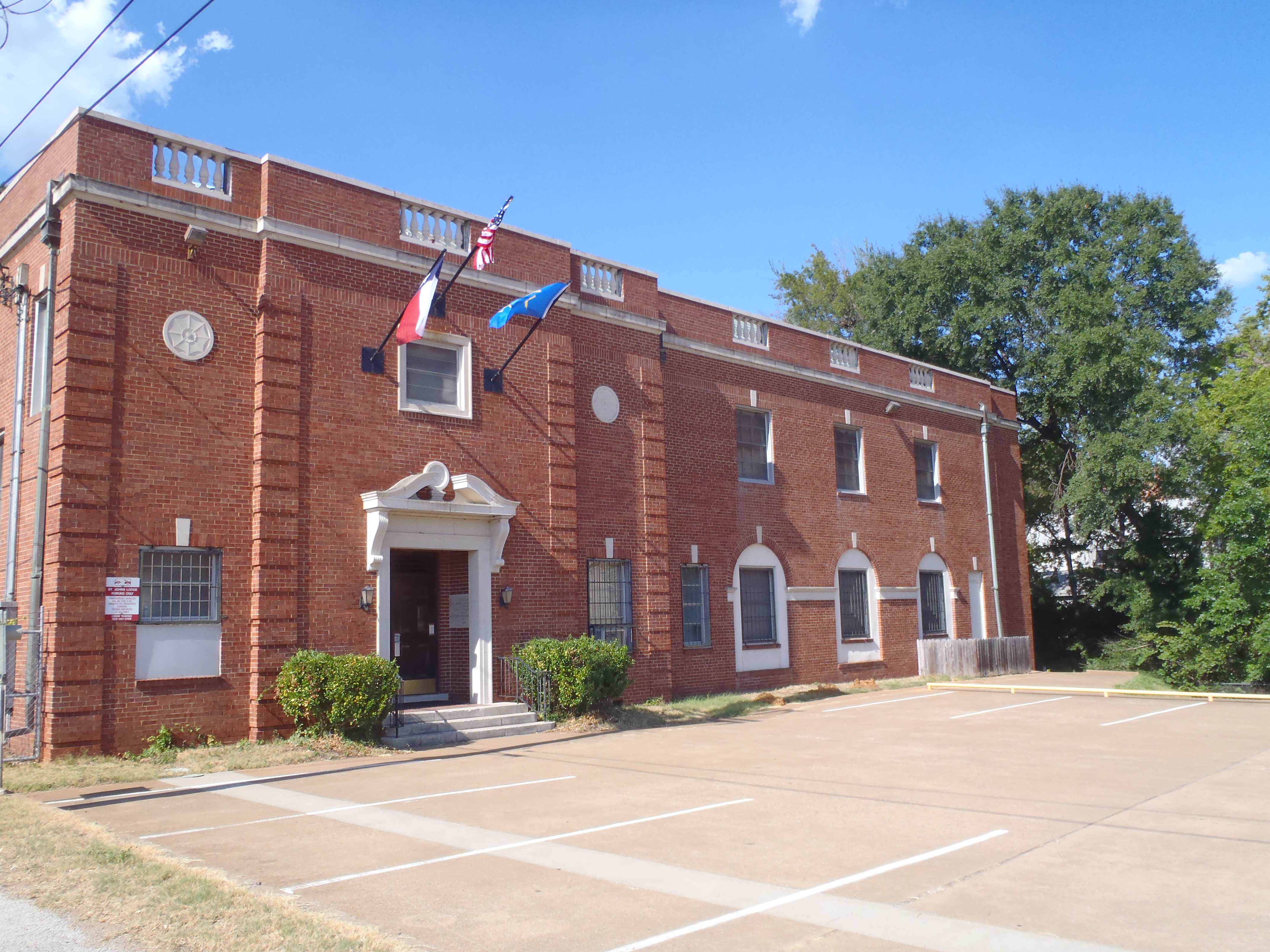
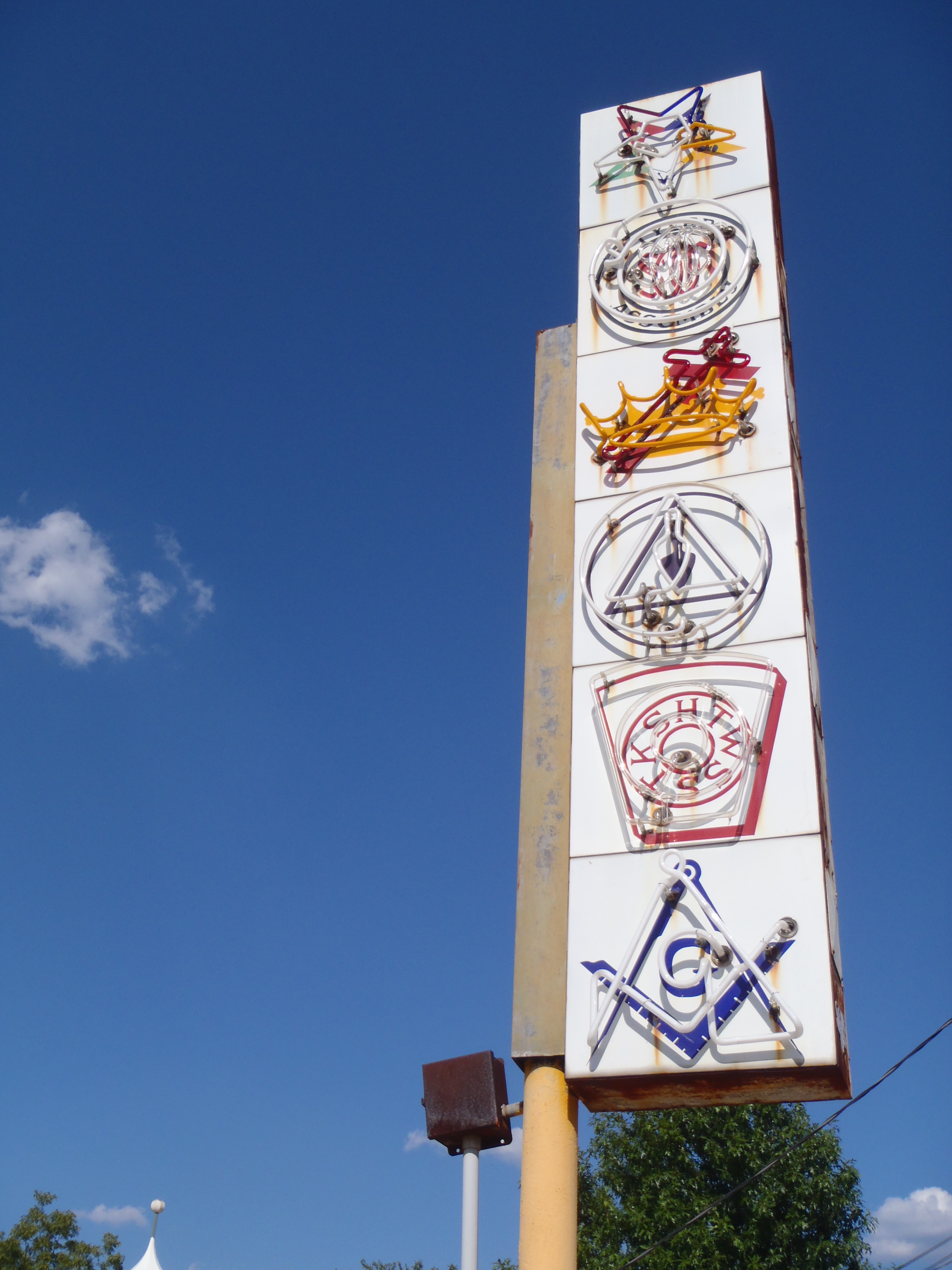
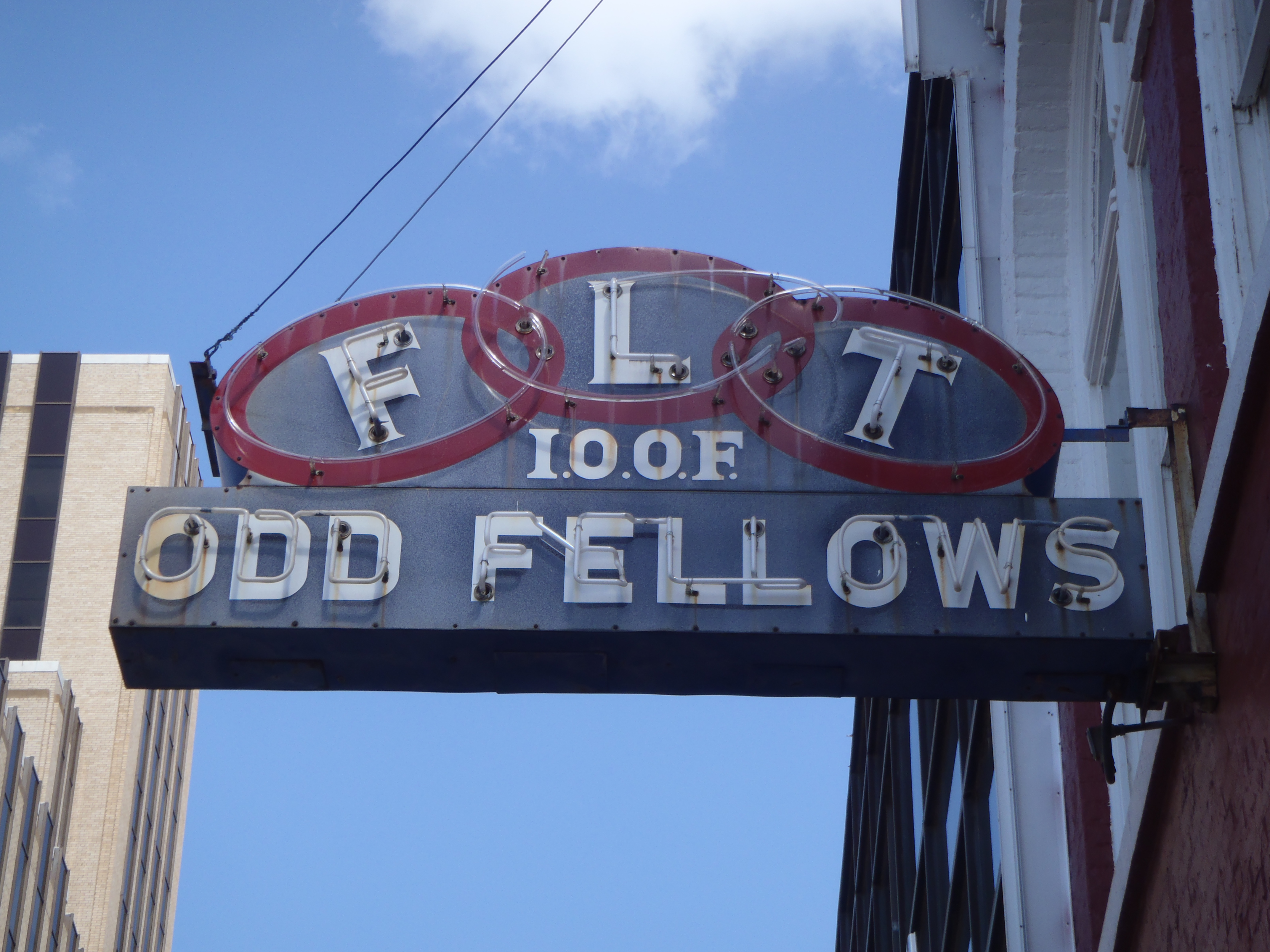
Today, things have changed. The America of 1900 no longer exists. But what I love about cities is that the buildings in our cities (the ones that survived) are the constructed monuments to our past. Tyler, TX is no exception. While they don’t hold the same place of prominence in the region, there are still buildings in Tyler that harken to an older era. The Masonic Lodge (pictured above), built in 1932 is the most striking downtown example that is still in use. I’ve driven by this building numerous times, but never thought it was special. Today, I almost felt like someone was going to come out and kidnap me for taking a photo of their building. The awesome neon sign (left) on the street is also worth noting … I don’t recognize some of the symbols, but I’m sure they all mean something to the men involved. The pentagram at the top looks slightly demonic, but I’d still think it was cool if my dad went to this building for a meeting once a week.

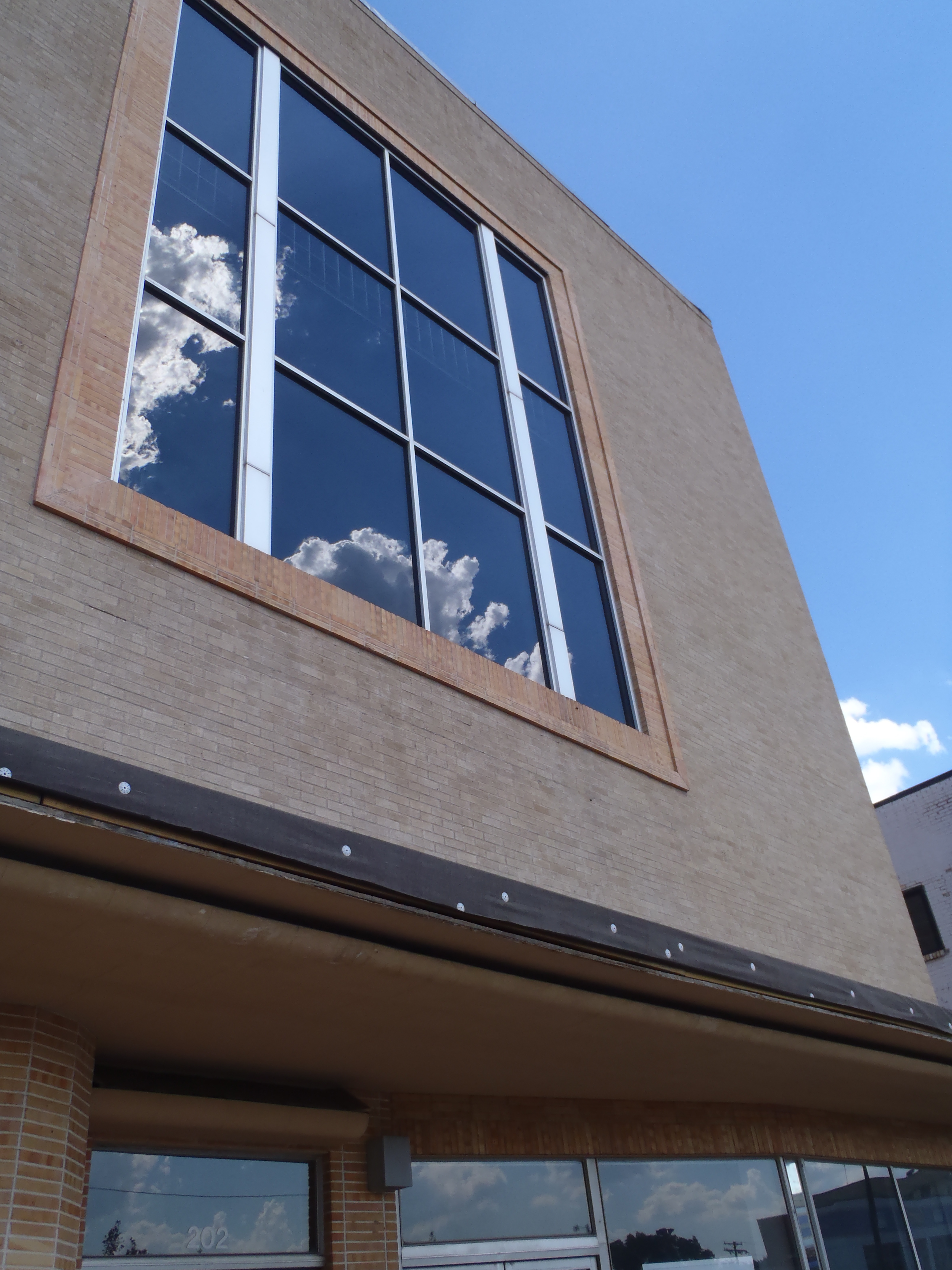
Other buildings in Tyler are no longer being used for their original purposes, but still bear the markings of early twentieth-century urbanism. The old Elk Lodge is one such building. I believe there is still a group of Elks in Tyler, but now they meet on the edge of the city in a newer lodge. It’s kind of a shame they moved, but I’m partially glad they did because the building is amazing and I got to walk through it today (without being properly initiated). It’s currently being renovated by Ron Mabry of Tyler for events in the city. I believe All Saints Episcopal is having a dance later on in the year. I hope that at least one high school student walking by notices the plaque on the building that states the founding purpose of the building: “Tyler Lodge No. 215, B. P. O. Elks, M. E. Danbom, Exalted Ruler.” The people on this plaque cared enough about each other to build a building where they could meet, talk about life, celebrate and mourn.

Only the oldest parts of our nation harbor these artifacts of the American past. It is always good to remember where we came from because it gives us a context for where we are. Plenty of people today are talking about why guys aren’t growing up, etc, but I don’t think they ever ask the question, “What’s waiting on the other side?” Yes, traditions are cumbersome and (quite necessarily) antiquated, but even in this postmodern society there is utility in having a structure to stand up under. There is a beauty in being told how to act. So don’t mock the Oddfellows, Lions, Masons, or Shriners. The men involved in these organizations are engaging in a tradition of American civil society that was once a grand element of this American life. Today, it is mostly just plaques on buildings … and a memory of how life could be.

C-T-D: Conclusion to my time in this place called Tyler

I moved back to my hometown of Tyler in May to begin a brief, post-grad-limbo summer. Since I arrived, I have made it my hobby to explore the city, imagine its potential, and write a series of posts on my ideas. I called this, “Connecting-the-Dots,” because I believe that Tyler (like many cities) suffers from a lack of cohesion and identity. On the micro level, we lack special places (“dots”) fully enhanced with the cultures, traditions, and organizations that comprise our civil society. On the macro level, we lack the connections of transportation and urban design that unite the disparate pieces of what we consider to be a singular unit. I’ve been primarily guided by the question, “Where is Tyler?”

In my attempt to answer this question, I’ve spent my time looking for what I believe makes this city unique: what someone can find here that is not anywhere else in the same way. The places that I love the most are sometimes the places that are most unloved. In other words, the Rose Garden may not be as sexy as Chuy’s right now, but it is unique to Tyler unlike the Austin import. Business in North Tyler might not be as lucrative as its cousin on South Broadway, but it’s more creative, local and artisan. It’s the difference between Janie’s Cakes and the WallMart bakery, Stanley’s and Spring Creek, the Rose Garden and Faulkner Park, Balance and World Gym, La Favorita and Pasado’s.

Unfortunately, all of those places that I believe represent Tyler do not reside together in one awesome, dense, and diverse place. In my opinion, a visitor to this city needs a guide to properly experience what this city has to offer. But suppose there were such a singular place comprised of all the unique Tyler attractions. It would be remarkable. People would come from all over the region to be a part of it’s energy and excitement. Now, suppose there were two. Or three and a street car connecting them. Suppose you could go to one for dinner, the next for a concert and the third for coffee, dessert and drinks and never get into a car or leave your friends. Suppose everyone in East Texas heralded this as the “Tyler experience.” Suppose we leveraged what makes us unique in order to make us uniquely great.

Our city is positioned as a regional leader in oil & gas, the processing of roses, healthcare, higher education, retail, banking, legal and financial services. Suppose we were also known as a creative and innovative community that supports new ideas local aspirations. That is a dream many in this city have been fighting to realize. I believe it’s a dream worthy of this place called Tyler.