Category Archives: Movement

Labor Lost

There is something that’s been bothering me since I left Detroit. It’s a lingering question: What would America be like today if auto workers throughout the Twentieth Century had rioted and protested against the American government rather than corporations for benefits and a fair wage?

What if the corporation was the wrong target all along?

Today, many people look to Detroit as a failure of unions demanding too much of corporations: health care, pensions, company cars. I disagree with this opinion, but I do see the point: residents on that frontier town were struggling too locally. This made Detroit a formidable industrial town for corporations looking to do business. But their struggle didn’t benefit or protect the rest of their nation with federal policy.

I think one reason workers demanded help from their employers was their perceived permanence. From the nineteen teens to the 1950s the auto industry in Detroit seemed as permanent as the nation itself. I think that it was also a matter of proximity for disgruntled employees: Workers in Detroit could march down the road to Ford’s River Rouge plant more easily (even with the fire hoses and armed guards) than they could drive 10 hours or so to D.C. Unlike Paris and London, our nation’s Capitol wasn’t the heart of industry and labor reform.

Ford was close and he was rich. The businesses in the city also had the most to lose and so it was here that employees felt they had the most leverage. With sit ins and riots they demanded their humanity and their health. And won. As their employers rose to global prominence the quality of life for middle class residents of the city continued to increase.

And then Martelle writes that two things happened: globalization and vertical integration. New factories were increasingly being built abroad and auto parts were increasingly being manufactured on site rather than purchased from suppliers. Neither of these is the fault of Detroiters. And then there was the flight to the suburbs and the Sun Belt, encouraged by federal policy and grants to decentralize defense industry and connect the nation with highways.

In sixty years, the city flipped in every way imaginable.

Today, the Big Three have taken their factories elsewhere and acquired or driven out many of their parts suppliers. With their departure went their jobs and salaries as well as their accompanying healthcare and other benefits. The classic quick-one-two jab of American unemployment.

We’ll never know what America would be like if we had demanded more security from our national government as we industrialized. Perhaps we’d be falling like France or maybe we’d be rising like Great Britain.

While we benefit from the labor struggle in Detroit, we continue to blame the city for demanding more. When really I think they should have demanded differently.
The trend

“The trend toward division of labor and specialization is one of the most universal and one-way trends in human history.”

(Roy Baumeister, Is there Anything Good About Men: How Cultures Flourish by Exploiting Men122)

Detroit! Books! Adventure!

I’m going to Detroit. In preparation, I’m putting together a reading list, calling interesting people for advice, and working my network to put together a legendary survey of this monumental city. I will likely post about Detroit in advance of my trip, potentially during the trip, and certainly after the trip. For now, here’s my reading list:

When I was in college, I loved to plan trips like this so I’m beyond excited to get back into the fun. Can’t forget about fun 🙂 Maybe one day I’ll have a job that encourages me to plan trips to places that have a story to tell, lessons to learn, and a creative vision for the future. Until then, Detroit awaits.

Underperforming Asphalt

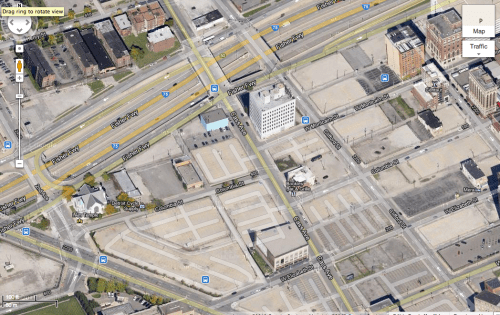
Looking through Google maps I spotted this section of downtown Detroit, almost completely erased for a highway and parking lots:

Detroit

Desiring Streetcars

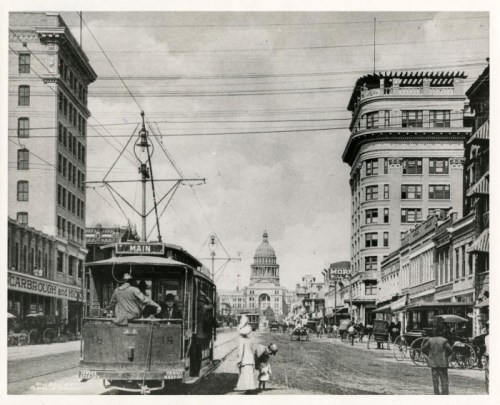
Not Even Past,” a blog produced by the history department at the University of Texas at Austin, just posted a piece about streetcars in the city. It’s amazing how similar the story of one American city is to the next.

Austin street scene

Career Dressing Rooms

“Cities have become the career dressing rooms for young adults. They have become the place where people go in their twenties to try on different identities. Then, once they know who they are, they leave.”

The Social Animal, 188-189

A is for Allée

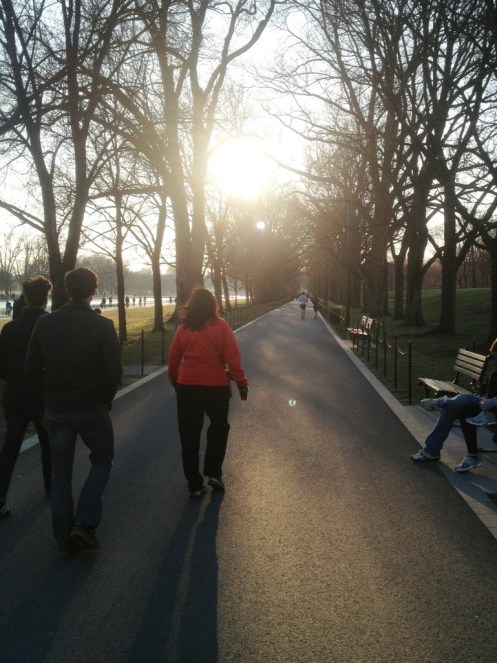
I believe that the beauty of D.C. is the simplicity of a good plan: symmetry, long vistas, and grand terminals. All of these qualities are found in the allée.

Here is a photo I took while walking the National Mall:

20130324-220654.jpg

What I love about the allée is that it’s so simple. With a straight path and some lovely trees we could turn any formless green space into a memorable experience.

With the allée, a simple path becomes dramatic. A walk becomes an journey.

Whoops

At the Lincoln Memorial, beneath the text of the Gettysburg Address, there is a room with an elevator and a door. In this room, while waiting for an elevator that never came, I noticed a sign for the US National Parks Service:

20130324-114831.jpg

“That’s interesting,” I thought, “Native Americans and bison.” Two groups that my ancestors hunted to the brink of extinction. Yet, today they symbolize the preservation of our wild frontier.

Whoops.

After I made this connection, the looming text of the Gettysburg Address started to feel like a grand contradiction. This speech was given almost three decades before the Wounded Knee Massacre that finally ended the American Indian Wars. When he gave the speech, Lincoln made the bold claim that the phrase, “all men are created equal,” applied to enslaved people, but he made no mention of the other war out West.

Instead, he said that “our forefathers brought forth on this continent a new nation, conceived in liberty…” It was an incredible proposition (and it’s a remarkable nation), but our forefathers needed a clean slate for this new, great nation. So they drove away all signs that this wasn’t a new or completely pure endeavor.

Native Americans were quarantined to the remotest sections of this land-rich nation. Today, many residents of the reservations live in poverty, many desire cultural and traditional significance, and many long for the places of their forefathers.

This world wasn’t new when America was founded. Freedom wasn’t truly extended when the Civil War ended. Today, we are living the dreams of Europeans that took a chance.

The rest is complicated/history.

Cities are an Adventure

I found this image on one of my favorite blogs, Colossal. It seemed like a perfect example of the truth that cities are not a place where you have to get stuck. Investing in a city (and making it your home) doesn’t make you dependent. Cities are an adventure. There is some danger in this adventure, but without high risk there’s no chance for high reward. This photo also reminded me of one of my favorite Foucault quotes from an essay I first read five years ago: “Of Other Spaces.” He writes,

“In civilizations without boats, dreams dry up, espionage takes the place of adventure, and the police take the place of pirates.”

With twenty-first century communication and connections, the modern city has become a boat (er, turtle) and if you are willing to commit, it will eventually take you somewhere completely new:
The Street Art and Drawings of IEMZA

Generations of Mentors

You know that brief moment in “Tarzan” when he is flying through the air between vines? That’s basically been my life for the last five years.

Like many of you, I left my family and friends to start college in Richmond. My first night in town, I had dinner with a student named Dan and listened while he shared his story. He became my first friend and connection to this place.

The next day, he introduced me to a few of his friends and his favorite professor. We laughed, they made fun of each other, and I began to imagine that life on this campus might actually work. In some small way, I was closer to home.

I had no idea how fast time in college would move. I especially didn’t know how significant those first few friends would be in providing me with advice as I made my way through the maze of classes, programs and professors. Without their help, I might have never found that sneaky second vine.

Looking back, I wonder why I listened at all. I could have disregarded their advice and found my own way. But for some reason I appreciated their experience and trusted strangers in a strange place.

Lesson #1: When life gives you strangers, hear them out. At the very least, you’ll have a story to tell. At best, you’ll have a new guide to show you the way.

These new friends told me which classes to take (and which not to take), welcomed me into their community and drove me to the ER when I fell out of a tree and broke my arm. That’s right, this Tarzan metaphor just got real.

Not much has changed from those early days in Richmond. If I’m honest, the vines just feel farther apart and the fall much farther below. The only difference is that I now have faith that someone will introduce me to someone who can show me the way.

I’ve also matured a little since then. I certainly appreciate people more than I used to. While I usually took advice from others, I also regularly took it for granted.

Appreciating our mentors doesn’t mean we have to become our mentors, but it does mean that we have to give some effort. We have to be willing to say yes to something new and outside of our comfort zone.

Lesson #2: Receiving advice means humbling yourself long enough to actually listen.

I’ve also learned (many times over) that being mentored isn’t simply about receiving advice. Mentoring is not a product to consume or even a loan to repay. It’s also not supposed to make me feel good about myself or confirm what I already know. At its best, mentoring is a truth and a challenge. Mentoring first says, “I think you can do it,” and then, “Here’s what it’s going to take.”

Being mentored then becomes more about making choices than discussing ideas. When you receive wise counsel, it’s not a hypothetical in a book; it’s wisdom applied to your life. Receive it and say, “Thank you.”

Lesson #3: The more often you ignore someone else’s advice (for no good reason), the less likely they will be to share it.

When we commit to being mentored, we become a part of generations of mentors who have been acquiring and passing down wisdom for years. Open yourself up to wise counsel, prepare to be honest, and be willing to be wrong. Then, if you really want to be stretched, you can become a mentor yourself.

You may think that you’re not patient enough to mentor or that you don’t have enough time. But that is exactly why you should do it. If life gives you a chance to grow in a new (and uncomfortable) direction, shouldn’t you take it?

You can become more patient and eventually learn how to make time for the relationships that matter most. You can have the chance to pass on what was taught and the advice you have been given. And, for what it’s worth, I think you’d make a great mentor.

This article first appeared in print on January 30, 2013, in The Collegian.