Category Archives: Memory

Revenge body (of work)

Over the past little while I have been processing the loss of a very significant relationship. When I look online for guidance, a lot of people say that exercise is the best way through. Exercise helps people regain confidence and independence as they grieve. The end result is their “revenge body.”

The revenge body says two things at the same time: Look at how well I’m doing/what you’re missing out on and also look at how much I miss you. It’s a positive outlet for the emotions and also a confirmation that those feelings are being felt.

I’ve never been a gym rat (except for one year in high school), and I already feel pretty good about my body thanks to being vegan and active. So instead of working out, I realized pretty quickly that writing was going to be my outlet. It always has been, but I’ve noticed myself leaning into it much more regularly, almost constantly, these days.

At some point I started to think of it as my revenge body of work.

Writing basically serves the same purpose as exercise to me. I enjoy it, it’s a distraction from life, it gives me space to process, and I can take a step back and look at all that I’ve written with a sense of pride. To some, it might even make me more attractive. It’s also a reminder of that person: the way they encouraged, read, and even reviewed specific posts in advance. The reminders are everywhere.

I have more time on my own these days, more brain space, and to some extent more clarity, all of which have been fueling my creative habit. I’ve wanted to write more regularly since I started this blog, but at some point early in my career I decided it was trivial. Then, I felt like I didn’t have anything I really wanted to share.

Coming out of the closet has given me so MUCH to say (110 drafts and counting) that I think I needed a disruption to push me to start getting more of it out there. And just like with revenge bodies, I’ve started to let go of the idea that it needs to be perfect. The value is in the action, the regularity, and the simultaneous memory and movement of letting go.
Losing a friend

A little over three years ago, in the early days of fall, I noticed myself looking forward to the first frost. It had been a season of upheaval in my life and I was tired. Everything in the garden felt like too much: the tomato plants were enormous, mosquitoes continued to test my sanity, and even trees seemed tired from the growth.

I was excited for the cold-weather months. It can be a relief when everything outside looks like death and the work (for a time) is done. I looked forward to hikes and runs when you can see straight through the faded underbrush. What I did not know at that time, when the sunlight cuts across the landscape and flies and dust dance in the cool, dry air of harvest, is that in a couple of months I would lose one of my closest friends forever.

Unable to control the weather, I started to cut back in my own ways. I aggressively unsubscribed myself from email lists. My inbox had become overrun just like everything else. I also decided to stop drinking coffee. I noticed it was making me more anxious than focused, my mind a glutton for information, too busy with ideas and making connections to focus on tasks at work. With less caffeine I found myself breathing more deeply, crying more easily.

As time wound into winter, the landscape began to feel more manageable and muted. There were few weeds to pull, nothing to prune or harvest. During winter we find comfort knowing that nature is just resting, that everything is gone for a time, that there will be flowers and fruit again.

On the night of Christmas Eve, just past the darkest night of the year, I got a text from a friend asking me to call. I immediately felt that someone had died. When I finally reached her, she told me something unimaginable. After I got off the phone, I called another of my closest friends and shared what I couldn’t even fully believe myself.

Then all of the sudden, in my grief and loss, I wanted every bit of the chaos to come back. I wanted to get caught up in the weeds, the insects, the relentless advance of kudzu. The land, now bare and clear, felt more acute, more permanent, more extreme, life cleared out and put away. I wanted the change of seasons that felt familiar, the loss that turns back into life.

At the same time, I was grateful that I had been listening to my sadness over the previous months. I felt like my emotions were very accessible to me in the early days of grief and acceptance. Many times I wondered if leaving religion had also prepared me to grieve.

Sometimes I feel like religions treat death like it’s perennial or cyclical rather than permanent. They believe (and maybe I still believe on some level) that the person has been reborn instead of accepting that they are gone forever. This is just my personal experience, but it has always felt too soon, like a silver lining, to say that someone is in a better place before someone else has let them go.

I want to tie this up with some kind of “and yet” sentence where I channel my inner Margaret Renkl and talk about being grateful for the things that are going well, but it feels more appropriate to just accept and metabolize the loss.

Nature is full of metaphors of rebirth and renewal, but sometimes things do just die. Sometimes species go extinct. Climate change is looking very one-directional these days. So when spring came, and warmer temperatures brought ephemerals, buds, and other signs of life, he was still gone.

Summer followed and my friend was not here to enjoy the cool river on a hot, humid day, or whatever beach trip he had been planning with his family. Fall came around before too long and he wasn’t trick-or-treating or getting cozy on a couch. Then winter again and we all relived in our own way the experience of losing him that cold night. That is cyclical, I suppose. I am always grateful for the chance to remember him, see mutual friends, and let him go all over again.

New Museums for Atlanta and Charleston

In the past year I’ve heard dozens of arguments in Richmond against museums: they’re not profitable, no one cares about history, they’re too expensive. In the past few months, Atlanta and Charleston have told a different story.

The Center for Civil and Human Rights in Atlanta opened a few weeks ago on June 23, 2014. The goal: tell the story of Martin Luther King Jr.’s relationship to Atlanta and legacy in the American Civil Rights Movement within the context of global human rights battles being fought today. Here’s a remarkable article on the center from the Bitter Southerner.

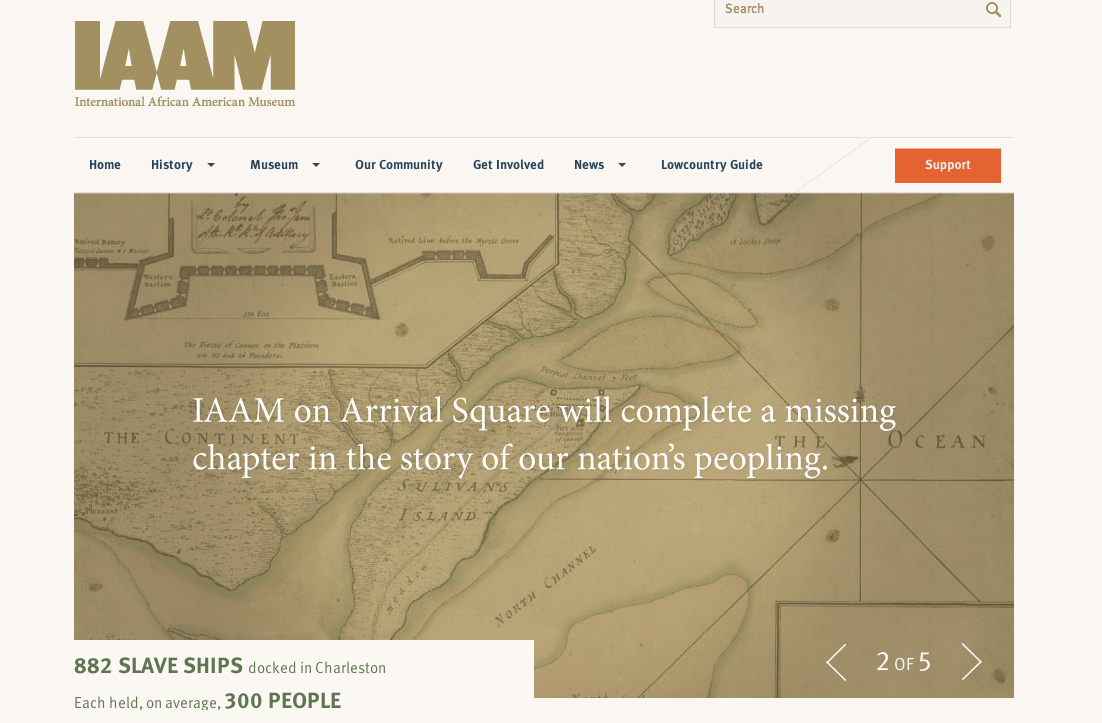
The International African American Museum in Charleston, set to open in 2017, will tell a complex cross-continental story of forced migration from Africa to Charleston and the American South. Mayor Riley announced last week that the museum will connect to Gadsden’s Wharf, the actual location where slave ships arrived in Charleston. Although the museum is still years away from it’s projected opening date, it already has a snazzy website promoting the museum and region:

IAAM Website

ArtNet News reports, “The 42,000-square-foot museum will feature interactive exhibits that describe the black experience in America. The displays will be designed by Ralph Appelbaum, who is responsible for the exhibits at the Holocaust Memorial Museum in Washington, DC, and the new Visitor Reception Center at the United States Capitol.”

Reading about these new institutions reminds me of the life lesson: make choices or they will be made for you. Richmond has a venerable place at the table in terms of historical significance. After all, it was Richmond, not Charleston or Atlanta that was chosen to lead the CSA. It was Richmond that industrialized while the Charleston elite held on to their agricultural society.

And it is Richmond that has spent the last 150 years wondering why.

Vocal residents and politicians in Richmond seem to think that history alone won’t be enough of an attraction for the city. Really, we make excuses to avoid telling the story we were born to tell. And while Richmond thinks, argues, and tosses plans on the shelf, other southern cities are making sense of their story and inviting the nation to drive down I-95 for a visit, passing straight through Shockoe Bottom on their way.

My Room: As it never again will be

I recently moved out of the house I lived in for two years. That is the longest I’ve lived in any place in the city of Richmond.

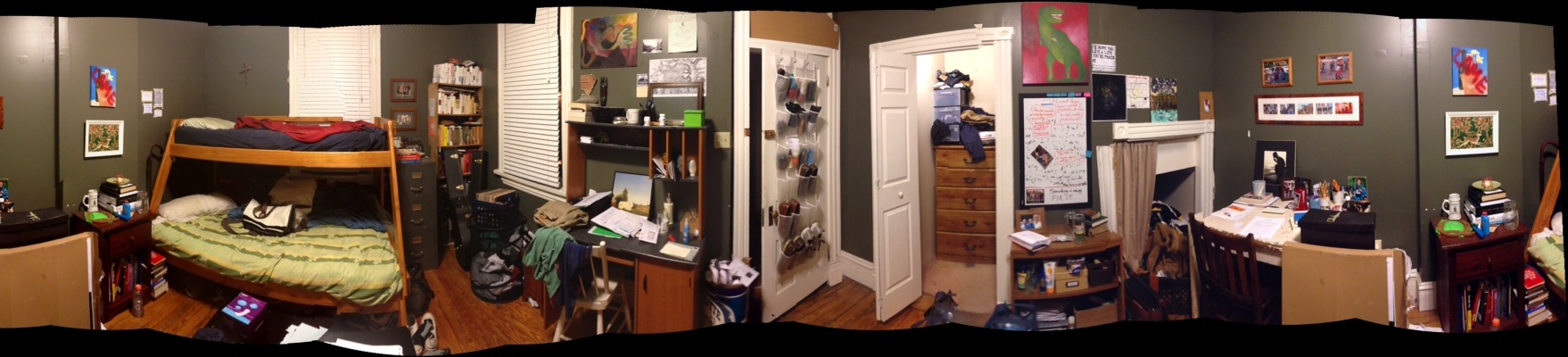
Before I left, I stood in the middle of the room to take this panorama of the space as it never again will be:Room panorama

I spent two tumultuous and rewarding years in this room as I worked to resolve the dissonance of post-grad life. I printed photos, hung my art, displayed my books, and taped inspirational quotes and life lessons everywhere:

“Something is wrong. FIX it.”

“I went from, ‘How could I possibly do this’ to ‘ How could I possibly not?'”

“A man without self-control is like a city broken into and left without walls.”

The night before I moved out of this room, I posted a photo on Facebook and wrote a long, emotional homage to my room and house of two years. Two weeks later, I had almost forgotten about it entirely. I moved into a new house, created a new routine for myself with new habits and a new environment. I have new roommates and a new city block with new neighbors to meet.

Also, I’ve realized that over the past few years I developed the habit of leaving unfinished business laying around. In the photo above, it’s on my desk (which I rarely used as a desk), on the floor, on my bed, on my bookshelves. Moving was an incredibly healthy process for me as I was forced to sort through all the unfinished tasks and gradually resolve each one.

So I’m glad I took this photo. I’m incredibly thankful for the two years I spent in this room, the two people that I shared it with, and a total of 15 guys with whom I shared the house. It’s a powerful thing to share a space with someone.

It’s a generous thing to remember.

Dust in the Light

Light illuminates dust played through the air as everyone goes everywhere. It’s golden hour in the Charlotte airport.

Staring into that playful dust takes me to my playful past. A son drapes his arm over his dad’s shoulder. A woman walks by talking on her cellphone. The world draws me away from my book then back into my mind.

Book. World. Mind. Journal.

I’m amazed by the depth of our diversity. Where are we from? Who do we love? Where are we going? The dust in the air turns day into dream. Conversations, beeping shuttles and rustling feet fade to the background as I, entranced by that light, sit and rest like a silent protagonist monologue or a string of thoughts tangled and blended together.

The sun is now shining on my entire body from the window across the room and I can feel it when I close my eyes. When the sun begins to set you wonder where you’re going to rest your head, and with whom.

I first wrote this as a journal entry in May, 2013.

Nostalgia in the Bible

“I will hurl you and the mother who bore you into another country, where you were not born, and there you shall die. But to the land to which they will long to return, there they shall not return.”

Jeremiah 22:26-27

Smelling Magnolias

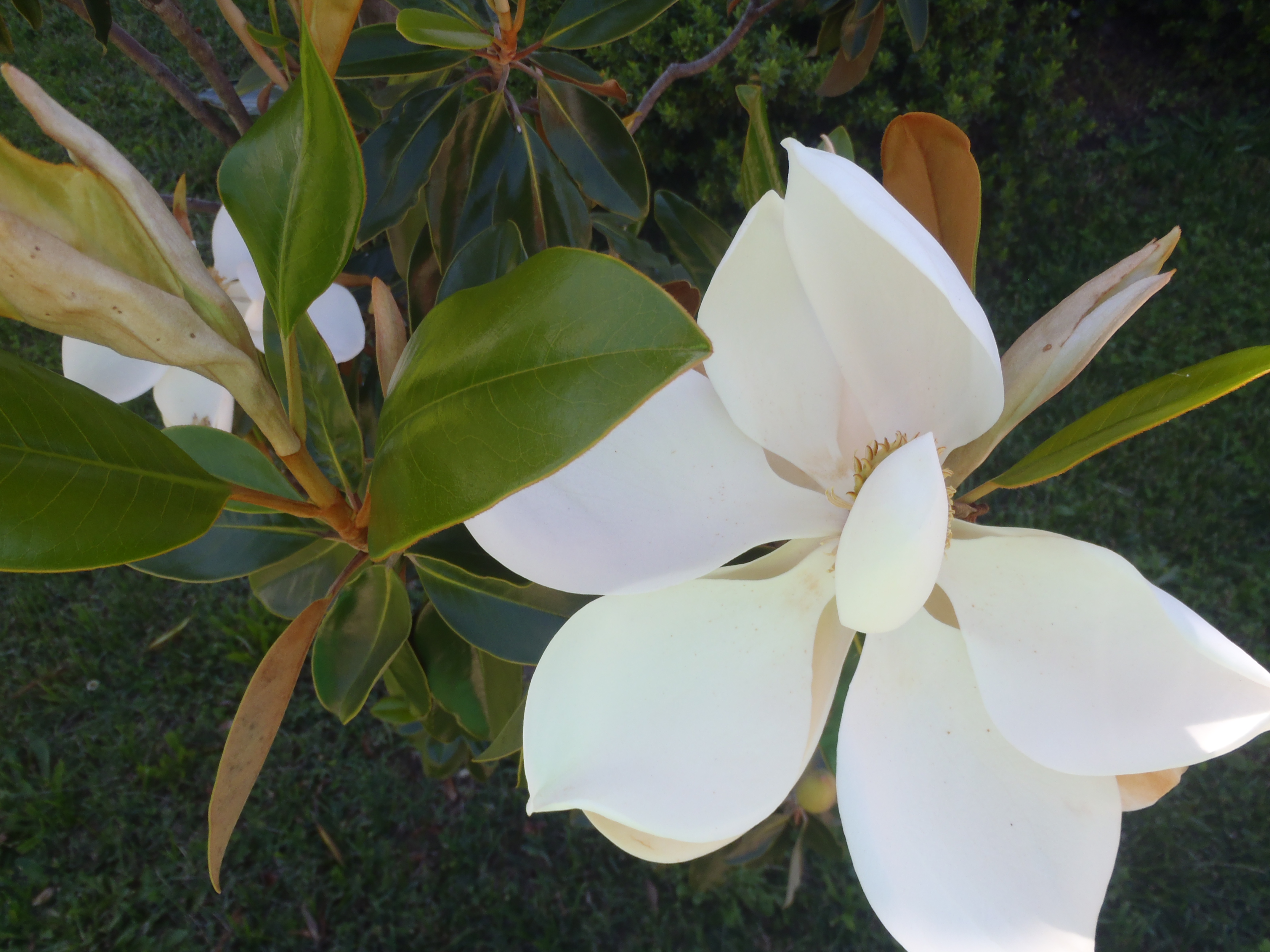
When I worked at a high school in Richmond last spring, I drove the bus in the morning before going in to teach. Each day, I dropped my students off at the front of the building then drove around the corner to park. Several times on my way back to the entrance, I walked past a small magnolia tree covered in blooms:

Walking by that tree, I would stop and lean in for a minute or two to smell an old, familiar smell. It’s completely cliche, but magnolias will always make this southern boy think of home. For that brief moment, I was there: climbing in the magnolia in front of the house where I grew up.

Memory is, of course, powerfully connected to smells and I have noticed this more intensely in the past few years. Maybe I’m more aware of the smells or perhaps I’m becoming more aware of the memories. Either way, smelling magnolia was a comfort on those mornings before walking into school and trying/failing to teach.

In recent months I’ve begun to move toward “nostalgia” as a topic of interest. During this time, I’ve remembered moments of nostalgia in my own life as I’ve also found it referenced in books and articles. Nostalgia is intimately related to the themes of this blog. As we propel ourselves forward we’re also liable to make an occasional backward glance. Also, nostalgia reminds me that “leaving” is not always as complete as we wish. We are all building on the past and it surely composes much our future.

I can’t always predict when I’ll come across a magnolia to remind me of another place or another time, but I hope I’ll stop to smell and remember. As my brain visits old synapses and makes new connections, I will be content to rest in the moment. And then, to take a step back and be thankful for the past and the present.

Magnolias grow in the most unexpected places.

Selling Memory

A few months ago, I wrote a post on my generation: many of us living, working, and studying far from the places of our birth. This post is a semi-related follow-up to answer questions related to memory of the place you’ve left.

Today, I want to write about how and why we think about the past. In particular, I want to write about nostalgia. Nostalgia is longing for what has been lost and holding onto memories of a place and a people from the past.

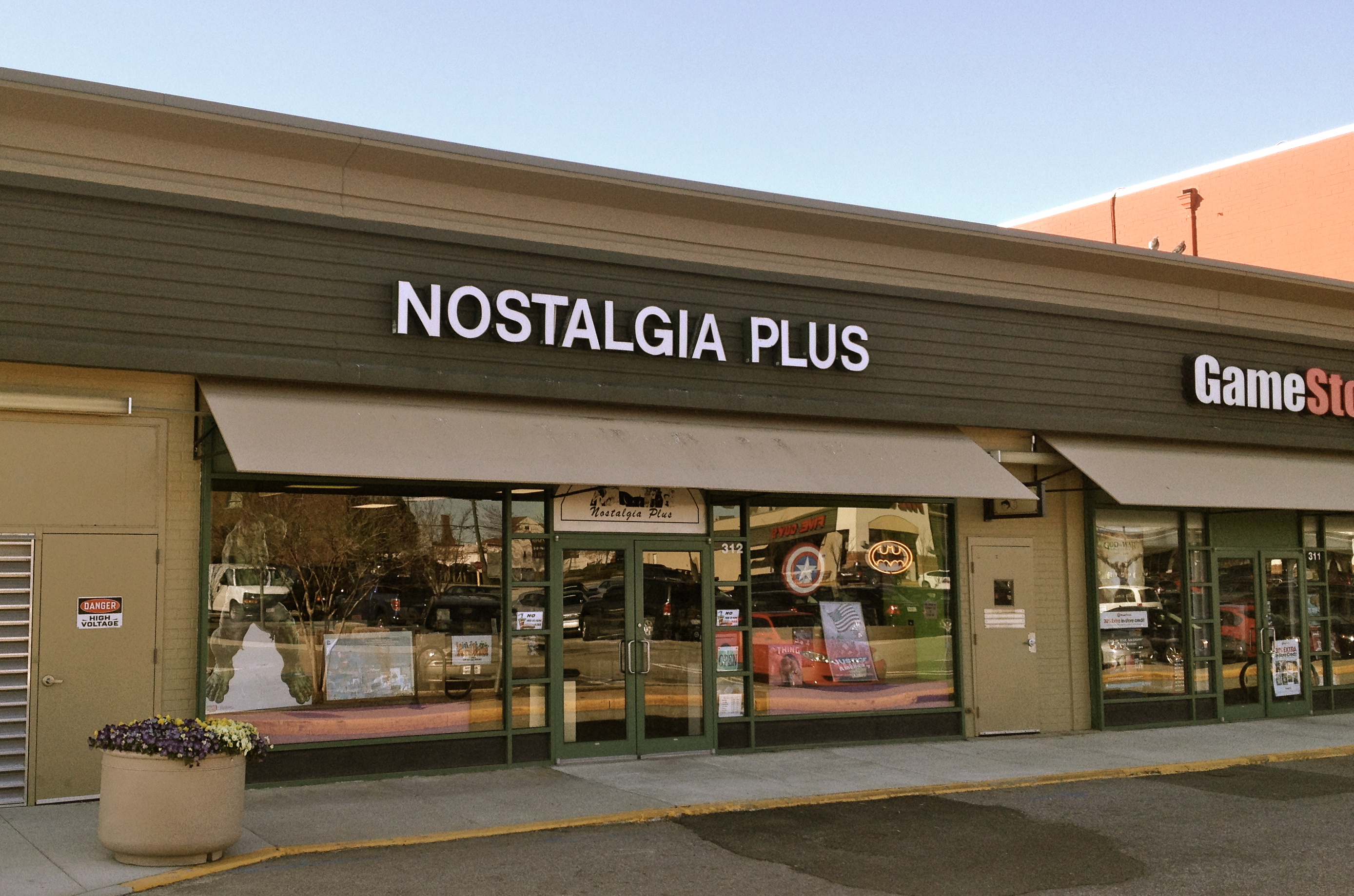
It’s also a comic book store in Willow Lawn:

Nostalgia Plus

As a cities guy, I first started thinking about nostalgia the summer after my second year while working in Richmond and reading Twentieth-Century Richmond by Christopher Silver. Driving through the region’s sprawl, I lamented the loss of what I believed was once a dense and invested place. I longed to return to the Richmond of the early 1900s with its streetcars and city festivals. I was amazed at how dense Richmond was and how much people cared about this place and cities in general. I wondered if I’d been born in the wrong century. In a previous post, “Longing for a Heyday,” I wondered that many American cities like Richmond are stuck in an unhealthy, backward gaze toward something they once were: places that people loved. Even cities that are actually old are sometimes forced to appear old in a certain, scripted way that flattens their experience.

By the end of the summer, I realized that I had made a mistake: holding onto nostalgia for the past involves denying the difficult realities of life at the time. I began to integrate my knowledge that the early 1900s was also a time when the KKK was experiencing a rebirth, segregation was increasing, and dirt roads were the norm. I also remembered that public health at the time was a nightmare. In my final presentation on the research, I called for an attitude of “thoughtful nostalgia” that learned from certain aspects of the past, while accepting their context in the overall reality of life at the time. It was an important shift for me and one that I have carried to this day.

A year later, I read Greg Dickinson‘s article “Memories for Sale: Nostalgia and the construction of identity in Old Pasadena.” It’s a fascinating piece about memory and place: Memory place. He writes that Old Pasadena has been crafted into a shopping center where people can visit and consume nostalgia in the form of architecture, period-themed restaurants, and walkable city streets. Most Americans live in places that were built since the 50s, but we like to visit places where we can feel like we’re connecting with the past. He writes:

“Old Pasadena’s new, old style is more a set change than a revival of the ‘real’ past. This nostalgic recollection formed as a movie articulates with the nostalgic films that Fredric Jameson suggests are typical of postmodern culture…For Jameson, nostalgia is a dialectal response that attempts to overcome, consciously or unconsciously, the emptiness left by the postmodern loss of the past.

This loss of the past, for Jameson, includes the very elements lamented by authors such as Robert Bellah–loss of communities of memory, loss of the extended or nuclear family and loss of concrete relations caused by the abstractions of post-fordist economic structures. Old Pasadena becomes one of the dramatic sites that responds with simulacra of the past to the contradictions of the present.”

The last four generations have, in essence, left historical places behind and replaced them with lesser representations, simulacra, that assuage the loneliness of our displaced souls. We consciously and unconsciously seek lives within historical context, or, as James Kunstler called it, “a hopeful present.” Kunstler states that the “public realm” needs to tell us where we are geographically and where we are as a society.

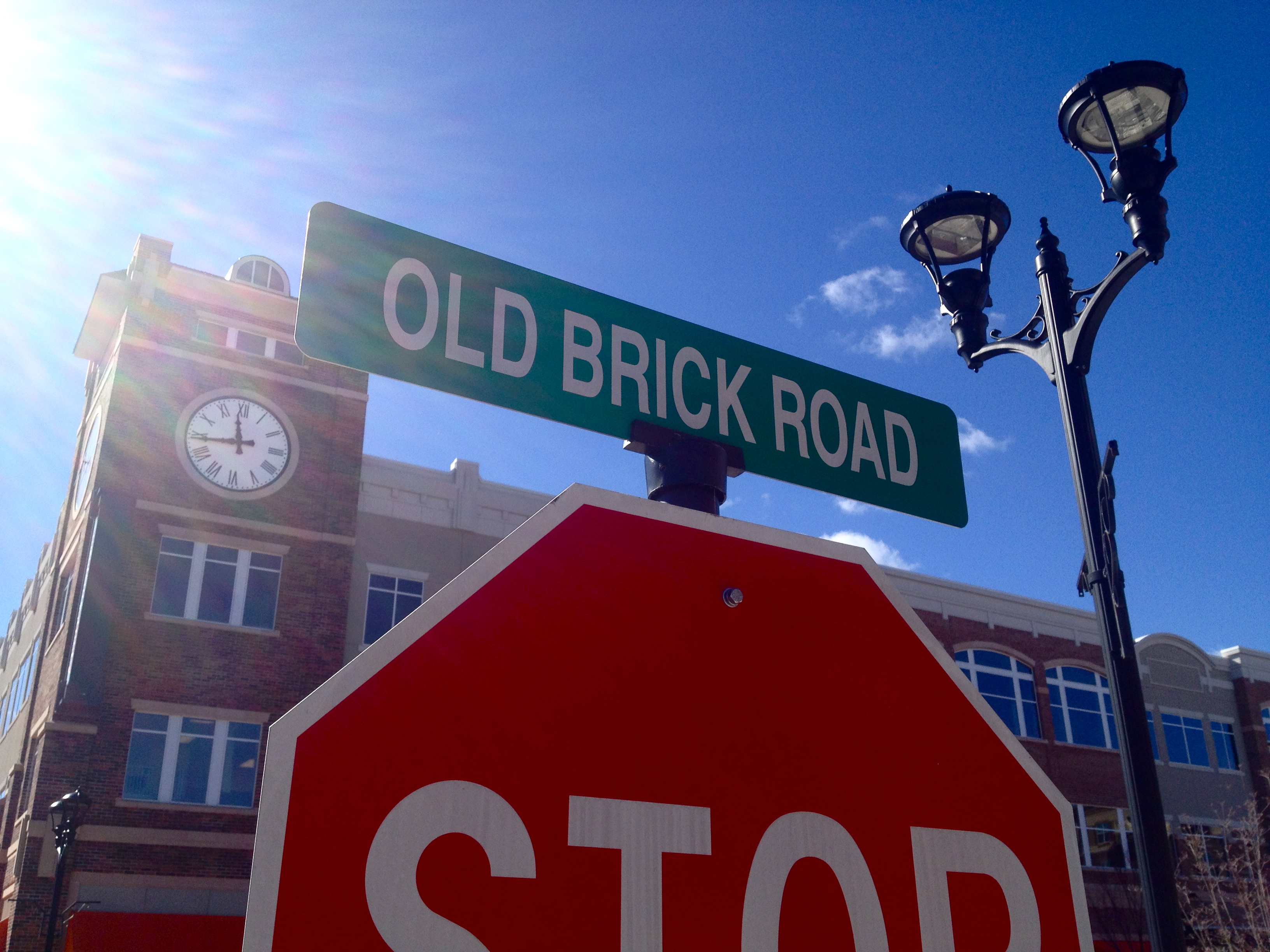
Today, while some seek architectural authenticity, others are left with historical references to old times on new buildings. The result is absurd on the verge of caricature, but we don’t even notice it anymore:

Old brick road

This is a photo from a development in Richmond that Ed Slipek playfully called “the future.” At West Broad Village, the future looks strangely like the past. With references to French, American Colonial, Italianate (?) and modern strip mall styles, the development doesn’t tell you much about our society in a coherent way, but instead calls upon a whole host of references to look like “something.” This is the veneer of nostalgia Americans have used to cloak the cinderblock and steel of our daily lives.

Once you start to see it, you will notice it everywhere.

I hope that as we begin to see this commodified nostalgia for what it is the market will respond with more thoughtful developments. I realize most real estate developers weren’t assigned Dickinson in college and I don’t expect everyone to think the way I think. I’m mostly just concerned with the nation America will be in 50 or 100 years.

I hope we’re building places that will still have worth for what they represent on their ownnot for the past civilizations that they reference.

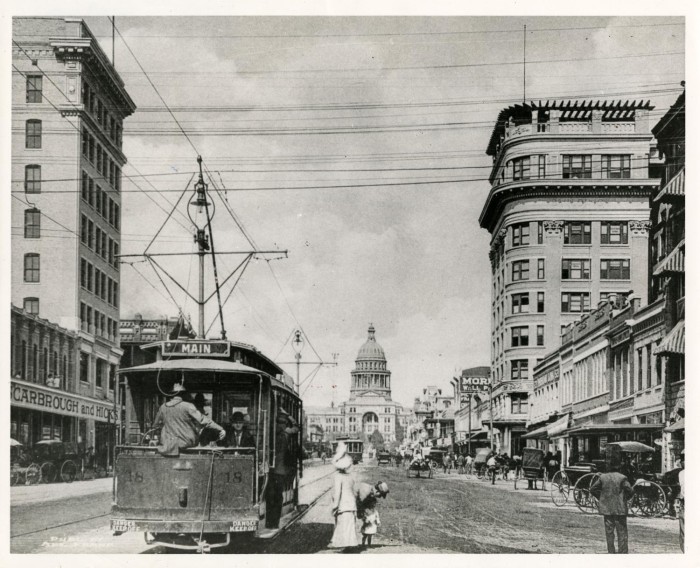
Desiring Streetcars

Not Even Past,” a blog produced by the history department at the University of Texas at Austin, just posted a piece about streetcars in the city. It’s amazing how similar the story of one American city is to the next.

Austin street scene

Whoops

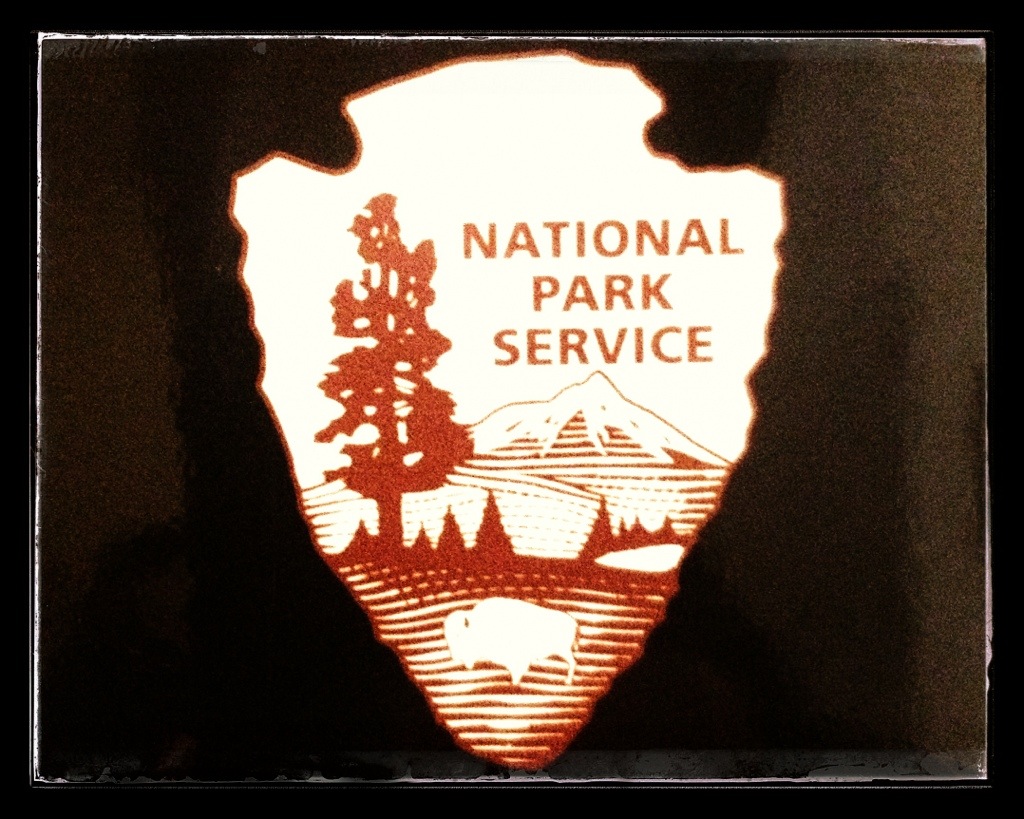
At the Lincoln Memorial, beneath the text of the Gettysburg Address, there is a room with an elevator and a door. In this room, while waiting for an elevator that never came, I noticed a sign for the US National Parks Service:

20130324-114831.jpg

“That’s interesting,” I thought, “Native Americans and bison.” Two groups that my ancestors hunted to the brink of extinction. Yet, today they symbolize the preservation of our wild frontier.

Whoops.

After I made this connection, the looming text of the Gettysburg Address started to feel like a grand contradiction. This speech was given almost three decades before the Wounded Knee Massacre that finally ended the American Indian Wars. When he gave the speech, Lincoln made the bold claim that the phrase, “all men are created equal,” applied to enslaved people, but he made no mention of the other war out West.

Instead, he said that “our forefathers brought forth on this continent a new nation, conceived in liberty…” It was an incredible proposition (and it’s a remarkable nation), but our forefathers needed a clean slate for this new, great nation. So they drove away all signs that this wasn’t a new or completely pure endeavor.

Native Americans were quarantined to the remotest sections of this land-rich nation. Today, many residents of the reservations live in poverty, many desire cultural and traditional significance, and many long for the places of their forefathers.

This world wasn’t new when America was founded. Freedom wasn’t truly extended when the Civil War ended. Today, we are living the dreams of Europeans that took a chance.

The rest is complicated/history.