Tag Archives: RVA

Crowdsourced Rewilding in Richmond (and beyond)

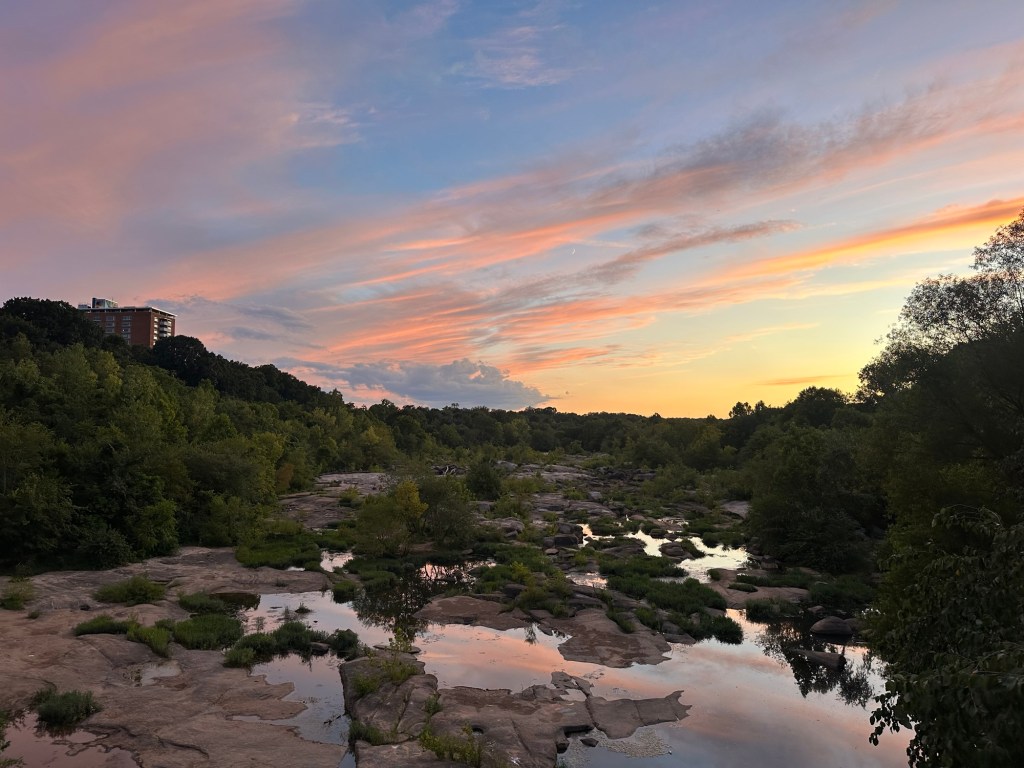
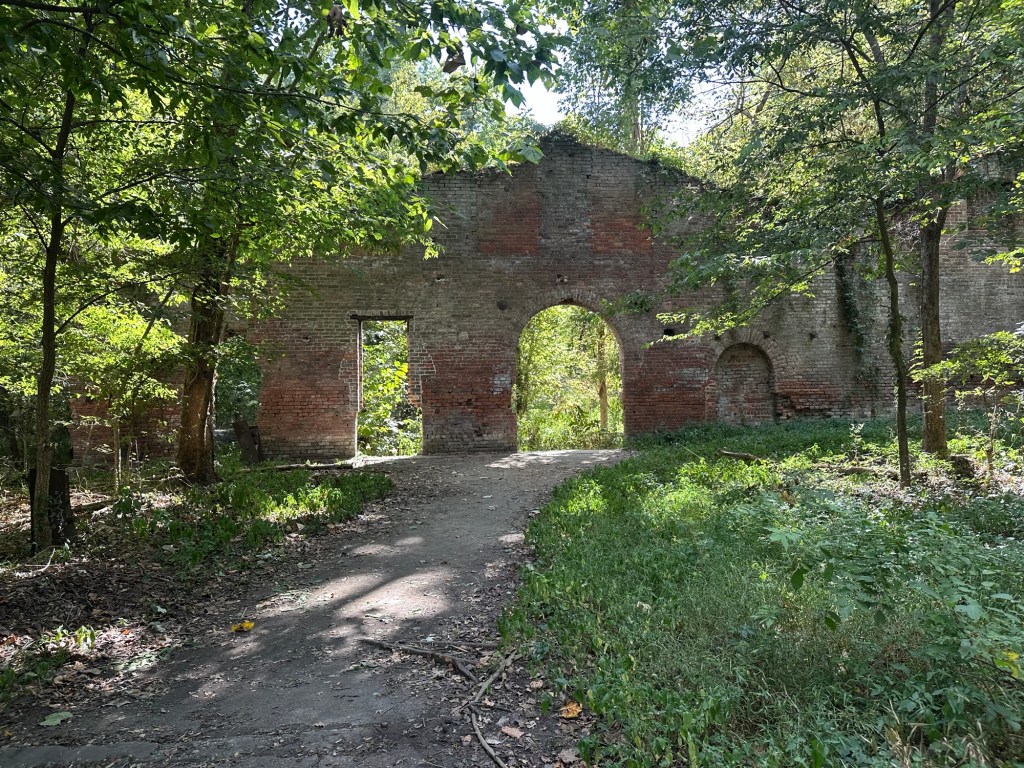
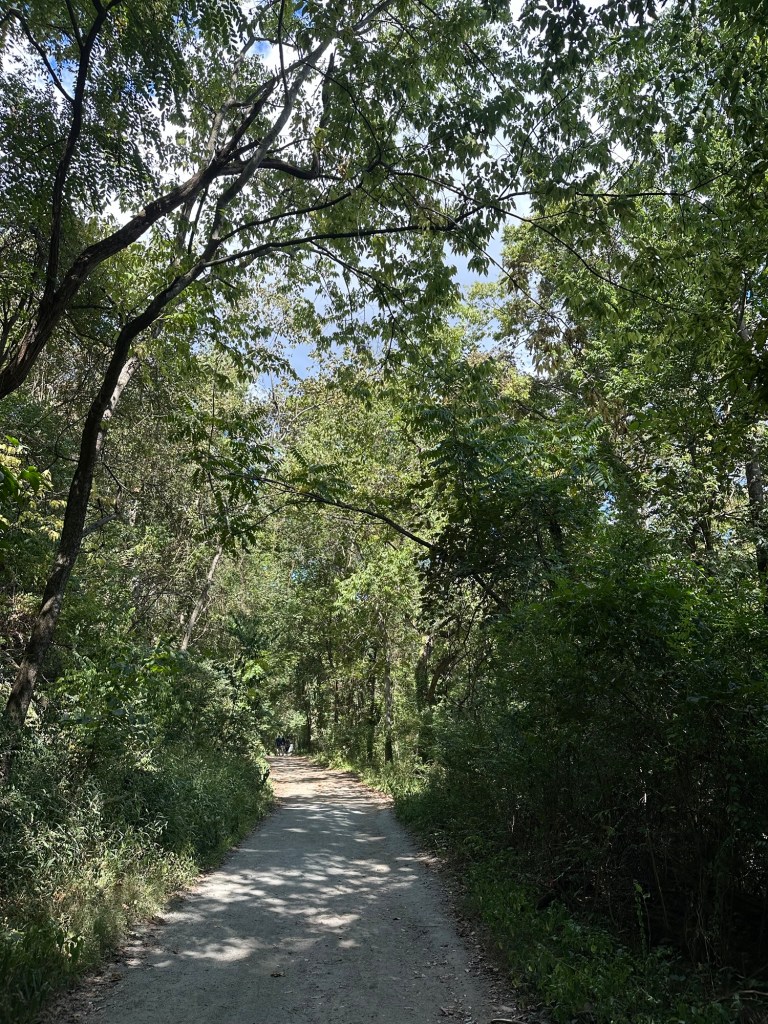
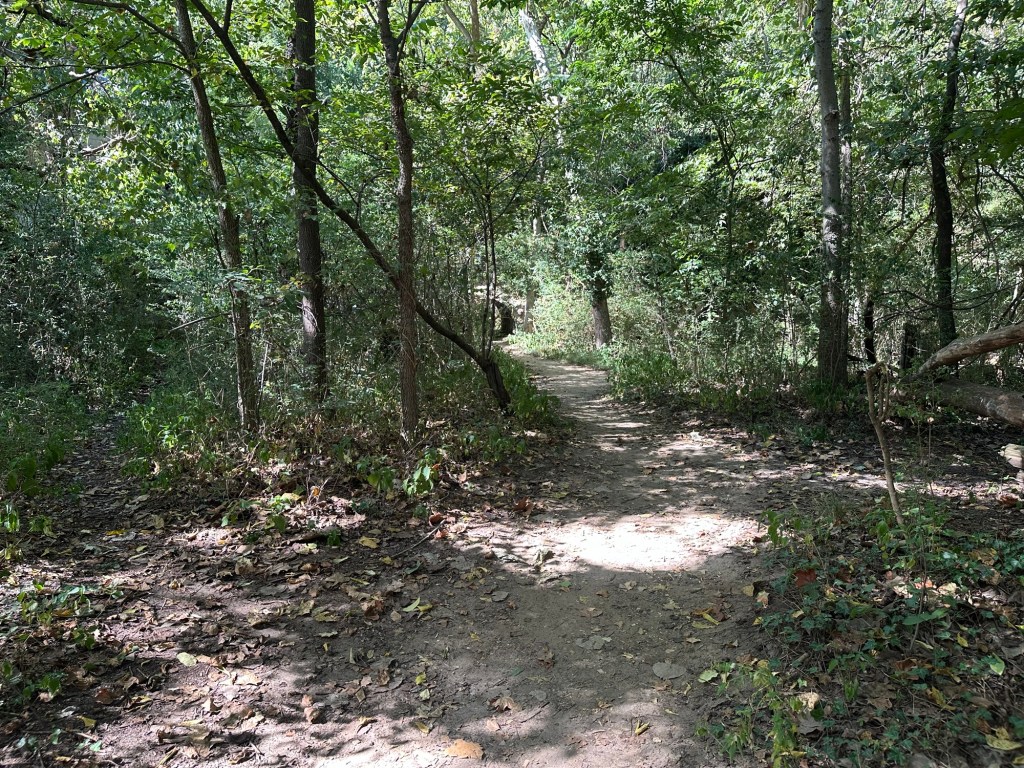
Over the past couple of months I’ve rediscovered the loop walk around Belle Isle. I’ve been spending time in more secluded areas of the river lately and had forgotten how beautiful it is with sweeping views, changing topography, and people everywhere enjoying the water and trails. 
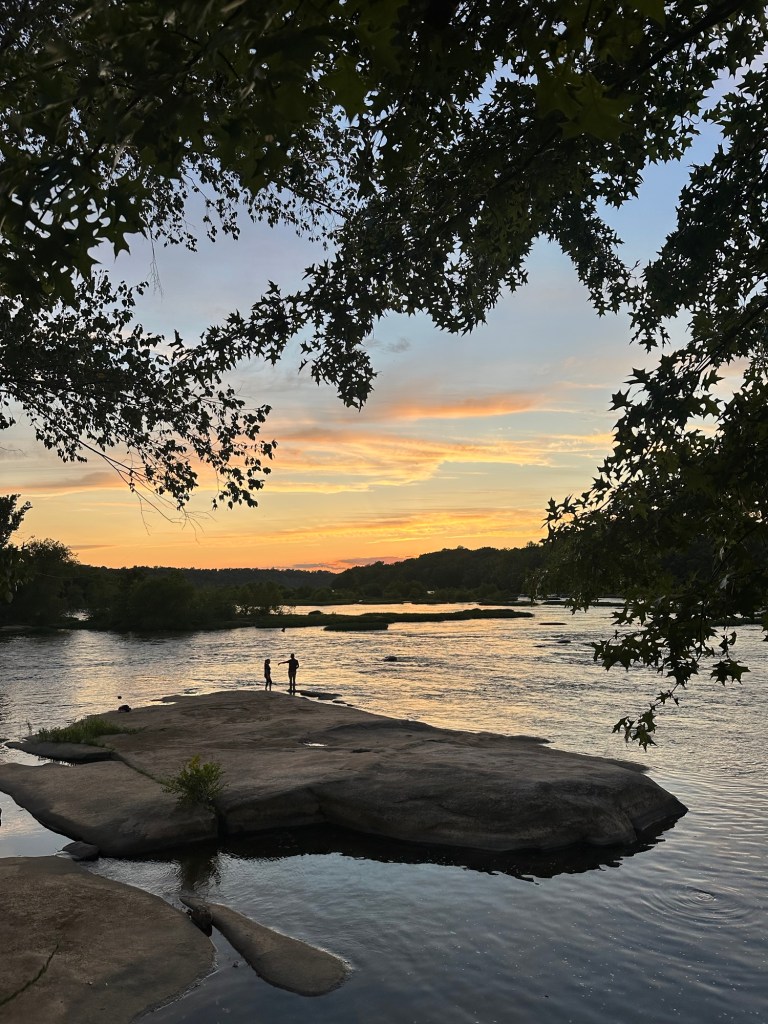
One morning in September, I also noticed something else: I hadn’t seen a single bumblebee on the entire walk. I started to look more closely and in two months I’ve only seen bumblebees two times, a total of four, all on bluestem goldenrod. Otherwise, the forests and fields of the island seem sort of oddly quiet.

Not only have I not seen many bumblebees, but I also haven’t other bees, wasps, butterflies, bugs, or birds like goldfinches, hummingbirds, and cardinals.

I think the reason I’m noticing this absence now is that I’ve been gardening for a decade or so and I love to see plants as a part of the whole ecosystem. Over the past six years especially my current garden has come alive in a way that gives me a lot of joy. I see more bumblebees on a single anise hyssop at the same time than I have on Belle Isle recently. For the past week, panicled aster (Symphyotrichum lanceolatum) has been in full bloom around my house and there are more bees and bumblebees than I could ever count. I see goldfinches eating coneflower seeds, hummingbirds on the cardinal flower, and monarchs on the milkweed.

And my garden is definitely not the only one. Richmond is full of gardeners who are planting native or “nearly native” plants and attracting all kinds of birds and the bees. Which got me thinking: What if we could somehow organize everyone to invest their energy into the JRPS?

I’ve been toying with this idea for a little while now and I see it working something like this:

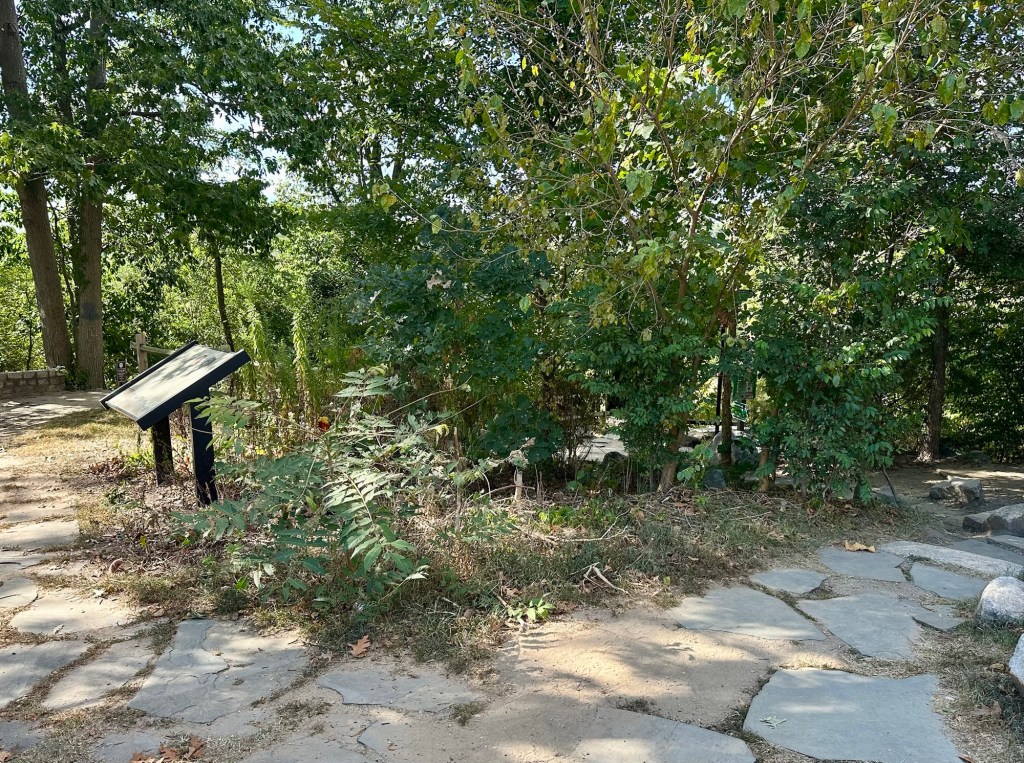
  • Starting with Belle Isle, a list of 30 or so first-round parcels are identified. These should be small, edges, islands, and otherwise manageable, well-defined parcels. These kinds of spaces would be really easy to manage and would have a lot of nice visibility:
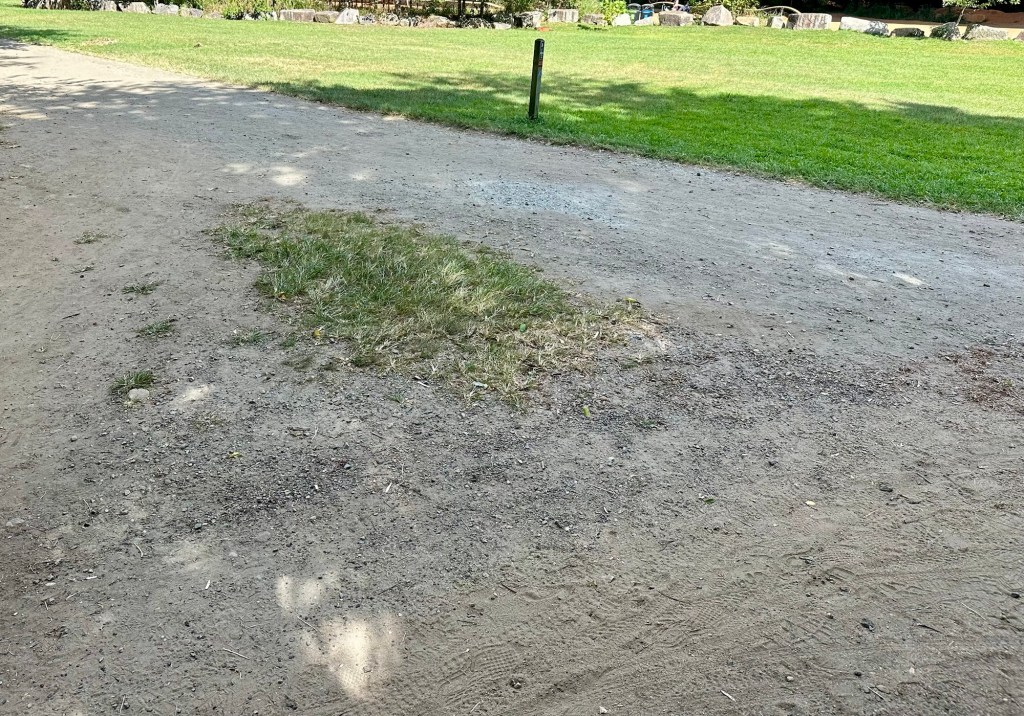
  • These plots are designated as full sun, part sun, part shade, and full shade with a list of plants that are approved to be planted in the area. They could also be designated for tall, medium, and short-growing plants depending on the location.
  • A call is put out into the community for interested gardeners to join the program
  • Selected participants are placed in an orientation and trained on the process of invasive species removal, which plants that are pre-approved for planting, and the general overview of the program
  • Approved gardeners then “claim” plots on the map and the first thing they would do is string a simple string and stick barrier around their plot with a sign that explains the program and the project – they would take a photo of this and post it to a google doc or app as a record of their project for someone to verify compliance and serve as a “before” photo for the plot
  • The gardeners would work at their own pace to fully remove the invasives and replace them with the native plants appropriate for the amount of sunlight and location of that plot. A photo would be uploaded for every day of work on the plot and for all subsequent maintenance visits.
  • Gardeners would be expected to maintain their plot for as long as they are in the program including weeding invasives and tending to the plot for other needs.
  • If they have capacity (looking at you, retired gardeners!), they could select multiple plots depending on availability
  • Gardeners would also be asked to provide seeds and seedlings to a community crowdsourced greenhouse. Gardeners who don’t have time to garden their own plot could opt to only participate in this donation program for their seeds and volunteer seedlings to be used by other gardeners around the project site
  • Once the initial phase is complete, a detailed GIS map of the landscape is drawn to divide the entire island into small, garden-sized parcels, maybe 400 sqft each
  • The plots would then be organized in order of priority
    • Areas around all entrances/exits to the island
    • Areas along high-traffic pathways
    • Areas along low-traffic pathways
    • Areas in the interior of the woods and fields of the island
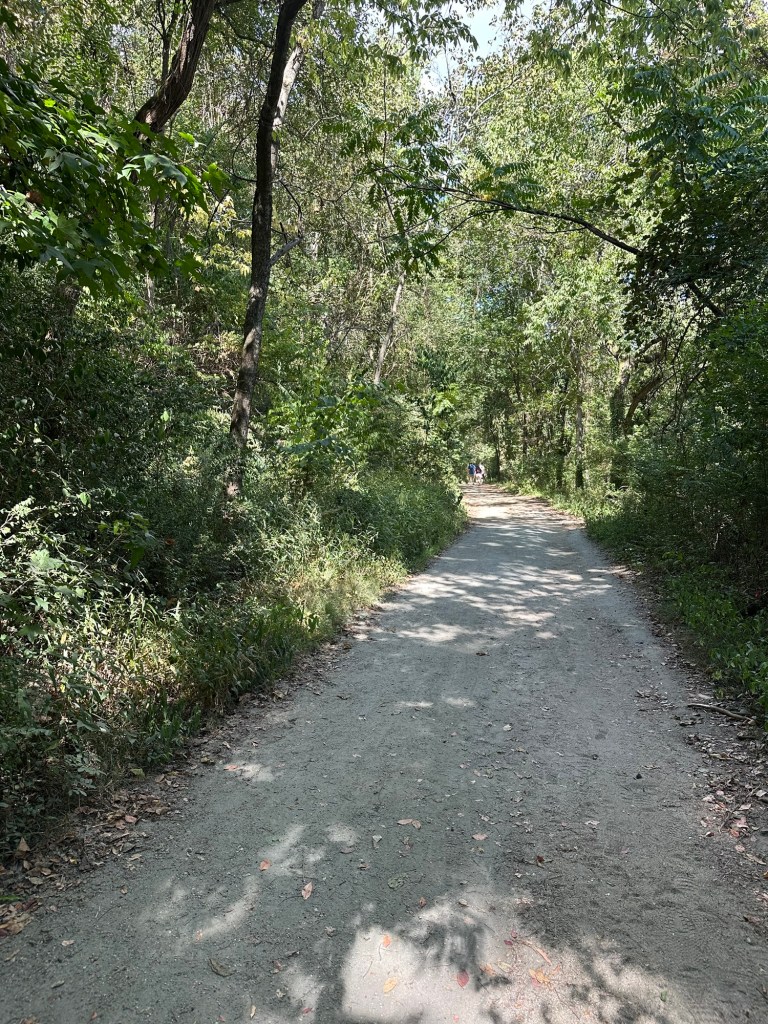
  • These plots would be assigned to more trained volunteers as the program continued to grow. If possible, a landscape team could be hired to plan the overall layout of the island and select a smaller number of plants for each location to provide a little more guidance on the final product

I know this is a little far-fetched and that there are already organizations doing a lot of this work. But this does feel on some level possible. The local knowledge, technology, and tools are all available.

I also think the sooner we start the better. Plants are basically seed factories. Once we start to establish a wider diversity of plants they will start to continue the work for us in spreading throughout the area.

In a very non-scientific search, there are 129 plants listed as native to Virginia on the Prairie Moon Nursery website which seems like a good place to start. With some professional consultation, we could finalize a list of plants, divide them up by their planting guides, and start some test gardens around the island. With so many deer living in the JRPS, it will be important to prioritize aromatic, deer-resistant plants like Purple giant hyssop (Agastache scrophulariifolia) and Yellow giant hyssop (Agastache nepetoides). These will have a better chance of becoming established over time. I have gardened with Anise hyssop (Agastache foeniculum) for years and love the way that it spreads, attracts bumblebees, and blooms successively throughout the summer, but it doesn’t appear to be native to this region. Another deer-resistant perennial that I would like to see is Rattlesnake master (Eryngium yuccifolium). It is very hardy, spreads generously, and attracts wasps, bees, beetles, and other small flying insects.

The middle of the island contains an open prairie that could be restored in the same way as the forests and trails. It seems to have full and partial sun exposure which would create an opportunity for many sun-loving perennials and grasses. More deep-rooted grasses would also provide an amazing opportunity for carbon sequestration. It seems like switchgrass and big bluestem are valuable in this way, but I’m sure there is an argument for most native grasses.

If there is a concern with the JRPS looking too manicured, I would support limiting the list of plants and also planning large colonies of a single flowering plant along with native ferns and grasses rather than a high diversity of plants in a single plot. It could look more natural for the species to be grouped like they have spread over time.

I think this project would work well on a stand-alone website with a front end that promoted the program and receives donations and a member login portal where members can manage their plots, post photos, and record donations.

The program could be funded in part through sales of excess seeds and plants grown in the shared greenhouse. It might even be possible to apply for carbon credits if the restoration were successful and extensive to warrant that. Of course, there are also grants and billionaires.

Once the program is functional, it could be expanded to include the entire JRPS. I can imagine there are many gardeners who would prefer to work in their neighborhood parks for convenience and sense of personal ownership. Every year there could be an outdoor awards ceremony on the island, etc. To scale this, we could sell licenses to other municipalities who could buy into the program and use the training materials, website design, etc. to manage their own crowdsourced rewilding programs. Training materials would be adapted to the native plants of that area, but otherwise could be fairly interchangeable.

I’ve really enjoyed imagining a Belle Isle that is buzzing with life, an oasis in the middle of a manicured/ruined landscape, and a pocket of life to inspire more and more people to garden with nature in mind. I don’t know exactly how, but I do believe it should happen. There is no way any of us would regret it.
A mini meadow for Maymont

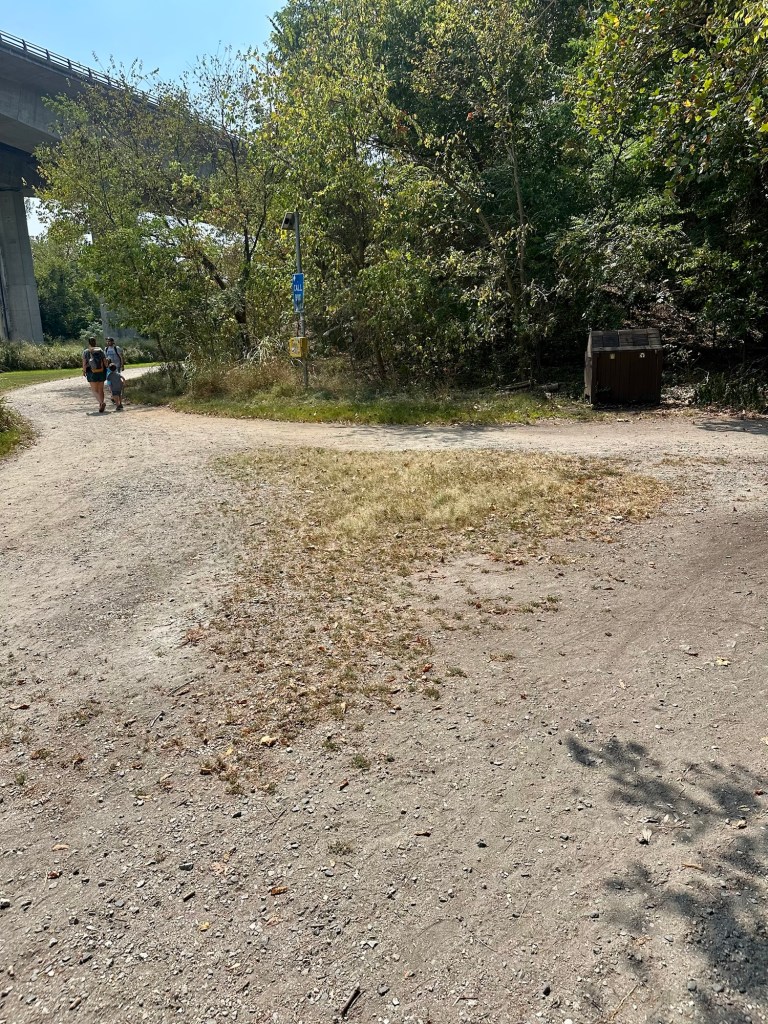
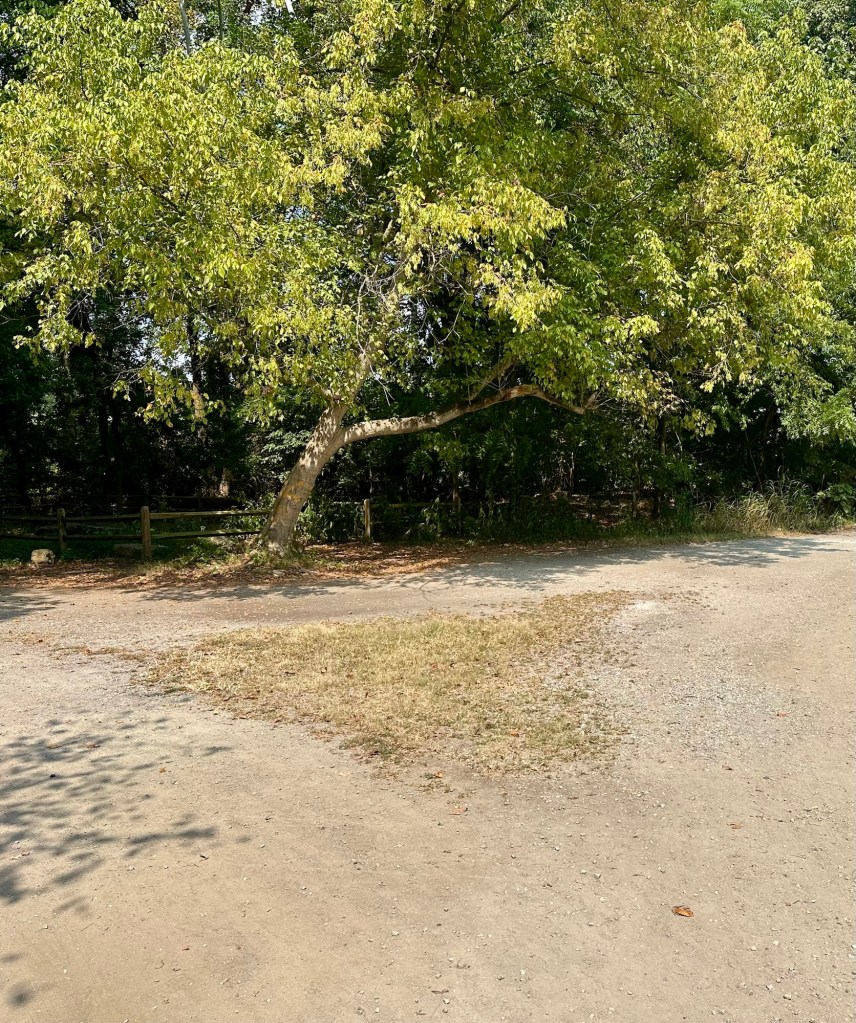
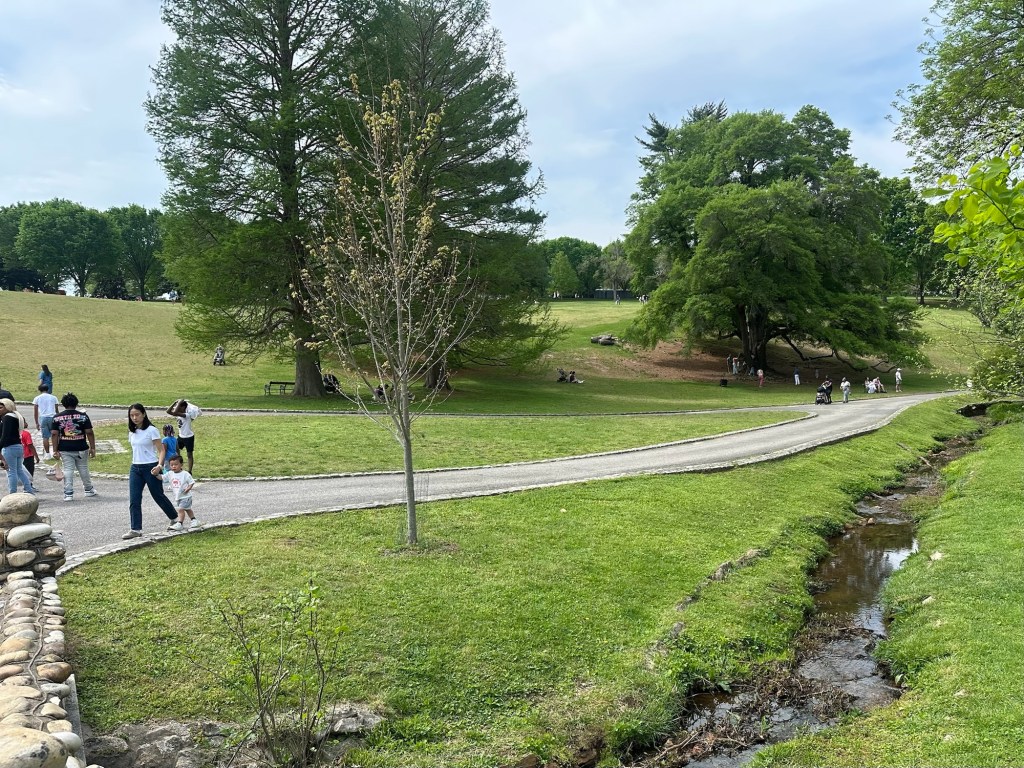
During a recent visit to Maymont I noticed a small island of grass that I can’t stop thinking about. It feels like the perfect opportunity for a small meadow of perennials at the intersection of the more formal Maymont Mansion and more “natural” Robins Nature Center and Maymont Farm sections of the property.

The long, tear-drop shaped island of grass is in the middle of the photo below, but of course I already have ideas for the area along the creek as well.

Compared to the yucca project, this feels somewhat realistic. I would need to borrow black tarps to kill the grass, enlist some volunteers to clear the area a month or so later, install plants collected from my garden, and spread leaf mulch in between. It would be nice to put a small stick and twine “fence” along the edge while it’s getting established as well as a “Prairie in Progress” sign and some educational materials about the benefits of these types of gardens.

The cost of this could be essentially free. Here is a list of plants I can think of off the top of my head that I would be able to contribute:

  • Anise hyssop
  • Echinacea / coneflower
  • Mountain mint
  • Showy goldenrod
  • Milkweed (1 or more varieties depending on how they spread)
  • Coreopsis
  • Panicled aster
  • Rudbeckia / black-eyed Susan
  • Rattlesnake master
  • Spiderwort
  • Wild garlic
  • Aromatic aster
  • Bee balm
  • Foxglove beardtongue
  • Groundcovers including violet and wild strawberry

While doable, it would still require a lot of work obviously. I would need them to commit to watering for the first couple of months after install and provide ongoing support like cutting it all down to about a foot off the ground in the fall, weeding, and continuing to add more plants. Still too much for me right now, but a really fun thought.

Vision for an urban valley in Richmond

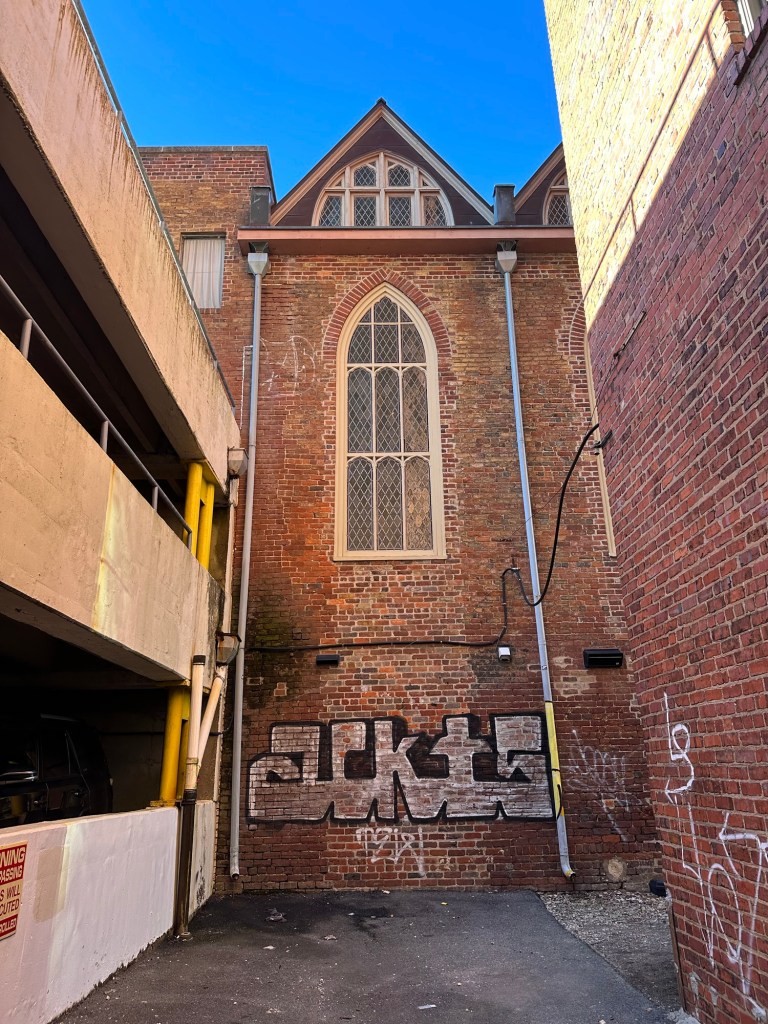
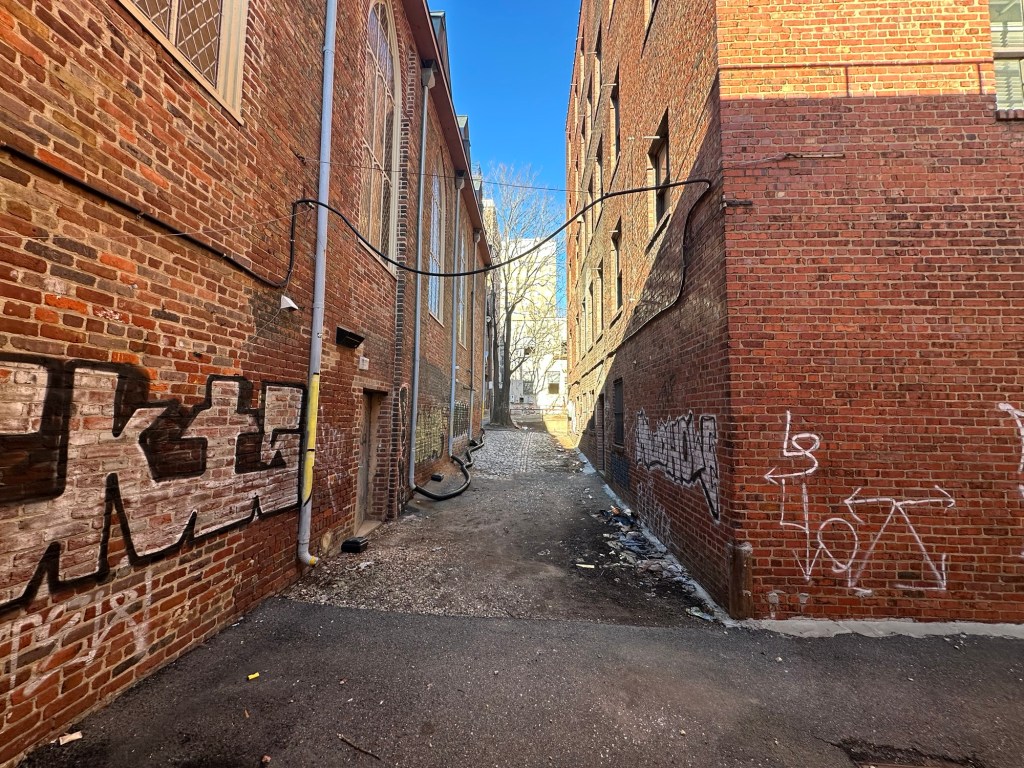
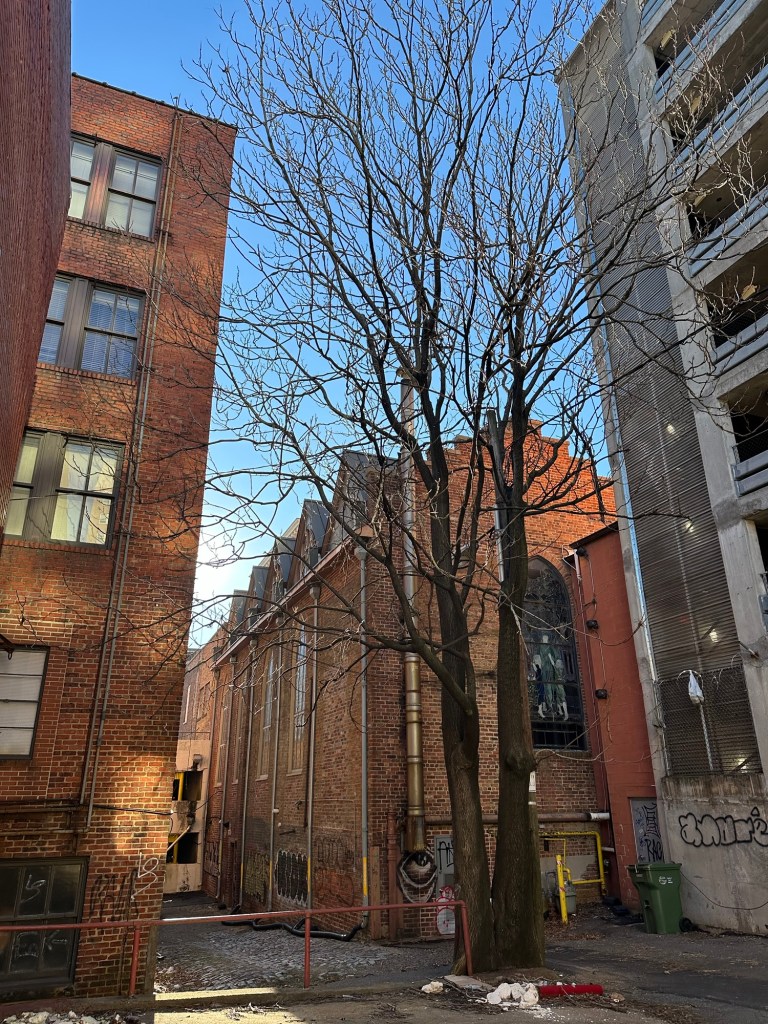
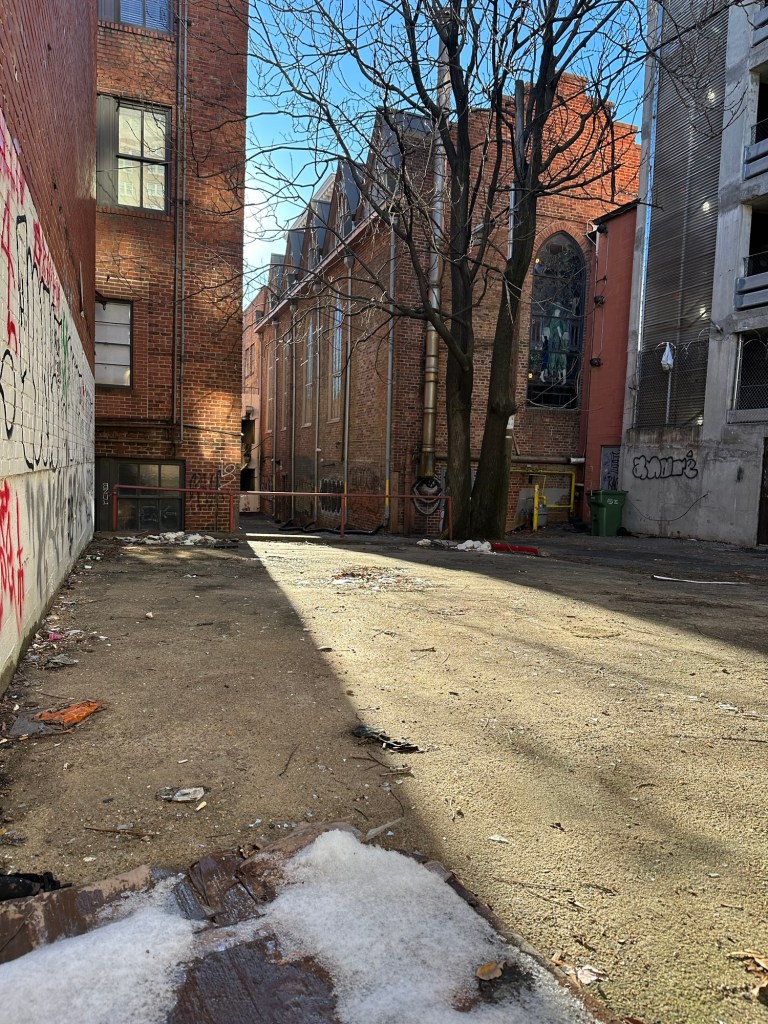
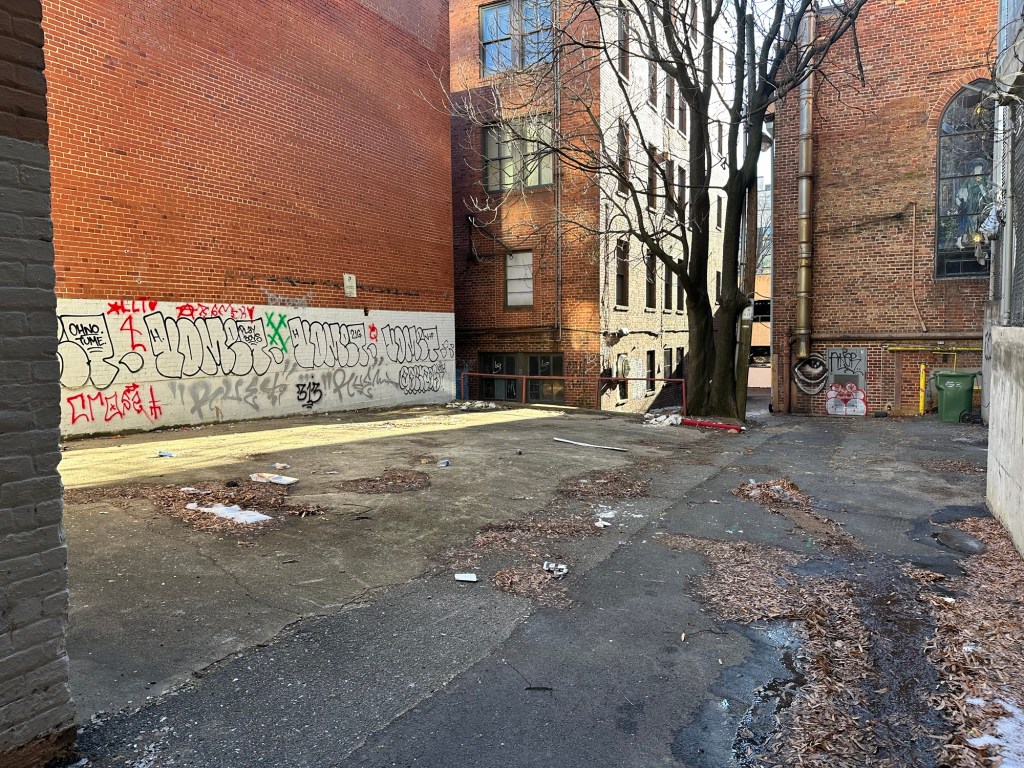
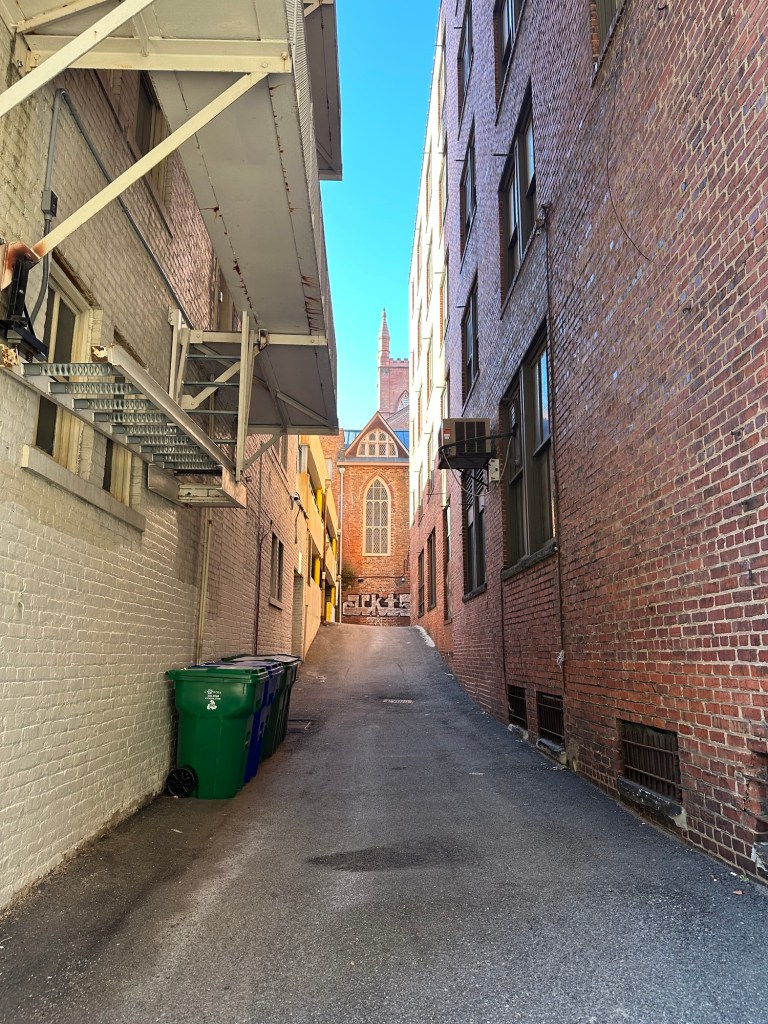
The other day while I was walking through downtown Richmond I stumbled on a small space with huge potential. It’s basically just a concrete slab, but what makes it special is that it’s located right in the middle of a city block. The concrete is connected to one building that forms an “L” around it. The area is accessible by three different alleys which all meet at the base of a somewhat beautiful, mature tree.

With some love, this could be a place to congregate just like the La Colombe near Logan Circle in D.C. The benefits of using these interior spaces is that they are quieter than the city streets and they are often cooler in the summer months because the buildings provide shade. They are cozy spaces, the diffused light is relaxing, and there is something charming about the irregular shapes. I love the surprise and delight of waking down an alley, turning a corner, and finding something you wouldn’t have expected,

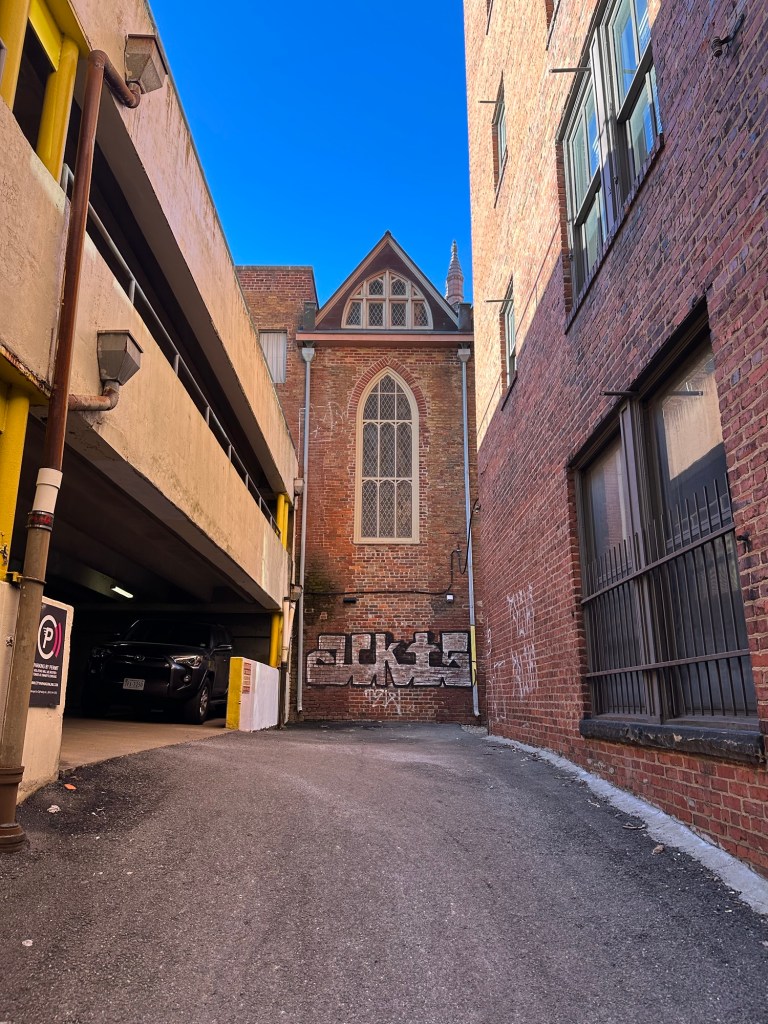
The approach that is most familiar to me (I actually worked and parked in the building to the left years ago) is below. I love the way the buildings frame the old window and steeple of Second Presbyterian.

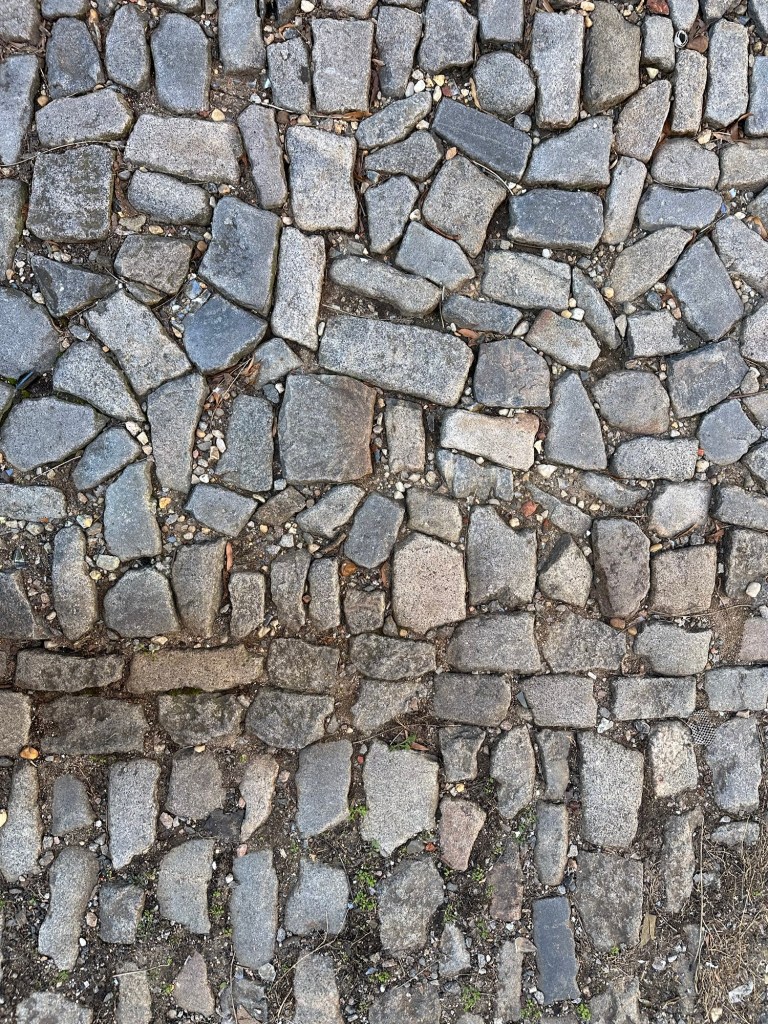
After you turn to the right, you start to get a glimpse of the destination. The area also starts to become more charming: the alley transitions to cobblestone, instead of a parking garage you have old brick and stained glass, and the tree is visible as well.

Despite being completely forgotten and unloved these granite stones are beautiful and the whole section would clean up very nicely.

This is the view from the space that I’m interested in. I appreciate how much there is to look at even in this small space. It feels like the medieval section of a city: winding, ad hoc, dense, and built to the human scale. The tree would also provide shade in the summer and a beautiful accent.

Here are two views of the actual space.

I am so in love with this idea. I had a similar vision for a space in Tyler many years ago and still believe in the potential of this sort of retrofit to bring new life and charm to cities. Whatever zoning process that’s required should be fast-tracked. Whatever the building around this space becomes (it’s currently being renovated), this should be a cafe or similar commercial space, with bistro lights, live music, and otherwise completely transformed into a beautiful and charming refuge in the middle of downtown Richmond.

Magic snow

A few weeks ago I woke up with a lot of climate anxiety. I could hear rain on the roof of our house – rain that 50 years ago might have been snow or sleet. We had just returned from a trip to New York City where it had also rained on an unseasonably warm December evening. I had global temperature charts and thoughts about crazy weather stressing me out before I even got out of bed.

When I came downstairs, the first thing my kids wanted to do was play with toys that we brought back from the city. As a parent I’m used to suspending whatever anxiety or “grown up things” are on my mind to enjoy my kids in the moment. On this particular day I found myself playing with, of all things, Magic Snow. It really is pretty cool. You add water to this very fine powder and it grows into a fluffy snow that we played with for an hour or more before school. On the inside I was wondering if at some point magic snow would be the only snow left. On the outside I was laughing and enjoying myself and the simple joy of parenthood

Since that day, my five-year-old asked several times if we were going to have a white Christmas and whether it was going to snow at all this winter. My niece also recently asked her mom if it was going to snow this winter and when she heard it might not immediately said, “We have to compost!!” Sometimes parenting feels a little bit like the movie “Room” where you are creating a reality within the safety and coziness of your house, neighborhood, etc. On the other hand, while I do want to keep my anxiety to myself, I don’t want to try and keep reality out more than I have to. I want to start to bring in age-appropriate books and conversations about climate change just like I want to do with other complex topics. This experience also pushed me to focus on solutions rather than abstract fears and sadness for a lost planet that we haven’t even entirely lost. So, yes, I’m going to continue to compost and I want to start buying carbon offsets again. I’m probably going to buy a children’s book like Bright New World or one of these. While I read about a hopeful future to my kids I hope to start to believe it for myself.

8.72 acres in East End Henrico for $180K

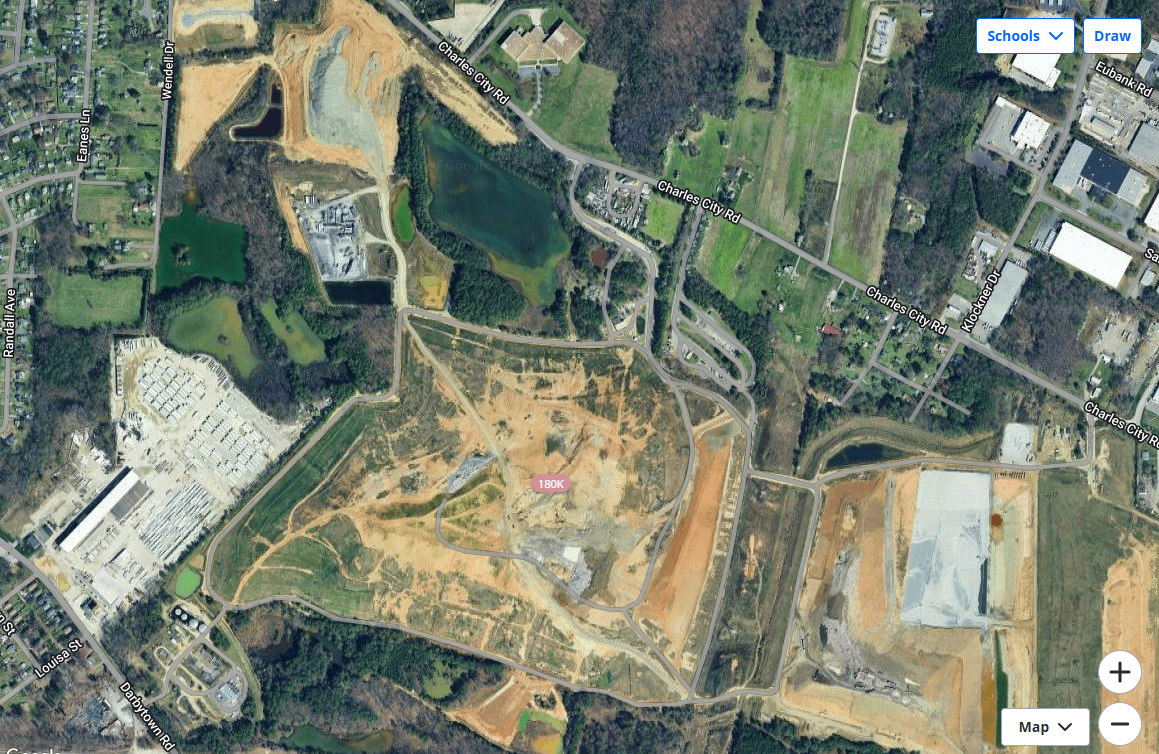
Yesterday morning I found myself dreaming about a plot of land for sale in East End Henrico County, just outside Richmond city limits. It’s 8.72 acres for $180K located very close to the center of the city and I think it would be an amazing chance to plant a pollinator meadow to restore the ecosystem and have it be managed as a park by Henrico County.

I’m imagining walking trails, giant woodland sculptures, and it might have some elevation that could be fun with a lookout tower at the top. The grounds at Glenstone would be a good inspiration. This plot of land looks like part of the East End Henrico landfill – I think the one that was shut down by Henrico County. I’m sure there are liabilities with owning a former landfill (environmental concerns, seepage, etc.), but I know it’s been done before and this could be a good chance to do it in the Richmond region.

I already emailed the Capital Region Land Conservancy, and I probably won’t go any further with the idea, but I wanted to at least post it here as a personal memory of the dream. At some point this is exactly the kind of restoration project I’d like to be a part of.

Some articles that I found along the way:

Update: I heard back from the Executive Director at CRLC and he told me that the information on Zillow was incorrect – there are actually only two acres for sale about seven miles west of the location – kind of bizarre. I still love the idea of course 🙂

Good mornings

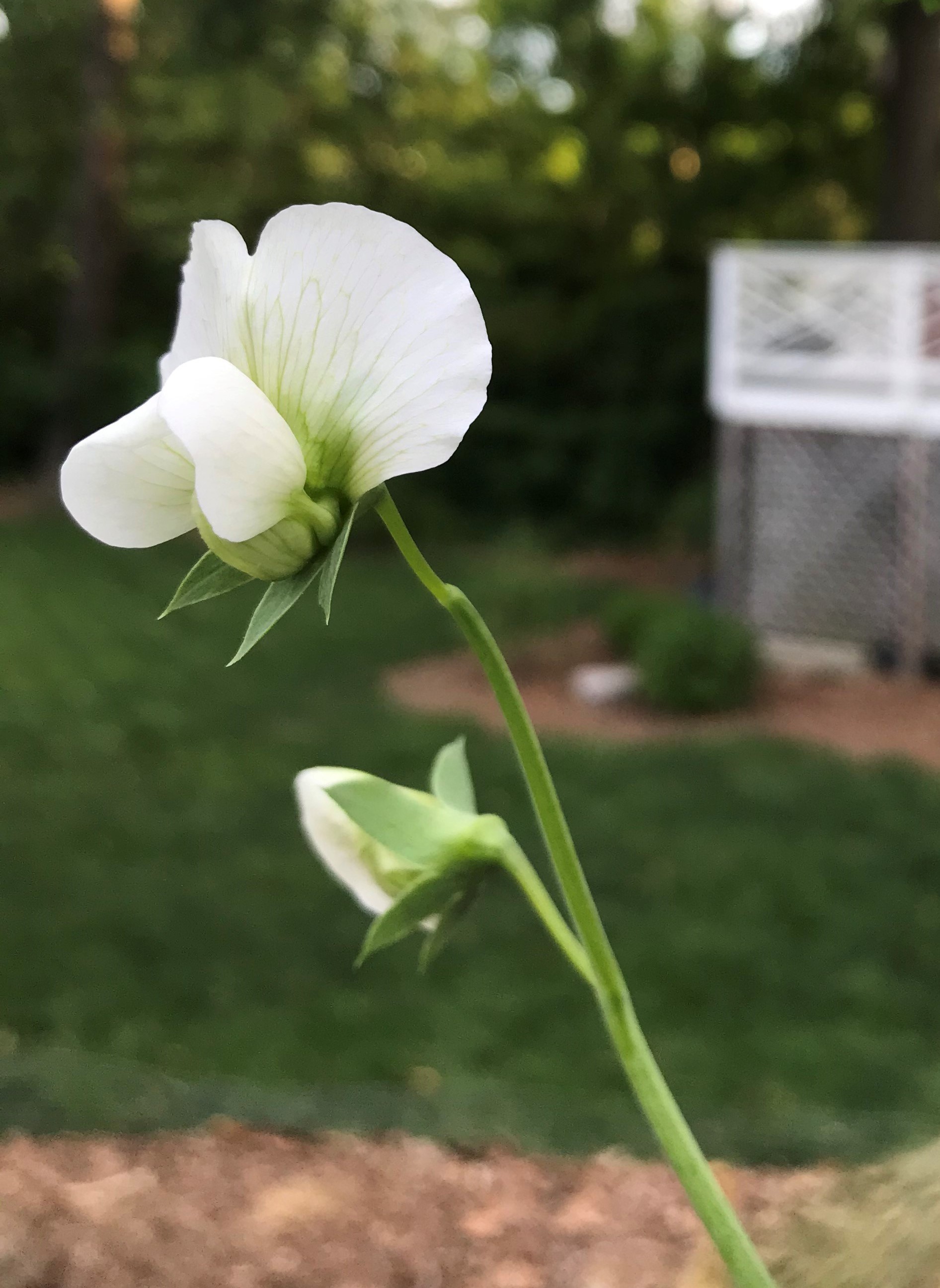
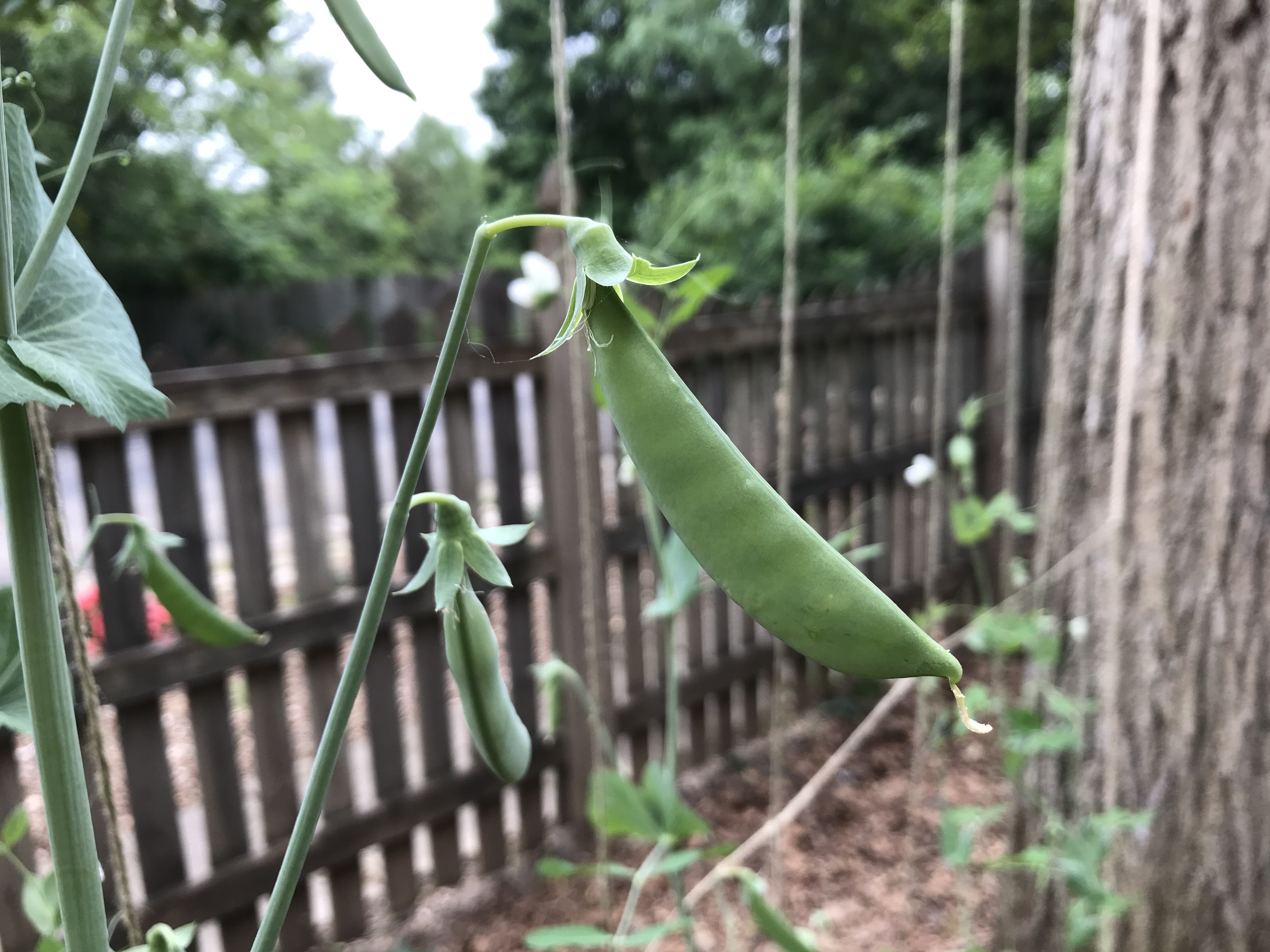
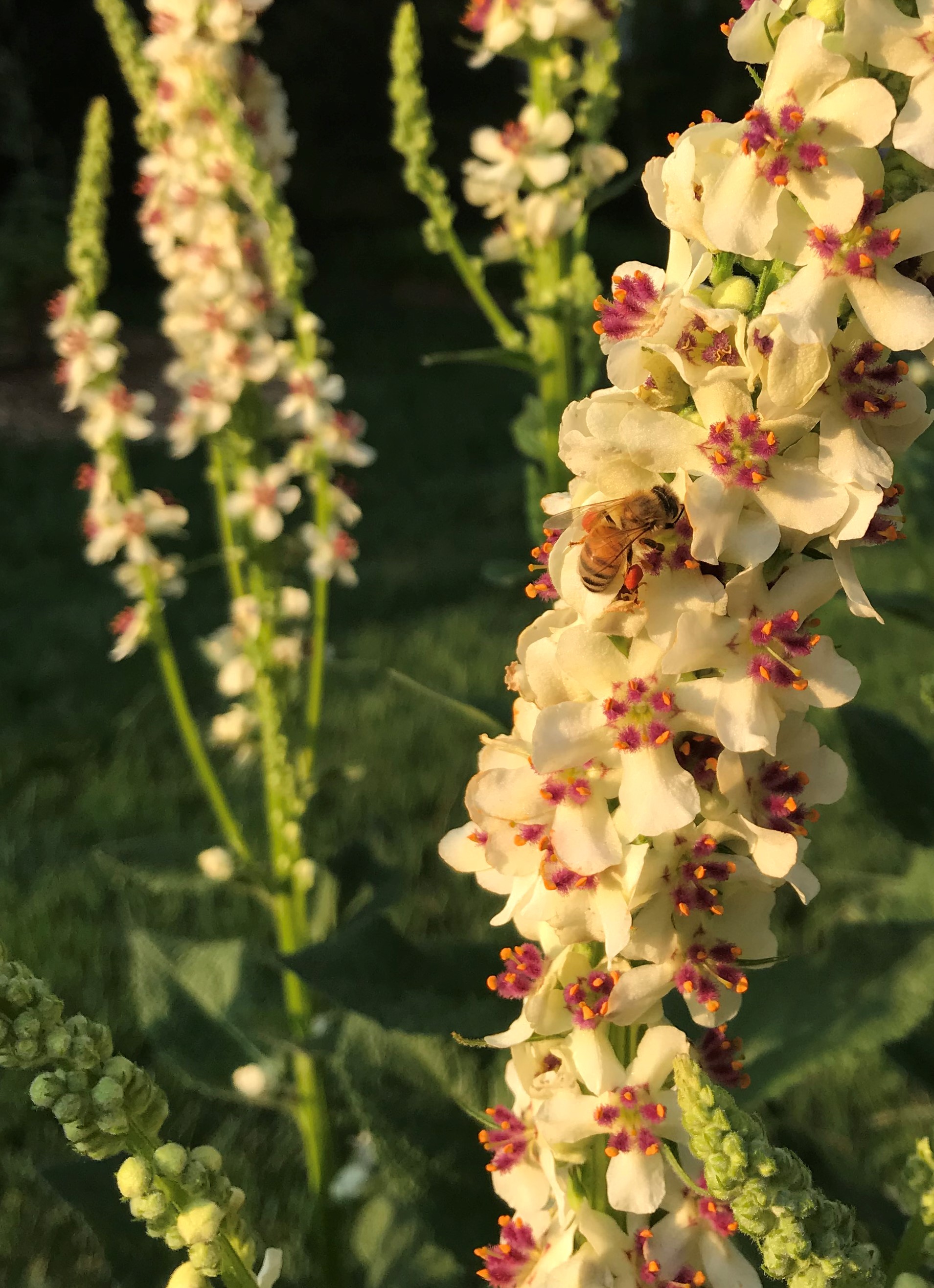
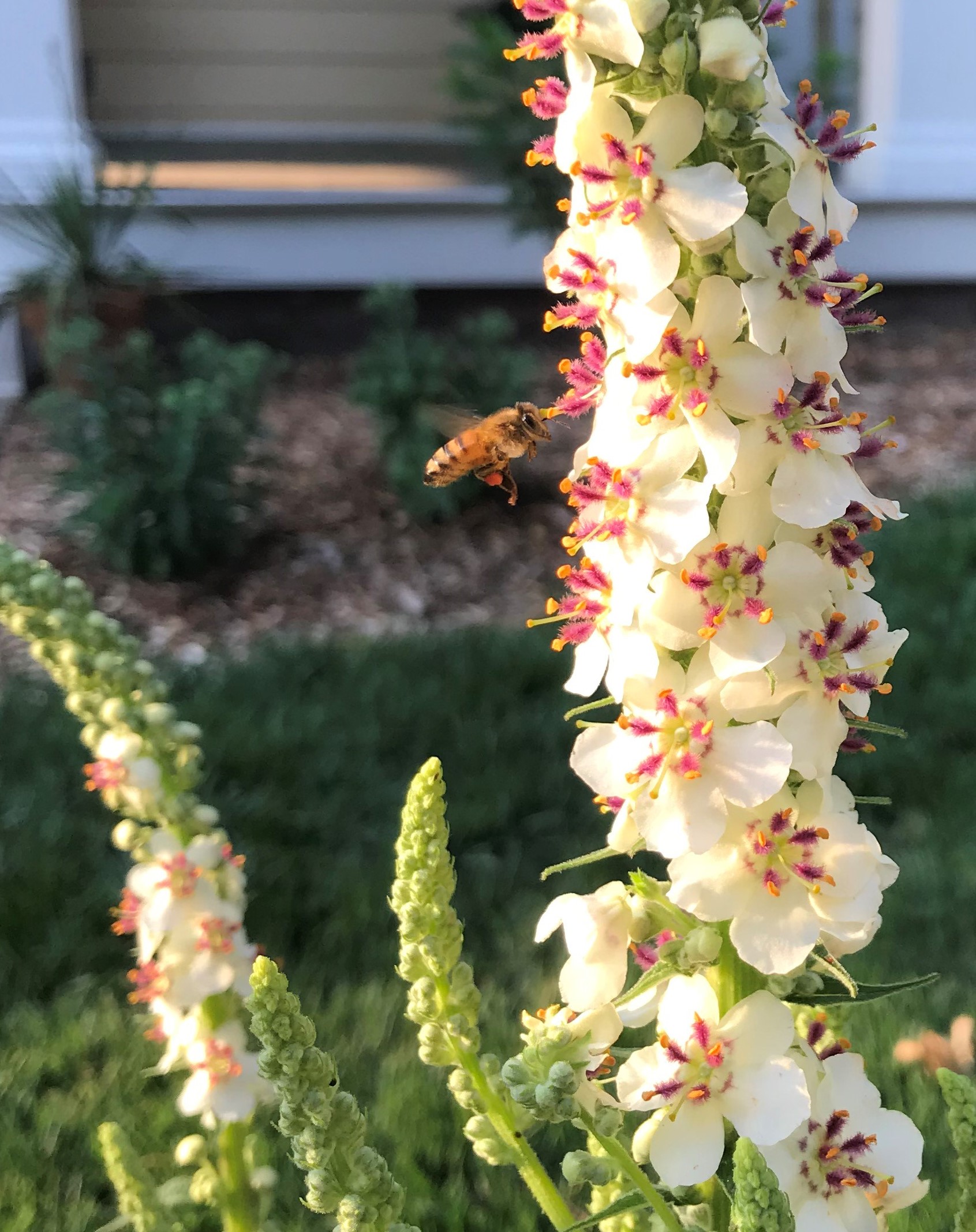
Yesterday morning I shared a sugar snap pea with my 18-month old while we watched bees forage on some Verbascum (Mullein) that I planted earlier this month. I’ve had some flops this year so far including beets, fennel, poppies, bachelor’s button, etc. I’ve already rearranged several plants that were either crowding each other out or not getting the amount of sun they require. So often, all I can think about is the work that still needs to be done, but in that moment, thinking about the benefits to nature and our quality of life, I was grateful for something going well. And considering the ease of use and the quick reward I will definitely be doubling down on these peas next year.

Another National Slavery Museum Design for RVA

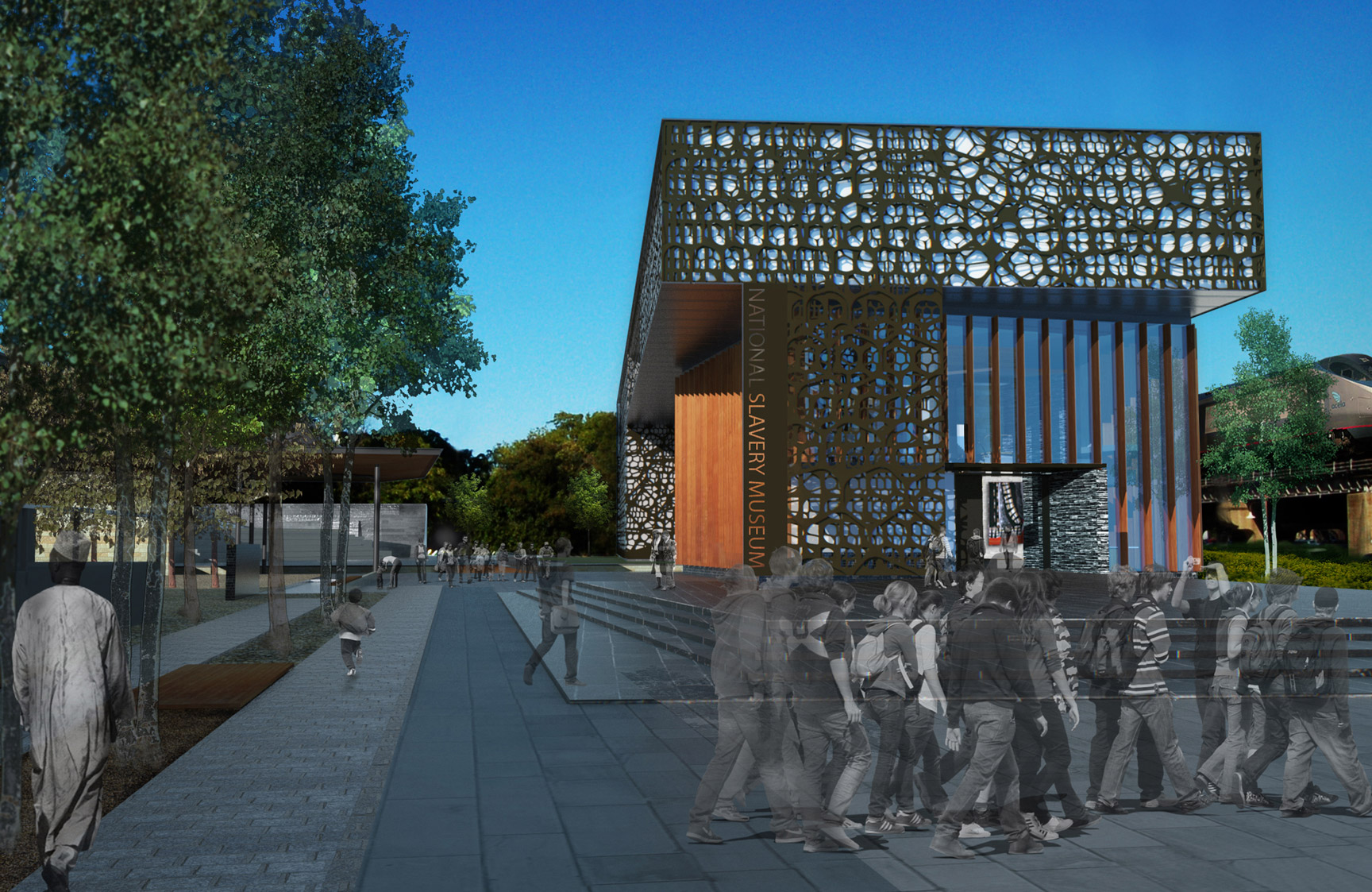
Somehow I’m the last to know that there is a third (or fourth?) design for a slavery museum in Shockoe Bottom. And, might I add, it’s my favorite:

PA-533_24

It looks like the design was completed by a partnership between the former BAM firm and SMBW then, I assume, it followed Chris Fultz to it’s current home on his website, fultzarchitects.com. The homepage of that site got me planning my next cross-country road trip … until I realized that this Slavery Museum design also won an AIARVA honor award in 2010. A little older than I thought. Then I found an article on this design, “Bridging the Gaps,” published in Richmond Magazine on October 19, 2009. The author of that article writes,

All Eyes on Shockoe, Again
The city of Richmond seems poised to embrace a national museum with a culturally significant subject and create the kind of international profile the region has been so desperate to achieve.”

Of course, five years later, we know that all eyes are on Shockoe again, again. This article was a good reminder of the many hours spent designing plans that were never completed.

I found a more recent Richmond Times-Dispatch article on this design published January 30, 2013. I’m not entirely sure how this design was still newsworthy after four years in existence, but I assume it was either gradually developed or gradually revealed to the public, or both. This article appears to be a followup with more details on the plan. According to the Times-Dispatch:

“The Richmond Slave Trail Commission…released its vision to develop a $100 million to $150 million heritage site in Shockoe Bottom, including a slavery museum, an African-American genealogical center and a glass-enclosed Lumpkin’s Jail archeological site.”

In the past year this design seems to have been generally forgotten and replaced by another less-ambitions (albeit beautiful) design for a slavery commemoration in Shockoe Bottom.

So what happened to the 2009 design? The question was recently posed in a comment on the Style Weekly article “Getting Wilder.” Thomas writes,

“The building Wilder wants for the museum doesn’t even look big enough to house a “National” slavery museum. If you want a grand one on a national scale, start from scratch. What happened to that National Slavery Museum proposal by Fultz Architects? That was the best one. We should have jumped on that one…”

I tend to agree. It’s no surprise that I’d rather Richmond move forward with something exceptional than settle for something acceptable. Besides, there are examples of projects of that scale in this country that were funded by a combination of state, local, and private funds. I continue to believe that good ideas of far-reaching significance energize donors more than anything else.

The story of this design should cause us all to take a step back. After reading through each article I found myself wondering,

How can one city generate so many incredible, unfinished designs?

On the one hand, this is just a factor of the architecture industry. An astounding number of designs are submitted every year that are never realized. But it still seems to point to a deeper issue of governance that prevents us from connecting the plans to reality. Every so often I stumble upon another great idea for Richmond that somehow never found funding or political momentum. And now we have this “economic development plan” for Shockoe Bottom that seems to be moving in the same direction. So what can we do next time to prevent the same results?

I found the best answer to my question in the original Richmond Magazine article from 2009. Christy Coleman, the president of the American Civil War Center at Historic Tredegar, states that the planning process for a museum of this scale should not begin with a building design. The article continues:

A fledgling museum should begin with a mission statement and a plan of whether it will be a “collecting” institution — one that houses a vast collection of artifacts for display and research — or a “storytelling” institution that strives to communicate knowledge and an experience to its visitors.

“All of these things start coming up that will have an incredible impact on the long-term operations,” [Coleman] says.

We ought to extend this wisdom to any large-scale project brought forward for the benefit of the people of Richmond: start with your mission statement. What is the essential purpose of the development and how will it serve the needs of the city?

As we have seen, there are many architects and firms in the area that are more than willing to turn a good idea into sparkling designs. They might even do it at a discounted rate if they are particularly inspired by the proposal and assured that this time there is a likelihood that the project will actually happen. This city has incredible potential, regional powerhouse corporations, and visionary leaders. Together I truly believe we can make something great.

But first, we need a good idea.

Perspective

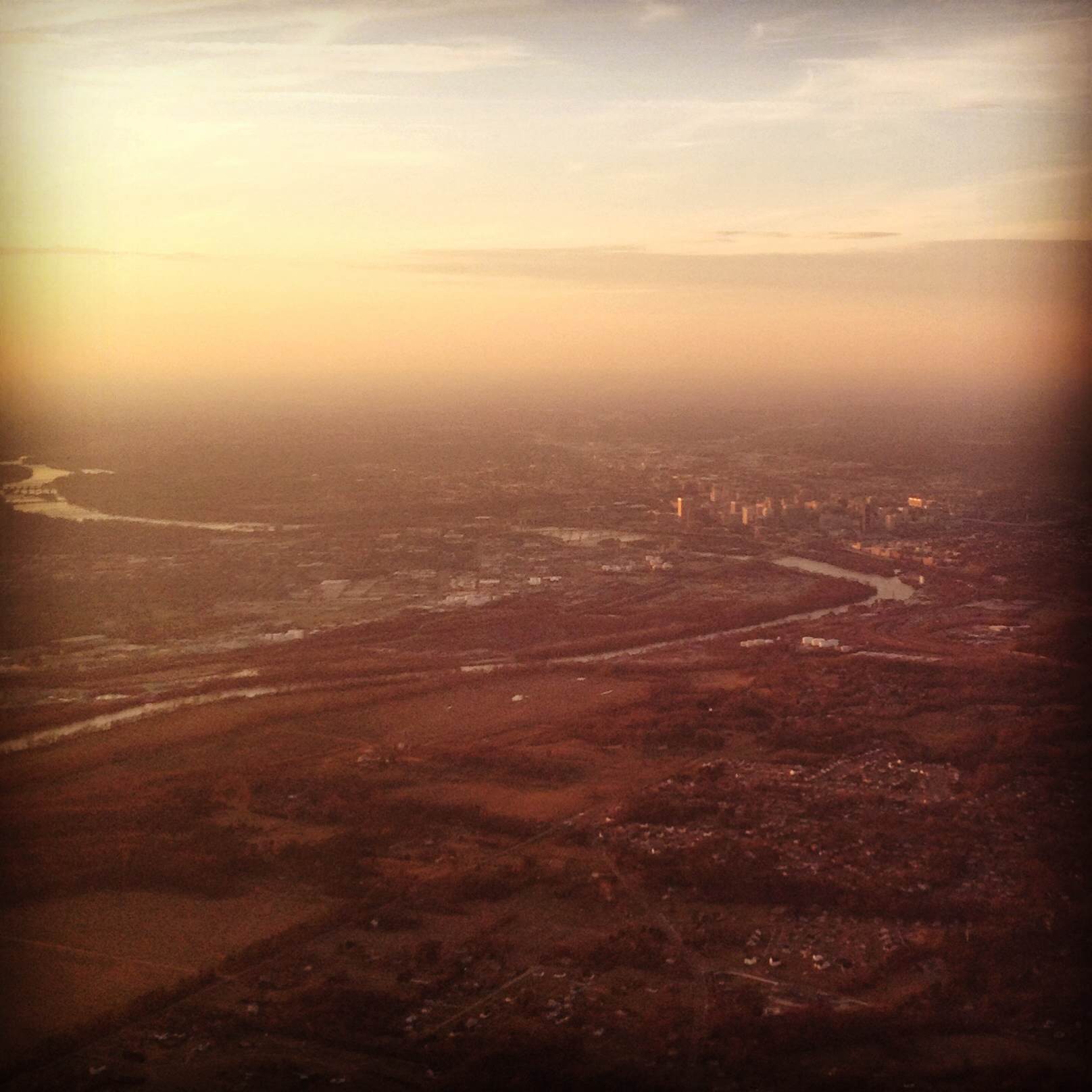
As I flew out of Richmond last week, I got a rare glimpse of the city at dusk:

River city

I just stared at that settlement on the banks of the James River and wondered what the next 400 years might bring. In the city of Richmond, there is the past, the present and the future. That makes us fortunate and it makes us complicated.

To move forward, we will have to make some sense of ourselves and our story.

In the past few months I’ve travelled all over the country: from Philadelphia to Dallas, to San Francisco. With each trip I’ve found new perspective on this current phase of the development of the city of Richmond. I’ve also found some clarity for myself and settled into four areas of focus for my writing:

1. Current events in context: If I ever write about current events, it will be to analyze and contextualize the story. I spent three years studying the debates in Richmond regarding the construction of the Richmond Petersburg Turnpike. That work left me particularly interested in economic development strategies and plans for improving the American city.

2. Drawings for the future: Like many of us, I’m constantly imagining new uses for old spaces and I’ve decided I’m finally going to get these on paper. I’m actually planning to draw them out. It will probably be pretty ugly at first, but I’m hoping to read a little on technique and improve over time.

3. The psychology of the city: I’ve been noticing for years that the city of Richmond has a certain personality. This personality comes out in furious debates as well as mundane daily life. Since college I’ve also entered the world of cognitive psychology, therapy, management, and organizational behavior. I’ve read books, met with academics, and watched every video I find. Insight from these fields will be my lens for understanding what’s going on in this crazy place.

4. The history of the history: There are so many stories being told about Richmond. I want to take those stories and study them to understand the different ways that we describe ourselves. I’m obsessed with historiography and excited to dive back into that field for a series of posts about the different ways we talk about our past. This is connected to the psychological perspective as well: how we talk about Richmond says a lot about how we think of ourselves.

I want a future for this city that is unique and authentic. I want Richmond to develop a maturity as a place that takes all of it’s qualities and integrates them into a coherent whole. As with personal development, this will require a lot of work. In a way, collective therapy. And all because we believe there is a best possible future for this city and that future must include a coherent, honest, and accepting understanding of the past and present.

As always, more to come.

Baseball at the Heart

The mayor’s proposal for Shockoe Bottom is a bit of a chameleon. When it was first revealed, it seemed like it was clearly a ballpark plan: baseball balloons, Nutzy, Parney Parnell cracking jokes. But as the plan progressed, this central goal became secondary to a host of other justifications for the development.

The phrase, “not just a ballpark plan,” has become popular in this current debate at the same time supporters of the mayor’s plan have proudly placed signs proclaiming, “I support Shockoe Ballpark,” in front yards and businesses. Clearly, we are confused. Like many, I’ve studied the proposal for Shockoe Bottom and attempted to make sense of all the arguments. As always with these sorts of plans, it is necessary to distinguish the certain from the projected.

Beyond all the letters of intent, the promises, and the economic projections, there is a baseball stadium. This stadium project will likely cost around $167M including interest over the next 30 years. We will hopefully finish paying off the debt around 2046. I will be almost 60 years old. These are the certainties of the mayor’s proposal. All other elements of the plan are subsidiary to the ballpark.

Below I have compiled four common arguments (other than baseball) and reasons why they are not substantive or central to the Shockoe plan:

#1. This plan will improve schools in Richmond

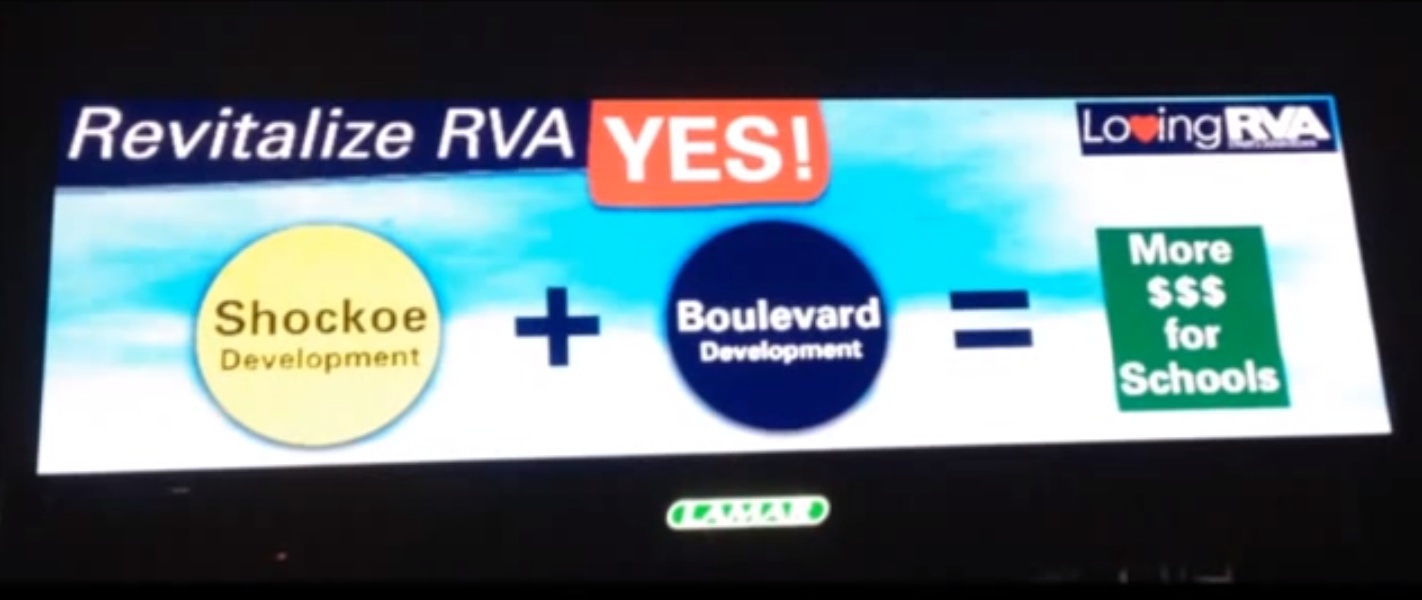
Schools argument

This is a photo of a billboard paid for by the LovingRVA ad campaign. It’s simple, it’s clear, it’s exciting. How could any of us say no to a promise like “More $$$ for schools?” It pulls at our heart strings and connects the plan to something we love.

Then I realized: this is not a schools plan. Not a single dollar of this plan is allocated for school maintenance, construction, or modernization. There isn’t a contract that says that our government is obligated to increase school funding a certain amount each year. We also don’t have any idea how much added tax revenue this plan will generate so there can be no sure promise made for future increases.

And yet, we are being promised that this plan is for our schools and our children.

After digging around, I realized the connection from this plan to schools is pretty weak. The most I could find was a quote from Mayor Jones in the RT-D:

“I think that as we continue to negotiate with City Council people and get them on board, that there’s probably going to be some designated streams that go to some various places that people feel very strongly about….”

Wow. Either Jones was badly misrepresented or the mayor did a terrible job convincing me that that this plan will have any meaningful connection to things I “feel very strongly about.” This schools argument  is like playing “seven degrees of the Mayor’s economic development plan.” Where will all the money end up? We have no idea. But I promise there’s definitely a chance you could get a slice.

And I’m particularly annoyed because I do have a soft spot for schools. The need in RPS is incredible. There are countless reports and articles on the financial need and the deteriorating infrastructure of our school system. Our mayor is promising us more money will be sent to schools, but he isn’t saying how much. All we know is if we build the stadium in Shockoe and if it’s surrounded by lucrative businesses and if we can attract huge amounts of private investment on the Boulevard, then we will have more money that might be allocated to schools.

To me, that seems like a lot of “ifs.” If you care about schools, ask the mayor to sign on the dotted line. Anything less is empty promises.

#2. This plan will provide access to good, affordable food

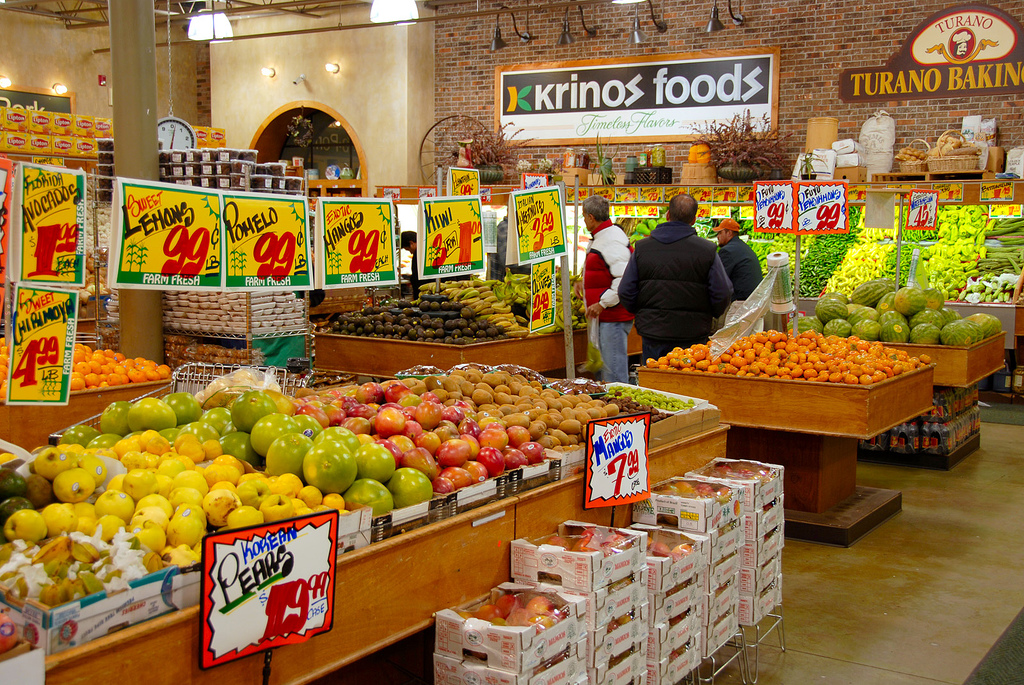
grocery

I’ve heard this argument regularly enough that it deserves to be included in this list. I haven’t seen it on a billboard, but this is the argument that seems to tug at the “food justice” movement in Richmond and the desire for residents to have access to healthy, affordable food.

As a resident of the East End, I think it would be great to have a new grocery store. I think it will provide access to good food for a wide economic spectrum of people. Residents nearby will be able to walk to get their food rather than drive around the corner to Farm Fresh. Many riding public transit will be able to get off 10 minutes earlier than they would for the Kroger on Broad St. I wouldn’t have to drive out to the Martin’s at White Oak for fresh vegetables. Sounds great to me.

I just keep returning to the fact that the grocery store is not a central element of this plan. Honestly, this grocery store has more to do with economic development and the mayor’s revenue bonds financing scheme. I think we would have built anything there if it promised to bring in a certain amount of revenue each year. Also, do we have to build a baseball stadium to have a grocery store? More on that later.

#3. This plan will memorialize and interpret Richmond history

museum 2

The third claim is that this plan has been created in order for Richmond to restore the history of slavery to its rightful place. On the cover of the Venture Richmond “Downtown’s Transformation 2014” document (an unfortunate title), there is a presumptuous photo of the proposed slavery heritage site, an element of the Mayor’s proposed revitalization plan. On the second page of the document there is a photo of the ballpark. For some reason, Venture Richmond chose to promote the heritage site.

Here’s the problem: the slavery heritage site is not funded. We honestly don’t know when or if it will ever be built. To further complicate things, Richmond City Council and the state legislature of Virginia have recently committed funds to the construction of a slavery museum. Is the heritage site enough to fit the specifications of these funds? We don’t know. There are designs for a full museum, but they haven’t been adopted by the city or promoted publicly to my knowledge. If all funds go toward the museum, how will we pay to memorialize the Lumpkin’s Jail site?

Many of us are in favor of building something to commemorate the history of slavery in Richmond. The Washington Post even wrote an editorial in support of a slavery museum back in December. It’s certainly the most historically, culturally, and socially important element of the mayor’s plan, but it’s not the main attraction. This “heritage site” has been tacked onto the ballpark plan to satisfy those of us who care about history, culture, and memory.

It’s a beautiful design and I would like to see it in Shockoe Bottom. But I have to wonder: why do we need to spend $52,250,000 for a baseball stadium so that we can memorialize the history of slavery in our city?

I’m also very concerned with the process by which this heritage site/museum has been developed. When municipalities plan and construct museums or heritage sites, they typically spend years developing a network of scholars, institutions, community members, foundations, and government agencies in order to strategize the future success of the enterprise. If done well, this process results in a site that is ready to receive public school tour groups (where will the busses park?), host educational events (who will coordinate?), conduct relevant research, and curate exhibits to keep the material relevant and interesting for visitors. This sort of strategic planning results in a place that is vibrant and well-loved by locals and out-of-town visitors for generations to come.

If the mayor’s plan were truly a plan devoted to the history of Shockoe Bottom, there would already be a consortium of interested individuals from all over the nation and the world developing potential directions for the space and the building. Right now all I see is a pretty picture.

#4. This plan will stimulate the economy in Richmond

city

The argument for economic development is the lynchpin of this entire plan. Many believe that the “baseball stadium + hotel + grocery store + heritage site + apartments + future development on the Boulevard” plan holds the greatest possible economic benefit for years to come.

I have to respectfully disagree. If maximum economic output were the ultimate goal of this plan, Richmond wouldn’t have a baseball stadium at all. Minor league franchises are mostly money losers. They are highly subsidized franchises with all salaries paid for by their parent major league team and stadiums funded by localities. So it’s counterintuitive to include a ballpark in an economic development plan. Unless by “economic development” you mean “we need to find a way to pay for this darn baseball stadium.”

Also, not only are minor league stadiums expensive on the front end, they usually require renovations 20-25 years after they are built. It’s fitting that our local leaders travelled to Durham in January. A few weeks before the Richmond delegation made their trek, The Hearld Sun reported that the Durham Bulls Athletic Park, opened in 1995, the model for our ballpark scheme, is now planning a $20M renovation. Nineteen years after it first opened.

If it weren’t for the ballpark, Shockoe Bottom wouldn’t even be on the mayor’s radar. This flood plain is surrounded by the many hills of Richmond that don’t require a $20M investment in infrastructure for development to start tomorrow. There are cranes up in Richmond right now already investing in the future of this city. The only reason we’re talking about Shockoe Bottom is because we have this baseball team and we need to find a place to put them that can generate enough money to pay of the enormous sum it will cost to construct a brand new stadium. But if economic development were the goal, we would be saving our future tax dollars for general use rather than for servicing the debt on a baseball stadium for the next 30 years.

So why are we calling this an development plan? The argument is this: the ballpark should go in Shockoe Bottom because it’s best in Shockoe Bottom because it will allow us to 0pen the area to private development so that the lease on the ballpark will be paid for. This is a cyclical argument: we have to spend money so that we can make money to pay off the money that we spent. Also, the word for that is not “free.” The only legitimate argument for economic development is on the Boulevard, everyone agrees on that. But why has there been so little planning done for this site? How sure can we be sure of its success?

You may be asking, “What about all the data that proves the stadium is a good idea for Shockoe Bottom?” Here we have to make a critical distinction between data-driven projects and data-justified projects. Throughout the planning process, our leaders have selectively chosen data that supports their goal: constructing a baseball stadium in Shockoe Bottom. We can be certain this was not an externally vetted process. All the evidence we have seen is simply a case that our leaders have developed to debate and defend their plan. That’s not my idea of leadership.

Regarding this plan for Shockoe Bottom, we can only be sure of the expenditures. The revenue is all projected based on letters of intent and market analysis.

Again, expenditures = contracts. Revenue = projections.

The report put together by Davenport & Co. LLC includes a comparison between developing the Boulevard and Shockoe Bottom. According to this report, putting the ballpark in Shockoe Bottom is a responsible option. But in the low estimate for revenue generated in Shockoe bottom, the debt service (at $4,062,976) is greater than total revenue ($3,874,778) which leaves a projected deficit of $188,198 annually. And everyone has been telling me this ballpark is “free.” Am I reading that wrong? If this project were truly concerned with economic development, it would not include the city of Richmond diverting tax revenue toward paying off the debt service for the next 30 years.

Our leader is convinced the ballpark is our ticket to success when it is actually the ball and chain we will drag, year by year, into our own reluctant future.

***

My final question is, why isn’t Mayor Jones talking about the ballpark?

Perhaps it’s because an estimated 70% of the people that go to the Squirrels games live in Henrico and Chesterfield. Does it matter? I think so. Why should we divert $4.8M in tax dollars each year for the next 30 years to pay for an entertainment facility that primarily exists for county residents? Or why didn’t we wait for a more unilateral deal? In 2003, the counties were planning to pay two thirds of an $18,500,000 ballpark renovation. That proposal was sidelined by a local official that decided he wanted to build a new ballpark in Shockoe Bottom. The deal was scrapped, Nothing has happened ever since. Now we’re planning to pay 100% by going out on our own.

Mayor Jones seems to only talk only about economic development. Many other leaders in Richmond are excited about the heritage site. Most of my friends are excited about the benefits for local schools. All the while we’re skating around the most controversial elements of the plan: the cost of the ballpark, the lack of public support for the ballpark, and the location of the ballpark.

I’ll leave the last word to Andrew Zimbalist:

“Cities spend millions of dollars to support a variety of cultural activities that are not expected to have positive economic effects, such as subsidizing a local symphony or maintaining a public park. Sports teams can have a powerful cultural or social impact on a community. If that effect is valued by the local residents, then they may well decide that some public dollars are appropriate. However, if the public or its political representatives are trying to make the case that a team or a facility by itself will be an important development tool, then the electorate should think twice before opening its collective wallet.”

Richmond, if we want a new baseball stadium, let’s talk about it. Let’s talk about how much we might be willing to invest in a new stadium. Let’s talk about where we would want it to be built. Let’s not allow ourselves to be convinced into needing a stadium for a host of unrelated reasons.

Top 10 reasons the Shockoe ballpark is a bad idea

At this point, we all know that Mayor Jones wants to build a baseball stadium in Shockoe Bottom. He’s doing his best to convince us that it’s a good idea for Richmond. Here are 10 reasons why I think he’s wrong:

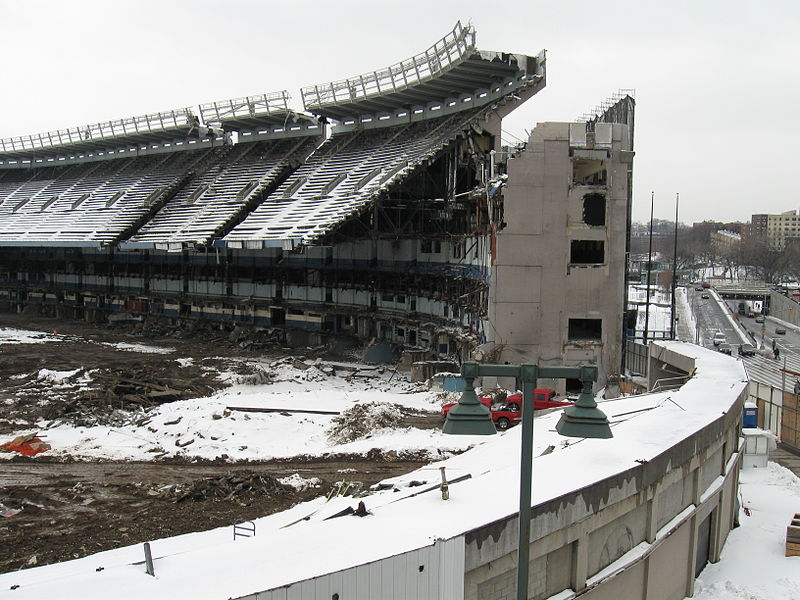
1. Baseball parks are disposable. Baseball stadiums don’t last. Even Yankee’s Stadium, “The house that Ruth built,” was demolished for something bigger and better. Here it is in all its glorious ruin:

Yankee Stadium

In the case of Shockoe Bottom, we are planning to build more developments alongside our stadium concourse. Do we have a plan for how we’re going to retrofit the concourse when the stadium is out of date? Honestly, how long will this stadium last. 50 years? 100 years? I bet Main St. Station will be standing long after the ballpark has come and gone.

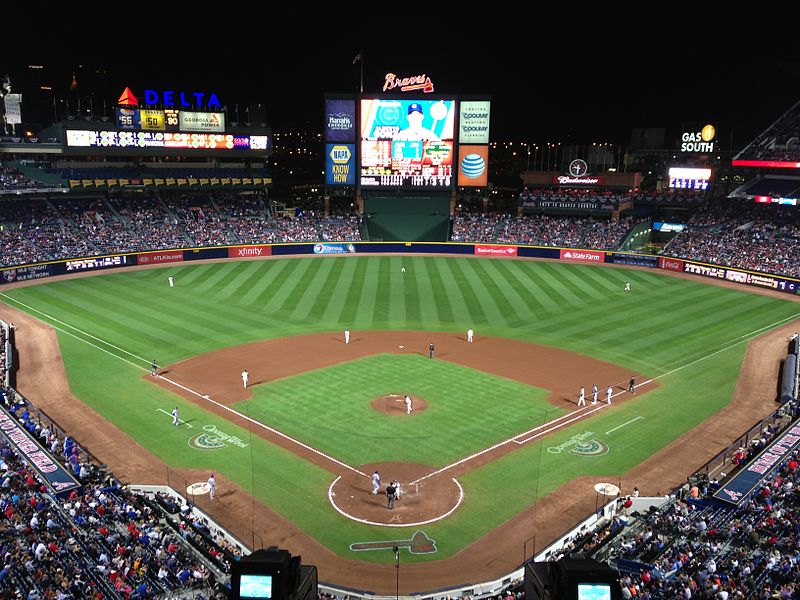
2. The team could ditch us. Contracts can always be broken. If the team leaves, the league has apparently agreed to cover the cost, but what will we do with the space at that point? Last fall, the Atlanta Braves announced they have received the government approval to build a new stadium in nearby Cobb County. They recently released stunning designs for this new stadium complex that they are hoping finish by the 2017 season. If they move forward with the plan, Atlanta will start scrambling to find a new use for Turner Field:

turner field

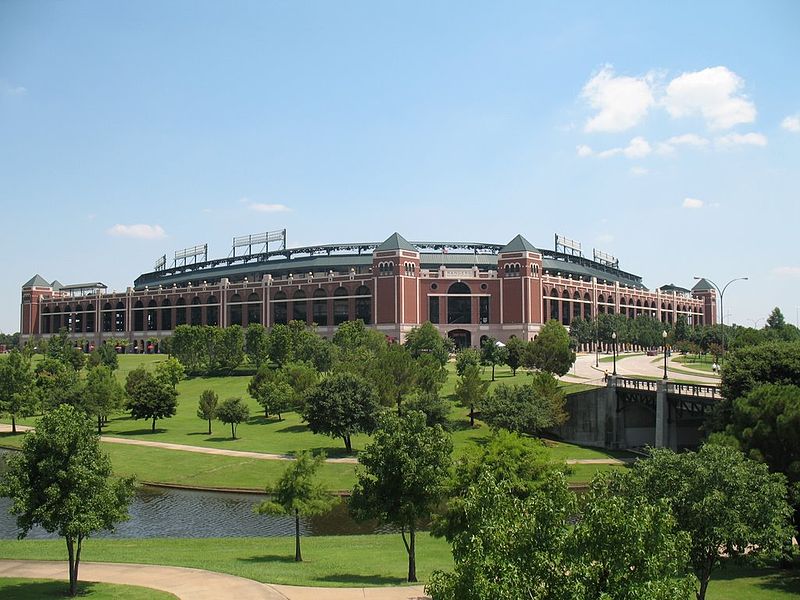
3. Stadiums are only good for one thing. It’s not good to devote so much valuable urban land to one single use. Urban areas are dense and integrated with housing, businesses, institutions, and public space all nearby. These areas of cities are best for many uses (at a park you can picnic, host a concert, play basketball, organize, or do yoga). In contrast, ballparks are PERFECT for the suburbs where everything is already spread out, huge and single-use. One example is Ranger’s stadium in Arlington:

Rangers

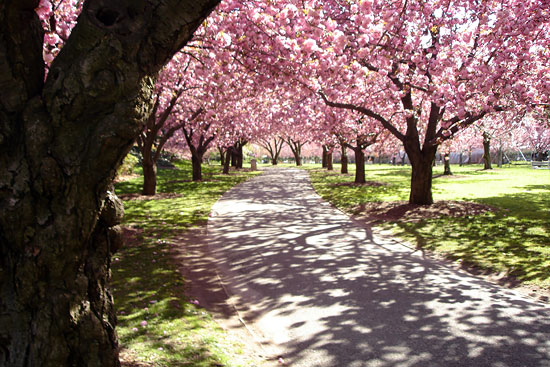
4. Stadiums don’t add value to daily life. Stadiums are used for about 164 games each year. Even on those days, they are only full for the 3-5 hours that visitors spend on the premises. The other 201 days they are mostly empty aside from practices and sports camps for kids. For the majority of their lifespan, stadiums are empty. In contrast, some of the most-visited places in the world are places that simply enhance the daily life of residents and tourists for generations:

Brooklyn

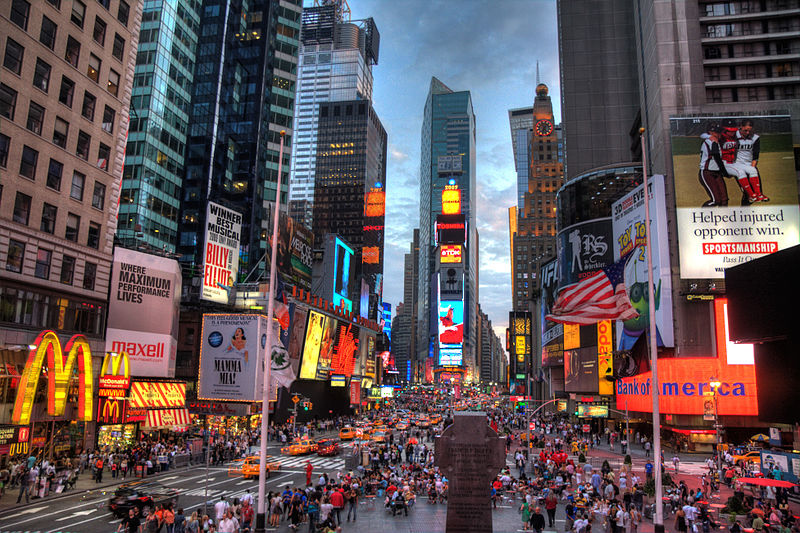
Even intersections can become 24-hour tourist attractions:

Times square

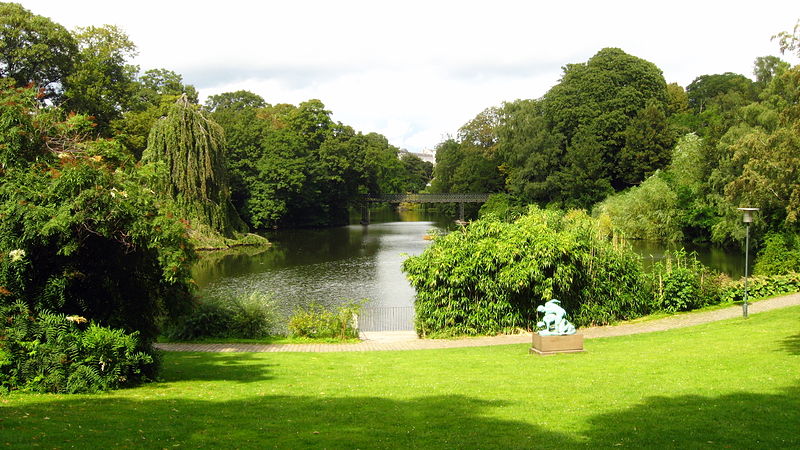
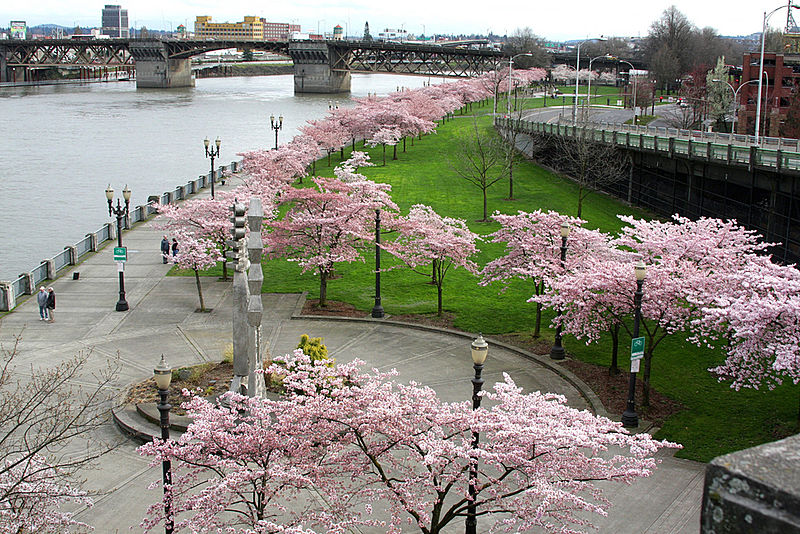
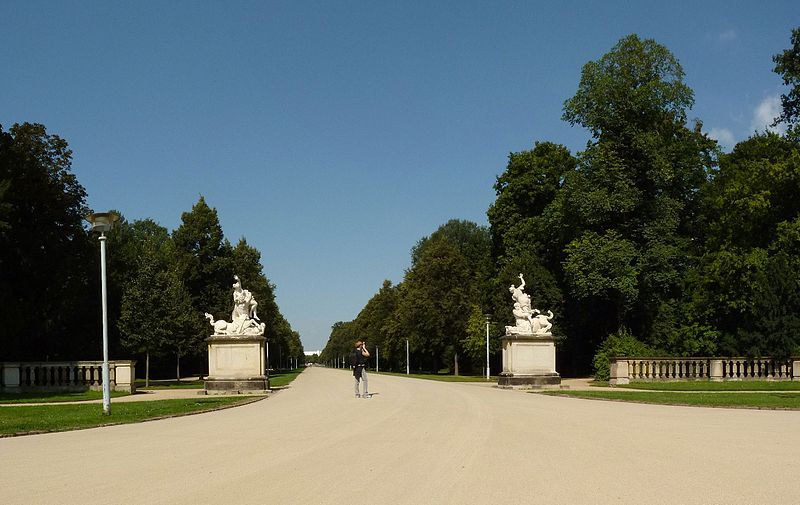
5. Baseball stadiums are not public space. In the middle of almost every admirable city there is open, public space (see two photos above). Public space can be integrated into the fabric of the city: alongside railroad tracks and highways, next to rivers, and across from businesses. Here are a few more:

Copenhagen
PortlandDresden

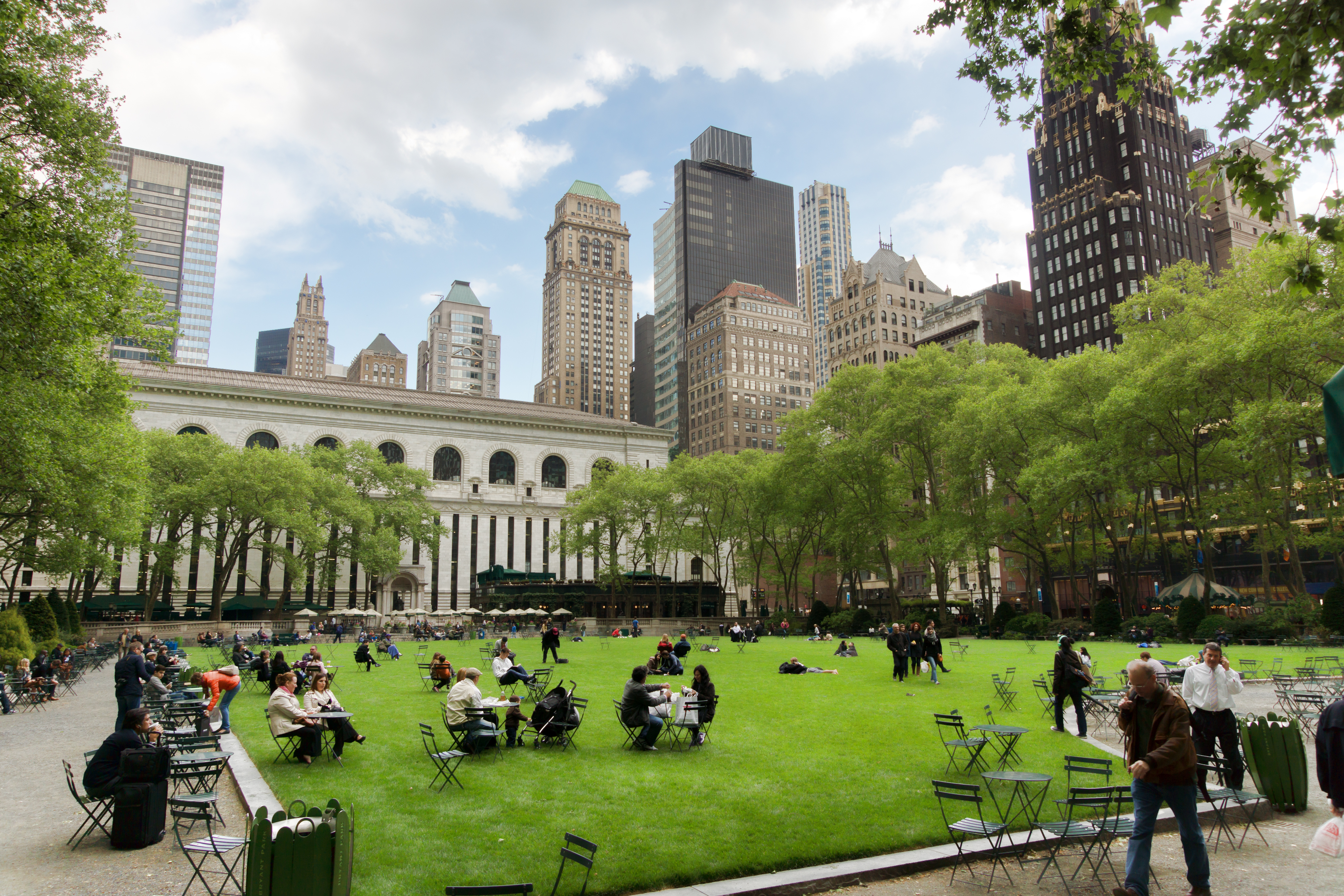
6. Richmond doesn’t want a ballpark in Shockoe Bottom. Mayor Jones and his advisers are the sort of politicians that believe they know what’s best for their citizens. There will never be a public vote on this plan because Jones knows that it would fail. He also wouldn’t put to a vote because he doesn’t care. This attitude is particularly offensive as someone who thinks that Richmond is a pretty smart and sophisticated place. I honestly believe if Jones had engaged a group of knowledgable citizens in the process, the final plan would have been incredible. Maybe we would have ended up with something like this:

bryan park

Notice all the shops and cafes nearby? Bryant Park is an asset to many businesses  in the area and is connected to the nearby New York Public Library. It’s also a model that could be emulated in Richmond. The park is maintained by a publicly-funded private entity, the Bryant Park Corporation. According to Wikipedia, “… BPC is now funded by assessments on property and businesses adjacent to the park, and by revenue generated from events held at the park.”

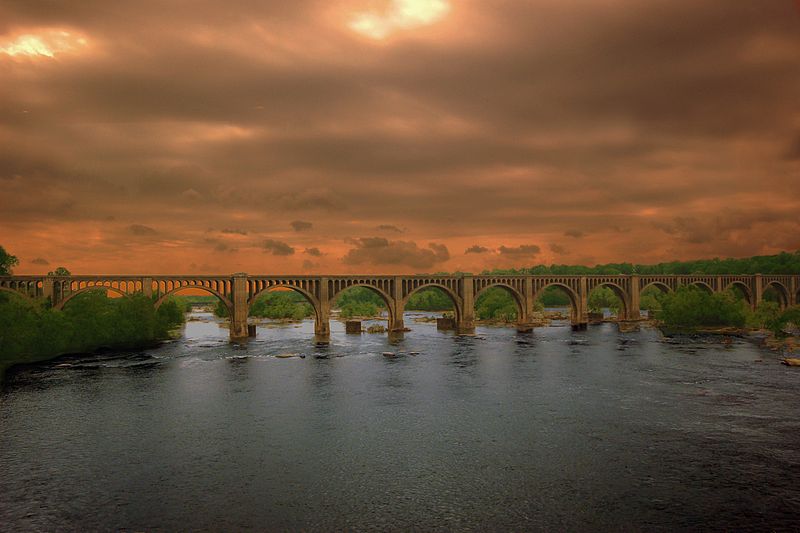
7. Richmond is the River City. If Mayor Jones wants to build a signature development, he should focus on something that is quintessentially “Richmond.” He should invest in something that is unique and timeless:

James

I know the mayor has plans to continue the riverfront redevelopment plan, but I don’t think he realizes the ballpark could begin to outweigh the river in our public image. Richmond could be known as a city of timeless architecture and natural beauty. The ballpark is neither of those things.

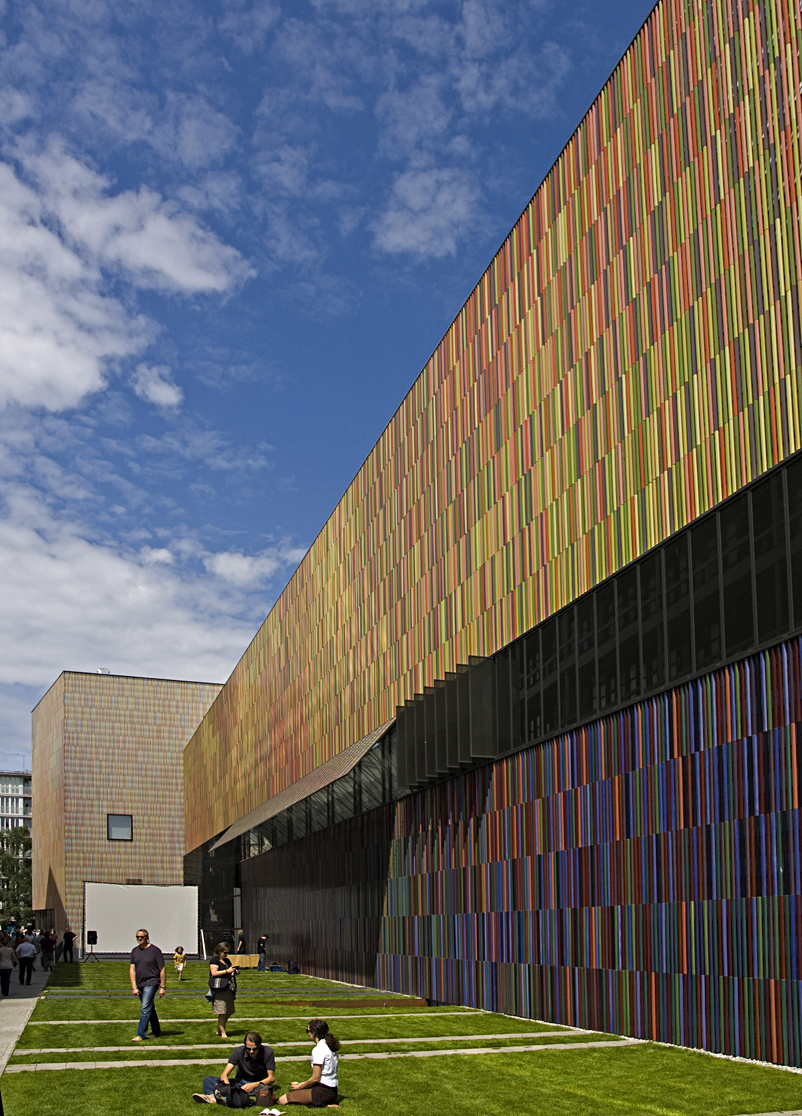
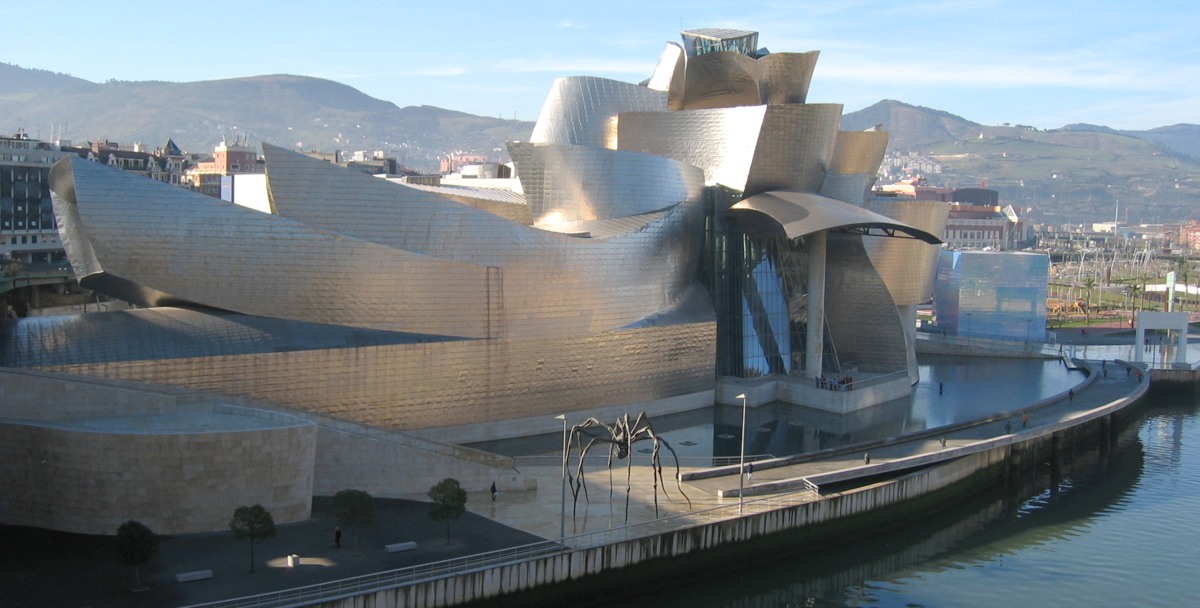
8. The ballpark is destined for mediocrity. Why do we want the crown jewel of Richmond to be a stadium for a minor league baseball team? As we improve our image locally and nationally, we should strive to keep our most valuable assets in the center of the city. I love The Squirrels and I think their games are fun and easy to love. I just think we can do better for the center of our city. Many people have mentioned the need for a slavery museum. There has been a backlash of people saying that museums are boring, but I think a museum could be world-class, free, and could encourage a spirit of learning. Unlike a baseball team, local history isn’t going anywhere. Also, we would have an easier time seeking donations for something historically significant. Maybe something like this:

Bilbao

Bilbao is a city of 350,000 people in northern Spain. This museum cost $89 million through a partnership with the Solomon R. Guggenheim Foundation. Richmond is a city of 201,000 people. We’re planning to build a minor league baseball stadium for $50 million without any international partnership. Which project is worth the cost? The whole world knows about Bilbao because that city dared to do something world-class. Even Roanoke turned heads in 2007 with the construction of a museum that set a new design standard for the region.

9. We’ve tried this before. The city of Richmond has funded and subsidized many single-use, large-scale venues in the past. These include the Richmond Coliseum, the Greater Richmond Convention Center, and the Carpenter Center. Each of these was built or renovated with the hope that they would help revitalize the area around them. The results have been mixed. I personally love the Carpenter Center and I think that it has been the most successful example in conjunction with grants extended to business on Grace St. More recently, efforts to encourage development on Broad have had incredible results. These have come from the hard work of citizens and government employees. The large-scale developments may have played some small role. That sort of revitalization will come with a more small-scale, intensional reinvestment program.

10. Richmond deserves better. It’s really irresponsible to spend our time and precious resources on something that will eventually be outdated. We can’t devote valuable land in the center of our city to the construction of a building that will be used for 70 days out of the year by a minor league baseball team that could leave. Even if they leave after 30 years, we’ll still be scrambling to find a use for the space. But there is no other use for the space because stadiums can’t be retrofitted or rebuilt. We can’t afford to ignore the rest of the city and try, once again, to revitalize Richmond with a big, flashy project downtown that is being celebrated as the future of Richmond.

If we must have a big project, we should at least build something that will be historically, architecturally, and culturally significant as well as something that is relevant to the place and people of Richmond.

“World-class cities are not built on a foundation of minor-league ideas.”