Tag Archives: Garden

Art project idea: yucca in red

One Saturday in early January, in the middle of cleaning and entertaining my kids, I got an idea for an art project and sketched the notes below.
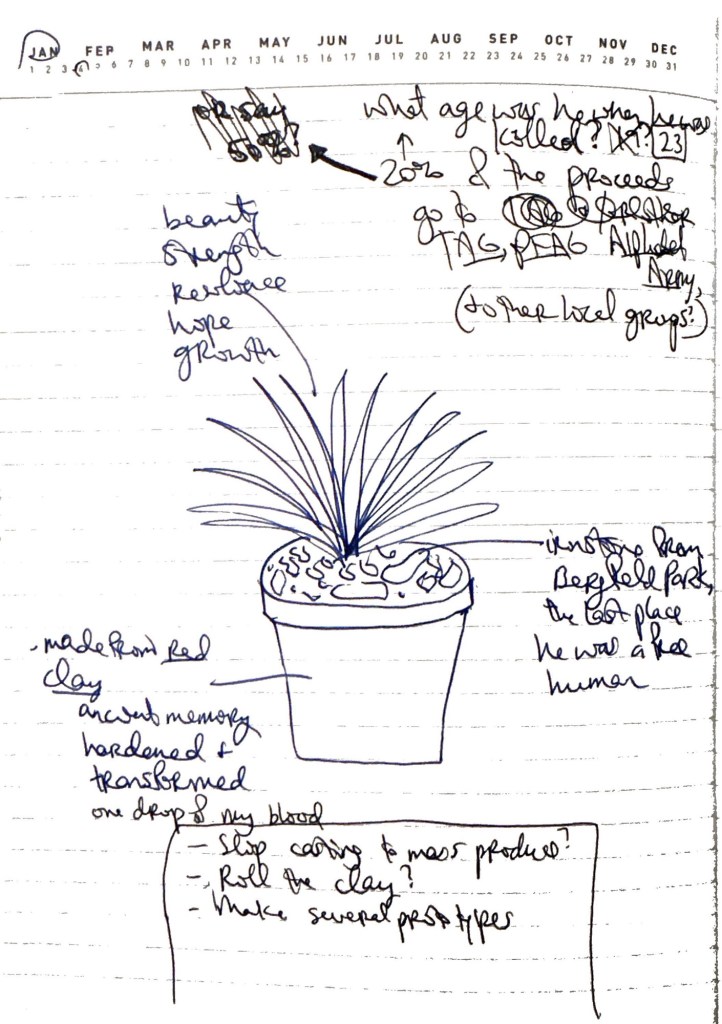
I’ve been really interested in the life and death of Nicholas West for a little over a year now and continue to feel a strong connection to his story.

The basic idea is…

  • A collection of pots thrown from red clay harvested in and around Noonday, TX where Nicholas was tortured and killed
  • The pots are different sizes with different biographical information about Nicholas like his birth and death years, text from obituaries, anything significant from his story
  • Each pot would have a drop or two of my own blood. I want to make people a little uncomfortable when they pick up the pot and read the description. I want to make his death more tangible and remind people that all soil has seen bloodshed of one kind or another. (On a more cosmic level, I also love the connection between the iron in our blood and the iron in the soil which was all stardust flung across the universe from dying supernovae.) I’ve noticed that men are pretty squeamish about the idea of the blood, and women I’ve told are much more supportive which makes me want to do it even more.
  • In the pot will be planted a Yucca filamentosa, native to the southeastern US (from Tyler to Richmond), very hardy, tropical, and structural. The yucca will grow to fit the size of the container that it is in, the yucca is resilient, and in the spring it has a bloom several feet above most other plants.
  • Yucca is also the first plant that I really noticed and developed a connection to. It is the first plant I remember finding and foraging and I’ve planted and potted at least five in the last two houses where we’ve lived. I was in a dark place in my life and my interest in plants, yucca specifically, was an encouragement that has continued to center me and excite me while also driving me a little crazy with more ideas than I’ll ever have time for.
  • While I still love the idea of Yucca, more recently I’ve considered Hesperaloe parviflora, also known as “red yucca” or “false yucca.” I noticed it in Texas at some point and planted it in my garden 3-4 years ago. I had a naturalist walk around with me and he commented that he liked seeing it growing in Richmond because he didn’t know that it could. I love the idea of a Texas transplant thriving in Richmond and the idea of it being a “false” yucca feels appropriate for the Southern culture of repression and how much of myself I held back from others for so long. Of course I love the red bloom, the color of blood and nectar for hummingbirds stopping for a moment on their impossible migration.
  • On the surface of the dirt in the pot I want to scatter bits of ironstone found at Bergfeld Park, the place where Nicholas was picked up, the last place he was free. On my most recent visit to Tyler I pocketed some pieces of the stone and brought them back to a potted yucca I have by our back porch. It has been special to me to have them there as a connection to home
  • I’d love to sell replicas of the different styles of pots and give a portion of the proceeds to local LGBT community organizations in the Tyler area.

It would take months or years to really do this as well as I would want to – I haven’t even fired a clay pot since high school. I’d need time to harvest the clay, prototype different styles, and learn how to make them consistently well, etc. So with all that considered in addition to the constraints of full-time employment/parenting life, I’ve accepted that I’m probably not going to attempt it, as much as I want to. It felt better to share the idea here and let it go rather than hold it too tightly.

4.22.25 – Since writing this post I’ve thought more about the possibility of partnering with an artist to make the pots that I could use to plant and we could market the project together. Even still I don’t think I have the time to do it well, but the partnership would be really rewarding and it’s much more realistic to lean on someone’s existing expertise rather than try and develop it myself. It also got me thinking outside the box even more. Maybe this idea should actually be an assignment for a class where everyone chooses an event that deserves more recognition and designs an installation to share the story. Maybe it should just be an online project that collects memories and details from his story. Or maybe this just needs to be a section of my own garden: a shrine to his life and a broader connection to my own story, my hometown, and the resilience, growth, and occasional moments of flourish.

4.24.25 – While reading about “The Burying Grounds Memorial” at the University of Richmond I learned that Yucca, “is often found in the cemeteries of enslaved people, serving as living grave markers.” I have only just gone a few steps down this rabbit hole, but I’ve already found some interesting articles and anecdotes that support using it for the project. It seems the plant has long served to mark the memory of people who might have otherwise been forgotten, to bind their restless spirits after life, and to provide permanent protection to their physical remains.

  • “Fieldstones. Yucca plants. Seashells. The last object a loved one touched. For centuries, these items, cultivated from lives and landscapes, marked many graves at burial places for Black people in America.” National Grographic
  • “Some of the plots were marked with pieces of quartz or with yucca plants, which were used by many Southern Black families who could not afford stones.” ProPublica
  • “The phrase “pushing up yucca” has been coined to describe these graveyards, and there was a Gullah belief that spiny plants restricted the movement of the spirits of the dead.” Society of Ethnobiology
  • “Spiky clumps of yucca dot Odd Fellows cemetery as further reminders that this patch of woods was once a curated (if not manicured) space. Though widely found in cemeteries across the country, in African-American tradition specifically, yucca binds restless spirits to their graves. Easily transplanted and nearly ever-lasting, yucca was sometimes planted near the head of a grave in lieu of an expensive stone marker.” Black Wide-Awake
  • “Yucca is another plant that marks many early graves even today. It can live hundreds of years and represents eternity. In many African American communities it was also traditionally thought that yucca kept restless spirits in the grave.” City of Birmingham
  • “Due to their association with cemeteries, the yucca plant has also taken on an association with the supernatural, as a way to ward off evil spirits.” Lumpkin County Historical Society

Garlic

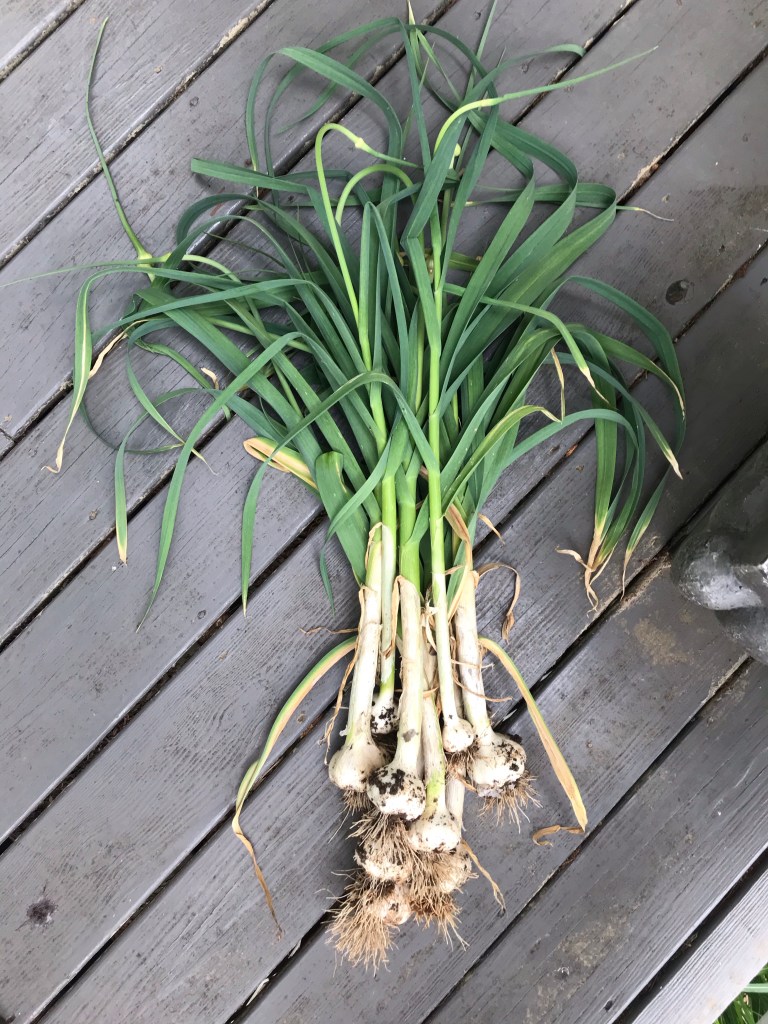
Last year, my younger sister came and stayed with us to help watch our toddler while daycare was closed. She also gardened a lot. At one point while she was here she planted garlic, just the regular kind from the store. It came up quickly and grew all winter long until I pulled it out looking like this:

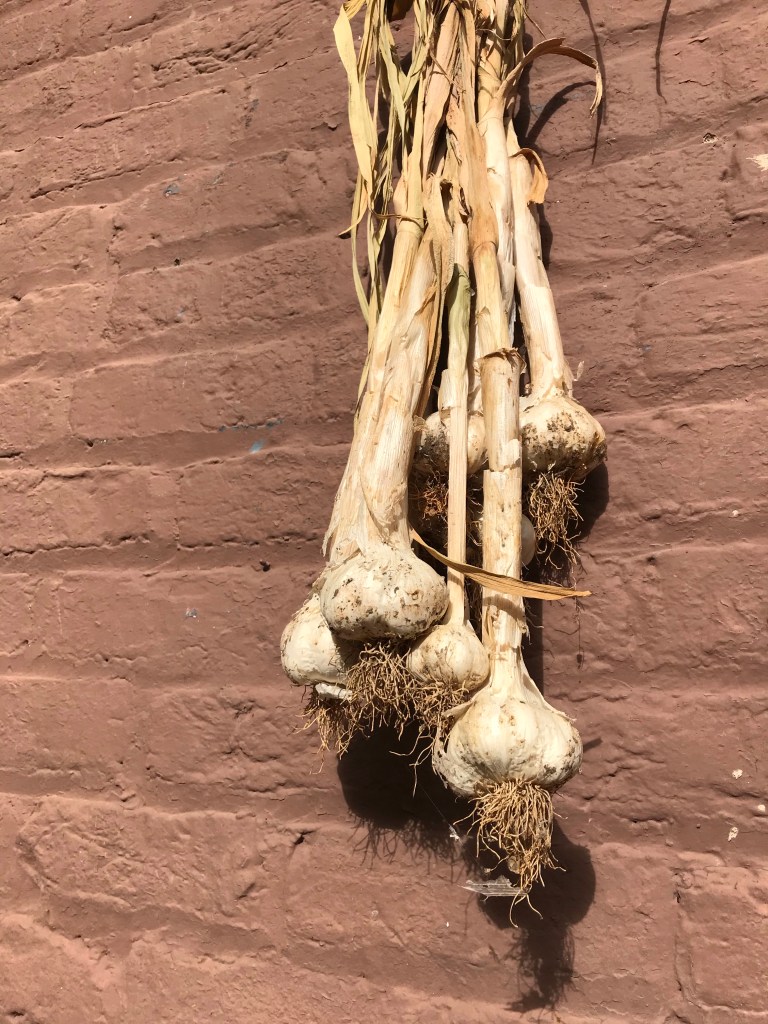
After harvesting it, I dried it in the basement over the summer. I am not sure this is the right way to do it, but I finally brought it up today to take a look.

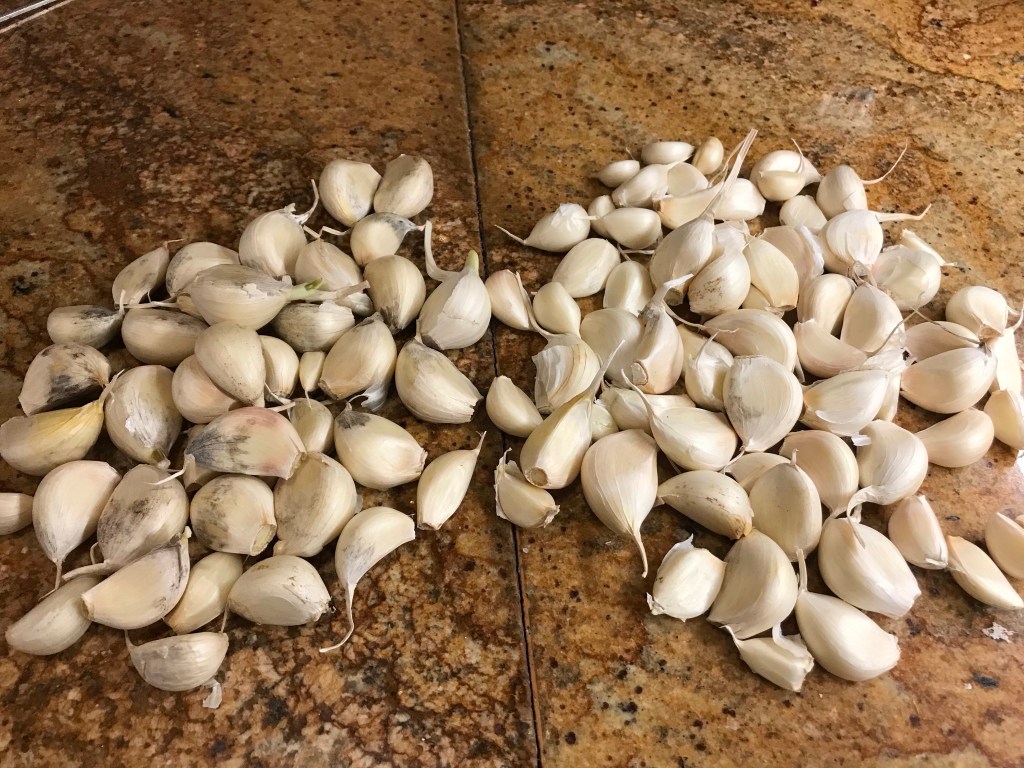
I’m pleased to say it all looks and smells like garlic! I appreciate how magical growing food still feels.

I’ll probably plant half of this in the next few days, roast the garlic scapes in spring, hopefully harvest the rest when it’s ready, then do it all over again. It makes me think about whenever it was that garlic was first spreading as a food. One person harvesting a head of garlic and planting it all that fall. Then, with several heads of garlic the next year, sharing a clove with close friends and family so they could start a crop of their own.

Fall forage

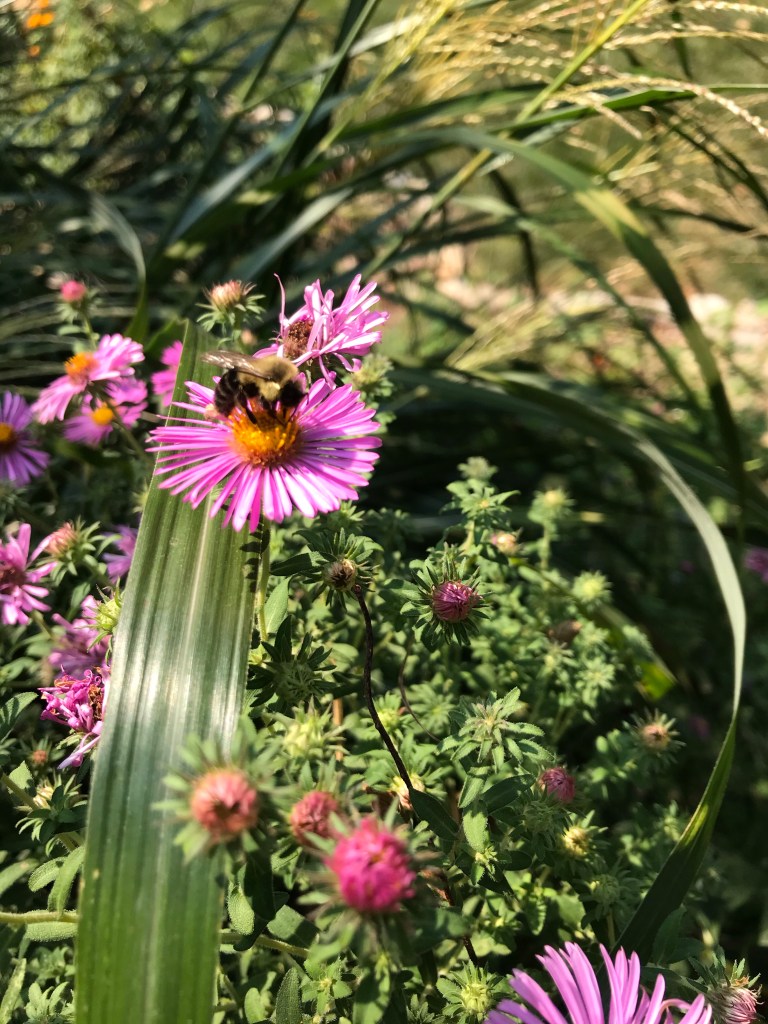
I admire perennial, wild gardens that have been cultivated to bloom throughout the growing season. When I see most of my perennials have gone to seed, I especially notice examples of flowers that that are still or for the first time in full, glorious bloom. I don’t have the time or energy to add anything to my garden right now, but I hope to eventually bring in the first and third on the list. I know it isn’t going to save us from climate change and mass extinction, but it is still so encouraging and sweet to see bumblebees floating from flower to flower this late into the fall.

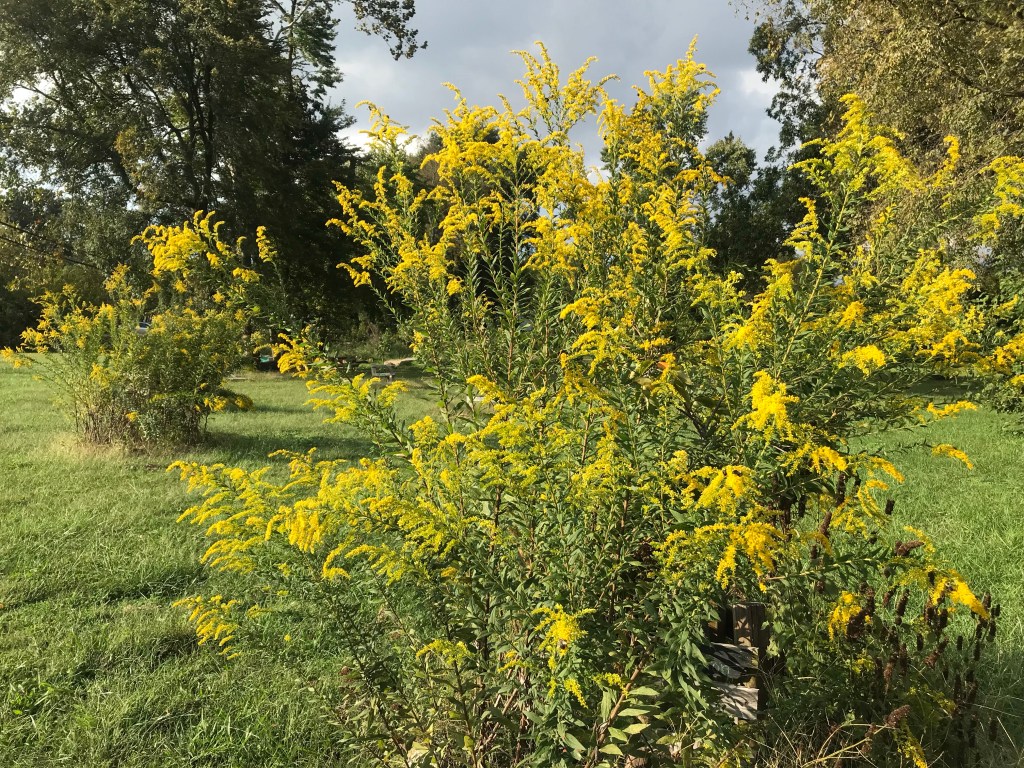
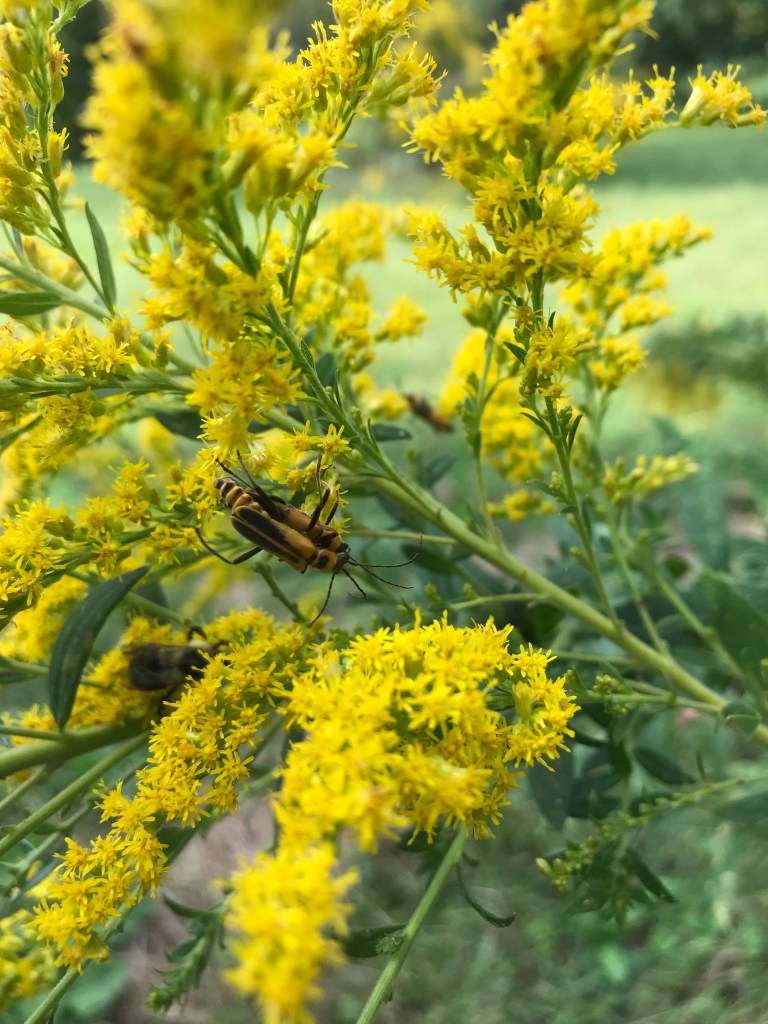
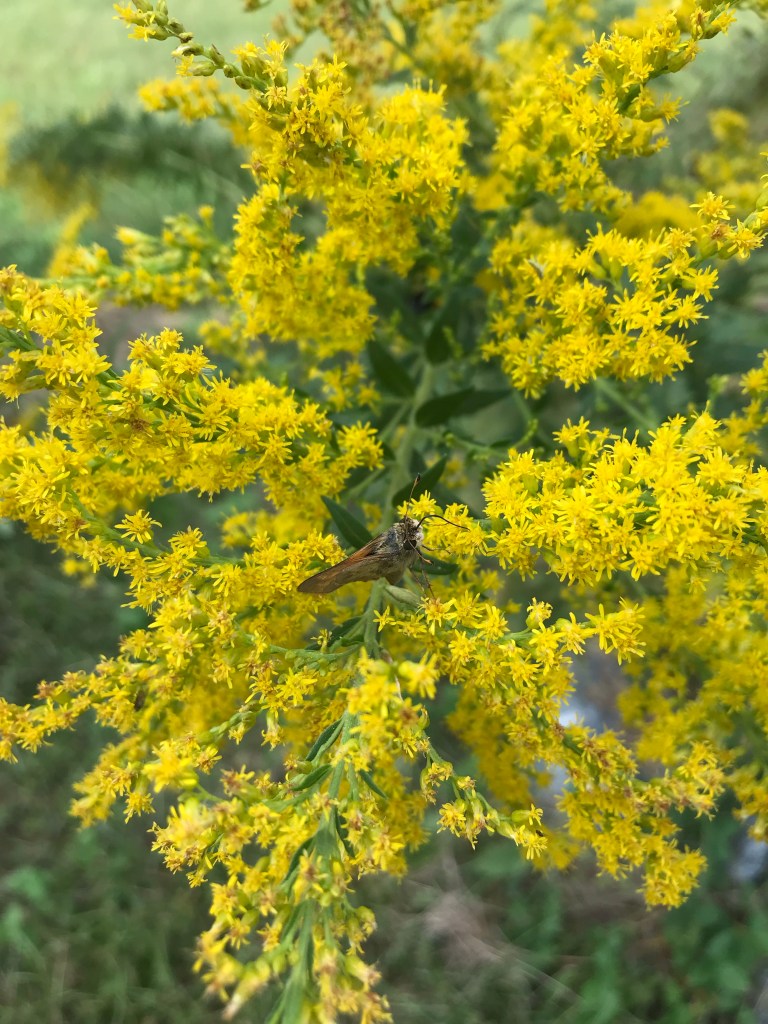
Canada goldenrod, Tall Goldenrod (Solidago canadensis) – this flower has been planted as a companion to fruit trees in the Fonticello Food Forest near my house. I am a little worried that the goldenrod is actually crowding out the trees at this point, but I don’t care because it is incredible on its own and appears to be attracting all kinds of insects.

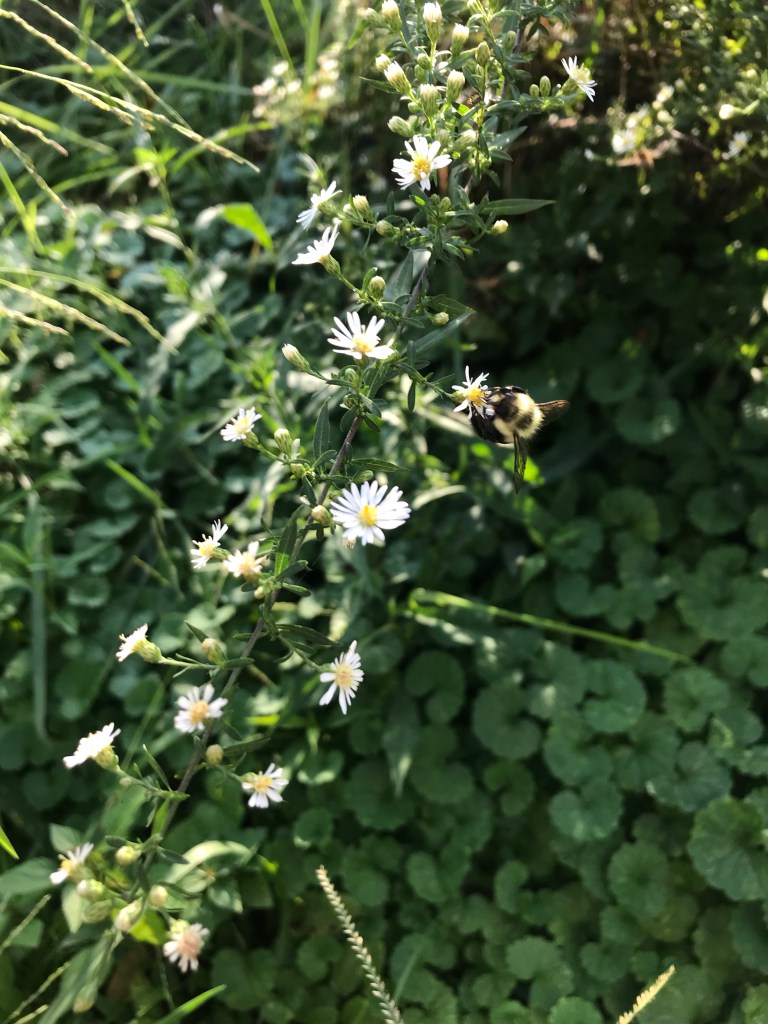
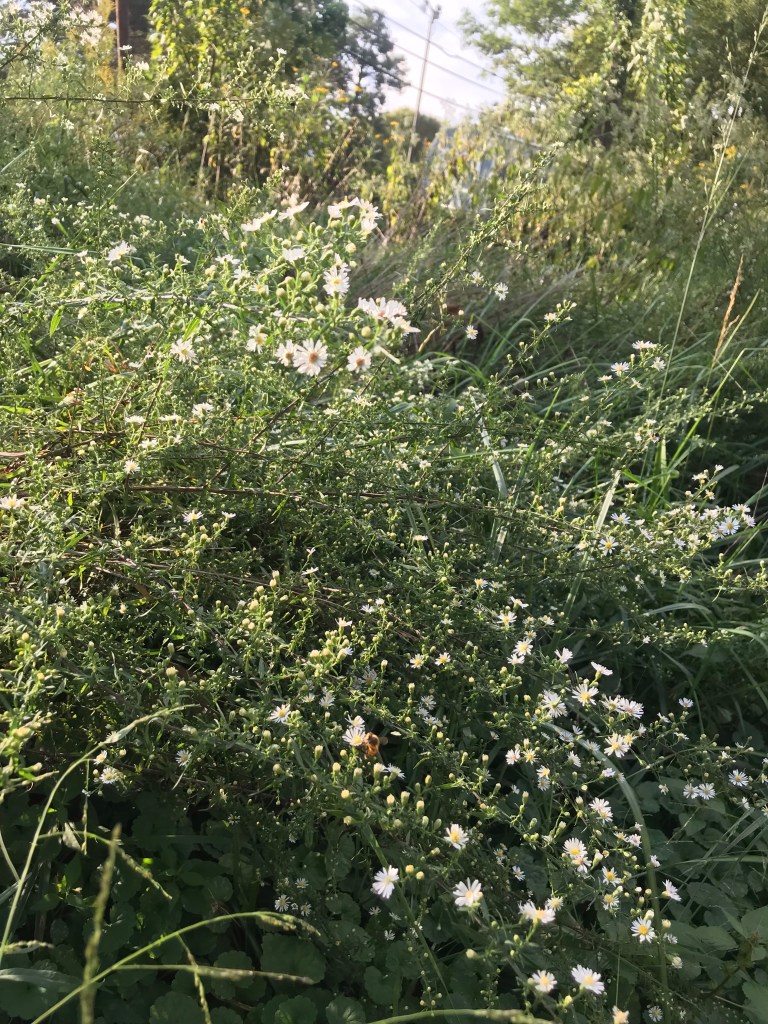
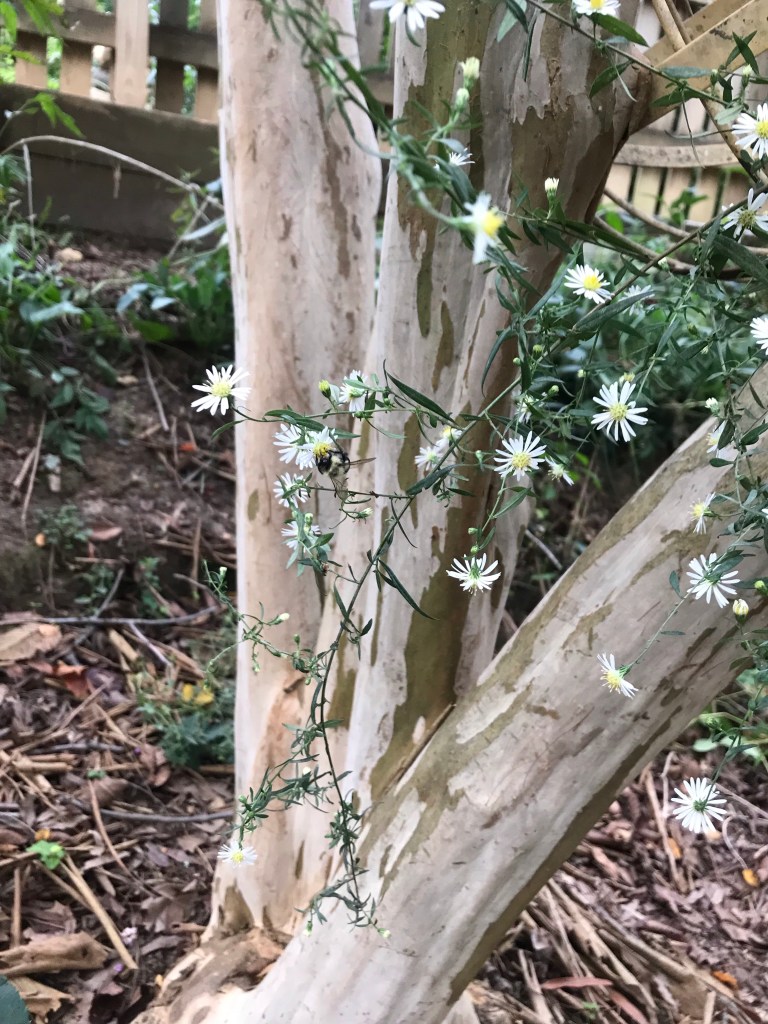
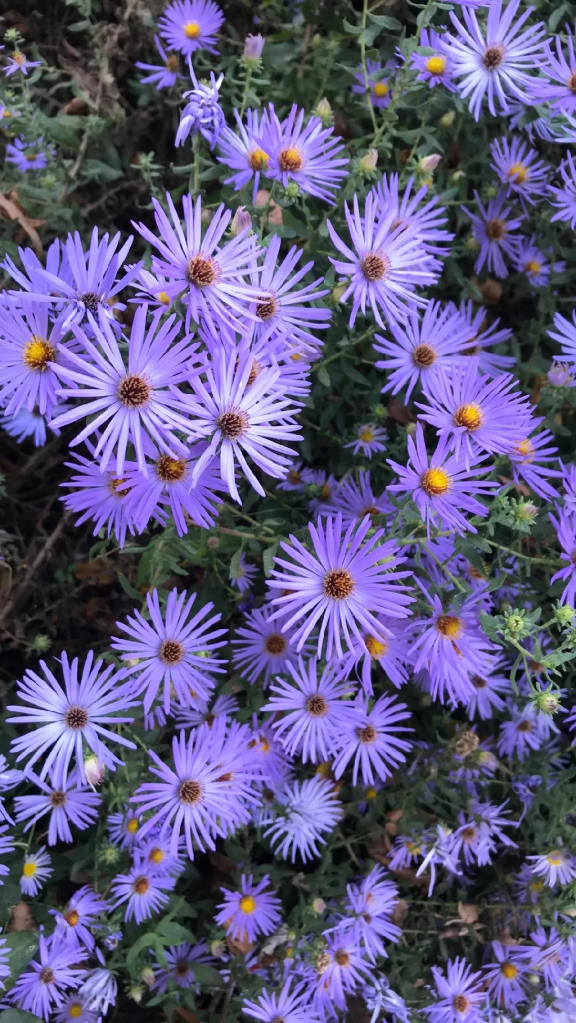
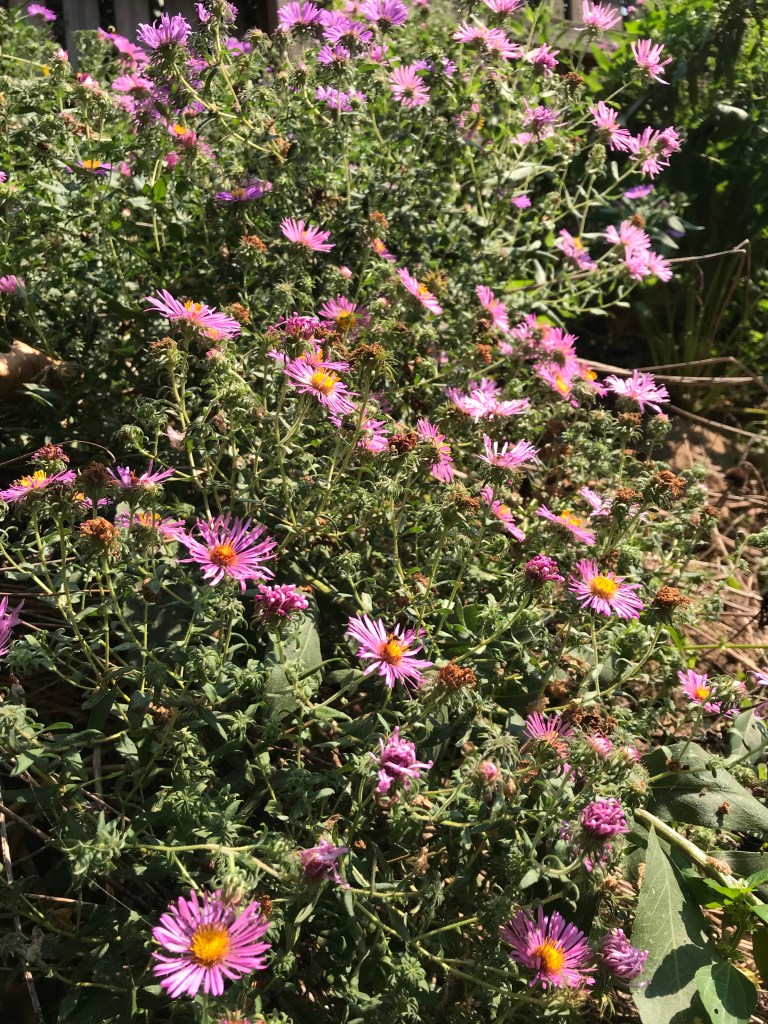
Panicled aster, Lance-leaf aster (Symphyotrichum lanceolatum) – also at the food forest, I noticed this aster completely buzzing with activity. They have it planted in a wet, low lying area of the property and it has thrived. When I got home, I was kind of thrilled to realize that I had two clumps of it growing in my garden also (last picture), a surprise gift from the native wildflower mix that I spread in 2020.

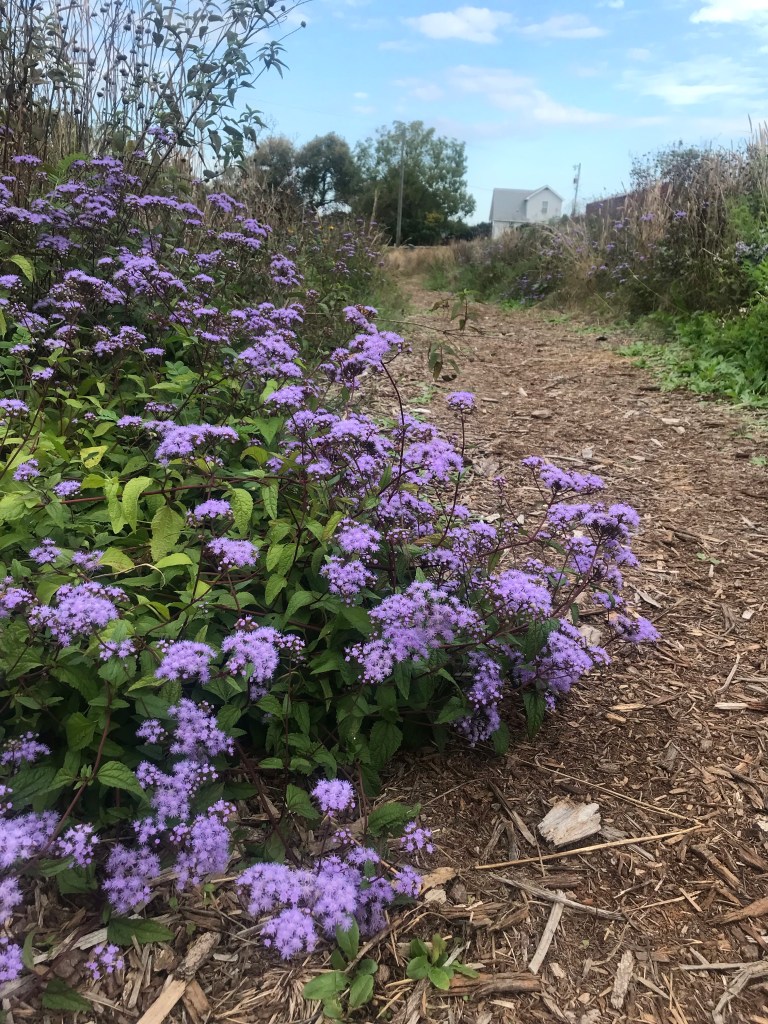
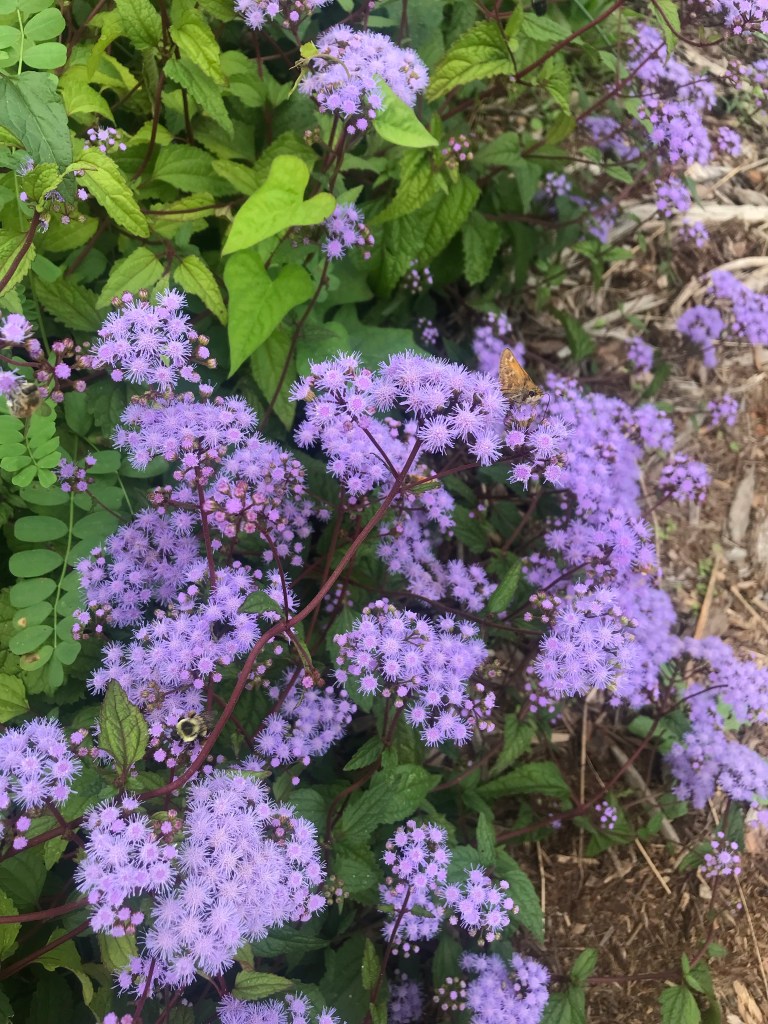
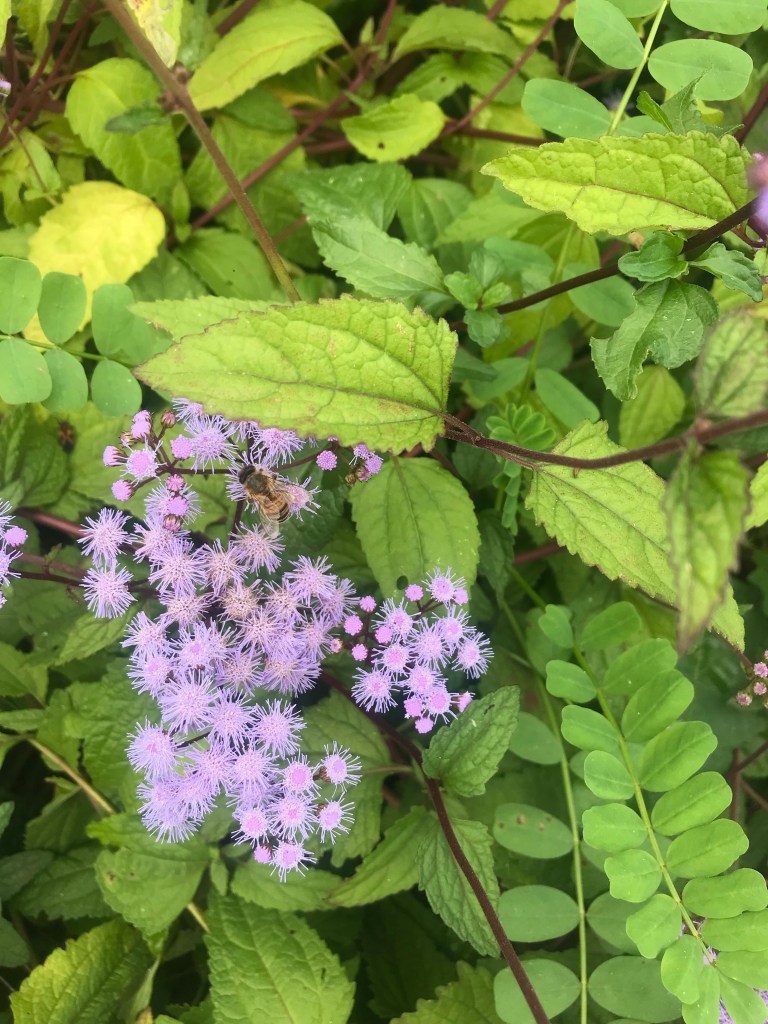
Blue mistflower (Conoclinium coelestinum) – I was at the Barboursville Vineyard last week for a wedding and noticed for the first time the Allegrante Meadow just below the tasting patio. Its acres of flowers had clearly faded from their peak summer color, but the blue mistflower was thriving. It’s color pops brilliantly against the browns and blacks of fall.

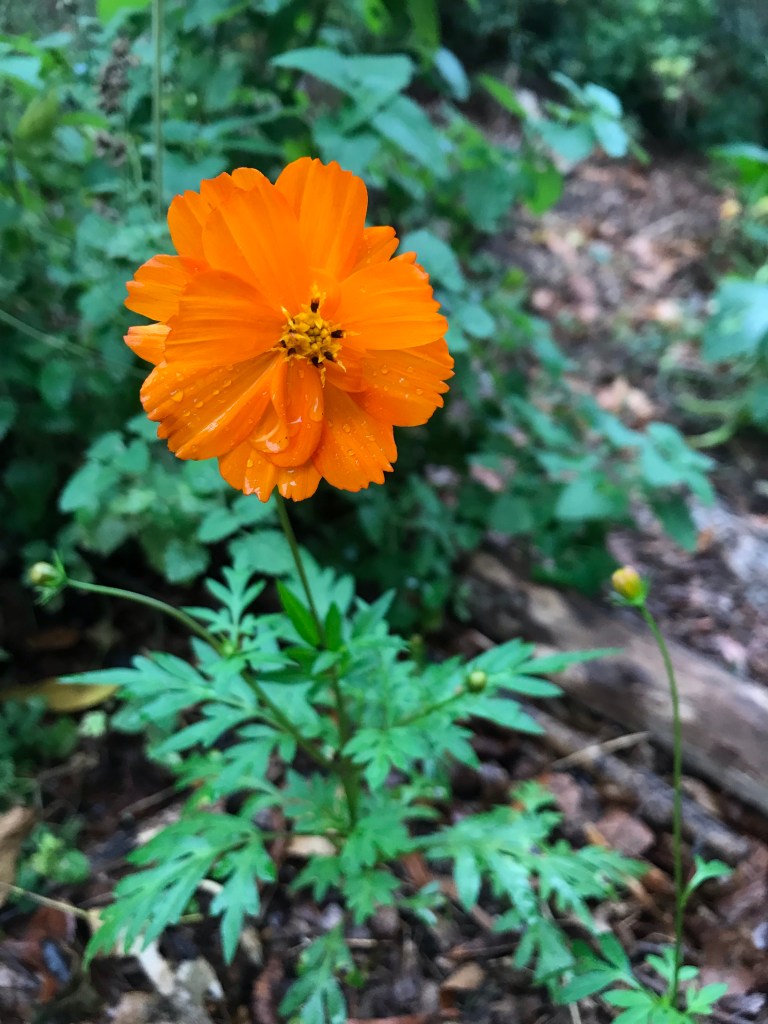
Sulfur cosmos (Cosmos sulphureus) – Another gift from a seed mix in the past, Sulfur cosmos have started to take over a corner of the garden. This summer I saw one bloom and go to seed. Then I saw several more. Now there are dozens of these flowers adding a really nice pop of orange. It does scare me a little how prolific this flower seems to be so I may add in some other flowers that will start to compete for space. Or just let the cosmos completely take over and be happy about it.

Update (10/25): yesterday I walked by a lovely mound of Aromatic Aster (Symphyotrichum oblongifolium), probably ‘Raydon’s Favorite,’ and realized it needed to be on this list. It was already somewhere in my garden plans, but seeing this example in person was an extra dose of motivation to include this plant some day.

A walk around my early fall garden

Just some photos and thoughts to remember early fall, 2021. The first winter we lived in our house, I terraced and seeded the side of our yard to create a wild edge. I have received so much joy from the plants that have come up now two years in a row in this section of the yard. I keep filling in gaps, but the bulk of color and life come from the seeds planted on turned soil a year and a half ago.

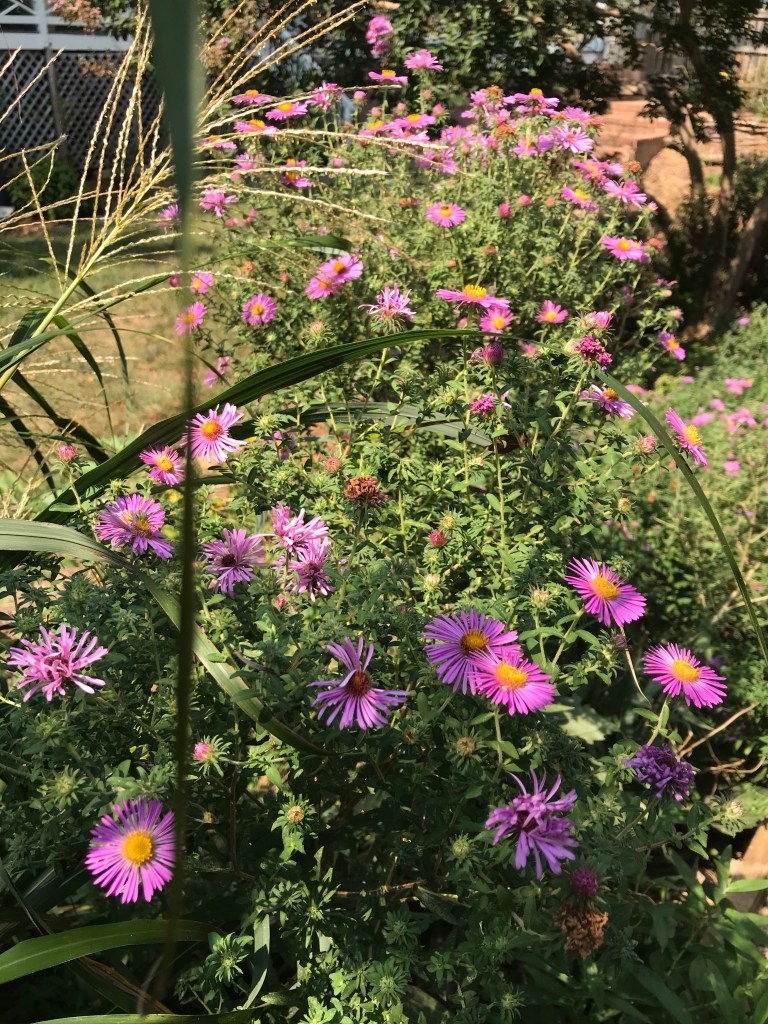
New England Aster has taken the place of first coreopsis then coneflower in the wild edge. Bumble bees and other insects have enjoyed this late summer bounty.

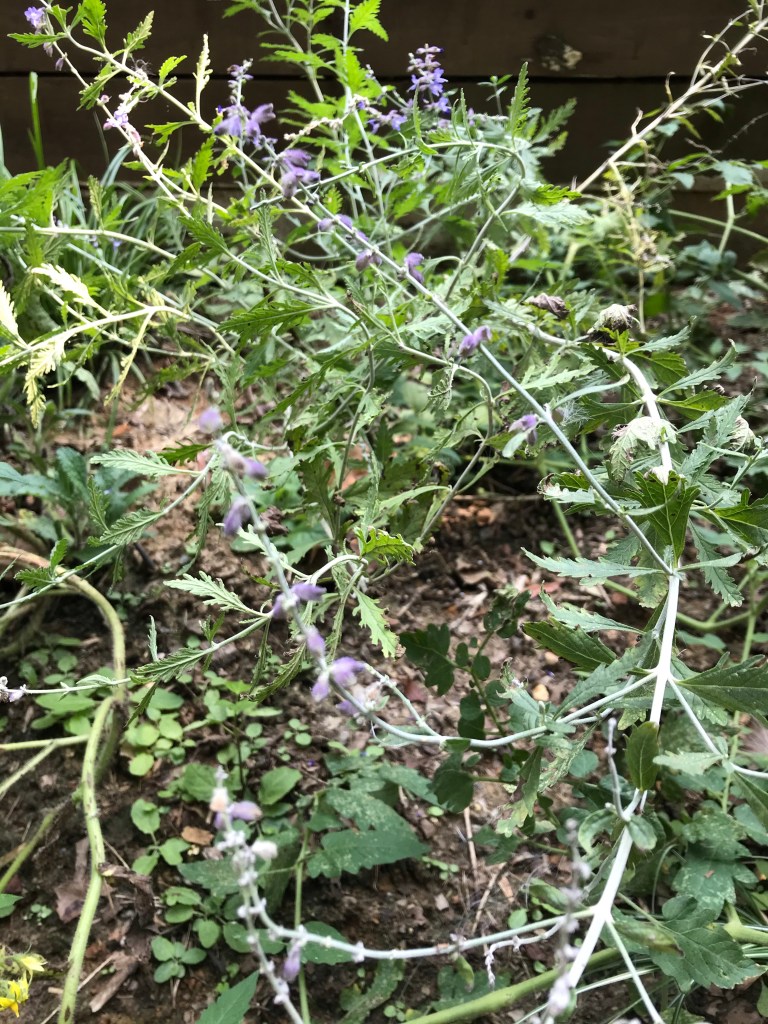
Russian Sage that struggled this summer, but I hope will thrive in the fall and come back with full strength in the spring.

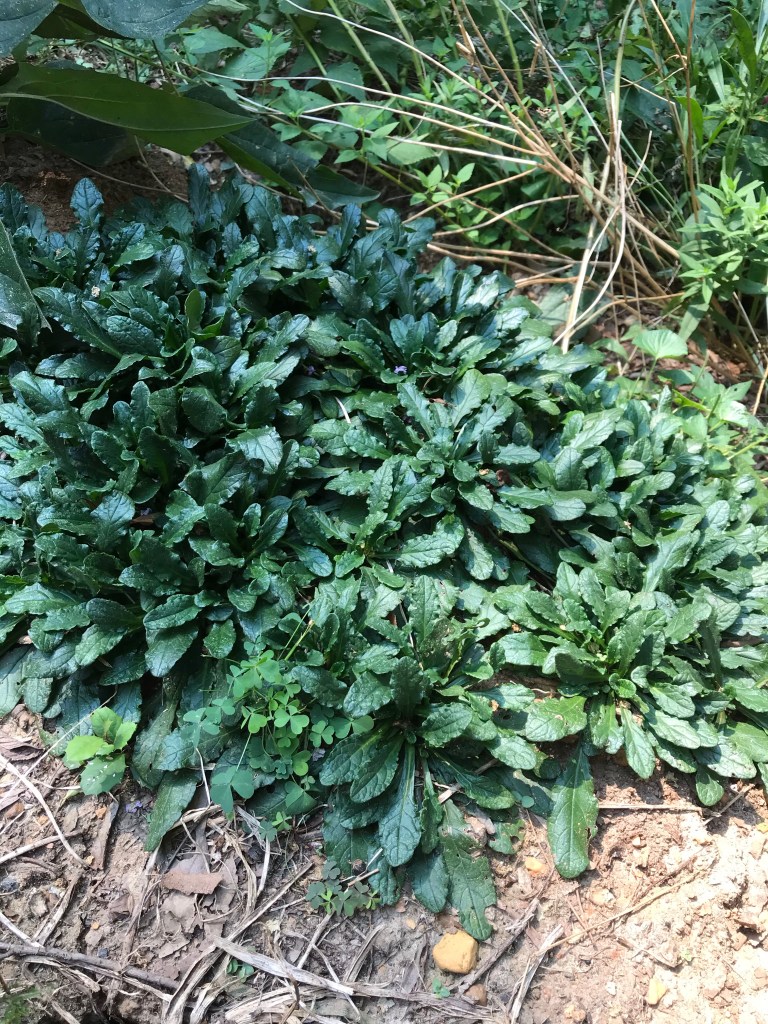
Ajuga reptans grown from seed is spreading in a few clumps nearby. I don’t remember planting this specifically, but I have thrown out a few seed mixes and wouldn’t be surprised if this was included.

I have graduated to mostly buying my flower seeds from Prairie Moon Nursery. I love their commitment to natives for habitat restoration and the variety of options is remarkable. I don’t limit myself to natives, but I’m definitely drawn to them and find myself using them more and more.

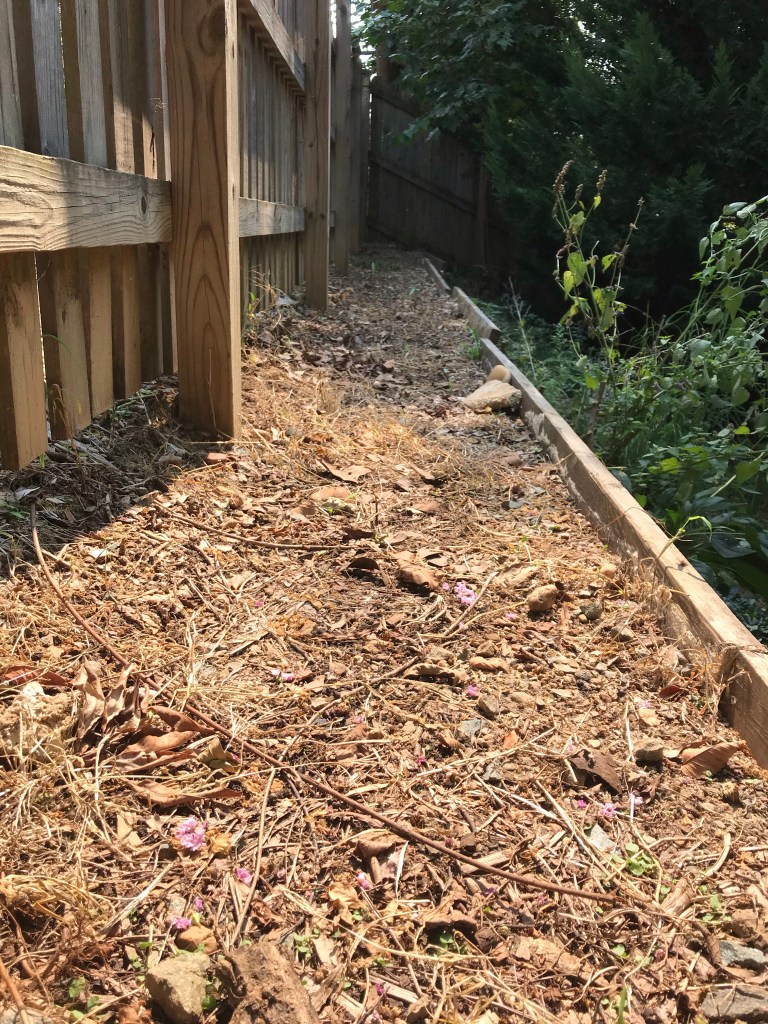
I filled half a “supercan” with weeds from this dog run a week or two ago. I let it go to seed last year and paid the price. I plan to put down cardboard and mulch to turn this into a walking path around the side and down the hill to the back of the yard.

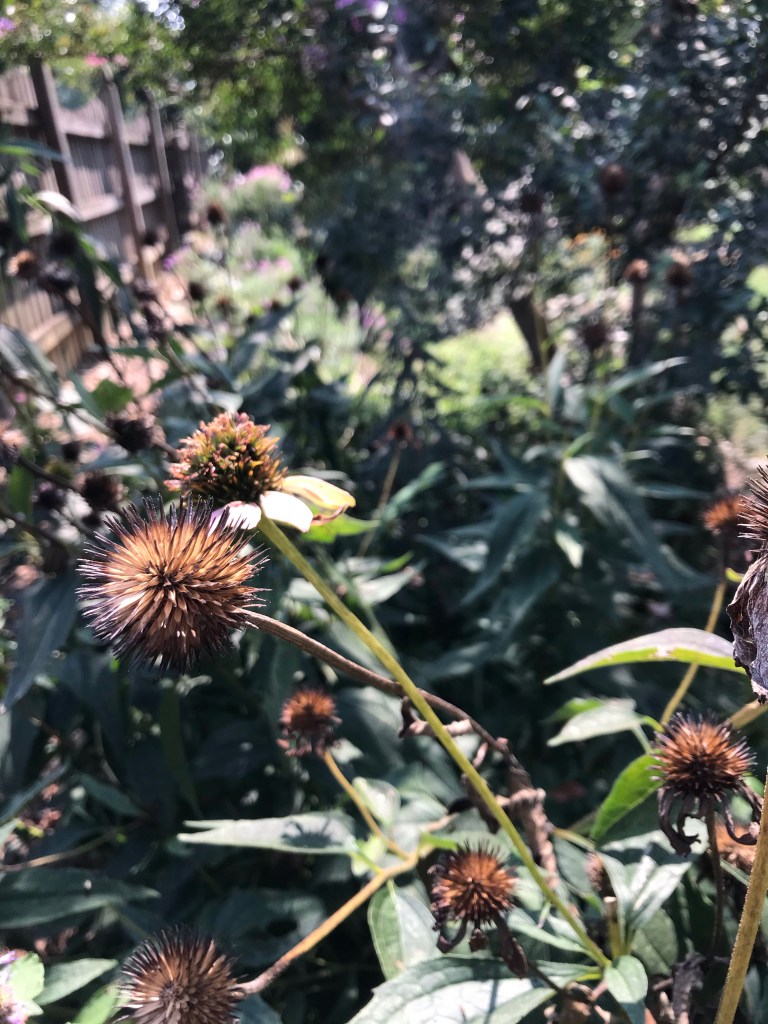
I have already seen one small, extremely fast bird feeding on these spent purple Echinacea/coneflower seed heads. I’ll leave all of this up through early spring.

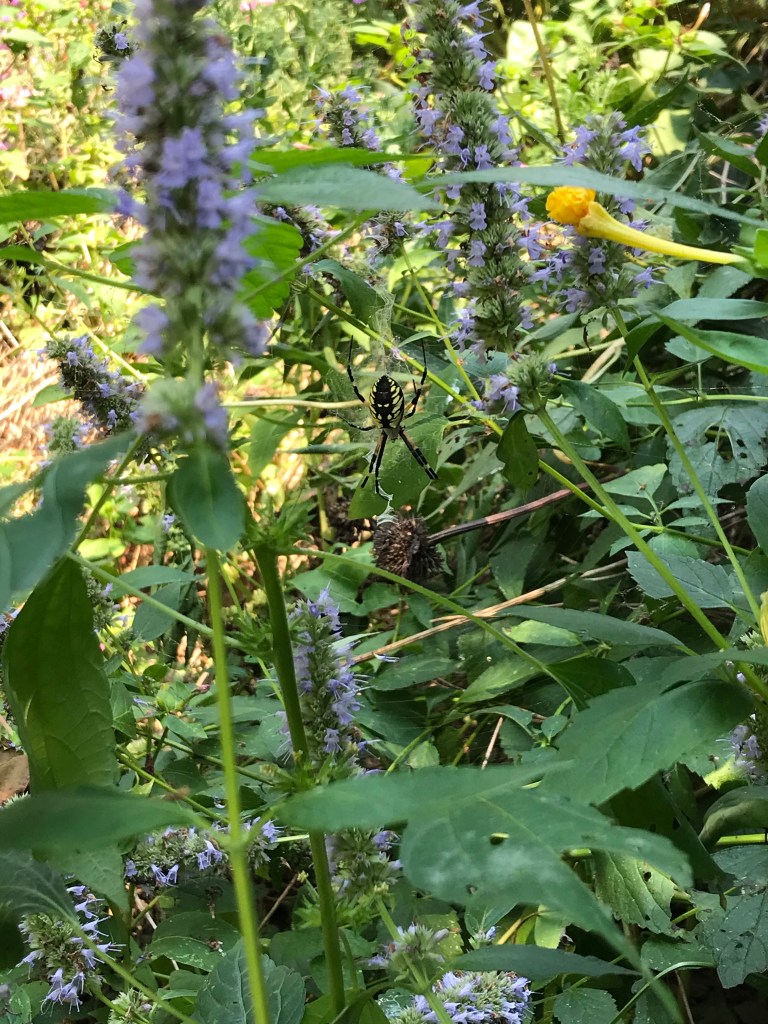
Agastache has been a fun, repeat blooming, addition and now is home to a Yellow Garden Spider, building the perfect place to lay her eggs. I remember when I was six or seven we had a “zig zag” spider web like this outside the window of the kitchen of the house where I grew up and I have loved them ever since.

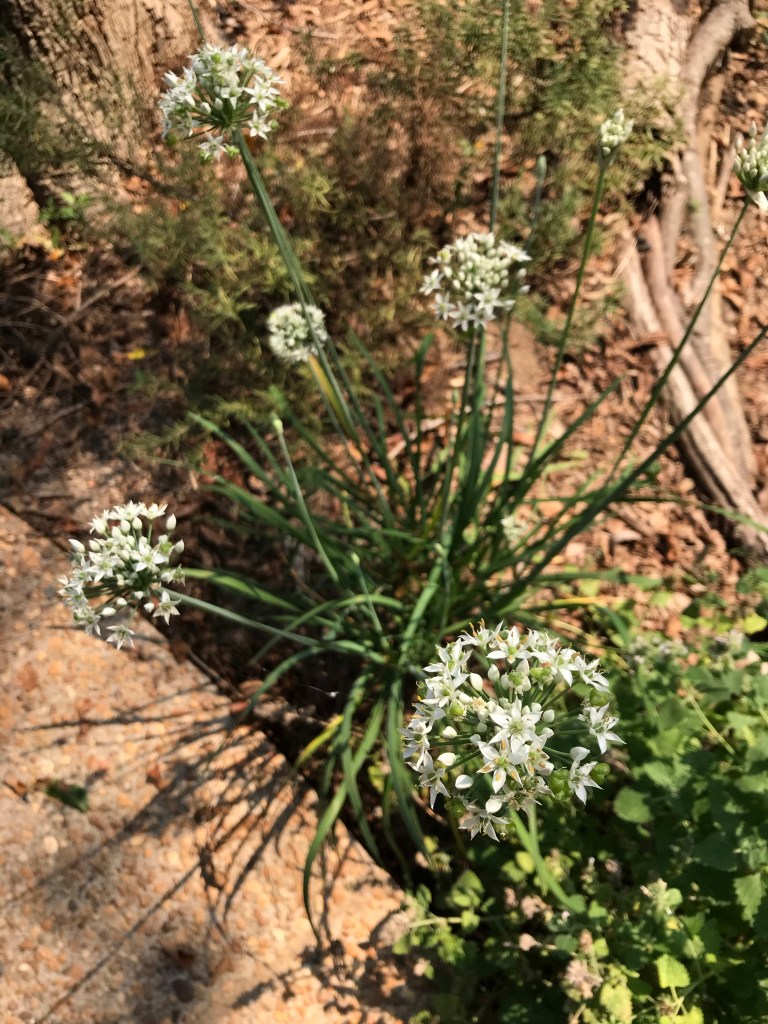
On a recent visit to the Lewis Ginter Botanical Gardens I saw large sections of chives blooming and it encouraged me because I thought I had just been lazy not harvesting the herb. I plan to add more of these for next year.

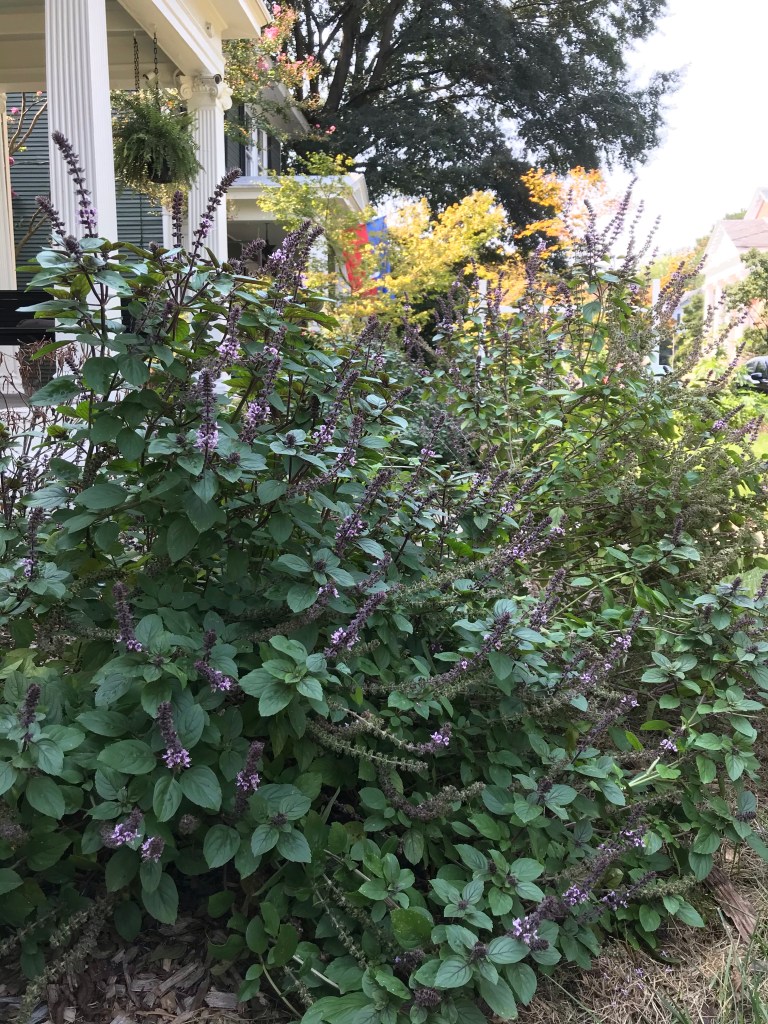
The blue basil in the front of the house was inspired my dad’s pollinator garden. It has been a summer-long source of entertainment for me as a steady parade of wasps, bumblebees, and honey bees have spent hours floating from one flower to the next.

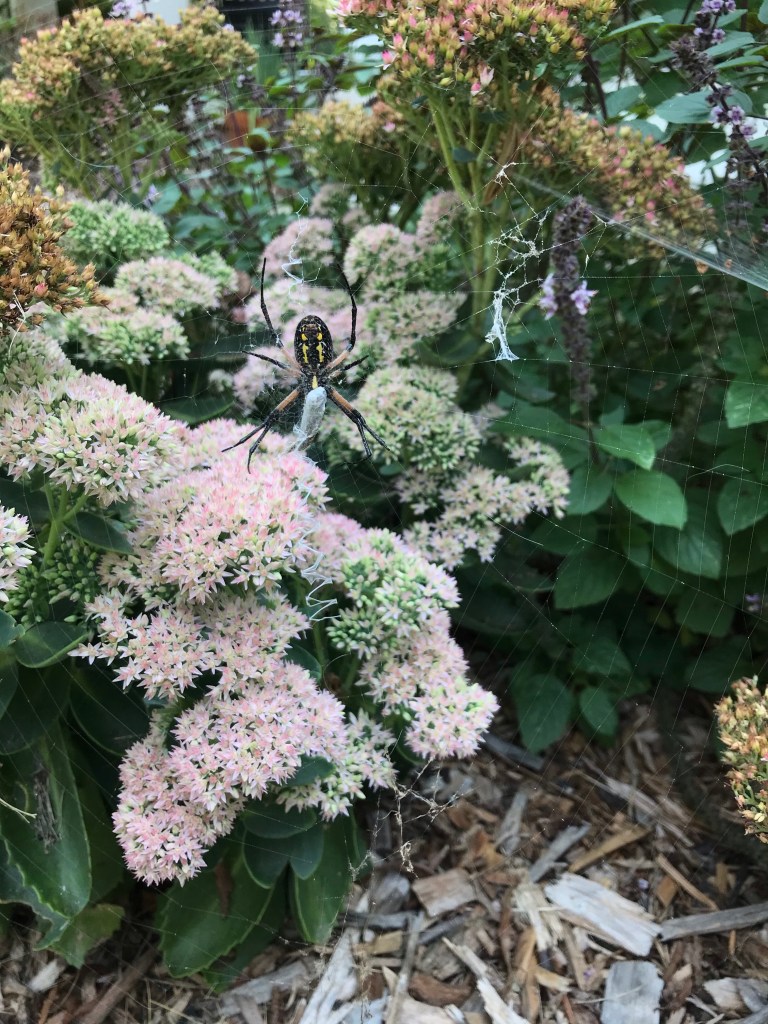
Another garden spider in between the sedum Autumn Joy. It’s devastating that the second search result for Orb-weaver spiders is a page on the Orkin website. Why anyone would fear, hate, and kill this insect is truly beyond me.

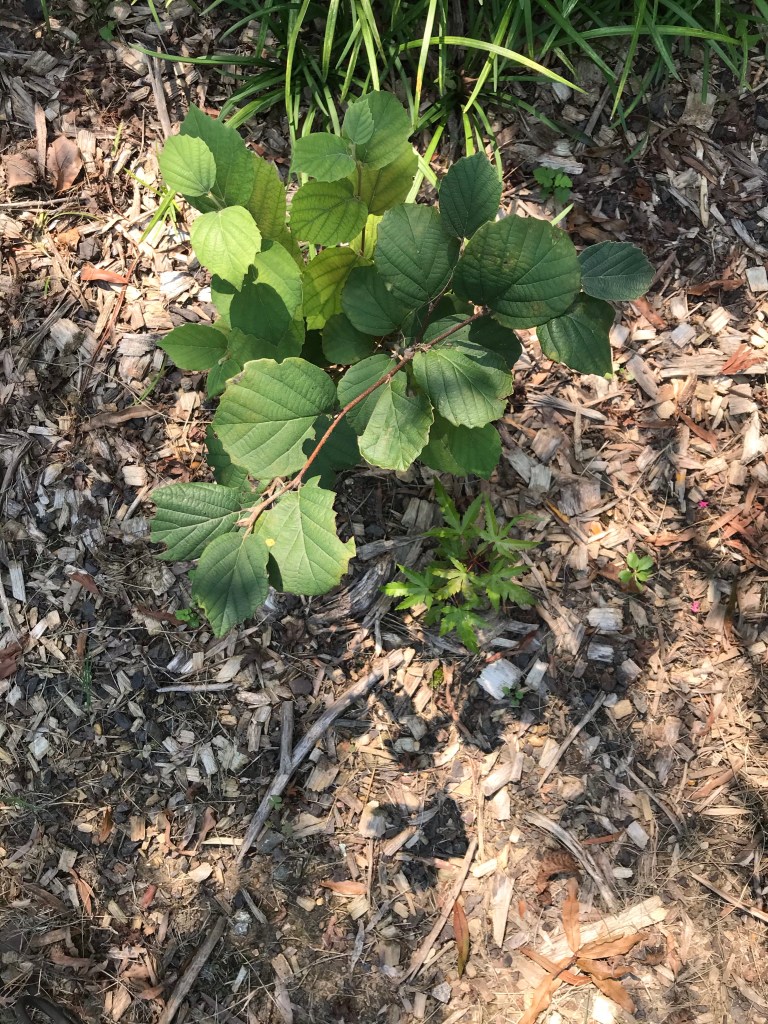
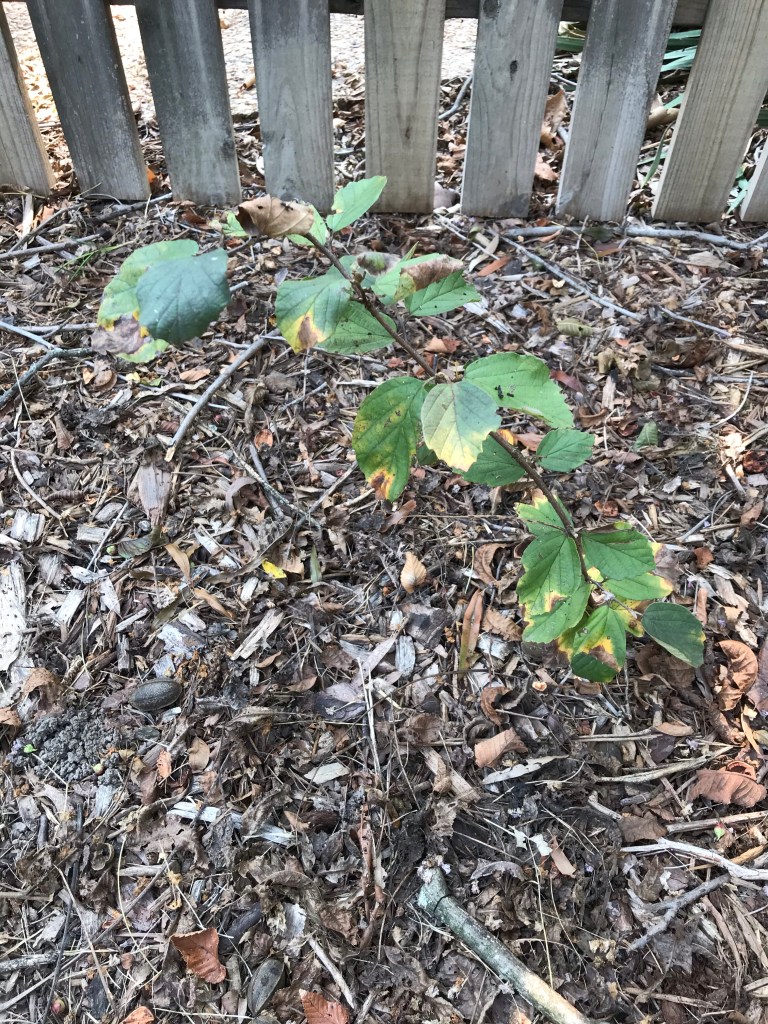
My mother has connected with her birth families over the past several years and we learned that her birth father’s last name was Fothergill. This plant is Fothergillia Gardenii (dwarf Witch Alder) and I feel like I have a special connection because of my new-found heritage. This one is looking great, filling out and nice and green, but the next one is not doing well, possibly struggling because I planted it in partial sun instead of full sun (it’s on the transplant list).

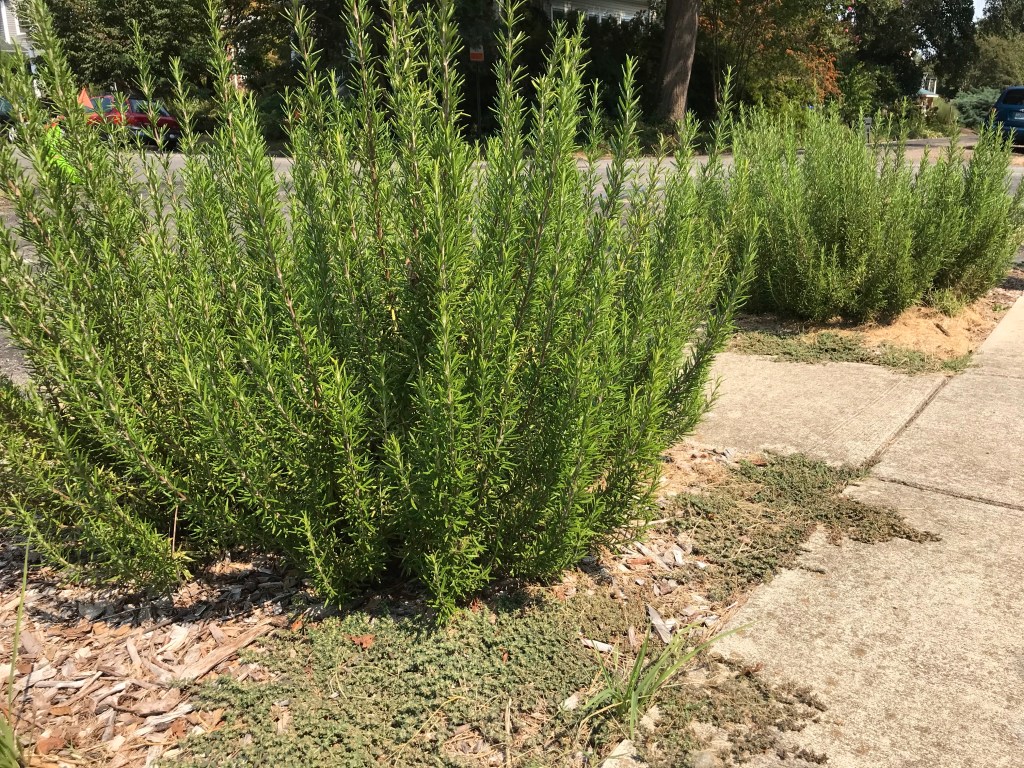
I can’t wait to see these Rosemary bloom in the spring. They were both maybe 5″ x 5″ x 12″ when I planted them in early 2020.

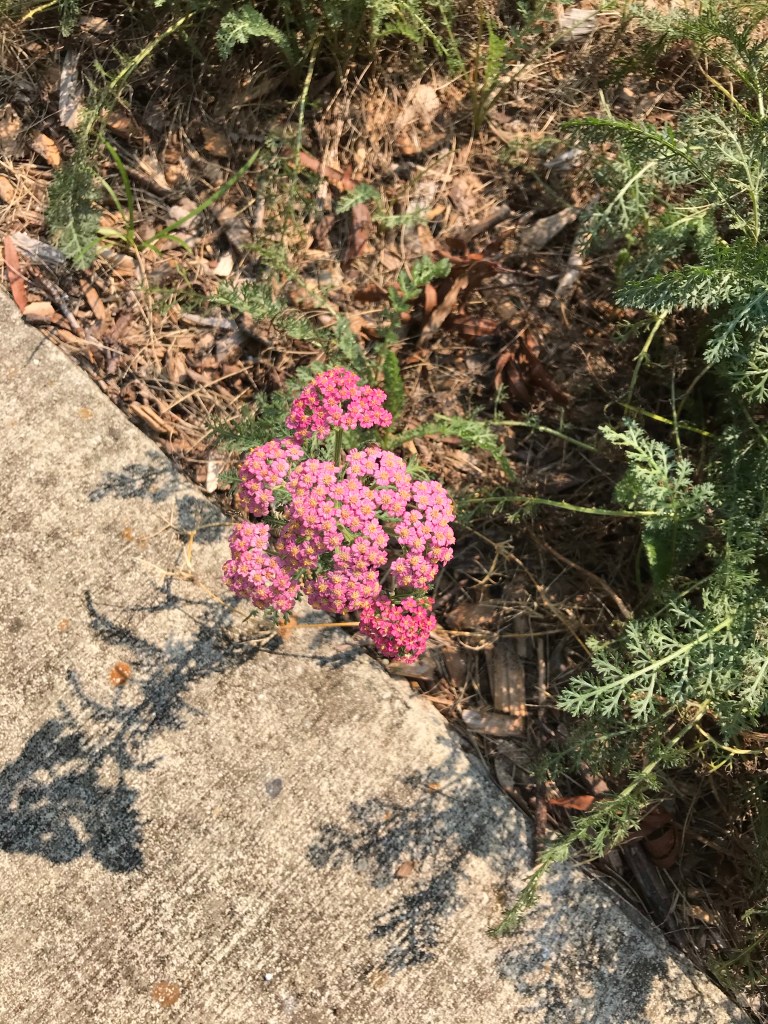
Achillea/yarrow that has naturalized well and continues to bloom.

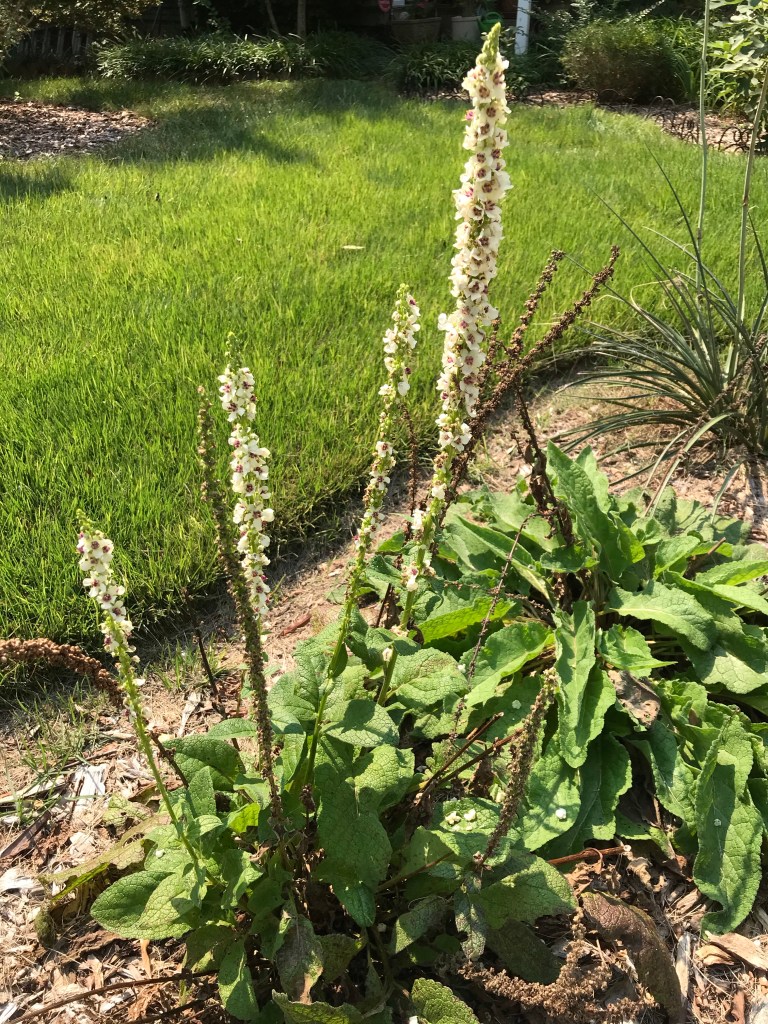
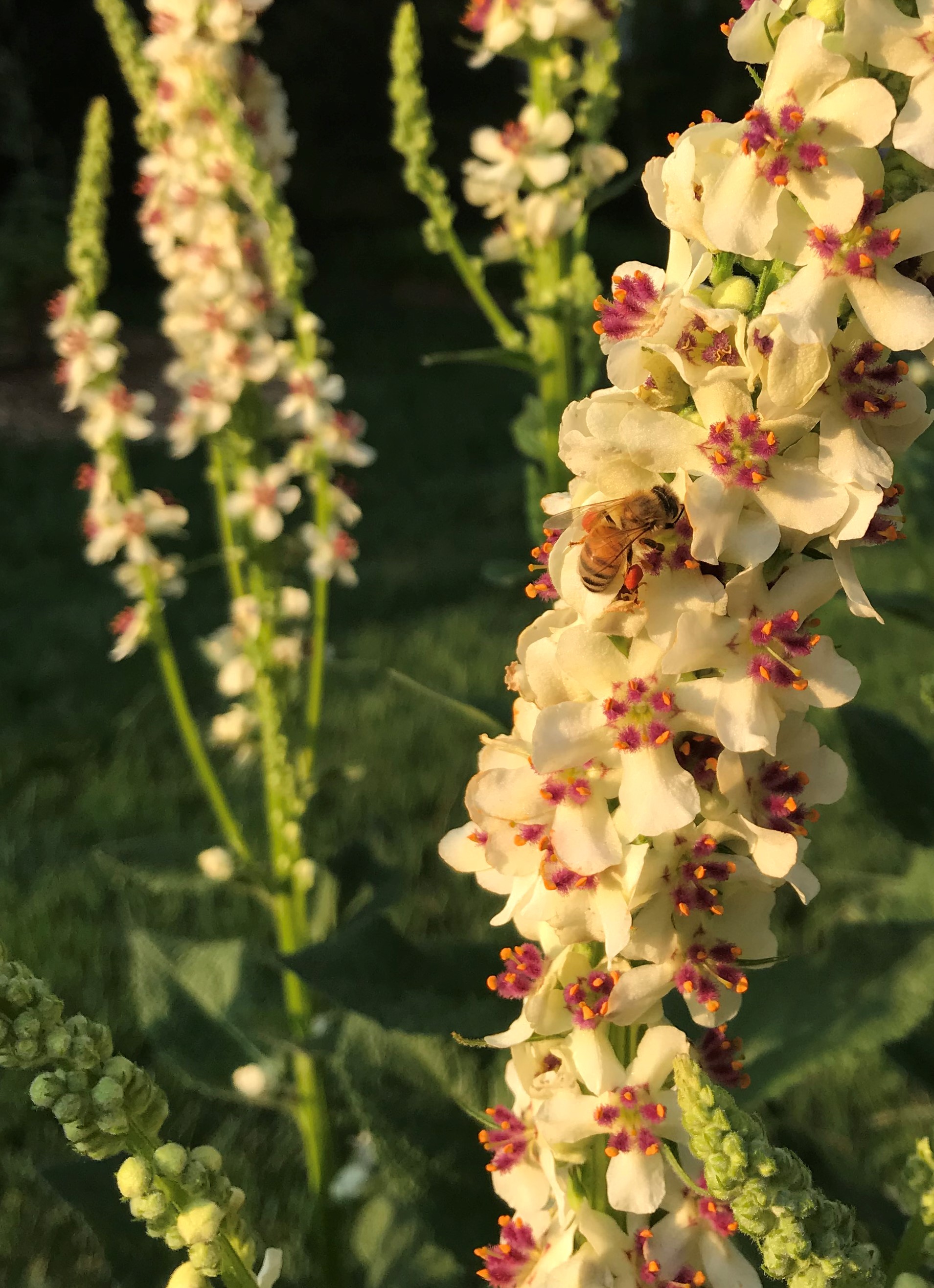
This third bloom of the Verbascum (wedding candles) is not as glorious as the first and not nearly as much of a bee magnet, but still gives me joy and nice visual interest.

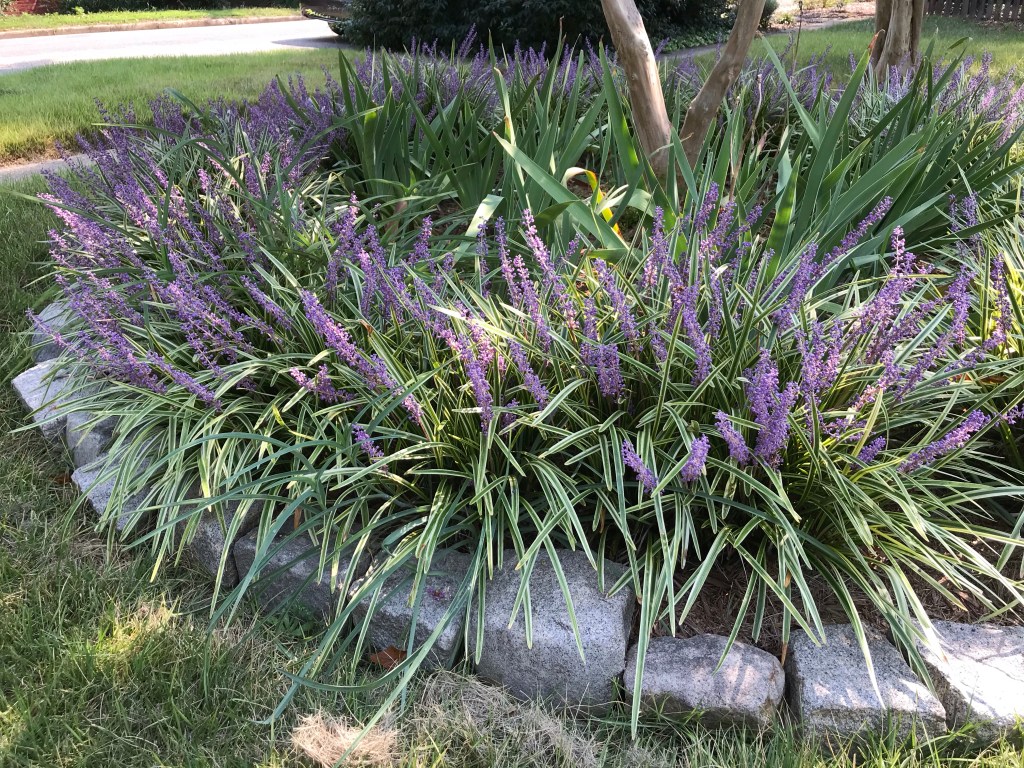
Liriope in full bloom has been making this circle pop for the last few weeks. The purple Irises in the middle are divided originally from my mom’s childhood home in Dallas. They were transplanted to California by her step mom, then again to Arizona, back to Texas, and finally flew on a plane to Richmond. It is a constant battle cutting back the suckers on the Crape Myrtle in the middle, but I finally feel like I have it in a good place. It shows off the evergreen shape of the Iris which is also a nice backdrop for the Liriope.

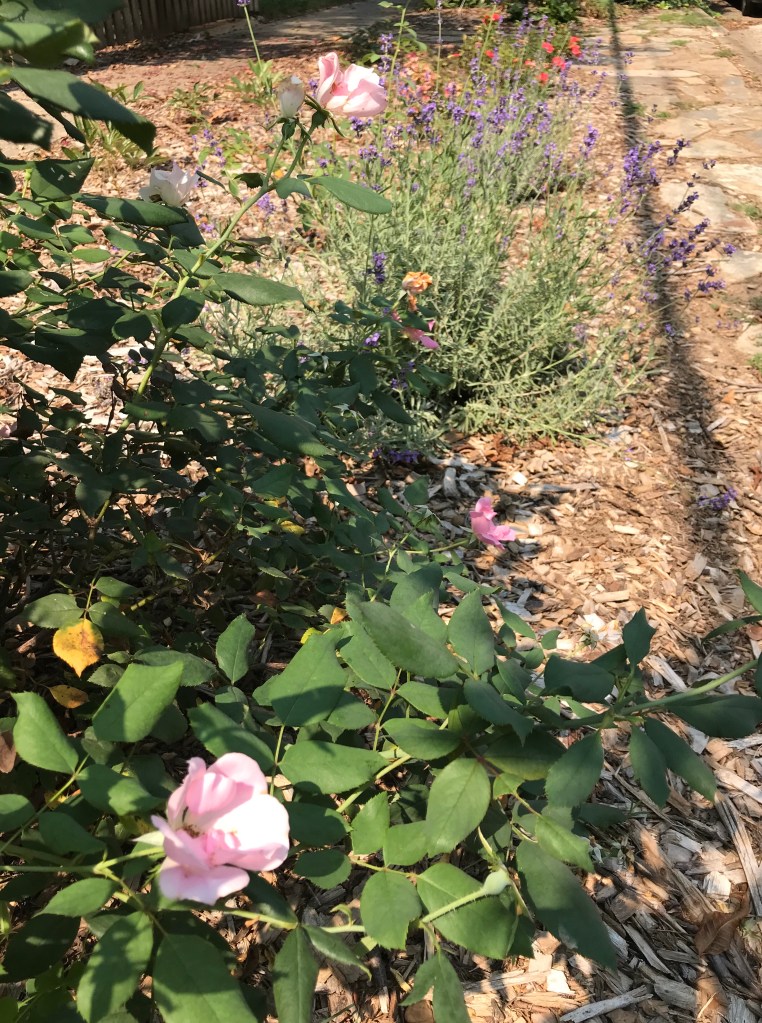
The newest flower bed has thrived for the most part. Roses and Hidcote lavender in bloom along the fieldstone path and near the peonies that I hope to see more from next year.

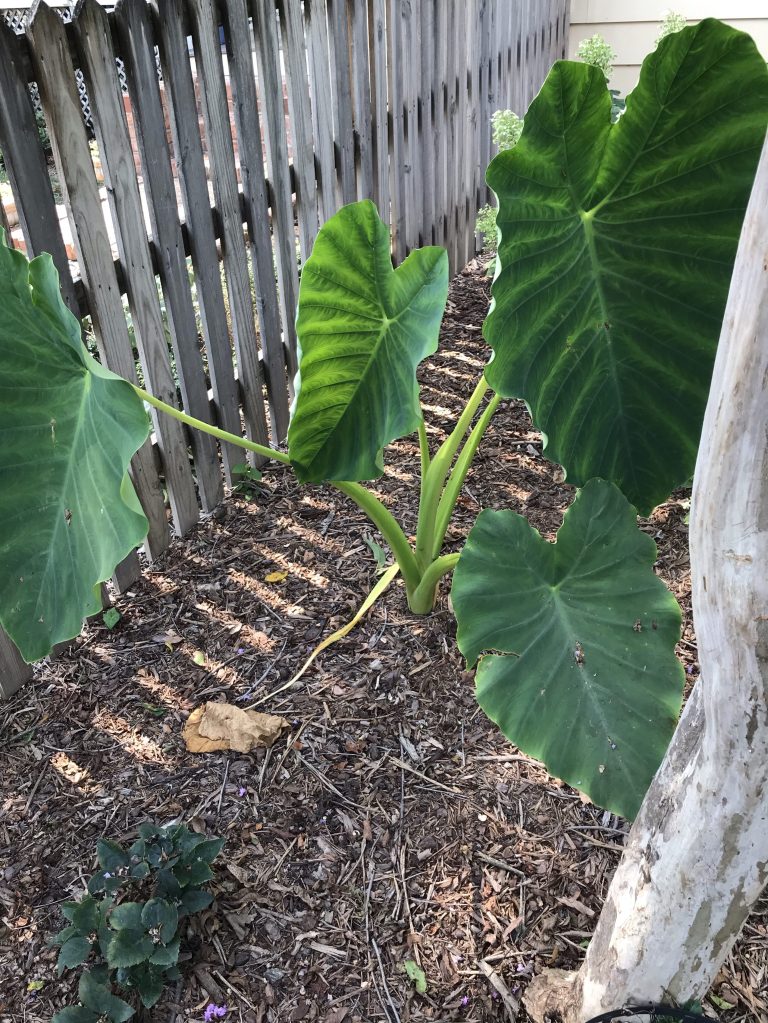
An impulse buy near the cleaning supplies section of Lowe’s, I have really enjoyed watching these Elephant Ear stretch out and claim their piece of territory.

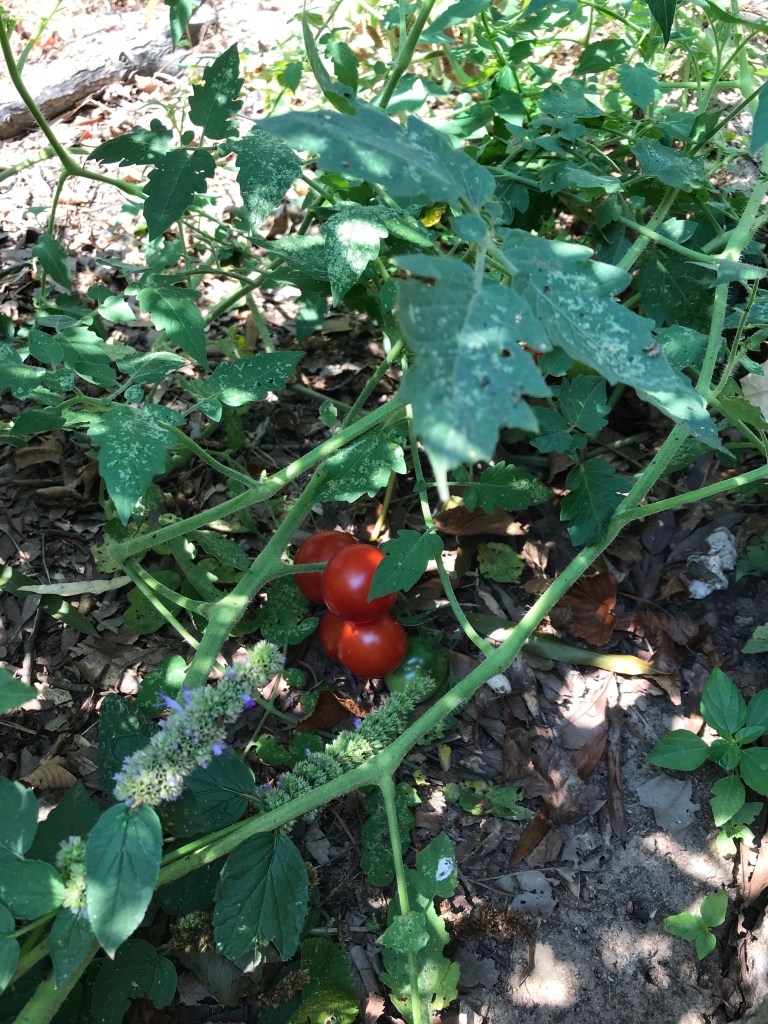
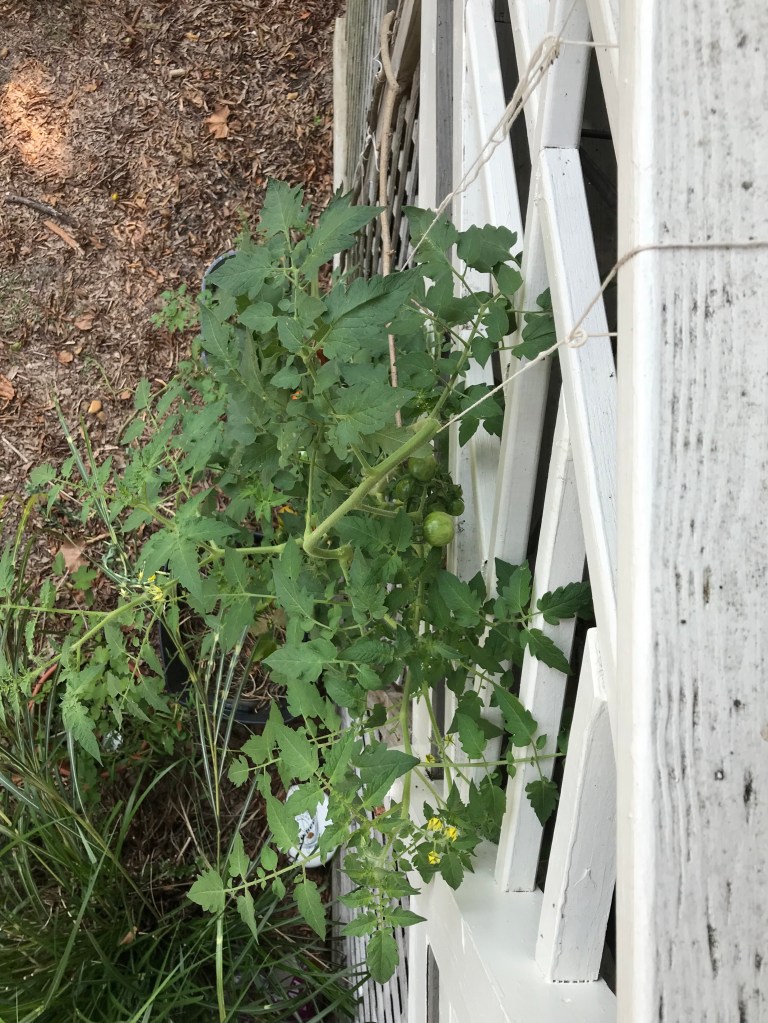
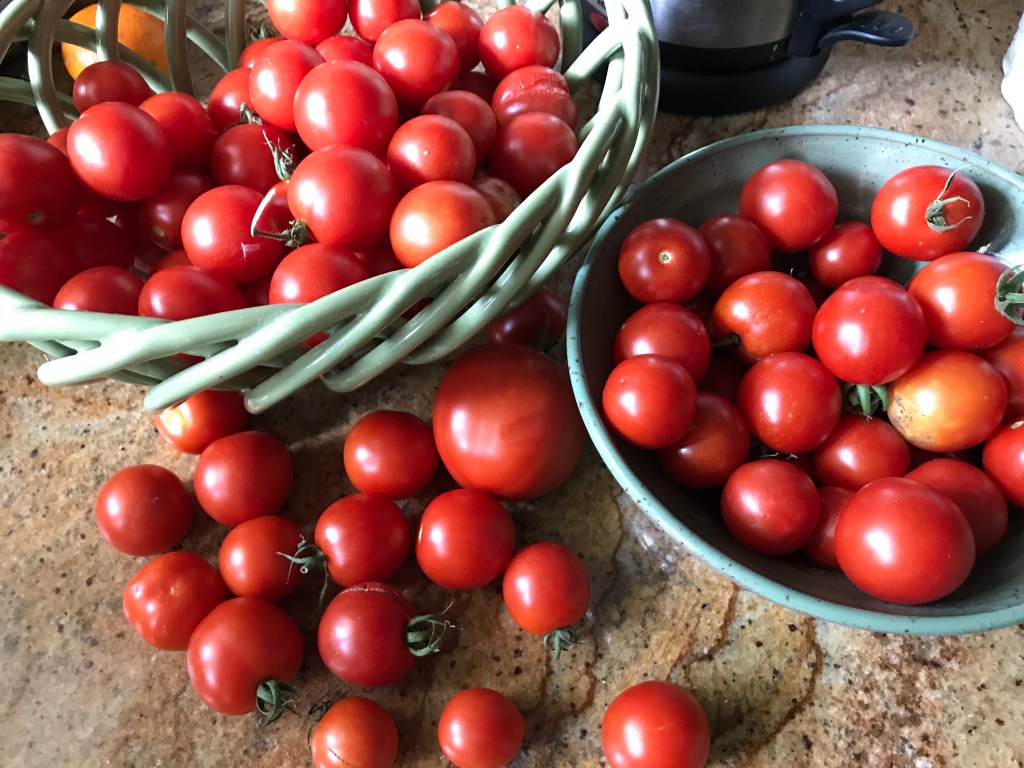
I had dozens of volunteer tomato plants sprout this year to affirm me in my lazy composting methods. Here is one I left to grow along the ground. Newsflash, you don’t have to trellis your tomatoes! I watched a YouTube video once of an Italian family harvesting piles of tomatoes from their yard, none of them were staked. Of course there are benefits to staking, but this is a reminder to me to relax. Here are three perfectly good tomatoes grown near the ground near some faded Anise Hyssop.

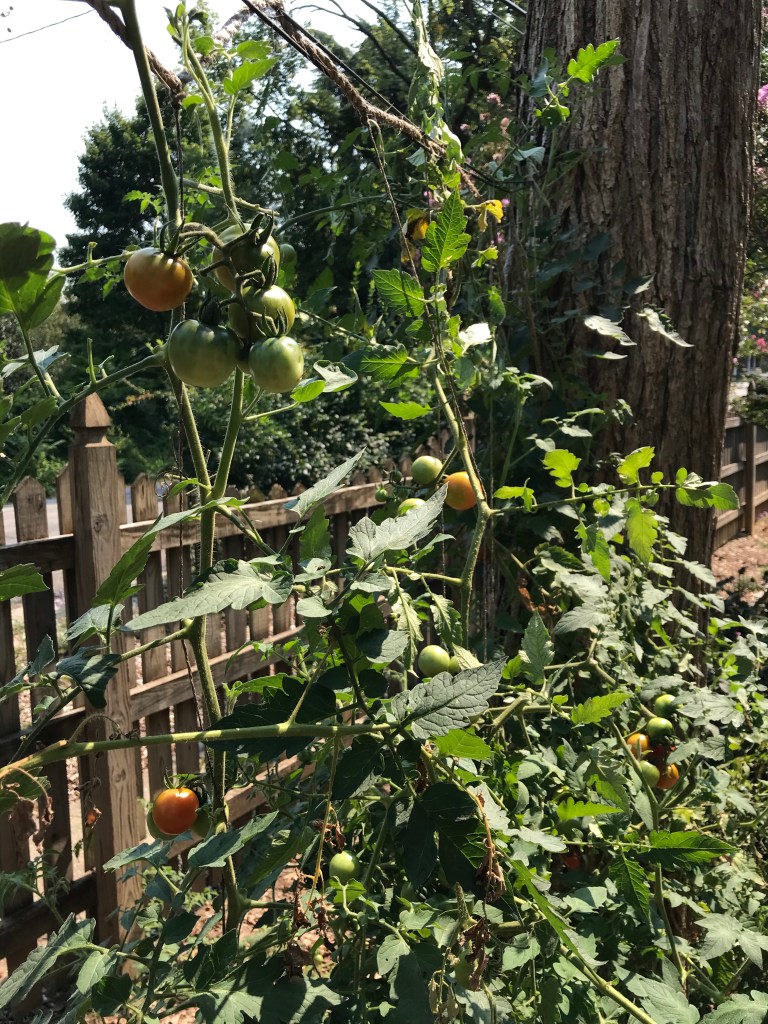
Volunteer tomatoes on a trellis between two trees.

I had some extra sprouts so I tried out some different sections of the yard for tomatoes and will definitely be doing more up the deck next year.

Late summer bounty:

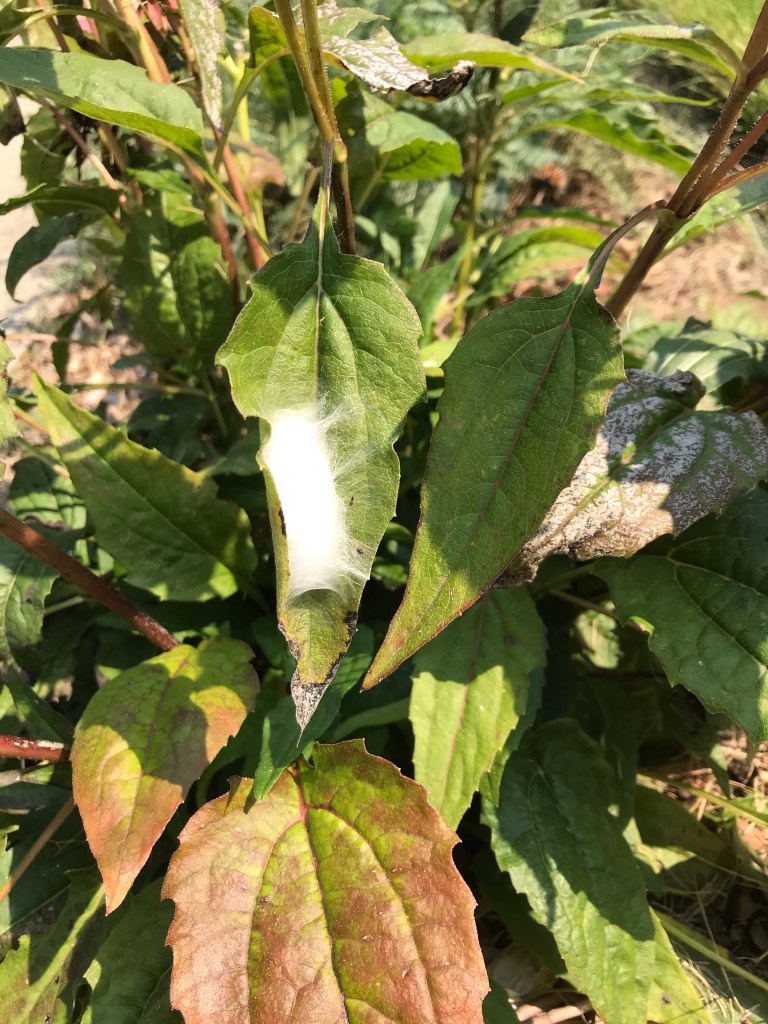
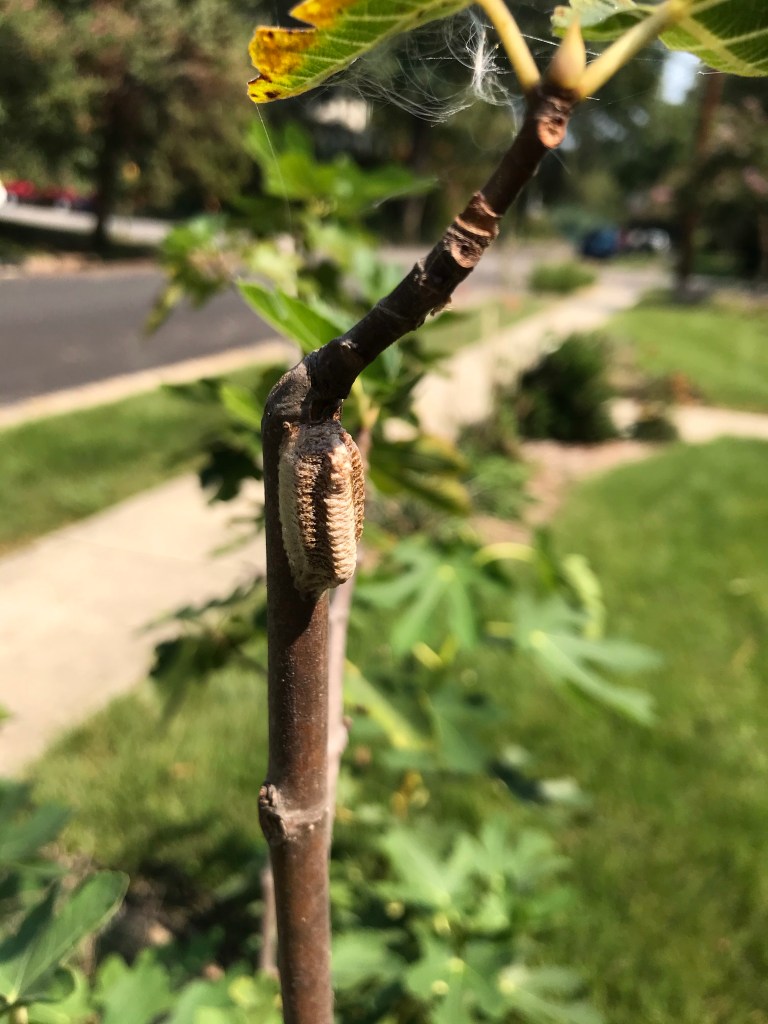
I believe this is a Praying Mantis egg case on this fig tree containing dozens or hundreds of eggs that will turn into those amazing predators of the garden.

Insects tucking themselves and their babies in for bed all over the place.

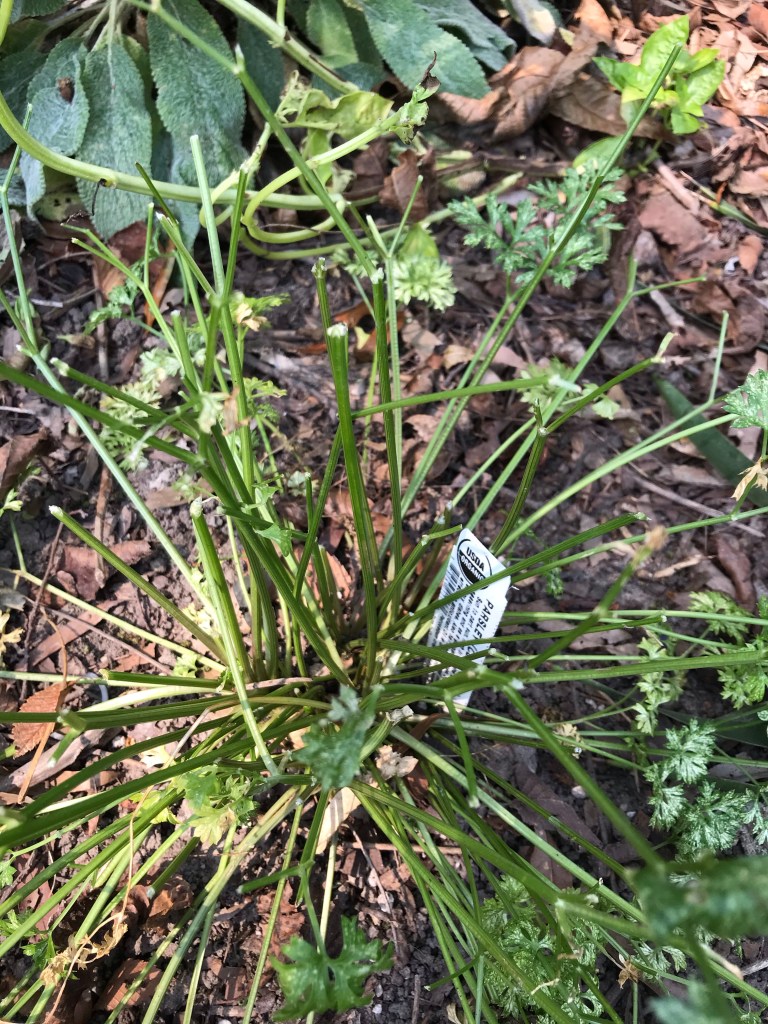
Parsley ravaged by Yellow Swallowtail caterpillars that I watched over the past week. I haven’t seen a crysalys yet, but hope to see the butterflies when they emerge.

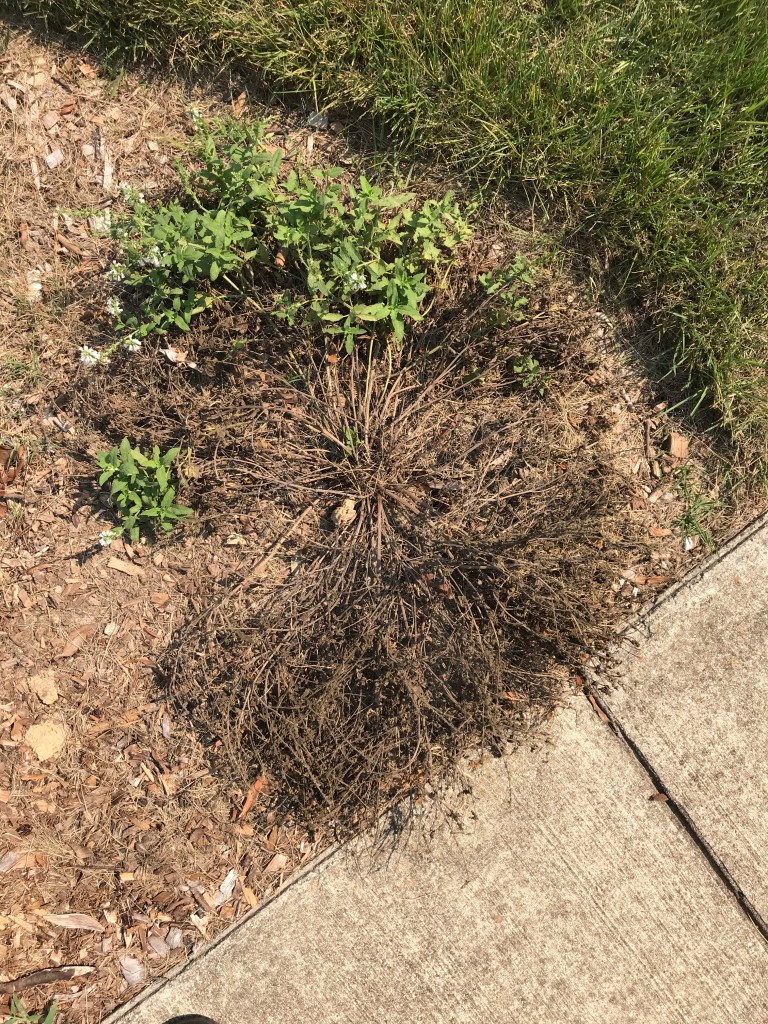
Something, I think underground, is destroying what was for months a beautiful white-blooming salvia. I’m depressed about it, but will probably post this picture on a local NextDoor gardening group and see if anyone has suggestions.

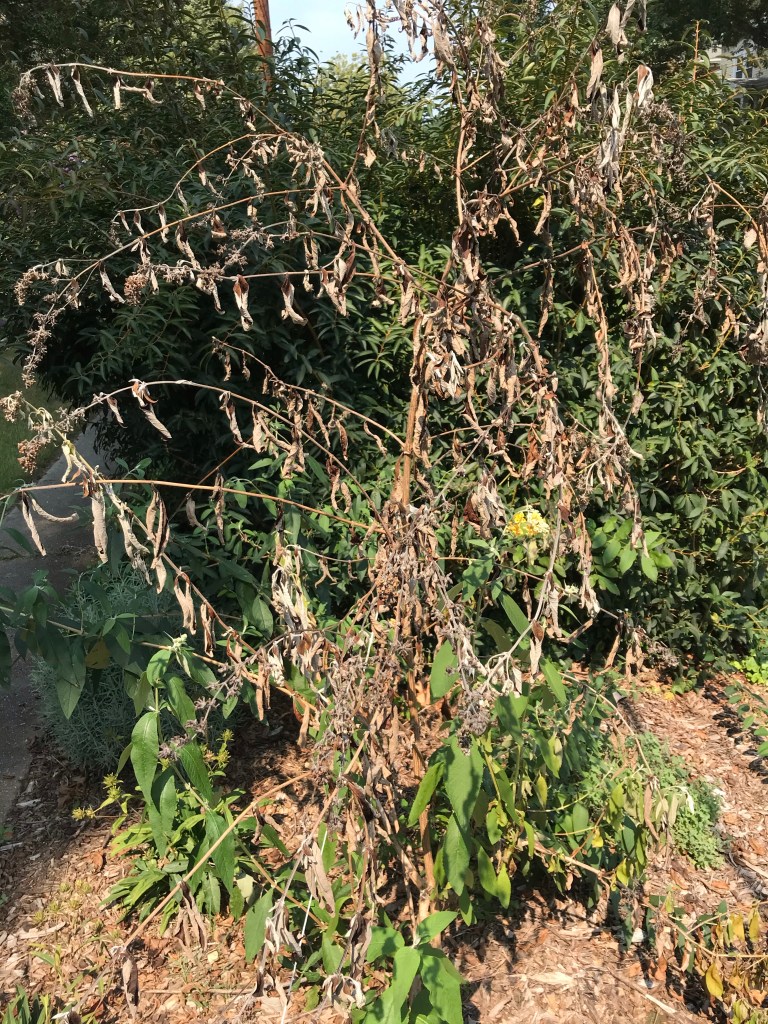
When I planted this butterfly bush it was tiny, maybe two feet tall. It grew all winter long with shiny green leaves and bloomed for most of the summer until the main trunk wilted. I cut it and pulled the side trunk to the middle, but as you can see below, it is also dying. I think I have root rot and will have to remove the entire plant, but for now I’m leaving the branches that are still alive to bloom while I cut out the dead.

Early summer color pop

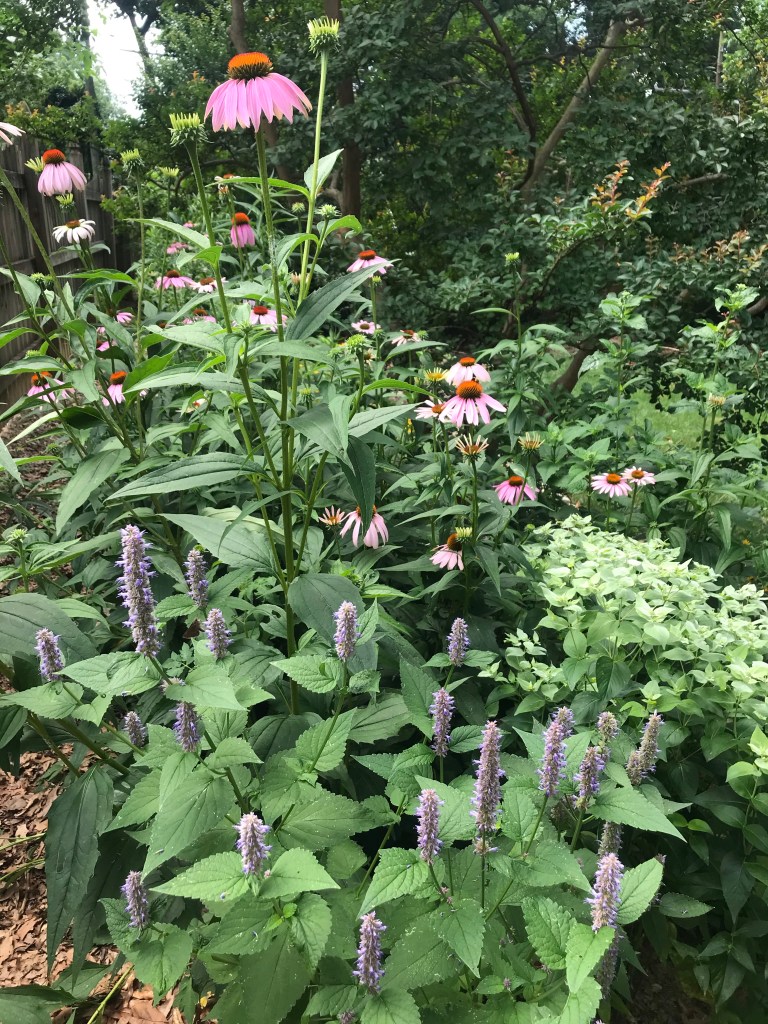
I’m enjoying this corner of the garden especially right now for its early summer pop of color.

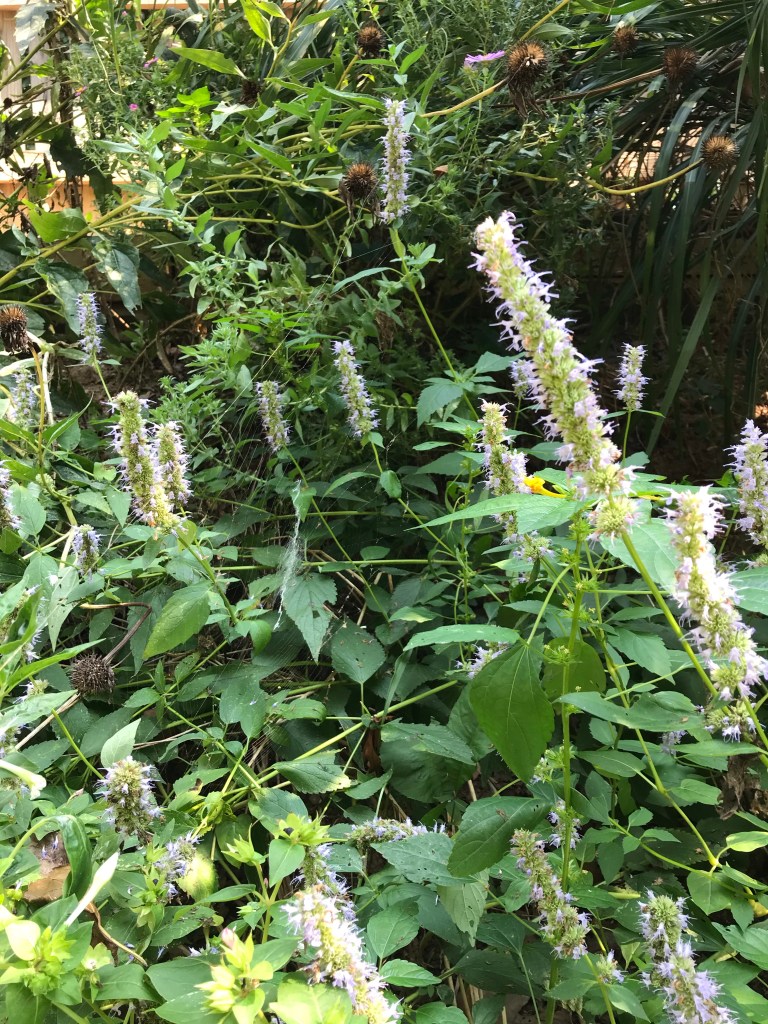
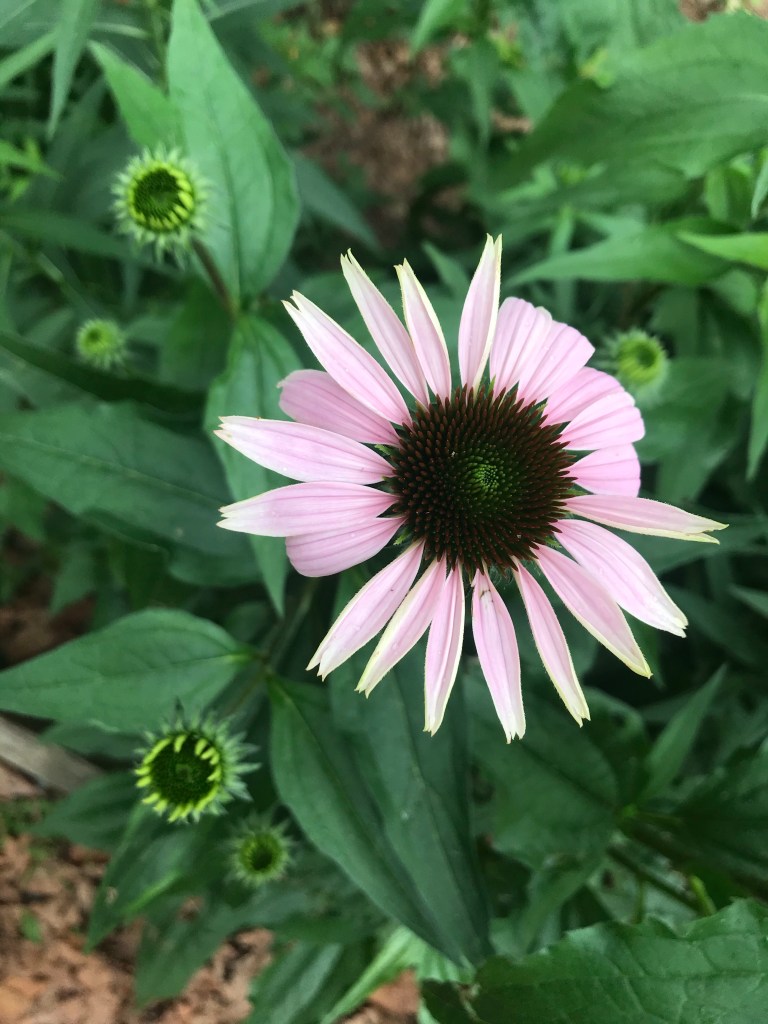
I planted the anise hyssop (purple) and the mountain mint (silver/green) as plants from a nursery, but the echinacea grew from seed and has been prolific. I am amazed by how well it’s done considering my neglect – I honestly don’t even remember when I planted it.

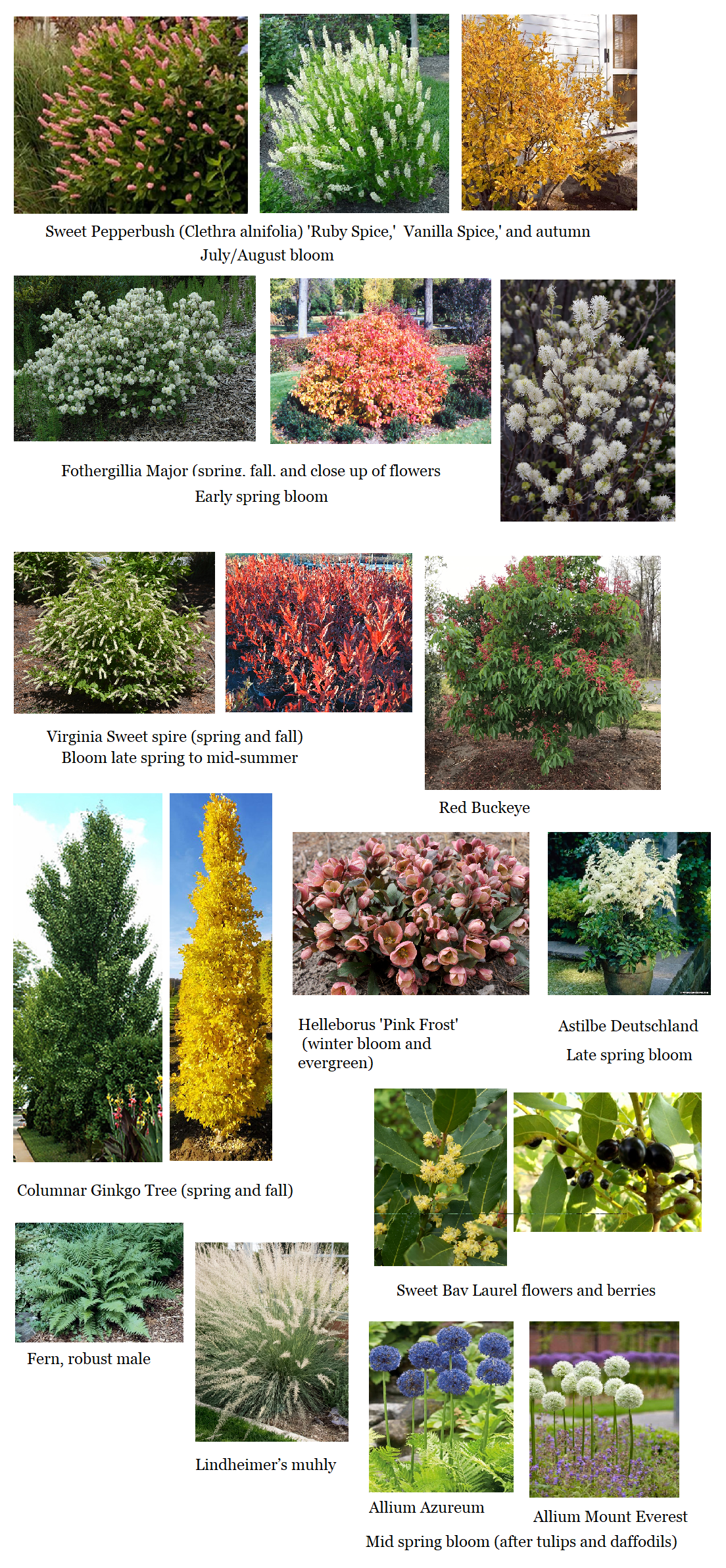
Hedge design (Sweet Bay Laurel)

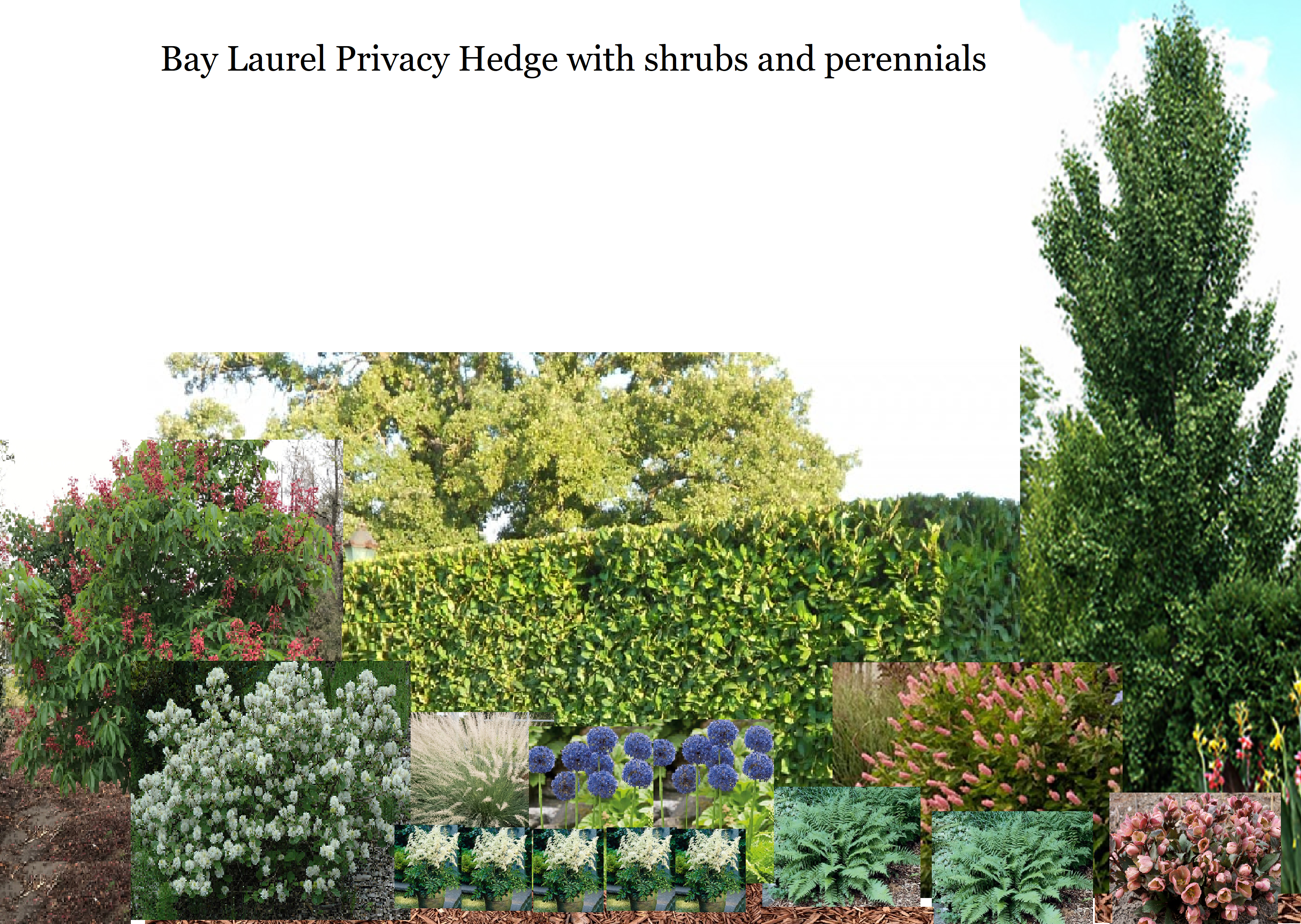
Just sharing something I put together for a friend that wants to block the view of a neighbor’s house from their back patio. It’s not totally correct with spacing and siting, but could be tweaked pretty easily. I chose Bay Laurel because it’s evergreen and the leaves can be used in the kitchen (bay leaves) and the shrubs and perennials provide a nearly year round color mix, attraction to pollinators and birds, and are low maintenance once established. If I were to actually install this I would follow the instructions in this “How To Create A Privacy Hedge” video by Urban Farmstead.

Good mornings

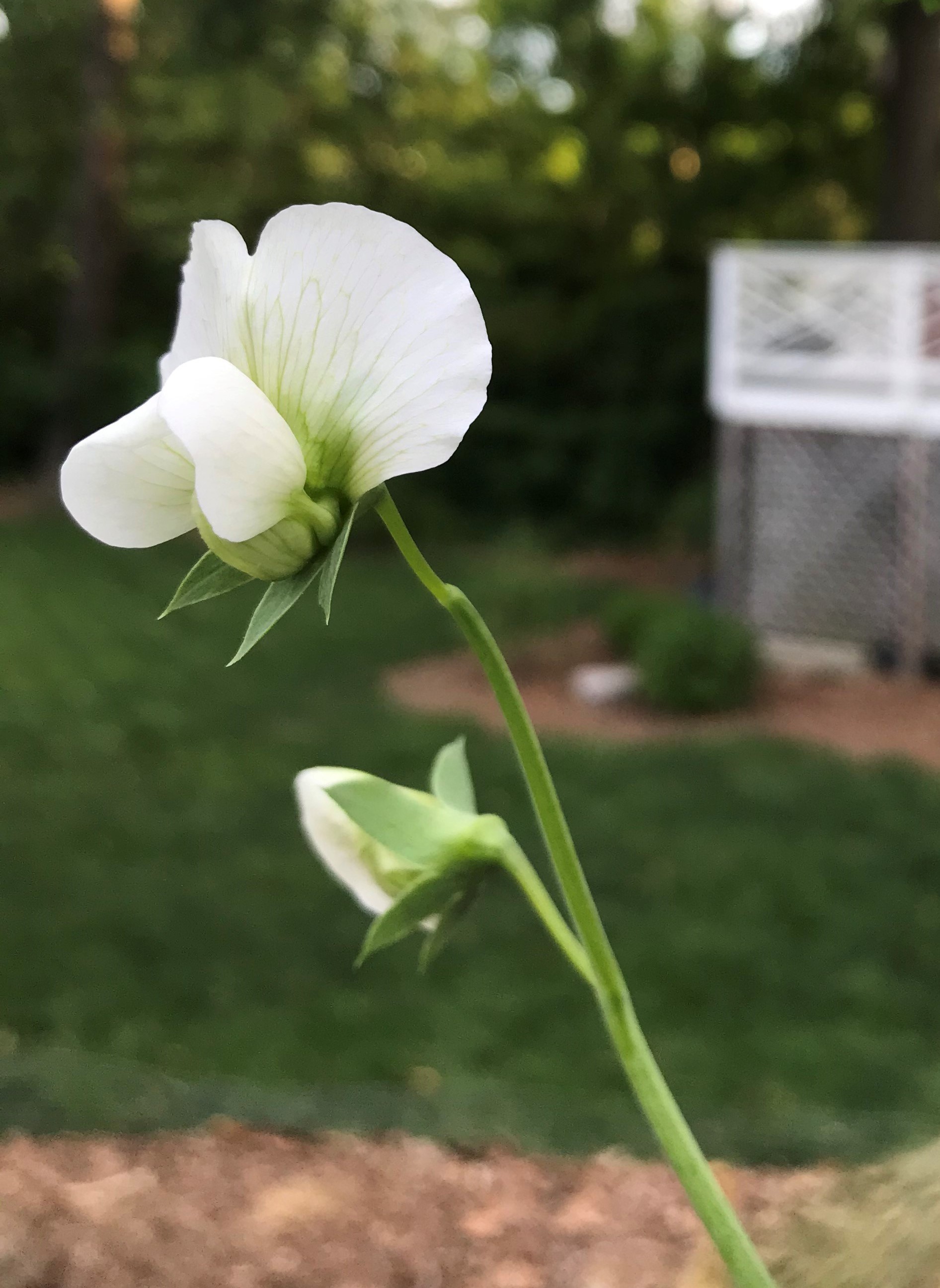
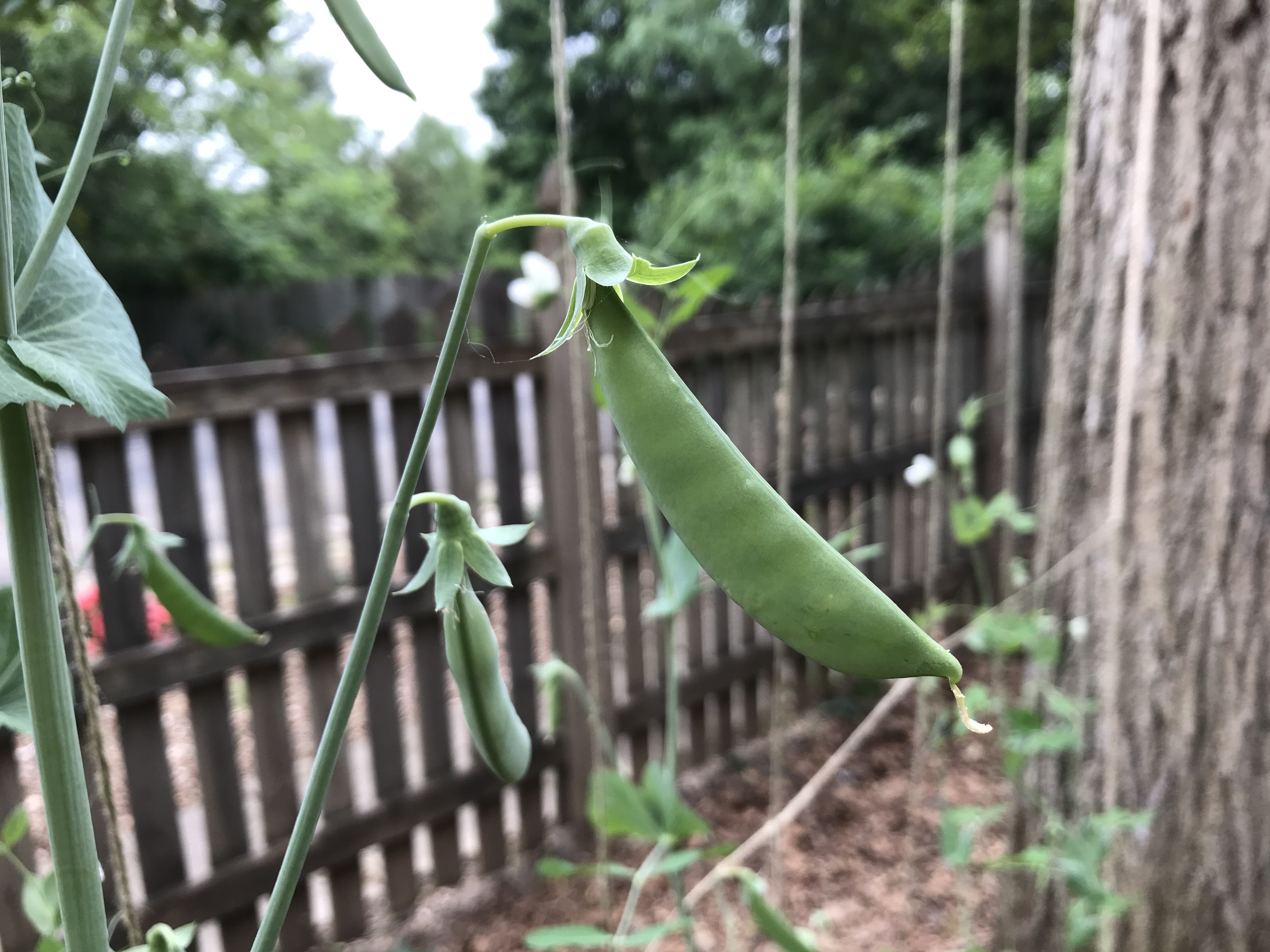
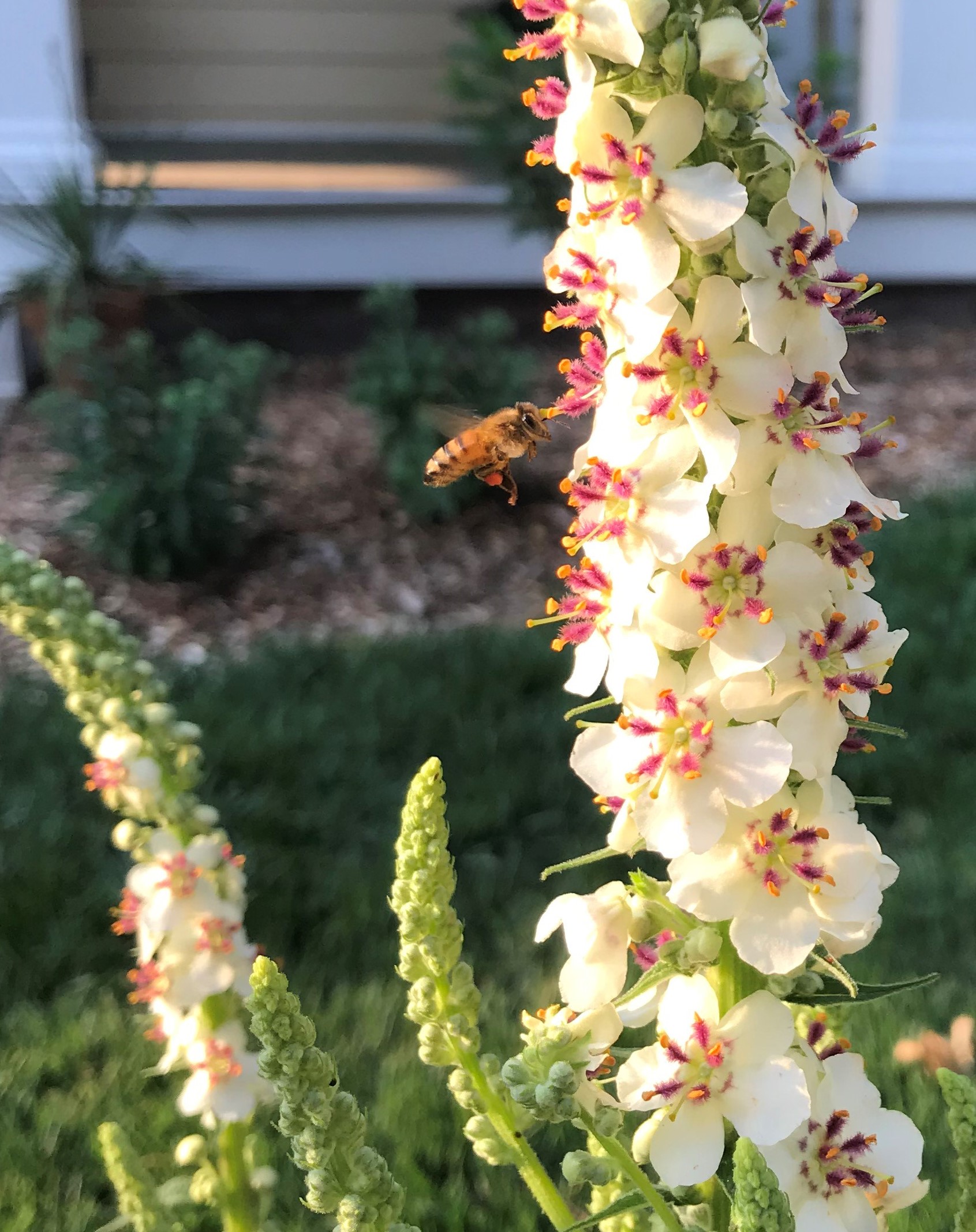
Yesterday morning I shared a sugar snap pea with my 18-month old while we watched bees forage on some Verbascum (Mullein) that I planted earlier this month. I’ve had some flops this year so far including beets, fennel, poppies, bachelor’s button, etc. I’ve already rearranged several plants that were either crowding each other out or not getting the amount of sun they require. So often, all I can think about is the work that still needs to be done, but in that moment, thinking about the benefits to nature and our quality of life, I was grateful for something going well. And considering the ease of use and the quick reward I will definitely be doubling down on these peas next year.

A is for Allée

I believe that the beauty of D.C. is the simplicity of a good plan: symmetry, long vistas, and grand terminals. All of these qualities are found in the allée.

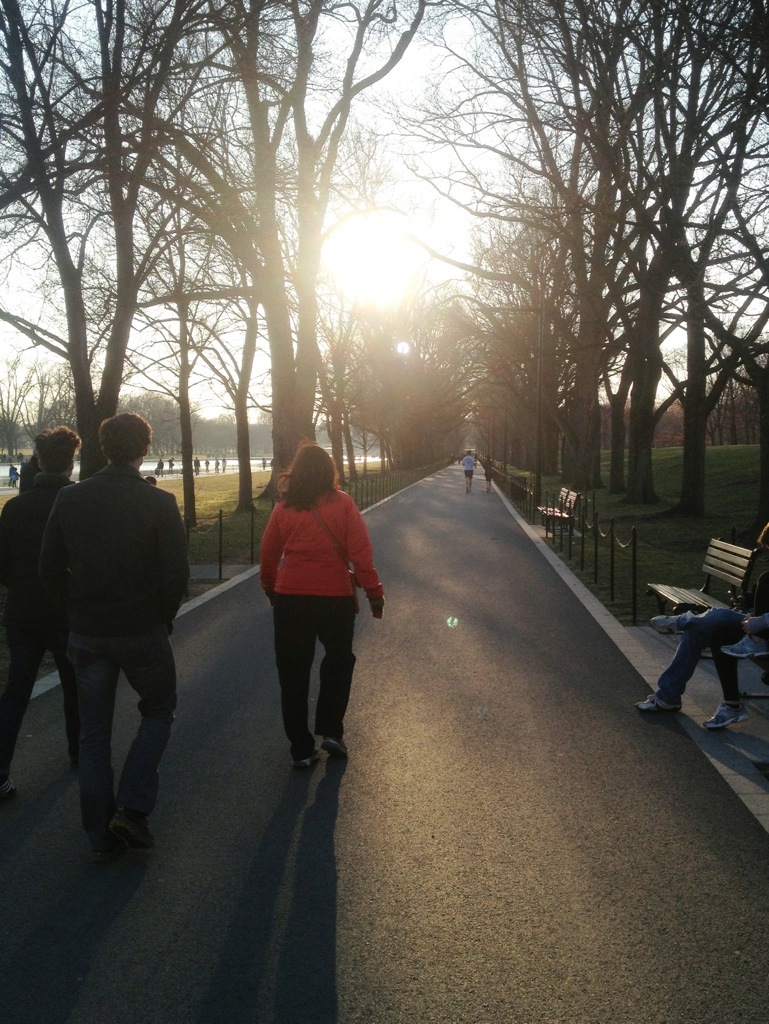
Here is a photo I took while walking the National Mall:

20130324-220654.jpg

What I love about the allée is that it’s so simple. With a straight path and some lovely trees we could turn any formless green space into a memorable experience.

With the allée, a simple path becomes dramatic. A walk becomes an journey.