Category Archives: Creativity

A mini meadow for Maymont

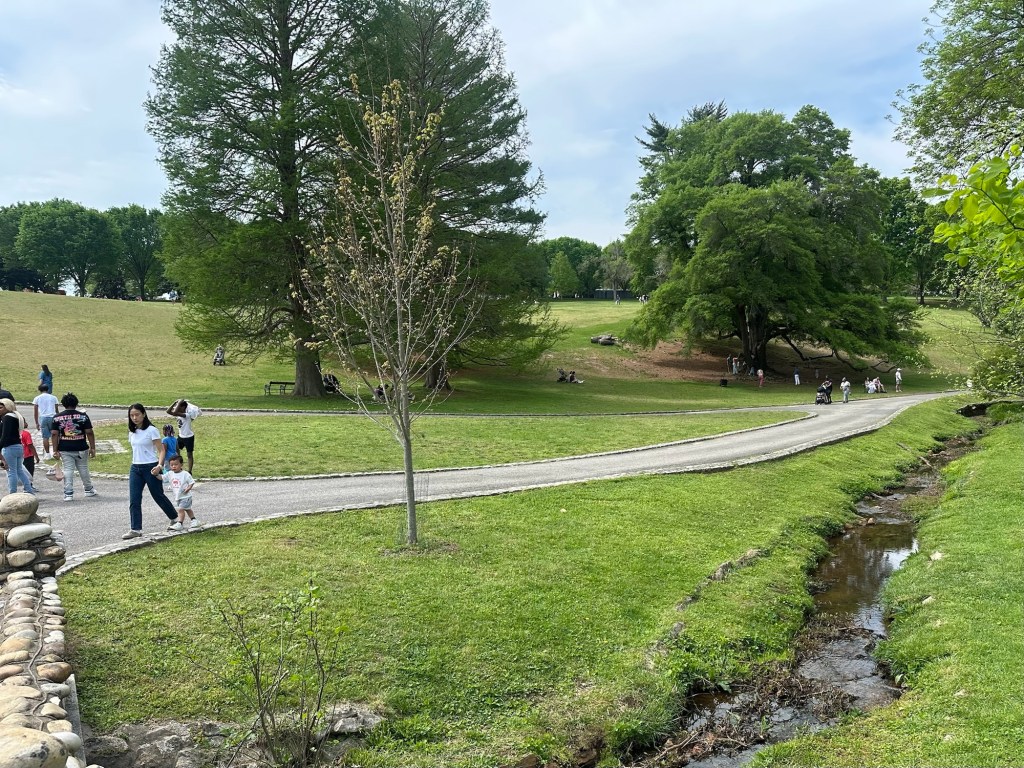
During a recent visit to Maymont I noticed a small island of grass that I can’t stop thinking about. It feels like the perfect opportunity for a small meadow of perennials at the intersection of the more formal Maymont Mansion and more “natural” Robins Nature Center and Maymont Farm sections of the property.

The long, tear-drop shaped island of grass is in the middle of the photo below, but of course I already have ideas for the area along the creek as well.

Compared to the yucca project, this feels somewhat realistic. I would need to borrow black tarps to kill the grass, enlist some volunteers to clear the area a month or so later, install plants collected from my garden, and spread leaf mulch in between. It would be nice to put a small stick and twine “fence” along the edge while it’s getting established as well as a “Prairie in Progress” sign and some educational materials about the benefits of these types of gardens.

The cost of this could be essentially free. Here is a list of plants I can think of off the top of my head that I would be able to contribute:

  • Anise hyssop
  • Echinacea / coneflower
  • Mountain mint
  • Showy goldenrod
  • Milkweed (1 or more varieties depending on how they spread)
  • Coreopsis
  • Panicled aster
  • Rudbeckia / black-eyed Susan
  • Rattlesnake master
  • Spiderwort
  • Wild garlic
  • Aromatic aster
  • Bee balm
  • Foxglove beardtongue
  • Groundcovers including violet and wild strawberry

While doable, it would still require a lot of work obviously. I would need them to commit to watering for the first couple of months after install and provide ongoing support like cutting it all down to about a foot off the ground in the fall, weeding, and continuing to add more plants. Still too much for me right now, but a really fun thought.

Art project idea: yucca in red

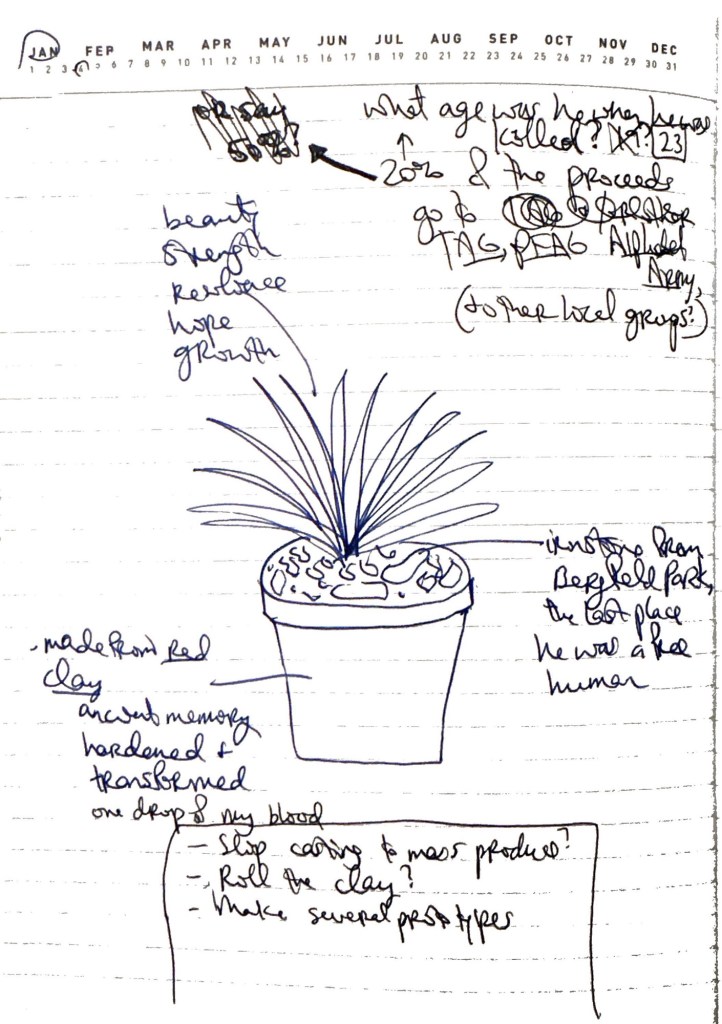
One Saturday in early January, in the middle of cleaning and entertaining my kids, I got an idea for an art project and sketched the notes below.

I’ve been really interested in the life and death of Nicholas West for a little over a year now and continue to feel a strong connection to his story.

The basic idea is…

  • A collection of pots thrown from red clay harvested in and around Noonday, TX where Nicholas was tortured and killed
  • The pots are different sizes with different biographical information about Nicholas like his birth and death years, text from obituaries, anything significant from his story
  • Each pot would have a drop or two of my own blood. I want to make people a little uncomfortable when they pick up the pot and read the description. I want to make his death more tangible and remind people that all soil has seen bloodshed of one kind or another. (On a more cosmic level, I also love the connection between the iron in our blood and the iron in the soil which was all stardust flung across the universe from dying supernovae.) I’ve noticed that men are pretty squeamish about the idea of the blood, and women I’ve told are much more supportive which makes me want to do it even more.
  • In the pot will be planted a Yucca filamentosa, native to the southeastern US (from Tyler to Richmond), very hardy, tropical, and structural. The yucca will grow to fit the size of the container that it is in, the yucca is resilient, and in the spring it has a bloom several feet above most other plants.
  • Yucca is also the first plant that I really noticed and developed a connection to. It is the first plant I remember finding and foraging and I’ve planted and potted at least five in the last two houses where we’ve lived. I was in a dark place in my life and my interest in plants, yucca specifically, was an encouragement that has continued to center me and excite me while also driving me a little crazy with more ideas than I’ll ever have time for.
  • While I still love the idea of Yucca, more recently I’ve considered Hesperaloe parviflora, also known as “red yucca” or “false yucca.” I noticed it in Texas at some point and planted it in my garden 3-4 years ago. I had a naturalist walk around with me and he commented that he liked seeing it growing in Richmond because he didn’t know that it could. I love the idea of a Texas transplant thriving in Richmond and the idea of it being a “false” yucca feels appropriate for the Southern culture of repression and how much of myself I held back from others for so long. Of course I love the red bloom, the color of blood and nectar for hummingbirds stopping for a moment on their impossible migration.
  • On the surface of the dirt in the pot I want to scatter bits of ironstone found at Bergfeld Park, the place where Nicholas was picked up, the last place he was free. On my most recent visit to Tyler I pocketed some pieces of the stone and brought them back to a potted yucca I have by our back porch. It has been special to me to have them there as a connection to home
  • I’d love to sell replicas of the different styles of pots and give a portion of the proceeds to local LGBT community organizations in the Tyler area.

It would take months or years to really do this as well as I would want to – I haven’t even fired a clay pot since high school. I’d need time to harvest the clay, prototype different styles, and learn how to make them consistently well, etc. So with all that considered in addition to the constraints of full-time employment/parenting life, I’ve accepted that I’m probably not going to attempt it, as much as I want to. It felt better to share the idea here and let it go rather than hold it too tightly.

4.22.25 – Since writing this post I’ve thought more about the possibility of partnering with an artist to make the pots that I could use to plant and we could market the project together. Even still I don’t think I have the time to do it well, but the partnership would be really rewarding and it’s much more realistic to lean on someone’s existing expertise rather than try and develop it myself. It also got me thinking outside the box even more. Maybe this idea should actually be an assignment for a class where everyone chooses an event that deserves more recognition and designs an installation to share the story. Maybe it should just be an online project that collects memories and details from his story. Or maybe this just needs to be a section of my own garden: a shrine to his life and a broader connection to my own story, my hometown, and the resilience, growth, and occasional moments of flourish.

4.24.25 – While reading about “The Burying Grounds Memorial” at the University of Richmond I learned that Yucca, “is often found in the cemeteries of enslaved people, serving as living grave markers.” I have only just gone a few steps down this rabbit hole, but I’ve already found some interesting articles and anecdotes that support using it for the project. It seems the plant has long served to mark the memory of people who might have otherwise been forgotten, to bind their restless spirits after life, and to provide permanent protection to their physical remains.

  • “Fieldstones. Yucca plants. Seashells. The last object a loved one touched. For centuries, these items, cultivated from lives and landscapes, marked many graves at burial places for Black people in America.” National Grographic
  • “Some of the plots were marked with pieces of quartz or with yucca plants, which were used by many Southern Black families who could not afford stones.” ProPublica
  • “The phrase “pushing up yucca” has been coined to describe these graveyards, and there was a Gullah belief that spiny plants restricted the movement of the spirits of the dead.” Society of Ethnobiology
  • “Spiky clumps of yucca dot Odd Fellows cemetery as further reminders that this patch of woods was once a curated (if not manicured) space. Though widely found in cemeteries across the country, in African-American tradition specifically, yucca binds restless spirits to their graves. Easily transplanted and nearly ever-lasting, yucca was sometimes planted near the head of a grave in lieu of an expensive stone marker.” Black Wide-Awake
  • “Yucca is another plant that marks many early graves even today. It can live hundreds of years and represents eternity. In many African American communities it was also traditionally thought that yucca kept restless spirits in the grave.” City of Birmingham
  • “Due to their association with cemeteries, the yucca plant has also taken on an association with the supernatural, as a way to ward off evil spirits.” Lumpkin County Historical Society

8.72 acres in East End Henrico for $180K

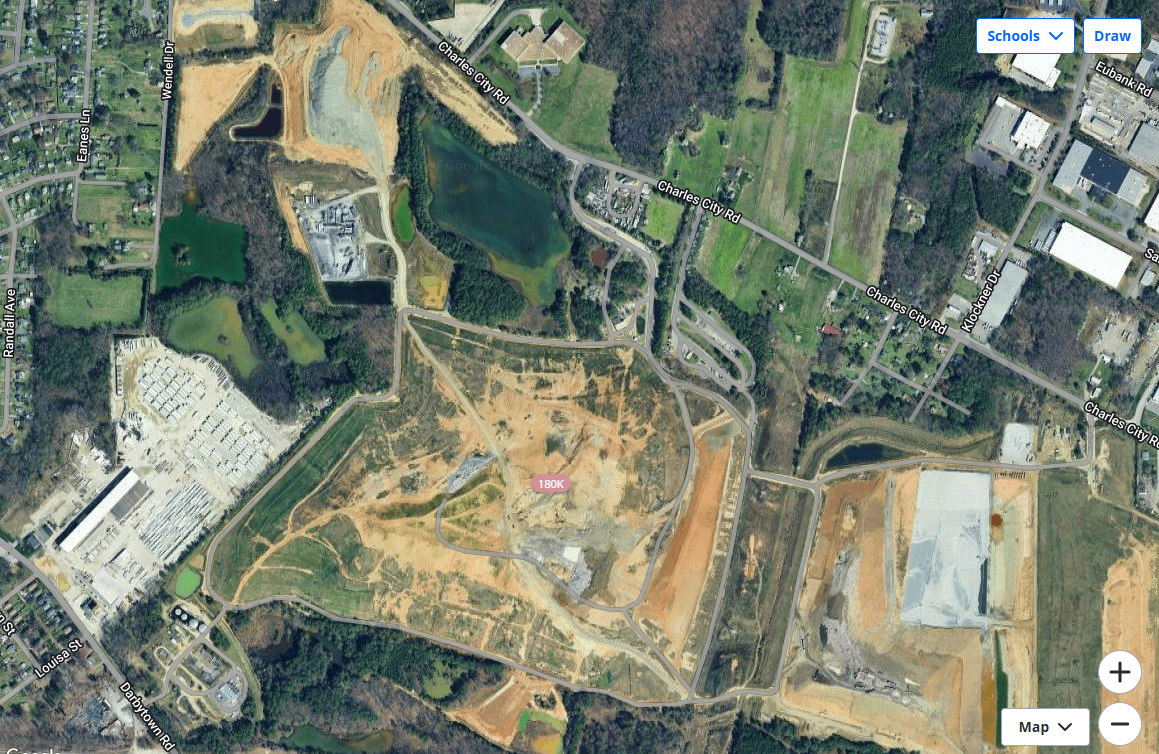
Yesterday morning I found myself dreaming about a plot of land for sale in East End Henrico County, just outside Richmond city limits. It’s 8.72 acres for $180K located very close to the center of the city and I think it would be an amazing chance to plant a pollinator meadow to restore the ecosystem and have it be managed as a park by Henrico County.

I’m imagining walking trails, giant woodland sculptures, and it might have some elevation that could be fun with a lookout tower at the top. The grounds at Glenstone would be a good inspiration. This plot of land looks like part of the East End Henrico landfill – I think the one that was shut down by Henrico County. I’m sure there are liabilities with owning a former landfill (environmental concerns, seepage, etc.), but I know it’s been done before and this could be a good chance to do it in the Richmond region.

I already emailed the Capital Region Land Conservancy, and I probably won’t go any further with the idea, but I wanted to at least post it here as a personal memory of the dream. At some point this is exactly the kind of restoration project I’d like to be a part of.

Some articles that I found along the way:

Update: I heard back from the Executive Director at CRLC and he told me that the information on Zillow was incorrect – there are actually only two acres for sale about seven miles west of the location – kind of bizarre. I still love the idea of course 🙂

Bamboo along highways

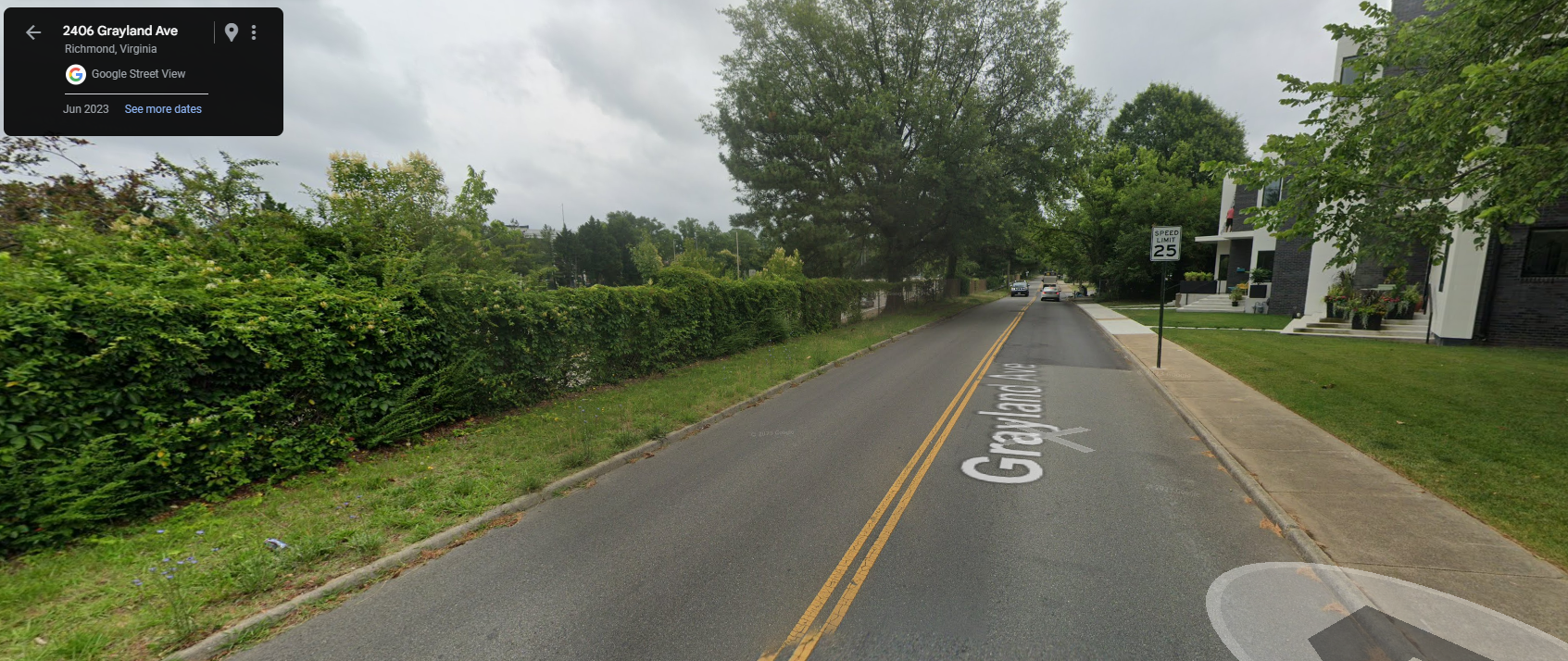
I was driving next to a stretch of I-195 in Richmond when I realized we are missing out on a huge opportunity: planting bamboo forests along our highways. Specifically I want to see bamboo in these little strips of grass in between the road and the fence or barrier to the highway, on the left side of Grayland Ave. shown below.

The first reason I would want to plan bamboo in these spaces is to create a natural barrier between the highway and the surrounding areas and the second would be to create an effective carbon sink on degraded and underutilized land.

Anyone who has ever walked through a bamboo forest knows intuitively that they are extremely quiet, but the noise-reduction has actually been studied and found to be effective comparable to solid noise barriers. Bamboo barriers create themselves and repair themselves so they are incredibly cost effective compared to concrete noise barrier solutions (the Berlin Wall of highway design). Bamboo forests are beautiful, certainly as beautiful as whatever invasive species there is growing in the space currently. Bamboo also grows tall enough to block the sight of highways from most passersby.

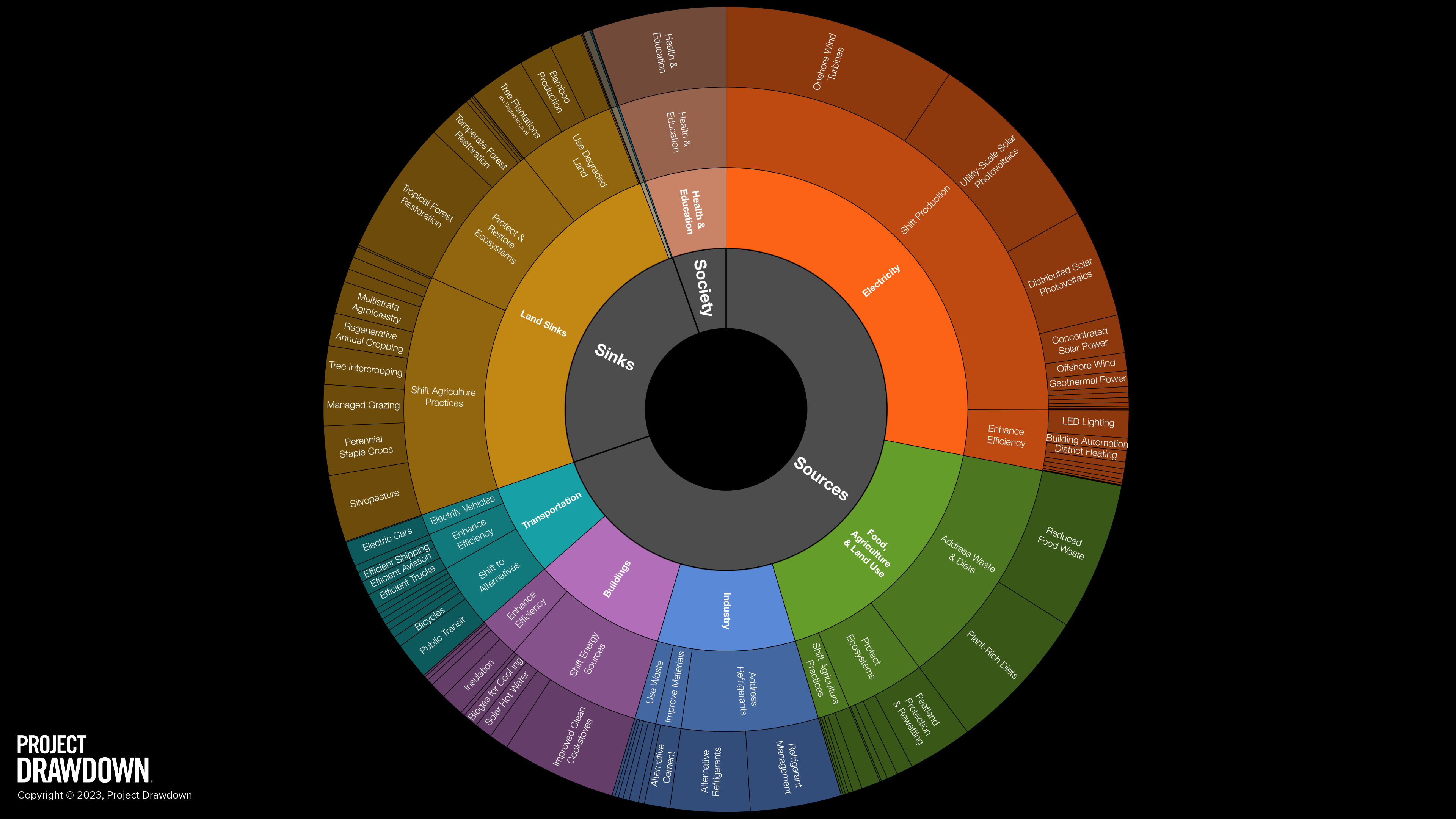
I’ve been thinking about bamboo as a carbon sink ever since I saw it specifically referenced on the Project Drawdown Roadmap where they calculated that the addition of bamboo forests could result in 7.70–19.60 gigatons of carbon dioxide sequestered by 2050. In the graphic below it is in the top left-hand quadrant on the use of degraded lands for carbon land sinks. I will not restate the entire Drawdown summary on “Bamboo Production,” but the summary for me is that it is extremely inexpensive and effective at long-term carbon sequestration.

Bamboo is often passed over because of how aggressively it spreads, but there are many ways to prevented unwanted growth. There are often strips of grass along highways that are already separated by concrete or asphalt that would prevent spread underground. If not, fairly low-cost barriers can be installed – the cost of these barriers may be less over a few years than the cost to companies contracted to mow these completely unloved areas of grass. According to Project Drawdown, there are also native North American bamboo varieties and varieties that do not run or flower which makes their spread unlikely and easy to manage. Years ago, while vising Echo in Southwest Florida I learned about clumping bamboo and have been interested in how we could encourage its use more widely. More information about Echo’s work with bamboo in this video: Bamboo’s Many Uses (filmed at ECHO in Ft. Myers). The fears around its spread are also not based in the reality of the current climate situation – are we really afraid of a fast-growing, zero cost, regenerative carbon sink?

Bamboo along highways is just the start. There are countless strips and triangles of land in cities that could be filled with beautiful, noise-reducing, sight-blocking, carbon sequestering bamboo. In particular I would like to cut sections along the perimeter of parking lots to be planted with bamboo. Combining bamboo with impermeable surface parking would have the added benefit of reducing water runoff into the combined storm-sewage system in cities like Richmond. Of course, bamboo is always the best or only solution. Often prairie grasses and native plantings can facilitate ground water recharge and sequester incredible amounts of carbon in their root systems underground. In terms of highway design, I do think bamboo is the best option for their combined benefits to the neighborhood and the climate.

Vision for Detroit, 1807

There was a time when Detroit was in worse shape than today. In 1805, the entire settlement burned. There may have remained remnants of buildings and streets, but for the most part, Detroit was simply a memory.

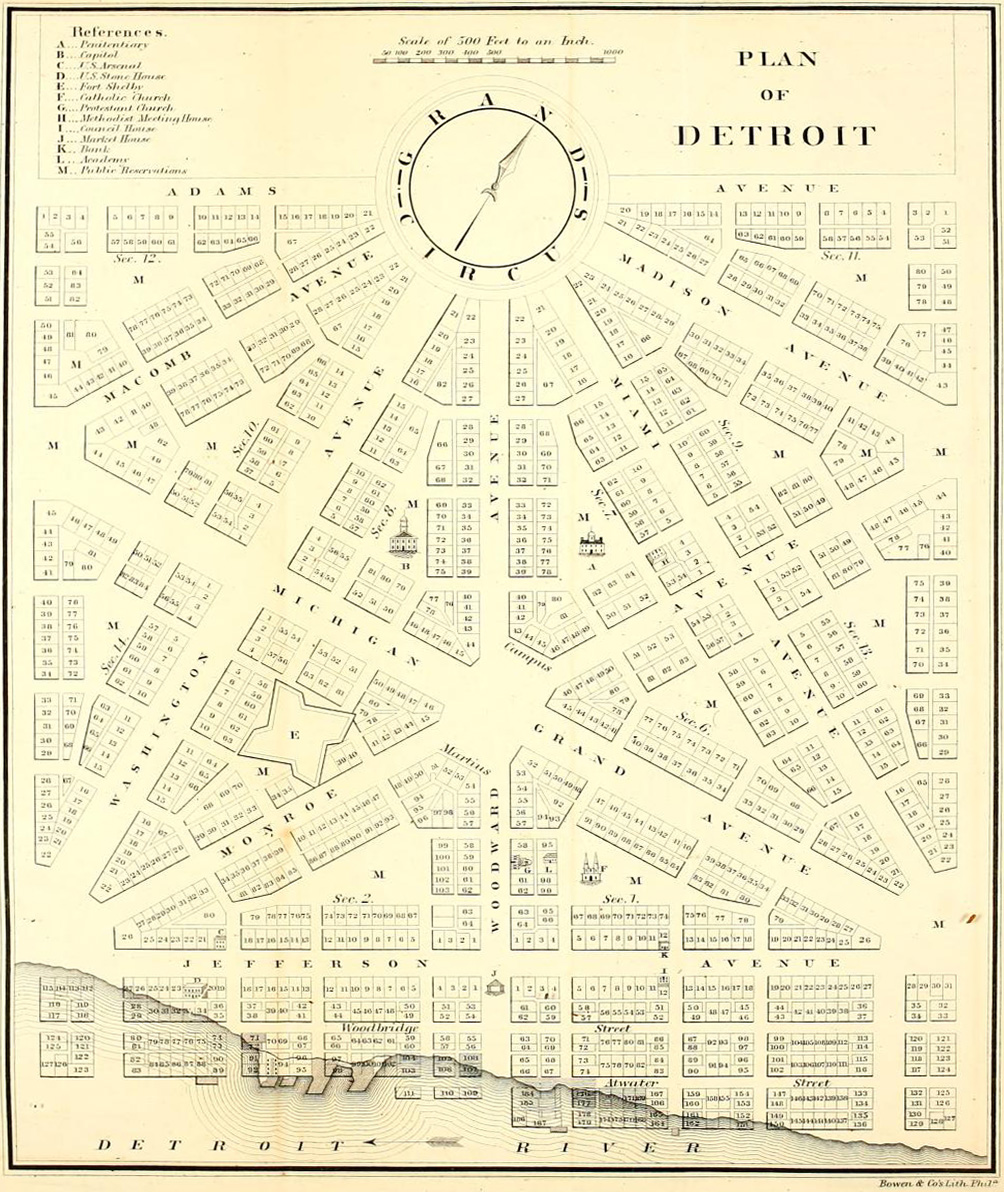
Just a few years before this fire, America invested in the idea of a completely master planned city: Washington D.C. There had been many American cities planned out of the raw earth, but none compared to the beauty and design of D.C. When Detroit burned, Augustus Woodward looked east for inspiration and found this new vision for the city called Detroit:

Old_map_1807_plan

In the two centuries that followed, this city grew to nearly 2 million residents and has now shrunk to a little more than 700,000. It’s easy to look at Detroit today and marvel at its losses. But we have to remember that fire. When Detroit lost everything, before the world knew her name, one person rose to draw this vision. He found inspiration in another great American city and drew a plan that became the backbone of an empire. It remains mostly intact to this day.

While bulldozers roam the city demolishing abandoned buildings by the 10,000s, as the earth returns to prairie as it was found over 300 years ago, residents of the city are wondering what could possibly become of this place. When I visited in 2013 I met so many people excited to tell me about the recent improvements: new jobs, new businesses, arts and culture. A few months later, the city declared bankruptcy and Kevin Orr took control of the city’s fate.

I’ll be going back to Detroit this summer and I can’t wait to see what has happened in a year: to walk around and experience it for myself. There’s so much to learn in that place: inspiration, caution, fuel for my endless curiosity, and context for the situation in Richmond and other American cities.

Until then, I’ll be wondering how a Shinola watch can cost $950 while this house was recently listed for $100. Until then.

Perspective

As I flew out of Richmond last week, I got a rare glimpse of the city at dusk:
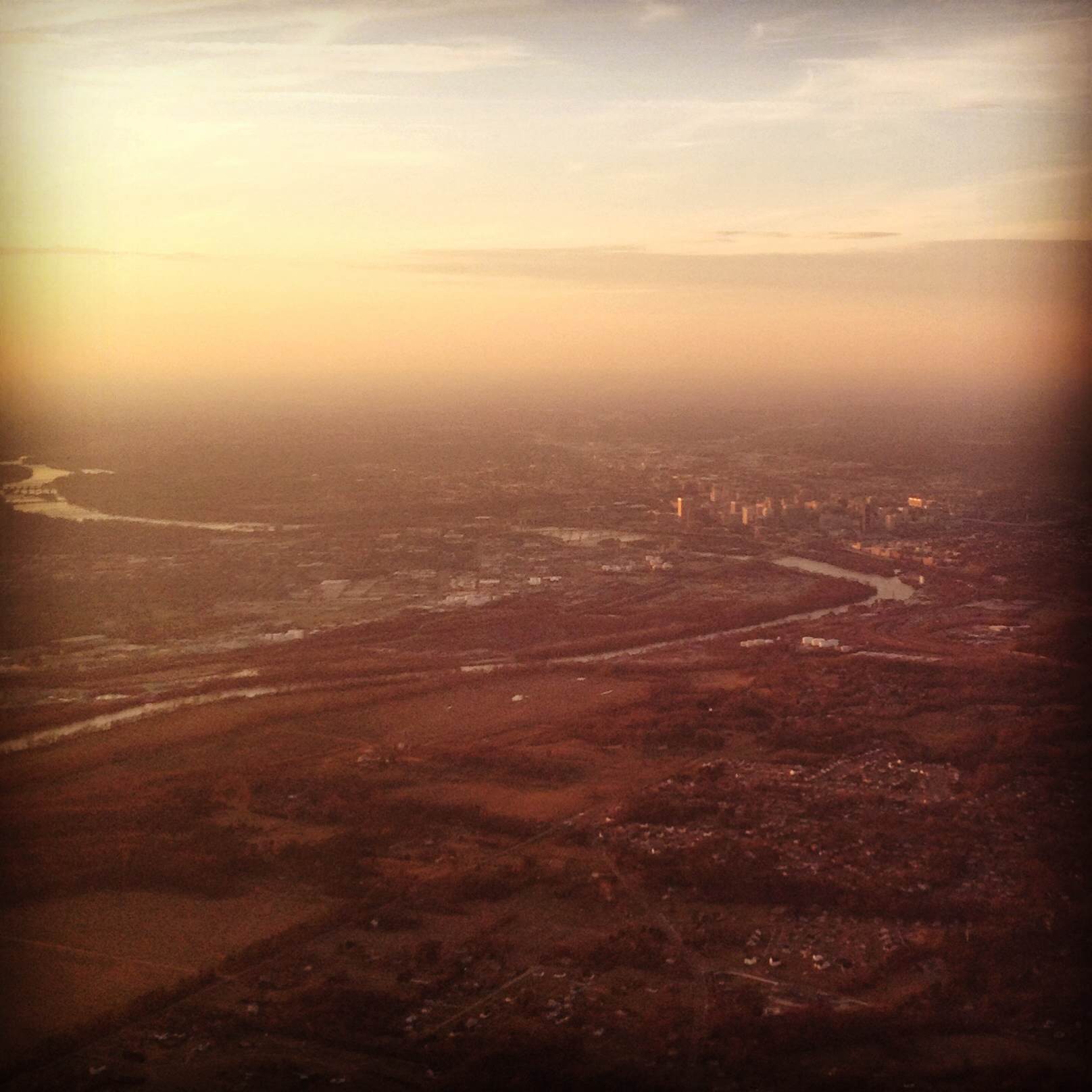
River city

I just stared at that settlement on the banks of the James River and wondered what the next 400 years might bring. In the city of Richmond, there is the past, the present and the future. That makes us fortunate and it makes us complicated.

To move forward, we will have to make some sense of ourselves and our story.

In the past few months I’ve travelled all over the country: from Philadelphia to Dallas, to San Francisco. With each trip I’ve found new perspective on this current phase of the development of the city of Richmond. I’ve also found some clarity for myself and settled into four areas of focus for my writing:

1. Current events in context: If I ever write about current events, it will be to analyze and contextualize the story. I spent three years studying the debates in Richmond regarding the construction of the Richmond Petersburg Turnpike. That work left me particularly interested in economic development strategies and plans for improving the American city.

2. Drawings for the future: Like many of us, I’m constantly imagining new uses for old spaces and I’ve decided I’m finally going to get these on paper. I’m actually planning to draw them out. It will probably be pretty ugly at first, but I’m hoping to read a little on technique and improve over time.

3. The psychology of the city: I’ve been noticing for years that the city of Richmond has a certain personality. This personality comes out in furious debates as well as mundane daily life. Since college I’ve also entered the world of cognitive psychology, therapy, management, and organizational behavior. I’ve read books, met with academics, and watched every video I find. Insight from these fields will be my lens for understanding what’s going on in this crazy place.

4. The history of the history: There are so many stories being told about Richmond. I want to take those stories and study them to understand the different ways that we describe ourselves. I’m obsessed with historiography and excited to dive back into that field for a series of posts about the different ways we talk about our past. This is connected to the psychological perspective as well: how we talk about Richmond says a lot about how we think of ourselves.

I want a future for this city that is unique and authentic. I want Richmond to develop a maturity as a place that takes all of it’s qualities and integrates them into a coherent whole. As with personal development, this will require a lot of work. In a way, collective therapy. And all because we believe there is a best possible future for this city and that future must include a coherent, honest, and accepting understanding of the past and present.

As always, more to come.

The Detroit Institute of Arts

When people ask me why I planned a vacation to Detroit, I think about my night at the DIA:

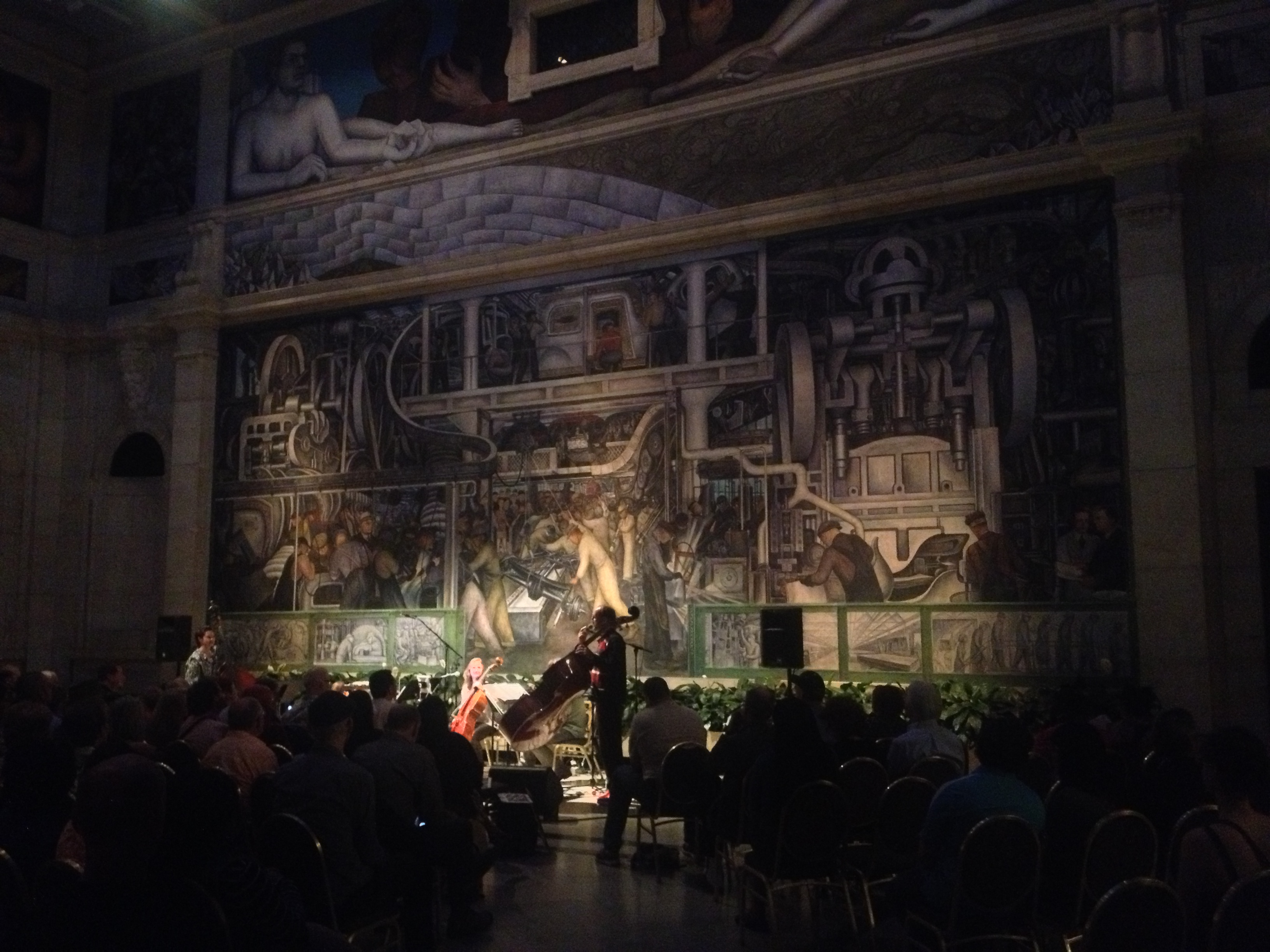
A Bonjour concert

I do my best to talk about my experience, but it’s hard to describe this setting in words: 1920s Beaux-Arts building, 1930s Diego Rivera murals, and an experimental stringed ensemble from New York led by French expat Florent Ghys. It was everything I’d imagined Detroit could be: cultured and complicated.

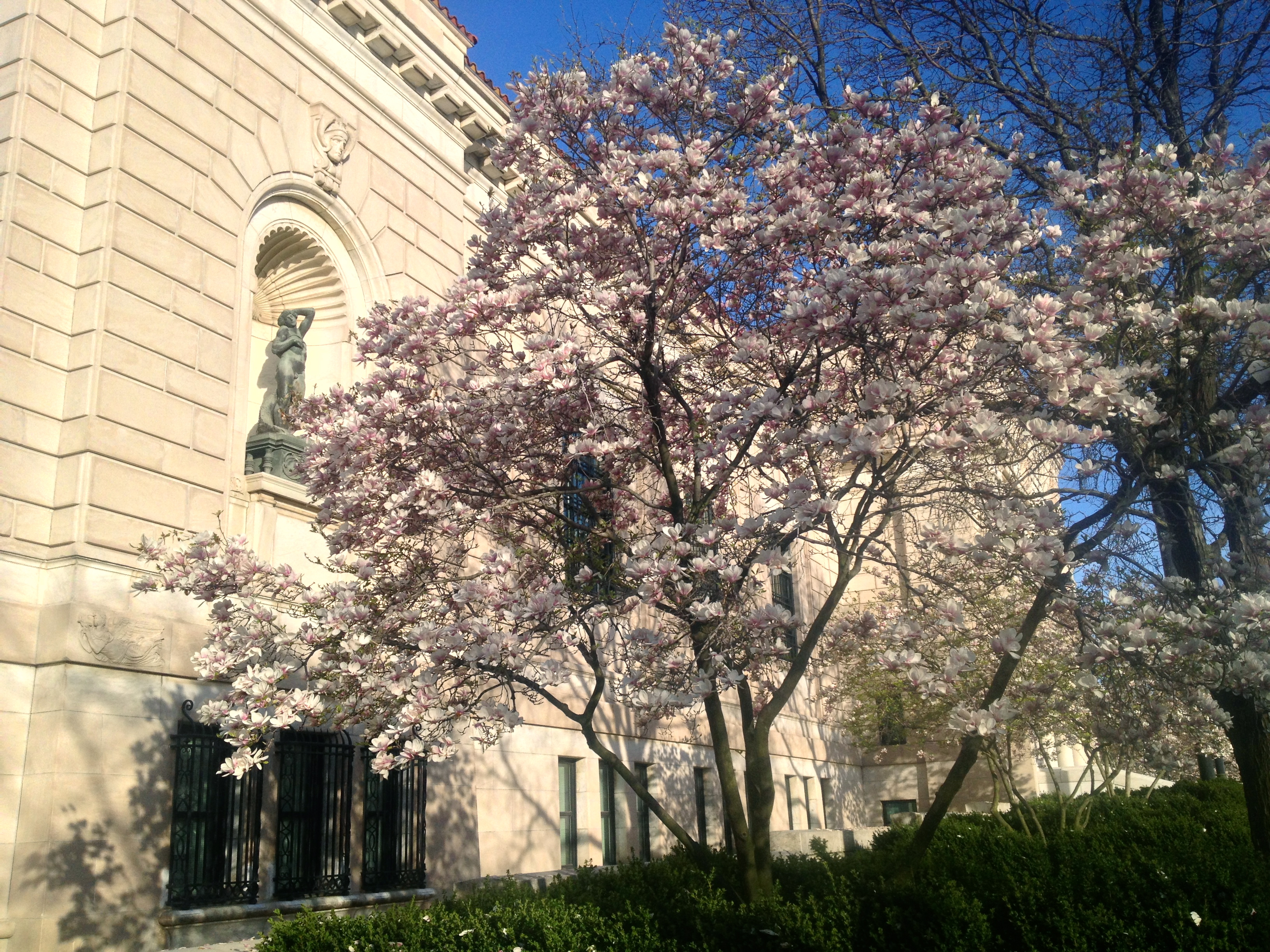
Built in 1927, the Detroit Institute of Arts (DIA) is a fine example of Detroit’s grand past and it’s one of the few world-class institutions in this city that has maintained its status. The building itself is a beautiful example of twentieth century beaux-arts and the American City Beautiful movement. It’s a symbol of a time when wealthy residents and cities boldly invested in their culture and their future. In the spring,  you might find tulip trees  blooming and the sun shining on manicured lawns.

This is not how most people picture Detroit:

Of course, I immediately fell in love. When we first walked in, my dad and I ate dinner at CaféDIA then settled into our seats in Rivera Court just past the main entrance to the museum. Every Friday night, the DIA exhibits a musical guest for a free live performance. For us, the museum hosted the modern stringed music of Bonjour. In this old stone hall of Diego Rivera murals, the New York chamber music ensemble played Thursday Afternoon and other innovative stringed arrangements.

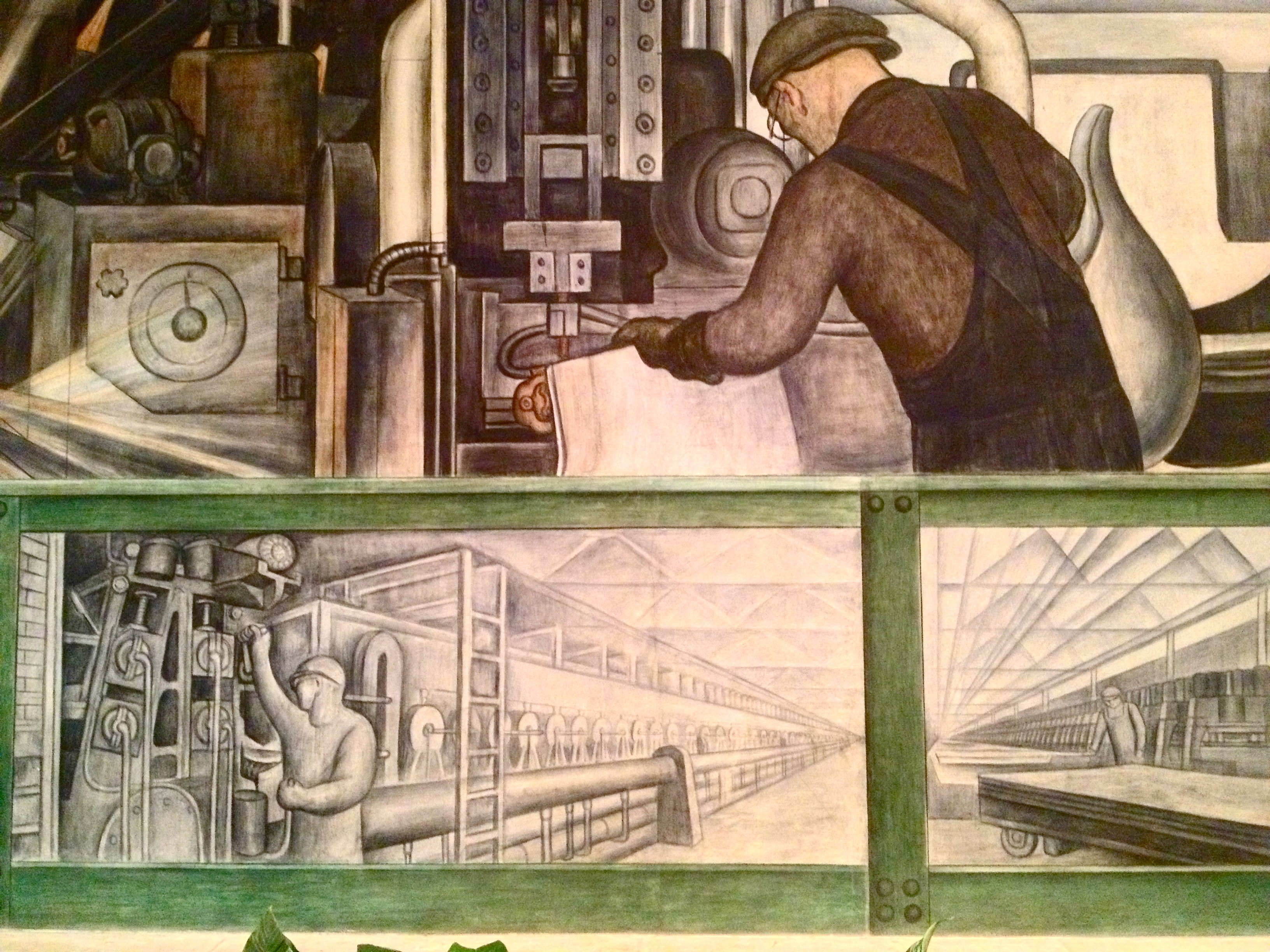
The museum, in large part funded by the wealth of the automobile industry, has also fiercely defended the Rivera murals which depict faceless humans and infinite assembly lines.

The infinite assembly line and anonymous worker

It’s one of the artist’s greatest surviving works in America and it’s ironic to be associated with the family and fortune of Henry Ford. Ford, the icon of the American automobile revolution and Rivera, a Mexican artist associated with communism and the revolutions from below. The murals are both grand and subversive. In Detroit, they’re perfect.

Today, the future of the DIA is in question. When the filed for bankruptcy, creditors began eyeing the art at the DIA and scheming its potential sale. Everything that is great about this museum also makes it one of the city’s most valuable assets. If all the art were seized and sold, it would certainly be a chilling moment in museum history. What’s incredible about the current spirit of Detroit is a “nothing to lose–nothing to hide” attitude. Unfortunately, in the case of the DIA, the city does have something to lose. The question is whether to hold onto an institution from the past or fully embrace a new and more innovative future.

The future of the DIA is the future of Detroit.

For more, check out my “Places” tab for Detroit.

The work

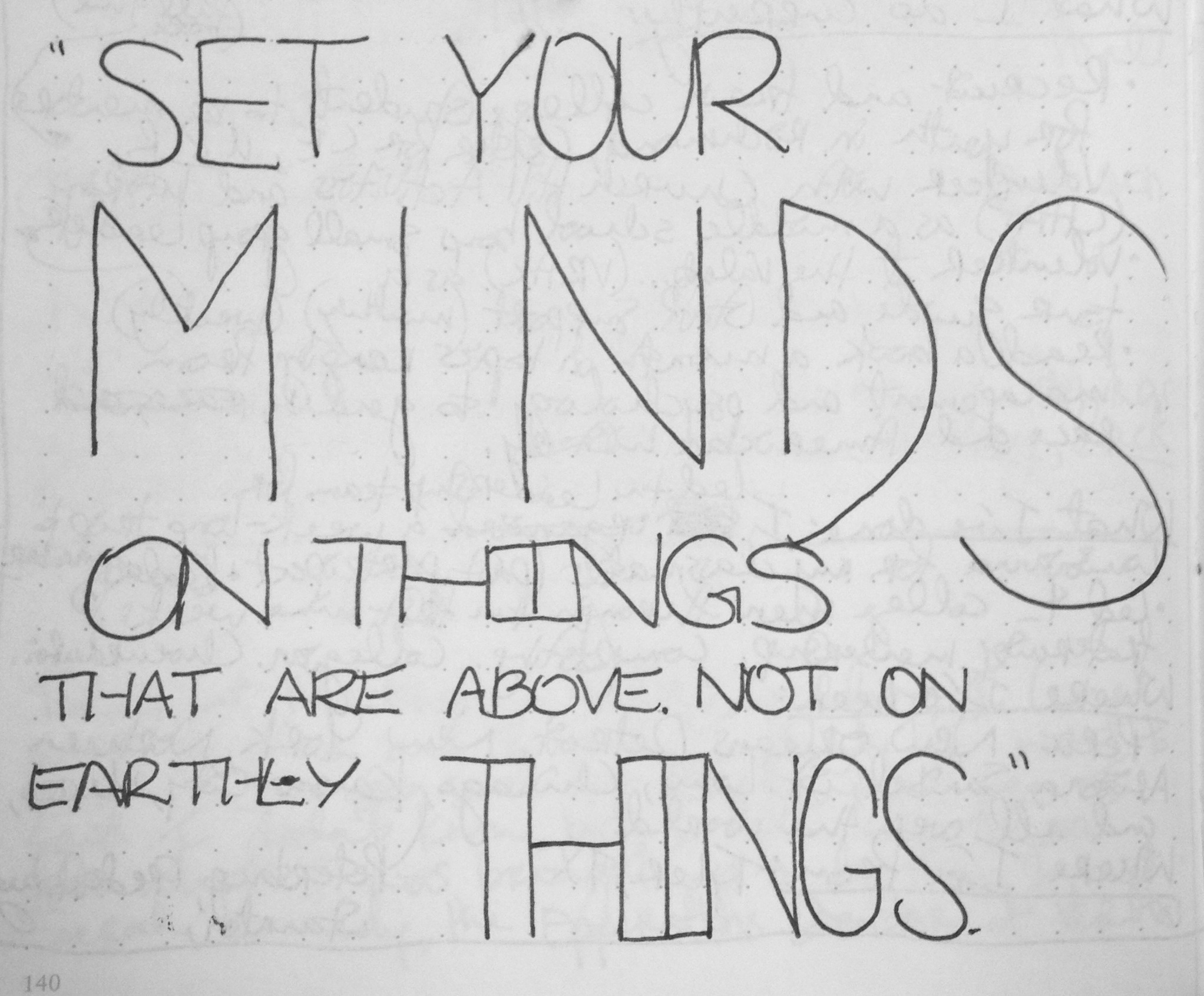
There are some verses in the Bible I could read every morning. This one struck me a week ago because I never really realized how much work there is implied between the lines. In a world where everything I experience with my senses is earthly, this verse is a challenge. I believe the word “set” is an active process. This is the work of faith.

20131119-082731.jpg

The Netherlands: A Map of Time and Space

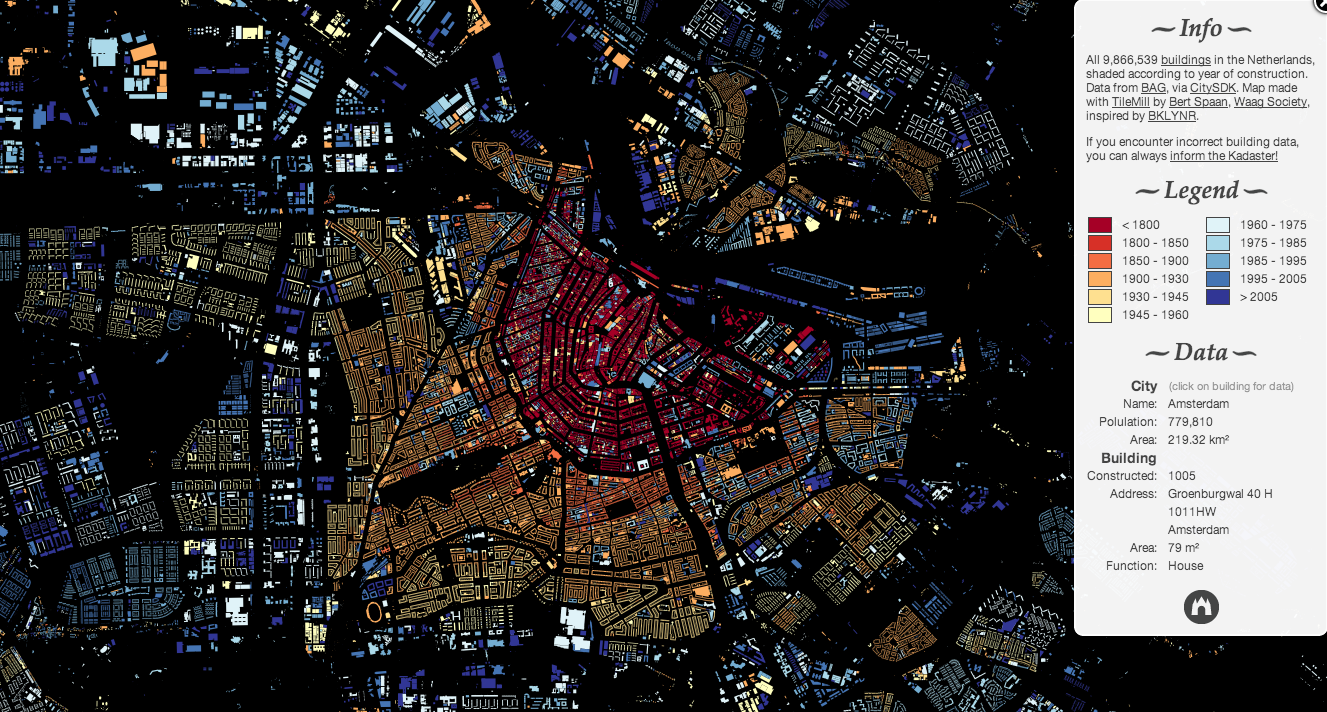
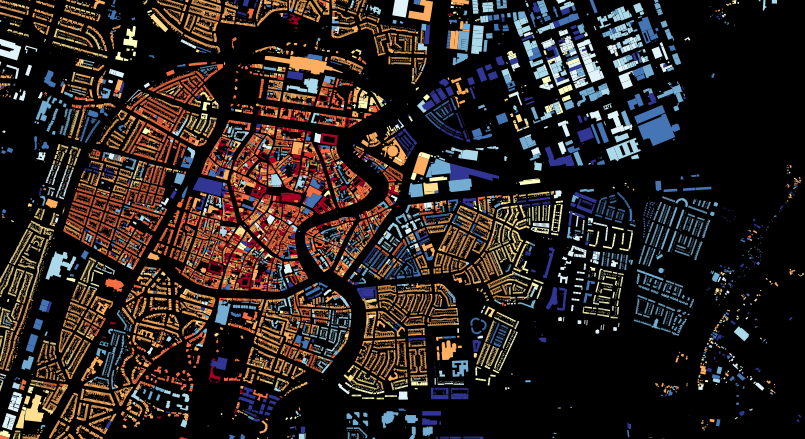
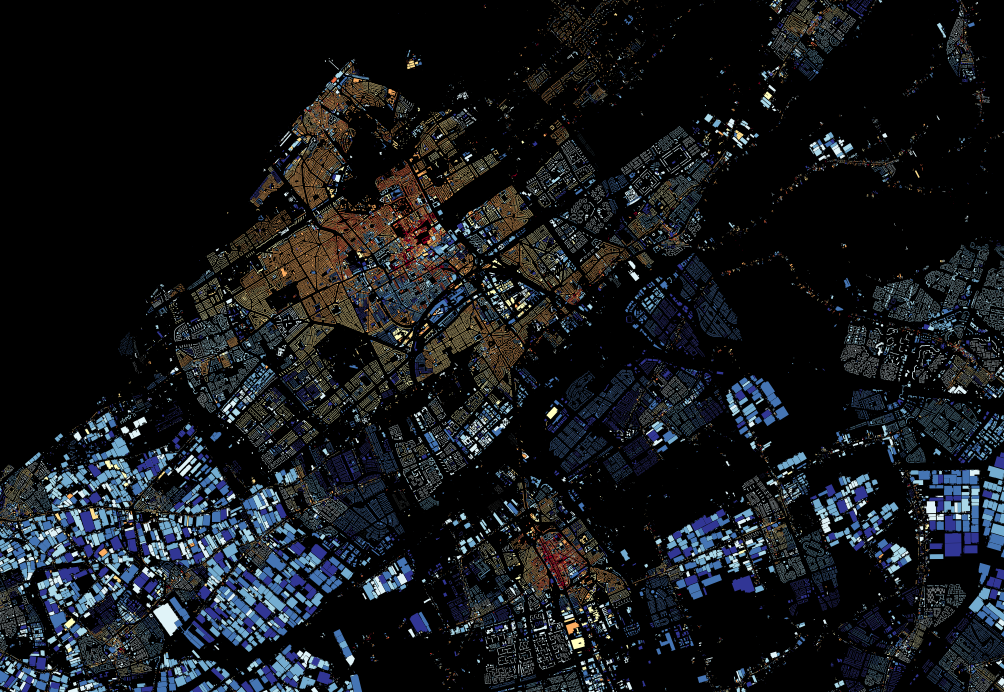
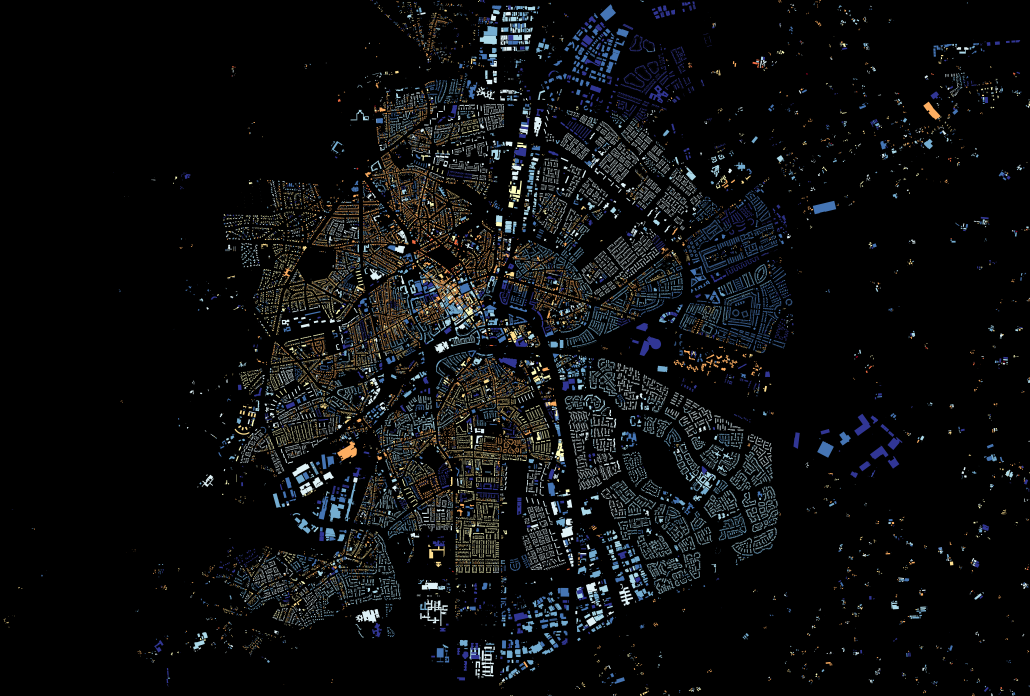
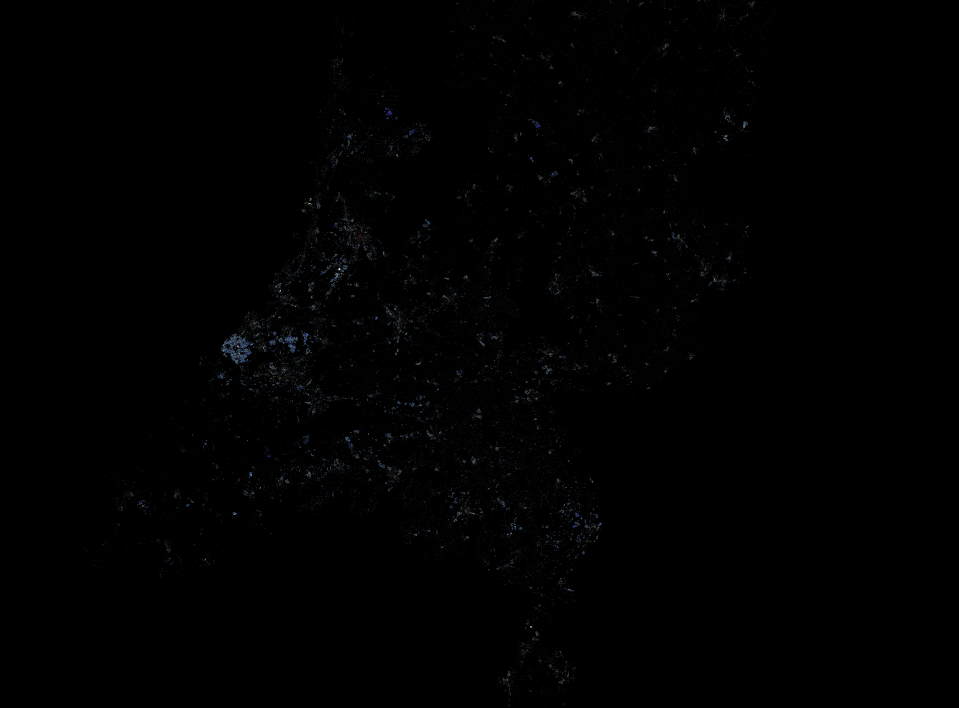
This map is beautiful: a black field with every building in The Netherlands color coded based on the year it was built. Take a look at Amsterdam:

Amsterdam

And Haarlem:

Haarlem

The Hague:

The Hague

Apeldoorn:

Apeldoorn

Aaaaaand the whole kit and caboodle:

Screen shot 2013-09-02 at 10.09.44 AM

Crying Over Spilt Rilke

I’m thankful for the Adam Lauver sharing his thoughts on this Rilke letter and the rest of the collection which I own, but have still not finished. Maybe this is the encouragement I’ve been needing 🙂 I’ve reblogged his post here for anyone else who is interested in a little encouragement today. It’s not an answer to your questions, it’s a new metaphor for your life.

During my first year of college, I struggled a good bit. On the outside, I was effortless: taking upper-level seminars, making friends with the president. But on the inside, I was asking big, fundamental questions about myself and about life. And I was, for the first time, on my own. During this time (as with much of my life since then) I began to reach out for life preservers—little bits that I could cling to for hope and assurance in the “goodness” of the future.

One such bit of wisdom was “Letter 4” from Ranier Maria Rilka written to a young poet. The interim chaplain at the time emailed the piece to me and I will never forget reading it one night while “studying” in the library. I read the words “Live the questions now” and my eyes began to open to a new perspective on life and a new peace I had never previously comprehended. Rilke continues, “Perhaps you will then gradually, without noticing it, live along some distant day into the answer.”

Adam Lauver's avatarThe Narratician

“You are so young, so before all beginning, and I want to beg you, as much as I can, dear sir, to be patient toward all that is unsolved in your heart and to try to love the questions themselves like locked rooms and like books that are written in a very foreign tongue. Do not now seek the answers, which cannot be given you because you would not be able to live them. And the point is, to live everything. Live the questions now. Perhaps you will then gradually, without noticing it, live along some distant day into the answer.” – Rainer Maria Rilke, Letters to a Young Poet

I recently came across a used copy of Letters to a Young Poet, which I’ve been meaning to read for a long time now. As I was leafing through it in the book store, I noticed that there was…

View original post 537 more words