Tag Archives: Richmond

Compost

I think about compost all the time. From food scraps to humanure, we discard, bury, sterilize, and burn some of our most fertile resources. Decomposition of organic matter happens naturally, we just have to set simple public health boundaries for rats and transmissible diseases.

Growing up, my parents kept a couple of compost piles in the back yard and it was very normal for us to save food scraps in a plastic bin under the sink. I think the bin was actually a drawer from the freezer that we didn’t need for some reason. My interest in composting went to a new level during Thanksgiving break in the fall of 2008. I decided not to fly back to Texas and instead I visited my older brother at Earthaven Ecovillage in North Carolina, a community devoted “to caring for people and the Earth by learning and demonstrating a holistic, sustainable culture.” I had never been to such a place and I soaked it up. There was so much to see everywhere on the property. It felt like a place where every mundane aspect of life had been reimagined. Most important in the context I this post is that this was the first time I ever used a composting toilet. I will always remember my time at Earthaven as a formative, positive, eye-opening experience. Over the next couple of years I realized my role could be connecting with the culture and innovations at places like Earthaven and helping to translate them to the mainstream. In my mind, that involves making these practices beautiful and functional.

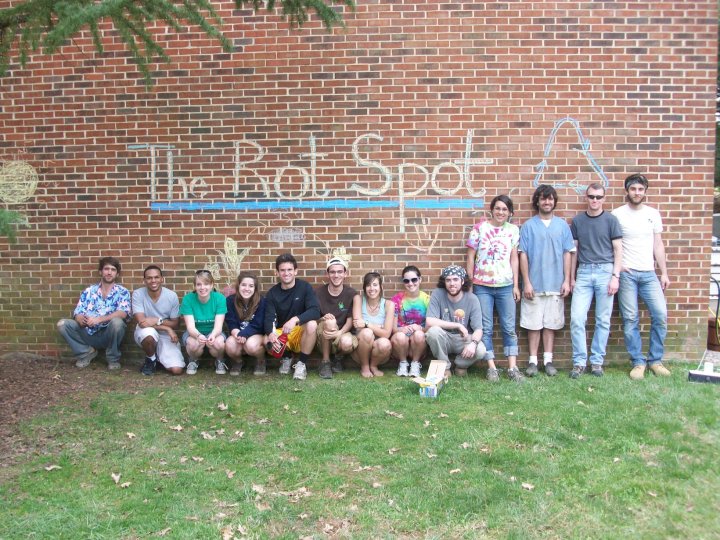
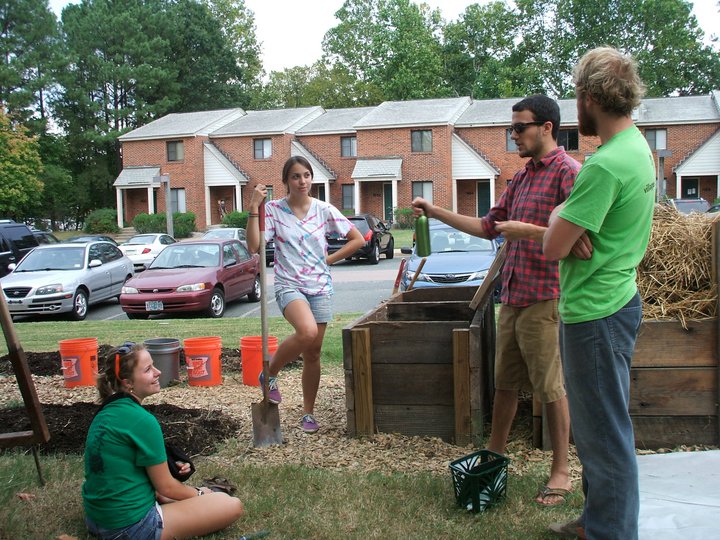
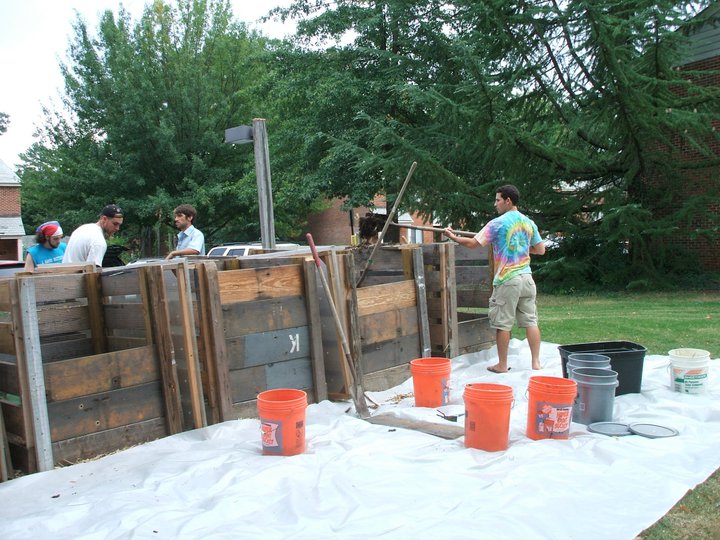
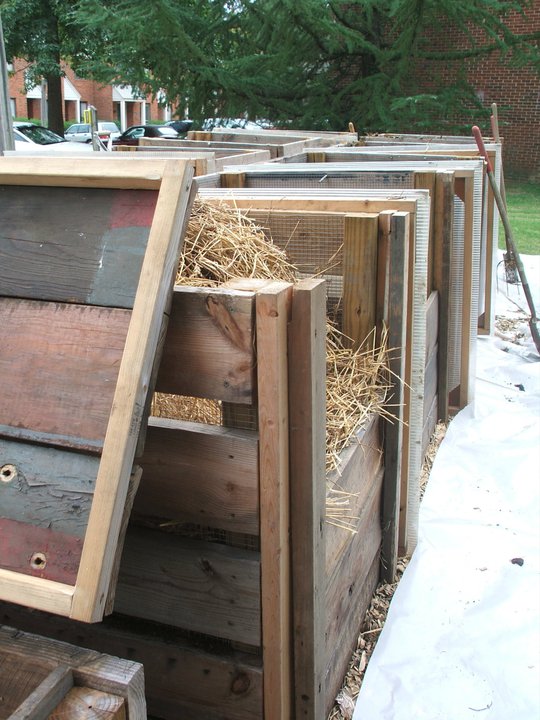
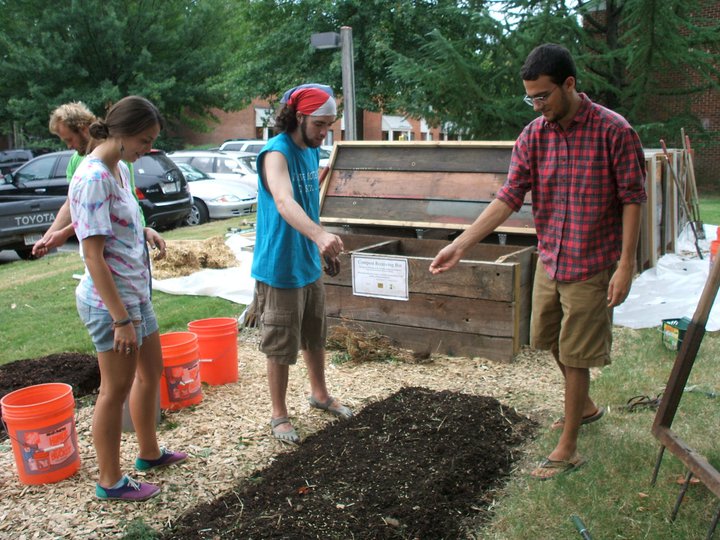
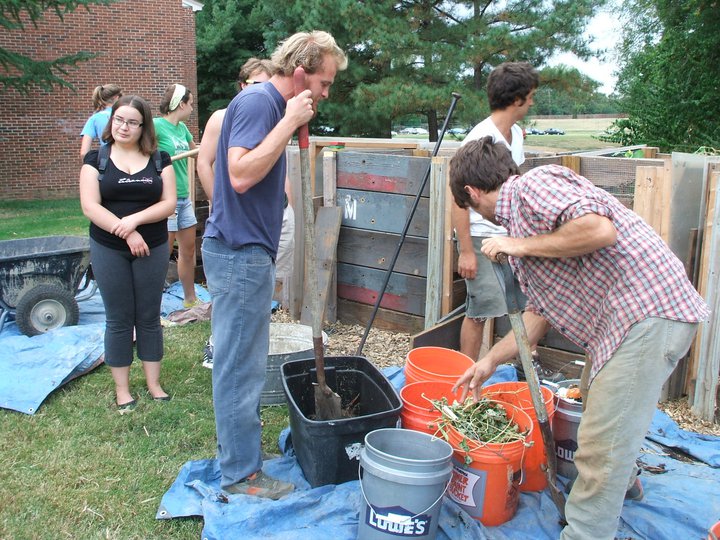
A year later, I started a composting program on my college campus. Digging up some of that pristine grass and installing the composting system at UR was one of my favorite days of college. It was my small attempt to make the place more interesting and feel connected to the soil.
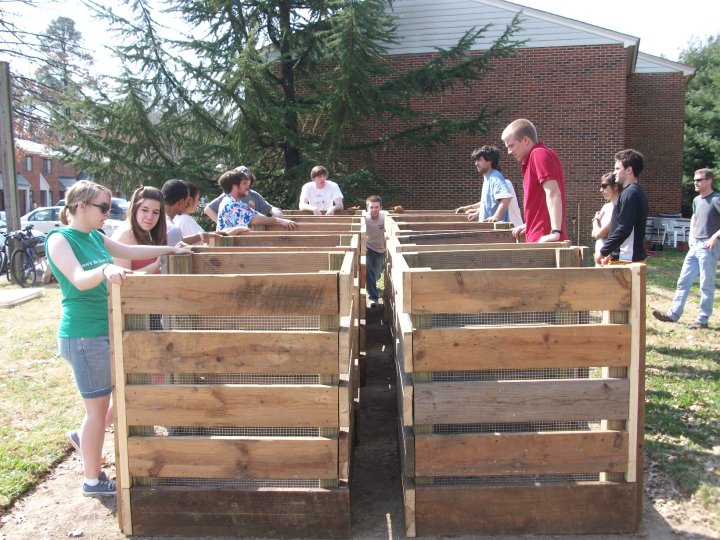
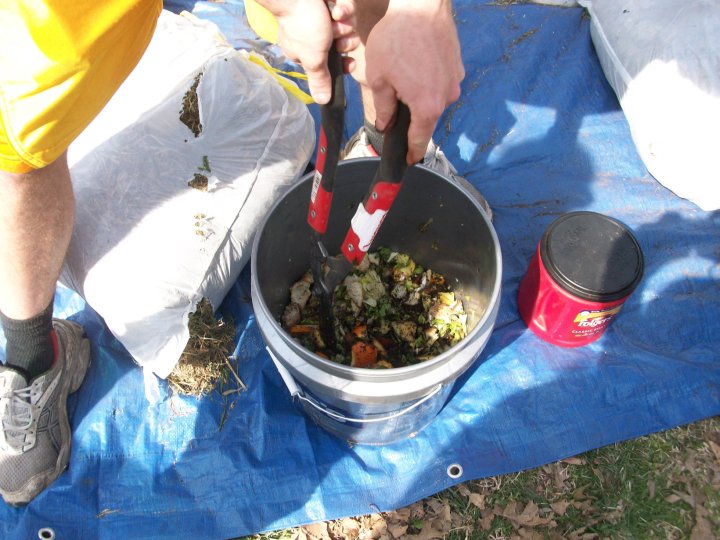
It was a special project for me. I loved seeing friends carrying bags of compost from their apartments. Like many college programs, the compost system fell into disrepair and the boxes were removed a few years after I graduated.

My first year out of college, the brother who had lived at Earthaven moved in with me. He started a compost pile in the backyard and it was fun to get back into that routine. Of course, composting can sometimes be a little like a cast iron skillet: everyone has their own way to do it and sometimes they are hard to share. One time, I was doing something that my brother didn’t like and we got in one of the biggest fights of the year together. We’re passionate composters 🙂 My main issue was that I wanted composting to be a low-stress activity. Things break down. I don’t want to think too much about it. A few years later we moved into a different house and I felt the energy to get it going again. I bought a plastic tumbler, pictured below, because we had just a small garden in the front and patio out back. This is a picture of it in its current, discarded state.
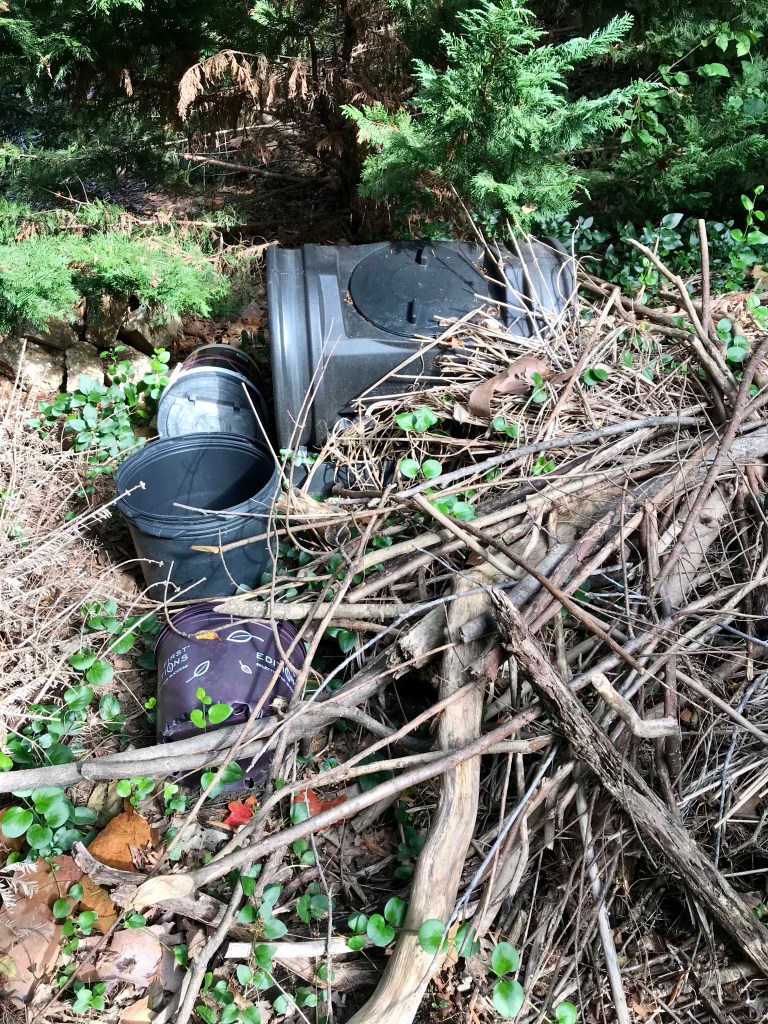
This tumbler served me well for a couple of years. I like how easy it is to turn, how sturdy it is near the ground, and how it collects compost tea in the reservoir below. My main complaint is that it is difficult to get the compost out. It gets stuck in the corners, the opening is too small, and the compost can tend to get too wet even with the drain holes in the bottom. It was also not enough room for us. After it filled up I started supplementing with five-gallon buckets with holes drilled in the bottom and sides.

My current composting system is a little more ambitious. We have more outdoor space now so lots more room to experiment. A couple of months after moving in I noticed that one corner of the back yard had a steep slope. The soil had washed down the hill and left the area eroded and also created a gap under the sidewalk above. I had read about contour lines and thought that I could set up a fence sort of perpendicular to the slope to hold my leaves, collect rain water, slow erosion, and start to build up the soil. As a bonus, I had somewhere to put my leaves every year. At some point in the process I also learned about leaf mold (composted leaves) and it has been incredible to dig to the bottom of the pile and find loads of this soil amendment to spread around the garden.
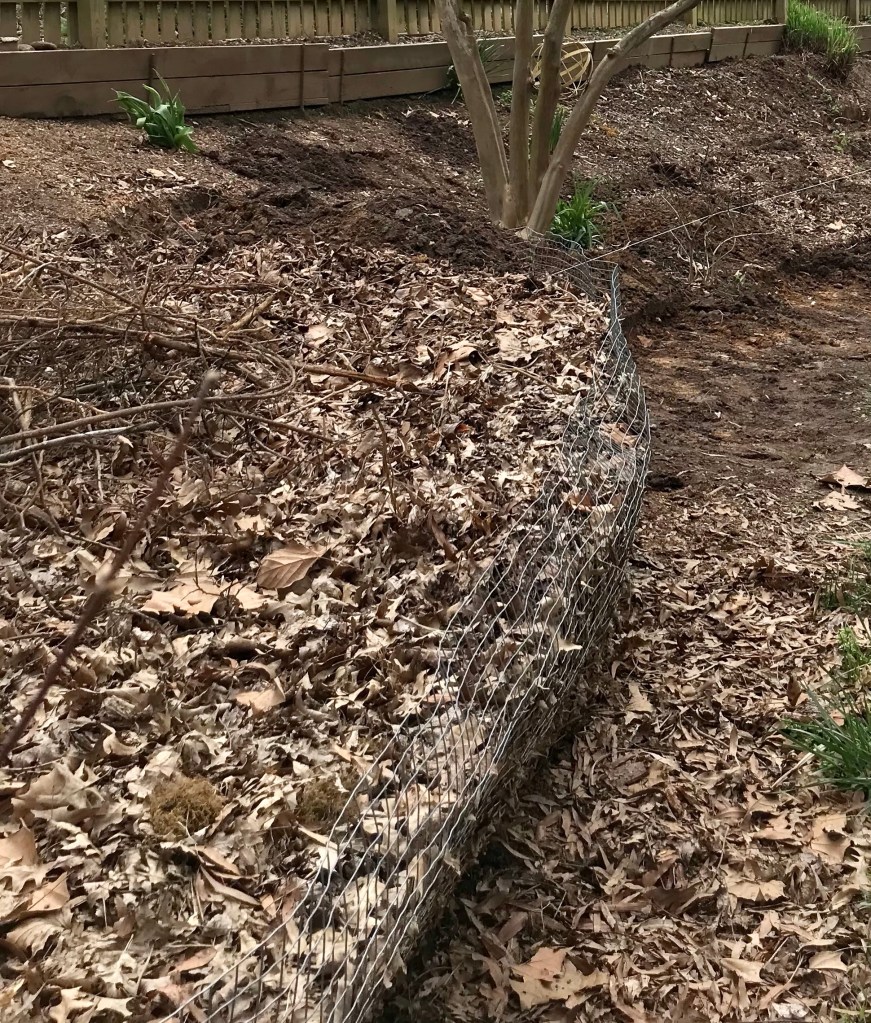
During the summer of 2020 I planted a wildflower seed mix around the top edge of the leaf pile. I like the flowers and also wanted the roots to help with building up the soil. I also added two natural wood terraces on contour, the top for planting and the bottom for walking around and reaching everything.
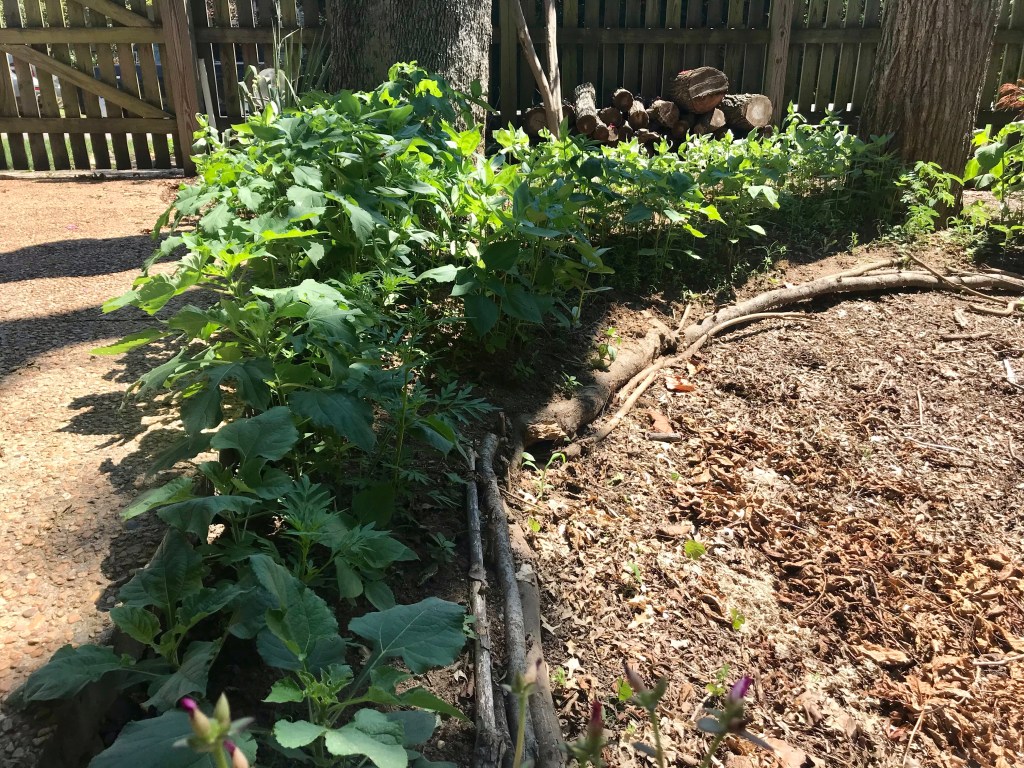
Around that same time I made a connection: if I was piling all of my dry matter in one place, it made sense to do my kitchen scrap composting there as well. I started to prefer the five-gallon buckets to the store-bought tumbler and I moved them over to the leaf pile to try it out. Once the buckets filled up, I let them compost until I needed the room. For the next stage, I dug holes into the clay farther up the hill and put the compost there to finish. Whenever I have the motivation, I dig it out and save it or spread it around. The photo below is from the summer of 2020.
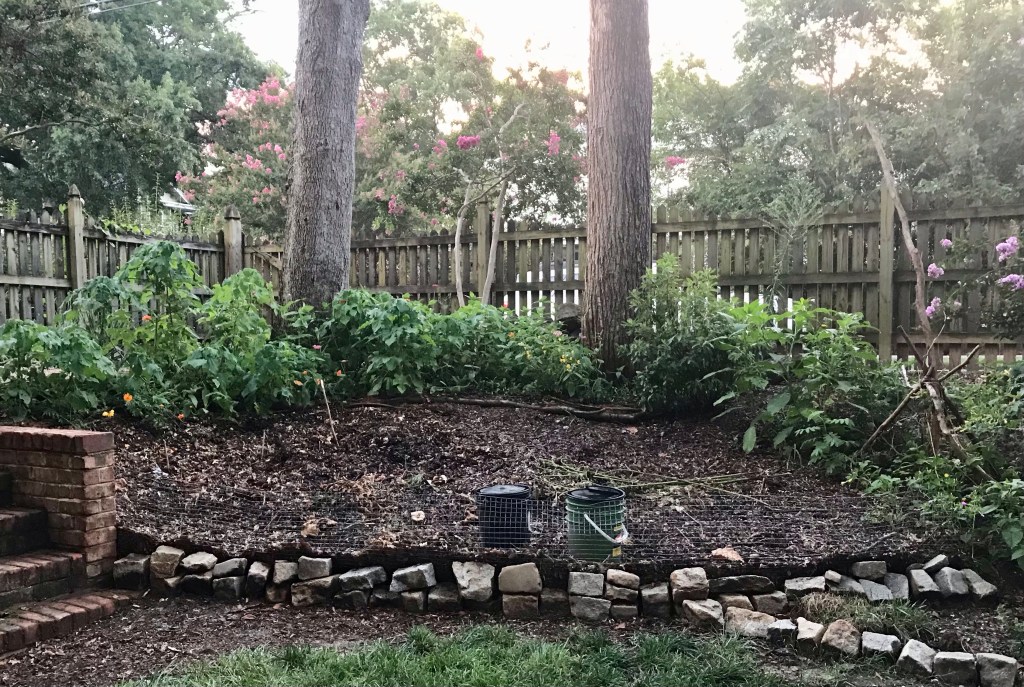
And this is from the most recent fall, 2021. This photo was taken after the first major raking effort in the back yard so the pile finally started to fill back up. I love the look of leaves.
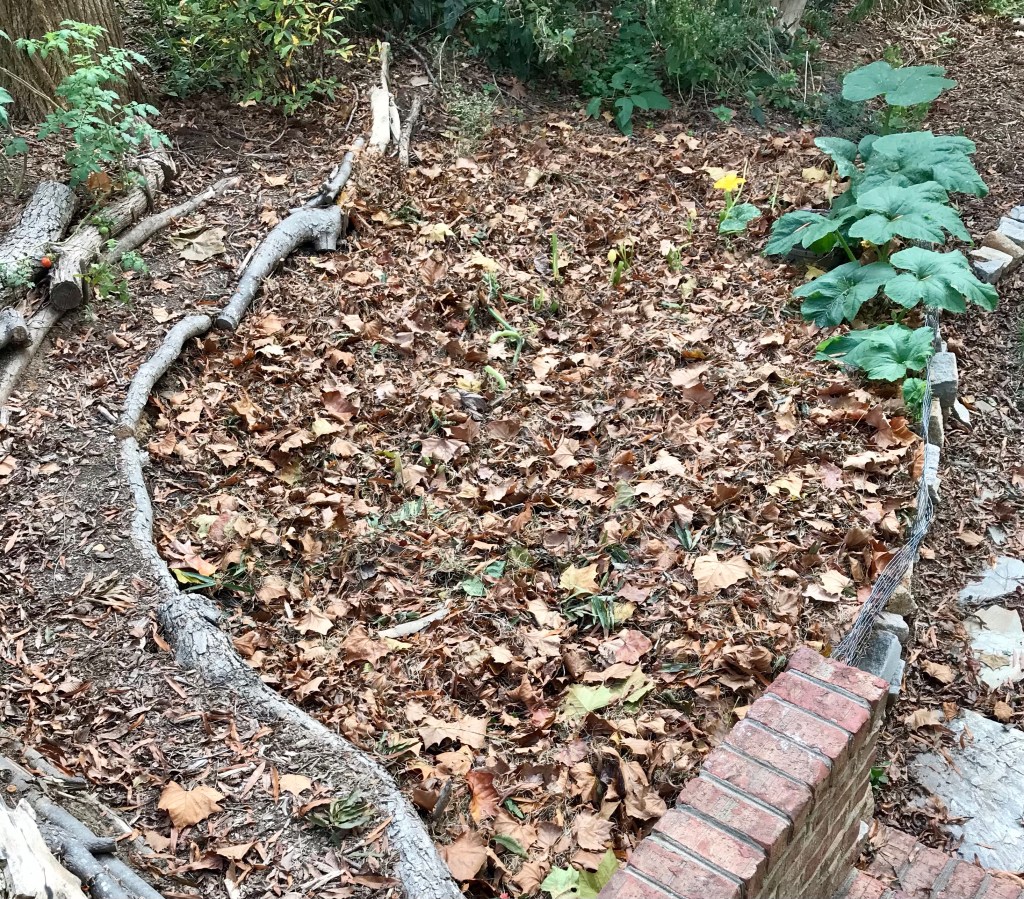
At one point I spray painted the buckets a camo grey color to try and help them blend in. I think it helped, but the paint is also chipping which is not ideal and eventually I just dug the buckets into the ground so they could be more easily buried in the leaves.
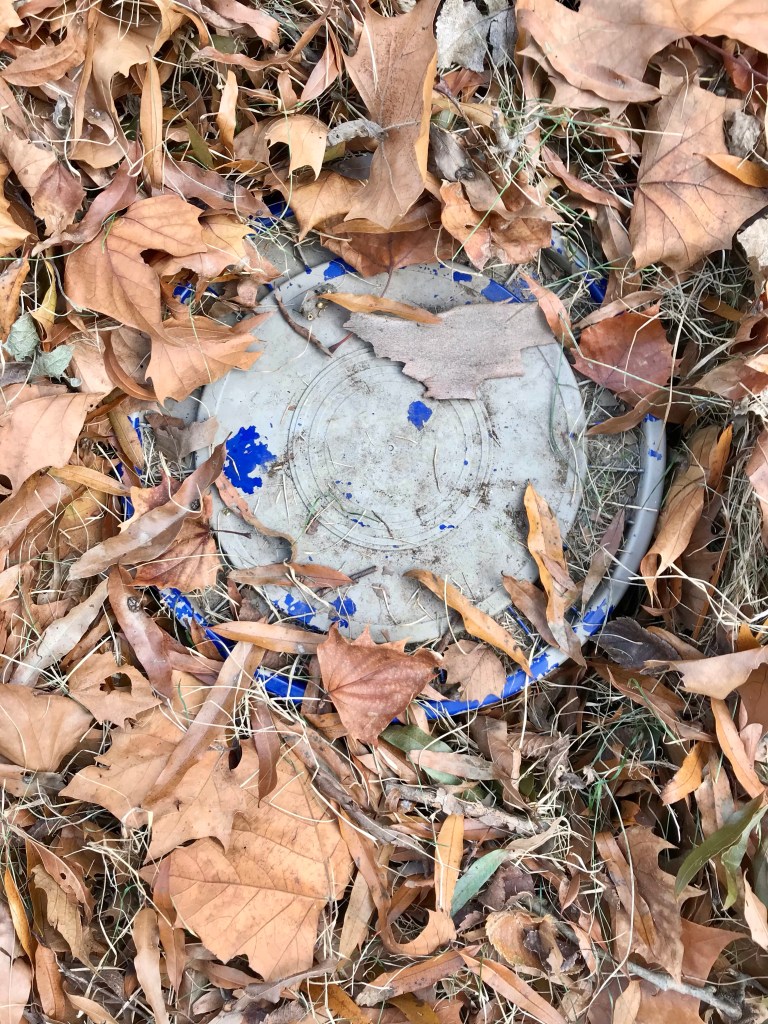
I really do love having the leaves so accessible. Not having enough dry matter has always been an issue for my compost so this is a real significant win-win.
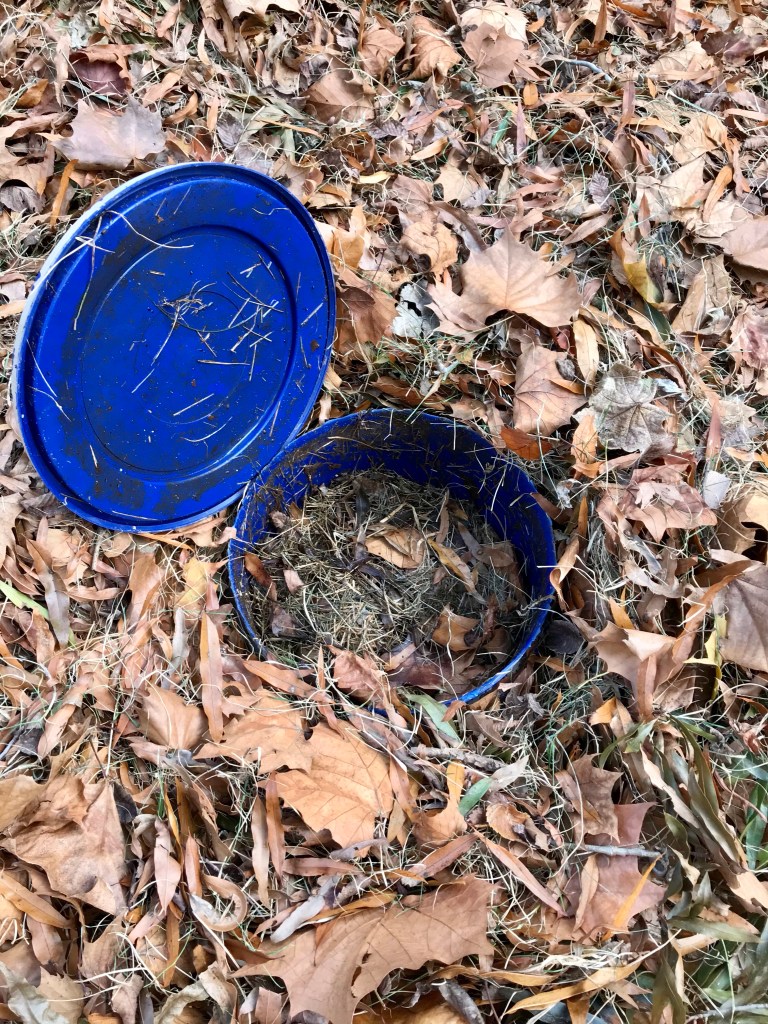
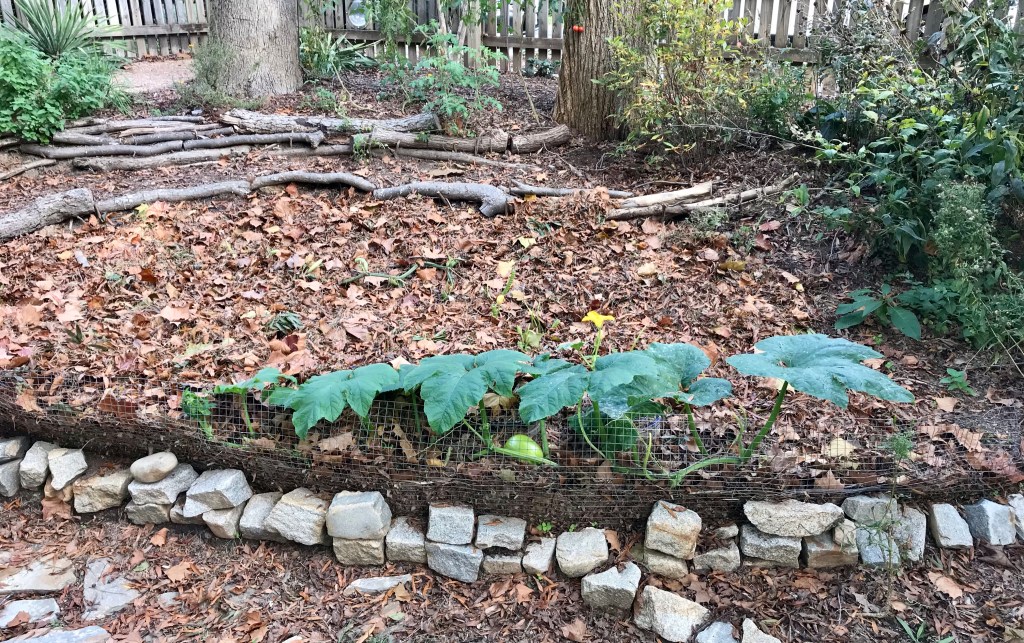
I also like that with the compost more connected with the soil there is room for volunteer plants to sprout. Here is a spaghetti squash that unfortunately did not survive, but added some nice greenery.
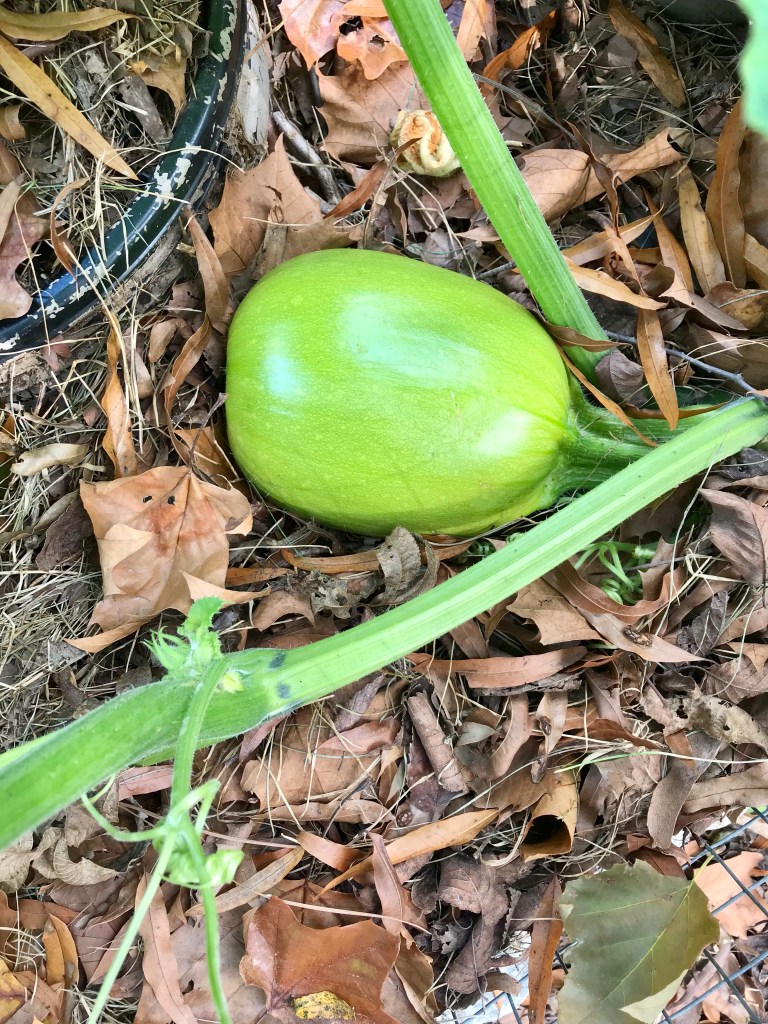
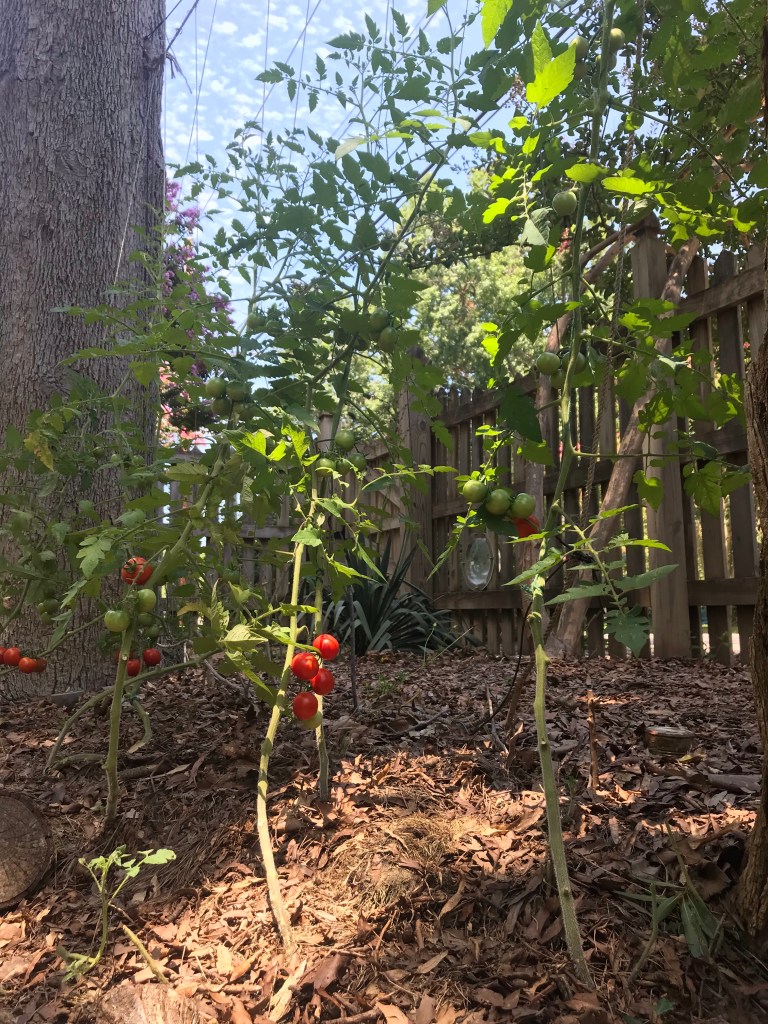
These tomatoes at the top of the hill are all volunteers from the compost. They were prolific, producing far more than the tomatoes I planted “on purpose.” I wrote about them already in a previous post.
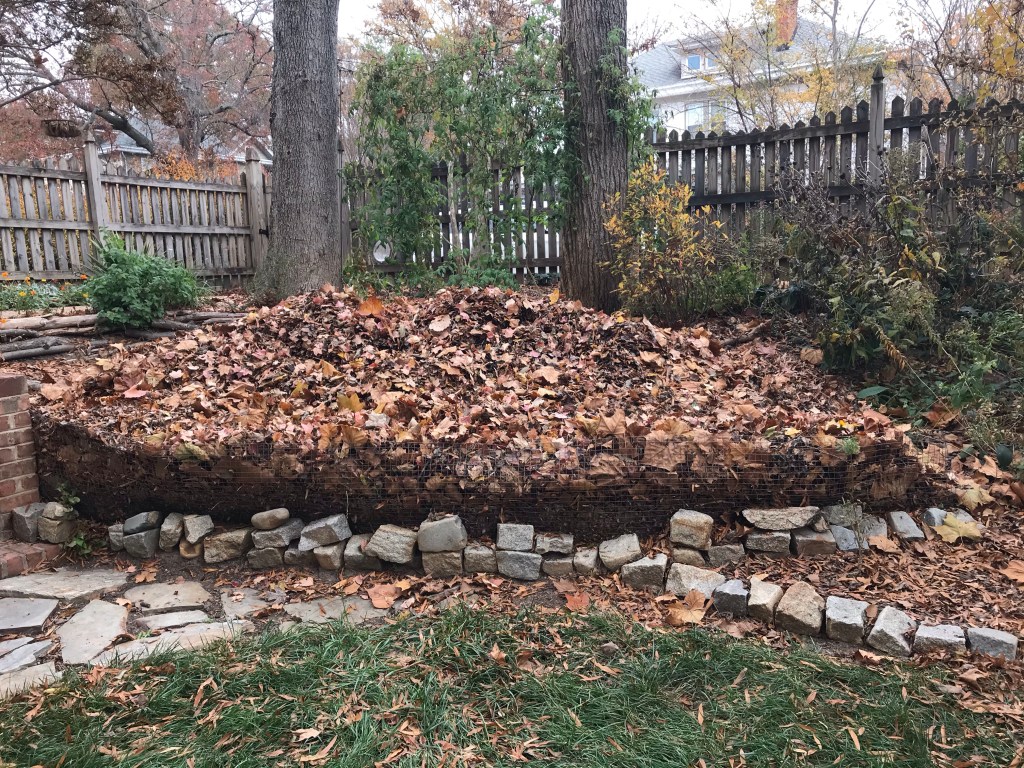
Here is a more recent view of the leaf pile after raking all the leaves from the back yard, front yard, and street. It is more than it looks.
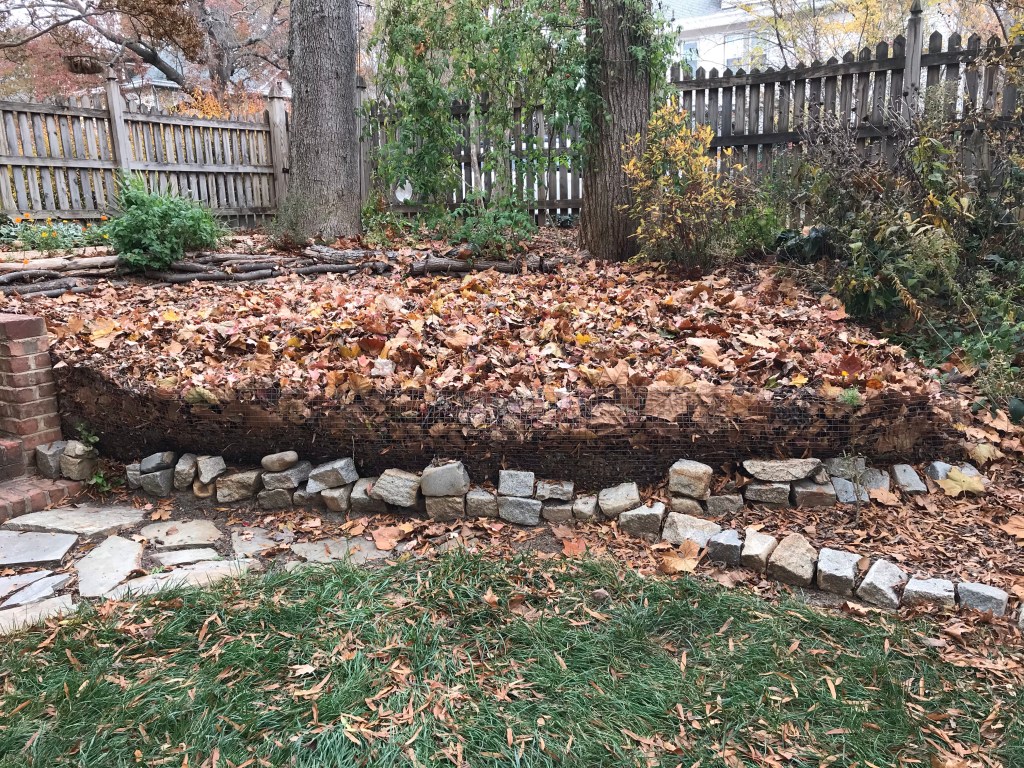
Here is the same pile after doing a little grape stomp to keep it from blowing away.
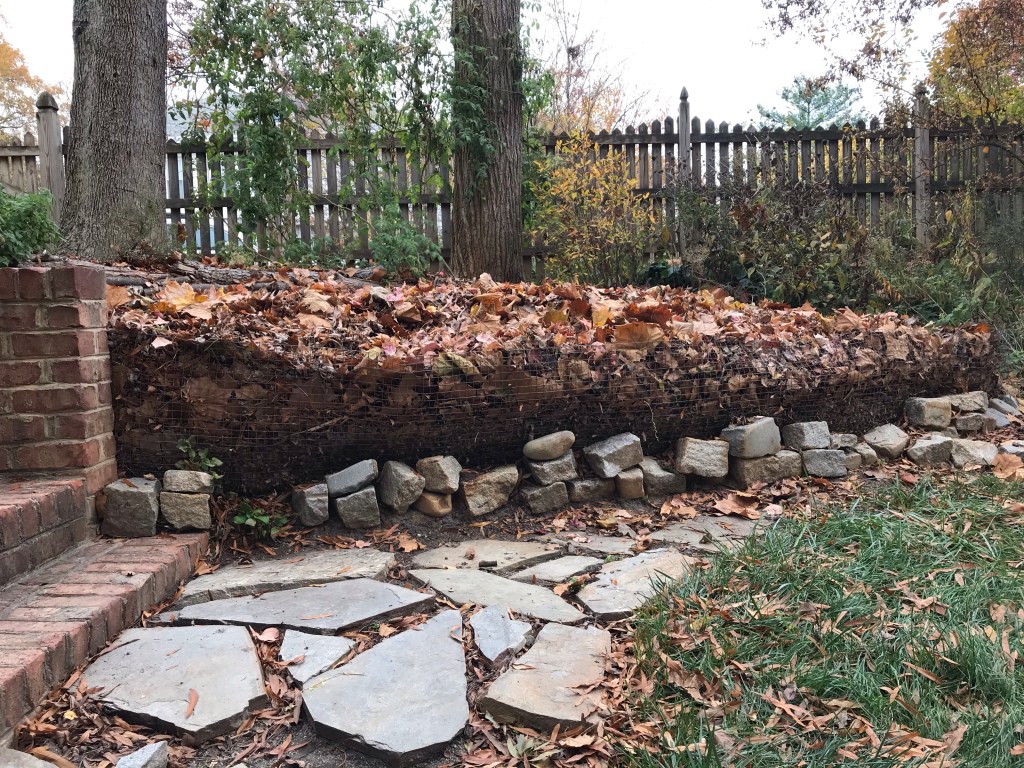
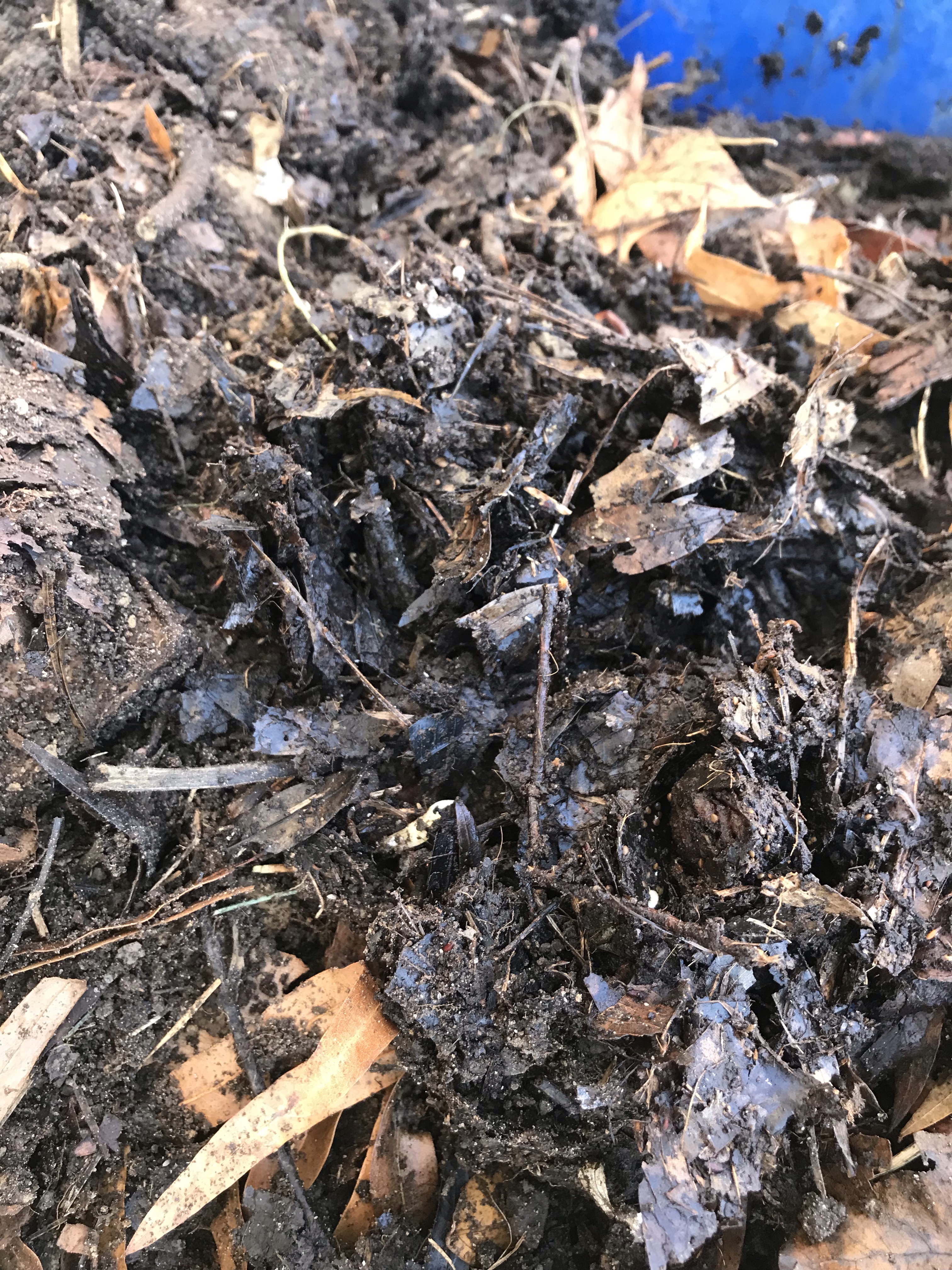
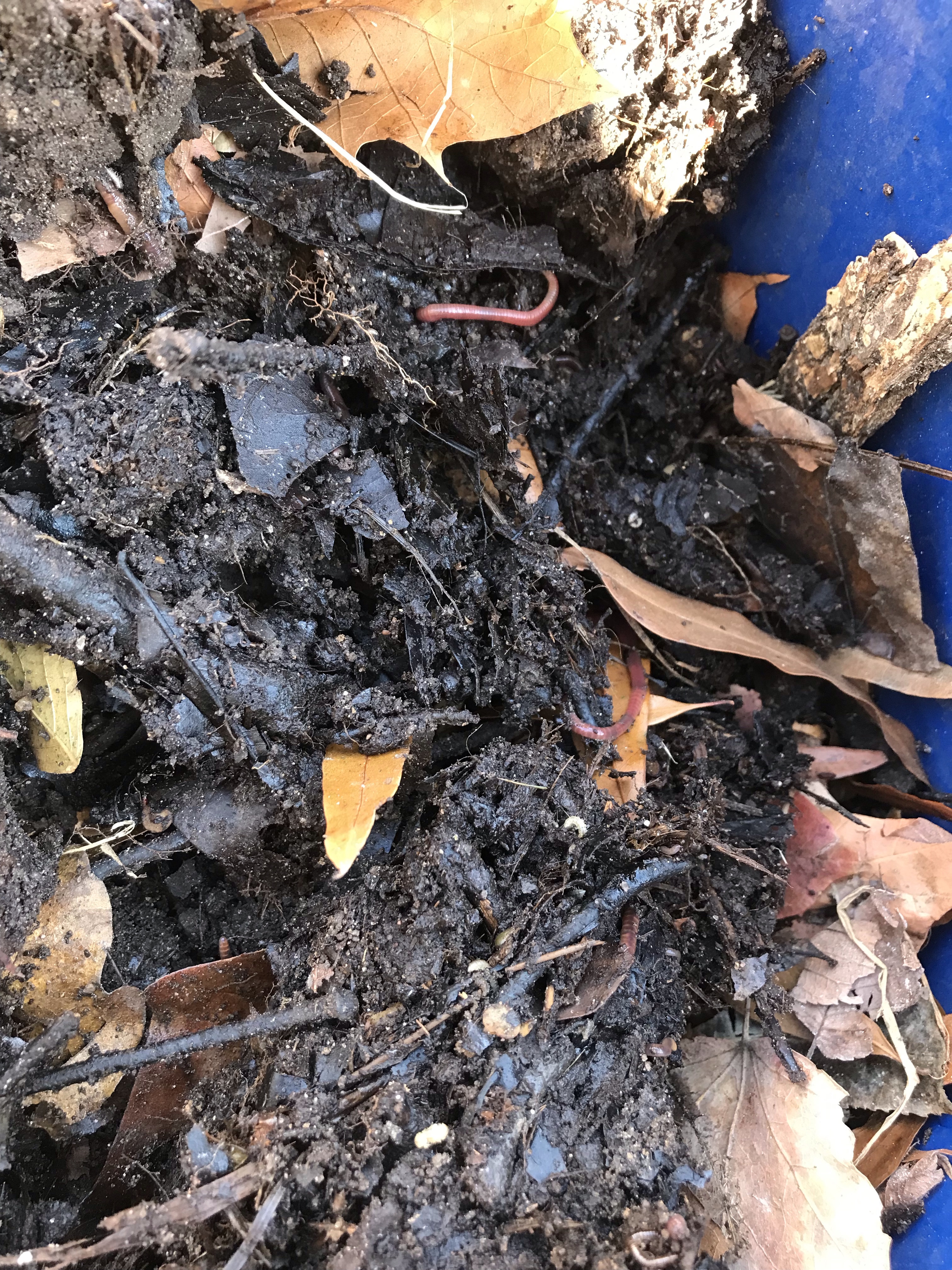
I’ve filled it this much at least once more since taking these last two photos and I think I have one last large batch to rake before my full leaf harvest is complete. It may look like just a leaf pile, but it is an entire universe of worms, millipedes, ants, fungus, and an occasional salamander. Birds love to pick through the leaves for food. Here is some compost I recently turned out to make room for the next batch.
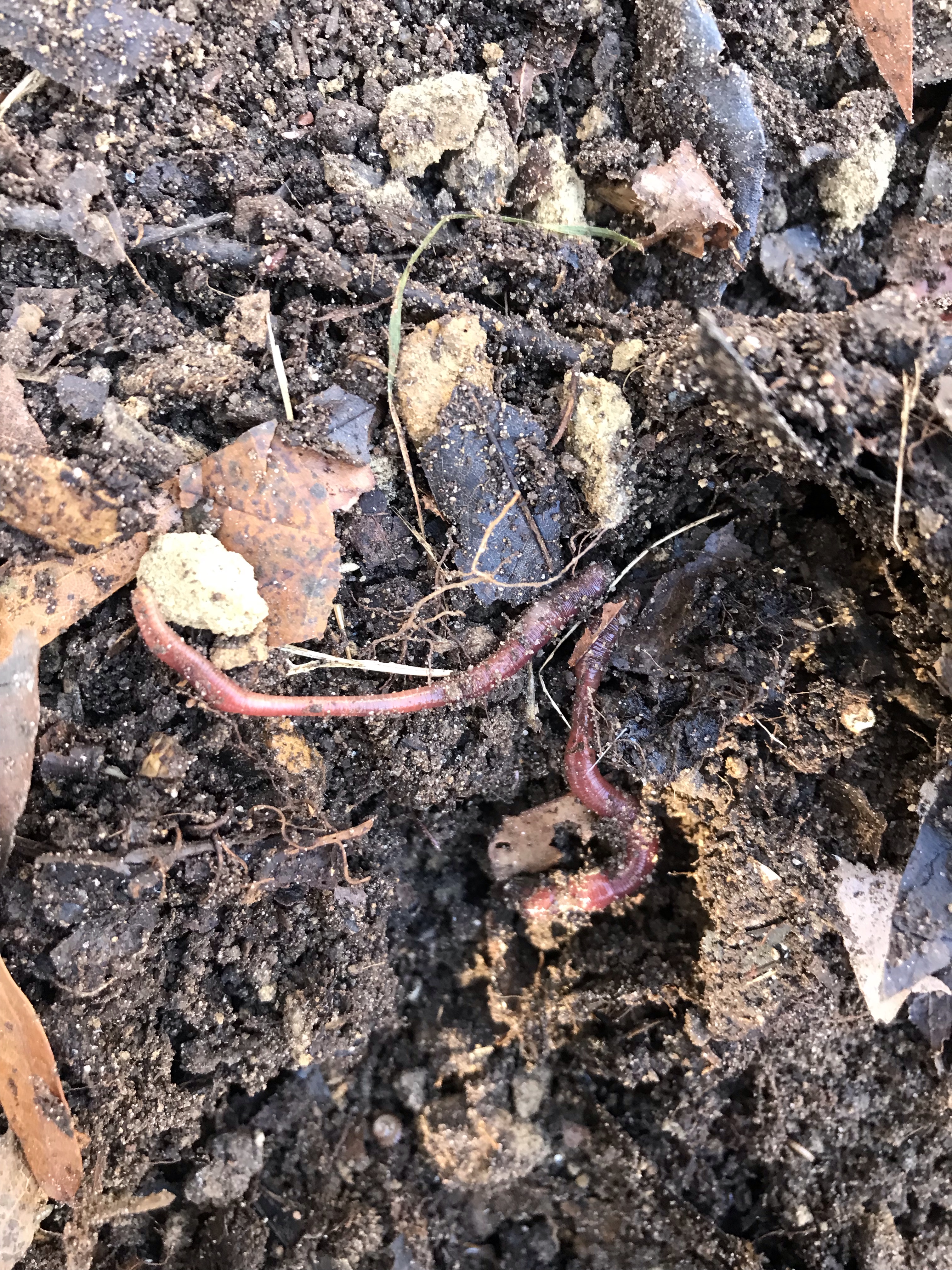
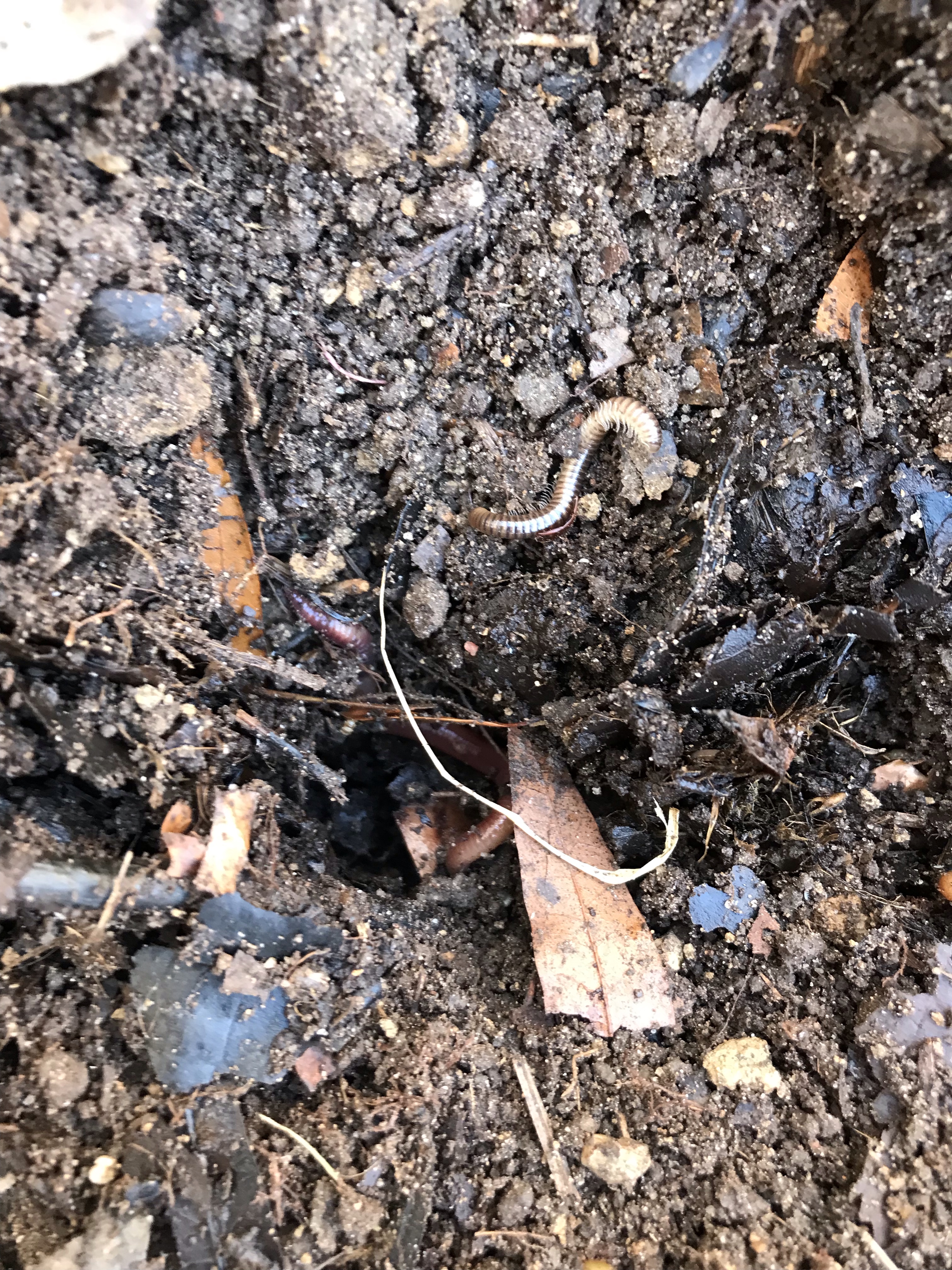
Composting is definitely a lifestyle. It can be messy and it usually involves interacting with rotting material at some point in the process. It’s also just so much easier and quicker to throw everything away. Even though I like my system, food scraps can pile up quickly. This is an aesthetic and time-consuming aspect of composting that can sometimes be a turn-off.
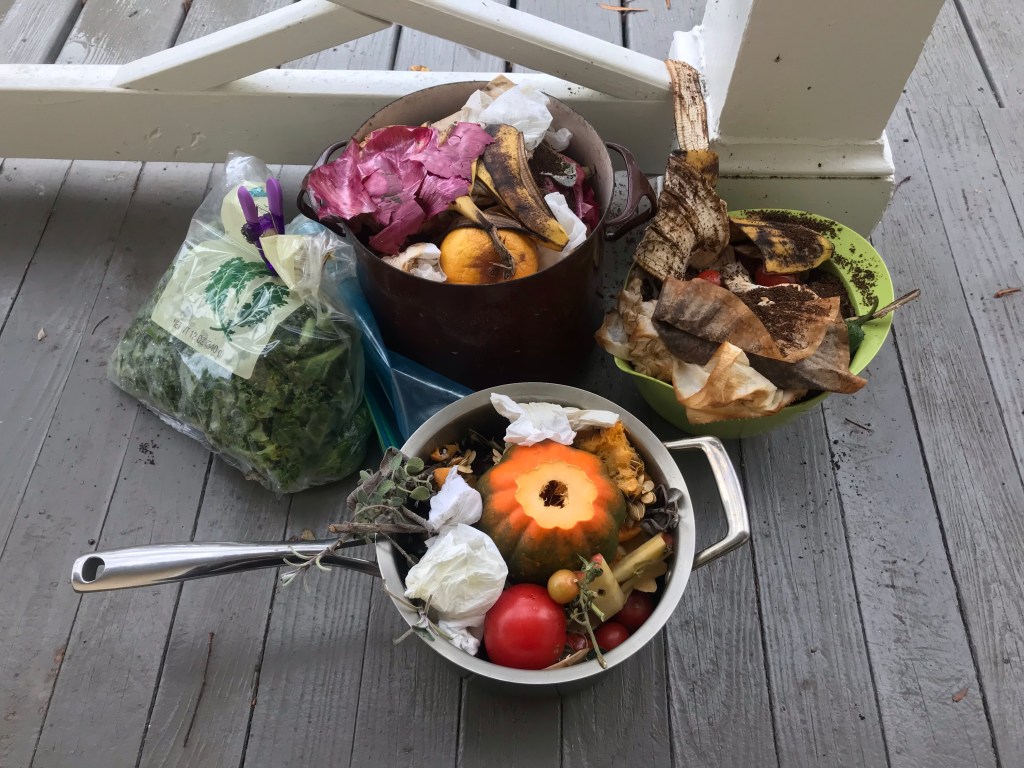
At this point in the process, I’m a little embarrassed to admit that I’ve become the “difficult composter” I wanted to avoid. In making this system that works so well for me I have also made it difficult for other people to participate. I want to work on the user experience so that anyone could take out the compost bucket and know what to do. In the spring I also want to plant some native honeysuckle around the fencing. I personally don’t mind the appearance, but I’ve received some negative feedback. Like I said, I want people to leave with a positive impression of compost and I want composting to be beautiful as well as functional so I’m happy to make the change. If friends and family associate rotting food with the sweet smell of honeysuckle then I will feel like I have done my job.
Garlic

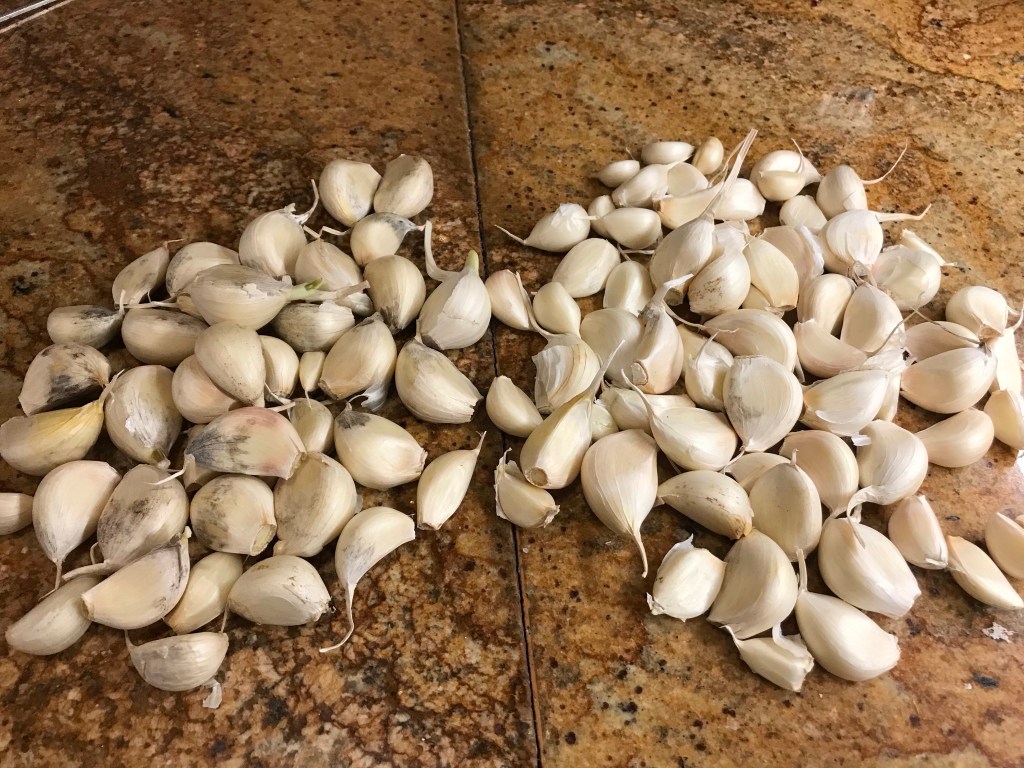
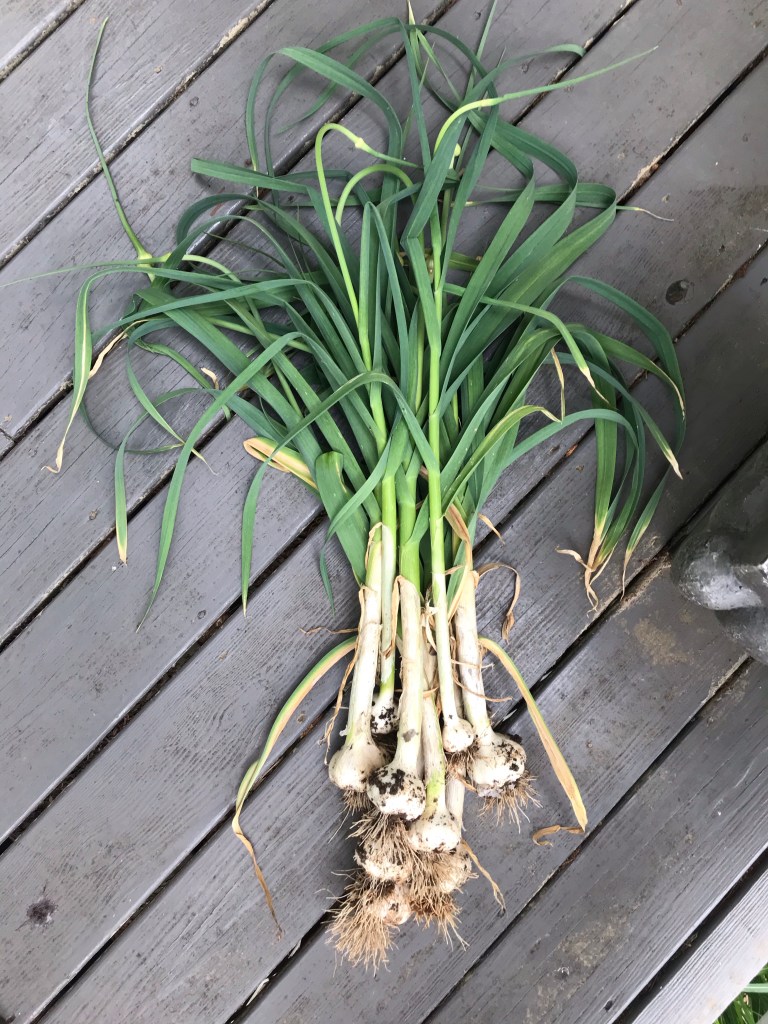
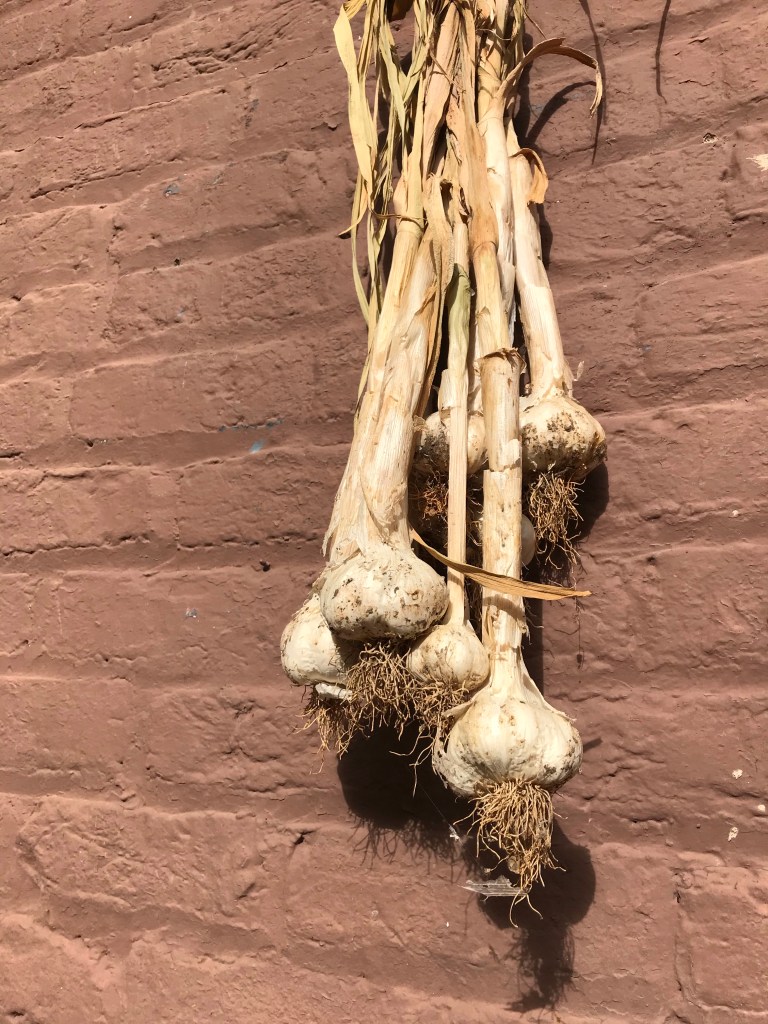
Last year, my younger sister came and stayed with us to help watch our toddler while daycare was closed. She also gardened a lot. At one point while she was here she planted garlic, just the regular kind from the store. It came up quickly and grew all winter long until I pulled it out looking like this:

After harvesting it, I dried it in the basement over the summer. I am not sure this is the right way to do it, but I finally brought it up today to take a look.

I’m pleased to say it all looks and smells like garlic! I appreciate how magical growing food still feels.

I’ll probably plant half of this in the next few days, roast the garlic scapes in spring, hopefully harvest the rest when it’s ready, then do it all over again. It makes me think about whenever it was that garlic was first spreading as a food. One person harvesting a head of garlic and planting it all that fall. Then, with several heads of garlic the next year, sharing a clove with close friends and family so they could start a crop of their own.

Back to the office

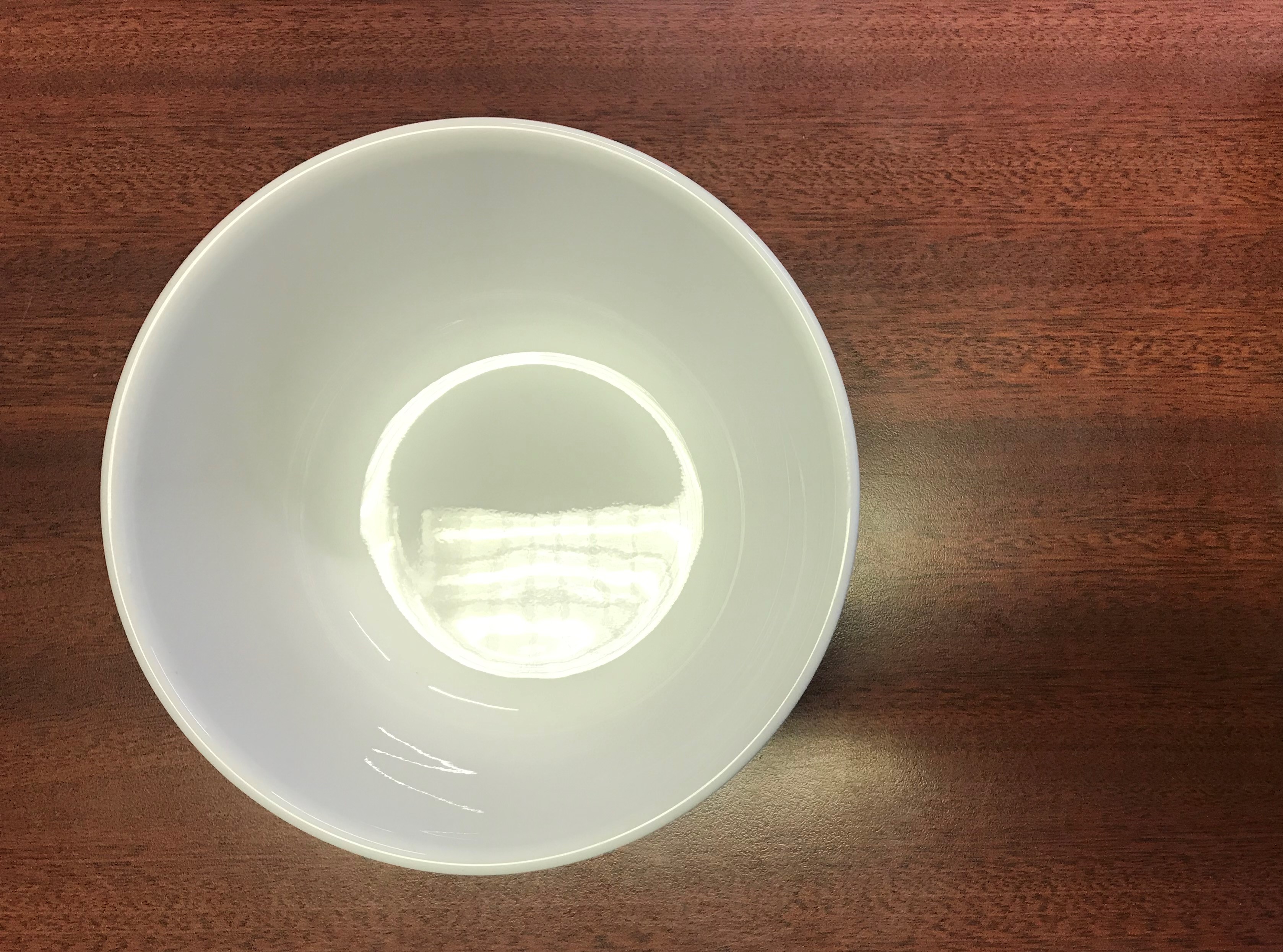
I did something yesterday that I haven’t done in over a year: I washed the ceramic bowl that I keep in my office for lunch. I used the hand soap in the bathroom and I dried it with paper towels from the dispenser while florescent lights buzzed overhead. It felt familiar, bizarre, and kind of depressing at the same time.

I’ve been coming into the office one day a week for over a month, but I am only just now settling into it. The clothes, the routine, the drive, the lunch, the snacks. I have a list of things to buy that, in addition to dish soap, include Band-Aids and a new phone charging cord for the car and my desk. I already have a few other items that I brought with me from my last job including a mug, water glasses, a bottle, Dayquil, fingernail clippers, a razor (for emergencies), and two slightly-embarrassing, inspirational books I bought during a particularly difficult time.

But this bowl has really got me thinking. As soon as I started washing it I had a really vivid flashback to a meal over four years ago. It involved “forbidden rice” I had purchased at Tan A Supermarket in Richmond. It looked beautiful, but it tasted disgusting. Had it been artificially dyed to look black? Did I mess up the seasoning? I remembered it so vividly almost like the object had woken up to tell me it was also still traumatized by that lunch as well.

The significance of this bowl goes one level further. I bought it during what was basically my first real/hard job. Several months in, I realized that I would be spending a significant portion of my life at this place including long days, some late nights, and weekends. I decided to make my life there as comfortable as possible. I would drive to the nearby Walmart on my lunch break or after work and just walk the isles looking for things to make me happy or more effective at work. I decided I was tired of eating lunch with disposable products so I purchased this ceramic bowl, two water glasses, a fork and two spoons. I also bought a Brita filter and the dish drying pad we still use at home today. I was basically just trying to take care of myself and my needs while being true to my values. This ceramic bowl, compared to the stack of paper plates I’d been using, was a good improvement.

At this point in time, I’m gradually remembering what it is like to go in to the office regularly. The work for me is exactly the same, but the location, environment and my appearance all have to change. Even though I can’t stand the buzzing lights and the theater of it all, I am also remembering how nice it is to have a psychological work/home disconnection. I’m settling in to this familiar, but new (and probably also temporary) normal.

First the location, then the vendor

The City of Richmond might soon have a casino. Unlike other localities in Virginia, Richmond took more time for input and competition. I generally think it was a good-faith effort, but one aspect of the process seems flawed in retrospect. Six proposals were submitted by different vendors for casinos and entertainment venues connected to different sections of the city. For example, one piece of property was near a fairly dense urban node, another on a forest/wetland in a suburban area south of the river, and a third on a brownfield near I-95.

To me, the vote between the different proposals was more a vote on land use than a real good faith comparison of the different vendor proposals. This to me seems like bad land use policy. We shouldn’t find a use (casino!) and try and plug it in somewhere. We should look at our land as a limited resource connected to infrastructure and communities and decide what it’s highest use with minimal negative impact could be. Then, developers can maximize that pre-determined potential. That should have been the first step of the process: vote on the parcel of land. Regarding the final decision, I’m pleased that it ended up being on the brownfield near I-95, but I don’t care about the vendor at all.

The real problem with this process is that it discouraged competition. It should have been realized ahead of time that neighborhoods might oppose the idea of a casino. We could have guessed that it would end up where it did. But all the other vendors lost their opportunity to have a fair chance, and we lost our opportunity to possibly have the best final outcome, because we were voting on land use and the casino was an afterthought.

Surveying our postponed lives

Last year, I had a lunch on the calendar with an old coworker set for March 12. We hadn’t seen each other since my son was born and we had lots of work gossip and life updates to share. Of course, as the date arrived, the COVID threat grew and we decided it would be safer to postpone. We pushed it back to April 30, then August 13, then again to January 13 (the worst date out of all of these), and May 12, then finally over a year later to May 26, 2021. With vaccinations and revised CDC guidelines in tow, it looks like our lunch is finally going to happen. We are not close friends or family, not in either’s inner quarantine bubble. I think we both acknowledged this and while we were looking forward to catching up we also didn’t take the rescheduling personally.

Of course, we could have cancelled, but I don’t think either of us wanted to give up on the lunch. We just wanted to be safe. Also, it was nice to have something normal on the calendar even if we knew it might have to be moved.

Many people have talked about how COVID gave them a new understanding of their closest network, who matters most in a time of crisis. I also think COVID has given us a new appreciation for the influence of a broad network of weaker ties on quality of life. There are loads of people I admire, but don’t know particularly well, who I have missed this year. I even miss strangers. The friends laughing at a table nearby, the interesting clothes people wear, the small acts of kindness on the street.

There have been far more serious casualties of COVID-19 than a lunch date or a wedding. Important communal sacraments and traditions have been postponed, some opportunities to grieve or celebrate feel lost forever. The entire experience of the pandemic will be a part of us, regardless of how we experienced it. I don’t want to forget the small things that keep a city and community moving forward during non-COVID life which has plenty of disappointment and excitement on it’s own.

One example that I have been daydreaming about lately is being in a full, buzzing coffee shop again. Since the first fall when I moved to Richmond almost 14 years ago, coffee shops have been my home away from home and I have missed them dearly. I miss real mugs, real plates, and silverware. I miss the caffeine-induced brainstorm. I miss the community board with events and vendors. And of course, I miss the eavesdropping and people watching. You just can’t fit this into a take-out container.

Sometime this summer or fall, whenever they are ready to reopen, I imagine myself in Sub Rosa with a cappuccino at the bar around 10:30 a.m. on a disastrously busy weekend morning. With myself, the Times, and who knows what former friend, neighbor, or coworker that might walk by. Croissant flakes and dirty dishes are everywhere along with the smell of chocolate, polenta, and smoke. I’m grateful we all united over COVID by staying away, but I can’t wait to see everyone and catch up on the other side.

Update: My lunch date was actually pushed back three more days because his wife was scheduled to get the COVID vaccine during our lunch window. It felt like a fitting end to the saga.

A new trail to the Pump House

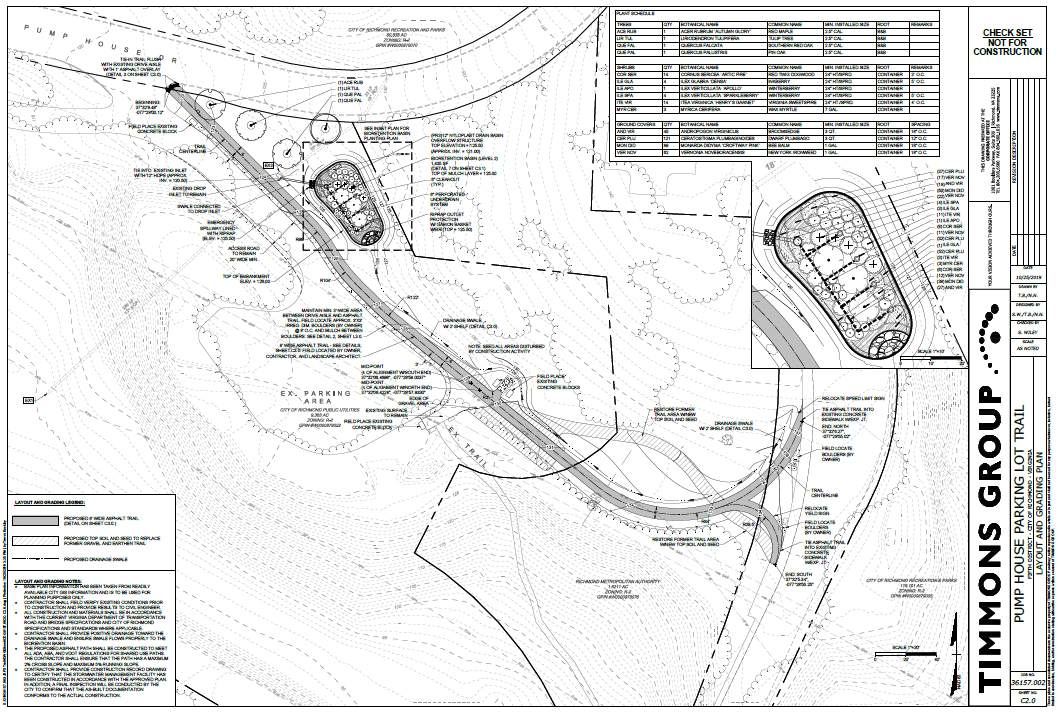
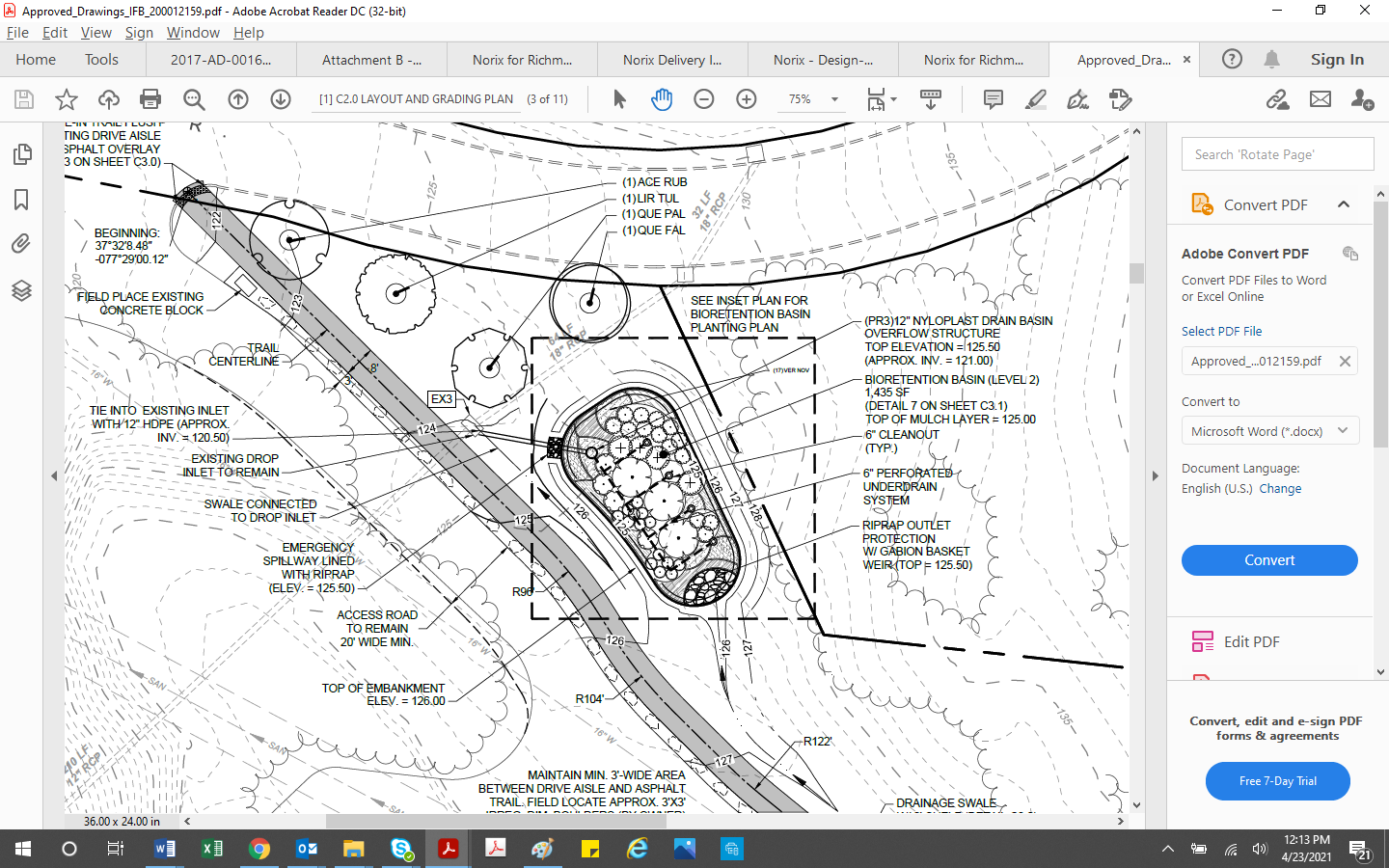
There is a construction site near the Nickle Bridge toll station that I’ve been running by for the past month or so. My first fear was that they were building a new road access to enter the trail parking lot right after the toll booths, but I realized that would cause traffic issues. While searching for another IFB, I recently came across the plans for the project and I was pleasantly surprised. The city is installing a new Pump House Park Trail that will connect the sidewalk of the Nickle Bridge to the North Bank trail entrance and the Pump House beyond. The project which includes “500-foot long and eight-foot wide multiuse asphalt trail with an ADA-compliant portion, requisite storm water management elements including a rain garden, and other landscaping and site furnishing elements” was awarded to Jeffery Stack Inc. in Jersey, VA for $186,380. I was surprised there were only four bidders, but contractors are very busy right now.

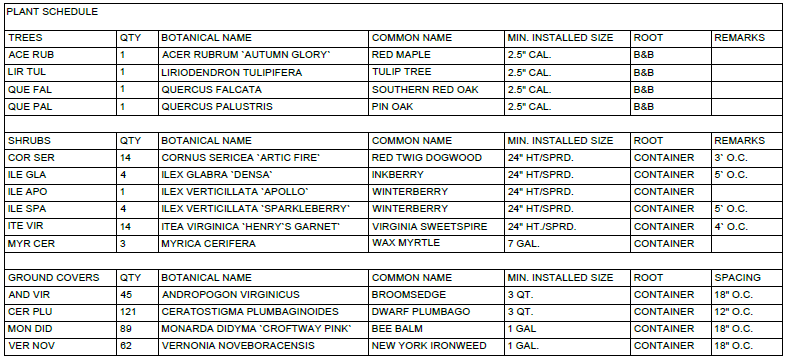
The plans designed by the Timmons Group, attached below, look simple and thoughtful. I appreciate the use of native plants in the rain garden. I’d like to know more about the policy or program that required the use of natives. Pollinators are going to love the wax myrtles, sweetspires, dogwoods, tulip tree, bee balm and more. I would have liked to see fruit-bearing shrubs included in the designs like serviceberry, blackberry, and blueberry. I like the graceful curve of the trail, and the way that the project prioritizes foot traffic at the juncture of so many beautiful outdoor spaces: Byrd Park, Maymont, the Nickle Bridge/Southside/Buttermilk Trail, the North Bank trail, and of course the Pump House. I especially hope the Pump House, with more foot traffic, visibility, and awareness, continues to become the destination that folks have been saying it could be for years. Designs and files attached below.

These documents and more are publicly listed at the following link: https://mvendor.cgieva.com/Vendor/public/VBODetails.jsp?DOC_CD=IFB&DEPT_CD=LAA1&BID_INTRNL_NO=161494&BID_NO=IFB+20012159&BID_VERS_NO=1.

New Museums for Atlanta and Charleston

In the past year I’ve heard dozens of arguments in Richmond against museums: they’re not profitable, no one cares about history, they’re too expensive. In the past few months, Atlanta and Charleston have told a different story.

The Center for Civil and Human Rights in Atlanta opened a few weeks ago on June 23, 2014. The goal: tell the story of Martin Luther King Jr.’s relationship to Atlanta and legacy in the American Civil Rights Movement within the context of global human rights battles being fought today. Here’s a remarkable article on the center from the Bitter Southerner.

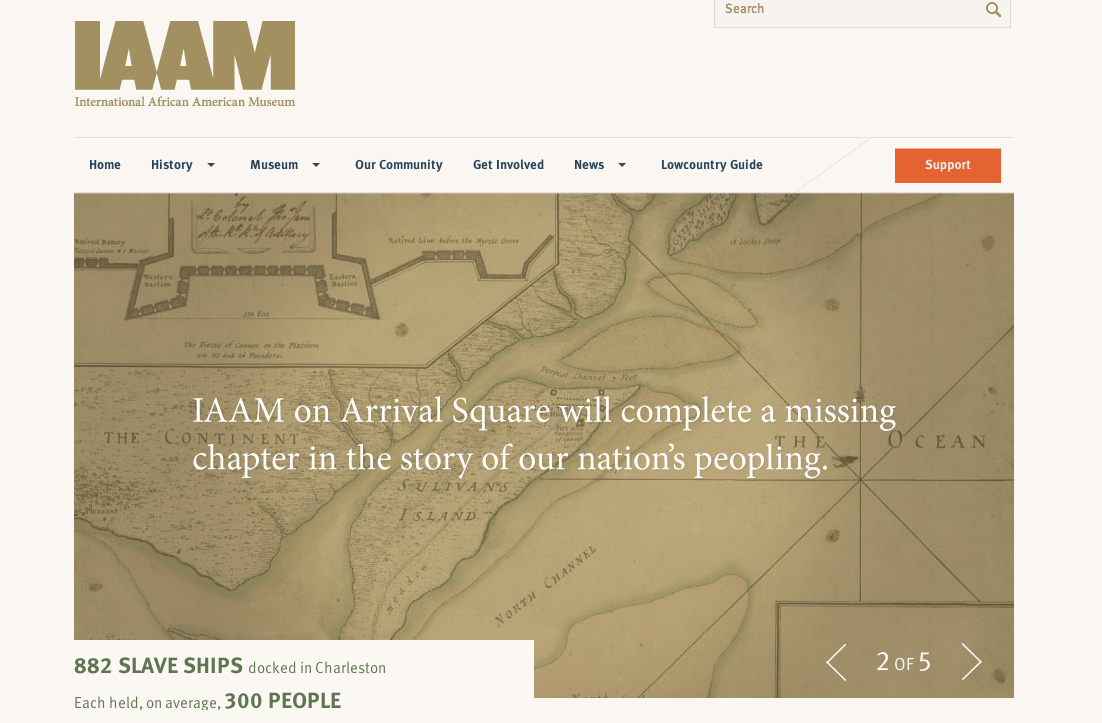
The International African American Museum in Charleston, set to open in 2017, will tell a complex cross-continental story of forced migration from Africa to Charleston and the American South. Mayor Riley announced last week that the museum will connect to Gadsden’s Wharf, the actual location where slave ships arrived in Charleston. Although the museum is still years away from it’s projected opening date, it already has a snazzy website promoting the museum and region:

IAAM Website

ArtNet News reports, “The 42,000-square-foot museum will feature interactive exhibits that describe the black experience in America. The displays will be designed by Ralph Appelbaum, who is responsible for the exhibits at the Holocaust Memorial Museum in Washington, DC, and the new Visitor Reception Center at the United States Capitol.”

Reading about these new institutions reminds me of the life lesson: make choices or they will be made for you. Richmond has a venerable place at the table in terms of historical significance. After all, it was Richmond, not Charleston or Atlanta that was chosen to lead the CSA. It was Richmond that industrialized while the Charleston elite held on to their agricultural society.

And it is Richmond that has spent the last 150 years wondering why.

Vocal residents and politicians in Richmond seem to think that history alone won’t be enough of an attraction for the city. Really, we make excuses to avoid telling the story we were born to tell. And while Richmond thinks, argues, and tosses plans on the shelf, other southern cities are making sense of their story and inviting the nation to drive down I-95 for a visit, passing straight through Shockoe Bottom on their way.

Another National Slavery Museum Design for RVA

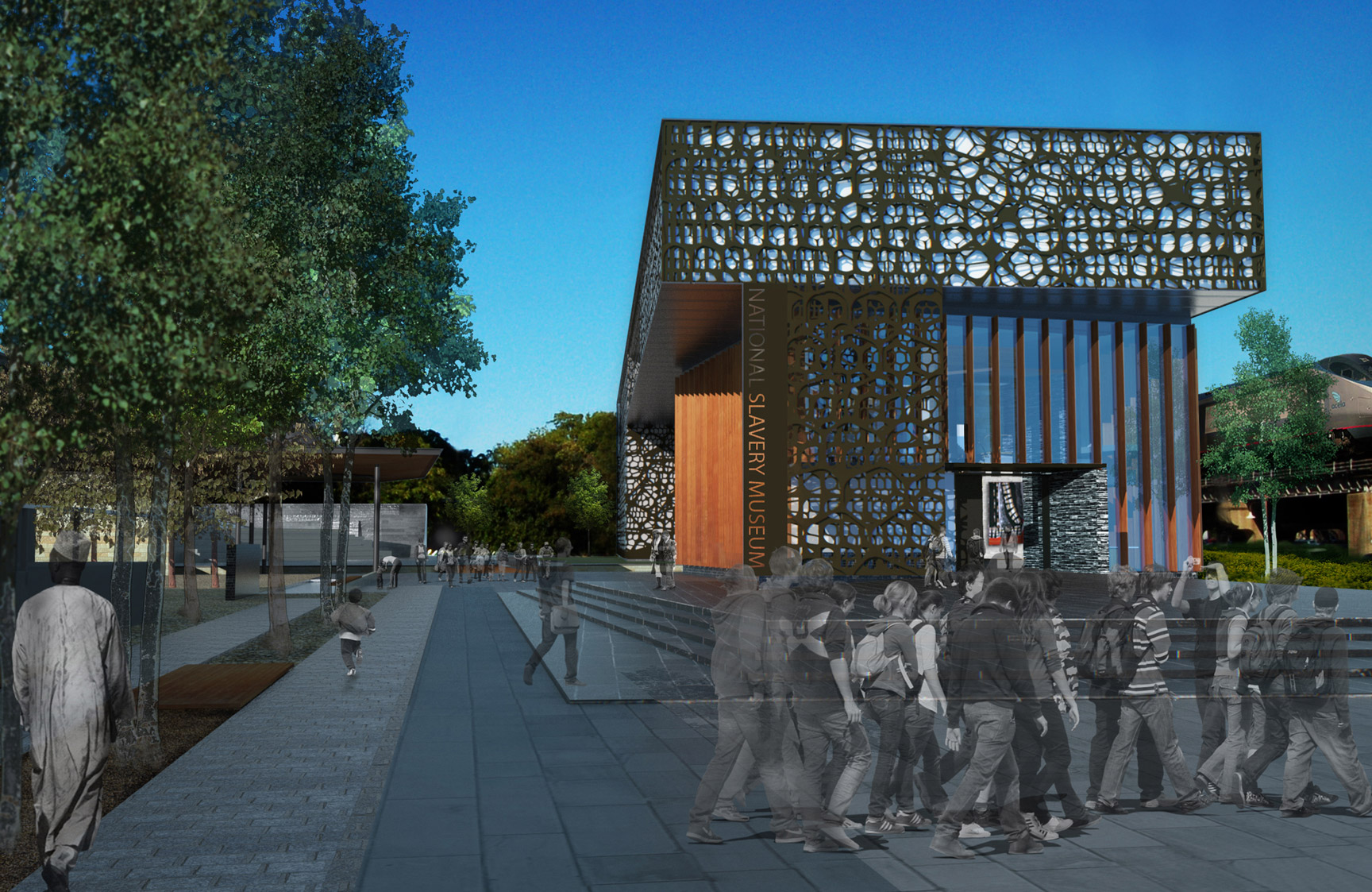
Somehow I’m the last to know that there is a third (or fourth?) design for a slavery museum in Shockoe Bottom. And, might I add, it’s my favorite:

PA-533_24

It looks like the design was completed by a partnership between the former BAM firm and SMBW then, I assume, it followed Chris Fultz to it’s current home on his website, fultzarchitects.com. The homepage of that site got me planning my next cross-country road trip … until I realized that this Slavery Museum design also won an AIARVA honor award in 2010. A little older than I thought. Then I found an article on this design, “Bridging the Gaps,” published in Richmond Magazine on October 19, 2009. The author of that article writes,

All Eyes on Shockoe, Again
The city of Richmond seems poised to embrace a national museum with a culturally significant subject and create the kind of international profile the region has been so desperate to achieve.”

Of course, five years later, we know that all eyes are on Shockoe again, again. This article was a good reminder of the many hours spent designing plans that were never completed.

I found a more recent Richmond Times-Dispatch article on this design published January 30, 2013. I’m not entirely sure how this design was still newsworthy after four years in existence, but I assume it was either gradually developed or gradually revealed to the public, or both. This article appears to be a followup with more details on the plan. According to the Times-Dispatch:

“The Richmond Slave Trail Commission…released its vision to develop a $100 million to $150 million heritage site in Shockoe Bottom, including a slavery museum, an African-American genealogical center and a glass-enclosed Lumpkin’s Jail archeological site.”

In the past year this design seems to have been generally forgotten and replaced by another less-ambitions (albeit beautiful) design for a slavery commemoration in Shockoe Bottom.

So what happened to the 2009 design? The question was recently posed in a comment on the Style Weekly article “Getting Wilder.” Thomas writes,

“The building Wilder wants for the museum doesn’t even look big enough to house a “National” slavery museum. If you want a grand one on a national scale, start from scratch. What happened to that National Slavery Museum proposal by Fultz Architects? That was the best one. We should have jumped on that one…”

I tend to agree. It’s no surprise that I’d rather Richmond move forward with something exceptional than settle for something acceptable. Besides, there are examples of projects of that scale in this country that were funded by a combination of state, local, and private funds. I continue to believe that good ideas of far-reaching significance energize donors more than anything else.

The story of this design should cause us all to take a step back. After reading through each article I found myself wondering,

How can one city generate so many incredible, unfinished designs?

On the one hand, this is just a factor of the architecture industry. An astounding number of designs are submitted every year that are never realized. But it still seems to point to a deeper issue of governance that prevents us from connecting the plans to reality. Every so often I stumble upon another great idea for Richmond that somehow never found funding or political momentum. And now we have this “economic development plan” for Shockoe Bottom that seems to be moving in the same direction. So what can we do next time to prevent the same results?

I found the best answer to my question in the original Richmond Magazine article from 2009. Christy Coleman, the president of the American Civil War Center at Historic Tredegar, states that the planning process for a museum of this scale should not begin with a building design. The article continues:

A fledgling museum should begin with a mission statement and a plan of whether it will be a “collecting” institution — one that houses a vast collection of artifacts for display and research — or a “storytelling” institution that strives to communicate knowledge and an experience to its visitors.

“All of these things start coming up that will have an incredible impact on the long-term operations,” [Coleman] says.

We ought to extend this wisdom to any large-scale project brought forward for the benefit of the people of Richmond: start with your mission statement. What is the essential purpose of the development and how will it serve the needs of the city?

As we have seen, there are many architects and firms in the area that are more than willing to turn a good idea into sparkling designs. They might even do it at a discounted rate if they are particularly inspired by the proposal and assured that this time there is a likelihood that the project will actually happen. This city has incredible potential, regional powerhouse corporations, and visionary leaders. Together I truly believe we can make something great.

But first, we need a good idea.

Perspective

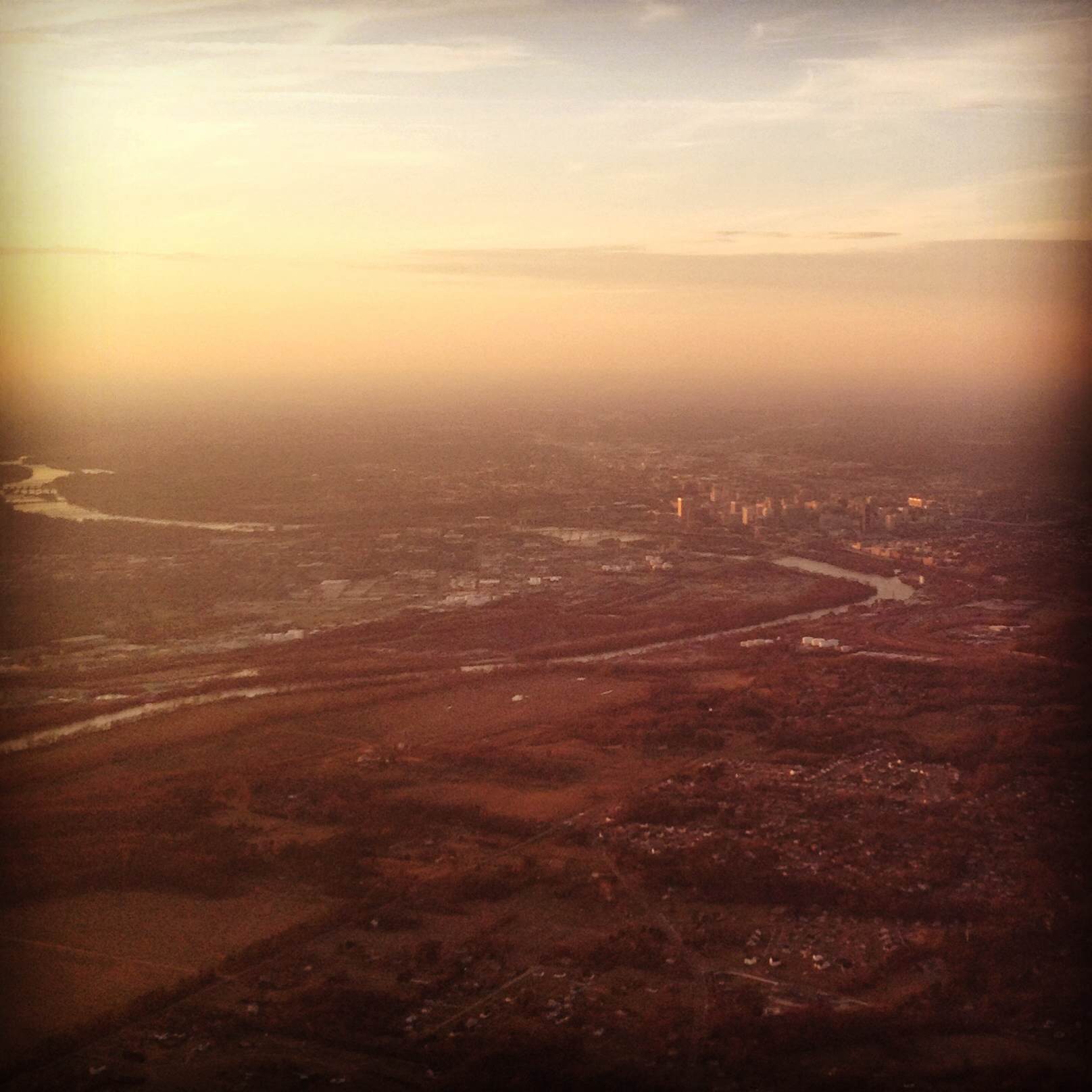
As I flew out of Richmond last week, I got a rare glimpse of the city at dusk:

River city

I just stared at that settlement on the banks of the James River and wondered what the next 400 years might bring. In the city of Richmond, there is the past, the present and the future. That makes us fortunate and it makes us complicated.

To move forward, we will have to make some sense of ourselves and our story.

In the past few months I’ve travelled all over the country: from Philadelphia to Dallas, to San Francisco. With each trip I’ve found new perspective on this current phase of the development of the city of Richmond. I’ve also found some clarity for myself and settled into four areas of focus for my writing:

1. Current events in context: If I ever write about current events, it will be to analyze and contextualize the story. I spent three years studying the debates in Richmond regarding the construction of the Richmond Petersburg Turnpike. That work left me particularly interested in economic development strategies and plans for improving the American city.

2. Drawings for the future: Like many of us, I’m constantly imagining new uses for old spaces and I’ve decided I’m finally going to get these on paper. I’m actually planning to draw them out. It will probably be pretty ugly at first, but I’m hoping to read a little on technique and improve over time.

3. The psychology of the city: I’ve been noticing for years that the city of Richmond has a certain personality. This personality comes out in furious debates as well as mundane daily life. Since college I’ve also entered the world of cognitive psychology, therapy, management, and organizational behavior. I’ve read books, met with academics, and watched every video I find. Insight from these fields will be my lens for understanding what’s going on in this crazy place.

4. The history of the history: There are so many stories being told about Richmond. I want to take those stories and study them to understand the different ways that we describe ourselves. I’m obsessed with historiography and excited to dive back into that field for a series of posts about the different ways we talk about our past. This is connected to the psychological perspective as well: how we talk about Richmond says a lot about how we think of ourselves.

I want a future for this city that is unique and authentic. I want Richmond to develop a maturity as a place that takes all of it’s qualities and integrates them into a coherent whole. As with personal development, this will require a lot of work. In a way, collective therapy. And all because we believe there is a best possible future for this city and that future must include a coherent, honest, and accepting understanding of the past and present.

As always, more to come.

Baseball at the Heart

The mayor’s proposal for Shockoe Bottom is a bit of a chameleon. When it was first revealed, it seemed like it was clearly a ballpark plan: baseball balloons, Nutzy, Parney Parnell cracking jokes. But as the plan progressed, this central goal became secondary to a host of other justifications for the development.

The phrase, “not just a ballpark plan,” has become popular in this current debate at the same time supporters of the mayor’s plan have proudly placed signs proclaiming, “I support Shockoe Ballpark,” in front yards and businesses. Clearly, we are confused. Like many, I’ve studied the proposal for Shockoe Bottom and attempted to make sense of all the arguments. As always with these sorts of plans, it is necessary to distinguish the certain from the projected.

Beyond all the letters of intent, the promises, and the economic projections, there is a baseball stadium. This stadium project will likely cost around $167M including interest over the next 30 years. We will hopefully finish paying off the debt around 2046. I will be almost 60 years old. These are the certainties of the mayor’s proposal. All other elements of the plan are subsidiary to the ballpark.

Below I have compiled four common arguments (other than baseball) and reasons why they are not substantive or central to the Shockoe plan:

#1. This plan will improve schools in Richmond

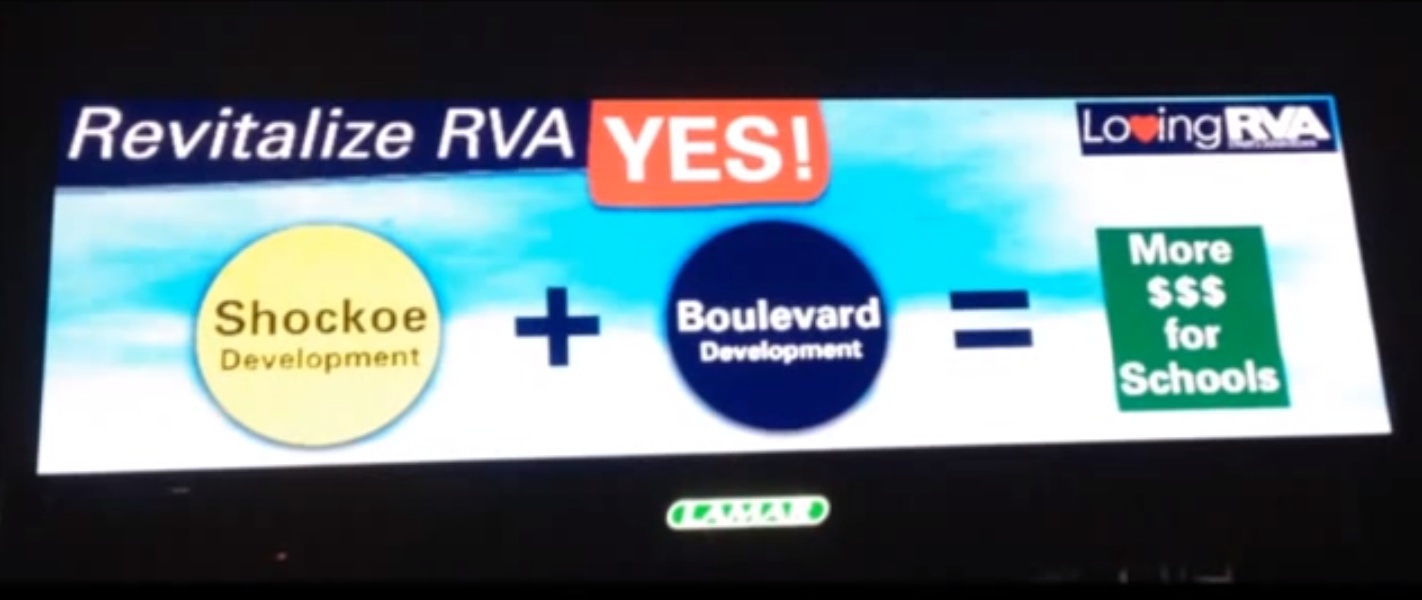
Schools argument

This is a photo of a billboard paid for by the LovingRVA ad campaign. It’s simple, it’s clear, it’s exciting. How could any of us say no to a promise like “More $$$ for schools?” It pulls at our heart strings and connects the plan to something we love.

Then I realized: this is not a schools plan. Not a single dollar of this plan is allocated for school maintenance, construction, or modernization. There isn’t a contract that says that our government is obligated to increase school funding a certain amount each year. We also don’t have any idea how much added tax revenue this plan will generate so there can be no sure promise made for future increases.

And yet, we are being promised that this plan is for our schools and our children.

After digging around, I realized the connection from this plan to schools is pretty weak. The most I could find was a quote from Mayor Jones in the RT-D:

“I think that as we continue to negotiate with City Council people and get them on board, that there’s probably going to be some designated streams that go to some various places that people feel very strongly about….”

Wow. Either Jones was badly misrepresented or the mayor did a terrible job convincing me that that this plan will have any meaningful connection to things I “feel very strongly about.” This schools argument  is like playing “seven degrees of the Mayor’s economic development plan.” Where will all the money end up? We have no idea. But I promise there’s definitely a chance you could get a slice.

And I’m particularly annoyed because I do have a soft spot for schools. The need in RPS is incredible. There are countless reports and articles on the financial need and the deteriorating infrastructure of our school system. Our mayor is promising us more money will be sent to schools, but he isn’t saying how much. All we know is if we build the stadium in Shockoe and if it’s surrounded by lucrative businesses and if we can attract huge amounts of private investment on the Boulevard, then we will have more money that might be allocated to schools.

To me, that seems like a lot of “ifs.” If you care about schools, ask the mayor to sign on the dotted line. Anything less is empty promises.

#2. This plan will provide access to good, affordable food

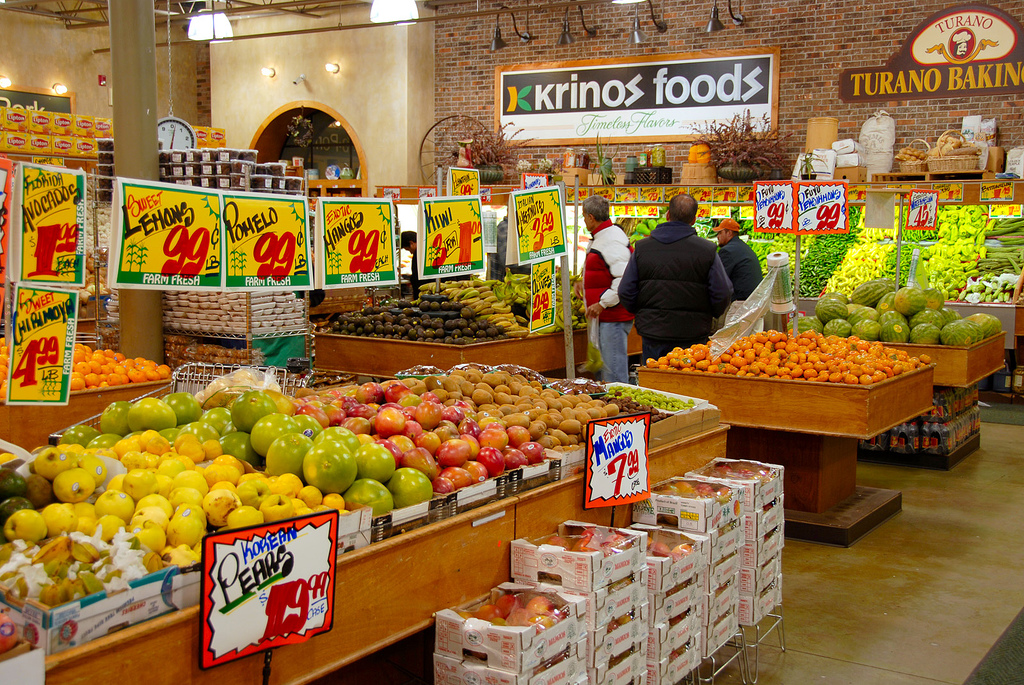
grocery

I’ve heard this argument regularly enough that it deserves to be included in this list. I haven’t seen it on a billboard, but this is the argument that seems to tug at the “food justice” movement in Richmond and the desire for residents to have access to healthy, affordable food.

As a resident of the East End, I think it would be great to have a new grocery store. I think it will provide access to good food for a wide economic spectrum of people. Residents nearby will be able to walk to get their food rather than drive around the corner to Farm Fresh. Many riding public transit will be able to get off 10 minutes earlier than they would for the Kroger on Broad St. I wouldn’t have to drive out to the Martin’s at White Oak for fresh vegetables. Sounds great to me.

I just keep returning to the fact that the grocery store is not a central element of this plan. Honestly, this grocery store has more to do with economic development and the mayor’s revenue bonds financing scheme. I think we would have built anything there if it promised to bring in a certain amount of revenue each year. Also, do we have to build a baseball stadium to have a grocery store? More on that later.

#3. This plan will memorialize and interpret Richmond history

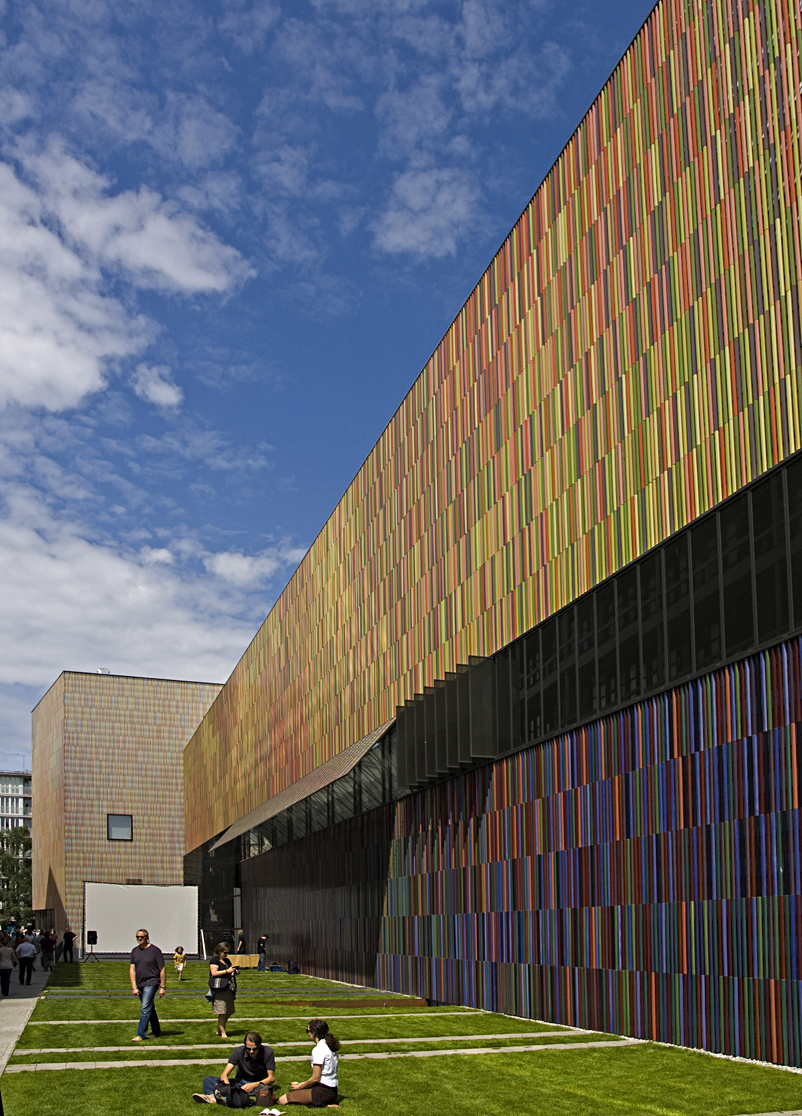
museum 2

The third claim is that this plan has been created in order for Richmond to restore the history of slavery to its rightful place. On the cover of the Venture Richmond “Downtown’s Transformation 2014” document (an unfortunate title), there is a presumptuous photo of the proposed slavery heritage site, an element of the Mayor’s proposed revitalization plan. On the second page of the document there is a photo of the ballpark. For some reason, Venture Richmond chose to promote the heritage site.

Here’s the problem: the slavery heritage site is not funded. We honestly don’t know when or if it will ever be built. To further complicate things, Richmond City Council and the state legislature of Virginia have recently committed funds to the construction of a slavery museum. Is the heritage site enough to fit the specifications of these funds? We don’t know. There are designs for a full museum, but they haven’t been adopted by the city or promoted publicly to my knowledge. If all funds go toward the museum, how will we pay to memorialize the Lumpkin’s Jail site?

Many of us are in favor of building something to commemorate the history of slavery in Richmond. The Washington Post even wrote an editorial in support of a slavery museum back in December. It’s certainly the most historically, culturally, and socially important element of the mayor’s plan, but it’s not the main attraction. This “heritage site” has been tacked onto the ballpark plan to satisfy those of us who care about history, culture, and memory.

It’s a beautiful design and I would like to see it in Shockoe Bottom. But I have to wonder: why do we need to spend $52,250,000 for a baseball stadium so that we can memorialize the history of slavery in our city?

I’m also very concerned with the process by which this heritage site/museum has been developed. When municipalities plan and construct museums or heritage sites, they typically spend years developing a network of scholars, institutions, community members, foundations, and government agencies in order to strategize the future success of the enterprise. If done well, this process results in a site that is ready to receive public school tour groups (where will the busses park?), host educational events (who will coordinate?), conduct relevant research, and curate exhibits to keep the material relevant and interesting for visitors. This sort of strategic planning results in a place that is vibrant and well-loved by locals and out-of-town visitors for generations to come.

If the mayor’s plan were truly a plan devoted to the history of Shockoe Bottom, there would already be a consortium of interested individuals from all over the nation and the world developing potential directions for the space and the building. Right now all I see is a pretty picture.

#4. This plan will stimulate the economy in Richmond

city

The argument for economic development is the lynchpin of this entire plan. Many believe that the “baseball stadium + hotel + grocery store + heritage site + apartments + future development on the Boulevard” plan holds the greatest possible economic benefit for years to come.

I have to respectfully disagree. If maximum economic output were the ultimate goal of this plan, Richmond wouldn’t have a baseball stadium at all. Minor league franchises are mostly money losers. They are highly subsidized franchises with all salaries paid for by their parent major league team and stadiums funded by localities. So it’s counterintuitive to include a ballpark in an economic development plan. Unless by “economic development” you mean “we need to find a way to pay for this darn baseball stadium.”

Also, not only are minor league stadiums expensive on the front end, they usually require renovations 20-25 years after they are built. It’s fitting that our local leaders travelled to Durham in January. A few weeks before the Richmond delegation made their trek, The Hearld Sun reported that the Durham Bulls Athletic Park, opened in 1995, the model for our ballpark scheme, is now planning a $20M renovation. Nineteen years after it first opened.

If it weren’t for the ballpark, Shockoe Bottom wouldn’t even be on the mayor’s radar. This flood plain is surrounded by the many hills of Richmond that don’t require a $20M investment in infrastructure for development to start tomorrow. There are cranes up in Richmond right now already investing in the future of this city. The only reason we’re talking about Shockoe Bottom is because we have this baseball team and we need to find a place to put them that can generate enough money to pay of the enormous sum it will cost to construct a brand new stadium. But if economic development were the goal, we would be saving our future tax dollars for general use rather than for servicing the debt on a baseball stadium for the next 30 years.

So why are we calling this an development plan? The argument is this: the ballpark should go in Shockoe Bottom because it’s best in Shockoe Bottom because it will allow us to 0pen the area to private development so that the lease on the ballpark will be paid for. This is a cyclical argument: we have to spend money so that we can make money to pay off the money that we spent. Also, the word for that is not “free.” The only legitimate argument for economic development is on the Boulevard, everyone agrees on that. But why has there been so little planning done for this site? How sure can we be sure of its success?

You may be asking, “What about all the data that proves the stadium is a good idea for Shockoe Bottom?” Here we have to make a critical distinction between data-driven projects and data-justified projects. Throughout the planning process, our leaders have selectively chosen data that supports their goal: constructing a baseball stadium in Shockoe Bottom. We can be certain this was not an externally vetted process. All the evidence we have seen is simply a case that our leaders have developed to debate and defend their plan. That’s not my idea of leadership.

Regarding this plan for Shockoe Bottom, we can only be sure of the expenditures. The revenue is all projected based on letters of intent and market analysis.

Again, expenditures = contracts. Revenue = projections.

The report put together by Davenport & Co. LLC includes a comparison between developing the Boulevard and Shockoe Bottom. According to this report, putting the ballpark in Shockoe Bottom is a responsible option. But in the low estimate for revenue generated in Shockoe bottom, the debt service (at $4,062,976) is greater than total revenue ($3,874,778) which leaves a projected deficit of $188,198 annually. And everyone has been telling me this ballpark is “free.” Am I reading that wrong? If this project were truly concerned with economic development, it would not include the city of Richmond diverting tax revenue toward paying off the debt service for the next 30 years.

Our leader is convinced the ballpark is our ticket to success when it is actually the ball and chain we will drag, year by year, into our own reluctant future.

***

My final question is, why isn’t Mayor Jones talking about the ballpark?

Perhaps it’s because an estimated 70% of the people that go to the Squirrels games live in Henrico and Chesterfield. Does it matter? I think so. Why should we divert $4.8M in tax dollars each year for the next 30 years to pay for an entertainment facility that primarily exists for county residents? Or why didn’t we wait for a more unilateral deal? In 2003, the counties were planning to pay two thirds of an $18,500,000 ballpark renovation. That proposal was sidelined by a local official that decided he wanted to build a new ballpark in Shockoe Bottom. The deal was scrapped, Nothing has happened ever since. Now we’re planning to pay 100% by going out on our own.

Mayor Jones seems to only talk only about economic development. Many other leaders in Richmond are excited about the heritage site. Most of my friends are excited about the benefits for local schools. All the while we’re skating around the most controversial elements of the plan: the cost of the ballpark, the lack of public support for the ballpark, and the location of the ballpark.

I’ll leave the last word to Andrew Zimbalist:

“Cities spend millions of dollars to support a variety of cultural activities that are not expected to have positive economic effects, such as subsidizing a local symphony or maintaining a public park. Sports teams can have a powerful cultural or social impact on a community. If that effect is valued by the local residents, then they may well decide that some public dollars are appropriate. However, if the public or its political representatives are trying to make the case that a team or a facility by itself will be an important development tool, then the electorate should think twice before opening its collective wallet.”

Richmond, if we want a new baseball stadium, let’s talk about it. Let’s talk about how much we might be willing to invest in a new stadium. Let’s talk about where we would want it to be built. Let’s not allow ourselves to be convinced into needing a stadium for a host of unrelated reasons.