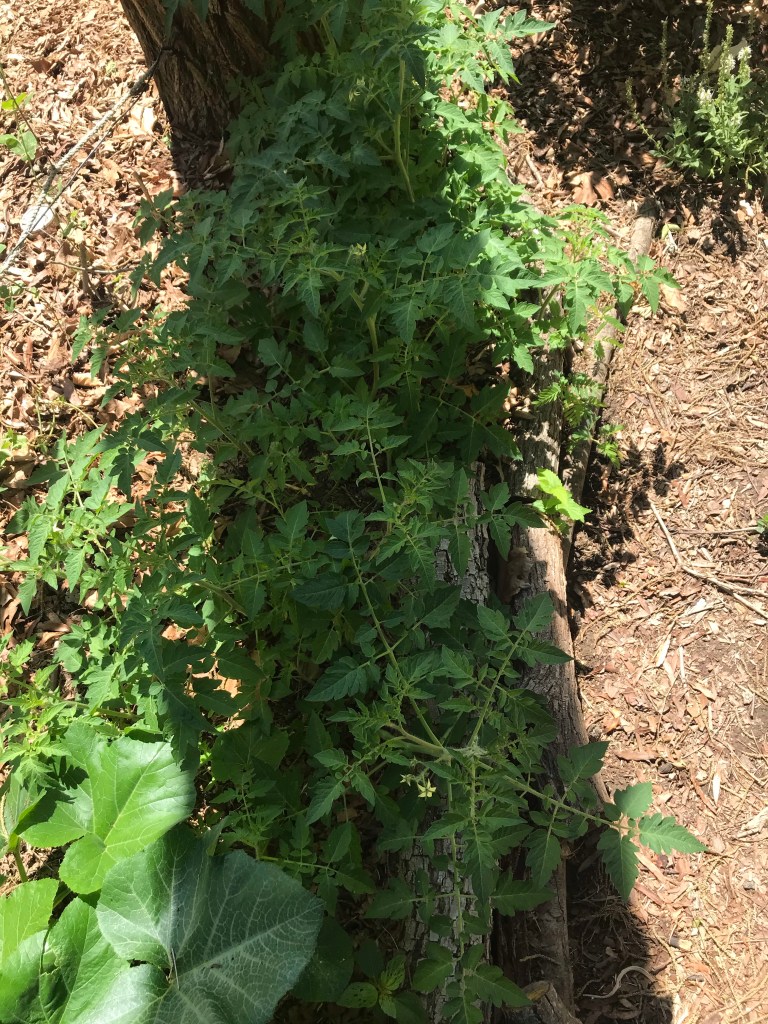
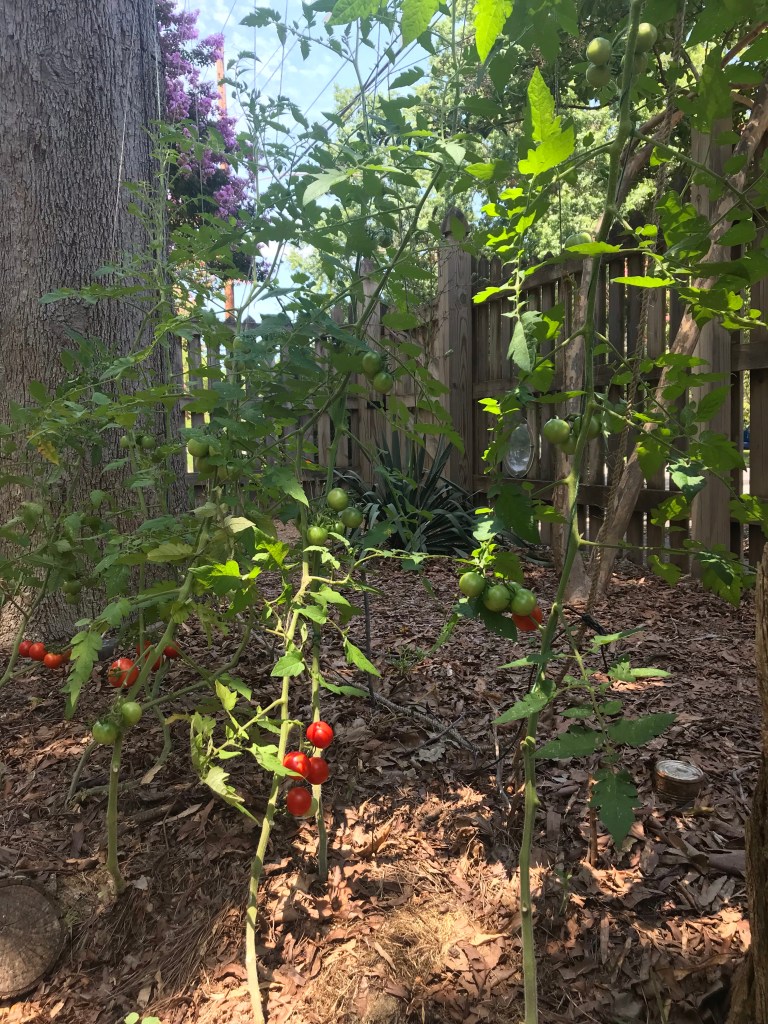
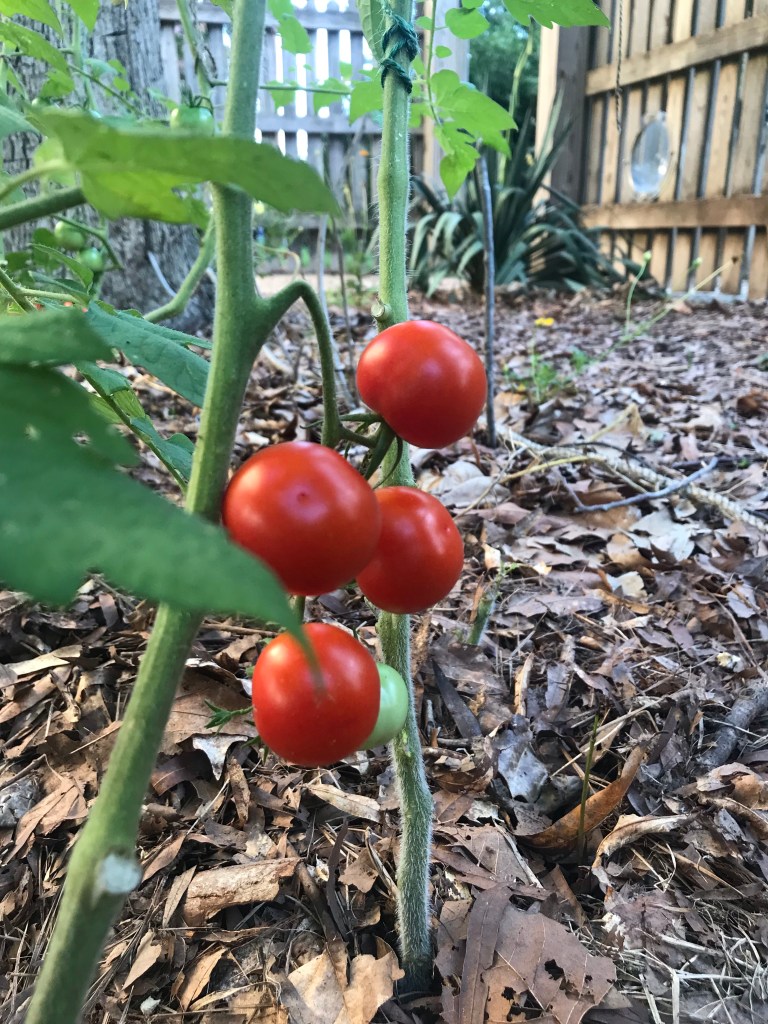
Earlier this year, while I was gently coaxing tomato sprouts inside, some tomato seeds from my compost were already germinating and starting to grow right in the garden. I just harvested 12 tomatoes off of these volunteer tomato plants, recently thinned and trimmed. The plants that I sprouted and grew “on purpose” are weeks behind in their first harvest. This is a good reminder to me that this cycle of plants and seeds has been going on for millennia, mostly without human intervention. Without lamps, sprouting mix, and “hardening off” seedlings, these plants will find a way to grow.
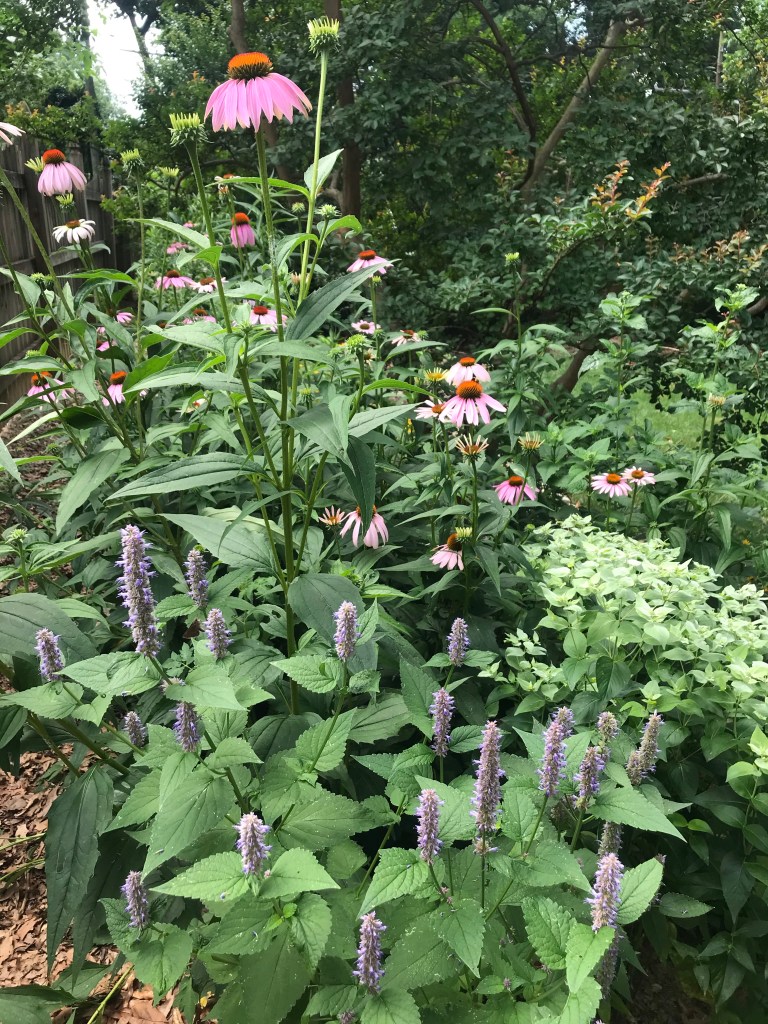
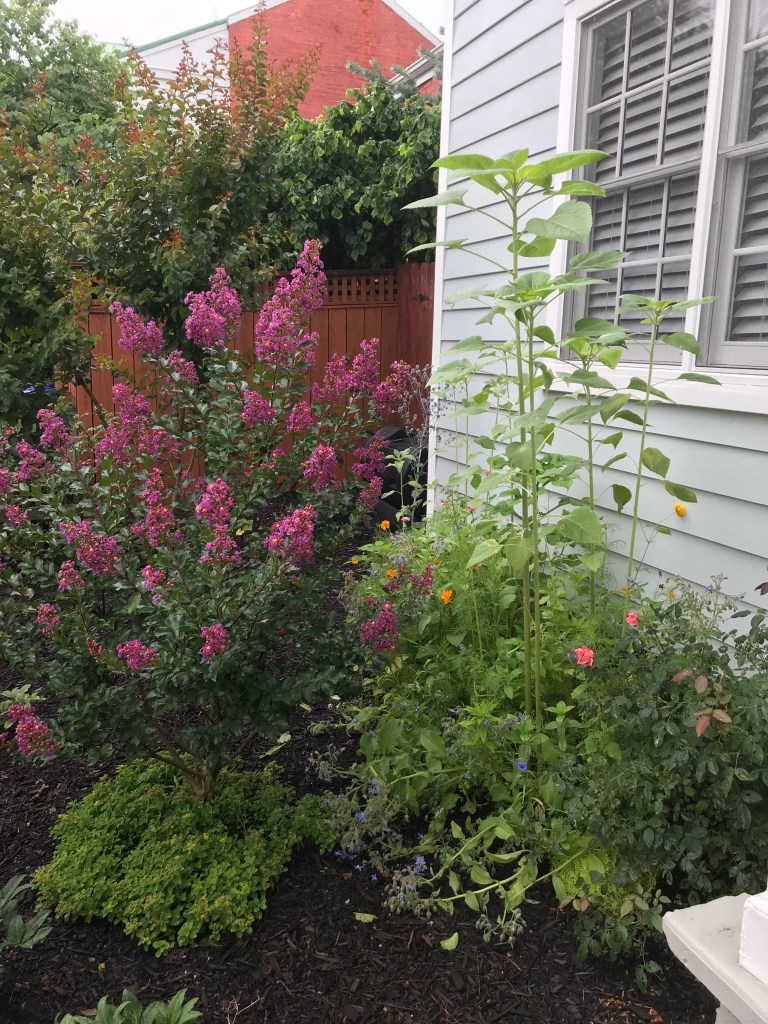
I’m enjoying this corner of the garden especially right now for its early summer pop of color.
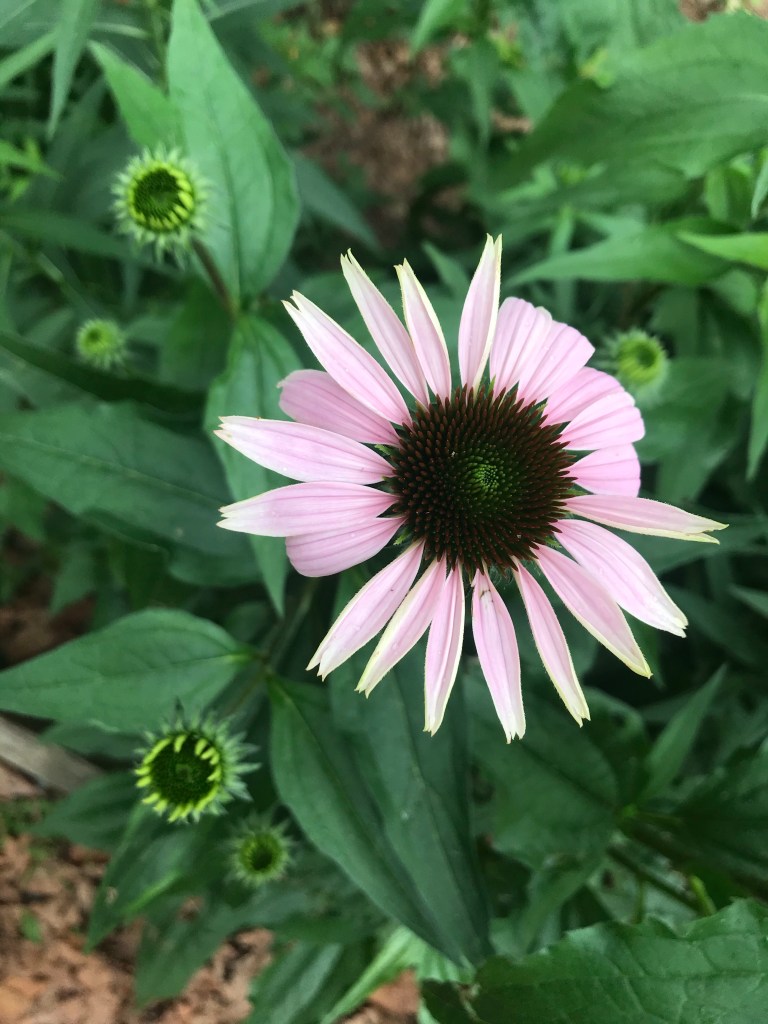
I planted the anise hyssop (purple) and the mountain mint (silver/green) as plants from a nursery, but the echinacea grew from seed and has been prolific. I am amazed by how well it’s done considering my neglect – I honestly don’t even remember when I planted it.
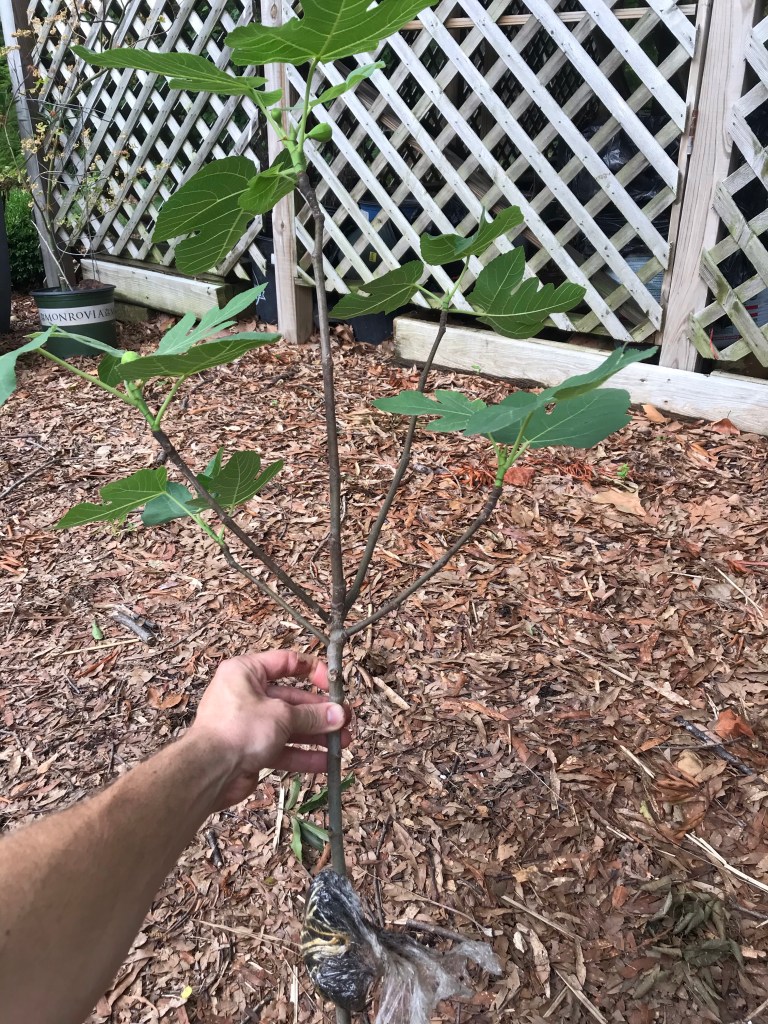
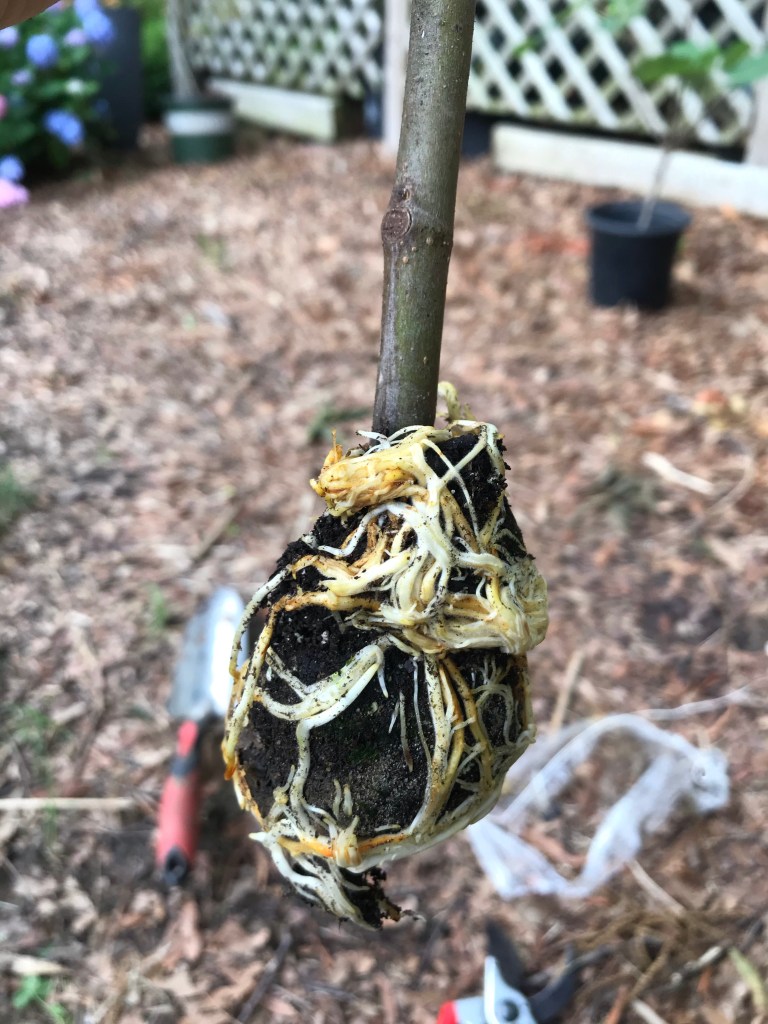
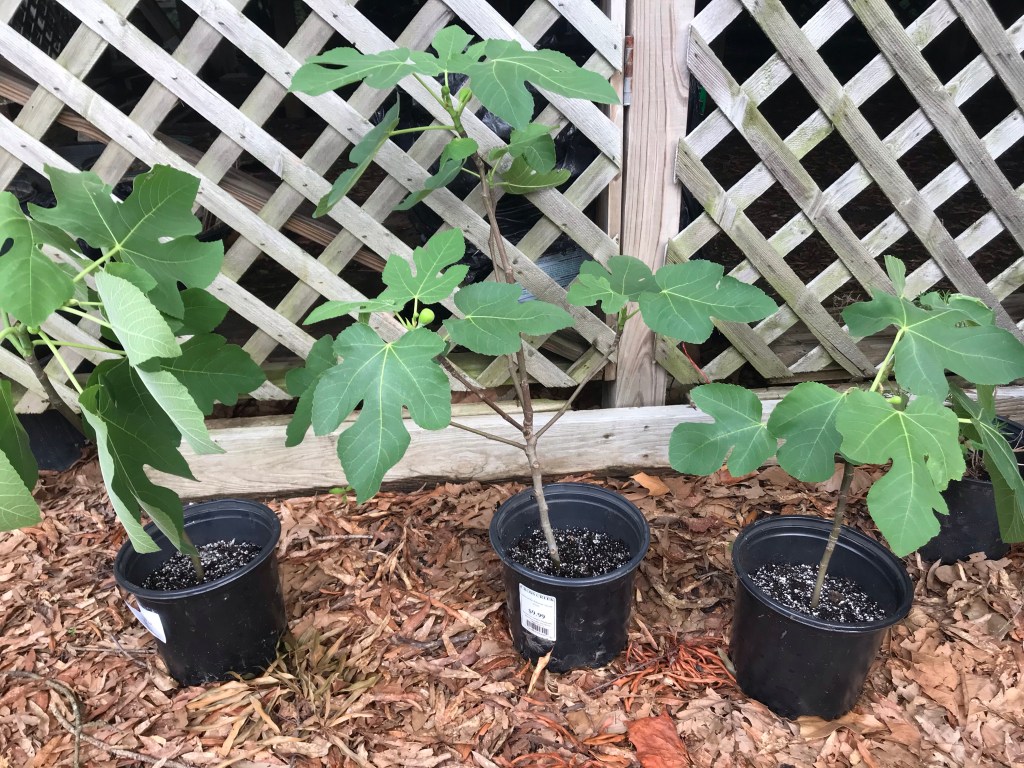
I tried air layering for the first time and so far it’s looking pretty good. These came from a neighbor’s Brown Turkey fig tree and are eventually going to be planted in a community food forest near my house. There are little air layering products you can buy, but my brother encouraged me to just use saran wrap and it worked well with about half of them rooting. You’re supposed to use peat moss, but I didn’t have any so I used potting soil with extra vermiculite instead. It’s incredible to me that you can make these as large as you want, especially since figs are fast growers and always have a branch to spare. Special thanks to NextDoor for connecting me with someone I already knew, but didn’t realize was my neighbor, who shared her fig and many gardening tips while I worked.
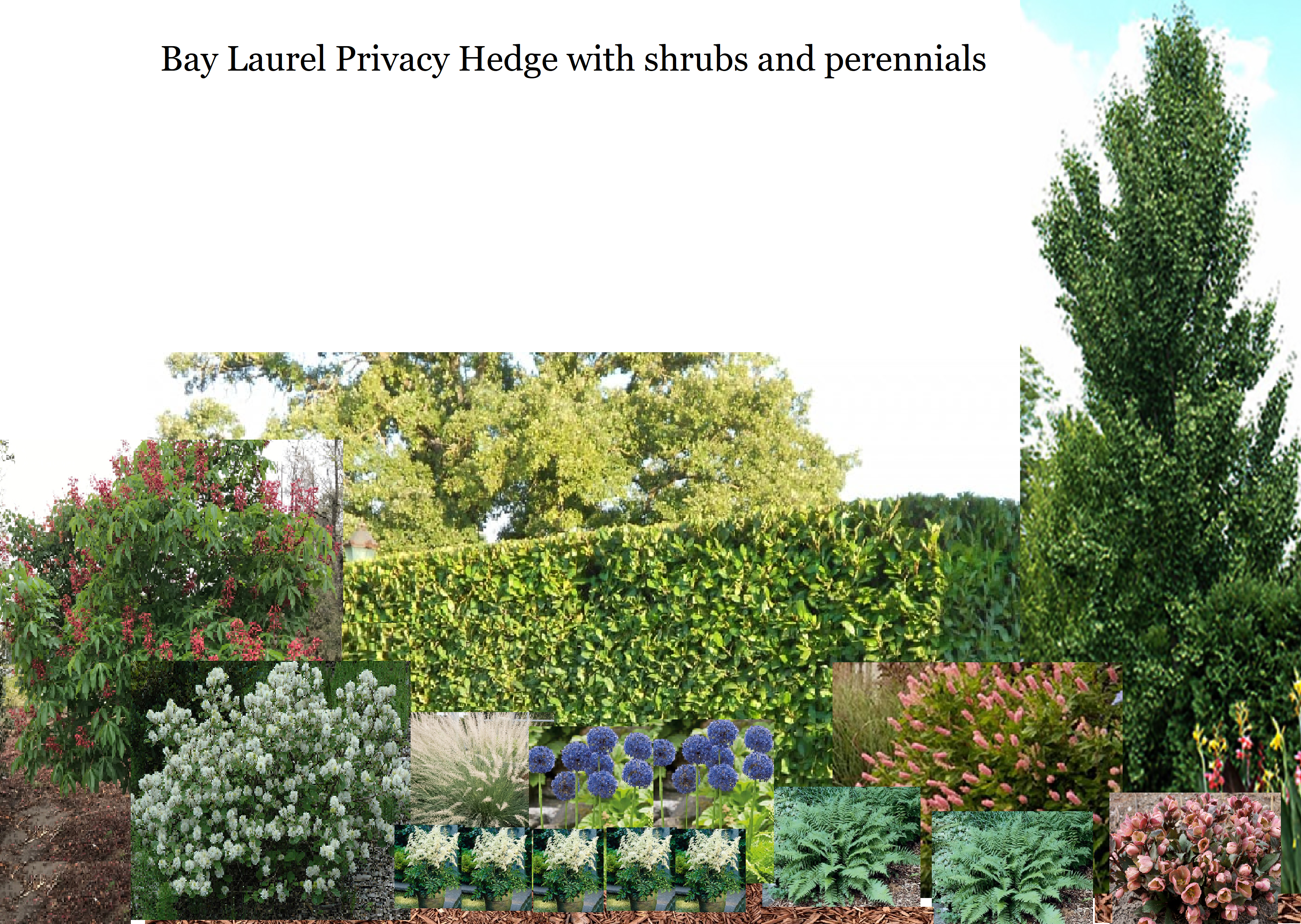
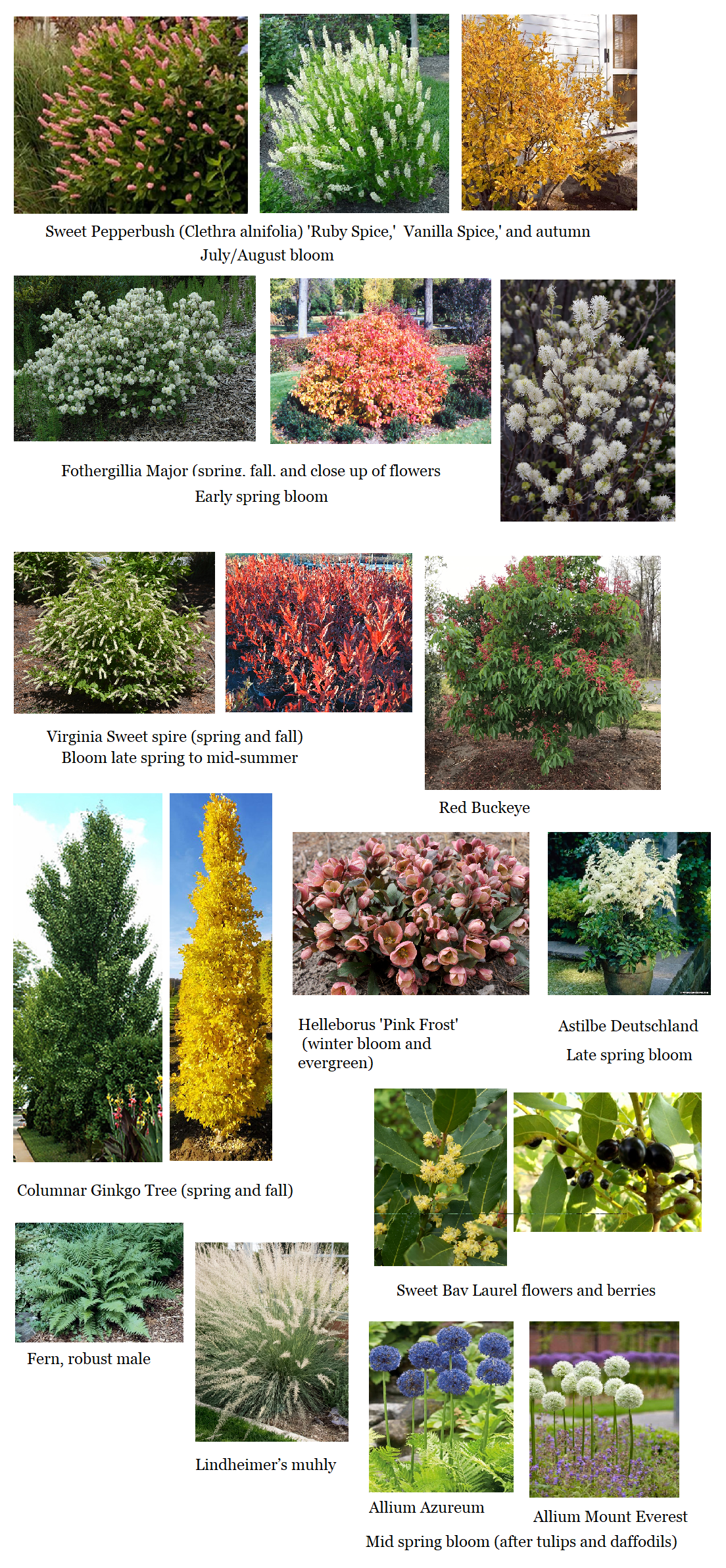
Just sharing something I put together for a friend that wants to block the view of a neighbor’s house from their back patio. It’s not totally correct with spacing and siting, but could be tweaked pretty easily. I chose Bay Laurel because it’s evergreen and the leaves can be used in the kitchen (bay leaves) and the shrubs and perennials provide a nearly year round color mix, attraction to pollinators and birds, and are low maintenance once established. If I were to actually install this I would follow the instructions in this “How To Create A Privacy Hedge” video by Urban Farmstead.
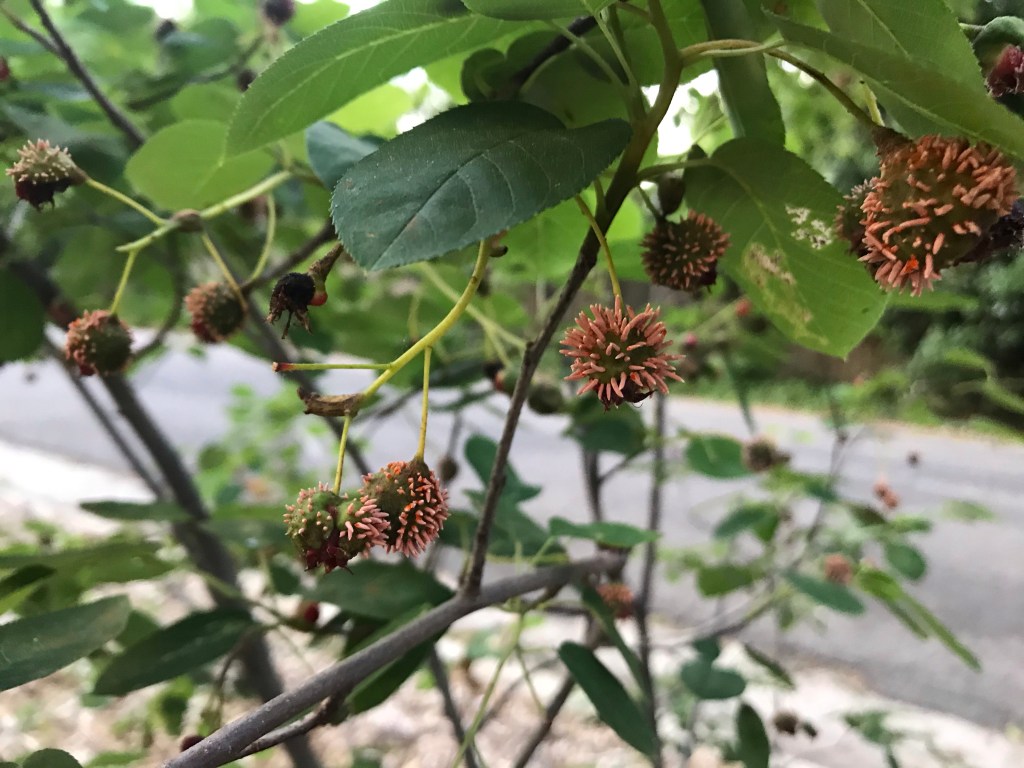
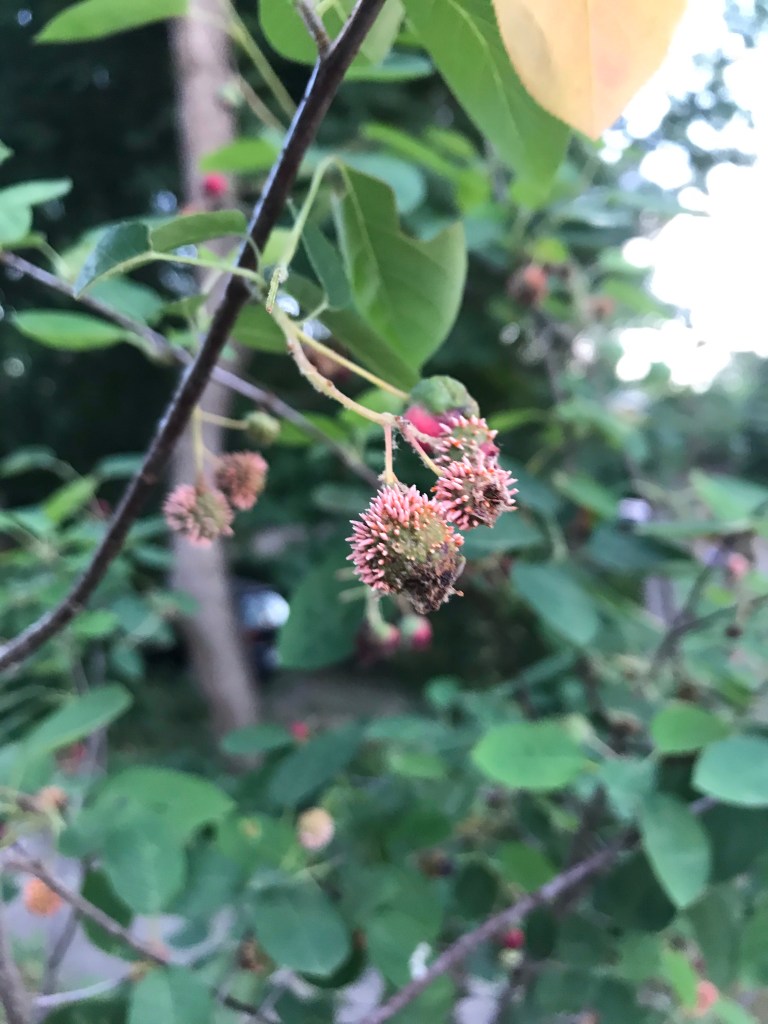
Two months ago I was feeling hopeful and sentimental about spring and excited about the potential of the buds on my serviceberry. This week, I discovered that the supposed abundance of berries I was hoping to eat in June are now disgusting and inedible. The plant apparently has something called Cedar Apple Rust. Now the berries that were flowers that were buds full of potential are just hosts for a fungus preparing to spread.
I don’t know what this means for my metaphor. That the world still exists in 2021. COVID is still ravaging communities, politics continue to get weirder and weirder, and Black Lives Matter is still a controversial idea in some circles. So I’m letting it sink in that my plant has a disease. That disease will never really go away. Even if this shrub recovers, as I’m told it will, the disease is always around. The spores can travel miles to their next host. It’s unrealistic to believe that this will not happen again to my serviceberry, but I know there will be a spring that the spores happen to skip this place. This experience will make me significantly more grateful for a season down the road, hopefully, that we get to enjoy the berries, ripe and ready to eat.
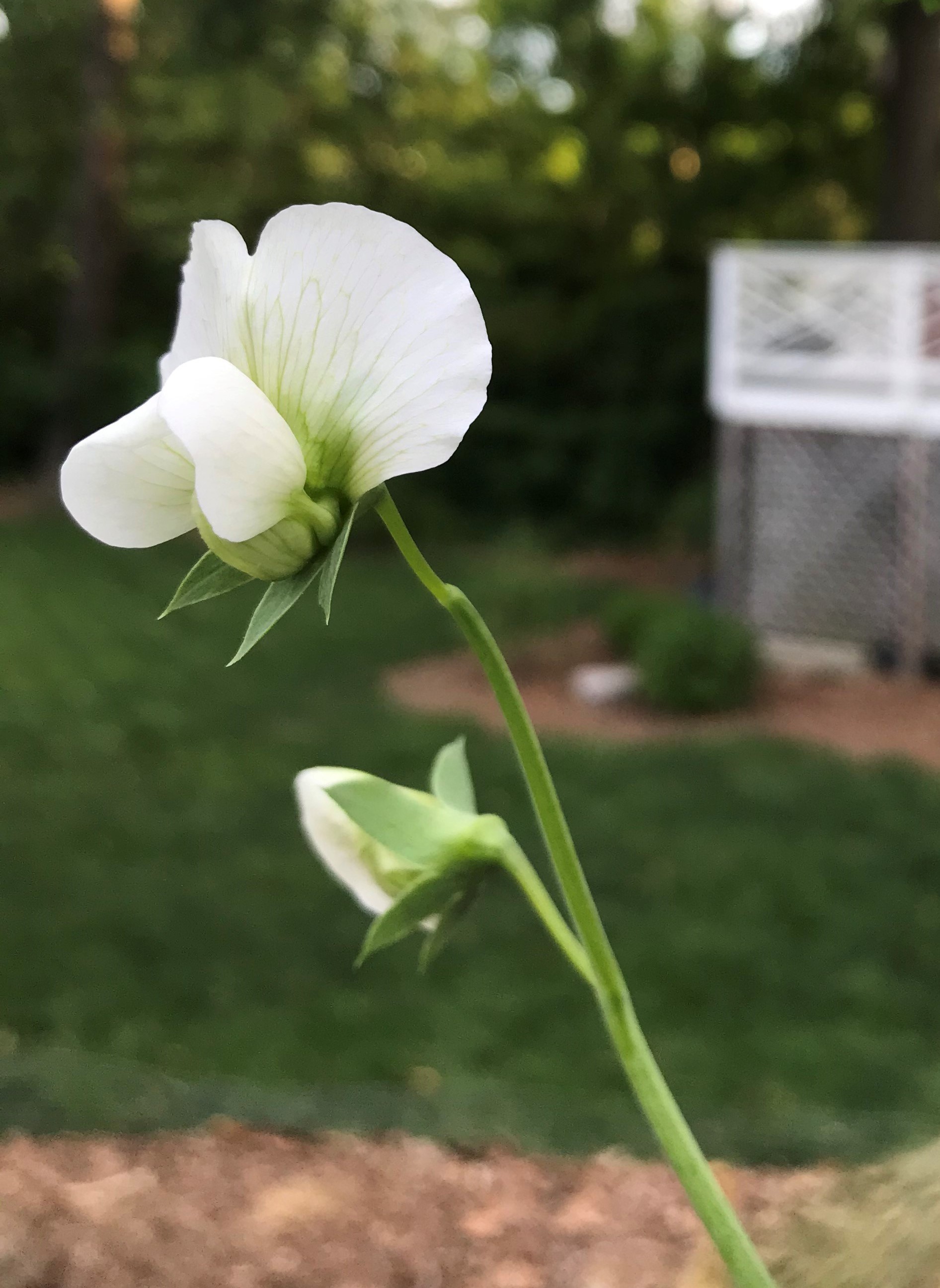
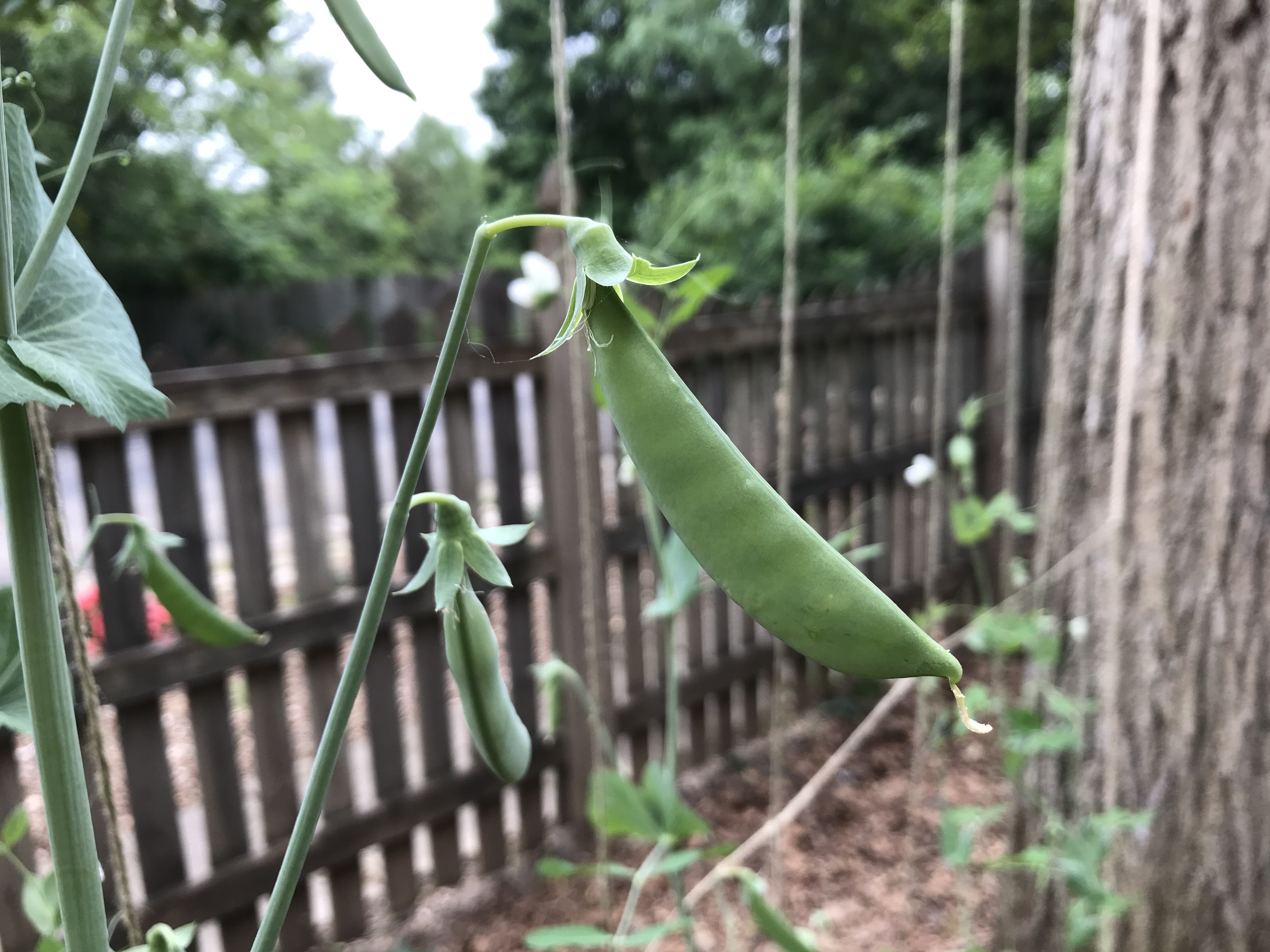
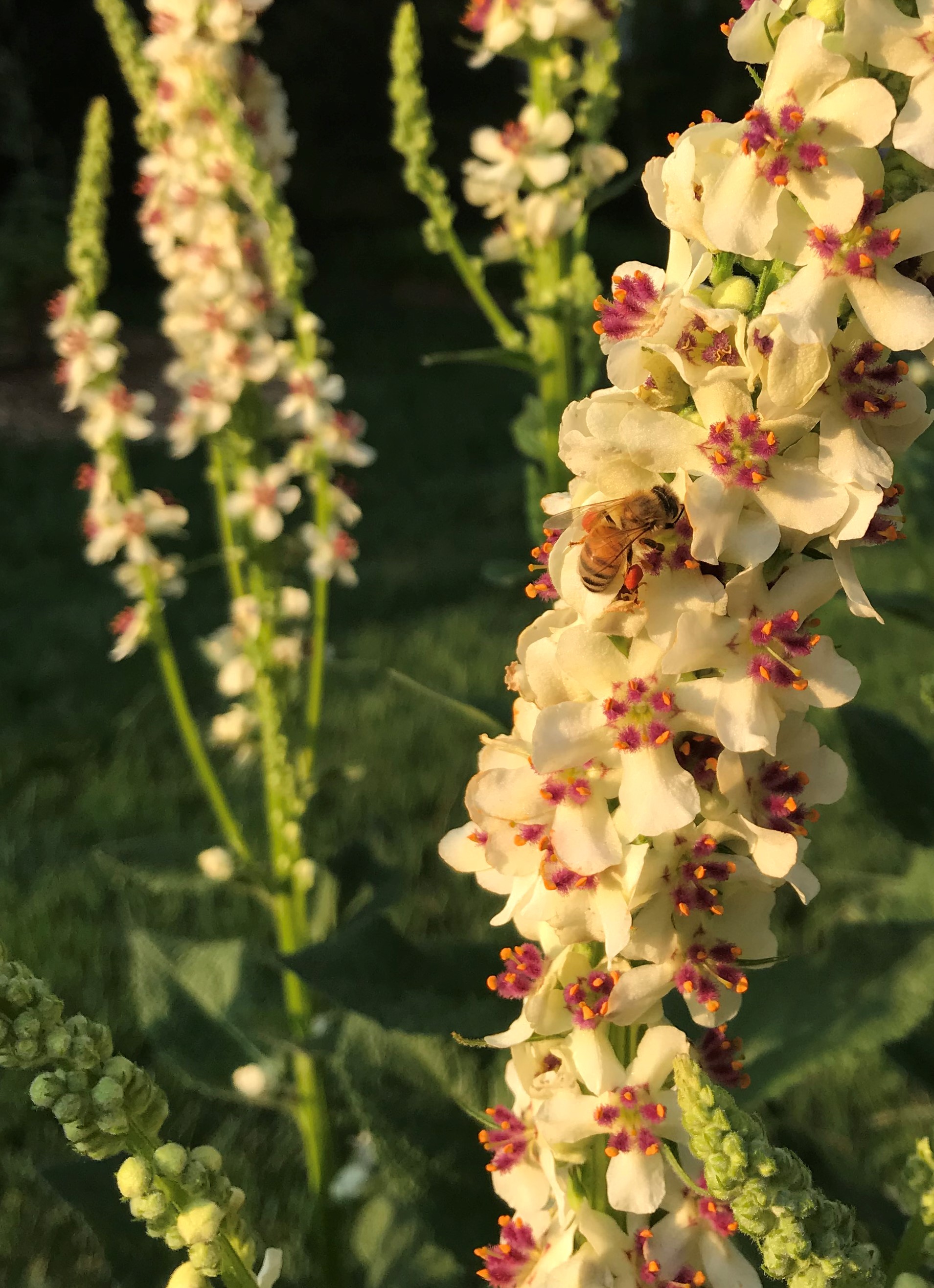
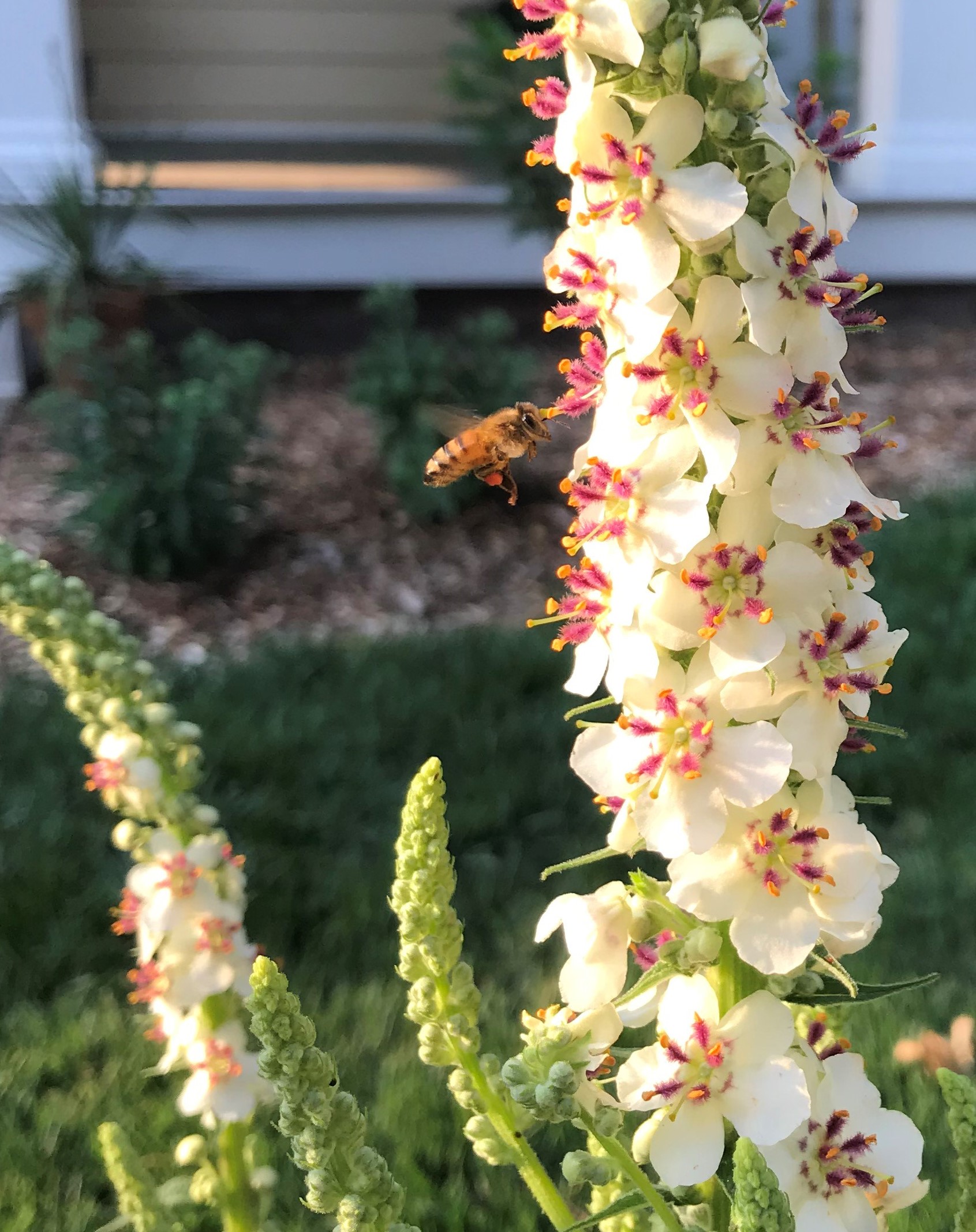
Yesterday morning I shared a sugar snap pea with my 18-month old while we watched bees forage on some Verbascum (Mullein) that I planted earlier this month. I’ve had some flops this year so far including beets, fennel, poppies, bachelor’s button, etc. I’ve already rearranged several plants that were either crowding each other out or not getting the amount of sun they require. So often, all I can think about is the work that still needs to be done, but in that moment, thinking about the benefits to nature and our quality of life, I was grateful for something going well. And considering the ease of use and the quick reward I will definitely be doubling down on these peas next year.
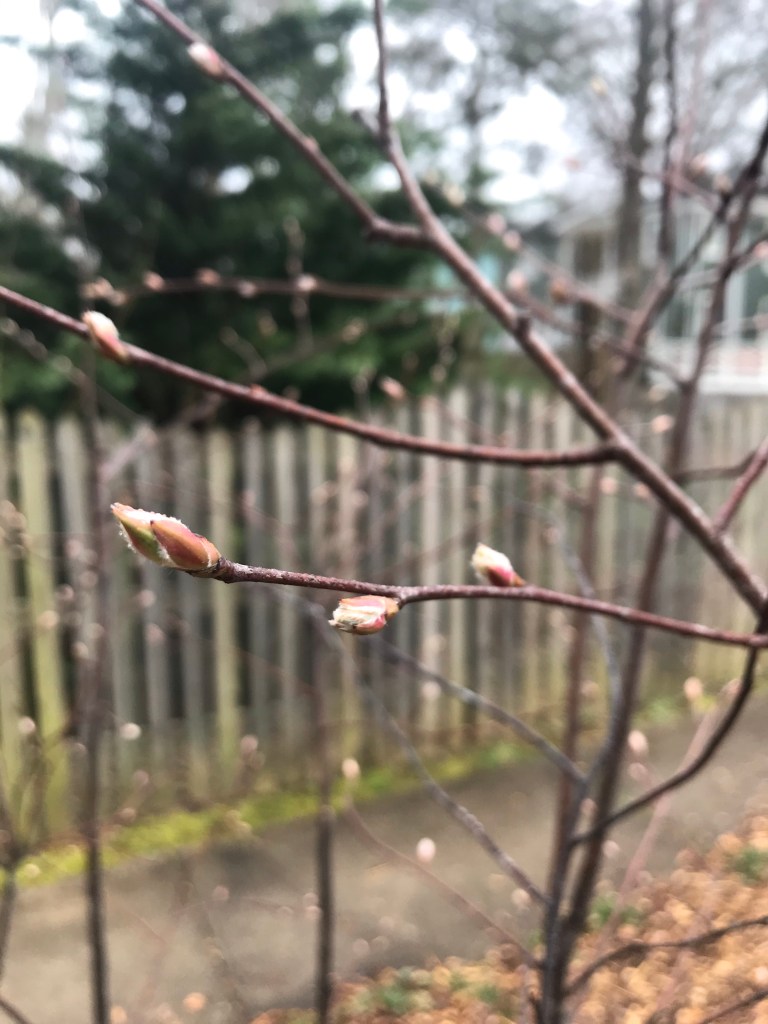
One year ago, there were buds on the serviceberry bushes in Richmond as there are today. I didn’t notice, of course. Even if I had known what they looked like to identify them, we were too busy helping our son heal from surgery and reading the news about a virus infecting the world. The service berry bloom historically signaled the time for bodies of those who had died over the winter to be interred. It’s hard to imagine putting a loved one in the ice for months until the ground was soft enough to bring them back out for a funeral. After one year of lockdown, loneliness, denial, and all the ways we’ve inhabited this pandemic, it feels appropriate to think that we’ve also postponed our grief in the same way.
Seeing these buds feels encouraging, but also too soon. They are going to bloom any day (some already have) and provide an early meal to pollinators as they emerge. Similarly, we are emerging from COVID, searching for what aspects of life will return to fuel us in the coming months. Although we may not be ready to let go of the darkness and confusion that we’ve been inhabiting for the past year, the buds are a reminder to me that we need to start preparing ourselves to grieve and to be ready to see the good.
Sometimes it can be hard to accept that spring has come, that things are beautiful again, if you still feel cold on the inside. It can be hard to accept the next chapter when you haven’t been able to let go of the last. Burying and memorializing the dead has long been part of the process of appreciating life. It will also be important for us to bury and memorialize what we have lost in other ways, the friendships, jobs, marriages, favorite restaurants, traditions. We could also bury aspects of COVID that aren’t serving us well like fear and the compulsive sanitizing.
I am daydreaming about some kind of memorial that involves serviceberry bushes and other spring blooming natives. A memorial that is beautiful every year around the time we started the slow crawl out of COVID-19. A memorial that gets better with time, perpetuates itself, serves nature. We are still in a pandemic, but it’s time to start getting ready to not be in a pandemic some day. I don’t want to be stuck in the last year, I don’t want to pretend like it didn’t happen, but I also don’t want to miss the blooms and the berries.
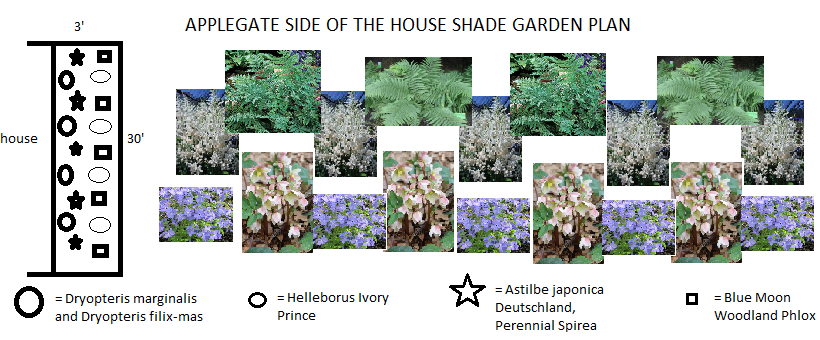
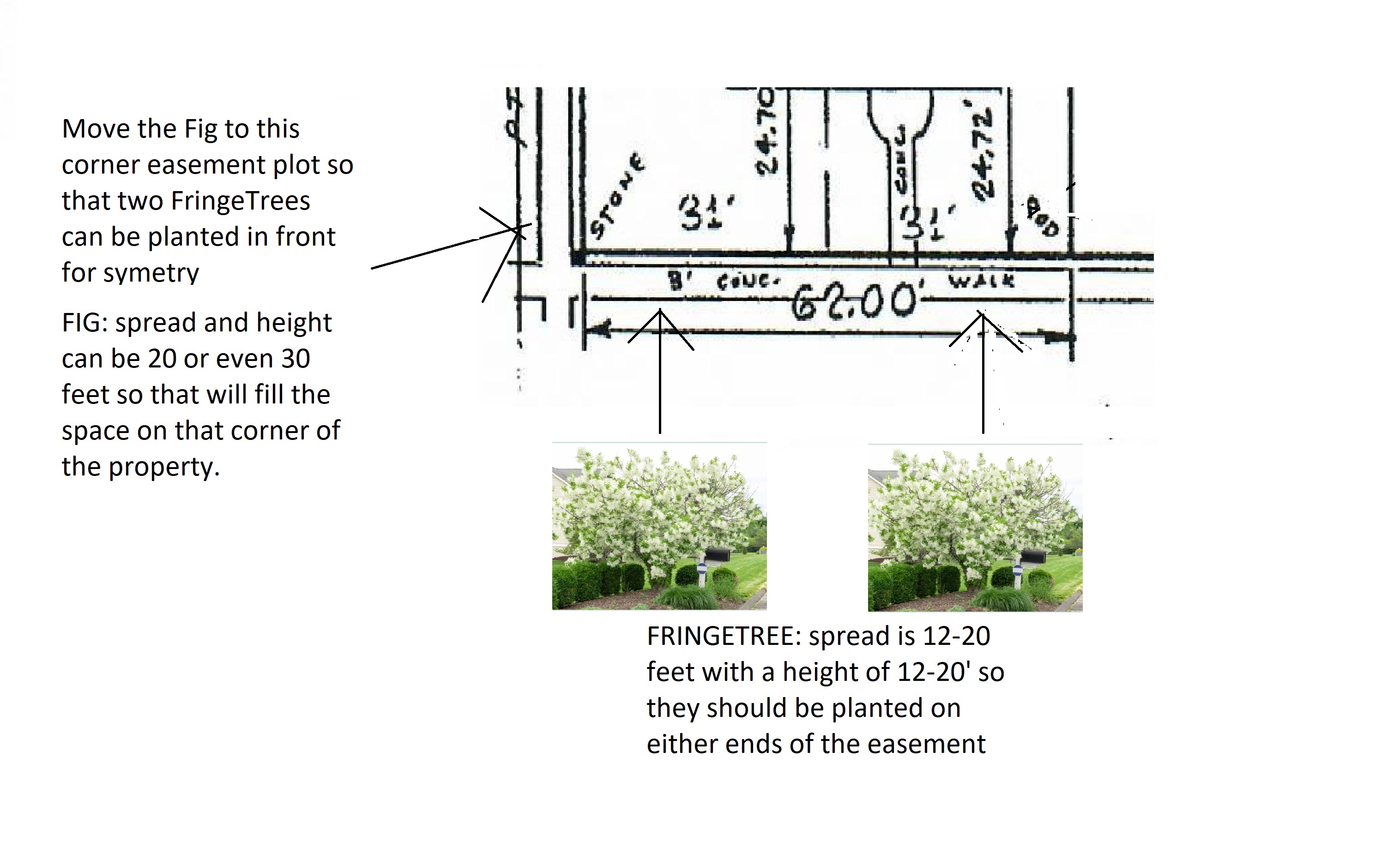
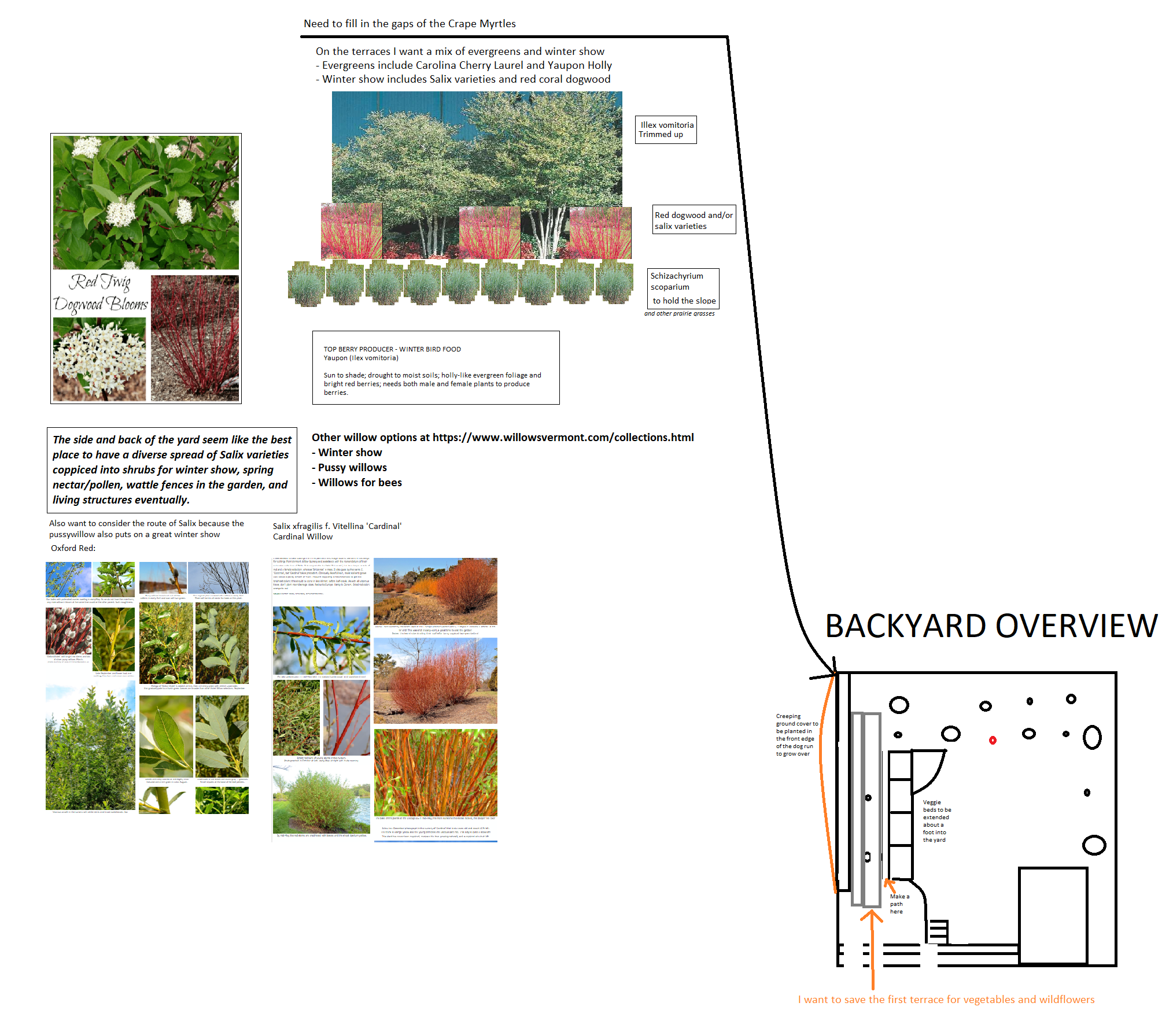
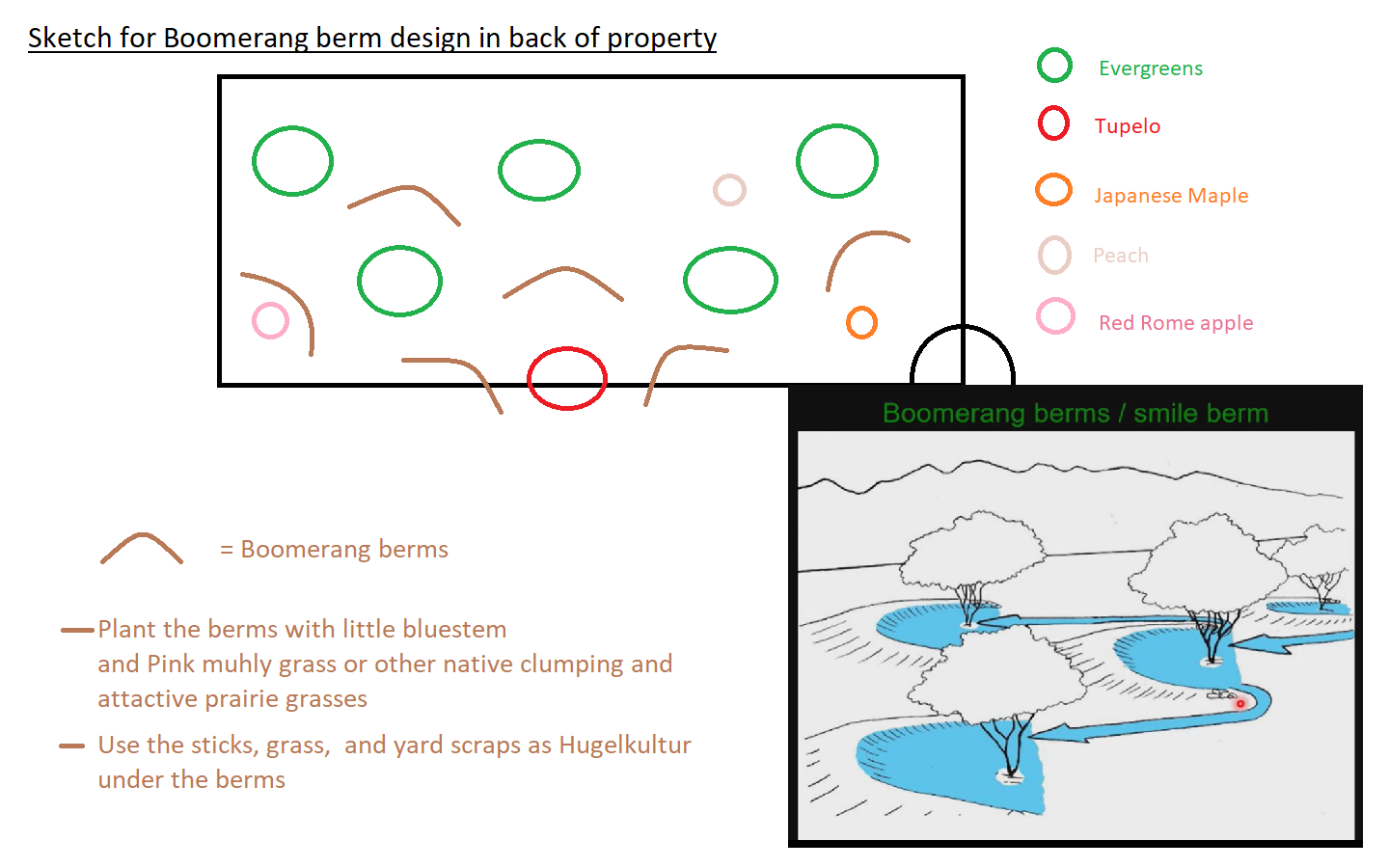
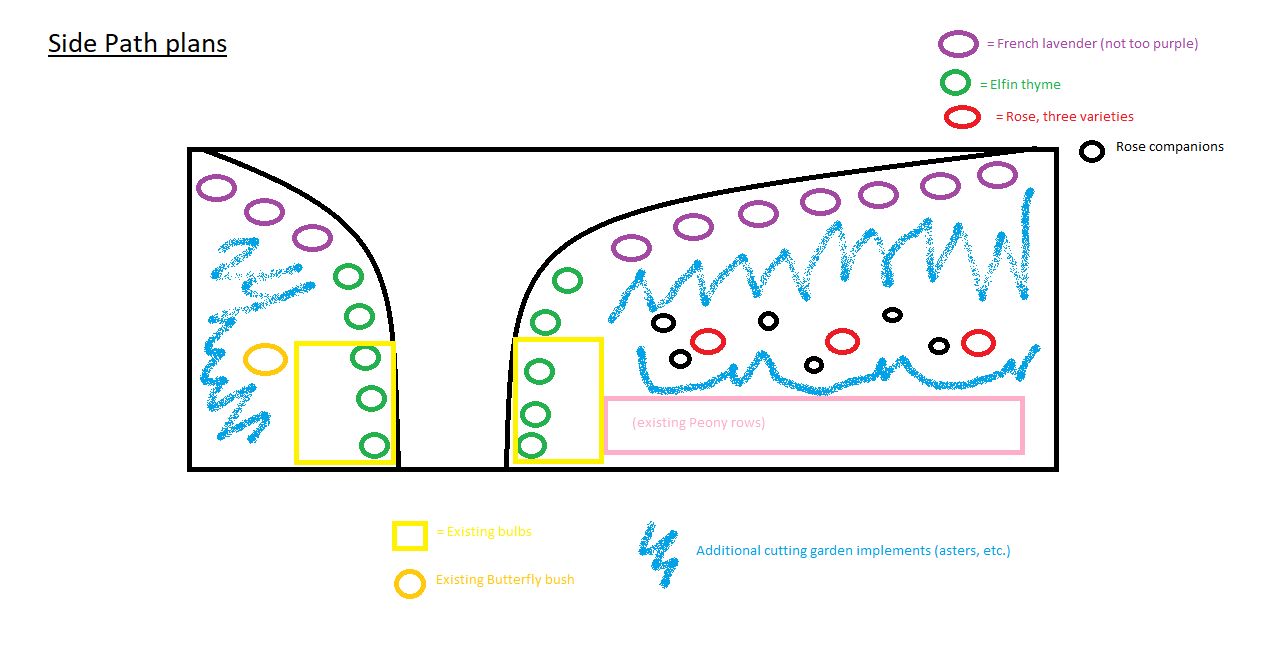
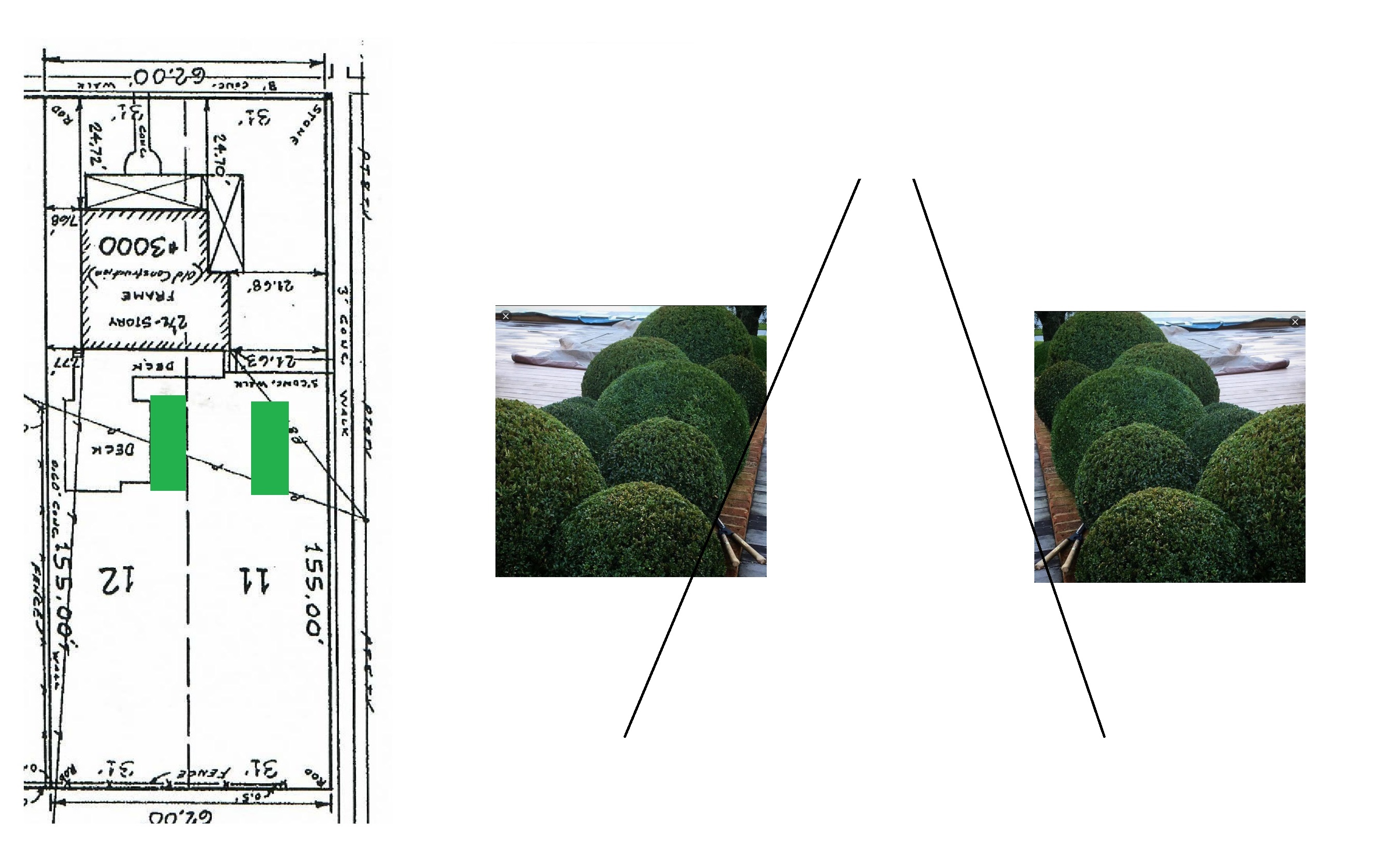
Most of my creative energy these days goes to daydreaming about my garden. I have a mental map of the spaces I want to improve and a growing list of the plants that I want to grow, but I started to realize I needed some way to organize it all outside my brain. I don’t want to learn a new program right now and I’ve been happy to realize that Paint does the job. These designs are in varying states of completeness, but really it doesn’t matter because they will all end up different than I imagine. This is just the starting point.
This daydreaming gives me joy, but it also makes me feel like I don’t have enough time. It could be years or forever before I finish all of these projects. I think it’s a good thing to take this project slowly (even when I don’t like to) because I’m constantly learning about new plants and designs that I want to fit into the mix. If I did it all with what I know now it wouldn’t be nearly as interesting.
My main values that guide me are to work with plants that are mostly native, support pollinators and birds (and other wildlife), don’t need much special care, and provide year-round cutting for inside the house. I have lots of climate anxiety and it’s helpful to focus on tending to my plot (among other things). For me, planting low-maintenance plants that benefit the ecosystem and are also beautiful is a win-win. Maybe I’ll check in for an update once planting gets under way next month.
As we enter spring, I’ve been getting extremely nostalgic for last summer when I watched my first wildflowers grow from sprouts. I’ve planted more seeds for more wildflowers in the past week, but honestly I still have this worry in the back of my mind that the seeds won’t grow this time. It’s a problem of modern life that I’ve very rarely sprouted and grown or done anything with seeds up to this point in my life, but it’s also fun to have a kind of childlike fascination with them like they’re magic (which the basically are). Since we’re in a new house now, I’m also thinking about all the landscape work that we did at our last house and wanted to put together this blog post to share and also save the memories for myself. Many exhausting weekend days went into making this “yard” into a garden that we could enjoy.
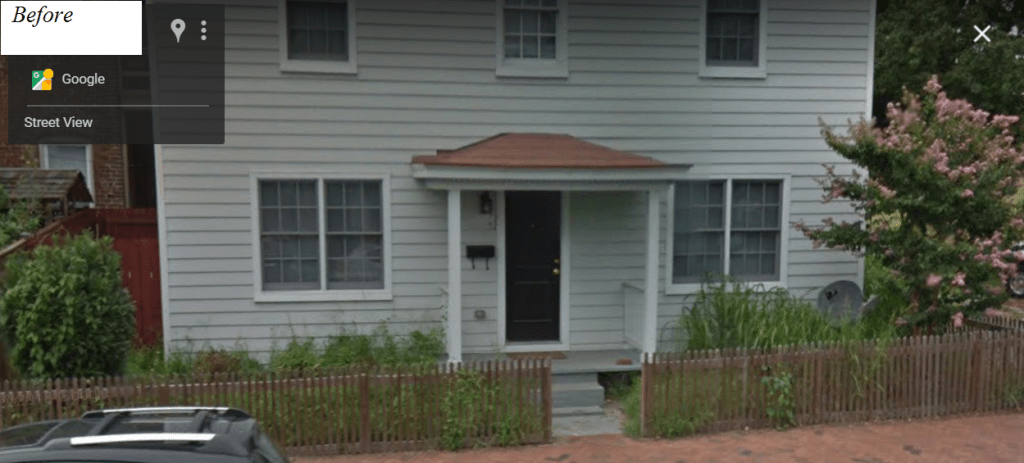
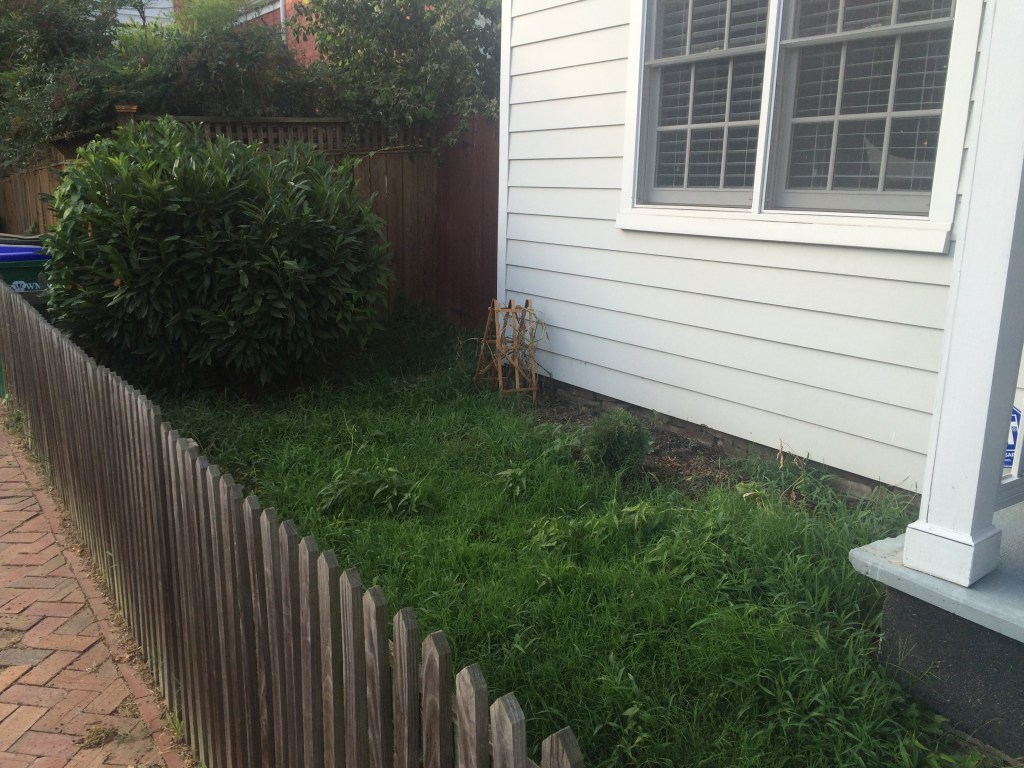
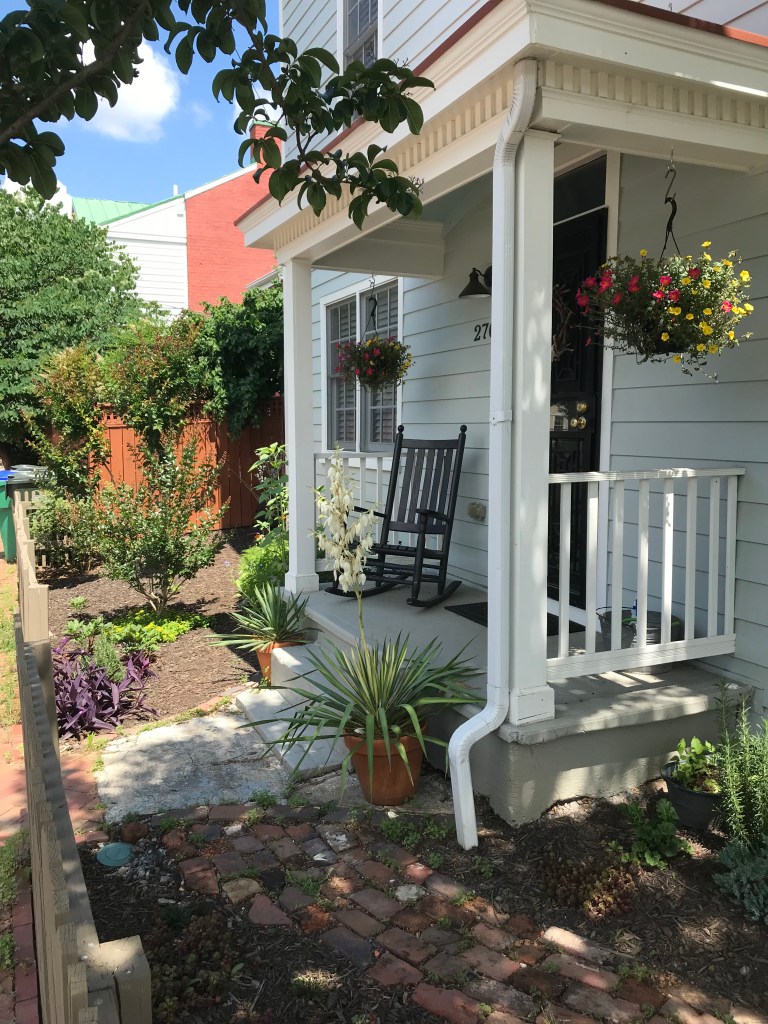
When we first moved into our last house, the front yard was a mix of tall grasses, one shrub, and one established Crape Myrtle. The fence was unstained and badly warped. The ground level of the front yard was higher than the fence so that it met the bottom cross beam and left no room for the fence and the siding of the house to breathe potentially leading to rot. There also was no clear walkway around the house and little visual interest in fall, winter, and early spring.
The property faces south and receives full sun all day long. We knew we needed to find plants that could withstand the heat and also some more trees to eventually provide shade for the house and the garden. We also knew that we wanted the garden to be low-maintenance so we looked especially for heat and drought tolerant plants.
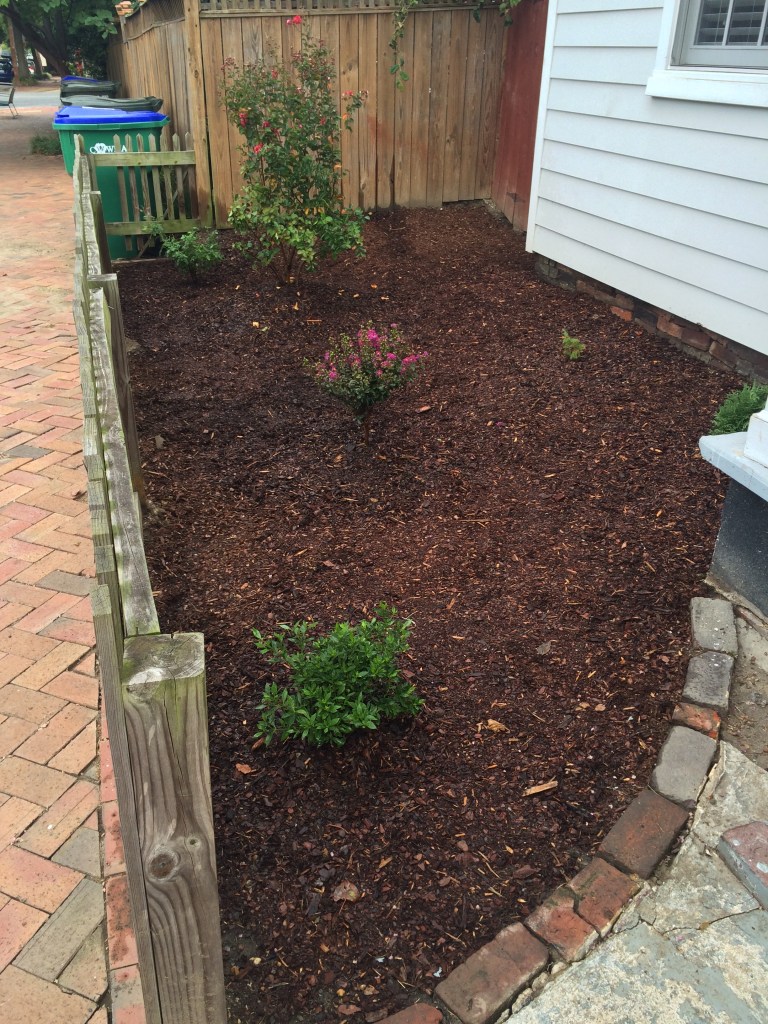
The first major change we made was to dig out the entire yard including a few inches of soil (several truck loads) to lower the ground level, remove the grass, add mulch, and prepare the space for landscaping. We also planted two more Crape Myrtles, one large one to mirror the existing one and provide shade on the south-facing front of the house
We also planted a knockout rose, a small arborvitae, and a gardenia (the last two did not do well).
I hired a landscaping company to install French drains around both sides of the house and redo the back patio. The patio had been installed violating code (sloping toward the house and covering the lowest board of siding) and needed to be redone to prevent the risk of rot.
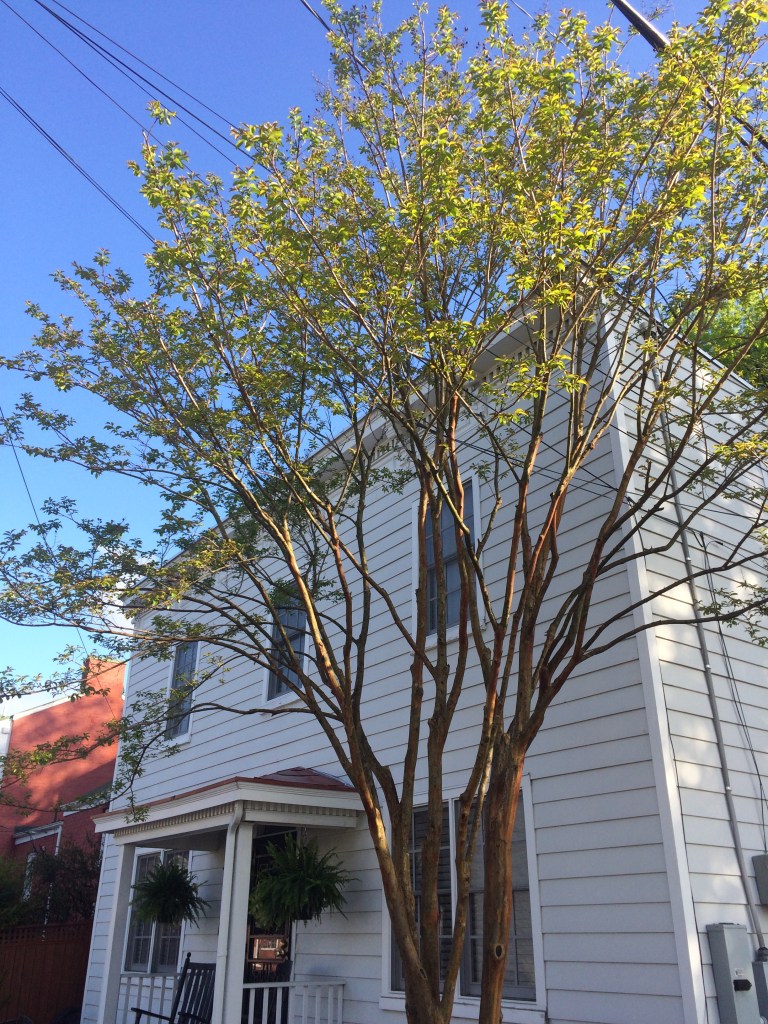
To give the existing Crape Myrtle more room to spread and encourage upward growth, I trimmed limbs growing toward the middle of the tree as well as lower limbs and many smaller limbs that I didn’t think looked good where they were growing. It has continued to grow and fill out nicely from this initial trim.
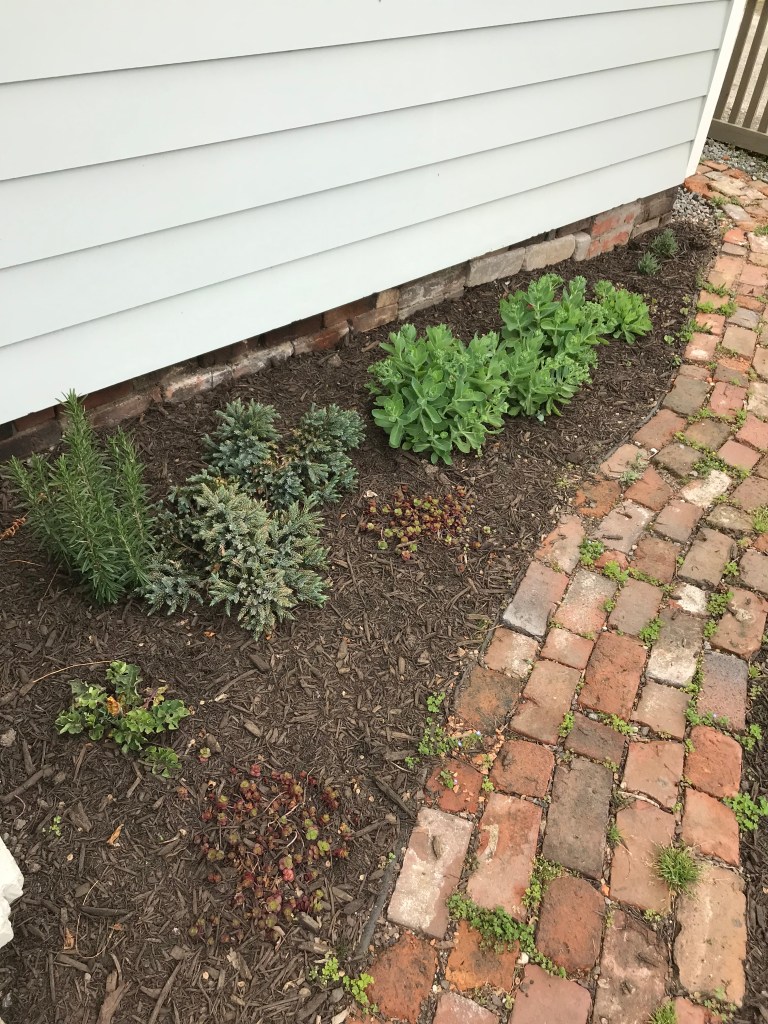
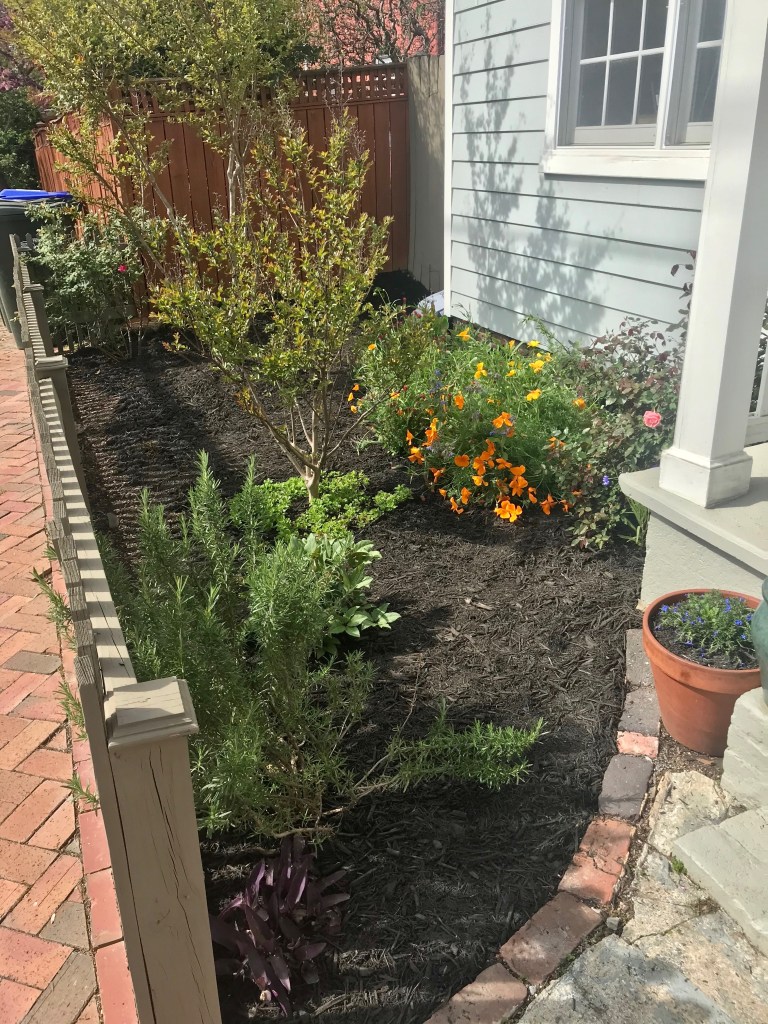
After considering many options, we decided to install a permeable brick path around the right side of the house leading to the side gate and the back patio. We used old reclaimed bricks from a friend’s backyard in the neighborhood so the path would match the historic character of the house. Along the brick, we planted a variety of sedums and aromatics including rosemary, lavender, and thyme as well some dwarf evergreens and Gerber daisies.
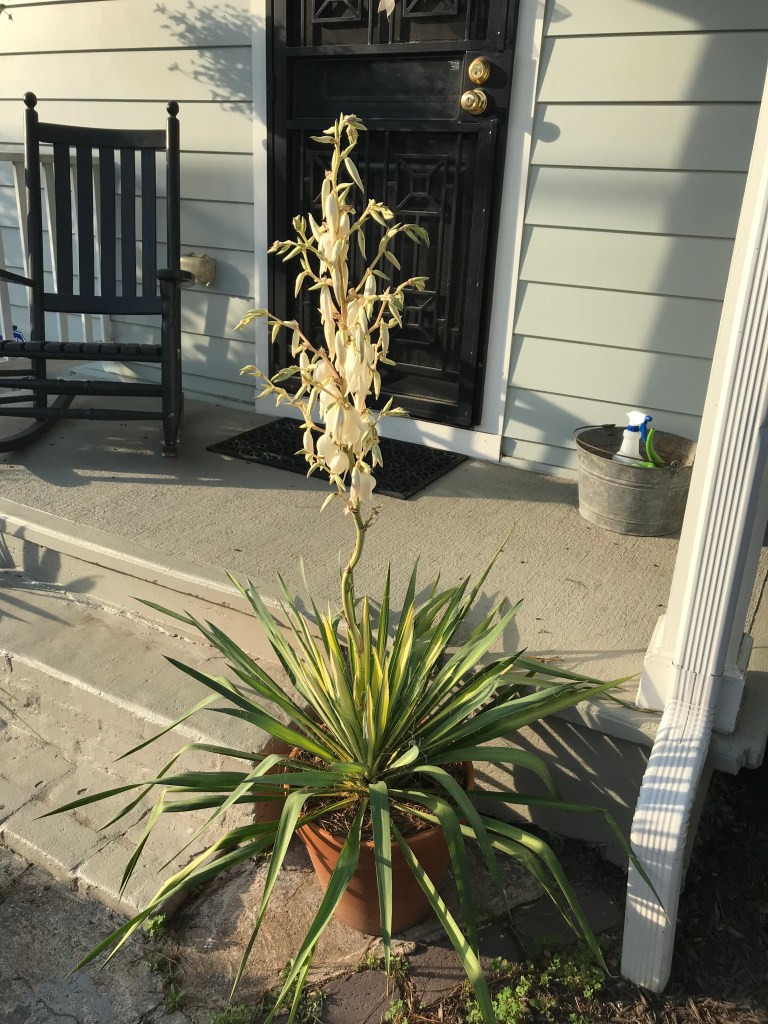
I potted yuccas (one foraged and one purchased) and placed them on either side of the front steps for more year-round, no-maintenance curb appeal.
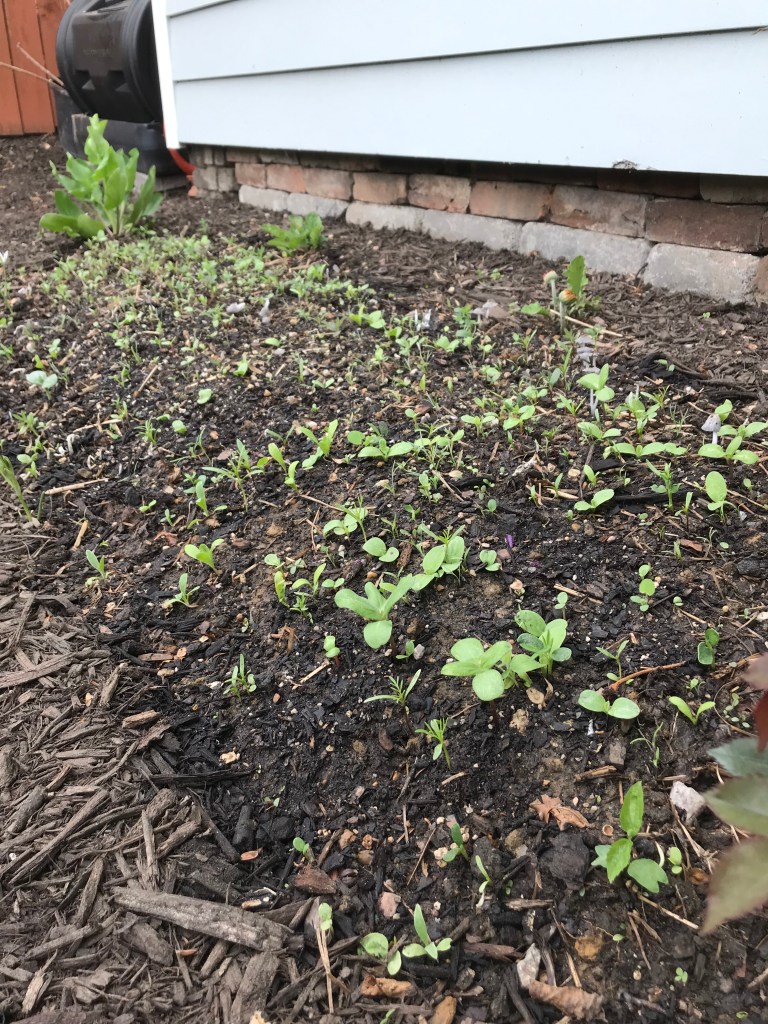
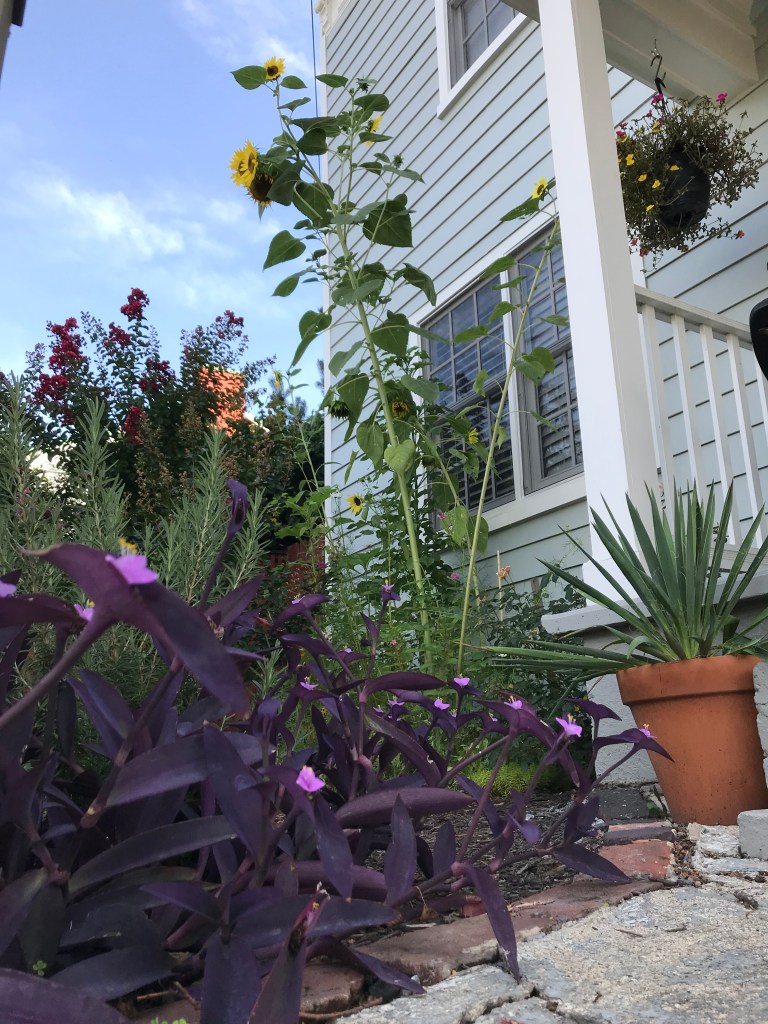
We added more plants including Lenten roses, Russian stonecrop, purple heart, more rosemary, and a second knock out rose. The Lenten roses provide nice winter blooms and have grown very well. We then spread some of our compost and planted a wildflower garden to attract pollinators and provide a bounty of flowers throughout the summer.
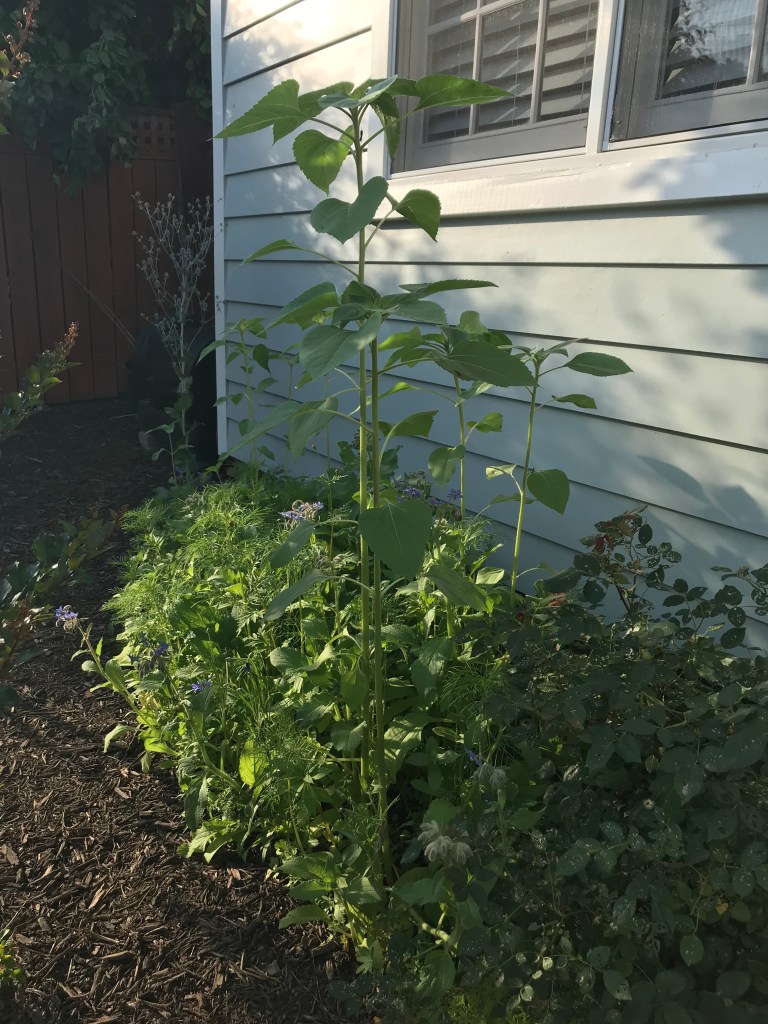
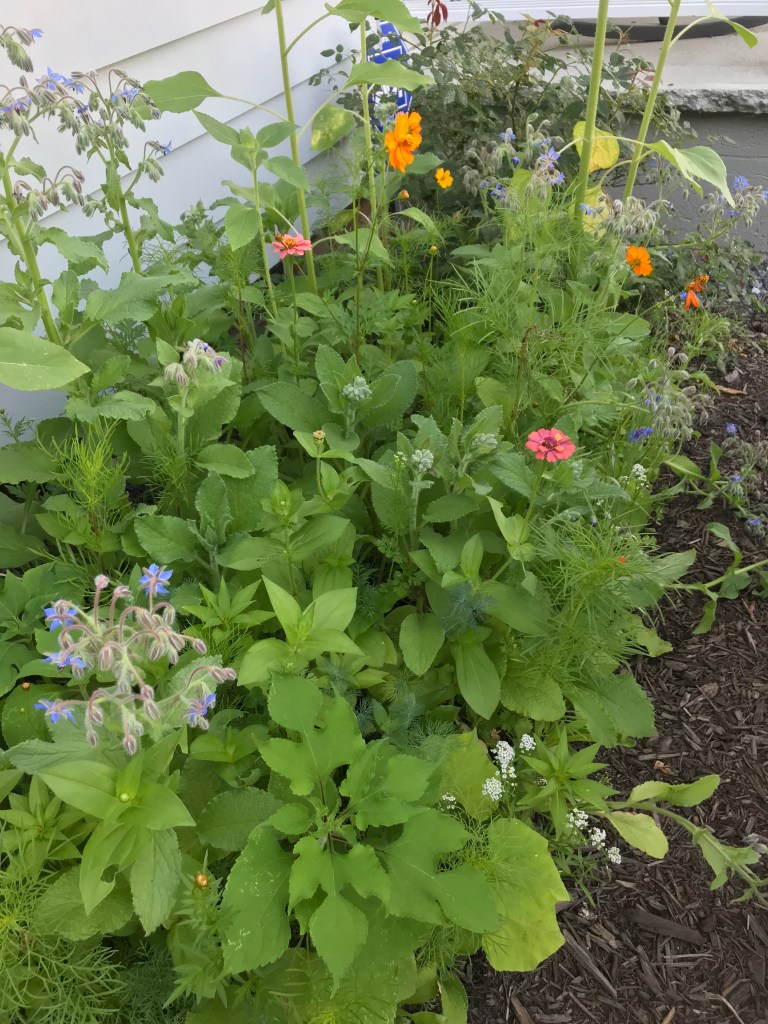
The wildflowers provided months of changing colors and shapes as different flowers grew and bloomed. It even got a little out of hand, but since they are mostly annuals, we weren’t worried about keeping it trimmed back as long as we could walk to the other side.
While we initially thought of the heat and full sun as a problem, we realized that with the right plants it could provide a bounty.
We also had the house painted a light, cool blue-green color to compliment the new landscape, mulch, and brick walkway. Then we stained the fence a light brown natural color to blend in and protect the wood. Hanging plants provide an additional layer of color.
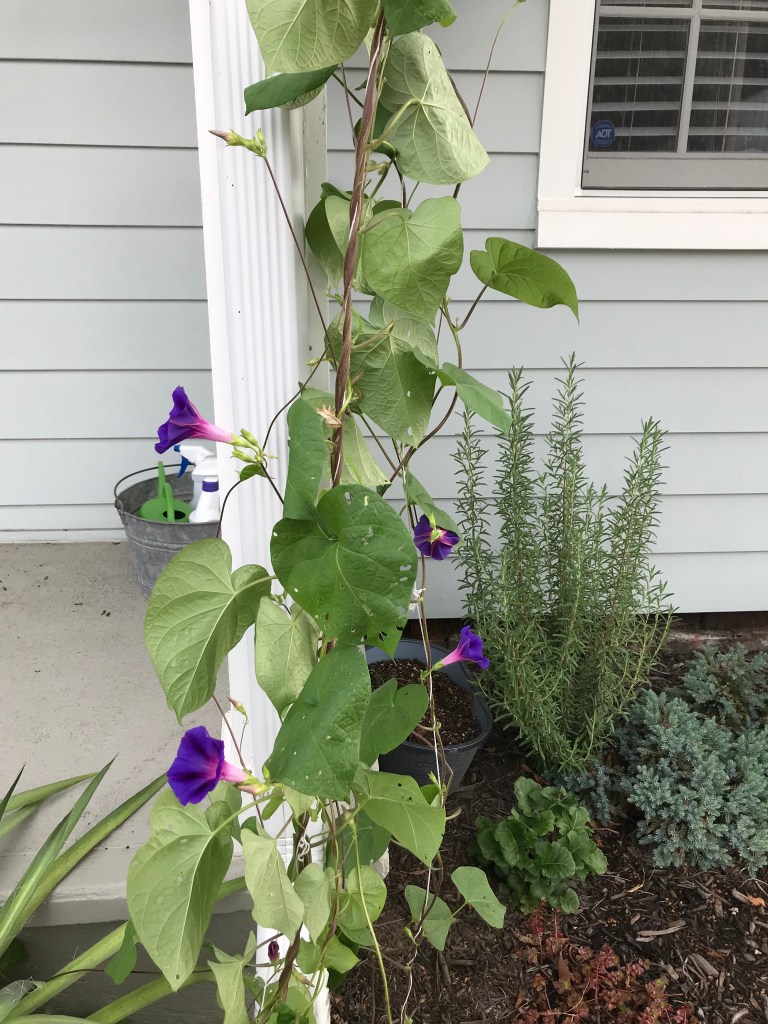
By late summer, I had trained a morning glory vine up the front of the house and across the brick path toward the larger Crape Myrtle.
I really enjoyed watching everything spread and thrive. Especially considering how low-maintenance it became once everything was established.
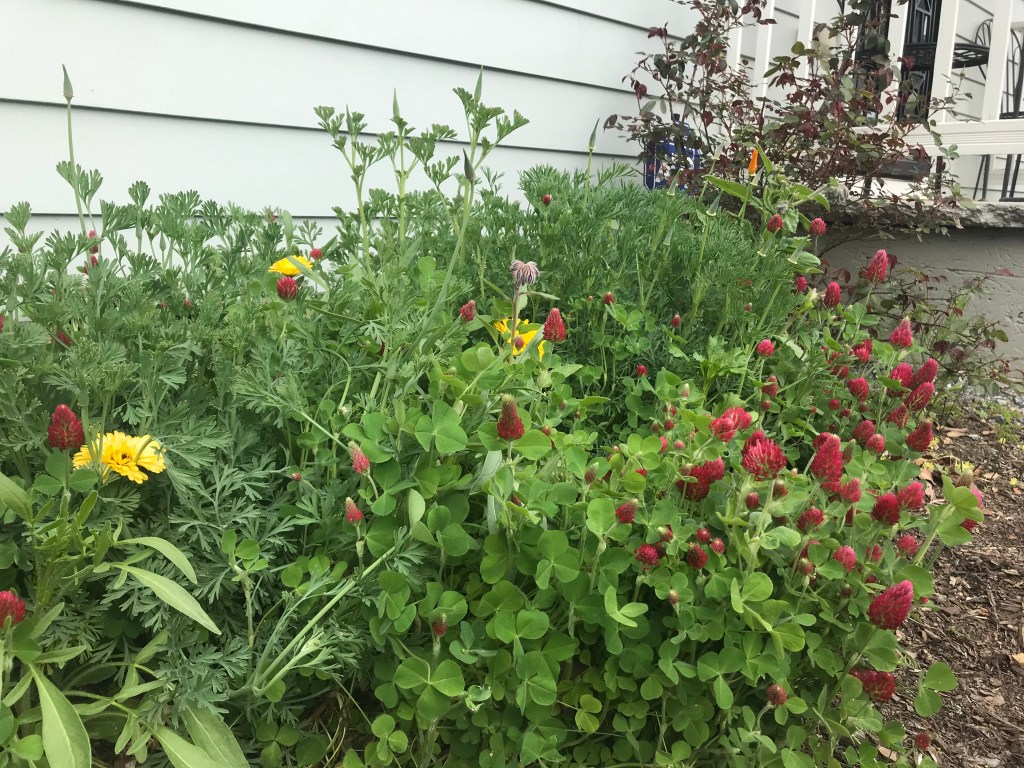
Last fall, I planted some crimson clover cover crop that has taken very well and bloomed along with some returning wildflowers this spring.
It’s definitely hard to leave something that we put so much work into, but I’m glad to go back and see it is still doing well and remember that it’s a gradual process figuring out what plants and uses will work best for each space.
For the past nine days, the only thing I’ve really wanted to talk about is an article in the New York Times by Brooke Jarvis titled, “The Insect Apocalypse is Here.” I had noticed the article on the homepage for a few days, but last Saturday I finally sat down to read it all the way through. I was not prepared.
The story follows scientists and “amateur” etymologists mostly in Europe and the United States who are all arriving at the same conclusion: populations of insects are declining at an exponential rate. The study that first alarmed the scientific community calculated a more than 75% loss in total flying insect biomass in 63 German nature preserves over the past 30 years. Similar studies of monarch butterflies, honeybees, moths and others have corroborated this research. Worry is growing that the insect kingdom will eventually disappear entirely. The consequences are expected to be catastrophic.
Beautiful headline graphic from the NYTimes article by Matt Dorfman.
The article hit a nerve very close to home for me because for the past year or two I’ve been spending a lot of time reading and watching videos about permaculture design. I’ve come to believe that nature can heal itself with the right combination of human interventions. I’ve begun to follow Jeff Lawton, Colette O’Neil of Bealtaine Cottage, and Toby Hemenway of Gaia’s Garden. My YouTube homepage is full of recommendations for videos about swales, cob construction, and food forests.
The creativity and optimism of these teachers has given me some hope for the future, but this article reminded me that their endeavor is more urgent in more ways than I had realized. Insects are integral to the creation of soil, the fertilization of flowering plants, the decomposition of all living organisms, and the foundation of the food chain. What is permaculture without insects?
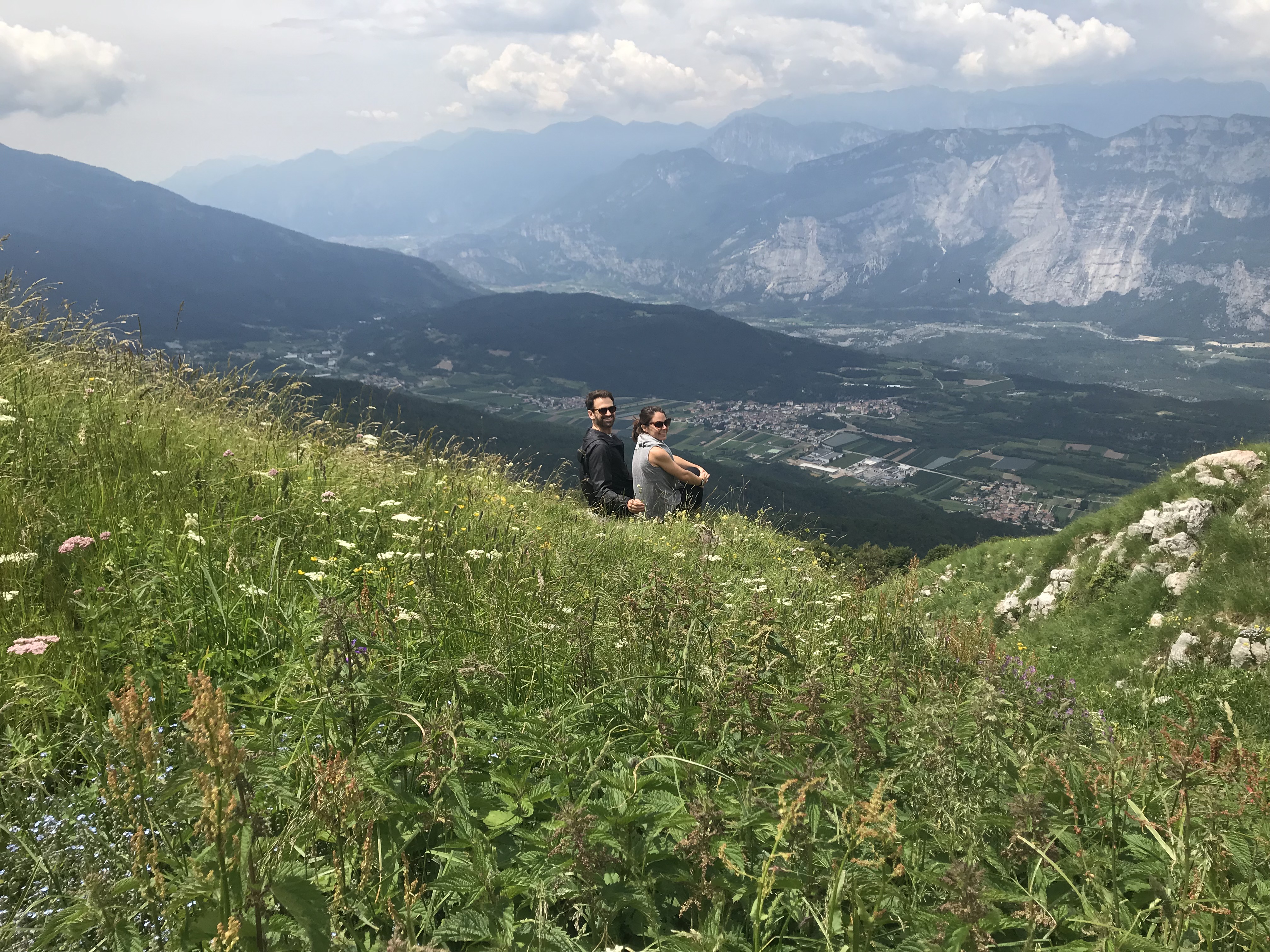
I started to look more seriously at how humans have shaped the environment, not just through the lens of permaculture vs. monoculture, but also from the perspective of insect habitat. We’ve taken our flowering meadows and replaced them with grass yards and immense monoculture farms, we’ve chopped up dense forests into subdivisions, we’ve dammed rivers and prevented them from flooding surrounding lands with their nutrients. We have replaced every known habitat with asphalt roads, parking lots, sidewalks, and other impermeable surfaces. We have removed elements of insect habitat everywhere: pollen, rotting trees and animals, feces. We have cleaned up our environment in every imaginable way and we are left with something monotonous and ugly in contrast to diverse and natural beauty like this alpine meadow that I experienced this summer, shown in the photo below.
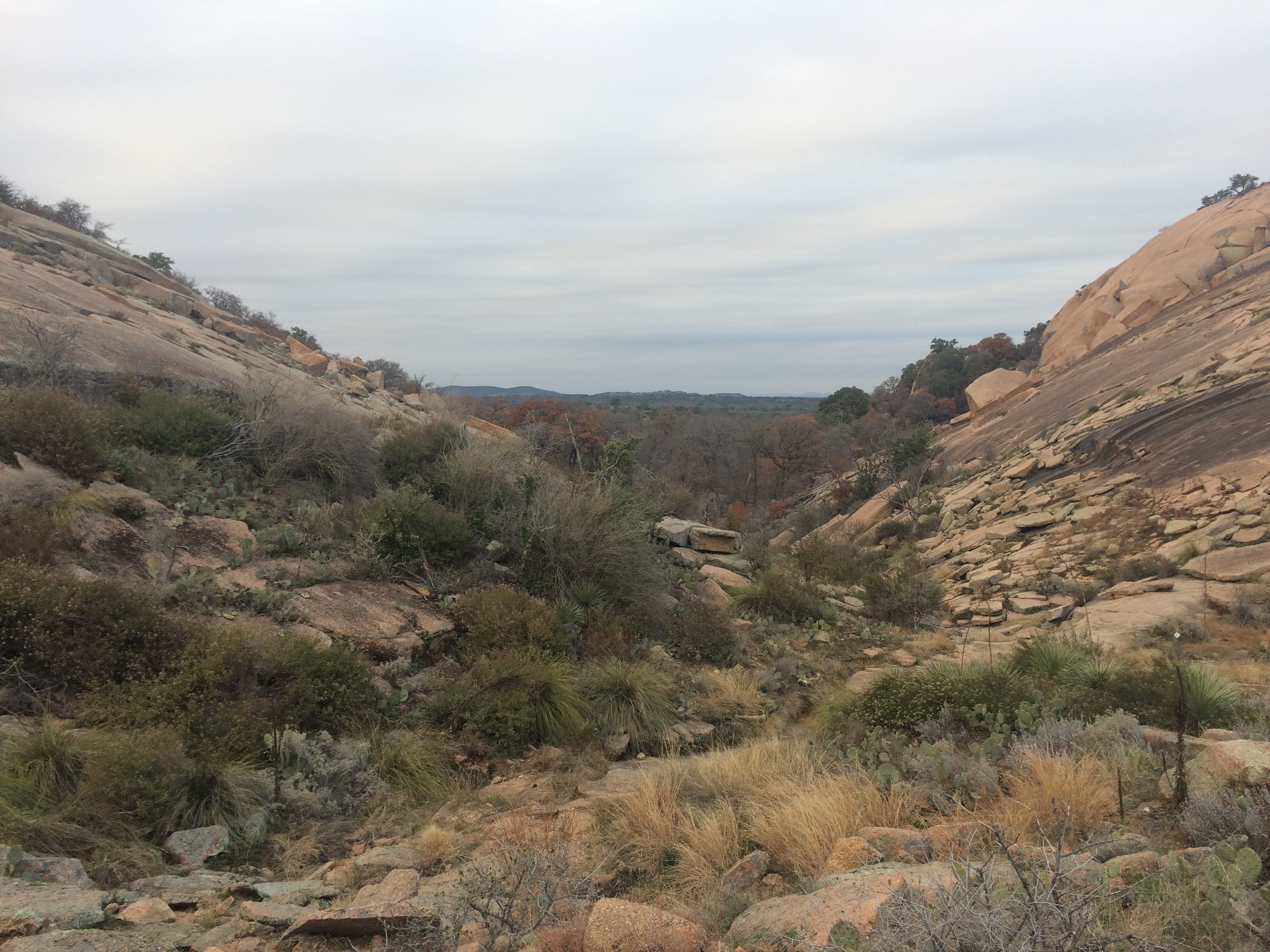
Or this Hill Country valley next to Enchanted Rock from last winter:
As I continued to read, I remembered another article from February of this year, “Let Your Winter Garden Go Wild,” that taught me for the first time how insects, birds, and small mammals all rely on dead plant growth from the summer months for shelter during winter. Some insects burrow into the ground, I learned, while others “like ladybugs, lacewings and parasitic wasps spend winter in the hollow stems of old flowers.” For three years, I drove to work past farms south of Richmond, and every season I watched as plants were harvested and removed entirely from the environment: no rot, no hollow stalk for hibernation, no insulation for production from the wind and snow.
I also felt a very personal sense of guilt as I thought about the ways that I have waged war on insects on my own small part of the world. Insecticide, in addition to climate change, is seen as a major determining factor for insect population decline. When we moved into our current house, I sprayed a general insecticide all around the place. I don’t even remember what exactly I was trying to kill, probably ants, but most likely out of some irrational fear. I remembered when I was young how my dad would fog the back yard of our house with an insecticide a few hours before my parents had friends over in order to control the mosquito population. What does it say about the product if we children weren’t allowed go outside for an hour or more after he sprayed? In just the past year I’ve poisoned rats with kill boxes, I’ve trapped flies by the thousands, and I’ve killed wasps burrowed into the dirt around our house. Although annoying, these wasps are actually harmless and we’ve never known them to sting. The insecticide revolution (along with fertilizer) allowed for modern farming to proliferate, but also created a world inhospitable to insects.
“Hans de Kroon characterizes the life of many modern insects as trying to survive from one dwindling oasis to the next but with ‘a desert in between, and at worst it’s a poisonous desert.’ Of particular concern are neonicotinoids, neurotoxins that were thought to affect only treated crops but turned out to accumulate in the landscape and the consumed by all kinds of nontargeted bugs.”
Brooke Jarvis, “The Insect Apocalypse Is Here”
Even small amounts of these toxins have been shown to wipe out insect populations. Jarvis writes that one of the theories about how neurotoxins affect bees is that it prevents them from finding their way home. Lost, the bees die alone and entire hives are found, not full of dead insects, but mysteriously empty.
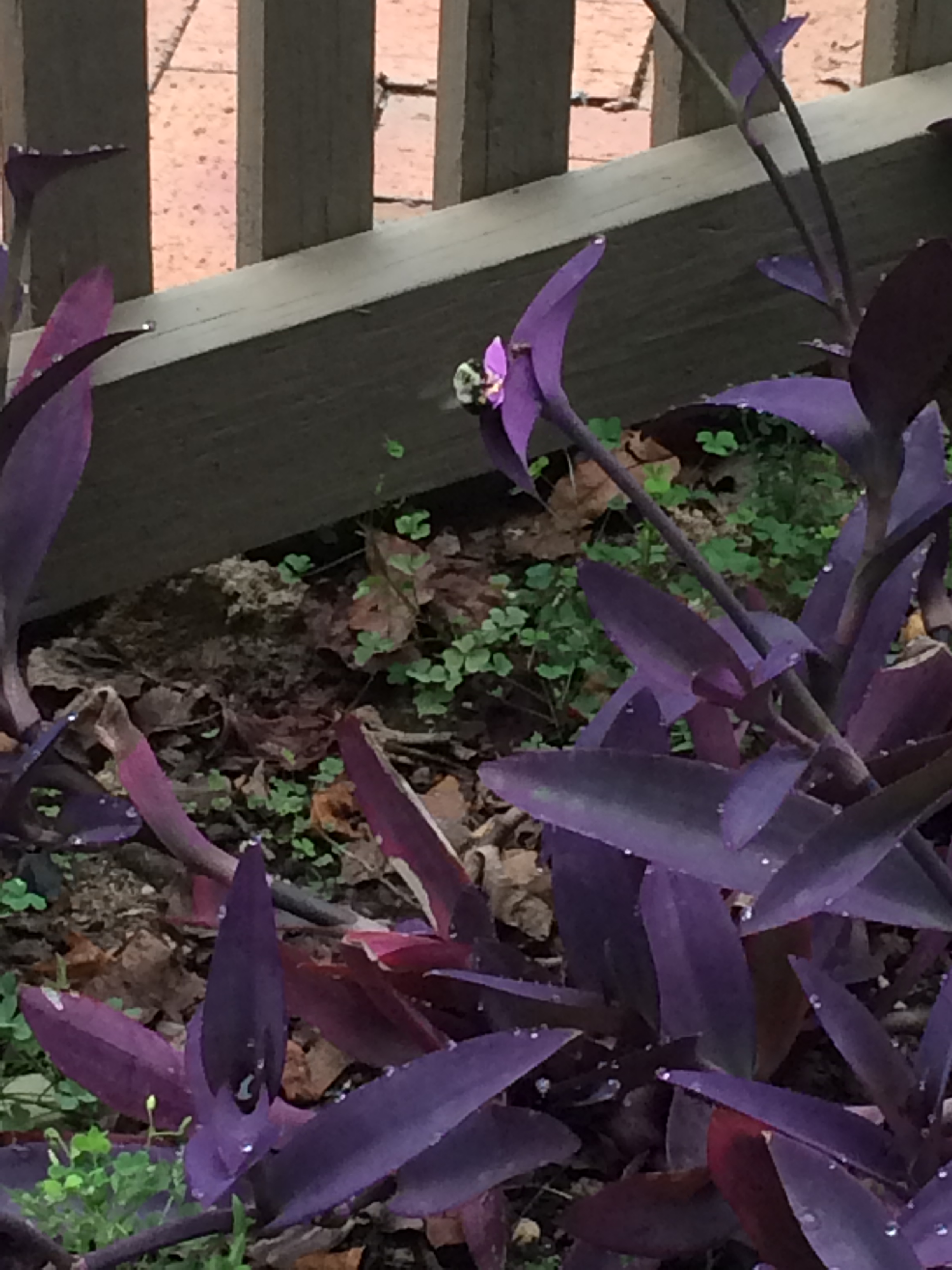
Considering the insect apocalypse also reminded me that one morning in September of this year, while waiting for the bus, I had been excited to see a bumblebee floating from flower to flower on our purple heart plants. I was so excited that I even took a photo (below) and watched it for as long as I could. What I didn’t realize at the time, because it is so difficult to notice, is that my excitement was borne not of the presence of the bumblebee, but of the overwhelming absence of all other insects in the garden.
Jarvis writes that we are exceptionally good at forgetting how things used to be. “The world never feels fallen, because we grow accustomed to the fall.”
As I have now been made aware of this acute loss, my last response has been to imagine ways that I could contribute to insect habitats. I found a lovely British organization called BugLife that created the following diagram for gardening with insects in mind.
This diagram includes food, water, and habitat for insects to grow and survive all four seasons of the year. One of the core lessons that BugLife seeks to share is that in order to support insect life we need to do more and we need to do much LESS. We need to stop keeping our farms, yards, and gardens so tidy and we need to keep a much wider variety of flowering plants than in a traditional garden. Essentially, we need to return our small portions of the earth back to a more natural environment and we need to learn to see beauty in way that each element serves to benefit the other.
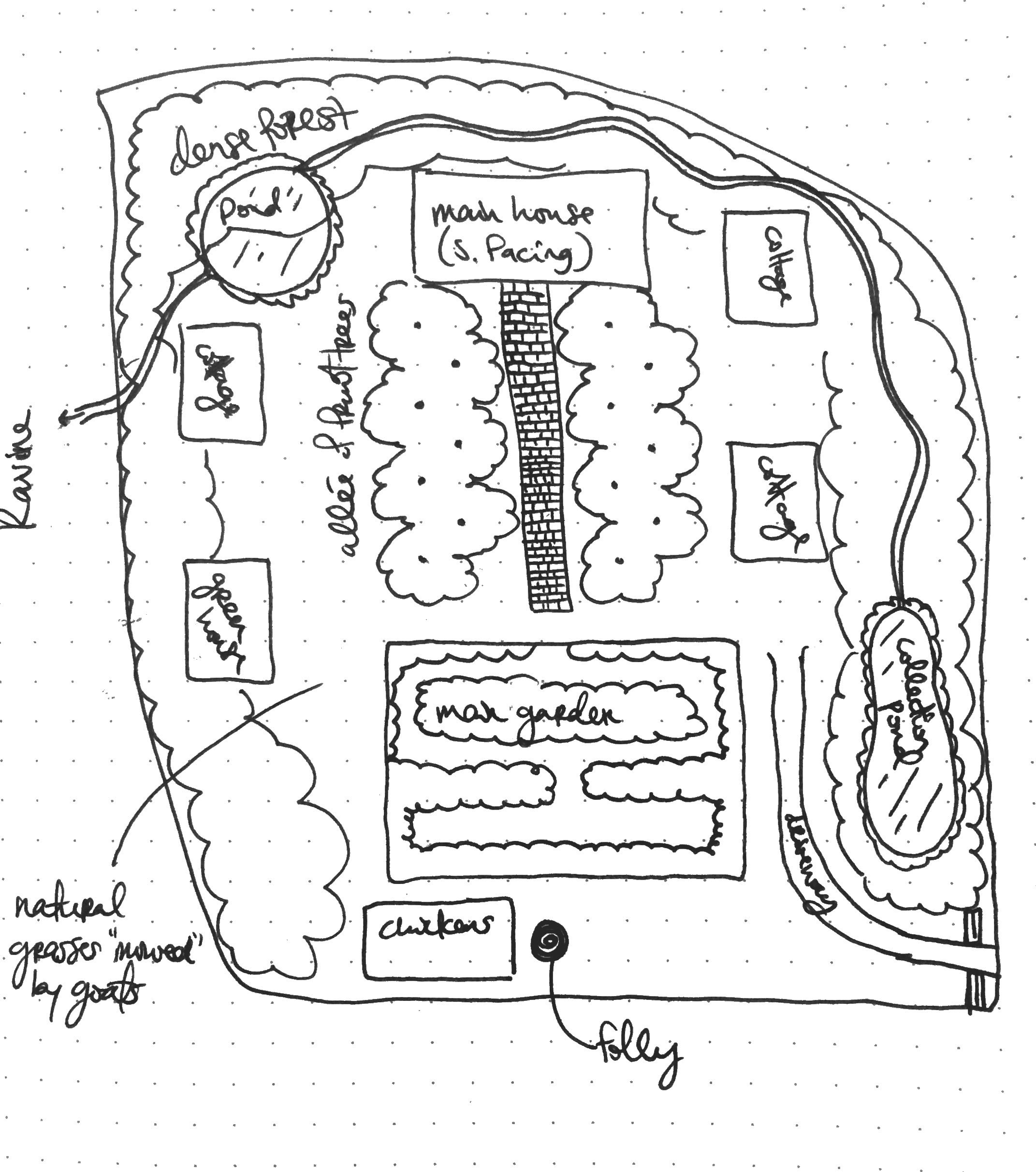
I’ve also been daydreaming constantly about buying a small parcel of land that’s for sale near my house and fully living into my permaculture fantasies. It’s a densely wooded area perched above a ravine on one side while bordering a neighborhood and an old semi-industrial area on the others. It looks like there is enough run-off from the street to feed a small pond or two on the property and enough room for a house and multiple outbuildings. While many trees would need to be cut down, the entire property could eventually be reshaped into a self-sustaining and diverse ecosystem of wild prairie, forest, ponds, as well as gardens and living spaces. I’ve imagined the houses incorporating sustainable design such as cob construction, passive and active solar, rocket stove mass heaters, and composting toilets.
Of course, I don’t know how to do any of these things and I can’t quit my day job, but it’s still fun to dream:
Until then, I will be actively swapping my anxiety for action with small changes to make the natural world around me more interesting, more wild, and a little more hospitable to our little friends.



 Highways and Hallowed Halls