
I was driving next to a stretch of I-195 in Richmond when I realized we are missing out on a huge opportunity: planting bamboo forests along our highways. Specifically I want to see bamboo in these little strips of grass in between the road and the fence or barrier to the highway, on the left side of Grayland Ave. shown below.
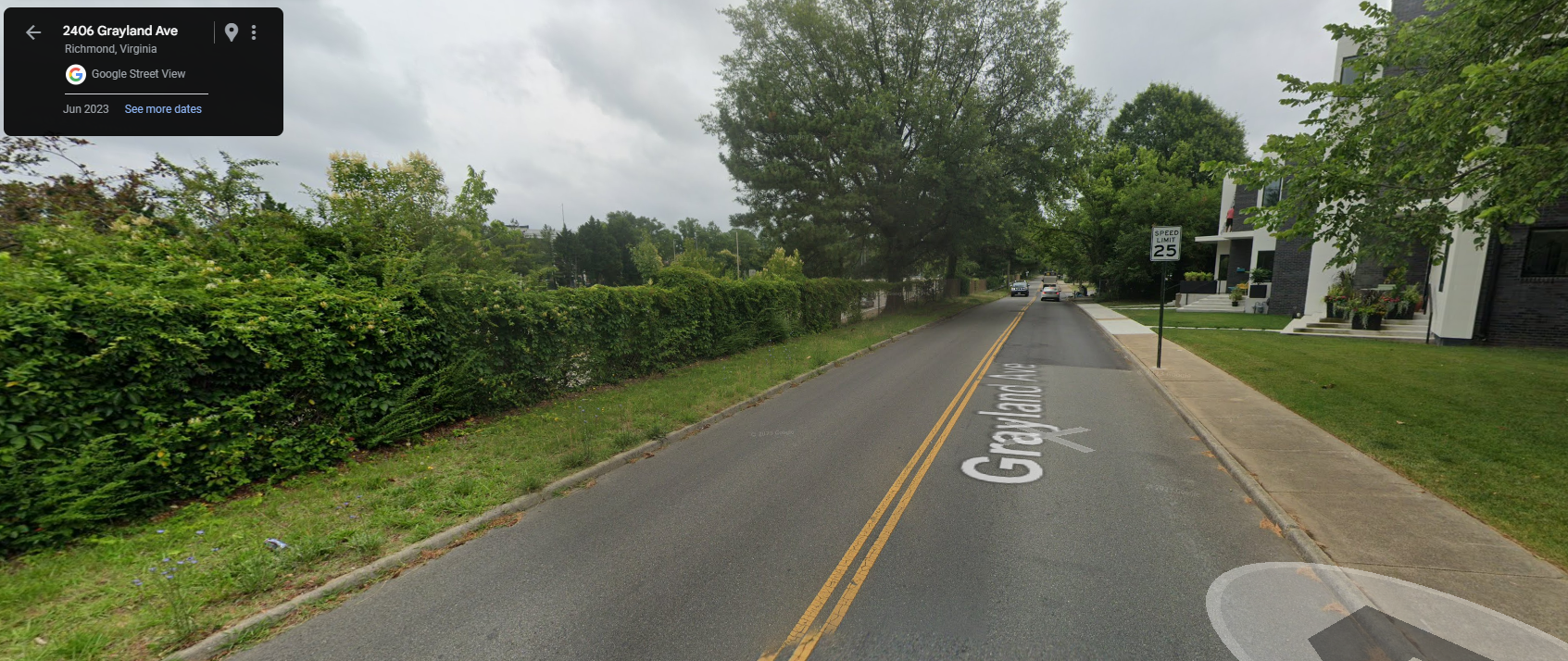
The first reason I would want to plan bamboo in these spaces is to create a natural barrier between the highway and the surrounding areas and the second would be to create an effective carbon sink on degraded and underutilized land.
Anyone who has ever walked through a bamboo forest knows intuitively that they are extremely quiet, but the noise-reduction has actually been studied and found to be effective comparable to solid noise barriers. Bamboo barriers create themselves and repair themselves so they are incredibly cost effective compared to concrete noise barrier solutions (the Berlin Wall of highway design). Bamboo forests are beautiful, certainly as beautiful as whatever invasive species there is growing in the space currently. Bamboo also grows tall enough to block the sight of highways from most passersby.
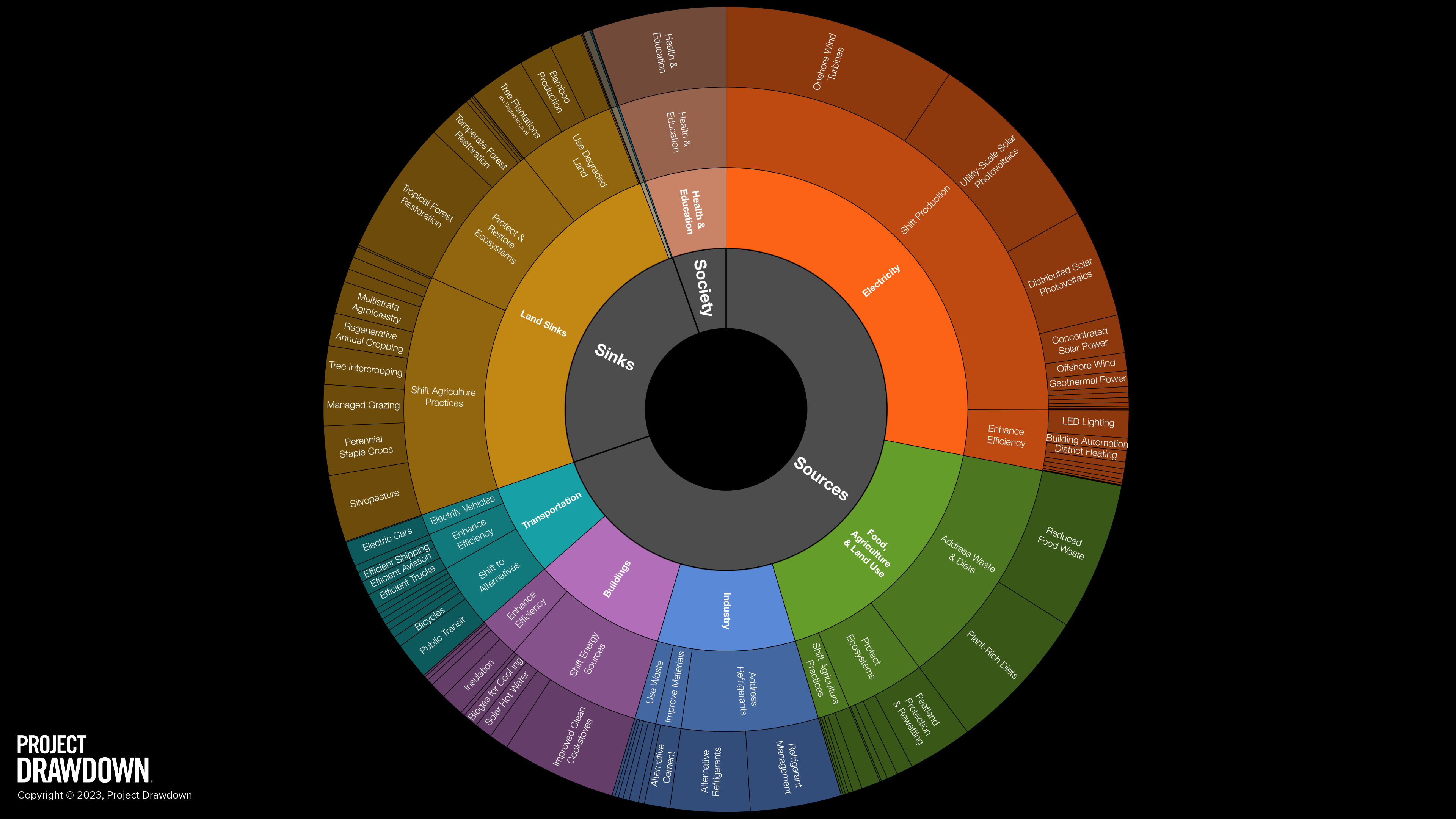
I’ve been thinking about bamboo as a carbon sink ever since I saw it specifically referenced on the Project Drawdown Roadmap where they calculated that the addition of bamboo forests could result in 7.70–19.60 gigatons of carbon dioxide sequestered by 2050. In the graphic below it is in the top left-hand quadrant on the use of degraded lands for carbon land sinks. I will not restate the entire Drawdown summary on “Bamboo Production,” but the summary for me is that it is extremely inexpensive and effective at long-term carbon sequestration.
Bamboo is often passed over because of how aggressively it spreads, but there are many ways to prevented unwanted growth. There are often strips of grass along highways that are already separated by concrete or asphalt that would prevent spread underground. If not, fairly low-cost barriers can be installed – the cost of these barriers may be less over a few years than the cost to companies contracted to mow these completely unloved areas of grass. According to Project Drawdown, there are also native North American bamboo varieties and varieties that do not run or flower which makes their spread unlikely and easy to manage. Years ago, while vising Echo in Southwest Florida I learned about clumping bamboo and have been interested in how we could encourage its use more widely. More information about Echo’s work with bamboo in this video: Bamboo’s Many Uses (filmed at ECHO in Ft. Myers). The fears around its spread are also not based in the reality of the current climate situation – are we really afraid of a fast-growing, zero cost, regenerative carbon sink?
Bamboo along highways is just the start. There are countless strips and triangles of land in cities that could be filled with beautiful, noise-reducing, sight-blocking, carbon sequestering bamboo. In particular I would like to cut sections along the perimeter of parking lots to be planted with bamboo. Combining bamboo with impermeable surface parking would have the added benefit of reducing water runoff into the combined storm-sewage system in cities like Richmond. Of course, bamboo is always the best or only solution. Often prairie grasses and native plantings can facilitate ground water recharge and sequester incredible amounts of carbon in their root systems underground. In terms of highway design, I do think bamboo is the best option for their combined benefits to the neighborhood and the climate.
 Highways and Hallowed Halls