When I think about Hallowed Halls … the Temples of Angkor Wat are a prime example. Even photos of these buildings are so breathtaking that they feel more George Lucas than reality. The trees are also remarkable. I will go here some day. I have never reblogged something before, but these photos are amazing and definitely deserve a wider audience. Enjoy!

leephelps's avatarLee Phelps Photography

Two days straight.  It’s 3:50am.  A strange noise steals our attention to sleep.  The first day it was the alarm waking us to make sure we made the bus to Incheon Airport.  Any other mornings only the apocalypse would be worthy of such an early rise.  But we had to make it to Cambodia.  Twenty-four hours later, the alarm made sure we made it to Angkor Wat.  It was imperative that we marked watching the sun rise over this iconic temple off our bucket list.

When we arrived in Siem Reap last night around six pm,  the guesthouse we were staying at arranged our pick-up from the airport with Mr. Tong.  After spending a day on planes and in airports, it was refreshing to sit in the back of the tuk tuk while the cool evening air welcomed us to a jungle climate.  There’s nothing quite like changing seasons in twelve hours.  We left…

View original post 1,179 more words

Thoughts from “The Creative Call”

Some artistic people in my life are reading a book right now called The Creative Call. It’s great. There’s a lot of wisdom for people who feel like they never “found their artistic voice” or perhaps never identified as “creative.” If you lack a medium through which you can express the inexpressible, this book is for you. *Just as a side note, this book is a Christian perspective of creativity in life, but there are plenty of secular examples to choose from such as The War of Art and The Creative Habit that beckon readers to reengage their creative side without also talking faith and the Christian life.

The following paragraphs are some responses to a section of a chapter of The Creative Call … it’s nothing special, but I thought it might be an interesting way for others to get a glimpse into my personal relationship with art through the years. Also, I hope anyone that stumbles on this post might think about their own artistic story and find some of their own answers to these questions.

Was there an earlier time in life that you produced art?

I used to make more “creative things” (e.g. bean bags, necklaces, cities in the sand, scarves, castles, drawings) when I was younger. I wasn’t really that cool, but at the time it didn’t matter. Besides, I had the privilege of growing up in a group that didn’t really want to be cool relative to other communities … it was a nice social cocoon. Then I moved into junior high and high school and literally left it behind. No more art classes, no more random projects (that I recall) and seldom did I read for fun as I had in my childhood. I sort of lost that self-confidence that one needs to tinker alone for hours on end with no advice or affirmation.

I was gradually pulled outward as I matured into a more social, active life. As I moved through my room during this post-art era, I often viewed my old paintings and drawings as ruins in Middle Earth … relics of a lost civilization. While I moved on from these visual arts, I realize that I began to move into the “written arts.” This shift has continued from that time except for a few noteworthy ventures into painted worlds at “art parties” my senior year of high school and during a class on “Observational Painting” my junior year of college. Otherwise, I suppose, writing has become my voice. Here’s a relic from early high school: an example of this shift as I struggled through my early adolescence:

“Enter la chimera cha; take my sorrows, learn to draw. 
A sword to take the life of one seeking solace from the sun.
From afar it seems so sweet, upon arrival Charon greets. Means to end 
surreal strife, death alone—that radiant life.”
 

“I would practice art if only …”

I would practice my art more often if I weren’t always around people: drawn to connect and afraid to retreat. I recently read a quote from Stephen King’s On Writing: A Memoir of the Craft” in which he writes,

“It starts with this: put your desk in the corner, and every time you sit down there to write, remind yourself why it isn’t in the middle of the room. Life isn’t a support system for art. It’s the other way around.”
 

When I read this quote I realized that in the past decade of my life I’ve been stretched far too thin and removed my support system of art and creativity. I definitely need to stay connected to my community, but as I become more healthy I think I’ll learn to withdraw more often. I often find myself blogging late at night (currently 1 a.m.) because I’ve already committed the rest of my day.

“I’ll start making time for art when …”

I’ll start making time for art when I’m not doing this yearlong internship, when I have more direction for my first book, when I know that I will be able to support myself monetarily (any wealthy patrons out there?), or when I start a graduate program that requires me to daily engage my creative mind.

“I’d be doing my art right now if it weren’t for …”

I don’t really know what my art is. If it’s writing, then I think I am doing my art right now, but sometimes writing feels more like a conviction. I realized the other day that I feel compelled to write … it’s much less a hobby than it is a part of who I am. I also wonder if creativity can get lost in obnoxious intellectual thoughts.

As I continue to write, I want to push myself to more actively integrate my design and personal narrative to perhaps make the process more “creative.” Perhaps the end product would be “my art.”

“I’d always hoped that I’d …”

To be honest, I had always hoped that I would go completely off the deep end, produce something incredible, then die an early death. This thought first entered my mind as I read Housman’s “To An Athlete Dying Young” and lingered in the recesses for years to come. I wasn’t really morbid about the thought of dying young, but I distinctly remember thinking that my talent would be more influential as tragic unrealized potential. I’d always hoped that I would be tragic, but at the same time I almost always followed the rules.

“I wish I had the courage to …”

I wish I had the courage to tell my own story in a compelling and innovative way. And to let go of the hometown ties that hold me back and keep me from being exposed as a human with flaws and fears. I also wish I had the courage to get past my fear of public humiliation (and latent political ambition) to just be myself. I’m thankful that I have let go of most of the hang-ups from my earlier years, but there will always be something new.

“If I could go back in time I would …”

… produce more at an early age, stop feeling alone on the margins and embrace my strengths as gifts to be used. Also, I would learn how to play the piano and cook great food. I might even learn to dance.

My hope deferred is the thought of me as a classy, unique, professional person, confident, yet realistic and sincere. Right now, I’m afraid I hide behind my words too much. While I’m glad to have further honed this skill, I hope to eventually use writing in a less esoteric way that people can still appreciate and enjoy.

Favorite words (and phrases):

Portmanteau, sin qua non, mutatis mutandis, latent, urbane, nascent, apex, zenith, delight, hallowed, space, amaze, past, significance, embrace, huzzah, fearsome, boulevard, difference, terrifying, nostalgia, anticipate, potential, place, remain, resent, longing, resist, gruesome, lament, sunrise, society, dissonance.

Special thanks to @brainpicker‘s New Year’s Resolution Reading List: 9 Books on Reading and Writing for a great survey.

Tree in Stone

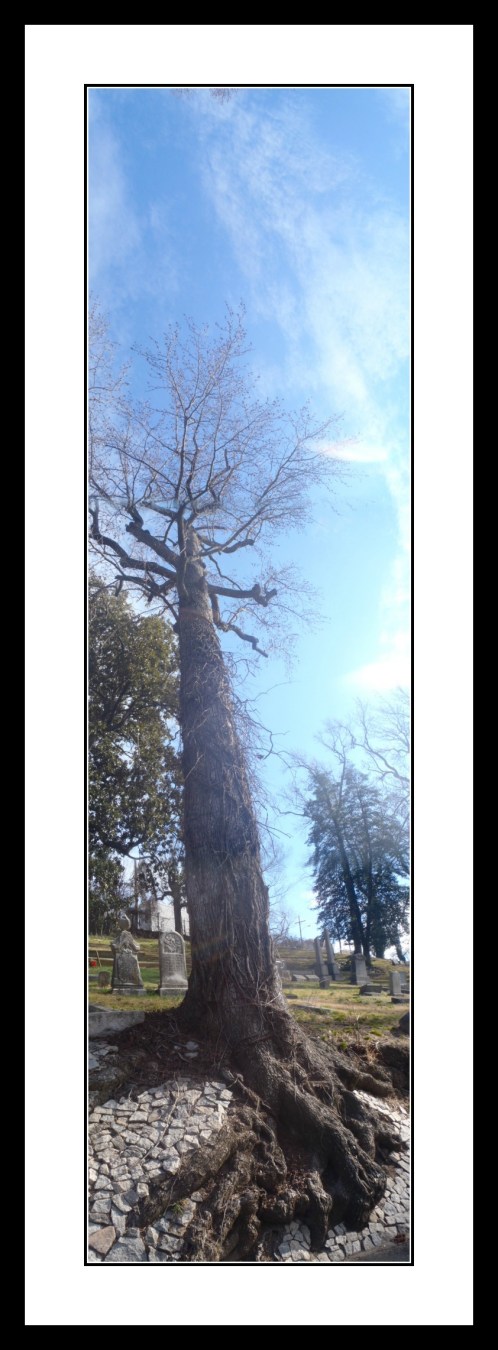
About two weeks ago I was driving out of Hollywood Cemetery with my housemates and I saw this tree that had grown in the cobblestones beside the road.

A tree in stone.

I don’t want to get too heady, but I think it’s really interesting to think about the life of the tree and the death of the area. Grown from the stones, the tree ascends into the sky and leads the eyes away from the ground and upward to the beauty of nature. I don’t think the picture is really anything special, but it’s definitely my favorite from the trip.

C is for Cemetery

Cemeteries are memory personified.

They are the tangible outcome of the human desire to be remembered. The desire to last beyond our death. They are the pyramids of the masses; each grave a person’s last chance to make their case for God and men. Cemeteries are also a halmark of civilized society … not everyone receives the dignity of a headstone. And because not all headstones are created equal, they’re also a tangible and public investment in the future of the family name.

In his book, The Language of Towns and Cities, Dhiru Thadani writes an entry for cemeteries that includes two photos of Hollywood Cemetery in Richmond. “Authentic towns and cities have cemeteries,” he writes, “and space should be planned to accommodate this essential component when designing new towns.” When I read this, I appreciated Thadani’s attention to the value of cemeteries in modern life. I also considered it a bit of a coup for Richmond considering the other noteworthy cemeteries in America. Then again, it’s completely justified.

There is something so basic and yet remarkable about the time and care that was taken in the planning and development of Hollywood Cemetery. It’s no wonder Richmond’s aristocracy used to picnic on the hills of Hollywood overlooking the James River. They escaped the smoke of the city, tidied up their family plot, and caught a cool breeze on warm summer days. Since the cemetery was first planned, it has been maintained, improved, and today remains a destination in this old American city. A brick walkway was added to create “President’s Circle” where two former US presidents are buried. The cemetery stands, in part, as a testament to the longevity of power and tradition in American society.
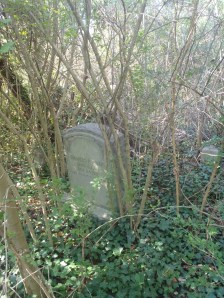
Another remarkable cemetery in Richmond, one that is not highlighted in Thadani’s epic, is Evergreen Cemetery. I visited Evergreen four days before I visited Hollywood and, as anyone would tell you, the difference is stark. Where one has improved, the other has declined. Where one is prominently placed on the hills overlooking the James, the other is beside a highway in Church Hill. Where one is a testament to power, the Other is a testament to the longevity of systemic stigmatization and shame.
At one time, Evergreen Cemetery must have been a place of prominence in the black community. At least a generation of leaders, their family and friends were buried in this place. The most noteworthy resident is of course the famed Maggie L. Walker: the first American woman to “charter a bank in the United States.” Her grave, like many others, is now shaded in the canopy of a forest that has grown where there was once a field. Mausoleums have been raided, pathways are hidden by brush, and the lives of black Richmond are gradually being lost to time.

With cemeteries, it’s always difficult to understand who is responsible for upkeep. The children of the deceased, the businessmen who sold the plots, or the society at large. The more fascinating question to me, of course, is not who, but why? At its most fundamental level, the maintenance of graves is actually a maintenance of one’s personal identity and heritage. In the case of Hollywood, this is both American and Confederate heritage. In both cases, the members of these groups seem totally unashamed of their pride. They live boldly in their past and work tirelessly to maintain the vestiges which prove it’s legitimacy.

In contrast, the people who would have maintained a place such as Evergreen were a vastly more manipulated and displaced group in the twentieth century. The successful class of black Richmonders, once confined to the city, were proud to erect monuments and sustain traditions that defied the white power structure’s condescending narrative of black inferiority. Once segregation was overthrown, however, many left the city behind and perhaps coincidently left behind their heritage as well. Of course, this is true of nearly every American who left the city in the twentieth century. And yet, one cemetery shines and the other is being slowly eroded by time.

“Segregated at Death” was a title that I considered for this post, but I decided that  it wasn’t the message with which I wanted to lead. I decided that it would be more worthwhile to simply present these two cemeteries and hopefully develop more of a holistic understanding of both (and cemeteries in general) in the context of the other. Thadani’s omission of Evergreen is unfortunate, but not unexpected: his work is often more concerned with aesthetic than politics. For me, I believe that if if we’re going to talk about cemeteries, we ought to at least consider both sides of the American color line to get the full story.

If anyone else wants to start tearing down trees at Evergreen let me know! I still think it can be saved and I would love to be a part of clearing the brush from old Richmond graves. The task is daunting (if you’ve been there, you know), but I think would be worth it.

Perhaps the more we work the more we will know why.

This slideshow requires JavaScript.

This post is a part of a series I’m putting together on my RVA page.

The Body of the Enemy

Tomorrow is the day we have set aside to commemorate the life of Dr. Martin Luther King Jr, one of the most famous leaders of the black struggle for dignity in the Western hemisphere. Whether King is remembered as the man who fought for equality or the pastor who taught the love of Jesus Christ, one thing is certain: King has been remembered.

This morning, I had the pleasure of visiting one of the greatest hallowed halls of American Christianity: The Washington National Cathedral. While it still feels a little odd that America has an official church, I am thankful that I had the opportunity to experience such a grand space in my nation’s capitol. In anticipation of the holiday, the memory of King was woven throughout nearly every message. My favorite example of this was the old testament reading:

“The man said, ‘They have gone away, for I heard them say, ‘Let us go to Dothan.’ So Joseph went after his brothers, and found them at Dothan. They saw him from a distance, and before he came near to them, they conspired to kill him. They said to one another, ‘Here comes this dreamer. Come now, let us kill him and throw him into one of the pits; then we shall say that a wild animal has devoured him, and we shall see what will become of his dreams'” (Genesis 37:17b-20).

As I heard the story of Joseph’s betrayal, I was struck by that line “and we shall see what will become of his dreams.” To the brothers, killing Joseph seemed the most conclusive way to end his behavior (and perhaps prevent similar behavior in the future). “He’s different, he doesn’t act like us, and he has received unmerited favor from our father … so we must end his life.” That, they believed, was the only way that they could sustain their fragile identities of tradition and status quo.

On April 4, 1968, a sad man named James Earl Ray believed much the same lie. He believed, I can only imagine, that the life of Dr. King was a constant and perfectly reasonable assault on his racist ideology. Thus, he killed the man that galvanized a movement that awoke a nation. But did he kill the dream?

In the story of Dr. King and of Joseph, I am reminded that people will go to great lengths to secure and maintain their place in society. This process could entail shunning someone or beating someone into submission, but in moments of greatest desperation, it is the life of the body, not the ideas of the person, that must be destroyed. This is most true in the case of Dr. King, who’s black skin alone was a political statement of insurrection to his assassin. I can think of many dramatic examples (“American Beauty,” for one) that convey the fear and rage that is felt toward someone who’s very existence seems to undermine the identity of another.

Still today, there are people who feel compelled to murder. In my city, homicides regularly remind me of this most basic fight for recognition and security. Men and women are killed for many reasons, but believe it is primarily motivated by a basic desire for power. White it is dramatic, murder of another cannot successfully heal the insecurities in the self. These insecurities are only momentarily mitigated by the finality of death.

James Earl Ray’s name is all but forgotten because the murder of MLK did not secure white supremacy as Ray intended. One bullet couldn’t stop millions of people. But he did, perhaps unknowingly, prevent us from forming a complex, humanized memory of the person of King. Today, the story of the man seems to have been set into a field of static nostalgia.

And now James Earl Ray is dead as well and I have to wonder why he even bothered to kill King in the first place. Murder is sad to me because it seems so foolish and all too common. Still, as long as murder exists there will be the temptation to end the life of the other. The body of the enemy, not the ideology of the self, seems like an easier place to affect change.

This is one of those sad realities, but I can’t let murder overshadow life. Instead, we must go on living with the discipline of faith and the hope that one day we will all be made whole. As King himself proclaimed the night before he was killed,

“I’m not worried about anything, I’m not fearing any man. Mine eyes have seen the glory of the coming of the Lord.”

Let it come.

P.S. My two most frequently visited MLK speaches:
King’s Mountaintop Speech
The Drum Major Instinct
 

A is for Adaptive Reuse

There is nothing more creative than adaptive reuse. In a world of earth movers and concrete slabs, redeveloping old buildings has become more rare than starting from scratch. Adaptive reuse forces creative builders to work in an existing space and create something that honors the history of the space while also recreates a new use for old bricks.

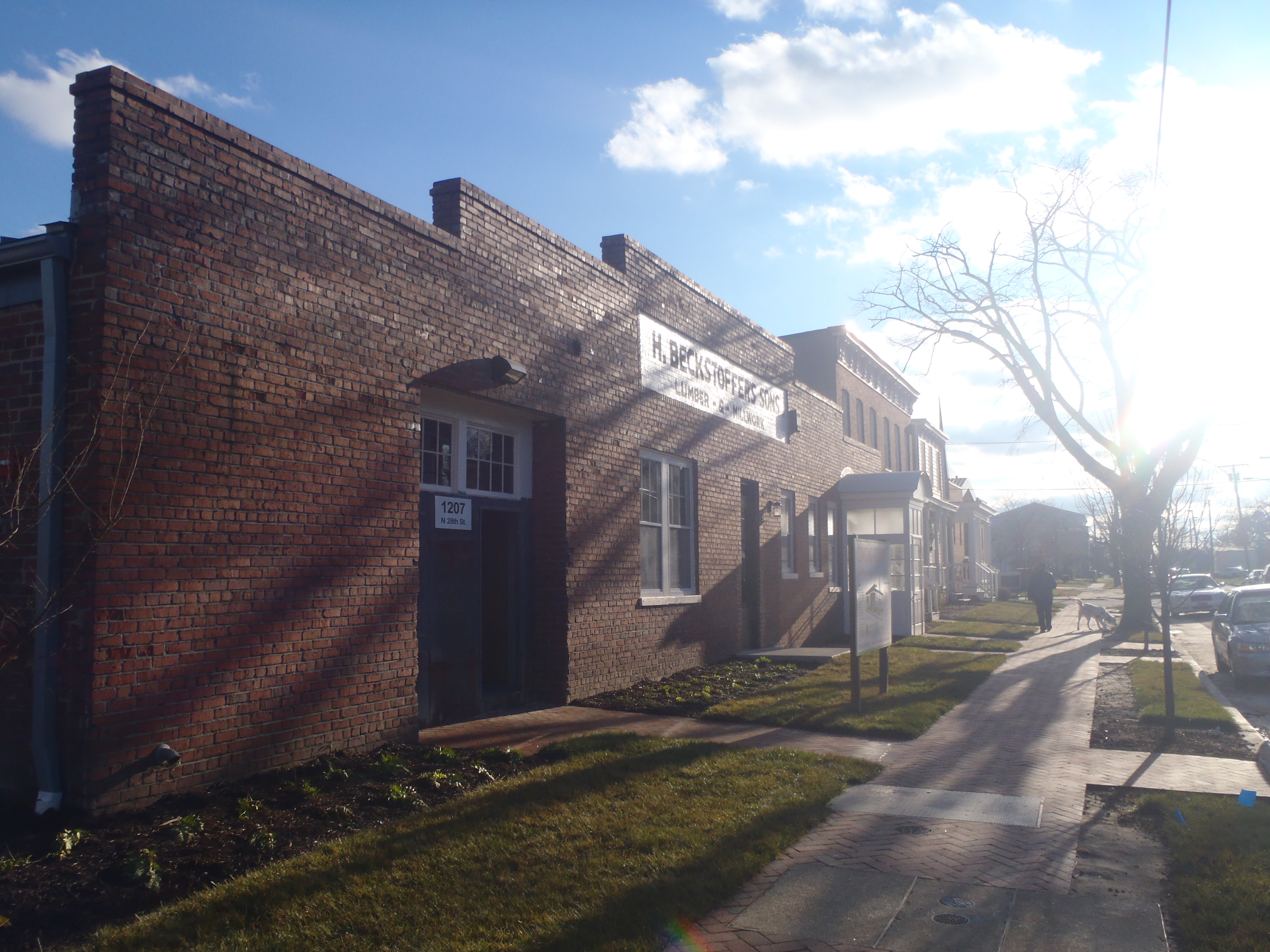
My favorite current adaptive reuse project in Richmond is the Live/Work Lofts at Beckstoffer’s Mill. I like this project because it’s compact (one city block), extremely well-done (down to the brick sidewalks), and it’s in the middle of a neighborhood. The old wood mill has been reimagined and resurrected for twenty-first century use. Yay for creativity and hard work in Church Hill.

This is a part of my, Cataloguing Richmond series on my RVA page.

D is for Duck

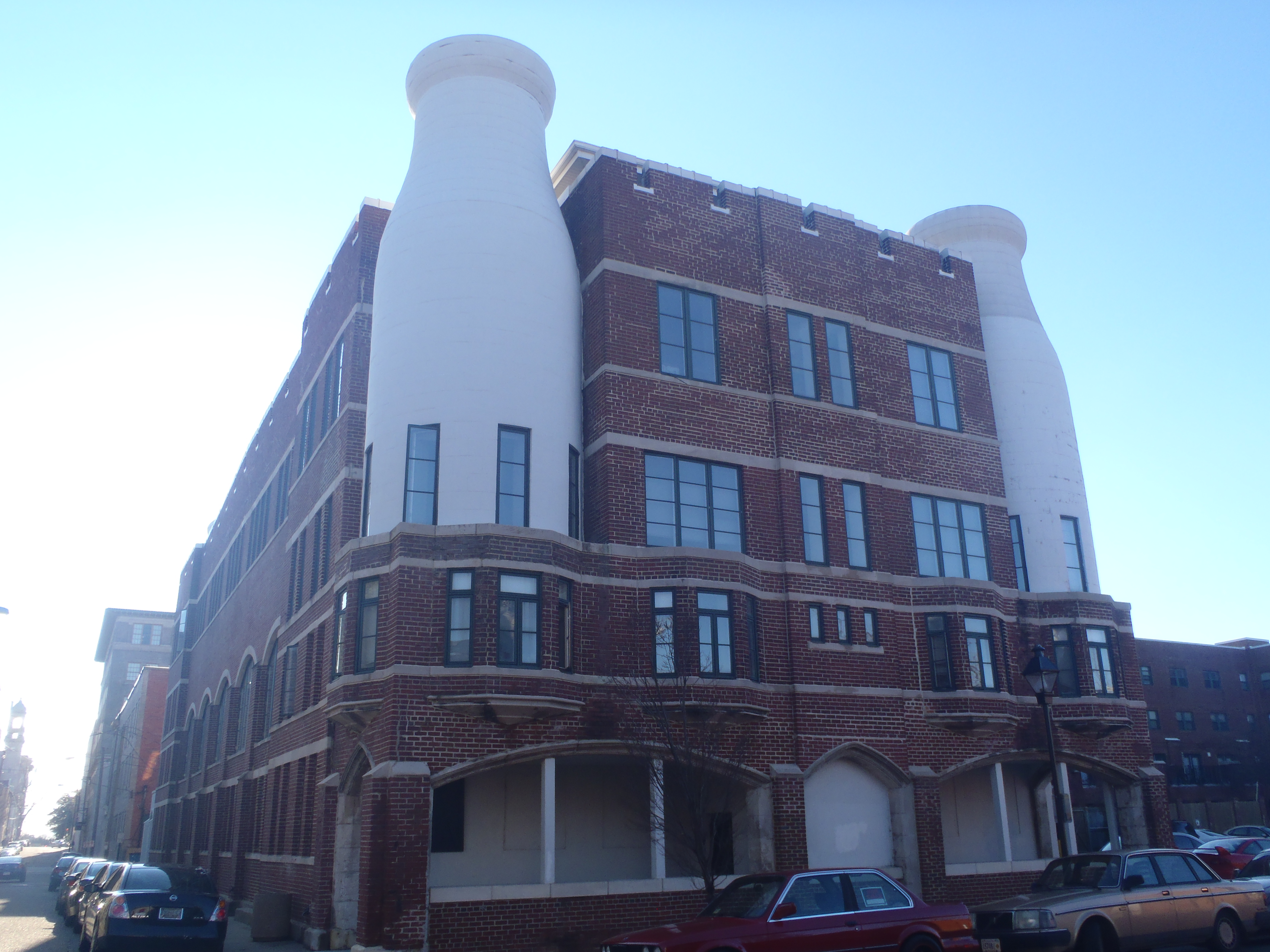
Since I’ve received so much feedback for an early post on the Kickers buildings in East Texas, I wanted to add a new post on a building in Richmond that attempts to “be” what it is (a “duck” a la Venturi). The old Richmond Dairy Company building on Jefferson and Marshall has intrigued me since the first day I saw it. An gothic-style brick building, there are three corners that were built out, rounded and shaped like giant milk bottles. The best thing about this building design? Don’t need a sign.

This post is part of a series I’m putting together on my RVA page.

2011 in Review … “A Hobby Worth Having”

Thanks to everyone that has read, perused, or glanced at my photos and thoughts. The WordPress.com stats helper monkeys prepared a 2011 annual report for this blog. It’s not really that impressive in the grand scheme, but the experience has been incredibly valuable for my personal growth. I encourage everyone to start blogging … it is truly a hobby worth having.

Here’s an excerpt:

A New York City subway train holds 1,200 people. This blog was viewed about 4,100 times in 2011. If it were a NYC subway train, it would take about 3 trips to carry that many people.

Click here to see the complete report.

He came and dwelt among us

Yesterday, Christmas Eve, was the deadliest day in Richmond since New Year’s Day. Last night, I got the following text from my housemate:

“Don’t know if y’all saw the news or not but two people were killed and a 2 year old girl was abducted a few blocks [from] our house tonight. Be praying for our community tonight and throughout tomorrow as we reflect on what the birth of Christ and the hope of his return means.”

Later, I heard that there were three murders in the same day — a reminder that we humans are not the kind and simple species I like to imagine. I was so thankful that the sad news came with a charge to take Christmas more seriously.

If there were ever a Hallowed Hall, it was the stable in which Jesus was born. Amidst the chaos of an ancient Hebrew city — multiplied by the Roman census — God created room for His holy and audacious command: “peace on earth.”

This day is a tradition that exists to remind us that, with reckless abandon, the God of the universe “came and dwelt among us.” He spoke human language, followed human traditions and respected the full range of human experience: Contentment, excitement, trust, affection, doubt, betrayal, and loss.

Into such a world, this incarnation brought a peace and hope that allows us to give of ourselves and be satisfied.

When we follow a higher calling, the most simple human places become holy. I pray that this year we will hear the Christmas story and appreciate how absurd it sounds: A baby that is God, a new star in the sky, a mother that is a virgin, a stable that is a maternity ward, and a peace that surpasses human understanding.

That ancient city became an unlikely intersection, a place worth remembering, and the origin of a hope found in the person of Jesus Christ.

Merry Christmas.

Gift

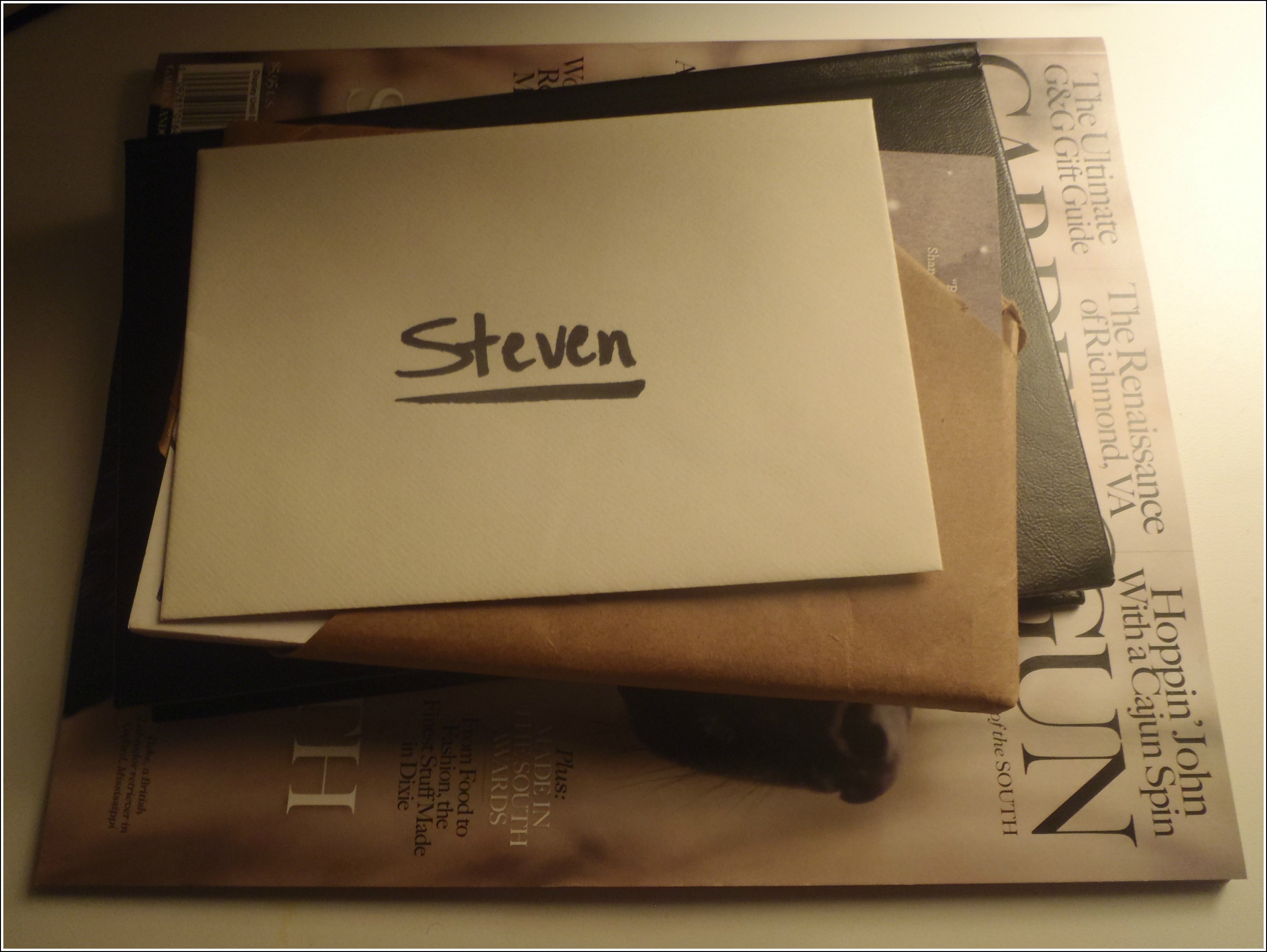
When my older brother Steven told me what he wanted for Christmas, I laughed and told him that he was boring.

Steven is similar to me in personality — very different in lifestyle. He’s a rational, fast-paced consultant and I’m a scattered high school teacher. His commute is thousands of miles while my job is five minutes away. So when I start looking for potential presents I’m always wondering if they’re something he would want and enjoy … or just something that I think is cool.

My first decision: The shotgun approach. In addition to his request, I decided to add three more gifts that I thought might engage his creative mind, reconnect him to home, and give him a chance to process his thoughts and emotions throughout the busy work week.

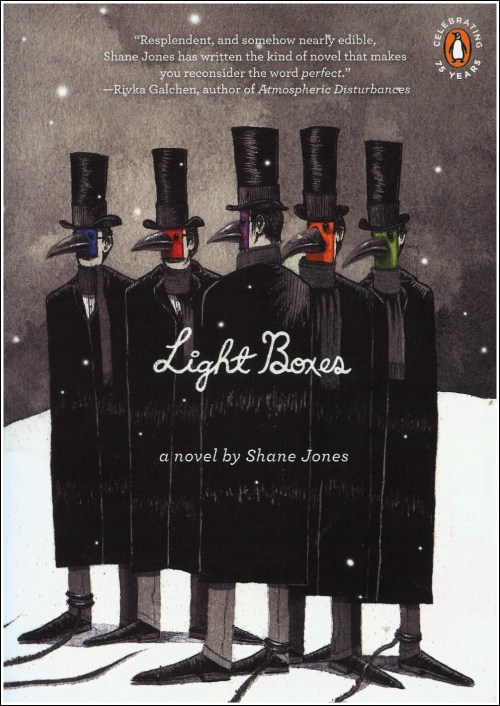
The first is Light Boxes:

 This novel is really a piece of modern folklore that can’t be read to “learn something.” For a book like this, you have to slow down and embrace the flourish of poetry … and learning is indirect. I also appreciate the cover art (suits, scarves, masks and  a creeping monster) for its connection to his current life.

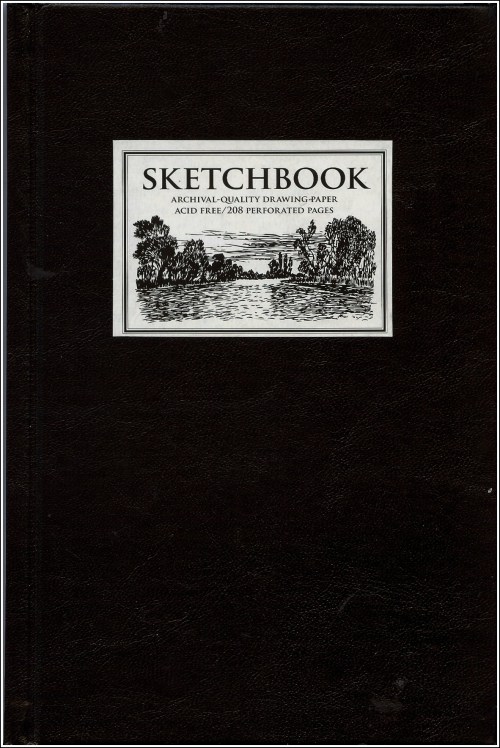
Next item I found for my analytical and professional brother is a simple, black, hardback sketchbook:

With 208 blank, perforated pages, I liked this book because it’s classic, but also has some utility as a place to write todo lists or brainstorms that can be removed and shared. In other words, it’s not another journal … it’s more like a canvas.

Finally, I was thinking about his long commute from the South to the cold Midwest and settled on his last present in this scattershot of gifts: the latest edition of “Garden and Gun.” That way, the next time he flies north he will bring with him a rich and unabashedly southern collection of photos and stories. Not to mention the article, “The Renaissance of Richmond, VA.” Here’s looking at you:

When it all came together, I couldn’t help but appreciate the collection … a pile of blacks, grays, and whites. It’s not for me, but I’ve enjoyed collecting it. As I get older, I hope I continue to find my own style,  while always remembering that saying, “I love you,” through a gift has to include a combination of my interests and another’s desire. That way, it’s personal, but not returned on Monday.

Just in case he gets bored by the narrative of Light Boxes, (“I dreamed you a field of running horses, Selah. For you, Bianca, a balloon the size of the sky, my body a kite you can throw into the air. Pull me by string and horse.”) I made it perfectly clear that I’ll gladly take any one item back for myself. The final benefit to shotgun giving is that nothing hinges on the one big-ticket item.

So, after finding what I thought could be the perfect Christmas gift collection for my older brother, I added the final piece and (I admit) a very practical addition to any grown man’s life:

A clothes hanger.

Sometimes you just gotta share.

P.S. Special thanks to Michael Wolfe and Maria Popova for leading me down this more thoughtful and appreciative path for the past five months.